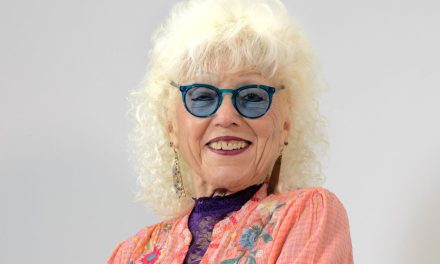
A LIFE OF HONOR. Aimone di Savoia Aosta, 6th Duke of Aosta, was born in Florence in 1967. After studying at the Naval College in Venice and beginning his professional life in London, he moved to Russia in the early 1990s. He later joined the Pirelli Group and more recently returned to Italy after many years abroad. He has also served as Ambassador of the Order of Malta to Russia.
13 minutes read time.
You can listen to the podcast of this interview here.
Aimone di Savoia-Aosta, you studied at Bocconi University. Did you graduate?
I never finished at Bocconi. I would like to say I am a Dottore della Bocconi, but unfortunately I dropped out.
You received the Collar of the Annunciation at fifteen. What did it mean to you?
It was a great honour. The Collare dell’Annunziata is one of the oldest orders of chivalry in Europe. Traditionally it was a very restricted brotherhood, closely connected to the House of Savoy. Umberto II gave it to me when I was only fifteen, earlier than tradition required. He died six months later, so I have always considered it an especially important honour.
“Italian History does not begin in 1946, but March the 17th 1861, in Turin!”

Aimone with his wife, Olga, and their children (left to right) Amedeo, Umberto, Isabella at Reggia di Venaria, Venaria Reale, 2024
Aimone di Savoia- Aosta, why did you go to Russia in 1992?
Almost by chance. I was working for a company that went bankrupt, and a friend and I decided to go to Russia. The Soviet Union had just fallen and the country seemed to be a land of opportunity. There was an extraordinary sense that everything was about to change.
What did you discover?
The reality was much harsher than the ideal. The transition from the Soviet system to a free economy was extremely cold. Shock therapy produced enormous wealth for some and terrible losses for others. It was a unique historical moment, almost as if you had arrived in France in 1789.
Why did you stay?
Because I became fascinated by the country. I also have some Russian blood, although that was not part of the original decision. Perhaps later that part of me emerged more strongly.
You lived in Russia from Yeltsin to Putin. What is Russia to you?
A country I deeply love and one that is very difficult to understand from the outside. Russia has passed through extraordinary phases: the Soviet period, the chaos of the 1990s, the economic and social development of the first years of Putin, and then a darker period. Living there teaches you to look at these phases differently.
Why do you think Russia is so often misunderstood?
Because people often know Russia through its literature, art and political history, but not through everyday life. When you live there and speak the language, you see another country. Russians are deeply sentimental and nationalistic, with a strong sense of culture and tradition.
What was life like in Russia?
Fantastic. In the 1990s it was a strange melting pot, and in the 2000s the country became much more sophisticated. There was a rich cultural life and enormous freedom to travel and discover the country. Russia is extraordinary for its cities, museums, art and nature.
Did you feel free there?
Yes, and in a particular way I felt doubly free. In Italy my surname often created a prejudice, even when it was a positive one. People already had an idea of who I was. In Russia, that did not happen to me. That gave me a great sense of freedom.
And today, in Italy?
Today I feel extremely free. I liberated myself from that sense of pressure.
“The title of Duke of Puglia was given to me by Umberto II and this grant was part of the tradition of the House of Savoy”
Aimone di Savoia-Aosta, how do you reconcile your royal heritage with life in the Italian Republic?
I think the answer is historical responsibility. I was born in the Republic, served it in the Navy and have lived my entire life under this Institution. At the same time, a part of the country’s historical memory runs through my family. I believe we have a responsibility to preserve that memory and pass it to our children.
What would you like your children to understand?
That Italian history is one history. I would like to see greater continuity between the Monarchy and the Republic, without questioning the institutions of the Republic. Italian History does not begin in 1946, but March the 17th 1861, in Turin! My family is part of the history of Italy, and that history should be studied as a whole.
You were made a Knight of the Order of Merit of the Italian Republic. How did you receive it?
With great pleasure. It was an honour to receive an award from President Mattarella. Ambassador Pasquale Terracciano in his speech at the Italian Embassy emphasized how proud he was giving an order of the Republic, for the first time to a Savoy. I was very happy to receive it, in recognition of the development of Economic ties between Italy and Russia.
Are you attached to your roots?
Very much. First of all I am attached to my Italian roots, and secondly to my Piedmontese roots. Whenever I can, I take my wife and children around Piedmont to discover its history. That is where they have to begin.
Why did you buy a house in Puglia?
It was an opportunity. The title of Duke of Puglia was given to me by Umberto II and this grant was part of the tradition of the House of Savoy, that the son of the Duke of Aosta receives it, but I did not buy a house there because I was made Duke of Puglia. But if I bought a house in Turin, it would be because I am a Savoy.
You were born in Florence. Do you feel Piedmontese?
Absolutely. Florentines would never really consider us Florentines. That is Italy: we are very attached to our campanile. Everything has to go back five hundred years before it is accepted.

Amedeo and Aimone: photo of Aimone in his early days with his father, Prince Amedeo of Savoy-Aosta, 5th Duke of Aosta

North Pole: Aimone and his father, Amedeo, during the expedition to the North Pole, 2001. They took this journey (with a tv troupe and Mike Bongiorno) to ideally complete the arctic expedition led by Luigi di Savoia, Duke of Abruzzi, in 1899-1900. In fact, since at the time they could not reach the North Pole (though reaching the Farthest North world record of 86°33′), Aimone and his father carried the ice axe of their ancestor (in the photo) to make it finally reach, a century after, the desired destination

Aimone portrait shot at Villa della Regina, Torino, 2002

Malta-Russia: Russian Deputy Minister of Foreign Affairs, Sergey Vershinin, received by an Order of Malta delegation which included Amb. Aimone di Savoia and Amb. Stefano Ronca, Rome, 2021

Aimone and his wife Olga with Prince Leka of Albania at the wedding of George and Victoria Romanov at Saint Isaac’s Cathedral, Saint Petersburg, 2021

Aimone with his children (left to right) Umberto, Amedeo, Isabella at the Sacrario Militare di Redipuglia, Redipuglia, 2024 in front of the tomb of their ancestor Emanuele Filiberto, Duke of Aosta, Commander of the “III Armata”

Aimone with his sons (left to right) Umberto and Amedeo at Reggia di Venaria, Venaria Reale, 2024
“I believe Europeans should make a greater effort to stop the war”
Aimone di Savoia-Aosta, how was it to return permanently to Italy?
I was extremely excited. I was less excited about Milan at first, but I have been positively surprised by the city. Milan has become an extraordinarily international and dynamic place, with a strong industrial base and an important cultural life.
Do you now feel at home in Italy?
Yes. Italy is Italy for me. I developed as a man and in my career in Russia, and I lived there very well for thirty years, but being Italian is something I cannot replace. I am also at peace with my surname again.
And your family?
My wife Olga is very happy here, and the children are enjoying their Italian life. They still attend international schools, because they were raised in French and English schools in Moscow, but they are adapting very well.
Do you still return to Russia?
Yes. I lived there for thirty years, so it would be absurd not to maintain those friendships. I still see my friends, although nowadays they come to Europe less often and I travel there less frequently.
How do you see the war in Ukraine?
It is very sad. I hope the war ends. It is difficult to be in Moscow now, just as it must be difficult to be in Kyiv. I believe Europeans should make a greater effort to stop the war; realistically we are not doing enough.
What is the relationship between Russia and China?
The behaviour of us Europeans is pushing Russia and China together, but historically the relationship has been much more complicated. Those two countries have often been cautious toward one another. I am not sure that this trend is good for Europe.
What about Russia and the United States?
The relationship is historically complicated. Since the end of the Cold War there has been a profound lack of trust. Russia and the United States see the world through very different lenses, and this has accumulated over decades.
Should Europe speak more with Russia?
Absolutely. The first mistake is not to speak. Diplomacy exists, and we have to use it. You cannot get out of a crisis if the people who should be talking do not sit at the same table. Pope Francis once said that perhaps the table stinks, but you still have to sit at it.
What do you think about the row about the Russian pavilion at the 2026 Venice Biennale?
My view is simple: Europe is not at war with Russia. We have decided not to be at war, but we have also decided not to have a relationship with that country. Institutionally, that is very strange. The Biennale has rules, and if those rules have not been broken, I see no reason to invent different standards simply because the country involved is Russia.
Do you think Europe is living too much through slogans?
Yes. We live with slogans rather than relationships. I am not sure that is the right way to live.
Russia has often been described as unconquerable. The war in Ukraine has challenged that image. What do you think?
The Ukrainians have shown extraordinary courage. It being true that Russia is difficult to conquer, perhaps the Russians should also think the same of Ukraine. It would help a process of peace.
Can you make a prediction about Russia?
Never answer when somebody asks you to make a forecast about Russia. It is always too risky. I once said, shortly before the invasion of Ukraine, that Russia would never invade. I was wrong. Whatever forecast you make about Russia is always in danger of being the wrong one.
Aimone di Savoia-Aosta, thank you very much.
ENJOY THIS INTERVIEW? SHARE IT WITH A FRIEND.