
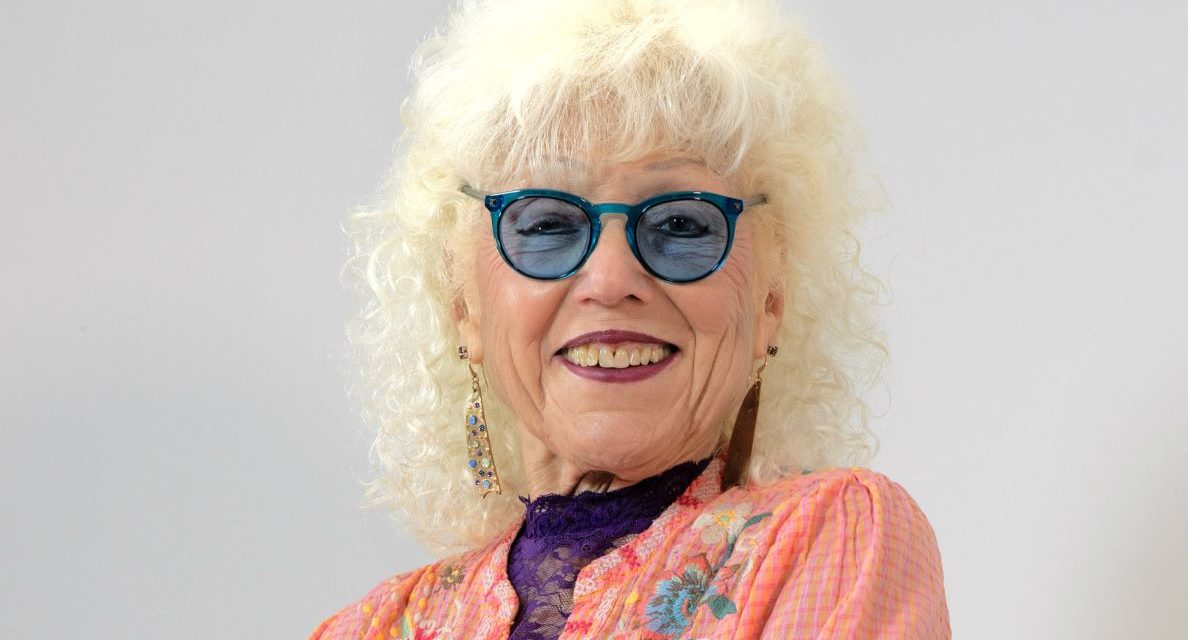
A FIGHTER FOR EGALITARIANISM AND JUSTICE. Judy Chicago is an artist, author, feminist, cultural historian, and educator who lives and works in New Mexico, USA. In 2018 she was named one of Time Magazine’s most influential people, and she has garnered an enduring stature. Born Judy Cohen in 1939, and known briefly after her first marriage as Judy Gerowitz, Chicago attended the Art Institute of Chicago and the University of California, Los Angeles. In 1970, she adopted the surname ‘Chicago’ and initiated the United States’ first Feminist Art Programme at California State University, Fresno. Chicago became particularly well known for her 1970s installation The Dinner Party. In 2024 her show Revelations is at London’s Serpentine and Herstory is at LUMA Arles.
You can listen to the podcast of this interview here.
Judy Chicago, the artistic director of Serpentine Hans Ulrich Obrist and the American art dealer and curator Jeffrey Deitch endorse your work with special passion. When did you meet Jeffrey?
In 2010, but he didn’t start representing me until later because there was a period where he wasn’t representing artists. He became my advisor and guide as my career changed so dramatically, from being entirely excluded and marginalized to slowly having my work looked at beyond The Dinner Party.
How would you define feminist art that you were marginalized for fighting for?
My definition has changed over six decades of work. It wasn’t until the end of the 1960s that I set out to figure out how to create a feminist art practice, very deliberately. At that point there was no such category. In fact, the biggest compliment you could get in Los Angeles when I was young was that your work looked like it was painted by a man. If your work looked in any way in the United States like it was made by a woman, that immediately disqualified it from being taken seriously as art. So for the first decade of my career I really tried to fit in. I tried to be a guy, but my real self kept sneaking through! (laughs)
“Feminist art promotes diversity. I believe that every voice counts.”
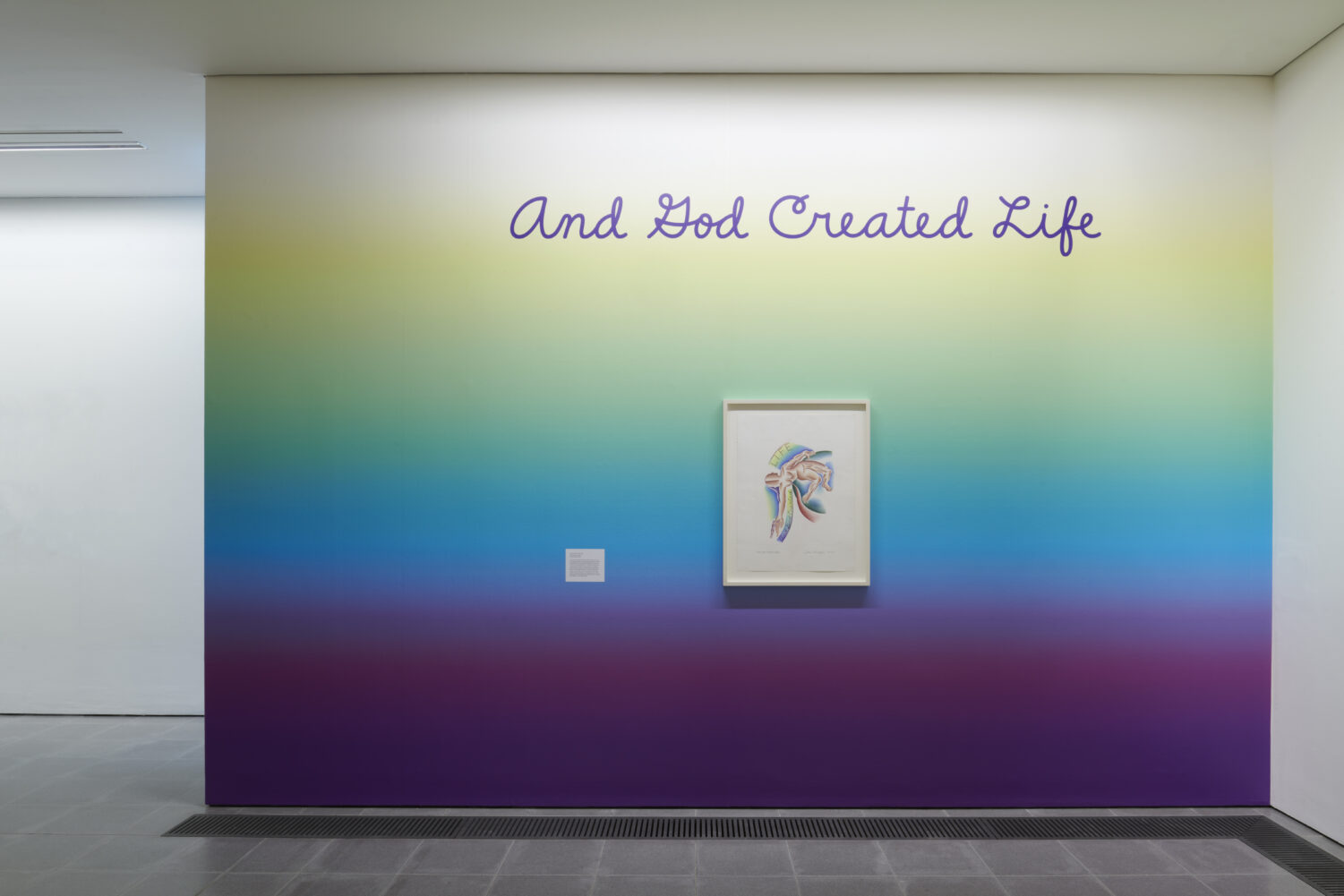
Judy Chicago: Revelations, 2024. Installation view, Serpentine North. © Judy Chicago/Artists Rights Society (ARS), New York. Photo: Jo Underhill. Courtesy Judy Chicago and Serpentine.
Judy Chicago, what did you do?
I decided to confront that in my work. At that point I was very focused on issues of gender. As I have evolved as an artist, my definition of feminism and my definition of feminist art have changed from gender to feminist values, which goes back actually to a writer named Christine de Pizan who wrote The Book of the City of Ladies, which is really the first known example of feminist literature. It kicked off a European-wide discourse on the role of women. But feminism now and feminist art now, in my view, deals with formulating a different set of values for the world. Not based on competition, not based on patriarchy, but based on a set of egalitarian and just values. For me, today, feminist art has to contain those values.
In the Arles LUMA Herstory exhibition there is a big banner panel where you write “What if women ruled the world.” Is that piece part of the work you did for Dior with Maria Grazia Chiuri?
Yes, that was the first project with Dior in Paris. There were 21 banners, half in English, half in French, and the French ones are on their way to Arles. I’m not interested in matriarchy. I am interested in equality, and the other banners raise a series of questions such as: “If women ruled the world would men and women be equal?” “Would men and women both raise children?” “Would the planet be protected?” In other words, if the world was infused with a female perspective – which is about caring, nurturing, sharing – how would it affect the whole world? That question introduces a series of questions about how women are excluded from most major political decisions on the planet.
How come Dior got interested in you?
Like a lot of things that happened in my career, it came out of the blue, just out of thin air. Apparently there was a German magazine that was doing a profile on Maria Grazia, and they asked her what ten people had influenced her, and she named me as one of them. I had no idea. It turned out that she was a huge fan of The Dinner Party, and whenever she went to New York she went to see it. So first somebody interviewed me about her, and I didn’t know very much about her, because I didn’t know very much about fashion, and I dismissed fashion, actually. And then after that they flew us to Paris in July of 2019 to meet Maria Grazia and Olivier Bialobos and to discuss a collaboration. I realized, oh my God, here is a way to get my art and my ideas better known globally. Dior sponsored both the New Museum show and the Serpentine show, and they made interview walkthroughs of both exhibitions and posted them on their social media. That means a million people around the world are getting to see my work that would have never seen it otherwise. A million people got to see the questions posed in the banners. I’m now on my fifth project with Dior.
You say women are excluded from political leadership but in some countries women are now leaders?
Very, very few. If you look at China, there are no women. If you look at Russia, there are no women except in low level positions. There are way more countries that have very few, if any, women in government. But having one or two women is not enough, because what happens is, let’s say there are 12 political figures who run the country and there are two women. One of the women says, I think we should do this. And then you hear all these men, go NO NO NO in a much louder voice.
Men don’t want to lose their power and so has your life been a big fight once you decided you were not going to pretend to be a man?
It has. It wasn’t easy, even when I was trying to fit in, I still faced tremendous obstacles. That’s what made me decide to confront gender issues and deal with it instead of trying to avoid it. I learned from my father that the world could be changed. He was a labor organizer, and a victim of McCarthy, who destroyed his life.
“I look at the history of art as the history of men’s art, and so feminist art opens the way for a history of women’s art.”
Judy Chicago, was this also anti-Semitism? Because at the beginning your name was Cohen.
Yes, but it had nothing to do with anti-Semitism. He was a Marxist at a time of anti-Communism in America. There was a couple in Los Angeles who were very important collectors and my patrons, and somebody asked them if I changed my name because I didn’t want to be Jewish. They laughed and they said, “Everybody knows Judy is Jewish.”
So why did you change your name to Chicago?
America in the 1970s was a very radical period of the civil rights movement, the farm workers, Stonewall, gay and lesbian rights, the feminist movement. The Black Panthers were always changing their names, and so when I wanted to announce that I was about to make an act of liberation from patriarchal values, I decided to change my name. It never crossed my mind that anybody was going to think it was to disguise being Jewish.
Why did you move from California to New Mexico in 1985?
I like the light of California. The only reason I’m in New Mexico is because of my husband, the photographer Donald Woodman, who doesn’t like to live in big cities. I would have gone back to California. Donald was the painter Agnes Martin‘s assistant for seven years. There are a lot of artists in New Mexico. Bruce Nauman‘s there.
Several different techniques are on display in Arles. At the entrance of your exhibition are two bronze sculptures, and in the middle there are 140 drawings titled Autobiography of a Year, a year in which you were depressed. Why?
Donald and I had finished the Holocaust Project and we were in debt. We lost the house we were living in. It was a rental and the woman wanted to sell it. We had no money and I had no career. The Dinner Party was in storage. I had no opportunities as an artist, even though by then people were studying The Dinner Party in classes all over the world. That’s not a totally unusual situation for artists who have gotten into art history. We had a friend who was Man Ray‘s lawyer. He met Man Ray in the 90s. Man Ray, who, as we all know, was discussed as a very important artist of the 20th century but was living in complete poverty. He had nothing. Well, that’s what we had. Nothing. And the only thing I had still was a burning desire to make art. Also by then, even despite the difficulties I had in the art world, I was very famous because of The Dinner Party.
The Dinner Party is an installation artwork of a triangular table set with 39 place settings each of which is for a famous woman – such as Artemisia Gentileschi or Virginia Woolf – and is now in the Brooklyn Museum.
Permanent housing was always my goal. But anyway, it had traveled around the world, and I was very famous and so I would be somewhere in public giving a lecture and a young person would come up to me, shaking, saying “I can’t believe I’m meeting Judy Chicago!” Well, that was a very different Judy Chicago from the one who had no money. So I wanted to do a work about me, the real me, which is what I did with Autobiography of a Year. I did 140 days out of a year. But you have to understand how much work I’ve made. We have 8000 works in our database, and that doesn’t count everything. It’s very unusual for a woman artist. For example, Frida Kahlo made 200 paintings.
Is feminist art a vehicle for political influence?
I look at the history of art as the history of men’s art, and so feminist art opens the way for a history of women’s art. There are a lot of women artists now. There’s thousands now around the world.
What new are you doing in Arles?
I’m doing a piece that I designed specifically for Arles without knowing that this is the 150th anniversary of Impressionism. My piece is an homage to the impressionists, particularly Monet and Van Gogh.
There are very few women impressionists….
Oh I know. Nevertheless. All the more reason! (laughs)
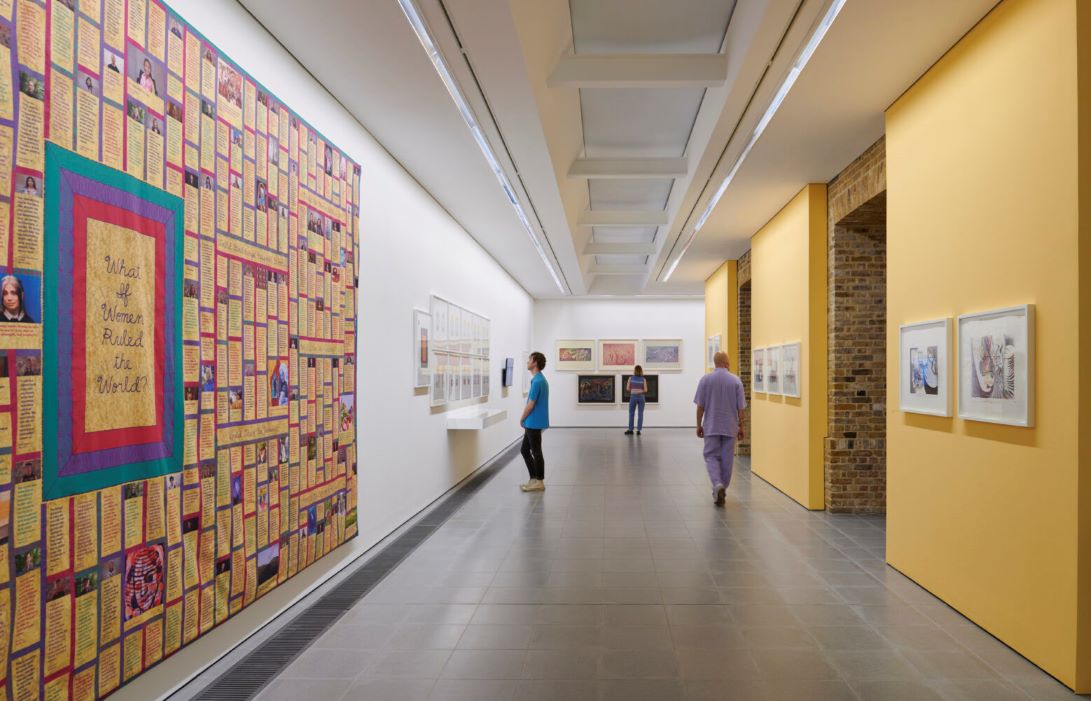
Judy Chicago: Revelations, 2024. Installation view, Serpentine North. © Judy Chicago/Artists Rights Society (ARS), New York. Photo: Jo Underhill. Courtesy Judy Chicago and Serpentine.
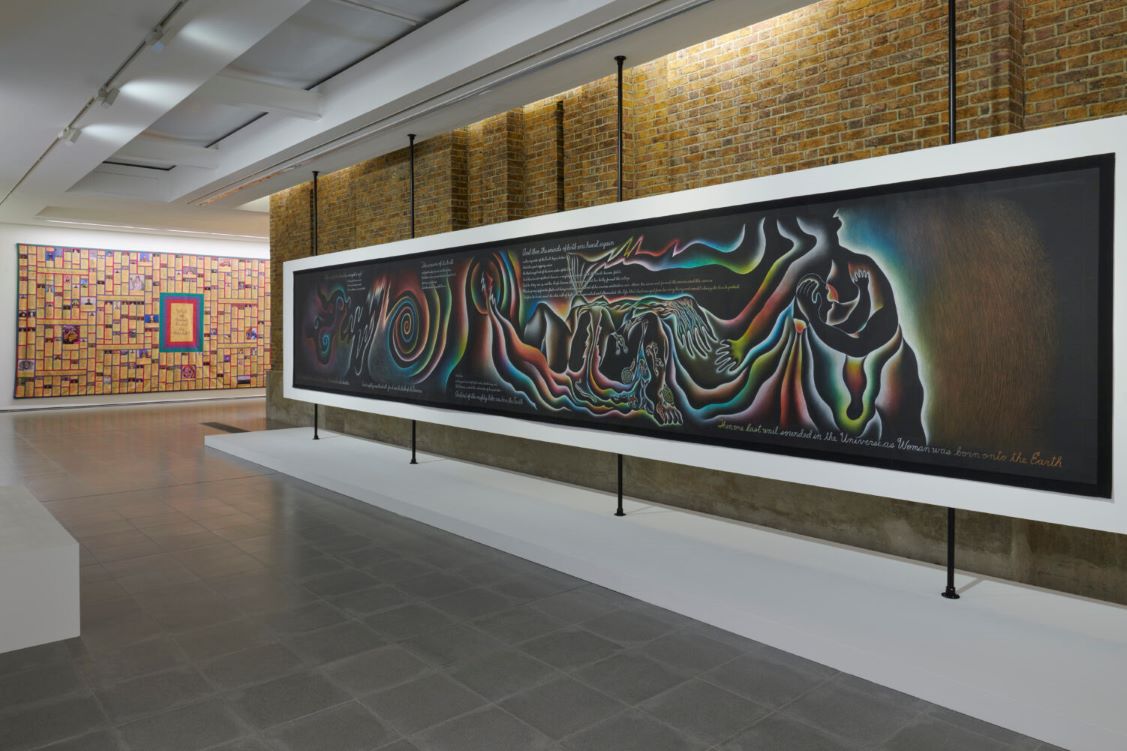
Judy Chicago: Revelations, 2024. Installation view, Serpentine North. © Judy Chicago/Artists Rights Society (ARS), New York. Photo: Jo Underhill. Courtesy Judy Chicago and Serpentine.
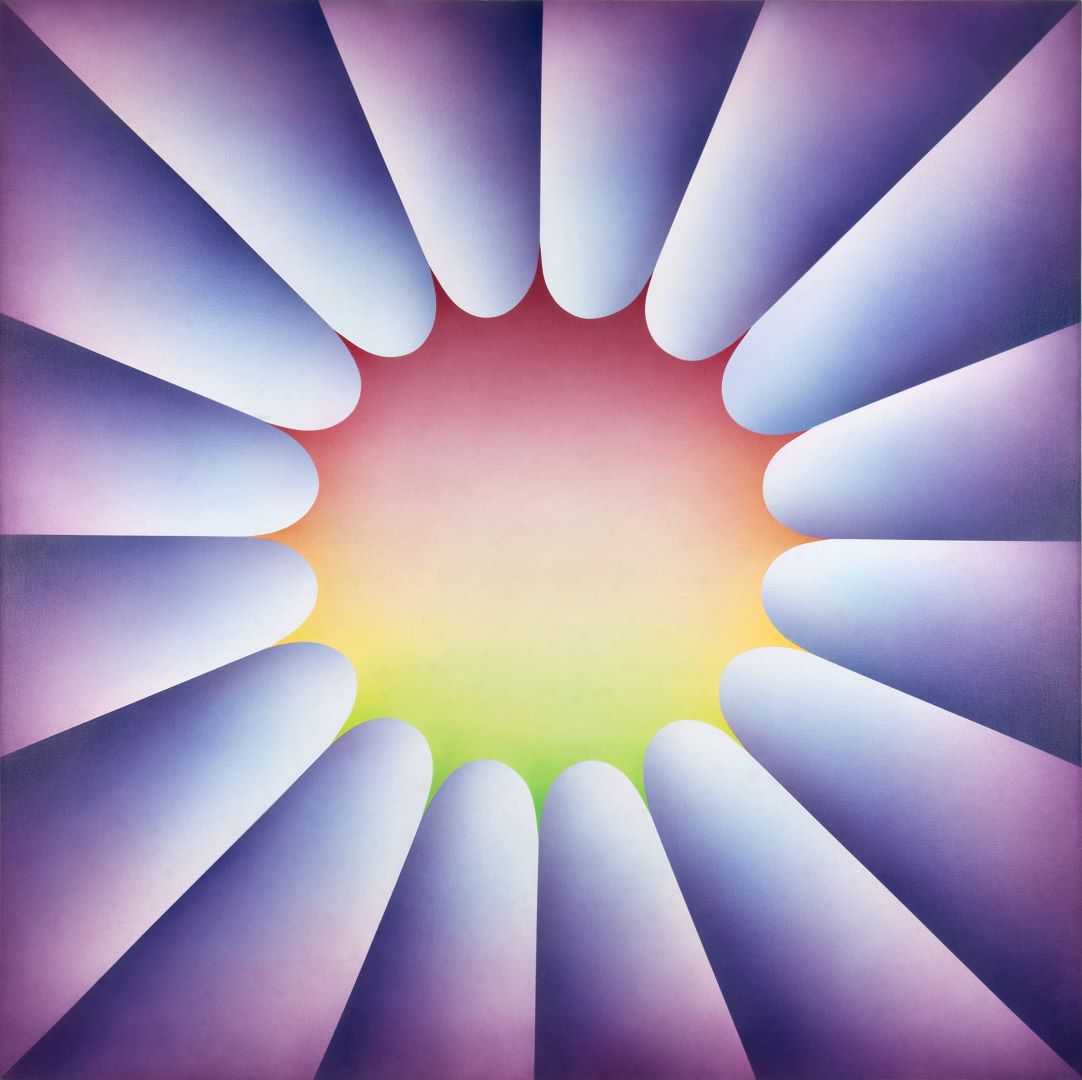
Judy Chicago, Through the Flower 2, 1973
Sprayed acrylic on canvas, 60 x 60 in
Collection Diane Gelon. © Judy Chicago/Artists Rights Society (ARS), New York.
Photo © Donald Woodman/Artists Rights Society (ARS), New York
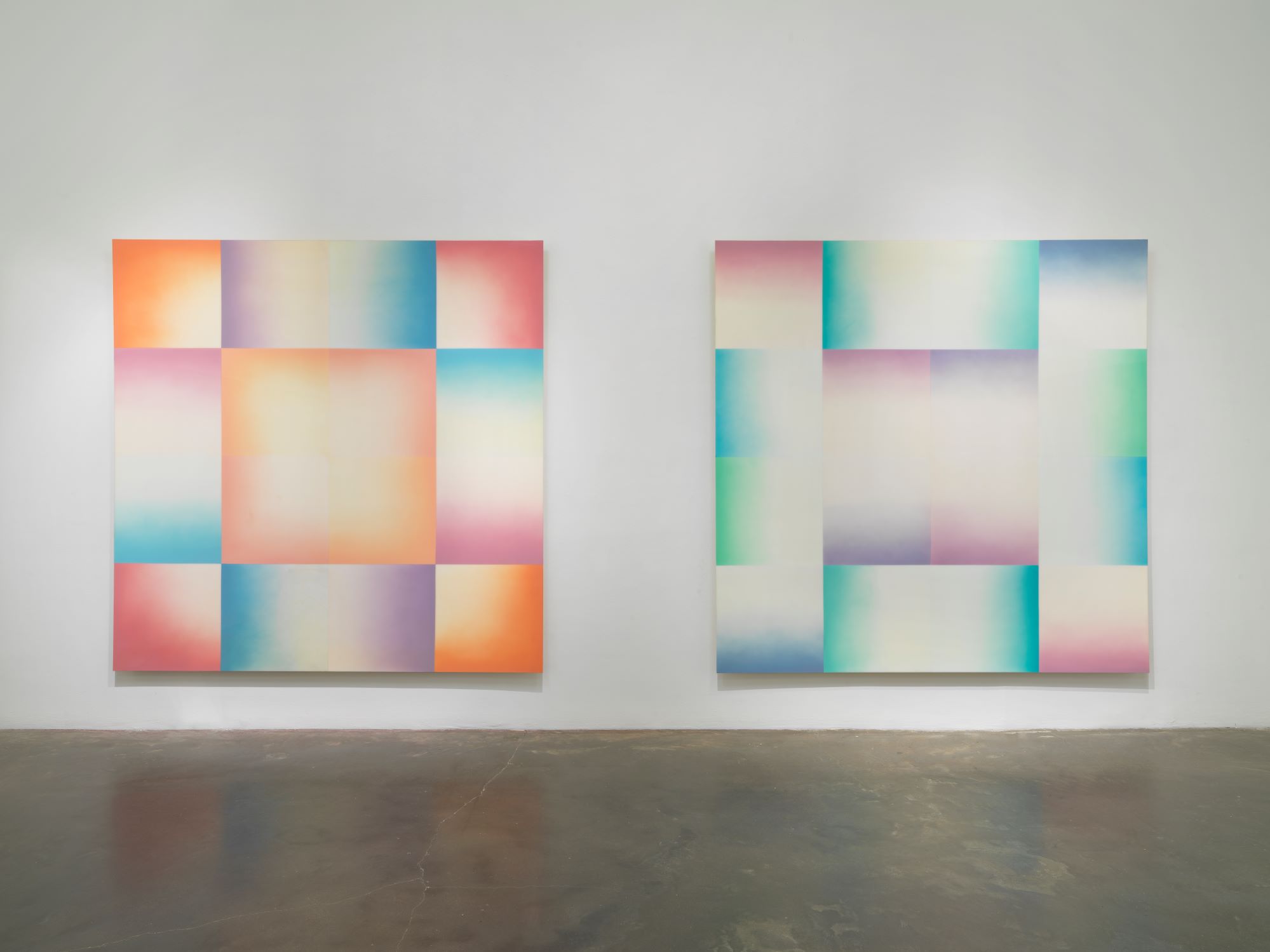
Judy Chicago, “Judy Chicago: Herstory,” 2023.Exhibition view: New Museum, New York. Courtesy New Museum
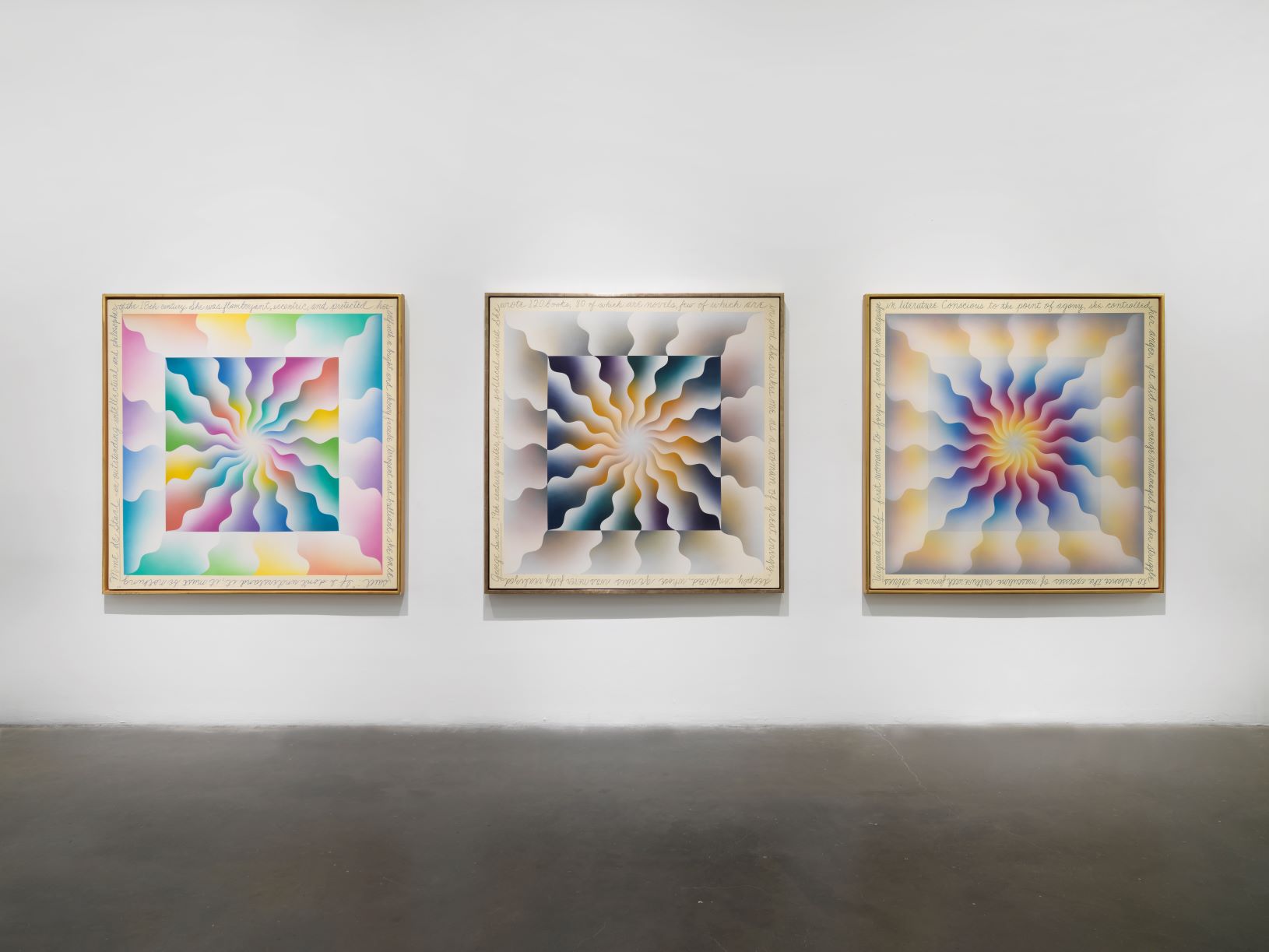
Judy Chicago, “Judy Chicago: Herstory,” 2023. Exhibition view: New Museum, New York. Courtesy New Museum
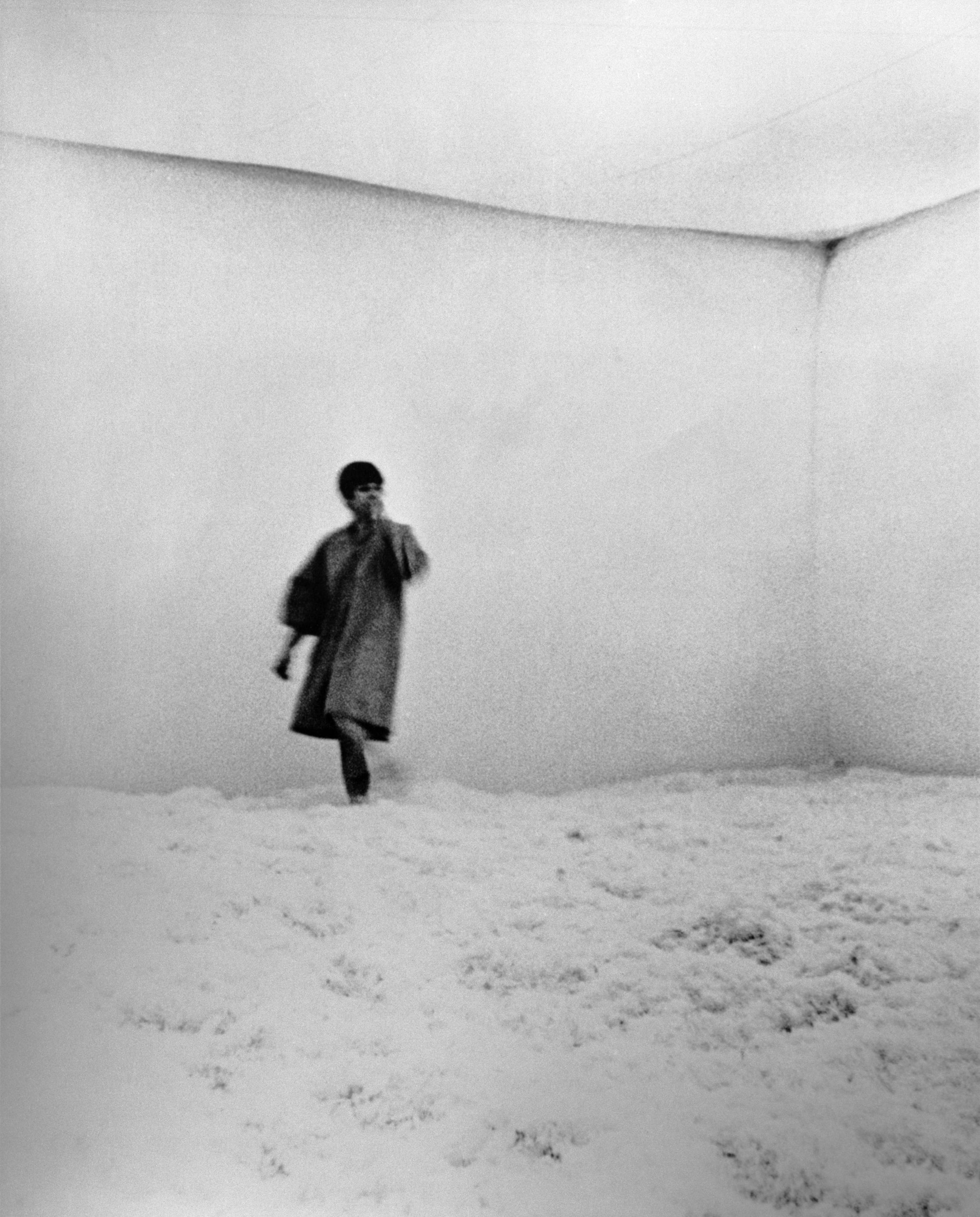
Judy Chicago, Feather Room, ca. 1965
Installed at Rolf Nelson Gallery, Los Angeles, CA. Collaboration with Lloyd Hamrol and Eric Orr. Feathers and inflated plastic © Judy Chicago/Artists Rights Society (ARS), New
“I don’t think people quite understand how much work it is for an artist to have three shows within one year.”
Judy Chicago, this summer you also have Revelations in London at Serpentine. Did you create this exhibition from the book Revelations that you wrote and drew by hand and which Hans Ulrich Obrist recently had published by Thames and Hudson?
Yes. Nobody was interested in it before Hans Ulrich. It’s very unusual for an exhibition to come from the catalogue. It’s usually the catalogue that comes from the exhibition. And the Serpentine show goes from analog to digital, the whole spectrum. When Hans Ulrich announced he wanted to publish the illuminated manuscript I spent five months updating the manuscript and working on the illuminations. I had to be in complete seclusion. Donald bought me a tablet so I could draw with a digital pen as we didn’t have time for me to spend hours and hours drawing on paper and we had to speed the process up.
Do you and Donald work together a lot?
Oh yes, we’ve been married almost 39 years and as Donald says, “We met, we ignited, we got married, and we started working on the Holocaust Project all at once.” (laughs) We are workaholics, as they say, but we enjoy working. People don’t talk about the struggle of being an artist and how difficult it is, and especially in this day and age where everything is defined by money. They don’t talk about the struggle of dealing with ideas and bringing something to fruition and into being. And women still make only 47 cents for every dollar that men make.
With all your success, are you now struggling less financially?
No, my recent successes haven’t translated yet into money all that much. It hasn’t yet. There’s still a lot of collections I’m not in. But money was never my goal. Human meaning is.
Nowadays do many more people understand and support your work?
Yes, particularly younger people. At the press preview at Serpentine there were 200 journalists, a lot more than what they usually get. A lot of them were young, and the interviews I did with some of the young writers were at a whole different level than anything I had ever experienced. They understood my work. That’s the same with the younger curators. They understand my work at a whole other level than ever before. Feminist theory, queer theory, masculinity studies, postcolonial studies – all of the new thinking has affected American curators and English curators and completely changed their thinking.
Do you lecture in universities?
Not anymore, but I used to. Somebody would come up to me In the supermarket and say, “I heard you lecture in Iowa when I was going to school there like a hundred years ago.” (laughs).
What are your next projects?
I don’t think people quite understand how much work it is for an artist to have three shows within one year. The New Museum, Serpentine and LUMA. Next year I will go back in my studio. I’m very superstitious and I never talk about what I’m doing until it’s done, but I had a project I was working on before my life exploded, and I just want to go back and work on that by myself and have a quiet life. I’m 85 this July. I’m going to pull back from public life. I want to spend whatever time is left in my studio.
I’m not sure they will let you do that.
Don’t I get to say no? (laughs)
Surely to create a show is part of your work as an artist?
Well, for a long time it wasn’t because nobody was that interested in my work! So I didn’t have to take any time out of my studio to work on a show. As Donald says, institutions wouldn’t show work like the Holocaust Project. We had to organize the show ourselves. There was no institution that came on and did that. The Birth Project was the same. Even The Dinner Party. They were travelled through an alternative distribution system that we created ourselves. Until it went to Brooklyn we had to deal with all of the institutional issues ourselves.
Is it very difficult for an artist to keep talking about a landmark like The Dinner Party?
Oh God, I get so bored. I feel so grateful now, because I used to go around saying, “Will I live long enough to see the body of my art come out from behind the shadow of The Dinner Party?” And because The Dinner Party doesn’t travel, the retrospective at the de Young, the retrospective at the New Museum, the retrospective at LUMA, none had The Dinner Party. When Vassilis Oikonomopoulos, the curator at LUMA, and I were walking around the show, he said, “Look at all this other work!” (laughs)
Now it is the turn of LUMA?
Yes and I admire what Maja Hoffmann has done at LUMA enormously. I’ve known about her for a long time, but now that we’re actually here, if I were doing the banners now, I would add another question: “What if women ran museums?”
But there are many women who run museums.
No, not at the level of Maja. Maja Is creating a new model for what an art institution is: one that is trulydiverse. If you look at the artists she has shown, they are an incredibly diverse group: women, men, artists of color, all different kinds of projects, artists in residence, exhibitions, programs. It’s a new vision.
Since you started there has been a positive evolution for women?
Oh absolutely. Not just women. Artists of color have also had a terrible time. That’s what I mean about feminist art. It promotes diversity. I believe that every voice counts.
And now the market is much more open to the world.
The market and art have nothing to do with each other. It’s fantastic. Yes, there’s been a change. That’s the good news. The bad news is the market has come in. And when the market comes in, meaning goes out.
Judy Chicago, thank you.
Portrait of Judy Chicago 2023 © Donald Woodman
ENJOY THIS INTERVIEW? SHARE IT WITH A FRIEND.


