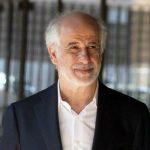
SINGING WITH THE PIANO. Ludovico Einaudi is an internationally celebrated pianist and composer. Born in Turin, Ludovico is the son of two exceptional people. His mother, the pianist and composer Renata Aldrovandi, was the daughter of the conductor and composer Wando Aldrovandi and had a great influence on his future life. His father Giulio Einaudi was a famous publisher and chairman of the Giulio Einaudi editore book publishing house.
You can listen to the podcast of this interview here.
Ludovico Einaudi, clearly the Einaudi family is a very important Italian family.
Yes, my grandfather Luigi was the first Italian President after the Second World War.
He was a brilliant economist and a very well-known professor. Was it heavy for you to have this family background?
At the beginning, yes, it probably was a bit heavy to have all this culture on my shoulders. I had to understand where to find my own road. Music was a nice escape in that situation, because at home my mother regularly played piano music from the classics like Chopin, Mozart and Bach. Music was like a regular rain drop that was happening at home, and this rain drop opened a path in my soul.
Were you an only child?
No, we were three brothers and I had two sisters. I was the youngest. The situation at home with my father was very interesting, because there were important evening meetings in the publishing house every Wednesday that finished at 8 o’clock, and so every Wednesday he brought lots of people home and there was a big dinner with all of the Italian writers like Italo Calvino, Natalia Ginzburg, Elsa Morante and Primo Levi. They were family friends, and other people like Susan Sontag came once in a while. Once I met Noam Chomsky.
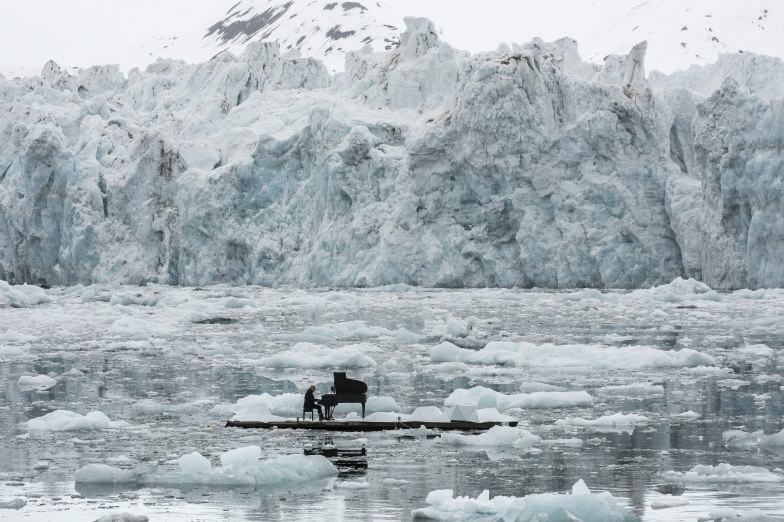
“I went to the North Sea in the Svalbard Islands to make a video and I played in front of a glacier.”
Ludovico Einaudi, were you attracted by the idea of being a publisher or a writer?
I had in mind that I could, maybe, but I had doubts about it. When I was 17 I worked in the archive of the publishing company in among all the art books, but I didn’t feel I was of the right mind to be a manager or someone that has to deal with that. I had more an artistic soul that I wanted to explore with music.
Did you learn to play the piano very young?
I started very early because my mother introduced me to the piano at home. Then I had a teacher, then I started to play with friends, and I also played guitar. It was the Beatles’ time, so I was attracted a lot by the music of the 60s and the 70. My older sisters were playing Jimi Hendrix and Bob Dylan and all this music and like everyone else I was very attracted by that. The music was part of a revolution in the way we looked, dressed and behaved. It was like a cultural renaissance for everybody that was born after the war.
How did your parents react to this?
My father was a very open-minded person, but they belonged to the generation that suffered the war. Their friends had situations in different parts of the world with the Second World War and a lot of their conversation was about that, while my generation had the desire to explore other things. We were dreaming about a new world that did not yet exist, a world with different colours. The music that was composed before or during the war generation was a music that was more black and white, while the music that came after, the music of let’s say the Beatles that are representing that era, was a music full of colours.
And you decided to study music?
I started the Conservatory in Torino, and then I went to Milan, and then after a while I met Luciano Berio – one of the masters of the avant-garde – and I started working with him as an assistant. He taught me orchestration, and he also taught me that you can make music transcribing other things from other media, other ideas coming from different parts of the world. So you can transcribe a book into music, the flight of the birds into music, the sound of the forest and the shape of a cloud or a colour of the sky into music. When you have connection between different fields there’s always an interesting result.
Were you immediately composing or just playing piano and guitar?
I was playing piano and guitar, but always with a creative idea. I wasn’t interested in becoming a performer of Mozart or Beethoven. I was studying classical music, but it was not my idea to become like Maurizio Pollini, I wanted to make something creative. I was always playing with improvisation, and improvising ideas more freely with music. I just had to understand how to do it, how to find my connection with my soul. At the beginning I tried exploring the world of contemporary music and the avant-garde, but after a while felt that it was not my cup of tea.
Which was your cup of tea?
My cup of tea was music that was connected with all the music that I grew up with. It was music that was able to contain the emotions and also the forms that were coming from popular music and classical music. The avant-garde was a cage that was too narrow for my vision, for my soul. I wanted to be freer, and more open to involve different worlds in my music.
Is music a language that you have to learn in order to be able to express yourself?
There are people that study music and other people that don’t study and can create music. The Beatles started to create music without studying at the Conservatory and they made great songs. You don’t start making music without having listened to other music. You have inherited something, and it can be a heritage of classical music or a heritage of rock and roll. The Beatles were connected with the rock and roll coming with Elvis Presley, the blues and other folk traditions. My heritage came partially from my mother and from the classical Bach, Chopin and Schumann, and the rest of the music that I was listening to was a lot of folk and rock music. I also grew up listening to jazz. Then I created my preferences. I created my background of music by listening to some different worlds of music and the different music that I listened to created my taste. Probably something similar happens when you read different books. We mentioned Calvino and you may like the way Calvino meticulously describes certain things, and if you like it and you want to write, maybe you take something of that and try to make it your own. Of course, it can happen that you like a lot of music or a lot of books but you are not able to write a book or a piece of music.
“There was a strange sensation, like they were composed by someone from my family, but not me.”
Ludovico Einaudi, you quickly became well-known, and in other countries, including the UK?
The UK was one of the first countries that started to recognise, appreciate and play my work on the radio. Even before Italy and then Germany. With the film Intouchables, my connection with an audience also became big in France. Intouchables was quite a big success around the world, so this opened a lot of doors.
And you worked in a film called J.Edgar with Clint Eastwood?
They used some of my music for the trailer of the film, but I didn’t have a specific contact with him. More recently I did the film score for The Father with Anthony Hopkins, and Nomadland, a film that won a few Oscars in 2021.
Do you like this kind of work?
I like the collaboration, but then after a while I feel that I’m losing a bit of my freedom, so I never wanted to do it extensively and regularly. I like to do it once in a while. I’m lucky to have the possibility to give a lot of concerts with my music. I like to record and compose my music, and to take my music around the world.
You did many albums.
17 or 18 albums, and I do 100 concerts every year all over the world. I was recently in Asia, and am soon starting a tour in Europe between Budapest, Rome, Germany, London, France. Sometimes I do too much and need to rebalance stay home and be quiet, in Torino and also in the countryside. I love to stay close to Torino in Dogliani, in the Langhe region where my cousins make the family wine. This is where I feel I belong. Dogliani is where I feel at home.
You composed one of your albums Underwater in the mountains during the pandemic?
I was in the mountains because I went to Switzerland for a week with my family just before COVID. The lockdown came and I was lucky to be in Engadin in a town called Samedan, where I rented a house. I talked to the lady owner of the house who said we could stay there if we liked, and so we stayed there for four months. Luckily I had a piano there and I was free to walk everywhere. It was a moment where finally I didn’t have any commitments. Nobody had commitments. I didn’t know what my future was going to be. Nobody knew.
You thought you might die?
I was not worried about dying, I didn’t know if I was going to release the album. I didn’t know if I was going to play another concert. In a way I felt completely free to write whatever I wanted, because I didn’t know if anybody was ever going to listen to what I was doing again. Every day I said, OK, I don’t want to lose this time, and I’m going to write an idea every day. I don’t know if it’s going to be a good idea or a bad idea, I’m going to write it anyway. It was like a journal, and after a couple of months I started to listen and to look at this journal and I found that every four or five days there was a good idea.
How did these ideas come?
I sat at the piano, I opened my recorder on the iPhone, and I recorded what came from my hands, from my mind, from that moment. Sometimes, if I didn’t record them, these sketches were completely forgotten. They were ideas that came, and sometimes it was interesting because I was listening to them like listening to something that was not done by me. There was a strange sensation, like they were composed by someone from my family, but not me.
And this was how you composed in the snowy mountains the very successful album called Underwater?
Yes, because the situation was like being underwater, in a different dimension. When you are swimming underwater, you feel you are not in your usual dimension with the air, and this is how I felt. It was like being on a different plane. Also it had been quite a long time since I recorded a solo piano album, and I had in mind to do that but I had too much expectation on me to do it, because after 20 years of not doing one it had to be spectacular. Then I realised that during those days, putting down an idea every day, the piano album was there, and it was beautiful already. I didn’t have to think too much about it.
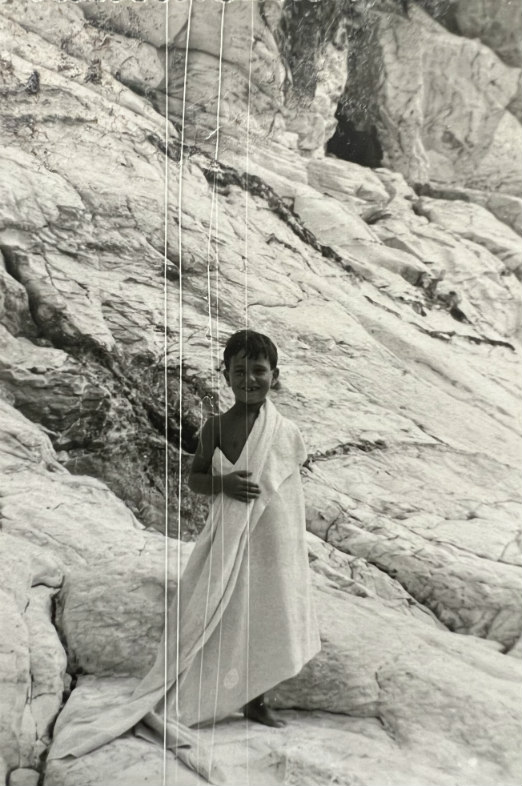
Ludovico Einaudi as a child
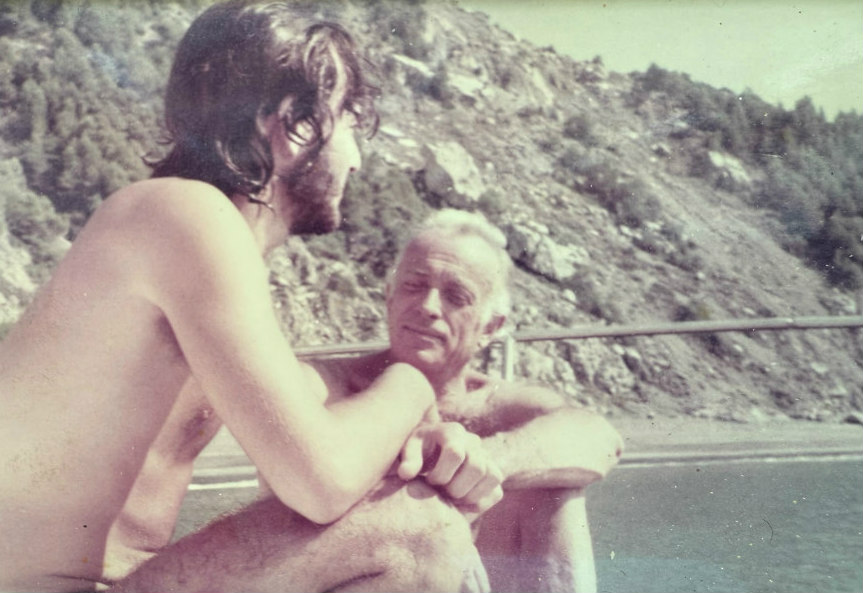
Ludovico Einaudi with his father Giulio Einaudi
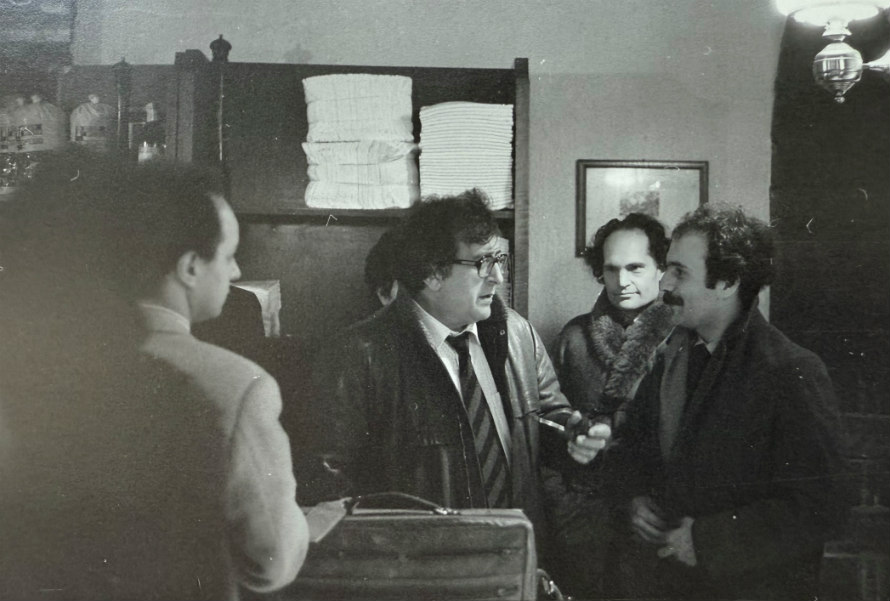
Luciano Berio was a composer noted for his experimental work, and for his pioneering work in electronic music.
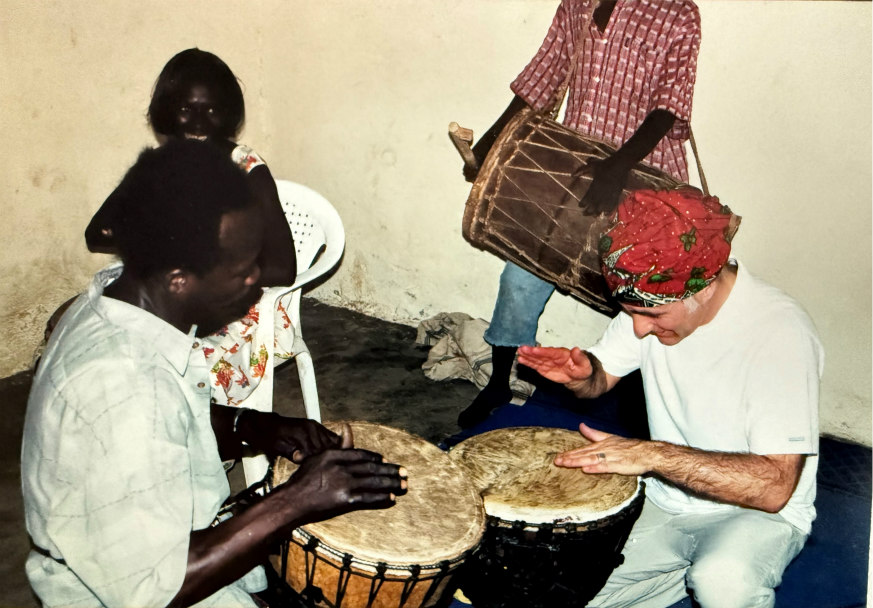
Ludovico Einaudi went to Mali in 2000 and did a project called Diario Mali with African musicians.
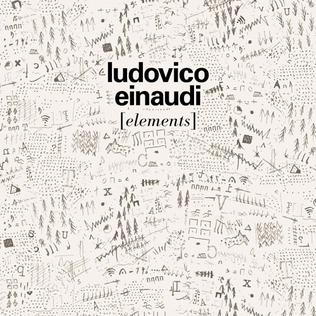
Elements is a studio album by Ludovico Einaudi released on 16 October 2015.
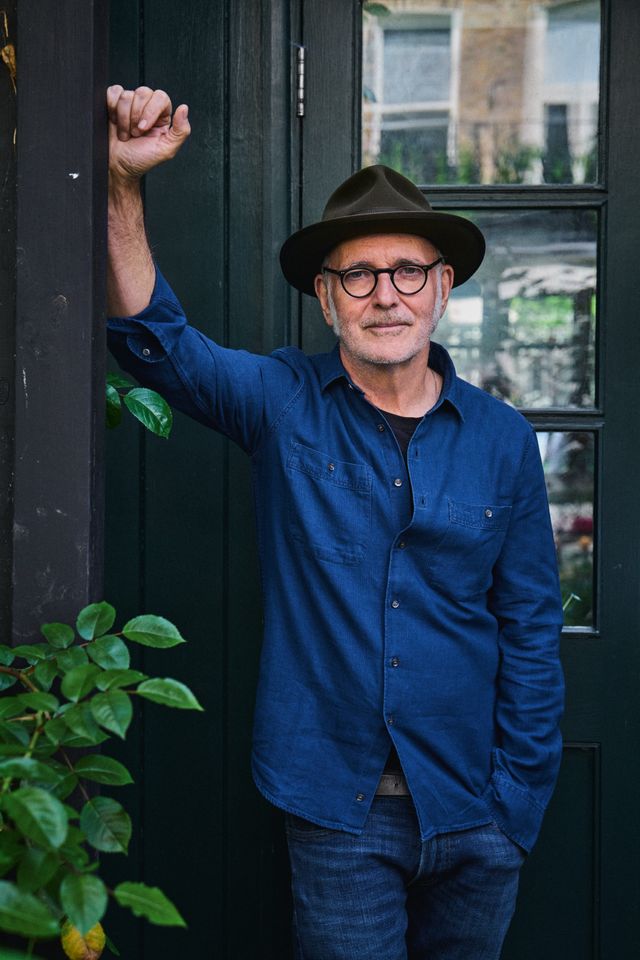
Ludovico Einaudi by Mary McCartney
“The chance to dive into different cultures always enriches myself and my music.”
Ludovico Einaudi, do you have a schedule?
Yes, but not a strict schedule. I have a stricter schedule when I have to prepare a tour. Then I play every day for maybe three hours, but at the time of Covid I was playing maybe one or two hours every day and enjoying very much having long walks through the mountains.
Over the years have you ever worried that no inspiration will come and you won’t be able to compose anymore?
This happens every time you do an album. When you start to write another one you say maybe this time I won’t be able to do something as good as I did it before. But I learned something from this journal idea, and now I record everything I do. All the sketches I do, all the ideas that come without purpose. My phone is full of sketches, so I just need to open it and go there and find an idea that I can develop. I think I have 10 years of sketches that I haven’t used.
How was your music influenced by the time you spent in Mali in Africa?
I went to Mali in 2000 and did a project called Diario Mali with African musicians. My experiences with different music from different parts of the world has been the chance for me to learn something new, to explore another musical culture, and to learn, to continue to study new things. Those ideas come back and you enrich yourself from what you study. I enjoyed it, and I did something similar also with Taranta, which is the tradition of folk music from the south of Italy. I also did something with Armenian music when I was doing the Zhivago project, working with some Russian musicians. The chance to dive into different cultures always enriches myself and my music.
How would you describe your music?
The new label for my music and for the generation of new composers is neoclassical, but labels are always a bit narrow. It’s music that derives influences from many sources, as I said, and there are different layers that connect with different musical backgrounds. You can hear some layers inside that come from Bach, and other layers come from the Beatles, and other layers from folk music, and so on.
Do you like the creating a feeling of tranquility?
There is a calm, but there is also excitement in the way I create big crescendos. In my concerts there are moments of suspension and tranquility, but there are moments of big crescendo that are connected with the tradition of baroque music, where you have levels of crescendo, like dynamic terraces. So there is a moment that is there, and then there is a second terrace where you pass from the piano to the mezzo-forte, and then from the mezzo-forte to the forte, and to the fortissimo. It’s like changing gears and you can compare it with that. You can change the gears of the car forcing the engine, but there’s also a different way of driving where you listen to the engine and you harmonise, and you change gear at the exact moment when the engine is not struggling and so the crescendo is harmonic and very powerful.
Who are the composers and musicians you consider your peers?
There is a new generation. In Germany there’s a composer called Max Richter, and there’s an Icelandic composer called Ólafur Arnalds. There is a pianist from Poland called Hania Rani and many others. There is a group of people, but no movement as such. We belong more or less to a generation that is connected with the minimalist movement that was explored originally by composers like Philip Glass and Steve Reich, but then everyone evolved. If I had to draw a family tree, Philip Glass would be there as the brother of my father. I always try to evolve and change, because if you stay with what was successful you become bored about yourself. The success of what you do is when you find young new blood in your activity.
You never thought of singing?
No, because I don’t have a good voice for singing. I sing with the piano. I feel my voice is represented by the piano and the way I play the piano is melodic.
Your father’s publishing company had a political element. Are you involved in politics?
Not particularly. I have my political ideas but I don’t mix too much my music with politics, I prefer to leave it open and free. The expression of a music creates a world that transmits some elements of the vision of your ideal world. The only thing I’ve done in a political sense was in 2016 when I did a project with Greenpeace to support the protection of the Arctic Sea. I went to the North Sea in the Svalbard Islands to make a video and I played in front of a glacier.
What do you aim to give to the people who listen to your music?
I would say one word that may sound obvious, but the main feeling is love. The concert is a moment where I try to create, and I hope I do create, a connection of love between me and everybody in the hall. It may sound stupid, but it’s also a peaceful moment. The energy of love is something that is needed, especially now when the world has turned so badly through these incredible situations that you wouldn’t expect anymore and where people are suffering everywhere.
Do you do concerts for suffering people?
I made an opera a few years ago based on a story about migrations. The libretto was written by the Irish writer Colm Toibin, and it was a beautiful story. That was a sort of political thing.
Music is universal, but is there an Italian influence in your music in the sense that you are Italian or is your music something global?
Probably there is something that I even may not know, but something melodic. The incredible thing is that wherever I go, if I go to Japan, if I go Kazakhstan, if I go to Mexico or to South America, there is an audience that listens to my music and understands it as if I was playing in Italy. I am lucky that I don’t need a translator, and also through my work have the chance to see the world.
Is your music for young people or old people?
It’s for everybody, and I’m happy to see that there’s a younger generation that comes to my concerts. People are always surprised to see so many young people at my concerts. There’s a strong young audience and I love that I still can have the possibility, the chance to be in touch with a younger generation. This is great for me. People love music, because it’s so light and it’s like a magic that creates all sorts of emotions.
Are some of your tracks iconic?
There have been some specific tracks from certain albums that have become classics. Maybe number one is a piece called Experience, and this has been used in films but also on all the new platforms like Instagram and TikTok that people use for their videos. Experience was composed in 2013, 12 years ago. Another one people expect me to play is Nuvole Bianche, a piano piece that was composed in 2004. If I don’t play them, they go back home unsatisfied. I try to refresh and to create other iconic pieces because it’s a beautiful feeling when you create something that is also for me, myself as an audience. I like to listen to my music, and I like to be the first audience, the first one to enjoy and to have the feeling. When I achieve that, when I find the right emotion, I say, okay, this is going to be for me an iconic piece, although then maybe it doesn’t become one.
You are a star, but – maybe because you belong to such a prominent and successful family – you seem to be simple.
I am a simple person. I enjoy the simple things of life and I feel I haven’t changed so much. I have the same doubts about myself that I had 40 years ago when I was composing the first pieces, and this keeps me young in a way. I don’t think too much that I have millions of people streaming. I care more about the fact that I have to write another piece of music that has to be better than the last one.
Soon you will play six concerts in a row at the Albert Hall in London, which is unique?
I’m very happy about that because I feel very connected to the British musical culture. I grew up with that music and so it’s an honour for me to be involved and in touch with London, with the English and with the British culture, and with all the rest of the people that for sure will come from abroad also to the Royal Albert Hall.
Are you nervous when going on stage?
There’s always a bit of thrill before. The first night I played the Royal Albert Hall, many years ago, I was quite nervous, but then I got more used to it. You never get completely used to that moment. Anyway, it will be great to be there for six nights. I much look forward to it.
Thank you.
All images courtesy of Ludovico Einaudi. Portraits of Ludovico Einaudi courtesy of Mary McCartney,
ENJOY THIS INTERVIEW? SHARE IT WITH A FRIEND