

A RESTAURATEUR ON THE FLOOR. Jeremy King is a well-known London restaurateur. He created some of London’s most iconic restaurants with his former business partner Chris Corbin, including The Ivy, Le Caprice and The Wolseley. In 2024 Jeremy King reincarnated Le Caprice as Arlington to great acclaim, and his latest venture is the all-day restaurant The Park.
You can listen to the podcast of this interview here.
Jeremy King, is The Park a brasserie?
Yes, although really it is a Grand Café with a very strong American influence, a New World Grand Cafe. In European cities, and certainly what I’ve done in the past with Grand Café brasseries, they tend to be early 20th or late 19th century. When I found this new building called Park Modern on the corner of Queensway and Bayswater Road I thought a more contemporary Grand Café would look well. It’s in an area which is being regenerated, in touching distance of Central London and midway between Notting Hill, Holland Park and Marble Arch, an area which hasn’t been particularly well served by large restaurants. Whilst small restaurants can be incredibly attractive, there’s also something about the communion of the community in a large restaurant, being a catalyst for lots of different things to happen. If you look at the great advances in literature, music, philosophy, art, politics, revolution, they all tend to start in a restaurant. Modern restaurants sadly, nowadays, are so often quite basic – poured concrete floors, painted walls, exposed ceilings, terrible acoustics – whereas I’m attempting to create a modern classic.
You started as a restaurateur very young?
Yes. The two best London restaurants of the 70s were Joe Allen and Langan’s Brasserie, and Peter Langan used to say he wanted a place where the Duchess can sit down at the table next to the taxi driver. He was a genuine egalitarian, which always appealed to me as well. He approached me when I was 25 years old at Joe Allen and said, “They tell me that you should open my next restaurant.” The next restaurant never happened, but we had a lot of fun touring London, looking at potential acquisitions. In the meantime I got to know Chris Corbin very well, and because the Peter Langan opportunity was failing we resolved to open together the old Caprice site, which at the time, funnily enough, was called Arlington, and created Le Caprice. I was 27 years old. It was the early days of us feeling that a restaurant should be that catalyst and shouldn’t dictate how people use it, but that we should facilitate people using it in a way that they hadn’t before. At that time, London was plagued by what was left of a very strong class system. There were upper-class, middle-class and working-class restaurants, and you didn’t cross the boundaries. The fun that we had was trying to bring top-class restaurant ideas to a middle of the road brasserie type of place, and hence Caprice started. From there we went on to open The Ivy, which took those ideas forward – although The Ivy had been there at that time some 70 years.
“I love clarity in a restaurant, which I feel with The Park that we have.”
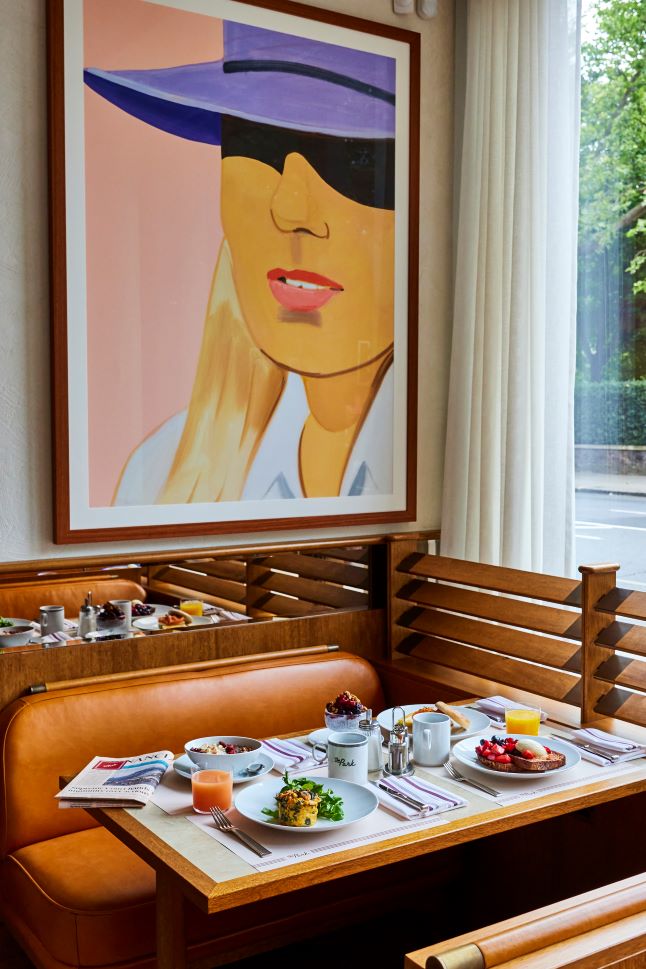
The latest restaurant of Jeremy King, The Park, opened in June 2024
Jeremy King, you were a pioneer also because you had no dress code in your restaurants?
When we first opened Le Caprice there would be photographs in the newspaper of interesting people leaving, and I’d get letters from around the country saying, “I can’t believe you allow somebody to come in with an open-necked shirt,” and so on. I abhor dress code because in the 45 years or so I’ve been a restaurateur, probably at least 90% of the serious problems I’ve had with customers have been caused by what I would call “oiks wearing a suit and a tie”, so I’m not sure where dress code gets you. A behaviour code is more relevant to me.
Has coping with the multiple food allergies of today’s customers become difficult?
I must admit, I was very short with somebody recently who was going on and on about their allergies, and to the point where they’d forgotten that they had certain allergies there were so many. It was somebody I knew, who developed these outages in the last few years. They certainly didn’t happen before. I was outspoken to the point where I said, “This is really getting silly. You’ve changed your orders. You’re forgetting allergies you’ve got.” They said, “Don’t you have any allergies?” And I said, “Yes. You!” Restaurants have to take control. I like to be a pioneer. My motto is Prince Tancredi in The Leopard saying if things are to remain the same, everything has to change. You don’t change the principles or the integrity or any of those things that you do, but we have to move forward.
Would you say that restaurant food has developed for the better from the days when there were just a few named chefs?
We believed that we could produce the sort of food that people would really enjoy on a basis that it wasn’t reliant on an ego or a particular chef, that we would do it as a collaboration, a team effort. When Russell Norman, who was quite an innovator in restaurants when he did Polpo, died at the end of last year, I was sent a video of him talking about the epiphany he had in 1991 when he went to Caprice and had a Caesar Salad. He realised that simple food can still be terrific food. It doesn’t have to be embellished and fussed with. No chef needs tweezers to create good food. It was a very sad moment for me because he talked about the fact that he’d that day in ‘91 happened to buy Alistair Little’s book called Keep It Simple. By coincidence, I’d just bought an old copy of the very same book for my new chef at Arlington, and so now, on the Arlington menu there is the Caesar Salad, but it’s called Russell’s Caesar Salad.
Were the 1980s a time of big change in London restaurants?
When we opened Caprice in 1981 it had very bad acceptance in London. We survived because of the support we had more from Manhattan than we did from London itself. American clients understood it. They’d seen Odeon opening in New York 2 or 3 months before by the McNally brothers and understood. We were also very strongly supported by the theatre and artists. Often they didn’t have that much money, but they had great aspirations and discernment.
Both the artist Lucian Freud and the publisher Lord Weidenfeld, Austrian German by origin, used to come often?
They did, and Lord Weidenfeld used to give us feedback at The Wolseley. Not that long before he died in 2016 I told him we were opening a Viennese restaurant, and George Weidenfeld became my food adviser at Fischer’s in Marylebone, which he enjoyed immensely. He would get caught up in the nature of the sausages and so on, because he had an encyclopaedic knowledge and extraordinary memory. He used to help me on lots of things. When I built the Beaumont Hotel, which was very much based on the thought that it may have opened just before the war and what was happening then and all the Americans who really saved England like Ed Murrow, Gil Winant, Harriman. He knew them all, and could remember them better than I did through the books.
Is the food in your restaurants expensive?
I work on the basis that the food should never be deemed expensive. We should give people the opportunity to spend, but we don’t make it mandatory because a lot of the most interesting people in a restaurant are the least affluent. If you go into a very expensive restaurant they’re often very boring, because the real life comes from the creative people who often don’t have that much money. The theatre loved Caprice because we stayed open late and they could come in and have Eggs Benedict and a beer, and it didn’t have to cost much. The artists felt exactly the same, we were close to the Royal Academy at the time. That’s been the bedrock for the restaurants going forward.
Even if they don’t have much money?
When restaurateurs look at people coming through the door as a source of income they are giving themselves a finite life. If you look at people coming through the door instead as an opportunity to give somebody a good time and you succeed, then you make money. The motivation mustn’t be money. Too many restaurants these days are under the auspices of restaurant owners who do it from the boardroom. Restaurateurs do it from the floor, and that shows.
“I work on the basis that the food should never be deemed expensive.”
Jeremy King, has the design of The Park been influenced by America?
With me it has to be love at first sight with a restaurant. When I first saw the building I thought, this is the opportunity of a late 20th century, early 21st century Grand Café and that works. I was thinking about what am I going to serve foodwise, and it seemed to me it had to be called The Park. The Park feels American, and there was an American feel to what I wanted to do with the interior. I asked myself what my restaurateur chef friends in New York would do if they had this building on Central Park and this took me back to the emergence of an American cuisine which a lot of people would call Cal Ital – Californian Italian cuisine, which came around in the 70s and 80s with Alice Waters, Jeremiah Tower, Jonathan Waxman and Larry Forgione. People like that suddenly just demanding and getting fine ingredients and doing very simple European influenced food with a strong American tradition behind it. The wine list is Italian or North American, primarily Californian, and so it’s a little bit a specialist restaurant but I like to think that anybody will find something.
Is it an open space?
Yes, but with privacy. Restaurateurs should open restaurants they want to go to, and a corner table or a booth in a restaurant are my favourites. A lot of restaurants don’t like that because in the space where you could put four tables of two sitting opposite, if you do it my way you only get three tables, because you got two corners and then one opposite so you reduce your capacity by 25% but everybody has a better time. Fischer’s had 14 corners or booths, The Park has 28. It is quite unusual.
The Park will open from 7am to 11pm. What will you serve for breakfast?
Pancakes and French toast, and all the healthy dishes that one would want, and slightly more American things like One Eyed Pete’s, which is fried bread with the centre taken out and an egg fried in the hole in the middle of the bread. Simple things like that.
Do I understand that you will also reopen Simpson’s, the very old restaurant on the Strand next to the Savoy Hotel that is famous for its roast beef?
Yes, I always was fascinated by Simpson’s, even back in 2000 I was negotiating with Savoy, and again ten years ago, and then the opportunity came up once more just two years ago. I love it. It goes back in many ways to what we did before, the big old restaurants like Ivy and Langan’s – which was the Coq d’Or before. Simpson’s is the last grand dame restaurant to not be upgraded and is massive. There’s two large restaurants, a very large event space, two bars. It has all that tradition, and just as with Arlington I spent a lot of time, effort and money in making it look as though nothing had changed, the same will happen with Simpson’s. I expect people to come in and say, “Oh, good. It’s much the same as it was before.” The trolleys will be there but it will be done with the Prince Tancredi mentality that everything has to change but change is normal. I’m immensely excited.
Do you enjoy the juxtaposition of these three restaurants?
Yes. There was the refurbishment of a 1980s restaurant: Arlington. The Park is a completely brand-new restaurant, although it has these P. Horst photographs of Babe Paley and Lee Radziwill from the 50s so there’s a suggestion it may have been here for quite a long time. Simpson’s, by the time we open it in 2025 will be three years short of its 200th anniversary, an extraordinary icon.
Do you have plans to add a fourth?
I still nurture a desire to go back to Chelsea and that’s always a possibility. I like going into unusual areas as well. A lot of people think of the Strand as being over and finished but it’s really changed a lot, and I was told this area here in Bayswater would never work, that nobody would want to come, that it was a terrible location. But if you do something well, people will come to it. Look at what Ruthie Rogers did with the River Café, people are only too happy to go out there, and I like not being mainstream.
Is well-presented simple food in pleasant surroundings what primarily draws people to restaurants?
People gravitate to the familiar, and I noticed how much people like to go back to the same restaurant if they can. There’s a certain reassurance and there’s the old saying: “The best restaurant is the restaurant where you’re known best.” In 1981, when we opened Caprice, they did a survey in the UK to ask how often did people eat out in a white tablecloth restaurant of an evening, and the figures came back that it was less than once a year. A high proportion of people never went to a restaurant. I celebrate the fact that they do now but a lot of restaurants are putting on what people will buy, and there’s any number of things which would sell well but you immediately diminish the restaurant, because nobody knows where they stand. The most important word is authority. People should believe what you’re doing, trust what you’re doing, feel that you know what you’re talking about, what you’re offering. I love clarity in a restaurant, which I feel with The Park that we have.
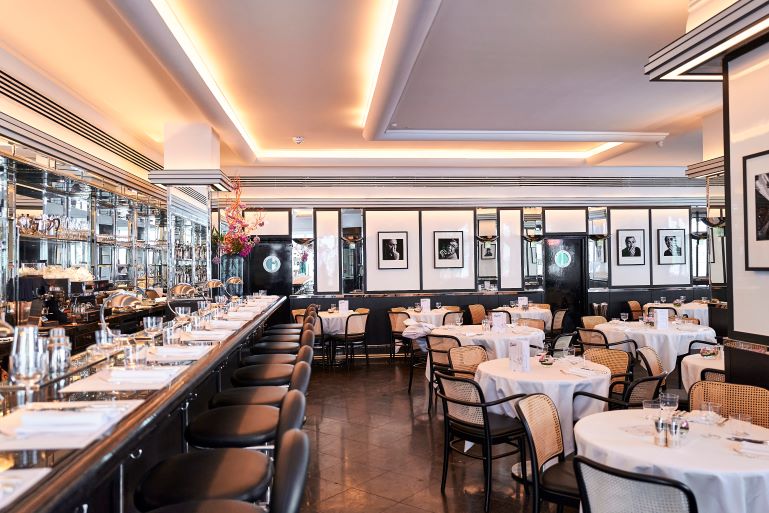
Jeremy King: Arlington is located on the former site of Le Caprice
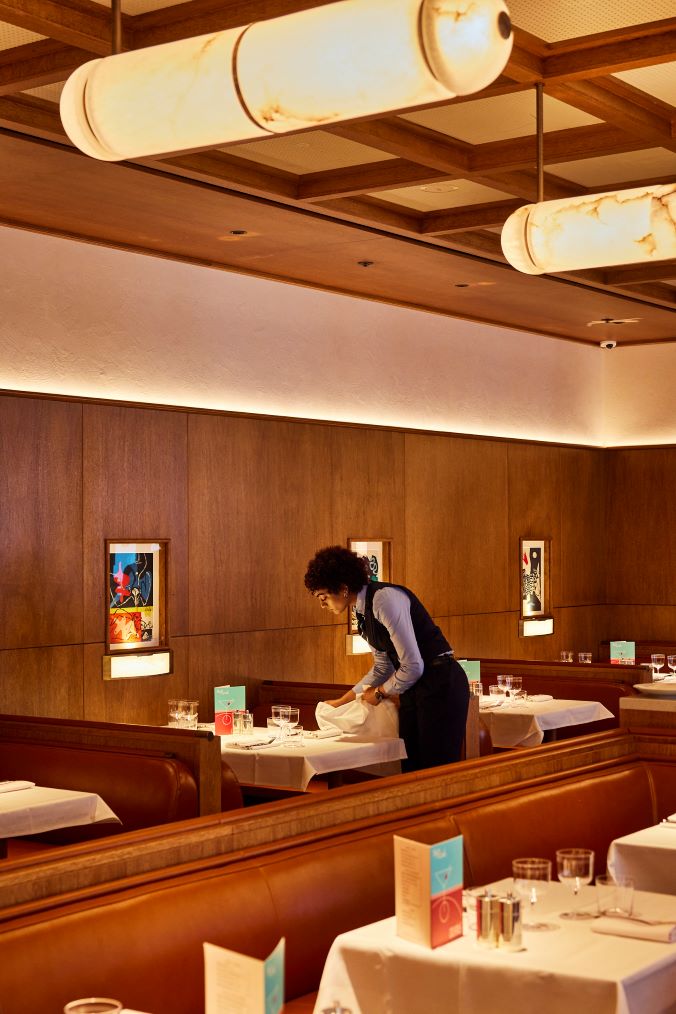
Jeremy King: The Park

Jeremy King: The Park
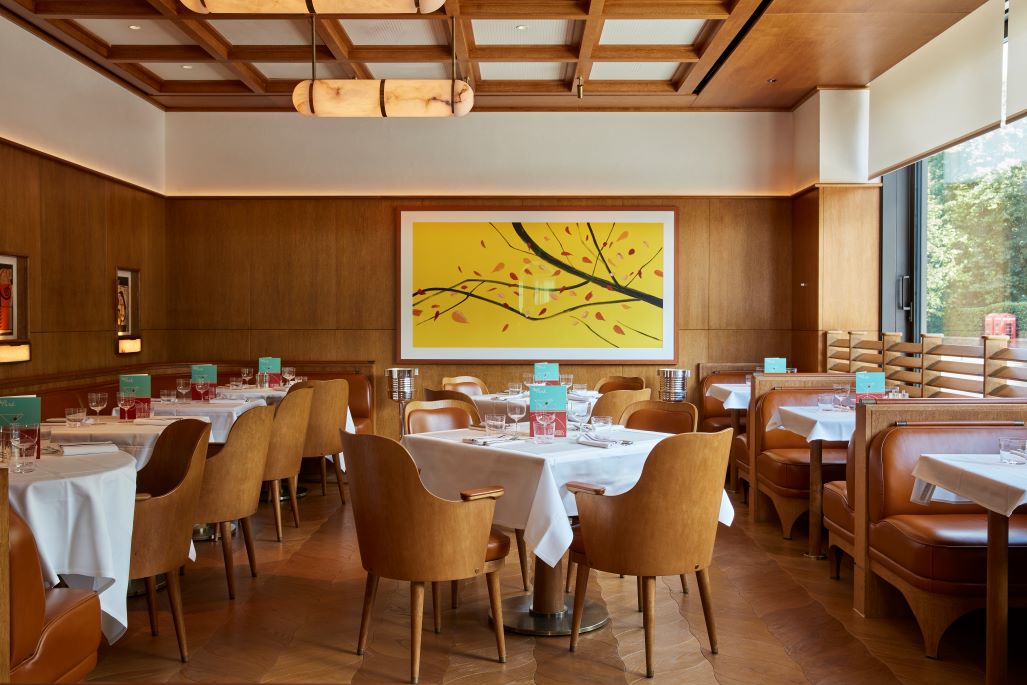
Jeremy King: The Park

Jeremy King: The Park

Jeremy King: The Park
“I realised it is impossible for me to see every customer when they come in, but I can see every member of staff every day, and they see every customer.”
Jeremy King, London has many villages within it, do people tend to stick to their local restaurants?
We go out for different reasons. Even the short time The Park has been open, the number of people who are saying, “Oh, it’s so needed, something in the area.” And I say, “There are other restaurants,” and they say, “Yes, but not a large restaurant. You save us the need to go into the West End because there is that sense of occasion and we might have visitors coming in from abroad.” That’s also why they chose to go to The Wolseley, because it was unusual and very impressive. If I get Simpson’s right, it’ll become a destination, but more for the experience as opposed to specifically the food.
What is your own job in your restaurants?
I sort of work. I am not essential. I interact quite a lot. I was joking recently that the problem for me and other older restaurateurs is that we’ve been deprived of one of our great uses by the ban on smoking in restaurants, because around Europe there was often an older guy, sometimes a woman, going around the tables quite slowly, shuffling around and changing the ashtrays. It gave them an opportunity to interact with people, being at the table without actually getting involved in the service. People often ask me when they find me in the restaurant on a Saturday night, “Why are you here?” and I say, ”Because the easiest way to do this is the hard way and – to put in the time.” It goes back to what I was saying about the difference between a restaurateur and a restaurant owner.
Does this also affect the happiness of the staff?
If the staff see that I care and that I’m with them, and that if things are going wrong that I take the blame with them as opposed to them just shouldering all the difficulties, I get a happier staff. Staff generally prefer to work for restaurateurs than restaurant owners, because decisions get made in a different way. When things are hard, it’s very easy to make brutal decisions in a boardroom. It’s very hard to make brutal decisions on the floor, because you’re looking the person in the eye, you’re working with them, they’re your colleague. I can only do it if I’m a restaurateur, if I’m on the floor. It’s really important.
What qualities do you look for in your personnel?
I look for attitude above aptitude, because you can teach people how to do things. Pre-Brexit, the number of nationalities we had in the Corbin and King group varied between 55 and 65, extraordinary to contemplate. I bemoan every day the loss of the Italians, the French, the Spanish, but they are starting to come back and there are ways to bring them into the country. One of the most important saving graces for restaurants has been Indian employees, particularly in kitchens. They have an extraordinary work ethic and great loyalty. For 10 or 15 years I have been encouraging older people to come into or return to the industry, and there’s a lot of women who feel precluded from hospitality and kitchens because of children, but it’s possible. You can change the rota systems and be innovative.
What do you tell the people who work for you that you need from them?
I talk about communication, and smiling, and actually making people believe that you’re happy to see them. This transcends technical ability always. We all want to be loved, to have that sense that they really do care about me. What I’ve recognised over the years is that when people say to me that a member of staff is brilliant, technically they’re probably the worst person. Often the ones that the customers think are the best waiters, as far as the management are concerned are the worst waiters. But they make people feel good, and we all want to feel good.
Do you look at both the clients and the service, as it were with a double eye?
I have to do the double eye, but one of the lessons I got inadvertently was from Nick Jones from Soho House days. I was waiting for him in a restaurant of his, Cecconi’s, and he was late. He came through the door and looked over to see that I was there, but he made a point of saying hello to the receptionist, and then the manager came up and he gave them a hug, and then as he came to the table he shook hands with the odd waiter and said thank you, and then he sat down with me. He didn’t look at the customers. He looked after the staff. I realised it is impossible for me to see every customer when they come in, but I can see every member of staff every day, and they see every customer. So if I impart to them a belief that generosity and friendliness of spirit and smiles is the norm, they’ll convey that to the customers.
You started aged 27 and now you’re 70. Do you still have the same passion for your métier of restaurateur?
I do, and strangely more so. The difference being that I relish it. I enjoy it. I’m trying to improve all the time. I’m trying to empower staff. I’m trying to look at it in a different way, to make people really believe they’re in it. It’s exciting. Back in those days, I had a lot of fear of failure, and fear is corrosive and damaging in anybody. Now I am still apprehensive about any number of things going wrong and I try and anticipate and I go through the anxiety of it. If I open a restaurant I never assume I’ve got it right. I assume I’ve got it wrong. A technique I use over the last few years is I write reviews of my restaurants before they’ve opened.
How long does it take to understand if a new restaurant will go well or not?
When I opened Brasserie Zedel in 2012 it was quite unusual because it was very affordable. My mission was to create a canteen for the affluent and a treat for the students. If you could afford to go to a restaurant at all, you could definitely go there. About a year into it we still weren’t breaking even, and my board and investors at the time said, “Jeremy, when are you going to admit defeat? When are you going to understand that this is never going to work? This is a vanity project. You’re being stubborn, and this could bring the company down.” I said, “Not just yet.” It comes back to a feeling of whether you’ve got it right. They say that one of the great assets of any businessman or woman, whatever field they’re in, is to recognise failure early and say, “No, it’s not going to work.” I think you know within three months if you’ve got a good chance, but if it’s not working after a year then you have to make that decision.
Arlington opened in March. Is it going well?
Arlington is going very well. It was incredible from the start. It’s more been happy problems of trying to control it.
Jeremy King, thank you very much and good luck for The Park and for Simpson’s when it opens early in 2025.
ENJOY THIS INTERVIEW? SHARE IT WITH A FRIEND.


