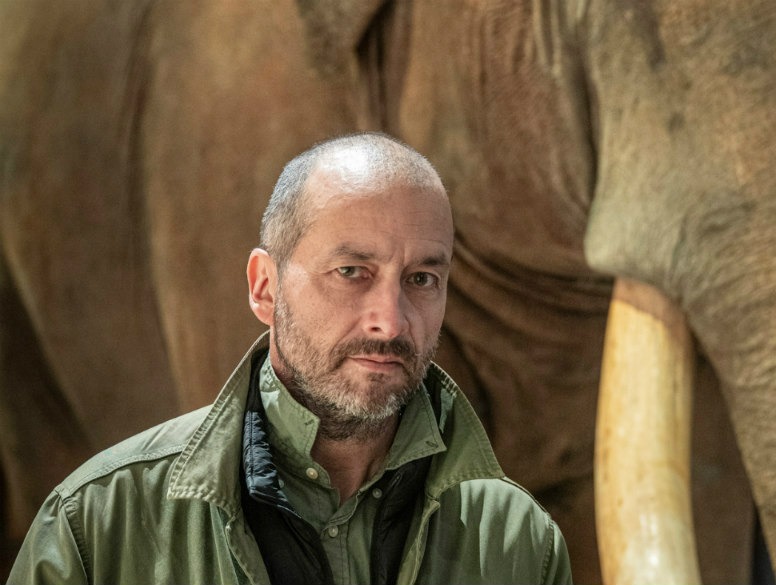
AFRICA: FACING THE FACTS. Guillaume Bonn is a documentary photographer who has commented on conflict, social and environmental issues for the last 25 years. As a contributor to the New York Times and Vanity Fair he covered topics ranging from the conflict in Northern Uganda, the Darfur humanitarian crisis and the ivory trade in African elephants. Bonn grew up in Kenya and his subsequent reporting bought him to 40 countries on the African continent. A Fellow of the Royal Geographical Society, he is the author of a beautiful new book Paradise Inc..
Yu can listen to the podcast of this interview here.
Guillaume Bonn, where do you live now?
I commute between Kenya and Lisbon, Portugal. When I start feeling ‘le mal d’Afrique,’ the longing for Africa, I know it’s time to return. It’s my own personal disease it pulls me towards the continent.
How is Nairobi today?
Nairobi is one of the most cosmopolitan cities in the world. Two United Nations headquarters bring people there from different parts of the world of different colours and different religions, and multiple schools attend to all those people and their kids. I arrived in Nairobi in my early teens and it was the perfect place to form my global and international outlook because I was growing up in this mix of cultures from all over the world and it is still the same today.
“African governments are struggling, yet they seem to overlook opportunities to improve the lives of their citizens.”
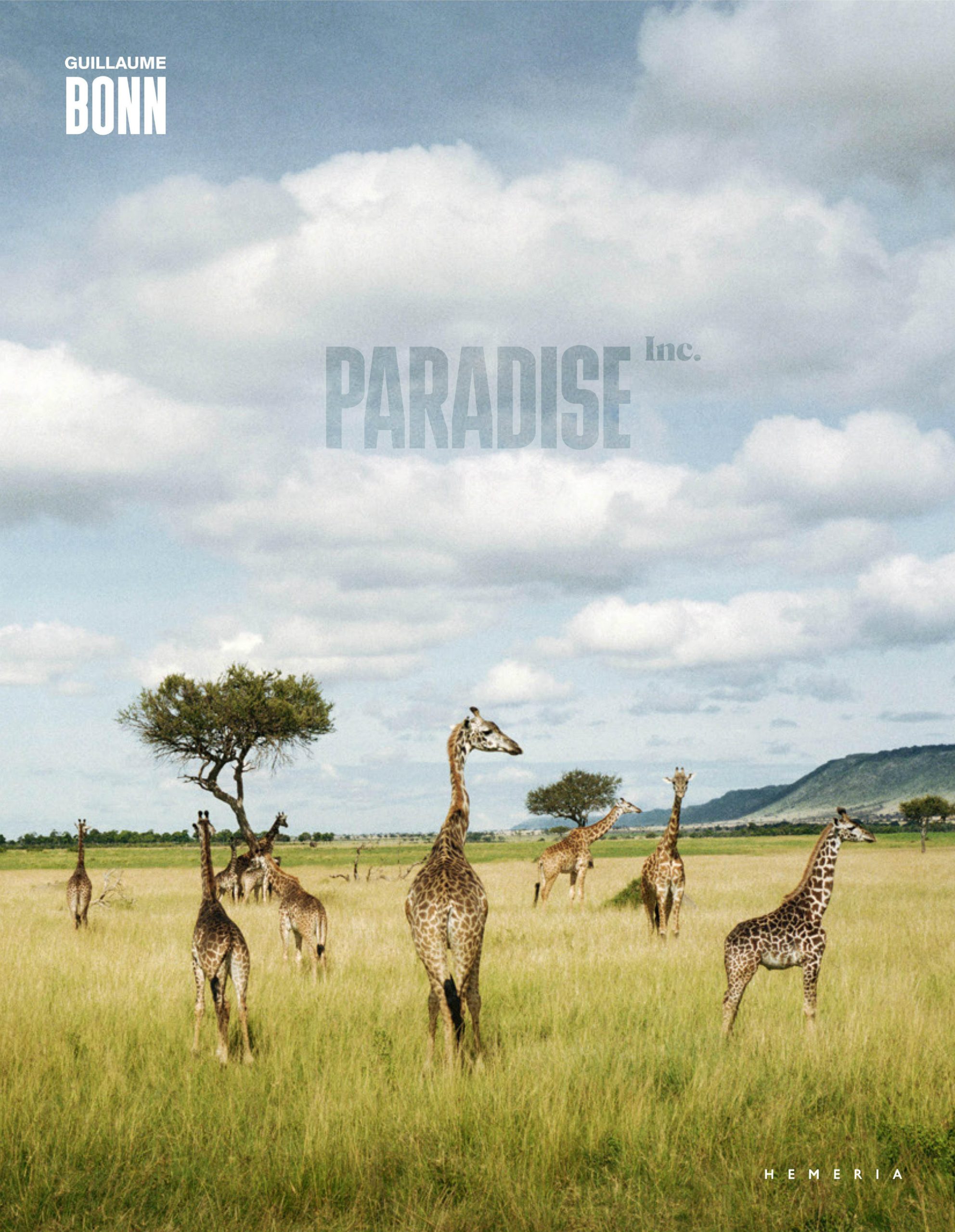
In the collective imagination, the African continent remains a wilderness paradise. What remains of this paradise today? Guillaume Bonn’s Paradise Inc. is published by Hemeria.
Guillaume Bonn, how is Africa?
We still have preconceived ideas about what Africa is. Sadly one of them is the great landscapes and the wildlife and the Maasai jumping up and down. Africa is not just a cliché. Kenya in particular is very sophisticated. Mobile money, now used globally, was invented in Kenya. Across Africa, the private sector drives progress, while governments often remain stuck in their ways, failing to address the needs of their people. African governments are struggling, yet they seem to overlook opportunities to improve the lives of their citizens.
Yet Africa has incredible landscape and animals that have been living there for millions of years?
We’re constantly balancing between tradition and the modern world. In my book, I aim to show that it’s not just about lions chasing gazelles—there’s so much more to it. For example, setting up a business in Kenya is far easier than in Europe, like France or Portugal. You arrive, and within five minutes, you’re up and running.
Is a high quality of life available to everybody who lives in Kenya?
The education is incredible and free for everybody in Kenya, so most Kenyans are super educated, totally cultured and aware of what’s going on in their country. Very politicised, they follow on a day-to-day basis how the country is being run. That is not the case in places like Congo or Tanzania. African nations often repeat old mistakes due to the lingering effects of cultural and economic imperialism. When the colonials left they were immediately replaced by people running the country who are doing the same thing to their people that the colonials did when they were in charge.
Do African countries still rely a lot on foreign aid?
I have never heard of a country that developed on financial aid. So it does not usually help the people at large. It helps the people who are in charge of the country. The disparities between the poor and the people who have a lot is even greater than it was 50 years ago. That is the sad reality of Africa today. What a waste of opportunities!
We see vast landscapes with many animals, but in your book Paradise Inc. you also photograph terribly poor places with buildings in really bad state. If the wonderful world of wild animals is not protected, will they disappear?
When I arrived in Kenya as a teenager, the population was around 16 million people. Today, 30 plus years after, it’s more than 60 million people. More space is required to accommodate the people, and there’s less and less wilderness available for the animals. My book tries to explain the human/wildlife conflict that is happening in Africa today. Metaphorically, wildlife represents the old habitats and its landscapes, along with the fauna struggling to survive amidst the rapid advance of human progress. The Chinese have accelerated that progress since they’ve arrived, because in a very short time they have expanded urbanism in a totally unprecedented way.
Is Africa in danger of becoming an open-air zoo?
Areas that surrounded all the national parks or game reserves used to be wild themselves. The national parks were never big enough for the animals to find sufficient food, so they had to leave the parks. Luckily, in Kenya, most parks remain open, unlike in South Africa, where they had to be fenced because of human pressure. And because they are open you still have the feeling of arriving in the old Africa, where animals are still free to roam, but it’s just a feeling because like in south Africa, the human pressure around the park is also very high.
“It’s baffling that African governments continue to follow outdated conservation models imposed when national parks were first established.”
Guillaume Bonn, who are the warriors who you describe in a chapter of your book called Warriors: Humans Risking Their Lives for Wildlife Conservation?
I focus on rangers in Kenya that work for private reserves and on rangers in Congo who work for national parks and the Congolese government. One is a stable country and the other is in a state of civil war since 1997 and yet both face wildlife and habitat loss. Protecting wildlife has become very militarized and because Kenyan private reserves are well run, their rangers and their families are taken care of, they take their jobs very seriously and the numbers of wildlife is going up, which is a positive outcome.
Is there enough habitat for more animals?
In well-managed areas, wildlife populations are growing, but this creates a problem when there isn’t enough habitat. Rhinos, for example, need about 32 acres as their own territory. If too many are confined within a fully fenced area, they start fighting—sometimes to the death. When animal populations exceed the available habitat, it leads to complex challenges. Many people assume these issues are being properly addressed and that as long as funding continues, conservation organizations are doing their job. However, finding solutions to manage overpopulation remains crucial.
How is the relationship between humans and wild animals?
Before the white man arrived and decided that Africa was going to be his playground, people and animals lived in a perfect coexistence which kept the ecosystems and the numbers of animals for the size of the land in a perfect balance, so everything regenerated in a way that was totally natural. The white man started shooting at rhinos and elephants and then one day realised that they had shot too many. That’s when they started national parks. As soon as they did that, they told the hunter gatherers who lived there, if you come into the national park you will be considered a poacher and you will be arrested or shot on sight.
What has changed since the system of national parks started?
Elephants face the same challenges as humans, competing for the same resources. Both are rapidly depleting habitats—elephants within fenced national parks and humans outside them. From above, a fenced park appears lush with vegetation and trees, while outside the fence, it’s a barren landscape. People rely on trees for cooking, building, and warmth, leading to deforestation. Now, those outside the fence want to move in, drawn by the greenery. But without regulating elephant populations, the park itself will also turn into a desert—just as humans are consuming their own environment. This is the reality we face today.
Is the whole system wrong?
For decades, hundreds of millions of dollars have poured into wildlife conservation. Yet, after more than 30 years of documenting and photographing it, I’m sorry to say the results have been deeply disappointing. What I’m trying to say is let’s not pretend it is working, because if we keep it like it is, I can assure you there won’t be anything left. The reality is that there are too many humans on the planet and too many elephants for the already fenced national parks.
What to do?
African governments are stuck in this imperialism idea that the West knows better about wildlife. They have given up their responsibilities to international NGOs who come to Africa and say, look, we have a lot of money and we have the expertise, we will handle this for you. This is what’s happening today, but why are we not talking to the people who actually know better than the people who come from outside of Africa, who pretend to be experts?
Are African countries not able to take care of these problems by themselves?
In Tanzania today, the government is forcing the Maasai people out of the Serengeti ecosystem, where they have lived for generations. Officials argue that their removal is necessary to preserve the park for conservation, claiming that if they stay, they will destroy it. But this reasoning is flawed—if the Serengeti’s ecosystem still thrives today, it’s partly because the Maasai have coexisted with its wildlife for centuries, integrating it into their traditional way of life. We are displacing the very people who have helped maintain these landscapes. It’s baffling that African governments continue to follow outdated conservation models imposed when national parks were first established. The reality is, this approach is not the way forward.

The wilderness is no longer boundless but a patchwork of enclaves, increasingly occupied by farms, small and large towns, factories, and roads continuously built by humans. How can we find a balance that allows human development while saving animals and their habitats from near-certain extinction? This photograph of a railway bridge cutting through Nairobi National Park, with a herd of zebras grazing around its pillars, might well be a glimpse into the imminent future.
Photograph by Guillaume Bonn.
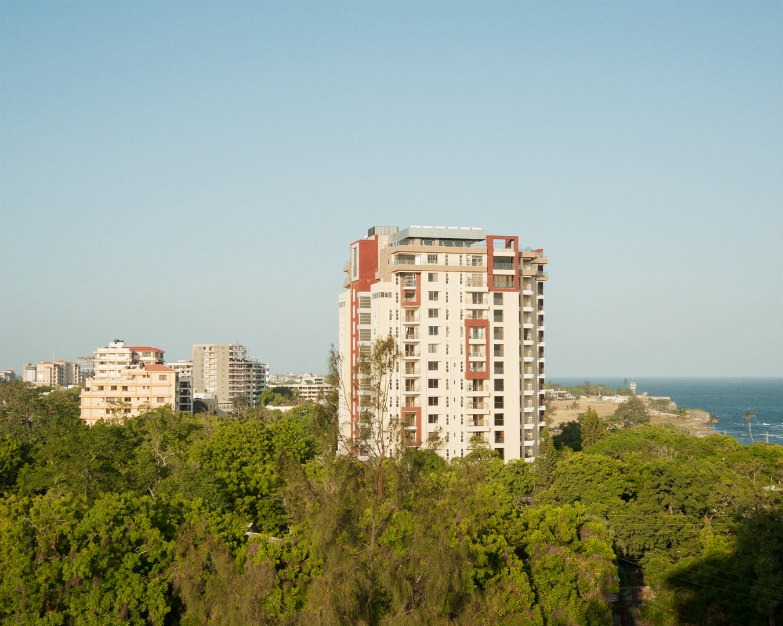
In 2021, a year before his death, the renowned paleoanthropologist and environmental advocate Richard Leakey shared with Guillaume Bonn his certainty that most of Kenya’s wildlife species would likely not survive beyond the middle of the century. The glaciers on Mount Kenya are melting, rivers are drying up, and the country’s population, which has quintupled over the past fifty years, will likely double again by then. According to him, the next thirty to fifty years will be decisive. “Overall, I am very pessimistic in the short and medium term,” he told Guillaume. “I see no future for wildlife and nature unless something changes, and I don’t see anything changing.”
His assessment is terribly bleak, yet unfortunately rings true. Nature in East Africa has been under threat for a very—too—long time.
Photograph by Guillaume Bonn.
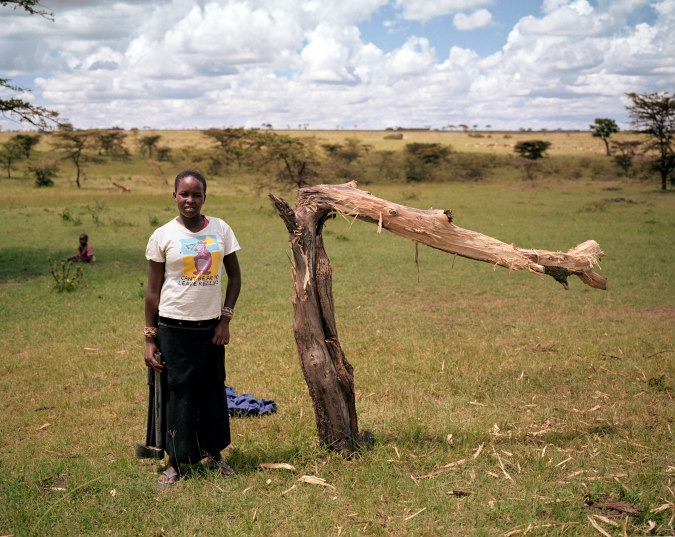
A woman is chopping down a tree on the outskirts of the Maasai Mara game reserve, intending to use it for charcoal to prepare meals for her family or to create a fire on chilly nights. According to a study conducted by the World Wildlife Fund for Nature from 1989 to 2003, wildlife losses were staggering, reaching up to 95% for giraffes, 80% for warthogs, 76% for hartebeests, and 67% for impalas. The study attributes this decline in animal populations to the growing human settlement in and around the reserve.
The human pressure is not only over taking the wilderness space where the wildlife is, but it is also eradicating all the trees and vegetations that giraffes, impalas and all non predators animals feed on.
Photograph by Guillaume Bonn
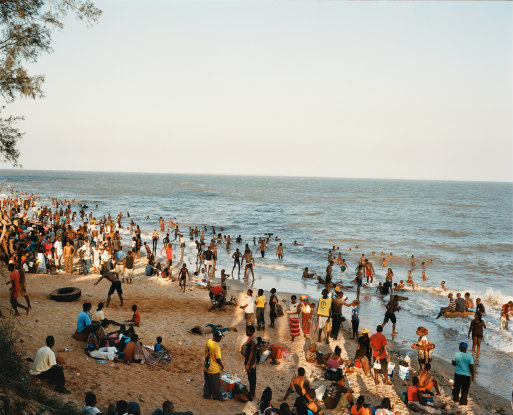
On Sunday afternoons, families and friends gather to relax on a public beach located just beyond the city limits. Projections indicate that by 2050, the continent will host at least 25% of the world’s population, a significant increase from the less than 10% recorded in 1950. This rise will inevitably lead to growing demand for resources, exacerbating pressure on already declining natural habitats and wildlife.
Photograph by Guillaume Bonn.
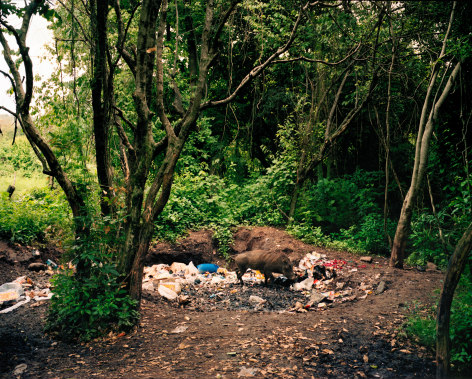
A warthog rummages through the trash of a prestigious five-star eco-lodge located on the outskirts of the Maasai Mara wildlife reserve. The reserve’s ecosystem is under severe strain due to substantial, often illegal, investments by hotel owners and accommodation operators. Unfortunately, these activities continue unchecked due to widespread corruption.
Photograph by Guillaume Bonn.
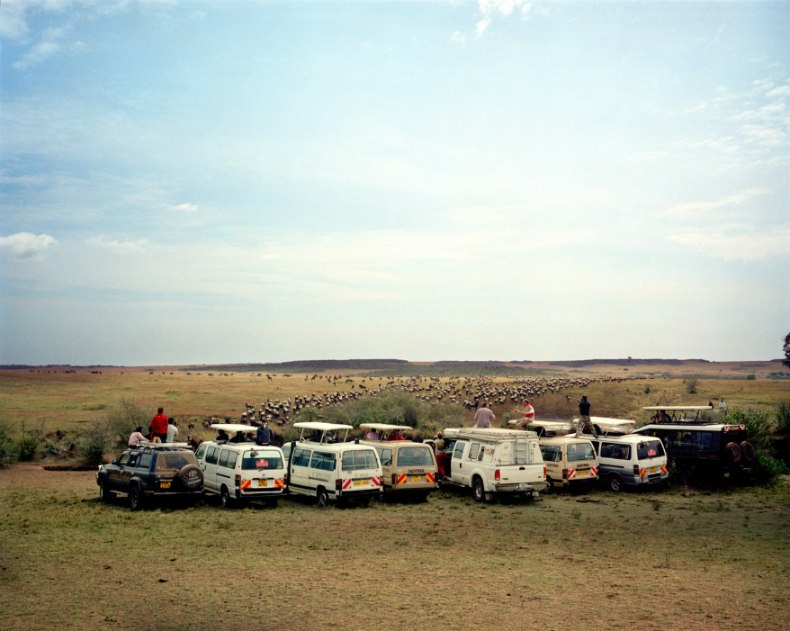
The Maasai Mara National Reserve is a unique wildlife conservation haven, renowned for its spectacular natural diversity and considered Kenya’s premier safari destination. It offers visitors countless reasons to experience this paradise of the animal world.
However, the reserve’s ecosystem is on the brink of collapse due to massive investments by hoteliers and accommodation operators. Furthermore, the reserve, which alone is home to 25% of the country’s wildlife, faces alarming over-tourism, posing a significant threat to the fragile balance of its ecosystem.
Photograph by Guillaume Bonn.
“Politicians view wildlife as existing on pristine land that could easily be transformed into big cities, parking lots, casinos, and supermarkets.”
Guillaume Bonn, what is the destructive role of hunting and poaching?
Many in the West focus on hunting and poaching as the main threats to wildlife, and while they are significant issues, this narrative often simplifies the problem for fundraising purposes. The real challenges are habitat loss and overpopulation. When elephants or lions invade small farms, causing crop damage or even fatalities, locals feel compelled to retaliate. Not long ago, those farms were part of natural corridors that elephants used to migrate in search of food and water.
Is the problem of lack of space and overpopulation ever greater?
Ten years ago in a specific area of Kenya, you would find 100 elephant carcasses without ivory. Today, the same number of carcasses remains, but the ivory tusks are still attached, indicating that poaching is now under control. However, the issue has shifted due to human retaliation. The growing wildlife populations within shrinking habitats in national parks have led elephants and lions to venture into small farms for crops or to kill livestock. This is our current reality.
In many countries and other continents there is still a strong coexistence between wild animals and humans. What is different about Africa?
The disconnect between wildlife and people began when national parks were established, and hunter-gatherer communities were told to abandon their traditions. This issue remains relevant today. In Kenya, however, some people have successfully adapted their traditional lifestyles to modernity. For example, the Maasai often use mobile phones while tending to their cattle, moving them between grazing areas. They still live in manyattas (huts), but many now have solar panels to charge their phones. This ability to blend old traditions with 21st-century innovations has been successful for them, but not all communities in Africa have managed to achieve this balance.
Are many people in Africa now totally westernised?
Yes, many urban Africans are now quite westernized, and for them, wild animals are often seen as a nuisance. In rural areas, people can no longer live as their ancestors did because they aren’t allowed to hunt for food. Many still do hunt, however, due to a lack of alternatives, which has increased what we call game meat poaching and accelerated the disappearance of herbivores like giraffes and gazelles and other species. Politicians view wildlife as existing on pristine land that could easily be transformed into big cities, parking lots, casinos, and supermarkets. While some conservationists are working to reconnect Africans with their natural environment in hopes of inspiring a new appreciation for wildlife, many rural communities still don’t see the value in saving it, as they don’t benefit from the tourism industry.
What pushes you to follow in the footsteps of Peter Beard, another great photographer of Africa?
Peter wrote an amazing book that addresses the same issues as mine, but his was published in the 1960s. Romain Gary also wrote an incredible novel about elephants in Chad called The Roots of Heaven. Before them, there was Rachel Carson in America, raising similar concerns. I remain hopeful, which is why I feel compelled to write this book—it is needed now more than ever for people to understand these issues. While everyone loves wildlife and beautiful landscapes, they often don’t grasp the reality of what Paradise Inc. represents. I didn’t want to simply depict the picturesque image of a lion chasing a gazelle; I aimed to highlight the fragility of beauty and show that many people profit from the misconception that Africa is being well taken care of and that their donations are making a real difference. This is not the case. For conservation efforts in Africa to succeed in protecting wildlife, a shift in perspective is necessary. With this book, I hope to spark a conversation that hasn’t been had in a long time.
Guilaume Bonn, thank you very much for this conversation.
ENJOY THIS INTERVIEW? SHARE IT WITH A FRIEND.