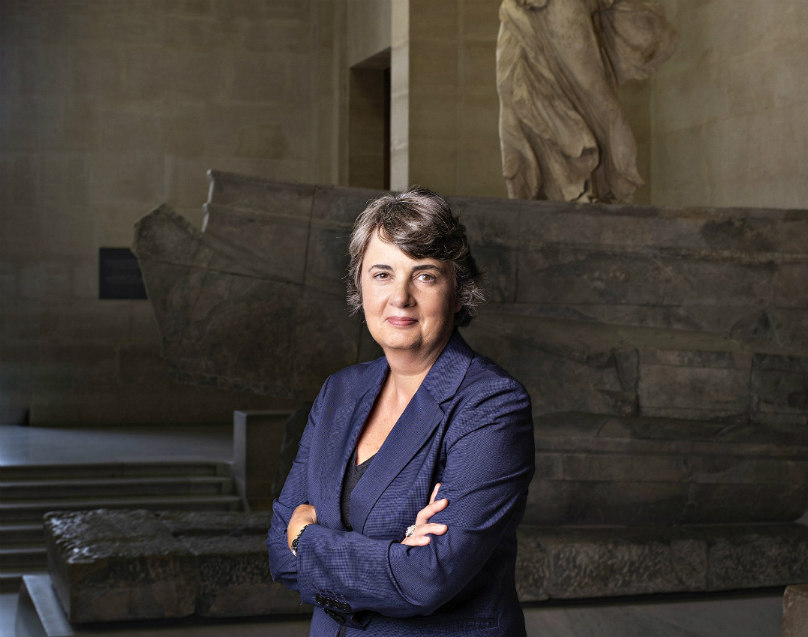
A LARGE MUSEUM IS LIKE AN OPERA. Laurence des Cars is a French museum curator and art historian who President Macron appointed President and Director of the Louvre Museum in September 2021, becoming the first woman to hold the position in the establishment’s 228-year history. Her previous role was President of musée d’Orsay and musée de l’Orangerie. Laurence des Cars is the author of several books including ‘The Pre-Raphaelites: Romance and Realism’.
You can listen to the podcast of this interview here.
Laurence des Cars, is it the case that you were not very pleased with the general conditions of the Louvre at the beginning?
It was a great honour to be considered for this position three and a half years ago, and I am grateful to President Macron for his trust in the possibility of my running this extraordinary place, because Louvre is a museum like no other. It is not just that it is the largest museum in the world it is a very important museum in the history of museums in Europe and in the world. The building used to be a royal residence before it was made into a museum, and the first foundation dates back almost nine centuries. An extraordinary place, it was transformed into a museum by the French Revolution 230 years ago as a symbol of democratisation and the creation of citizenship. It was really for the emancipation of the citizens and for the education of the artists. Today living artists continue to be inspired by the Louvre collection, but the reality was that there were different types of problems that I encountered when I took my position, and the first one is that the Louvre enjoys fantastic success.
Are there really about 9 million visitors a year, a huge number?
Yes, because I cap the number of daily visitors to 30,000. Before I came, and before Covid, it was more than 10 million a year! When I arrived the security teams pleaded with me not to go back to those numbers, because it makes things very difficult for the teams, uncomfortable for visitors, and not so good for the works of art. We needed to calm down and be in control of things. The reality is that there was a big moment of transformation decided by President Mitterrand in the 1980s called Le Grand Louvre, with this extraordinary gesture of a unique single entrance, the pyramid designed by I. M. Pei.
Surely at the time this made great sense?
Yes, it was a very good idea at the time. It simplified things and the glass pyramid was a modern symbol within this historical building, which was full of controversy as is typical of something new in France. But you need to realise that when the pyramid opened in 1989 before the fall of the Berlin Wall, half of Europe was not travelling as intensively as it is today. China was not travelling, and international tourism was not at the level that it is today. Designed to welcome 4 million visitors at the most in a year, the pyramid is structurally too small to welcome 9 or 10 million people in a comfortable way.
“The Louvre is more than a museum. It’s a symbol of France, of Paris.”
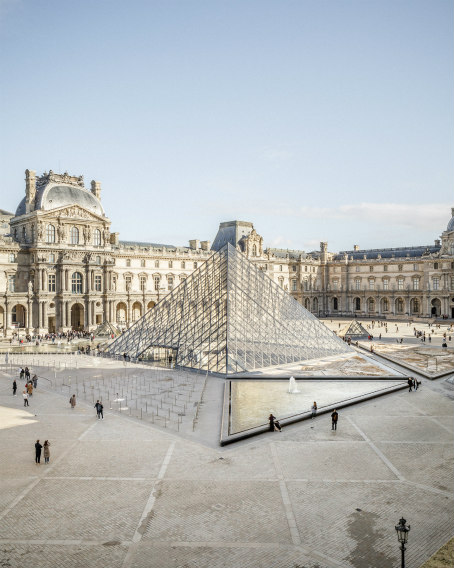
La Pyramide du Louvre © 2023 musée du Louvre. Photo Florent Michel
Laurence des Cars, what other problems did you encounter?
The second problem – also, a nice problem – is our friend Mona Lisa, a masterpiece deeply rooted in the history of Louvre and the royal collections. It came with Leonardo when he was invited to come to France by King Francis 1, and entered the royal collection at Leonardo’s death. It is really at the heart of the Louvre collection.
Many people come to the Louvre just to see Mona Lisa?
More than 70% of our visitors want to see Mona Lisa during their visit. It’s not that they come only to see it, but they wish to see it. It was already a very famous painting in the 19th century, but the modern fame of Mona Lisa started when it was stolen just before First World War and disappeared for two years. It was under the bed of a crazy Italian who used to live in Paris at that time, who stole it and kept it for himself. One day he decided to go back to Italy and offered it to a dealer, who immediately recognised the picture, because when it disappeared it was reproduced in all the newspapers in the world.
And as a result it became even more iconic than it was?
Like Greta Garbo – she disappeared and became more and more famous. Absence created desire, and it became a superstar. It is no longer a picture like any other, it has unique status. For a very long time the Louvre denied this, saying it was a Leonardo like the others. We are very lucky to be the only museum in the world which has five Leonardo paintings, as well as many of his drawings.
The other four are less famous?
They are as beautiful to my taste, and as fascinating, but anyway, Mona Lisa is a very singular work. Now she is in the Salle des États, the largest gallery in the Louvre, and it’s not enough. A long overdue decision had to be made, because we have the congestion of the pyramid, we have the congestion around the Mona Lisa, while half of the Louvre stays rather empty. Half of the Louvre was not modernised by the Grand Louvre project, which concentrated on the Cour Napoleon, the first big court where the pyramid is, but completely neglected the beautiful Cour Carrée and the Colonnade, an entry designed for Louis XIV before he left Paris for Versailles. The Colonnade faces Eglise Saint-Germain-l’Auxerrois, a delightful and historic church at the heart of the history of Paris.
Where are you going to put Mona Lisa?
We’re going to create another entrance on the eastern side in front of this Colonnade, with very smooth and easy access. President Macron has announced an international competition to design this entrance, which should be very elegant, respect the Colonnade and integrate the Louvre within the heart of Paris. It will go underground, as was done for the pyramid, because we cannot build in front of the Louvre, which is a protected historical monument. We will dig below the Cour Carrée, connect with the medieval Louvre at the same level, and there we have large spaces. We can dedicate one gallery to Mona Lisa, one gallery to temporary exhibitions, and another gallery to education – because we need to welcome more schools. This new way of functioning for the Louvre will be operational in 2031.
Are you going to close the Louvre in the meantime?
This part of the building around Cour Napoleon will always stay open, exhibitions will still take place, and you will still be able to see Mona Lisa, The Winged Victory of Samothrace, Venus de Milo and the other wonders of the Louvre. The Louvre is a so-called universal museum, and even if some specific parts of the collection went to other museums, nonetheless we have nine curatorial departments. These include Eastern Antiquities, Greek/Roman, the largest Etruscan collection in the world outside of Italy, and a wonderful Egyptian collection. People want to see the Mona Lisa, but once you explain the collection, it attracts them to other things in the collection, exactly as is happening with the Louvre Couture exhibition from 24 January – 21 July, 2025, with the Decorative Art department. Not the most popular one before the exhibition, right now it is as crowded as the Mona Lisa room. People are curious, and those extraordinary collections are for everyone to enjoy.
Do people pay for entry?
Half of French visitors of the Louvre enter for free. We have a gratitude policy that is very generous. French or European young people under 26 and young people from all over the world under 18 do not pay to enter the Louvre.
Does education help people to feel welcome in the Louvre?
Everyone should have the keys to understand the works, and so education, interpretation, and mediation, is extremely important. We’re going to work a lot on this during the coming years, because we have to adapt with such a number of people coming. I open the doors of the museum to schools on the closing day, which is Tuesday in the Louvre, because I want the young kids of France to discover it. Generally their first visit is with their teacher, and it should be a moment of pleasure, of wonder, a good memory that they keep forever. It’s very touching to go in the galleries on Tuesdays – where a lot of things are happening because it’s closed but we are de-installing works, hanging the pictures, cleaning the place, restoring – and the young kids walk around, discover the collections, and also see that the museum is alive with people who actually work in the museum. They discover the place in a very nice way.
Your wish is to ensure a certain quality of visit?
Yes, this is exactly what is at the heart of the project that President Macron has announced. A gallery dedicated to Mona Lisa will allow people to make timed reservations for slots, to enjoy their moments in front of Mona Lisa. To understand Leonardo’s genius, you have to take a few moments in front of the picture. It’s not something that you just look at for two seconds. You have to contemplate the work, enter into the landscape, appreciate the genius of the composition and the way he changes everything within the rules of Renaissance portraiture. Before Leonardo, it was a profile, coming from the Roman and antique medals. With Mona Lisa you have something very sophisticated. In the composition she’s looking at you, but she’s turning her body a little bit and there’s a very subtle dynamic.
“We are definitely in a very complex moment, and we are looking for places where we can confront ourselves through a perspective of long time in history.”
Laurence des Cars, do you think the architectural competition will attract the propositions of different talented designers from all over the world?
Absolutely. Creating the new entrance and the new galleries below the Cour Carrée is exciting material for any architect in the world. I am very curious about the solutions that the different architects will have, because it’s a challenge that a few museums in the world have with works such as Nefertiti in Berlin, The Nightwatch in Amsterdam, or The Scream of Munch in Oslo. They all wrestle how to deal with a singular work within a big, strong museum that is attracting the visitors, and there is the general problem of needing to reorganise because of too many visitors. We have seen this at the Uffizi, and in Athens the Parthenon is encountering the same question, because international tourism has increased a lot and we can be happy about it. It means that more people are enjoying it.
Is the Louvre the most visited attraction in Paris?
No, Notre Dame is right now more visited than Louvre but is completely free and has just reopened. Our numbers are daily quite close to Notre Dame, but more than half of our visitors pay, so it’s a bit different. Our luck of having many visitors means that we generate revenues and that makes it possible to renovate the building, to think about a new entrance, and new galleries, so it’s very important.
With so many masterpieces and incredible paintings here, do you have a very big job of organisation?
It’s a large museum. There is also performing arts and music. It never stops. 2300 people work in the Louvre. It’s a city within city. What is fascinating is that the passion that everyone has working in this museum unites all the different professions, from somebody who deals with security to somebody who is hanging the pictures in the gallery or the curator or the marketing department or the extremely important fundraising department.
Do you do a lot of fundraising?
There are many friends of the Louvre. We have an American organisation too and for the first time we had a wonderful dinner gala with fashion which was a fundraising event. We raised 1.5 million Euro for a single dinner at the first try, so it’s very encouraging and people were very happy about it. This is the kind of new dynamic that I want to bring to the Louvre. The place is more than a museum. It’s a symbol of France, of Paris.
Do you sometimes buy works?
Yes, we buy all the time and 20% of our ticketing revenue is given to acquisitions. We just bought recently two wonderful pictures. One is a still life by Chardin, ‘A Basket of Strawberries’, a beautiful 18th century masterpiece. We bought it in Paris. It was a bit complex because it was classified as a national treasure that couldn’t go out of France so we negotiated out of the auction. The other one is an extraordinary picture that is at the centre of an exhibition right now, a small panel by Cimabue. We have two Cimabues now – one large master and this little panel: ‘The Mocking of Christ’, and we just restored it. It’s extraordinary. We dedicated an exhibition to the birth of Italian painting in the late 13th century, when everything is changing from the eastern icons and the gold backgrounds, and suddenly you see faces, individual portraits, bodies, the start of the perspective that will be at the heart of the Renaissance. This is so moving, so interesting, and what is very encouraging is that this exhibition dealing with two very old pictures that are really at the birth of modern Western painting, is being discovered by young people. They have a passion for that because it’s a new narrative about the history of painting. When I see young people in the exhibition, I see exactly what the Louvre is about. Opening eyes. Opening minds.
Some say that young people don’t like old masters?
Completely untrue. We have a very important number of young people under 25 in the Louvre, because there’s a continuity of creation. Right now, the most fashionable thing is old masters. Going back to the origin, to a certain primitivism, is extremely interesting, and people now are obsessed with time and history. We are definitely in a very complex moment, and we are looking for places where we can confront ourselves through a perspective of long time in history. You can be touched and moved by a 5000 year old fragment coming from Mesopotamia, the same way you are moved by a Renaissance masterpiece or Delacroix or whatever. As in the Uffizi, the Met or British Museum, we are dealing with humanism, dealing with the most fragile and also the most beautiful parts of human memory or testimony, but they are just fragments of a past, and we are here to give them to a new generation. My job is to organise this transition as smoothly, as pleasantly, as excitingly as possible.
Isn’t the world of old masters out of fashion?
No, we had a wonderful van Eyck exhibition around the restoration of one of our masterpieces done by a young, very talented 30 years’ old curator. The curator of the Cimabue show is also 30 years old. They reflect their generation’s concerns about having a sense of purpose in what they do and working on artists that come from a very long time ago is something that their generation are very much concerned with – much more than my generation. I am a 19th century specialist. Manet, Courbet. 35 years ago I was fascinated by the birth of modernity, the modern Paris, Baudelaire. Today I see the youngest generation of curators are much more fascinated by the possible continuity between ancient world, antiquities, or the Old Masters, with this modern sensitivity, understanding, confronting things that could be far from you but tell you things about yourself. They are looking for a sense of purpose. A place like the Louvre is giving a sort of depth, a beautiful weight that comes from the past. We are not out of nowhere. We come from something. Humanity has a long-term story. Artistic expression has always been a need for man. That’s reality, and we shouldn’t forget this in this very crazy world we are living in. It’s also what makes us human.
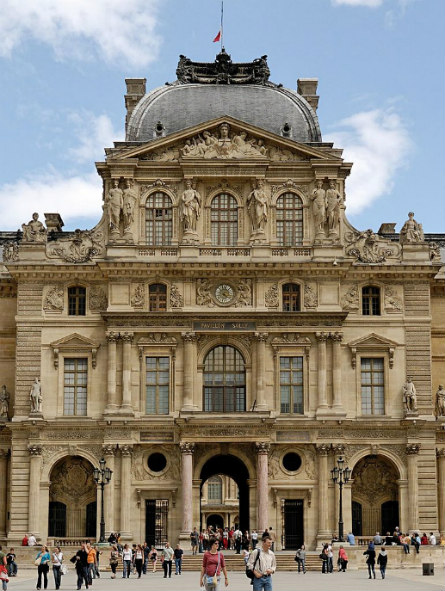
Pavillon Sully du Louvre
Salle des Caryatides du Louvre
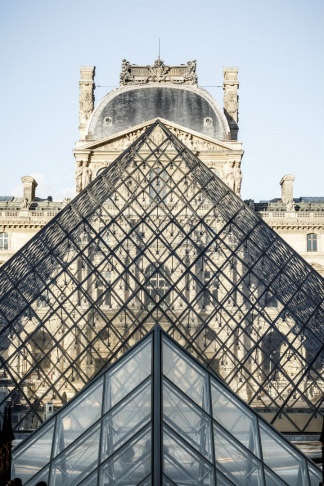
La Pyramide du Louvre © 2023 musée du Louvre Florent Michel
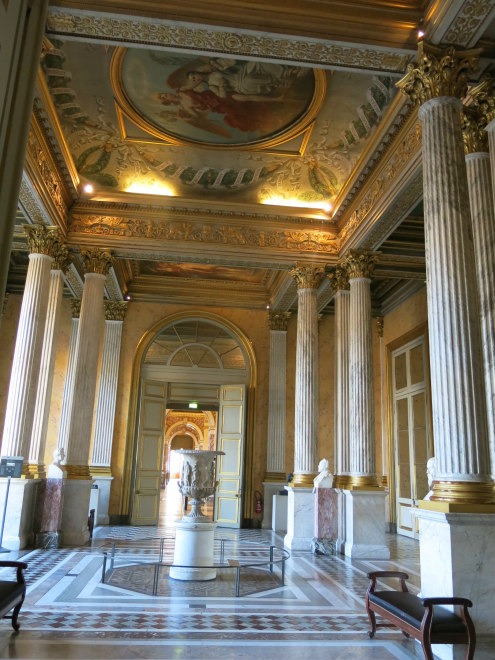
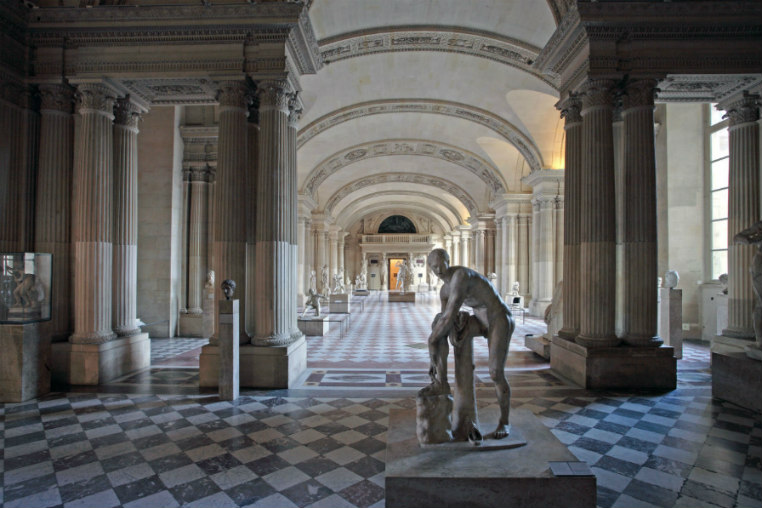
Salles des Colonnes du Louvre, view towards the East
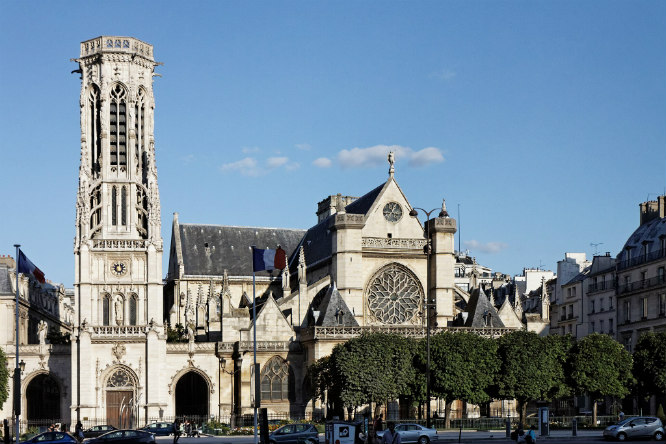
Église Saint-Germain-l’Auxerrois, Paris
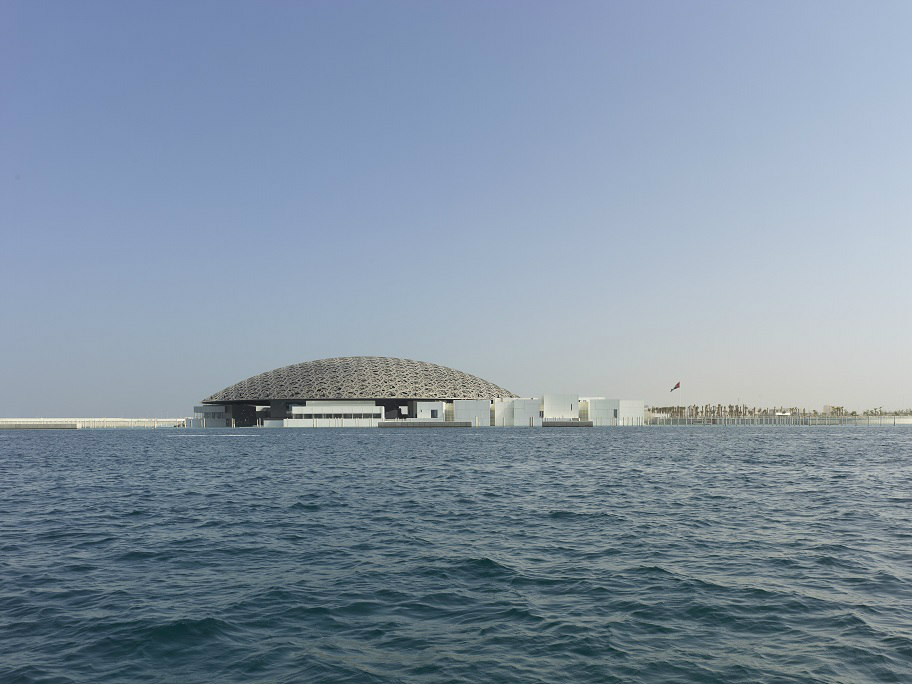
Louvre Abu Dhabi Exterior view © Photography Roland Halbe
Louvre Abu Dhabi, Architect Jean Nouvel
“I do not think that looking at art should be painful, boring and exhausting. It should be absolutely the contrary to that.”
Laurence des Cars, will there be more big exhibitions at the Louvre in the future?
All the time. A large museum is like an opera. We are now working on the programs of 2029/30. Large exhibitions need to be planned very much ahead because we generally co-organize them with other partners in the world and need to secure the loans from public museums and private collections. In a year’s time we will be opening a wonderful exhibition dedicated to the comparison of dialogue between Rodin and Michelangelo. When Rodin was becoming the great artist we know in Paris in the 19th century, he used to go to the Louvre to draw, and he used to draw the two Slaves of Michelangelo. I want to explore what I call Le Louvre des Modernes , the way modern or contemporary artists have been or are still looking at the collection of the Louvre and how the Louvre keeps inspiring modern and contemporary art.
Do you also show contemporary artists like Pistoletto?
Yes, absolutely, and we had commissions. My predecessor had commissions with Cy Twombly, for instance. I cannot reveal the artist but in November we will reveal the first commission that I made as President of the Louvre. It’s a living thing, and I created two artist studios in one of the pavilions of the Louvre. Elizabeth Peyton is working and has a studio in the Louvre right now, and Kader Attia is also invited as a guest artist in residence. I love the idea that making art is always with us, because great artists sense things before anyone else. They feel the zeitgeist
Do you also invite writers?
We love to invite poets and writers, and we just published a book of poetry, ‘At the Louvre: Poems by 100 Contemporary World Poets’. It was translated in English and I was very proud because it was in the New York Times selection of the best books of the year. Poetry is so much part of a history of Louvre. Louvre has inspired beautifully poets from the beginning, and so for me, it’s part of opening the doors and windows.
Baudelaire used to come to the Louvre.
Baudelaire has written wonderful things. In the 19th century the Louvre was very much at the centre, also of literature, and it still inspires when you talk about it with writers today. The Louvre is a big machine that stimulates imagination. We published our first Manga cartoon inspired by the Louvre, and it’s a big success with young people. Movies are shot in the Louvre and TV series. I’m very open to this pop culture dimension of the Louvre because this is part of the magic of the Louvre.
Do many people visit the Louvre on the internet?
All our works are available on our database. You can have images on a smartphone, but going to the Louvre is about experiencing the real thing. After Covid when everything was online people went back to theatres, to opera, to museums. It’s such a pleasure to experience the real thing, even with the problems, because you are living something that is very unique. People want to have made their own memories too. It’s very important.
How long do people spend when they visit the Louvre?
Almost three hours is the average time of visit, a uniquely long time. I used to run the Musée d’Orsay, where the average time of a visit is about 45 minutes, and people run to the Impressionist gallery, see Monet and van Gogh and the other wonderful artists and that’s it. People realise that the Louvre is a large museum with different kinds of collection and they organise a visit to take their time. This is very interesting for the project we are working on, because I want them to be able to spend a day in the Louvre, have a nice relaxing moment for lunch, have pauses. At the moment we do not offer a comfortable visit. It’s tiring to walk around a museum and the Louvre is physically exhausting. You need a good pair of shoes, and you need sometimes to sip a coffee. It’s generally a collective experience with friends and family, which is also interesting for us because it means that it’s about sharing a moment together, sharing an emotional experience, making memories together, and we should make this moment beautiful, easy and comfortable. I do not think that looking at art should be painful, boring and exhausting. It should be absolutely the contrary to that. (laughs)
Is security a very big issue for you?
A museum is today a very complex organisation, and we need to protect the works, but also the people working and our visitors. In the world of today half of the staff of the Louvre is dedicated to security. For any public place in the world, this is a very serious responsibility. We take that very seriously, and the new project will be designed with all the prescriptions in terms of security and new technologies also dedicated to it.
Do you worry that people like to take a selfie In front of the Mona Lisa?
I’m not against that, because how can you be against your own time. We are all taking photographs with our smartphones. Maybe it will be out of fashion in a few years’ time. What is behind this thing is: “I am here now and the Mona Lisa for two seconds is mine – I’m keeping this personal memory with me.” I have nothing against keeping a personal memory of it, because if it makes your life better, if it’s a way of sharing something that you enjoy with your family, with your friends, that’s okay. Today people are so much focussed, queuing up, to have a few seconds with Mona Lisa that they do not care or do not take the time or they do not have the time to look at this extraordinary picture. That should not be what the Louvre is about and I’d love to correct this. In a few years’ time, we will be able to share a Louvre where you will enjoy your favourite work of art, or discover other works of art, in a very pleasant manner. In the near future, and especially for people who live in Paris or near Paris or stay in Paris a few days, you will be able to go to the Louvre for one hour, one work of art, and come back for another day for one hour and one work, because this is the best way. I have friends who come once a week to Louvre, just for half an hour. They select a work, a gallery. They enjoy it and that’s it. Somebody has calculated that if you wanted to see everything in the Louvre it would take you more than three days, technically speaking. So in one visit it is not possible.
Do you want a museum to be a joyful experience?
Museums are about works of art, so they should be about your personal emotion and the way you make a very old work contemporary simply by the fact that you’re looking at it. If we are successful for that, then we do our job correctly. Of course, we are all about expertise and restoration and conservation, but in the end, let’s remember the first emotion you had during your visit, like during a film, an opera, music, whatever. This is what those places are about. To trigger emotions and say the world can be difficult, life can be difficult, but this is a place where I could go.
How many people come from Paris and how many from elsewhere?
70% of our visitors are international visitors, 30% are French. We are creating this other entrance and keeping the pyramid as an entrance to be able to welcome everyone, to welcome the international tourists as much as the frequent visitors living in Paris or the schools of France or of European schools. We need to have perfect preparation for each type of visitor, which is not the case at the moment. For the moment we are welcoming everyone not in a very satisfactory way. According to your visitor profile you should find solutions and options of visit that will be the best. If you want to see only the masterpieces in one hour it’s okay, you will have the right visit to do it. But if you’re a frequent visitor and you want to come every week, you should able to enjoy and access the collection quickly and easily. This is exactly what is at the heart of the project we are working on right now.
What about the Louvre Abu Dhabi?
I worked for six years on the Louvre Abu Dhabi project and was again in Abu Dhabi recently. We send Abu Dhabi works. We co-organise the shows. It’s a big success, as is our other Louvre in the northern part of France in Lens. We are very much part of the life of those museums.
Does the Louvre Abu Dhabi belong to France?
No, to the United Arab Emirates. It’s a diplomatic agreement between the two countries in quite a unique way. They are acquiring, and the collection is in dialogue with the loans from the Louvre and other French museums. Little by little, the collection is growing. My experience there probably prepared me in a very intense way to run d’Orsay. I would never have become president of d’Orsay and more president of the Louvre without the Louvre Abu Dhabi experience, because it is exactly what the world is about today, not only about New York, Paris, London, the old world of museums. The museum family is expanded with other parts of the world. I was 40 when I worked on the project and it changed my vision of the museum. It’s really about being able to talk to visitors who do not have our cultural references, and be able to share culture, and the whole project is highly diplomatic and political.
This is also something that was beautifully designed?
I think it’s Jean Nouvel’s masterpiece and I worked a lot with Jean on the project. I learned a lot working with a great architect and in a way it prepared me for the competition that we’re going to have, because I know what it is. It’s the Louvre. If you go there, you will see works from the Louvre and the new entrance, the new galleries will be the work of a contemporary architect within the palace. So that’s fascinating.
Is Jean Nouvel competing?
I don’t know, we haven’t opened the competition yet, so I cannot answer you!
Laurence des Cars Samothrace © Franck Ferville
ENJOY THIS INTERVIEW? SHARE IT WITH A FRIEND.