

GOOD GOING. Graydon Carter launched his enjoyable digital weekly newsletter Air Mail in 2019. He was the editor of Vanity Fair for twenty-five years, and under him Vanity Fair won numerous awards. Named to the American Society of Magazine Editors Hall of Fame, he is also an author and editor of books, a producer of plays and documentaries, and a restaurateur. In the newly published memoir When the Going Was Good Graydon recounts how he made his mark as one of society’s most talented editors and shapers of culture.
You can listenn to the podcast of this interview here.
Graydon Carter, why did you write When the Going Was Good: An Editor’s Adventures During the Last Golden Age of Magazines?
I never thought of writing any kind of a memoir, but when I was having lunch with the writer James Fox in London about seven years ago he had just finished helping Keith Richard with his memoir Life, and James said if I was ever interested in working on doing one, he’d love to work on it with me. That got me thinking. Then he explained how I should have ten good stories in the proposal, and James was my guide through the whole process of how to organise the stories rather than just starting off at my birth in Toronto in 1949. Also I love having a partner. I had a partner at Spy Magazine, and I have a partner in restaurants, and I have a partner in Air Mail. I love a collaboration, and, in addition to being a wonderful friend and great company, he kept me working throughout the whole process. Otherwise it would come out years from now, because I’m quite frankly a little bit lazy.
You spent your youth in Trenton, Ontario, and attended the University of Ottawa and Carleton University. How was growing up in Canada?
Canada is very cold, and my life revolved around skiing and playing hockey, which my father, a really funny and wonderful character, loved as well. Growing up in Canada toughens you up, because if you can play hockey in minus 30-degree weather almost anything else seems easy by comparison.
“I’m a very kind person, and I treat everybody the same.”
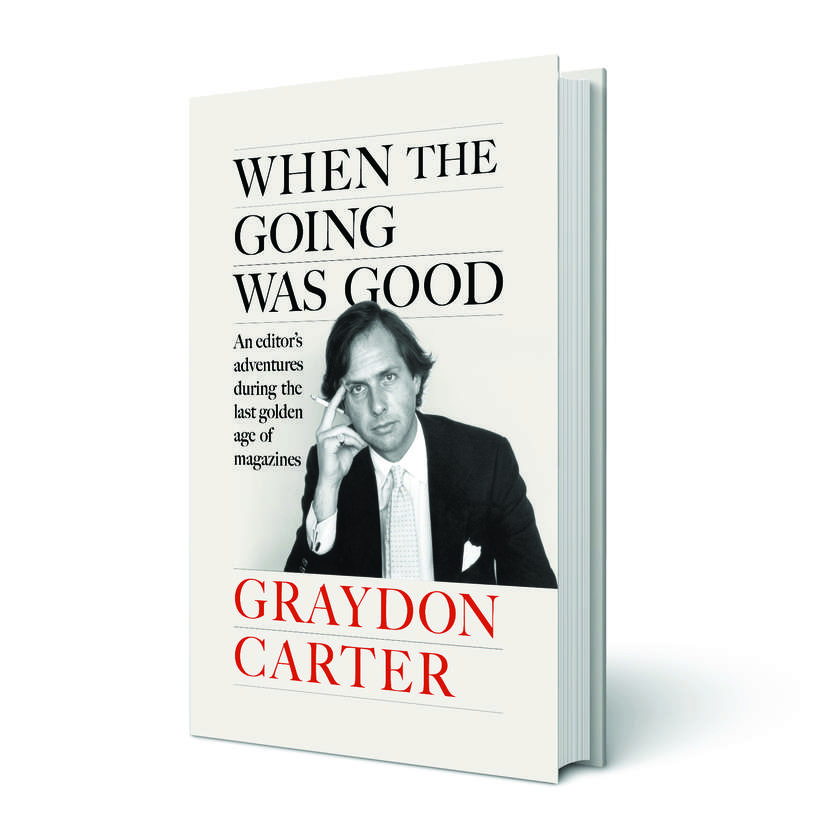
When the Going Was Good. An Editor’s Adventures During the Last Golden Age of Magazines.
By Graydon Carter with James Fox. Published by Penguin Press.
Graydon Carter, do you still feel Canadian?
Yes, but especially right now. I love Mark Carney, and the Canadians are going to be a good match for Trump. Canadians like being exactly who they are, and Canada is up for a good fight when it comes to being part of the United States. I don’t know where this idea came from, it’s not going to fly, and only Trump feels that this is a necessity. It’s part of Trump’s fever dream, and I don’t know another American – and I’ve been here for almost half a century – who’s ever even mentioned this as a thought.
After university you became a journalist, and in 1973 created The Canadian Review, a magazine which became award-winning after four years?
Yes, it had a healthy circulation and was as good a magazine as you could put out with a bunch of 20-something-year-olds who knew nothing about what they were doing. In that way it was a success, but overall I look at it as a magazine that wasn’t particularly good. It did better than it should have.
After the Iraq War, you wrote a book on the consequences of the Bush administration called What We’ve Lost, but in your new book you don’t go into politics. Why not?
Because if you write about politics it dates a book, and can make it seem old very quickly. And the good periods – the Obama years, the Clinton years – seem to go by in a heartbeat, but the Bush years and the Trump years seem to last forever.
Do you understand what’s going on in the United States?
No, I don’t understand anything. America had an economy that was the envy of the world in January, and Americans were by and large admired around the world. Now we are essentially at odds, or enemies in some cases, with almost every one of our traditional allies – almost every country in Europe, Britain, Canada, Mexico. We have aligned ourselves with countries like Russia and possibly North Korea, and it makes absolutely no sense, and goes counter to the way most Americans think. I wake up every morning and want to look at the newspaper with my eyes closed, because there’s no good news coming out of Washington.
Will America change in these coming years?
Americans don’t change that much, but America will. Depending on how effective Trump is, it could take a generation or more to get the country back on track again. But I think the country was due for a correction. The far left had consumed the conversation, and now the far right has it. Most of us are somewhere in the centre, and that’s where it’s got to settle.
Are you more an editor or a journalist?
I was an editor first, a writer second, and I could never be an investigative journalist. I did a lot of writing, but mostly about people who were cooperating. I could never be the kind of extraordinary journalist that I hired at Vanity Fair. Curious, engaged and very fair, I’m a much better editor than I am a reporter. I think I’m a very kind person, and I treat everybody the same.
How was Vanity Fair when you took over as editor from Tina Brown in 1992?
The first two years were not pleasant. There were a lot of people who had been left over who didn’t like me or trust me. I tried to create a collegial office where people would appreciate and respect each other’s talents, and it took two years. Finally there were three people who I thought I could not bring them around to my way of thinking, and I got rid of them all in a two or three day period. That changed everything, and for the next twenty-three years the office was a wonderful place to work. People would say thank you and were polite to each other and worked together, and the success was there.
“Every editor out there was working at the top of their game, and they were really good, so the competition was fierce.”
Graydon Carter, it must be a very particular skill to pick out the key stories from hundreds that could be told and plan them in advance with your journalists?
Having five children was very good training for having forty or fifty writers working for you, because you treat writers much the way you treat children. You encourage them. You say, “This is very good, but maybe we could just do a little change here or there.” I’ve always respected writers because I know how tough that is. I may not be able to tell a great story myself in journalism. but I know a good one when I see one. A good Vanity Fair story that’s going to run between 5,000 and 15,000 words has to have a number of elements.
What elements?
It has to have access. It has to have conflict, which is always good. It has to have a narrative arc, a beginning, middle and end. And it has to have disclosure, which is new information. We would come out after the immediate news stories and we’d have to tell a story that brought the reader in, so our big stories were the stories between the newspaper reports and the books that would be written on the subject. Finding writers who could do that on a regular basis was difficult, but I built up a stable of forty or so writers who could do that, and that was the backbone of what Vanity Fair was. Then the thing was to team them up with the best photographers in the business, like Helmut Newton, Annie Leibovitz and Herb Ritts.
You were selling 1.2 or 1.3 million copies a month, a big number. Did the media mogul SI Newhouse, whose titles included Vanity Fair, trust you?
I could not have imagined working for anybody better than SI, and whether in France in London or Milan there’s not an editor around who worked for SI who did not come to think that he was the best person to work for ever. He never told you what to do, but he gave you all the equipment you needed to be successful, and when there was a problem he would use his own Socratic method of asking questions towards getting toward a solution. He had wonderful editorial instincts, and great people instincts. He took chances on people, and more often than not they paid off. All in all, he was like a second father to me.
Did you have some good scoops?
Yes, the biggest being the discovery of who ‘Deep Throat’ was, which was the code word for a source that Woodward and Bernstein had when they were reporting All the President’s Men. We worked on that story for two years, what business people call a long game, and somehow we wound up releasing it to the world the day I was returning from my honeymoon. That was a very nerve-wracking day, as was every day, because I worked during the golden age of magazines, and that was a golden age for other editors too. Every editor out there was working at the top of their game, and they were really good, so the competition was fierce.
Of the jobs you have had in your life, which is your favourite?
I’ve had three or four jobs and all of them were my favourite jobs. Before college, working for a half year for the Canadian railway as a lineman out in Western Canada was a wonderful experience for me, and I love the job I have now. I’ve been very blessed.
When you decided to create the digital newsletter Air Mail were you inspired by those wonderful blue and white airmail envelopes?
Yes, I love those airmail envelopes, and Air Mail is very much like a magazine for a world outside your borders. It’s like a weekend edition of an international newspaper that doesn’t exist, and it’s very much like Vanity Fair, but on a weekly basis. I love scandals. I love political stories and literary stories, and we have a lot of book reviews. I love stories about people behind the scenes in the culture like directors and producers rather than movie stars. I love a good adventure story. It’s got a lot of humor in it as well.
Do you edit every issue?
Every word. We have an office in in a beautiful old house in the Village about two minutes from home and it’s easier than running Vanity Fair. Vanity Fair was like driving an aircraft carrier and Air Mail is like driving a 30-foot Riva. The Riva has less impact but is more fun.
Do you really feel that the time for magazines is over?
No, I don’t. Magazines devoted to quality will have a long life. Magazines devoted to things you can find on the internet anyway will not have a life. There are some great magazines in America, including The Atlantic and New York Magazine, and I love The Oldie and Private Eye in London. Magazines will do well, a bit like vinyl is to the music business they just won’t be the dominant part of the intellectual conversation that they were for the past eighty years.
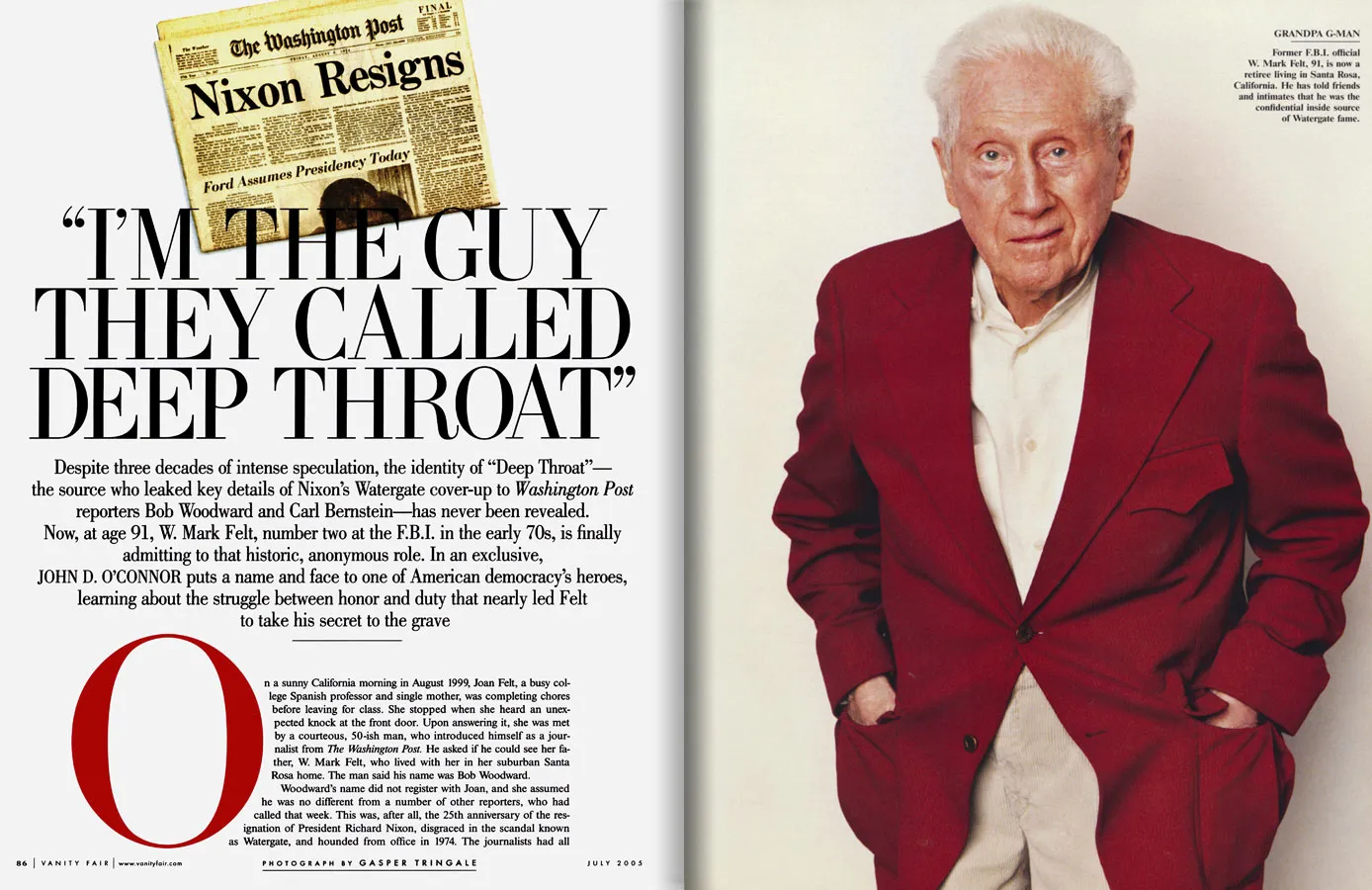
On May 31, 2005, Vanity Fair revealed that Mark Felt was Deep Throat in an article on its website by John D. O’Connor, an attorney acting on Felt’s behalf.
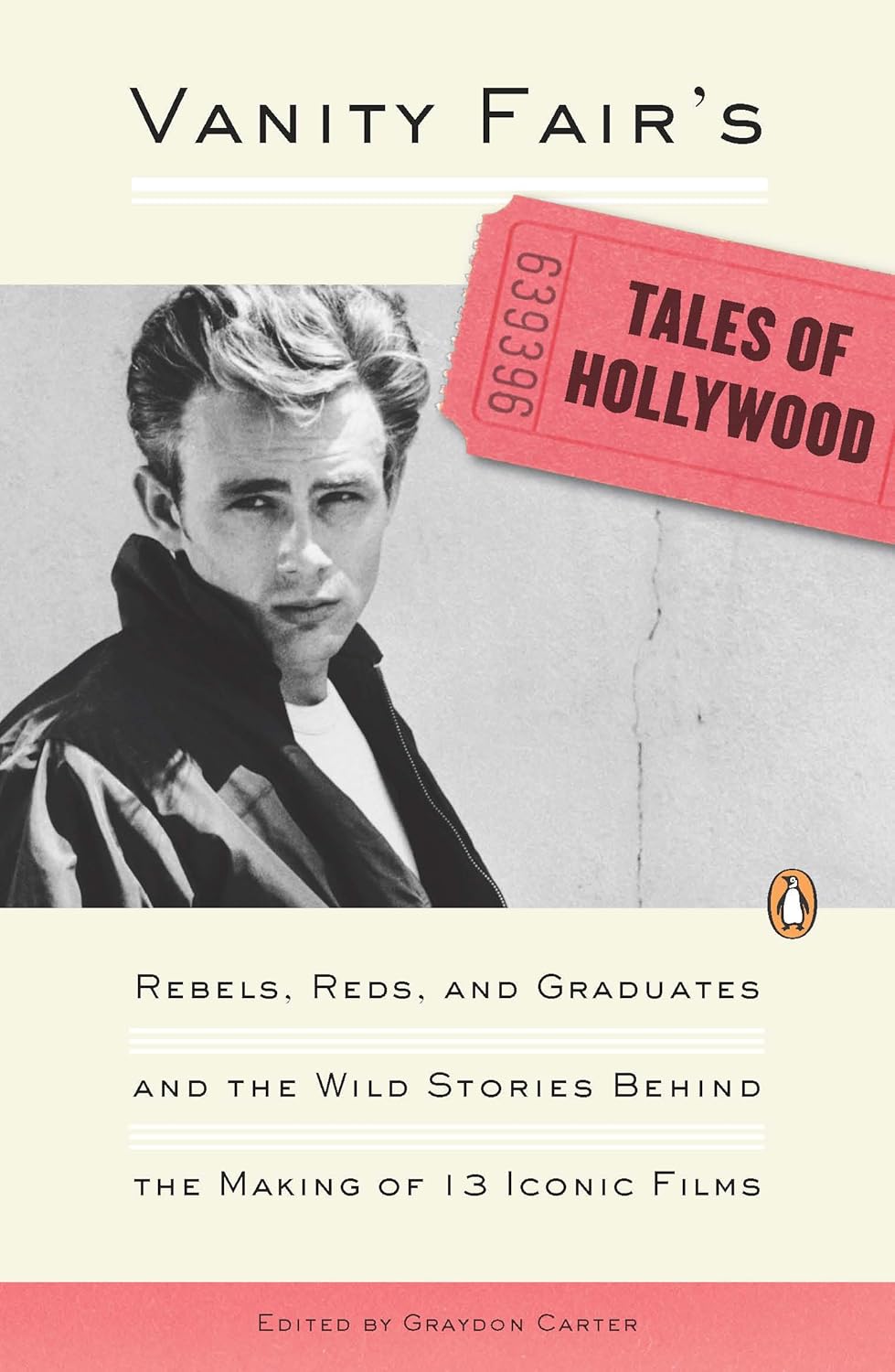
Vanity Fair’s Tales of Hollywood. Rebels, Reds, and Graduates and the Wild Stories Behind the Making of 13 Iconic Films. Introduction by Graydon Carter. Edited by Graydon Carter
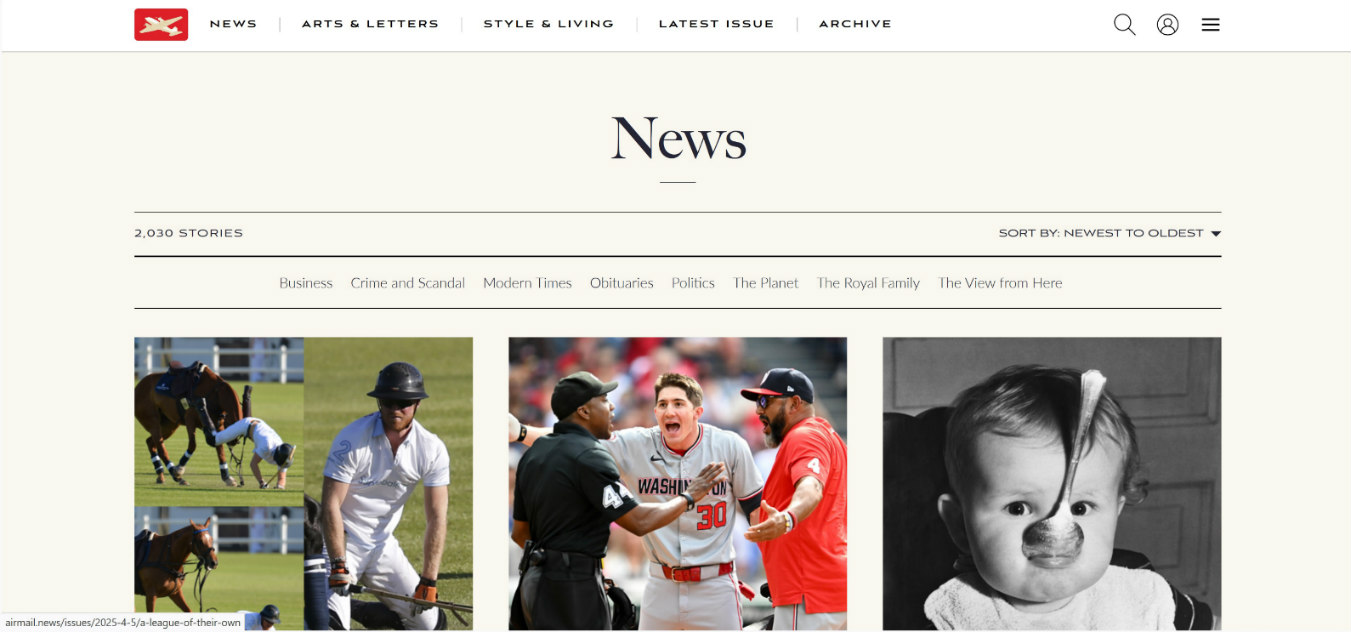
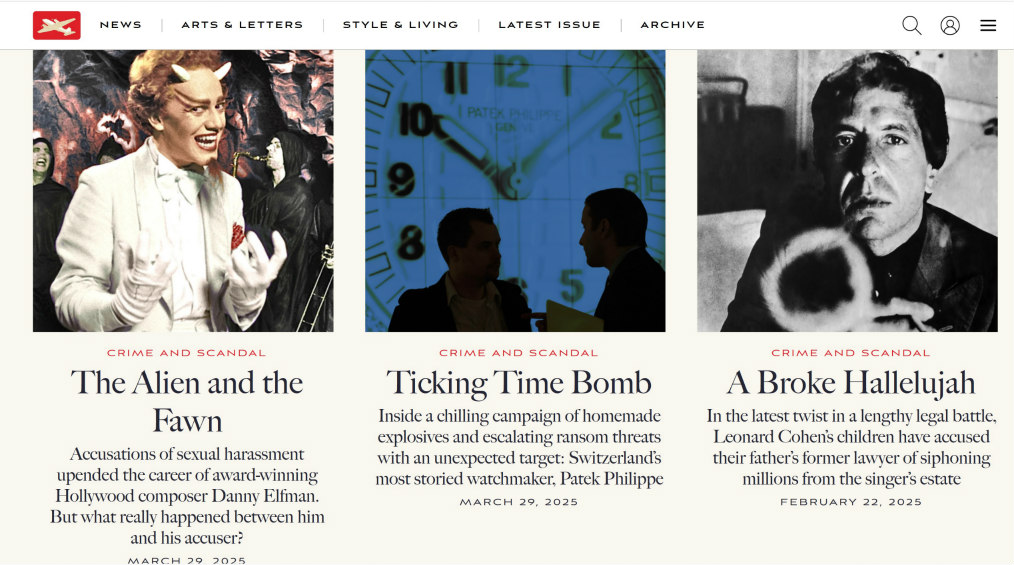
Air Mail is a digital weekly newsletter launched in July 2019 by former Vanity Fair editor-in-chief Graydon Carter and former New York Times reporter Alessandra Stanley.
“Always carry a handkerchief!”
Graydon Carter, you tell your story in your memoir and then say, I’m sorry, I have not finished, I have to give you some advice. For example, you say to write the person’s name on both sides of the place cards for official dinners or parties?
Most people only put the name on one side of those little tents, but it means if it’s a long table you have to walk up and down both sides to find your place, and a round table you have to circulate, which can be difficult in a crowded room. If you have the name on both sides you can find your place a lot easier, and you also can know the name of the person sitting across from you. I don’t know why everybody doesn’t do this, but it was a part of Vanity Fair seating arrangements for twenty-five years and I continue it to this day for anything big.
Was it very important for you to organise the Vanity Fair Oscar Party?
In a strange way, yes, it made a big difference in my time at Vanity Fair. It put the magazine on a map in a big global way. It was a lot of work, and I had a reasonably good time at the party, but I was really happy when I left the party knowing that we hadn’t completely screwed it all up, that it was a success. Back then, movies were a big part of the culture and therefore a big part of what America exported to the world, and the people who ran the movie business were interesting big characters – like Barry Diller, David Geffen, Robert Evans and Jerry Weintraub, and I loved all these people – and that made for good journalism as well. Now they’re all generic executives.
You also devote some pages to Anderson and Sheppard, your London tailor to whom you also introduced your friend Fran Lebowitz. In some pictures I see you wearing a beautiful suit, a tie and cufflinks, but then in the book you tell of your encounter with white short sleeve Lacoste shirts. Do you still wear these?
Yes, every day for the last fifteen years! I have not abandoned Anderson & Sheppard suits, I wear them for special occasions, but as I don’t go to an office anymore I’m giving away most of my suits to my children and to friends who are about my height. I am keeping a dinner jacket, white tie and tails, and two suits for weddings, funerals, and memorials. Otherwise I wear the work jackets I’ve had made for the last fifteen years and the Lacoste shirts. This one’s getting sort of frayed!
In the book you don’t mention your shoes, do you wear sneakers or proper shoes?
I have fifty pairs of beautiful leather handmade shoes from the old days that I wear on special occasions, but now I wear desert boots a lot, which are halfway between leather shoes and sneakers.
One of the things you advise is if you see an item of clothing that you like, for instance in your case the Lacoste shirt, one should buy many because they can go out of production?
That especially applies to women, because women’s clothing changes much more dramatically than men’s. Even I bought twenty pairs of Brooks Brothers boxer shorts because I worried that Brooks Brothers would go out of business, and I have about a half dozen pairs that I haven’t even worn yet, and that’s for the future. If there’s something that you really like, that works for you, in terms of clothing or anything else, don’t be afraid of buying more than one, because the odds are it won’t be around when you go to reorder. They stop everything that’s good.
Can you give us another piece of advice that maybe you didn’t write in your book?
Oh my god, I could give so much, but one thing is: Always carry a handkerchief! I never go anywhere without a handkerchief. There’s so many uses for a handkerchief, especially for mopping up, as I told my sons when they started having children of their own. I probably use mine twenty times a day for one thing or another.
You are an eclectic man and have many facets and one is as a restaurateur. Why did you open The Waverly Inn in New York?
I was drunk when we did it. It was two doors down from the house we used to own in the West Village. It was profitable from the first year, incredibly successful because first of all the place is very cozy. It’s a hundred years old and it’s got four fireplaces and a mural that goes around the entire restaurant, and it’s got a beautiful garden that can be used in the winter as well. We serve good American comfort food and the lighting is very soft, so everybody looks good at The Waverly. I don’t look after the food, although we do tastings, but I do the seating of the restaurant every day.
You also produced several documentaries?
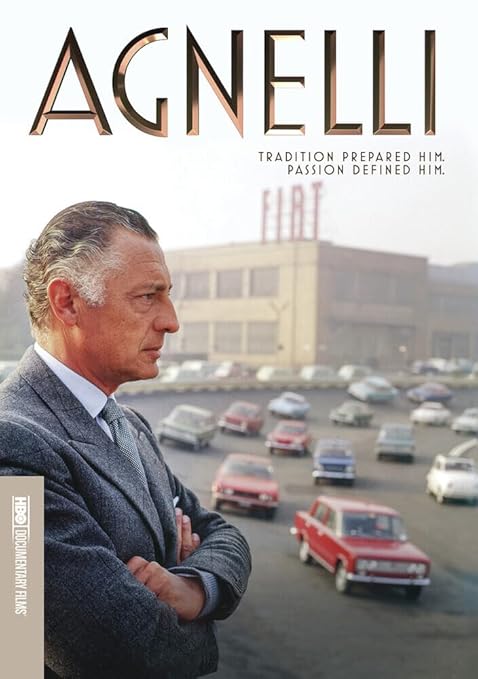
I’ve done about fifteen documentaries and that’s an extension of the journalism we did at Vanity Fair. I do about one a year. I’m not a director of them, but I like coming up with the ideas and arranging the financing. I do all mine for HBO. I have one that’s coming out this year on Karl Lagerfeld, and I did one on somebody close to you, Gianni Agnelli, a few years back. I did Sue Mengers as a Broadway play, I’ll Eat You Last.
Do you still have the same enthusiasm as at the beginning of your career?
I have more enthusiasm. Nobody at my age has the level of energy they did when they were in their thirties, but the intellectual energy does not change.
Thank you very much for this conversation, and my best wishes for When the Going was Good.
Portrait of Graydon Carter © Nikolai Von Bismarck
ENJOY THIS INTERVIEW? SHARE IT WITH A FRIEND.


