
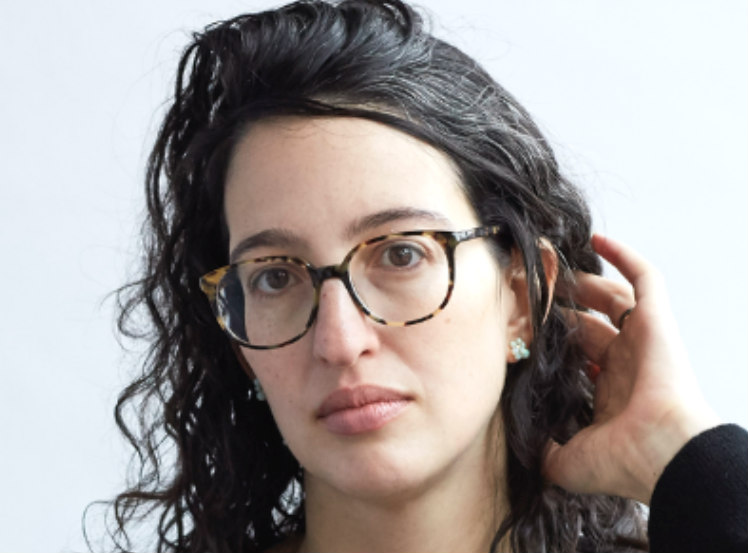
STANDING FOR CLARITY AND COMPLEXITY. Emily Greenhouse has been the Editor of the prestigious New York Review of Books magazine since 2019. She began her career freelancing in Paris, then worked as an editorial assistant at Granta literary magazine in London. After a stint as an editorial assistant to Robert Silvers, the co-founder of The New York Review of Books, Emily was editorial assistant to David Remnick, the editor of The New Yorker, before joining Bloomberg as a reporter focusing on gender and politics. She returned to The New Yorker as the managing editor in 2016, and in 2019 returned to The New York Review of Books. She is the first woman to be sole editor of the magazine, and when she was appointed was the youngest editor in its history. Emily is the daughter of Steven Greenhouse, the longtime New York Times labor and workplace reporter.
22 minutes read time.
You can listen to the podcast of this interview here.
Emily Greenhouse, How did you make your way back to the New York Review of Books as editor?
I zigged and zagged my way. I’m not someone who had the intelligence or the articulated ambition to know exactly what I wanted to do. I thought I was going to be a writer because I love to play with words and language is very alive to me.
Will you now stay there?
I’m always surprised at how satisfying I find work as an editor as a creative pursuit, because I don’t have a byline—but I really enjoy it. And I certainly hope that I can stay here for a good long time, as Bob Silvers and his co-founder Barbara Epstein did. It’s one of the most liberating and liberated jobs in publishing today.
“What we publish is very accessible and very delightful”

“The Art of Editing” – a podcast Greenhouse launched with Lit Hub, hosted by the celebrated critic Merve Emre; art credit Leanne Shapton
Emily Greenhouse, The New York Review of Books became known for the very precise and accurate writing that Bob Silvers had a total commitment to?
Yes, and I was hugely privileged to work for him. In our old office on Hudson Street Bob had this enormous horseshoe desk, and then a field of computers in front of him. He would have four or five assistants at a time, and I was the one girl assistant. He was a hugely gracious and courteous person, and completely obsessed from the moment when we called to wake him up at 9.30 or 10 until 1 or 2 in the morning!
I started this job the week I became a mother to my wonderful now six-year-old son, and therefore it was necessary that my obsession would look somewhat different.
As editor, do you try to bring in people who are similarly obsessed?
Yes, but Bob had his brilliant hands on every single article that was published, and the work that I have done here has often been to open the place up and empower other brilliant editors – including our executive editor, our deputy editor, and a number of senior editors who worked with Bob for decades – to do what they maybe weren’t doing, necessarily, under Bob. They were learning so much, but the former model could be a bit stifling.
What is your obsession?
A lot of my obsession has been with the people in the office and trying to find the best editors and writers. For me, the more people you have reading, and reading catholicly, the more you’re learning about who’s very alive to different subjects and the changing nature of text in this crazy, unanticipated era.
In this changed world of Artificial Intelligence in which many magazines have a difficult time, how is it for the New York Review of Books?
What we really privilege is the mind of the writer and what the writer thrills to or what outrages the writer, and that is a necessarily human thing. There’s not going to be enormous disruption in that sense for the Review. We’re very lucky to have about 130,000 subscribers, but we no longer see the magazine on many newsstands — so it has to be something that you subscribe to or go to a bookstore for. I find that a bit distressing. The mid-century intellectual skywriter culture that Bob and Barbara were regal figures of was exclusive and clubby. We’re living in a different ecosystem now.
Are you reaching out to younger people?
We are certainly trying to expand our audience. I am mindful of the need to reach out to a new generation, by which I often mean people under 55 who are in academia now, in college and graduate school. We think about ways to present them with our magazine as a place of extraordinary rigor, vigor and – hopefully – intellectual delight — that is supposed to, and I think does, incarnate intellectual curiosity.
You’re not the size of the New York Times or The New Yorker, and come out every other week for most of the year. How do you decide your content?
We come out twenty times a year and I would say we’re not in a great hurry. Bob always taught me that it’s not so much the final word but the authoritative word that the reading public can wait for. Even if we’re never the first to publish a book review, we will publish something very thoughtful, that will stand the test of time, and that will really ransack the book under review. But we publish a lot from around the world so it is a very cosmopolitan magazine, just like the New York Times or The New Yorker.
You also publish long articles about political and scientific subjects, and therefore you’re not only literary. How do you decide the subjects of the Review?
That kind of curating is the great fun. In every issue we like to have a number of history and literature pieces – fiction, poetry – and philosophy and science. Ideally I would like to have an article on the environment in every issue. Sometimes we have a graphic novel, which is a way of telling stories visually. We certainly have an arts piece, and as much as possible music. That can be the newest Aida performance at the Metropolitan Opera here in New York or it can be the Bang on a Can festival. I consider myself more of a political thinker and person than strictly literary, and so very often what motivates me and what I shape an issue around is the politics piece.
Such as?
A piece on the falsification of elections in Mozambique, say. I have focused very keenly on the war in Gaza and what has happened since October 7th, and have had the privilege of working with one of the leadings scholars of genocide, Omer Bartov at Brown University. We have a reported piece from Ukraine In the issue that will come out shortly. Alma Guillermoprieto has a long history of writing from South and Central America for us. Fintan O’Toole will write on the political events in the United States with bracing clarity about what is happening. He has no fear in stating the norm-shattering, completely destabilizing, utterly immoral presidency of this country right now.
“We are a very jousty magazine.”
Emily Greenhouse, how do you face the different Jewish voices since October 7th and the war in Gaza?
This is a magazine of the Left, but it is a heterodoxical magazine. I’m proud to say that we don’t publish people who necessarily agree with each other, or the views entirely of our colleagues here. The piece that I am perhaps most proud to have worked on in is by Aryeh Neier, the great human rights lawyer. Aryeh Neier started Students for a Democratic Society (SDS) with Tom Hayden, then led The American Civil Liberties Union (ACLU) and started the Human Rights Watch NGO and later the philanthropic network Open Society Foundations (OSF) with George Soros.
How does Aryeh Neier approach this question?
As a Holocaust refugee himself, and as a human rights attorney. He wrote a piece that was not a polemic, but it was stating why he believed that what was happening in Gaza was a genocide. It was extremely meticulous, extremely cautious, and I found it very instructive to work on such a piece with him and to see how it affected the conversations politically. It’s really important to have thundering moral argumentations of the more polemical variety, but also the very sober, very careful essays like Aryeh’s, who I’ve continued to work with on this subject. I’m doing a piece with him right now on Turkey and Erdogan. I find that thrilling, because it feels as though we can really make a difference.
Isn’t there a tradition of publishing human rights testimonials in the New York Review?
Yes, and Aryeh himself has collected many of these testimonials. I wouldn’t say that we publish articles that take the position of the American Right on Israel and the war in Gaza, but I do feel that between Ben Rhodes, Pankaj Mishra, and Noah Feldman and other contributors, people really disagree with each other. That’s healthy. That’s the mandate of the magazine. We are a very jousty magazine. We’re always fighting about what is good, and what deserves to be covered.
The first and further words of an American Pope were for peace in Gaza and Ukraine. Are you trying to understand what this new pope has in mind?
The first piece in the issue that I was recently closing is about the Pope. The late Pope Francis represented moral authority in a way that we no longer see through much of the world. He was a great moral leader and one who spoke to the poor. Pope Francis came to stand in opposition to a leader like Donald Trump. I was moved by the way Pope Leo invoked the exhaustion of the people in Gaza. That’s a very human way of framing what Gazans feel like. It’s completely horrific and they are exhausted, among many other things.
Will it be interesting for you to watch how the White House and the new American Pope will live together, as there are many Catholics in the United States?
The role of Catholicism in American politics has been a fascinating thing. We published an astonishing report by Mark Lilla, who’s been following this for many years, on Catholicism and liberalism. My understanding of J.D. Vance is certainly informed by his mode of Catholicism. I don’t expect that there will be any kind of grand showdown, but Pope Leo has made pronouncements on migration and we’re pleased to learn of his Creole background. A recent article in the New York Times was about his mother and how educated she is and her pursuit of graduate education and of teaching. And then there is Pope Leo’s time in Peru. I hope that he will be a voice of open, liberal thinking on migration.
What is your point of view on the menacing of universities by the American government?
I am heartened that a few hundred university presidents have gathered together to state their opposition to these pressures that are trying to degrade this wonderful university system, which is really the jewel of this country. It’s very complicated to try to untangle the reality of antisemitism from the exploitation by the presidential administration, but it is our job to talk about complex things and allow them to be complex. So I would never say that there hasn’t been any instance of antisemitism — but for the government to make this the pretense for this preposterous defunding of and cracking down upon our nation’s universities is horrifying. We work with a lot of professors, a lot scholars, a lot of students. To all of us who prize knowledge and expertise it’s very distressing, so I’ve been heartened, as I say, by the president of Harvard, the president of Princeton, the president of my alma mater Wesleyan, who have really spoken out.
Is the loss of a huge number of overseas students weakening America?
Without question. It is completely senseless. It is weakening the country. It is weaking the world. I have friends who are moving abroad. Macron is very smartly trying to tempt American scientists who have lost their jobs to go to France. I’m a French citizen and considered going to school in France. It’s much cheaper and has a wonderful model, but to not have to know what you want to do, to not have to choose what you want to be until you’re 21 or 22 years old, is so freeing. It’s really just the pursuit of knowledge and inquiry for the pursuit of knowledge and inquiry. That is the best of what this country has devised.
Are there not many other things that are difficult to understand, including the acceptance of the new Air Force One plane from Qatar?
The plane that will then go to the Trump presidential library or institute. You can’t believe it. I’m not a lawyer, so I don’t know if that constitutes a white-collar crime, but it is as though the norms and these laws no longer hold water. It’s quite shattering. It goes back to that Access Hollywood tape in which Donald Trump stated his position toward the sanctity and agency of women’s bodies, and his desire to grab them, us. I can’t believe that so many people in this country saw that and thought that’s okay, this is the kind of person I want to vote for. The second term is a vengeance tour, and there is great weakening. There is nothing great being made.
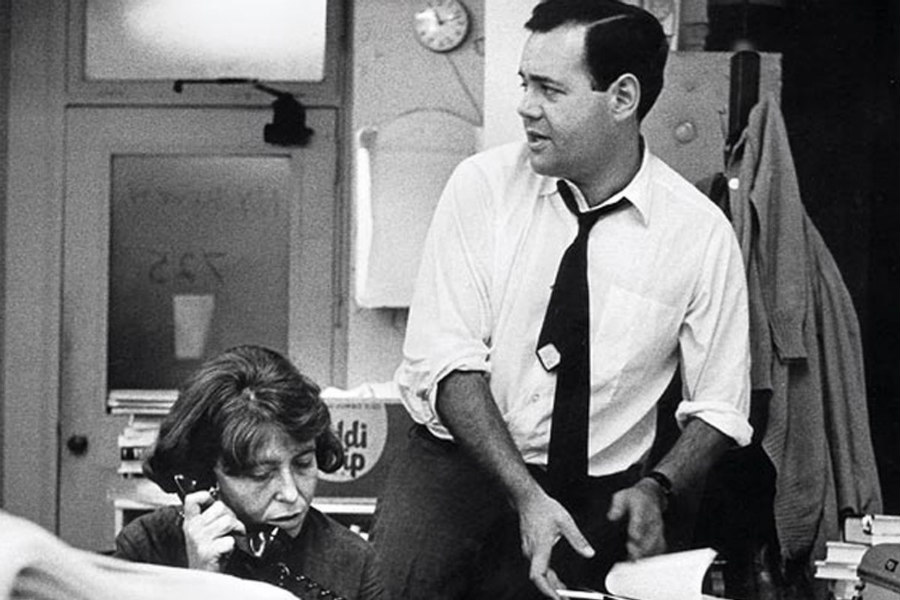
Barbara Epstein and Robert Silvers

Emily Greenhouse as an assistant to Robert Silvers on Hudson Street
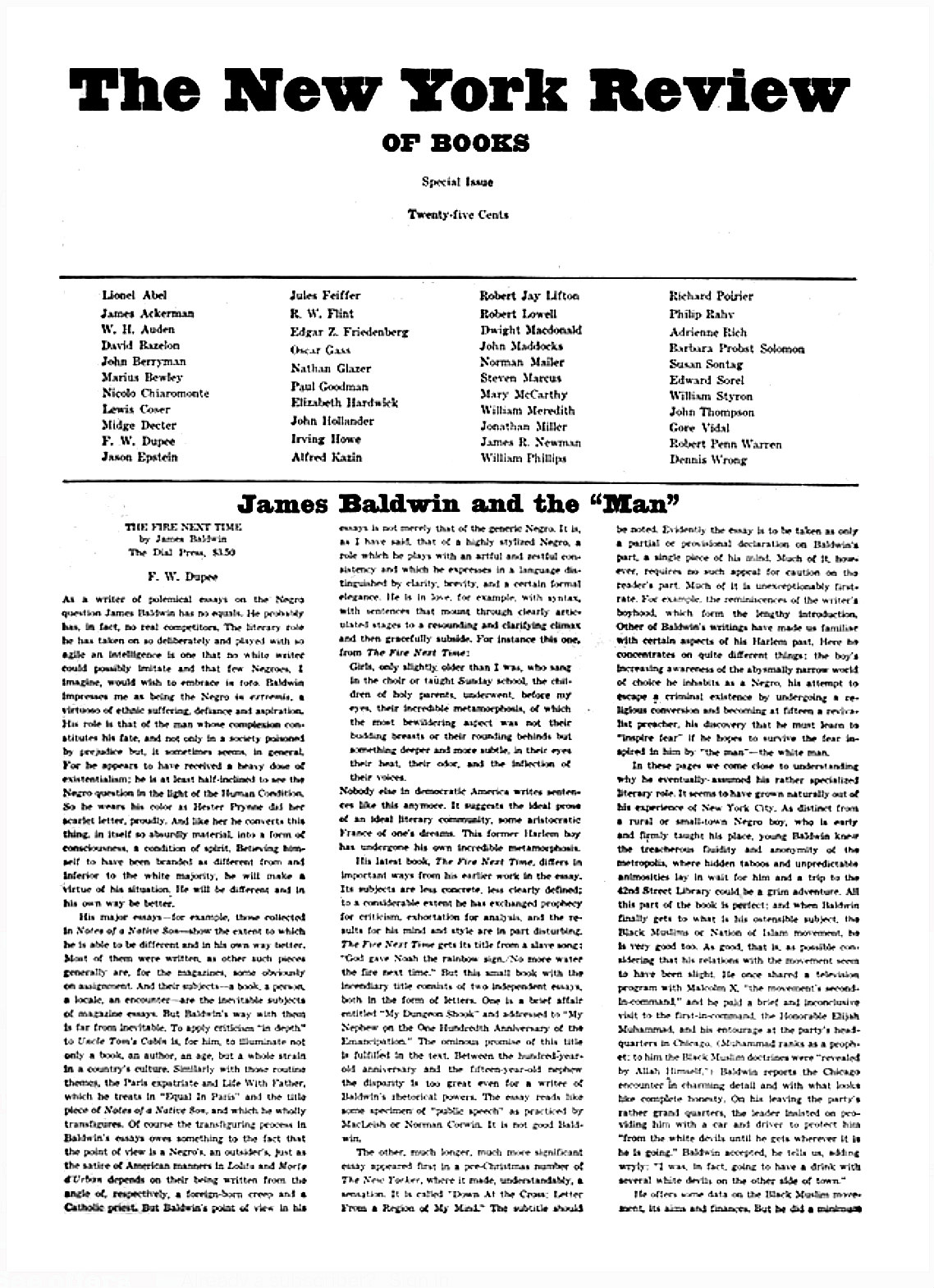
The first issue of the New York Review of Books, from February 1, 1963

Cover of The New York Review of Books from fifty years ago
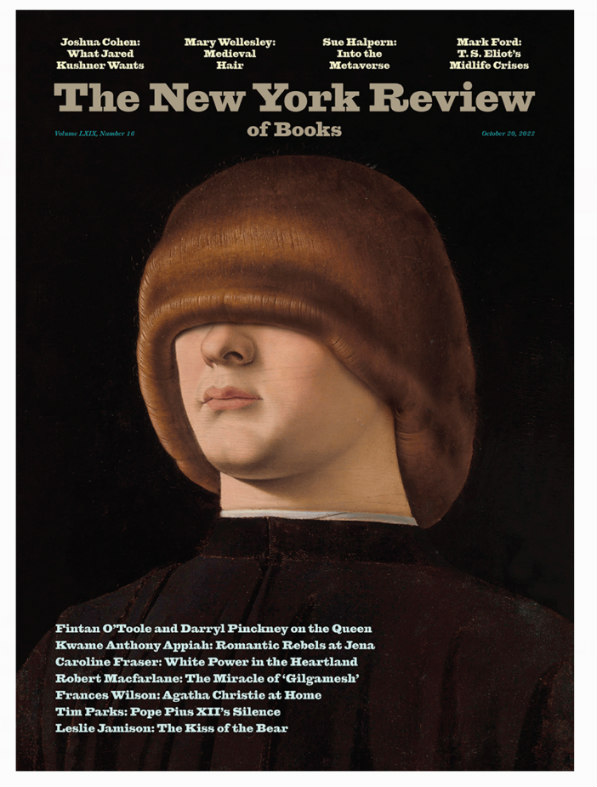
Cover of The New York Review of Books
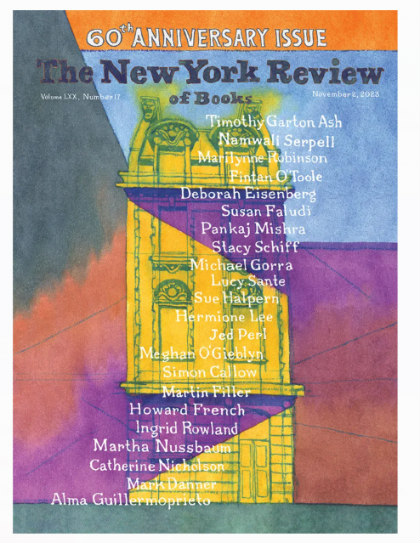
Sixtieth anniversary cover, from 2023, showing the magazine’s new offices on 32nd Street, in Milton Glaser’s old office building, where Push Pin studios was housed and New York Magazine and Ms. Magazine were launched
“It is our job to talk about complex things and allow them to be complex”
Emily Greenhouse, Europe watches the USA for many reasons, including as a model to emulate. Now it simply doesn’t know what to say.
The work that we do here at the New York Review of Books, and at independent publications like the New Yorker and the New York Times and many others, is that we need to state plainly what is happening. There is a real defiance now in what we’re doing, but I trust that Europeans, being the readers that they – you — are, will acknowledge and will read what we are doing and continue to do.
Is American education going to continue to be the pole of attraction it has been for several generations of international students?
No, and cultural exports will change if this Hollywood tariff or whatever he’s calling it, this protectionist measure will happen. America is no monolith, and this administration is gutting the Department of Education, the system of education. I believe that there’s enough will to keep things together at liberal arts schools, at Ivy League schools; and if my worries are for the very privileged they are not only for the privileged, because everything is interlaced.
Do you receive many letters from your readers?
Yes, and we have a grand tradition of publishing letters to the editor and of publishing really heated, erudite exchanges between readers and our critics and writers and essayists and reporters. We’ve had many writers on the creep of authoritarianism. I don’t know if you could even call it a creep now or just a kind of out-and-out explosion, and our readers are hoping for more. We are trying, just like everyone else, to make sense of what is happening. Unfortunately, there is so little sense sometimes to the decrees of the administration. It’s unclear who is writing these executive orders, where they’re coming from, whether they are applicable.
Do you have the feeling that there is a new sense of fear in America?
Yes, there is a lot of fear. The abduction, the kidnapping, the deportation of students, of undocumented residents and of some citizens, is beyond chilling. My former colleague, Masha Gessen’s comparison to their upbringing in Russia is bone chilling. We published Tim Snyder, who’s been very clear on the road to fascism and on what is happening. We have a piece in our new issue by Christopher Browning that says this is happening here. We work with scholars of the Holocaust, scholars of fascism, who say look around. I would be lying if I said that I was not afraid, but it is my job to produce the most courageous and truthful report, for instance on the genocide in Gaza, that I possibly can.
There’s a lot polemic that the word genocide is inappropriate and they also criticized the previous Pope when he used this word ?
My care about language is really a care about truth. That is what this magazine needs to be. We’re committed to stating really what is happening.
Do you feel that people now read less or that writers find it difficult to write?
There is a great dilution of quality and a great devaluing of complexity. This magazine and the work I’m so privileged to do is a way of trying to assert and argue for the importance of complexity.
When people are on their phones they are receiving a lot of information, a lot words. That’s not a priori a bad thing, but it is our job to assess where those words are coming from, who is positing, who is writing, creating, speaking those words. In this rush to gain the attention of teenagers and of people in their 20s, and sometimes of people younger than adolescents, a lot of real thinking and critical thinking is being lost.
The New York Review has always stood for clarity and for complexity?
We’re always going to be a print magazine. We of course publish online and we publish everything we do in print online, but it’s a slower and, I hope, very rigorous defense of quality and erudition and expertise. And it’s not pretentious. What we publish is very accessible and very delightful. I really stand against the dilution of the quality of content that I perceive is happening in a lot of places, and sometimes it’s very sad to say that simply the printed word, sometimes simply text, is under attack. But I feel that that’s true to some extent and that that is what we are defending.
Once they read a book review of yours do people then go and buy the book?
Our magazine has never been primarily interested in selling books. We’re trying to talk about books – which is to say published material, published stories, published novels, poetry, et cetera – as a manifestation of a human idea, and of something that is released into the commons and that is then digested, read, appreciated, reacted to.
Is it one of your jobs here to create a younger generation of critics?
Yes, and I feel proud that we have managed a generational shift and made the magazine more youthful, more female, perhaps more racially diverse, while still very much being itself. I’m reaching out to people who are writing 800-word pieces, or even long arguments, on social media, that I think have the cogency belying a real critical thinker.
The humanities are neglected and therefore the formation of a young person today is very different from the past. Books seem to be less and less important in homes and in schools, and people write and read a lot of messages, but this is not accuracy.
We can see everywhere how that is harming our democracy. It’s very dangerous. The New York Review of Books is one small pebble in this ocean, this quest, but for the vitality of the thinking mind and ultimately of a democratic polity, we are trying to constantly assert the importance of the writer, of serious work that gets published.
Is literature above politics?
Much of what has happened in the United States is a cleaving away from what is actually true and actually fact. It seems it no longer matters to people as much. There’s less local press, less knowing who the reporters and writers are. There’s much less interest in literature and in the cultural heritage that we all share. That’s very concerning.
The resurgent interest in the African-American writer James Baldwin was heartening five years ago after the murder of George Floyd. The Review has had the great privilege of publishing Baldwin. There’s a real trendiness, too, around writers like Susan Sontag and Joan Didion; the Review has published those writers and there sometimes is interest in public philosophers and public intellectuals. That’s not bad. I don’t want to say that we pursue rarification, but a kind of refinement and cultivation and literary culture is certainly being turned against in some way. It’s sad.
Thank you, Emily Greenhouse.
Thank you. It’s such a pleasure.
I don’t like the idea that you ended with the word sad, but it’s also an incentive to spread the voice that humanities are important.
They are.
Portrait of Emily Greenhouse; photo credit Annie Schlechter
ENJOY THIS INTERVIEW? SHARE IT WITH A FRIEND.


