

BUILDING EXPERIENCES FOR LIFE STORIES. David Prior is a travel writer, editor, and the founder of PRIOR, a travel and media company that curates immersive journeys and offers custom travel planning. He was formerly a contributing editor at Condé Nast Traveler and Vogue Living, and his work has appeared in various publications like T: The New York Times Style Magazine and WSJ.
25 minutes read time.
You can listen to the podcast of this interview here.
David Prior, you grew up in Brisbane, Australia, why did you go to the University of Gastronomic Sciences Pollenzo, Italy, to study Slow Food with Carlo Petrini?
I wanted to go out and experience the world. Food is a gateway to the rest of the world. I finished high school and discovered nightclubs and partying, and then landed in a kitchen in Sydney. On Tuesday nights, I used to work in a cooking school where I would do the dishes, but it was a great opportunity to listen to cooks and learn about their travels. One time a chef had come back from Piemonte in Italy and described the University of Gastronomic Sciences in Pollenzo. Since I hadn’t gone to university, and that would be very strange for my overachieving family and siblings, I decided to write a letter to them. Two weeks later I learned that I had a scholarship.
What did Carlo Petrini teach you?
I landed in Bra, Piemonte, with a suitcase and was there for three and a half years. The international nature of the student body and the philosophy of Carlo Petrini and Slow Food around protecting the diversity in the world appealed to me. They have the very well-known in Italy Presidia products, protecting biodiversity and also cultural diversity. That philosophy around preservation but also celebration of beauty and diversity, inspired my approach.
“Australia is the most visceral example of humans’ connection to the power of the land.”
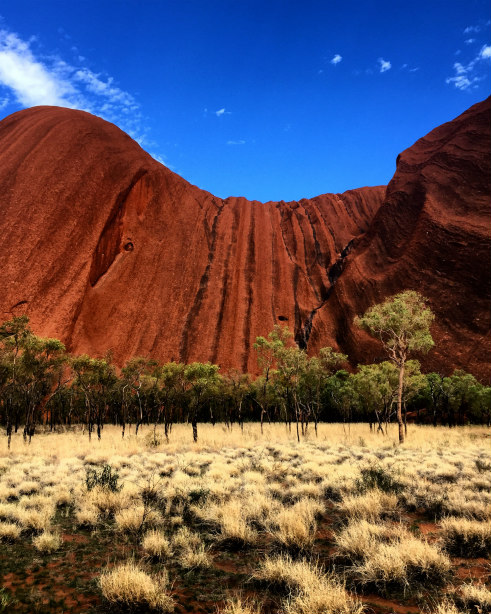
Uluru in Australia is sacred to indigenous Australians
David Prior, Carlo Petrini suggested you work with Alice Waters in California as director of communications at her restaurant Chez Panisse?
Through the university I went to a young farming conference in Pueblo, Mexico, with Carlo Petrini, sat next to Alice and we got chatting. She invited me to come and do an internship for Slow Food Nation, an event where they created an incredible garden in front of City Hall in San Francisco. Alice’s philosophy similarly appealed to me from a food perspective: simplicity of ingredients, celebrating culture in that way. I didn’t want to go back to Australia necessarily so at Carlo’s suggestion I went to work for her. Alice operates in a very small way with a very huge international scope, so working with her very directly for a number of years and writing articles with her was a gateway.
What is the cuisine of Chez Panisse?
It’s called California cuisine, but really it’s about celebrating whatever the farmers are growing in that particular region. When I travel the world, that is super exciting to me. The first thing I do very often when I land in a particular place is go to the market, because that becomes a roadmap around what you’re going to eat, what’s in season, what’s the culture. I learned that from Alice. Food is my lens in which to understand the world. Alice was very gracious and I travelled often with her and then would write articles. Deborah Needleman, the editor-in-chief at the New York Times Style magazine, gave me my break in the New York media world.
You started travel writing for several different magazines and newspapers. How did you become a name in that field?
I would just travel to a place without a story in mind and drop myself there and find the story, whether it was a guide to the Riyadhs in Marrakesh, or going to Sao Paulo and discovering that at a certain moment it had the best nightlife of anywhere in the world. I’m able to meet people and connect with people at every level to understand what is special, what is the story, what is the only in factor in a particular place. I was writing about a wide variety of things, and the signature thing that I would do is really tell a story of the place and allow people to understand what is the essence of that. Which led to what I’m doing now.
How would you choose the particular places?
On instinct. It’s just like any editor; what are people talking about? what am I interested in thinking about? I have a sense of curiosity generally, and then also a sense of romance. Also I didn’t get to travel when I was growing up, so sometimes I would just put a finger on a map and then I would go there, because you can always find the stories.
During this period when you were travelling, did particular places impress you or remain in your heart?
I went to Syria a couple of months before the civil war started and, for me, Damascus was like Rome and Aleppo was like Florence. At that point people were talking about Damascus as being the new Marrakech, which seems completely absurd at this point. The lesson in that particular trip is that everything is so fragile and that it can be gone. Aleppo is just not there in the way that it was. The idea that we cannot take for granted any of these particular places and cultures is a motivating factor. I’ve travelled all over the place and in many ways you can find something special.
What about Australia, your country of origin?
I wanted to leave Australia for my whole life, but when I was at Conde Nast Traveler I ended up being the person responsible for Australia, ironically. I had to learn to love my country again, as a traveller looking through a particular lens. For me, Australia is the most visceral example of humans’ connection to the power of the land. You go to India for an experience about belief. Food is the great doorway in Italy. In Spain it’s cultural celebrations and festivals, Mexico handicrafts, Morocco understanding how the home and hospitality becomes critical. All of these things are in all of those different cultures, but very often I think about entering a place from a particular point of view that becomes the opening factor.
When you studied Australia, did you read the books of Bruce Chatwin or Robert Hughes?
I re-read Bruce’s book Song Lines about 18 months ago because there was a referendum in Australia about indigenous recognition and rights. I was somewhat involved in the Yes campaign, and so I revisited that to understand a little more. I know Australia so well, but rediscovering it was really about being in environments that I used to find unappealing. Travelling and experiencing the desert or the red centre at Uluru are things that I would never have done, because I wasn’t interested in exploring my own country. Now I’m an ambassador for Tourism Australia. Re-finding that country has been something quite profound for me.
“PRIOR has a very global reach and attracts a certain type of person.”
David Prior, in 2018, you made travelling your business and created PRIOR, a community of curious travellers. Bloomberg named you one to watch, and also said that PRIOR would influence the future of travel. Why did you create PRIOR?
I was creating stories in various different places, trying to get people curious and inspired with writing, and as an experiment I took a bunch of friends to India over 21 days, wondering how I bring a magazine story to life. I created this company basically because I took a trip and took some friends and it got some attention, and I understood that I really loved hospitality and creating these experiences to spotlight the best of a country and then amplify it. It started as a small cohort of travellers that I knew or it was word of mouth and then 15 months later the pandemic happened and things changed radically.
PRIOR organises group trips to Nepal, Slovenia, the Nile, Uruguay, Provence, the Dolomites, very varied journeys. Does a group of people tell you they want to go somewhere or do you propose the destinations?
It’s a combination of the two. Sometimes we do bespoke trips for individuals, and sometimes we create these group experiences. I like the group experiences, because sometimes these experiences are better shared. It also gives me a bigger canvas in which to create experiences. We create trips in places that I’m curious about. It’s somewhat selfish because then I can go there, do the research and development and then bring something to life. It’s very eclectic indeed, and how I choose is just by instinct around where I think people will go and what I’m curious about.
What kind of people travel with PRIOR?
There isn’t a barrier to entry other than curiosity, and also the types of experiences that we’re doing. When I started this, my editor-in-chief at Condé Nast Traveler at the time said, you are literally the last person that I thought would host group trips, because you’re so out there and independent, but I found that it can be a special experience. People who have somewhat of a creative bent have a sense of romance, and are curious about the world is the only thread. Some trips are more expensive because these things cost to do well very often, but others are not so much. I’m interested in not being a travel agent for oligarchs. We have a free newsletter and a very inexpensive subscription so we can inspire people to travel even if they can’t afford it yet, or they can do it themselves. Some things are very expensive because it is expensive to close down XYZ cathedral or house, or privatise something, but I come from the school of Carlo Petrini and the simplest, humblest thing is often the thing that most surprises people, and it’s also very often this mix that attracts me.
Do these groups of different people from all over the world that you put together become friends or do they hate each other?
Hating each other has almost never happened! I’m on dozens of WhatsApp groups from people that fell in love with each other. We did a trip with Madison Cox, and Deborah Needleman, my former editor, and I hosted a trip about textiles in India. Then a group of women from Brisbane who I’ve known since I was a child, and then other random people from all around the world, and then they’ve become great friends. This happens one trip after the other. Martina Mondadori and I hosted an “Inside Milan” trip. Cabana magazine and PRIOR have a partnership and there were people from Kuwait, Turkey, Australia, the UK, the US. PRIOR has a very global reach and attracts a certain type of person.
Why did you decide to establish yourself in Milan?
Italy is our number one country. It was also the first place that I ever travelled to and the university was a formative experience for me. Maybe I’m channelling that thing of when I was most curious in my life. The other thing is that Milan is in an interesting dynamic moment. I love Italians. And then also Linate airport makes my life very easy.
Where is PRIOR based?
The main offices are between New York and newly Milan, but we have people in Buenos Aires, Uruguay, Paris, California…. all around the world. It’s split between people that are editors and writers or people that are more focused on the creative and then people that are organising – they’re making the calls and liaising with the fine details of the very complicated execution of these trips, either for individuals or for groups. And then travel designers, people that are expert at creating and weaving together experiences in particular places. Increasingly we’re building our own execution and experiences on the ground. The thing about the travel industry which people may not know is there are travel agents and there are tour operators and these travel agents and tour operators often use the very same fixer. So you’re gonna get the exact same experience even if it’s coming from a different packaging. What I would like to do is make our travel magazine come to life and execute it ourselves, which is quite different in a lot of ways. We’ve started with Italy, and then we’re adding countries and experiences that we have an exclusivity on, whether it’s a creative take on a particular aspect or whether it is an exclusive.
If a person comes to you and says,”I would like to do a trip,” is it pre-packaged?
Some will be pre-packaged, but in those experiences we will visit the Nocciola farmer in the Langhe or a particular winemaker that doesn’t offer tourism experiences. The trips in Piemonte are close to my heart, and they’re also not expensive because I want people to experience that, so they can be prepackaged in a way. Other things are entirely bespoke. When we got a private visit to the Last Supper (that you can buy and other people can buy that) we also visited the home of Umberto Pasti and Stephan Janson, which is a super special experience. I’m going and visiting a Berber village in Morocco because I want to make sure that if we are sending people there that they experience the rug making in the authentic way. I’m building experiences now with this team and that applies all around the world.
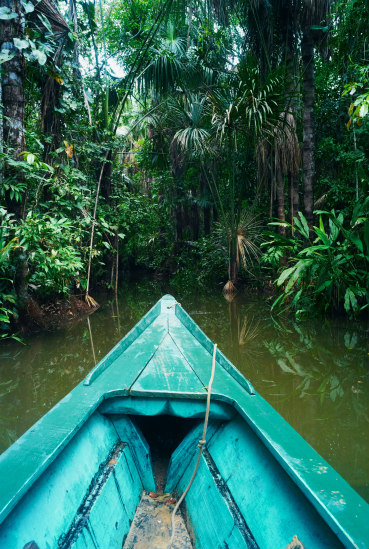
The Peruvian Amazon

The Souk in Damascus, Syria

Alice Waters and David Prior
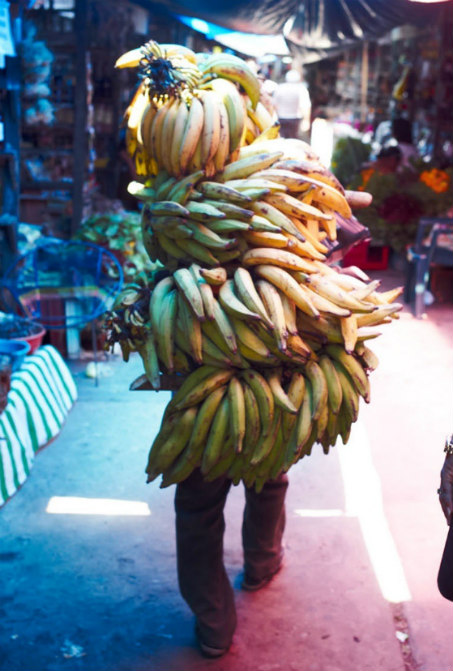
Varanasi, India

In Eastern Nepal
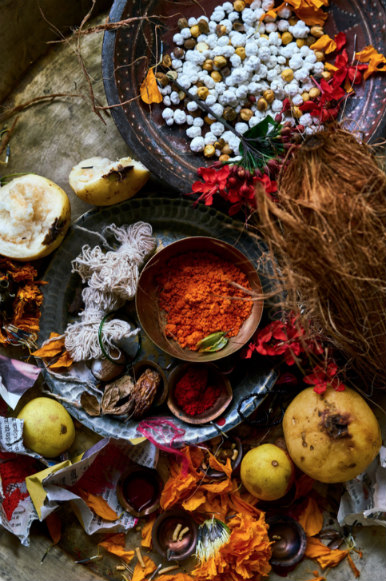
Iquitos, Peru
“If you want to be involved in something that is predictable, don’t get into the travel industry!”
David Prior, do people nowadays, even with economic problems, inflation and wars, still travel a lot?
I would say that the interesting thing about the pandemic was that it was happening for some time that the idea of luxury or nourishment of oneself, or an indulgence was changing from what you would put on your back or the bag that you would hold to an experience. And then the pandemic really turbocharged that. People want to find some level of connection. We’re very disconnected in this connected world.
Do you have to change according to politics and, sadly, according to what’s going on in the world?
The pandemic made me very agile, and then in terms of world affairs, yes, you have to have a wide scope. You have to manoeuvre in that way. Gaza and Israel, Ukraine and Russia notwithstanding, and also parts of Central Africa. The travel world has matured a little bit because before if something would happen in Morocco, people wouldn’t go to Istanbul for whatever erroneous reason. Now people are more willing to understand a little more and are willing to travel to places. Once they would completely discount an entire region if there was one place that was having an issue. We can’t tell what will happen in the world. Travel is a volatile business, as the pandemic proved and as conflict happens and then also economic stability. If you want to be involved in something that is predictable, don’t get into the travel industry! (laughs) But that’s part of the beauty of it.
There is budget travel and high-cost travel and hotels are more and more expensive all over the world. How do you steeplechase around this for your travellers and find unique places and people to visit?
I am able to connect at every level with people, whether it’s the right guide in India or whether it is Prince XYZ. I’ve never had a problem connecting at every level in wherever I go. I’m not sure why that is, but I think it comes from a genuine curiosity and respect. I also think that that’s something that I learned from Carlo Petrini, because he’s absolutely the master of being able to go to places and experience it in dare I say authentic – which is a word that I still like, but has become a cliché. You can experience that in ways that are not expensive. Also, the most expensive thing is not always the best thing. Travel has the ability to, in certain places, shine a spotlight on what is special about a place and tell that story and allow its preservation because of that. But that intensity of spotlight can also burn it and destroy it, and we’re in a moment where how you weave that is very difficult.
Is yours an elite proposition?
I think everyone should have a passport. I hope that a lot of what we do is at the very highest end because that’s part of the business, yet you can go to Venice for the day and experience something that is not outrageously expensive, if you eat at the right place and understand what you need to see. Maybe you’re not staying at the Gritti Palace or you’re not staying at The Cipriani – not that that necessarily is, in my view, the best – but there are ways in which you can do that, and there are ways in which it’s incumbent upon us to tell the right story about what is special so that people respect that.
Are more people who want to do your trips old or young?
It’s mixed. We skew younger and much more from the creative world. Our average age is probably 42 to 44. There’s a big spectrum. What attracts us to people is the curation of what we do and the creation of it, it’s not so much about age. At any age, you can be curious about certain things. Of course, older people who are retiring have more disposable income and time in which to travel, but I find that working people want to be able to work from home or work away from home for a period of time and very often that ties into travel. Similarly, people in the United States are negotiating 5 weeks’ vacation rather than 10 days. That just shows you that younger people are really valuing the ability to be able to travel.
Which are the places that people like to go to most?
After the pandemic we saw a big rush towards Western Europe and familiar places that had a sense of safety and glamour. You saw the Amalfi Coast explode, the Cote d’Azur as well, and that hasn’t really slowed down. Right now people want to return to Asia, Japan is just huge, the most popular for sure, and now I start to see it in Vietnam and people returning to India. People are moving to places that are less familiar, which is exciting, so I wouldn’t say there’s one particular destination but there’s a big pull right now to Asia in general.
If I want to take my family to Scotland, for instance, and want to not just to go to Edinburgh or Glasgow but visit the islands around, would you be organising that specially?
There are some prepackaged things, because I want people to be able to experience those and it allows us to refine our own product. There’s an extraordinary project by Anders Holch Povlsen who founded ASOS, who had a terrible tragedy in Colombo with his family in the terrorist attack. He’s very involved in re-wilding, and in Scotland he’s the largest private landholder. His project on his gigantic estate is called Wildland, and he’s created all sorts of different accommodation options. That would be the first thing that would come to mind. Scotland is a destination that people are interested in and next summer will really be a spot to go to, like Norway this summer is definitely a thing.
You offer many different ways of travelling?
We aren’t the everything store, and I will be very frank if I don’t know the place particularly well, or I don t know the right person that I trust to ask. But there is an amazing geographic spread, because once you have the trust of certain people in certain places, or you ask someone about the place that they’re from or the thing that they care about, the doors open so quickly. It’s about understanding and connecting with the right person.
Are some clients very fussy travellers?
There’s a reason why we do the editorial and why that’s really important, and there’s a reason why the brand or the company looks the way that it does. It becomes a very self-selecting thing. It is better for me to say no to someone if I don’t feel like our values and aesthetic are aligned than it is to take it on board and not do a good job. Because ultimately, it’s not a democracy of taste. In my company, I can meet people where they are, and we can make it a collaboration around something, but if they’re not aligned, it doesn’t work necessarily. That’s why I didn’t call it “Amazing Adventures.”
What are the people who come to you really looking for?
Something that’s not fake. In the travel world, there’s a lot of things that are pastiche and fake of a place. The only places that I’m interested in reflect the culture or the environment, and those are the only places that the people who come to us are interested in as well. Sometimes what you need to do is find the essence and exaggerate it in a sense. Sometimes that gets to the ultimate truth of it. You want to go to Seville and experience flamenco, but you don’t necessarily want that kind of tourist thing. How do you experience it in the most majestic way, the most dramatic way that is true to a particular place, but that is heightened? I’m always thinking about it in that way.
For instance, you might describe the anatomy of Mexico City via its markets?
Absolutely. Its markets for sure. The absolute essence of it is that street life thing. That connection is exactly how I think about Mexico City.
Why did you start to collect textiles?
Because very often the people making those textiles are stewards of culture. This interesting mix of function and beauty can be very much about daily life, but it can also be the expression of raw materials of a particular place. You see a lot in a textile about where it’s from, both in terms of the natural world, but also the culture, the aesthetic, the colours. It’s a very codified way of collecting things. I collect all sorts of things, but textiles I find to be something that you can feel that there’s a memory in there, if that makes sense. These things are very beautiful in general, so it comes from a beauty place, but there’s also a depth to it. I very much collect the things that I find on my travels because it’s all storytelling. It’s your own story.
Why is travelling so important?
it’s one of the things that can save us. If you understand the humanity of other people and their situations, and understand that it’s only by luck that we’re born into certain places. If you understand that, there is a different kind of decision-making people would make, whether it’s on conflict or climate change and all of those things. It becomes the story that people tell themselves about the world, about themselves. The exciting thing about doing what we do is that I can put people in the story and help them craft that story that they want to tell themselves about the world and themselves. It’s about building your own identity and understanding that it’s an enriching thing for yourself and everyone around you.
Are people travelling less because they can Google everything?
We’re in an interesting moment where it could go either way with AI. You can get a perfectly strong itinerary now and it will only become more refined by saying, “I’m interested in this place, create me two days.” It’s getting better and better all the time and will give you a good itinerary, but the access and the connection to people and the feeling of things is not going to come through a device, so will only become more valuable. People want real life experiences. We don’t know exactly where that will land, but my gut instinct says the desire for connection will be so strong that that will be the thing that people ultimately want. The irony, of course, is that we think we’re connected, but we’re actually disconnected.
David Prior, thank you very much for your time.
ENJOY THIS INTERVIEW? SHARE IT WITH A FRIEND.


