

GLOBALLY RELEVANT DESIGN. JENNIFER ROBERTS became the Chief Executive Officer of Design Miami, the global forum for collectible design, in 2015. She has introduced several new verticals for the company including Design Miami Curatorial Lab, a strategic consultancy to help businesses build cultural capital. In addition, Roberts successfully launched Design Miami.Paris and developed new event formats including Podium and In Situ. Born and raised in Manhattan, schooled in London, she has a residence in the unspoiled jungles of Ilha Grande, Brazil.
25 minutes read time.
You can listen to the podcast of thi interview here.
Jennifer Roberts, what is collectible design?
Collectible design is rare, unique and one-of-a-kind; over time, pieces of collectible become design artefacts of the specific time and place in which they were created, just like a work of art. Some of the great architects of the 20th century, like Frank Lloyd Wright, Jean Prouvé or Oscar Niemeyer for example, when designing houses would create bespoke furniture for those homes. Today that material will often come into the market through galleries that are experts in that designer, that architect or that period. The pieces are typically unique, rare or limited edition, so it could be a prototype for example. The people who collect it tend to be people who look at the material that they live with in the same way that they look at art collecting.
What did you do before you became the CEO of Design Miami?
I’ve been with Design Miami for half its life. Before Design Miami I studied the decorative arts in London for a year in a post-graduate diploma programme through Christie’s. I fell in love with the decorative arts and architecture, looking at the built environment as a societal and political reflection of a period of time – much like art history. Originally I wanted to be an antiques dealer, so I started buying material in London while I was in school and selling it at the flea market in New York while keeping a full-time job. I realised very quickly that I was the only one repacking my car at the end of the day with my 18th century objects – all of the 20th century vendors were driving off with empty vans! The material that I liked was not in fashion at the time, so I gave up on that idea when I realised I was never going to make a living.
“The interior design market comes through Paris.”
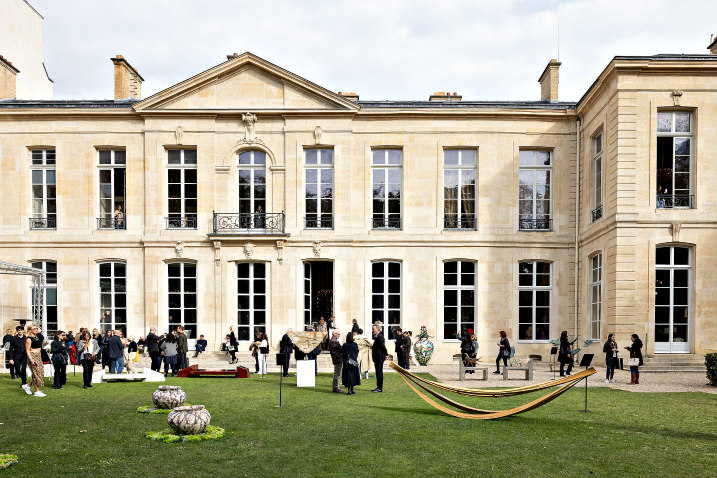
Design Miami.Paris 2024
Photo courtesy of Ivan Eorfeev for Design Miami.Paris
Jennifer Roberts, you worked for a time at the magazine Antiques run by the Brant family?
Yes, and I started to observe the market was really shifting. All the antiques dealers were complaining that they were going out of business and people were dying off and there was no one replacing them. But in actuality there were people replacing them, they were just defining themselves differently – and those were the design galleries. At the time, they were saying that they were 20th-century decorative art galleries and the departments at Christie’s and Sotheby’s were 20th-century decorative arts, so it was a different marketing speak around the material but ultimately it was a continuation of what the antiques dealers were doing in a new and fresh way.
It seems you identified that pretty early on?
When I was working for the magazine Antiques I was selling advertising and I thought I’m going to get these guys to advertise with us – and of course none of them wanted to be affiliated with Antiques. Then I realised that the Brants also collected design and that there were all these people collecting design and there really wasn’t a publication for it. I was living in Brazil – and there’s a whole long story there – but basically I came back and they asked me to work for them again and I told Peter Brant’s son, a guy named Ryan Brant who I adored, that if I were in his shoes I would be looking at design and architecture. A few days later he said, Hey, we really liked your idea. Do you think you would stay on and do this with us? And so we started a magazine called Modern, which lasted for about 10 years, and it was design, architecture and decorative arts.
When did you launch Modern?
In 2009, just after the Yves Saint-Laurent sale at Christie’s where the Eileen Gray Dragon Chair sold for $26 million, an incredible record for the market. I launched Modern in Basel, Switzerland, at Design Miami.Basel on preview day. Somehow they let me make an offer where in exchange for answering five questions I would give the VIP visitors a free subscription, so I got this incredible list of subscribers who were genuinely interested in design and architecture and we went on from there and had a great run. The magazine was terrific, a lot of fun, maybe a little bit ahead of its time. Then I realised that the market was shifting yet again, and that instead of spending $60 to $100,000 a year advertising in a magazine, they were spending that same money on participating in fairs where they could meet the potential clients in person. So I started talking about doing a show with an infamous show producer in New York called Sandy Smith, who unfortunately passed away about a year ago. He had started all the niche market art fairs and really owned the relationship with the Park Avenue Armory. Later on, that became the Salon Art + Design Fair which I helped them start with the Syndicat des Antiquaires, so we had a very interesting roster and a very nice mix of dealers – 18th century to contemporary – but eventually it evolved into more of a design fair and it’s gone on to other iterations since.
What has changed in the world of collecting in the last 25 years?
First and foremost, the collector of 25 years ago is very different to today. People are much more eclectic in their collecting and less afraid to mix an old master with modern furniture. In the 1990s, when I worked for the magazine Antiques, there was a gentleman who had a collection of chests of drawers that were from all the major cabinet makers of the 18th century on the Eastern seaboard of the United States. That kind of collector is very rare today. We’ve evolved, and antiques actually are on the up and up with younger generations and it has a lot to do with affordability. Sometimes people find that they’re priced out of a market, but it doesn’t mean that they don’t like or appreciate the work. I see a lot of interior designers today saying, These Chippendale chairs are $12,000 versus the Gio Ponti ones that are maybe multiples of that. It’s all cyclical and eventually everything comes back.
The next Design Miami.Paris fair from October 21st to 26th 2025 is at the Hôtel de Maisons, which was Karl Lagerfeld’s house. Do your fairs at Miami, Basel and Paris each have a different flavor?
Absolutely, the fairs take on a lot of the personality of their locales. Miami is where we were founded and has a history of being experimental, challenging the norms, thinking outside the box, and unabashed creativity. It’s our flagship fair and our largest and this is the 20th anniversary of that fair specifically. It’s also the fair where you see the most contemporary material, and it’s a 70,000 square foot tent with over 70 exhibitors. Many of the designers shown are at the beginning stages of their career and some of our top international galleries are doing 65 to 70% contemporary, the rest being 20th century historic and sometimes a little bit earlier. In contrast to Paris, in Miami we are in a giant tent that’s just across from Art Basel on the park. We also get about 35,000 people through that show.
Why Paris and why in an 18th century house?
Our European galleries have been asking us to do Paris for a very long time. They really felt that there was an opportunity there. Everybody comes through Paris, so it made a lot of sense. The interior design market comes through Paris. They still shop at the galleries and at Les Puces, and it’s a really active community. Many of our expert galleries are based in Paris and we decided that we wanted to give a different kind of experience. We looked at over 45 different locations in Paris, at which point L’Hôtel de Maisons was presented as an option and it hadn’t been seen in a public capacity before. With an 18th century background, I saw the potential and how you could do a really interesting contrast of the 20th century material in that architecture. It was a stroke of luck that we got that building and could create something that was so intimate and people love to come because of the building and the garden and the way that the galleries present in there. It’s something very special, and everyone remarks how happy they are to exhibit there at the end of the year. It has worked really well, with all the interior designers from around the world and collectors from everywhere: the Middle East, South America, the US. They all come through that show. It has been really extraordinary.
“All of the great architects have done furniture.”
Jennifer Roberts, what will be showing this October?
We have a handful of new exhibitors this year. I’m pleased to announce that Yves Macaux, the foremost specialist in 1900 Vienna – so Wiener-Werkstatte, Vienna Secession – will be exhibiting with us for the first time. Another gallery called Side Gallery from Barcelona are going to be doing 1960s/1970s Japanese design and a lot of that will be fresh material to me, so I’m really excited about it. We have a gallery from New York called Patrick Parrish, one of the early galleries from Design Miami, and Benjamin Paulin is doing an exhibition in one of our courtyards which will be an elaboration of a work that his father had already designed, where architecture and furniture become one. Mitterrand Gallery is showing the granddaughter of Les Lalanne, a jewelry designer who works in the same techniques as her grandparents. Friedman Benda is coming with a very global roster of designers. They’ve been doing the show since we started it, and represent Formafantasma from Italy, Joris Laarman from the Netherlands, Frida Escobedo from Mexico, Elliott Hundley from the US.
Will the 20th and 21st century designers become classics? Jean Prouvé for example became extremely important and expensive. Is this going to last or not?
It will, and if you map out post-war growth and look around at where there was great development, and from that came great architecture and design such as Brasilia for example, there are still a lot of people who have designed and have not received their recognition yet, or the material hasn’t really come to the market. So there’s still potential. In terms of holding their place, people such as Prouvé will continue to have relevance. As long as there’s scarcity, there’s always going to be demand. The difference between continued growth or holding value is important to distinguish, because a lot of these pieces will hold value, but whether or not they’re going to continue to reach soaring prices depends on the piece. The best pieces are always going to have a market.
For example?
A couple of years ago, Jacques Lacoste brought this beautiful Jean Royère set to Design Miami.Paris. It was a Polar Bear sofa, two chairs and two poofs. He sold it on opening day for 3.4 million euros, an outstanding price for these pieces, but they had never been on the market before, had been with a single family and were in mint condition. That’s a really rare find, and there’s always going to be a collector for something like that and those prices will always be realised. When we talk about Jean Prouvé and the school chairs, they’ll always retain value but whether or not they’re going to grow in value tremendously, I couldn’t say.
Carlo Molino was an eccentric professor of architecture in my hometown of Turin. None of his friends would have thought that he would have become an icon, but suddenly people became passionate collectors of his?
Part of that is driven by familiarity. Collectors like to buy things that remind them of their childhood, whether it’s their grandparents house or their own home. When I joined Design Miami I bought myself a gift. I like to live with pieces that have some kind of poignance in my life and when I was growing up my parents had two Joe Colombo Elda chairs. My brother and I loved them because they spin and have a high back, so you feel very cozy in them. My mother decided that they were destroyed and got rid of them when I was very young, and I had no idea what they were, but I was really upset about it. Later I went to school in London and was at an auction at Christie’s South Kensington and there were a pair of these chairs in the auction. At that point, I had no idea that there was a name to the maker of these pieces. That sparked interest and all these years I’ve wanted to have my Joe Colombo Elda chairs, so when I finally got the job at Design Miami, I went out and I found myself a 1963 Joe Columbo Elda chair!
Is collectible design comparable to art?
I don’t tend to like it when we start to draw the lines between art and design, there are creatives that do both, like the Lalannes, or like many sculptors, and you don’t always need to define it. Design intrinsically has a function – that is a distinction, but some of the world’s most creative minds are creating furniture and the only distinction is it has a function. Today Joris Laarman is an incredible designer because he’s working with technology and with materials in novel ways, and there’s a handful of people that you can look at in the same way.
There is always a link between architects and design?
Look at Jean Nouvel. Look at these incredible buildings that he’s doing and the furniture. Frank Gehry has done furniture. All of the great architects have done furniture. For me, if you can have one little piece of their creativity, that’s super exciting. Jean Nouvel is somebody to watch in terms of furniture. You haven’t seen what’s come from him on the market so much.
Many art dealers and fairs are now in South Korea or Japan, are you going to enlarge Design Miami further?
We have our first programme in Seoul in September, a 14-day exhibition of 20th century contemporary Korean design with over 170 objects in the Zaha Hadid Dongdaemun Design Plaza (DDP) building. Many of the pieces are available for sale, but it’s more of a museum exhibition that we’ve put together with Hyeyoung Cho, a Korean curator. Seoul is a UNESCO Creative City of Design and this will be a part of a new programme that is a really big opportunity for us called Design Miami.In situ, which is looking at localities and the communities there, and building and creating some gel to keep that community together, but also leverage our international community to bring people to those locales. We just did a small two-day event in Aspen, Colorado, which we’ll probably do again next year, and we’re looking at ways to expand the In Situ programme at other locations.
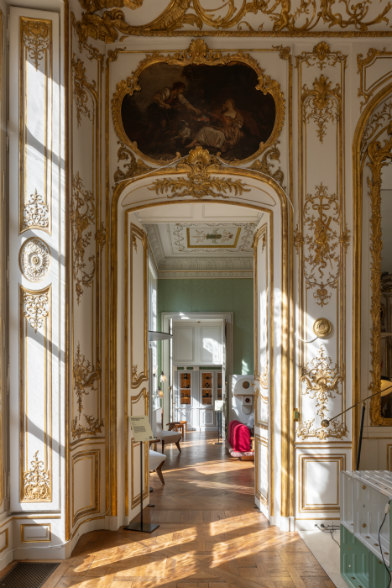
Design Miami.Paris 2024
Image credit – Ivan Erofeev

François-Xavier Lalanne
Grand Bouquetin, 2007 Bronze
H 97 x 135 x 30 cm
H 38 1/4 x 53 1/8 x 11 3/4 in
Édition de 8, n°2/8
© François-Xavier Lalanne, Adagp 2025.
Courtesy de la galerie Mitterrand, Paris. Photo: Studio Shapiro
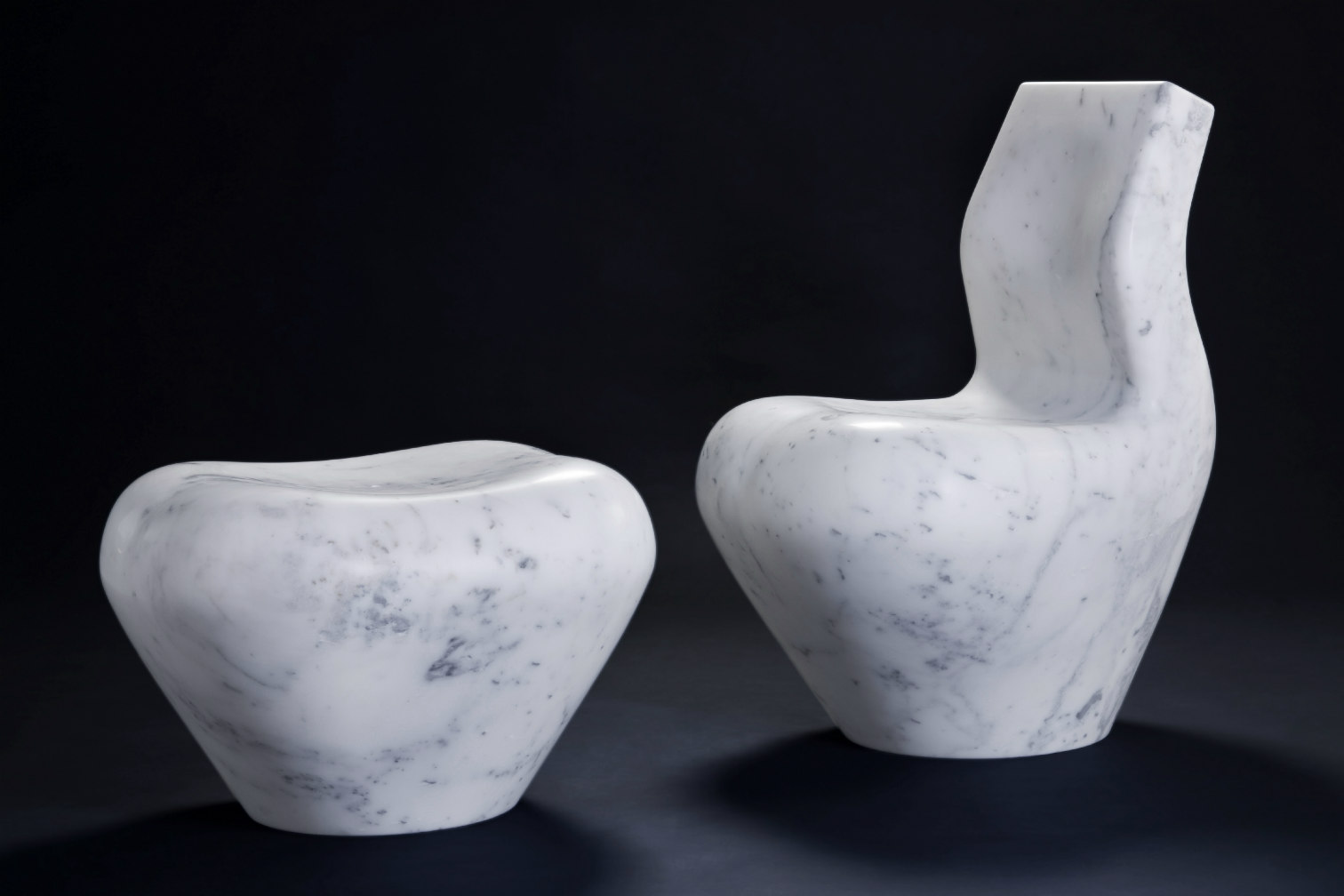
White Swan and Pouf, 2025 by Satyendra Pakhalé for Ammann Gallery at Design Miami.Paris 2025
Image courtesy of Ammann Gallery

Longcase Clock, c.1904 by Adolf Loos for Yves Macaux Gallery at Design Miami.Paris 2025
Image courtesy of Yves Macaux Gallery

Paris Platine, 2025 by Adélie Ducasse for Galerie SCENE OUVERTE at Design Miami.Paris 2025
Image courtesy of Galerie SCENE OUVERTE

Lalalamp, 2024 by Sarah Roseman et Barry Llewellyn for Galerie SCENE OUVERTE at Design Miami.Paris 2025 Image courtesy of Galerie SCENE OUVERTE
“There’s no higher bar than impressing the French in design or creativity or fashion.”
Jennifer Roberts, is your job very entrepreneurial?
In the 10 years that I’ve been here, from the very beginning Craig Robins, our founder and the developer of the Miami Design District, let me take the helm and said: Don’t lose money! My job is trying to figure out how to keep the dialogue and the commerce around design going all year long, so I have to be strategic, but I’ve had the most amazing experiences getting to be entrepreneurial. We’ve done licensing deals in Asia. We’ve done the marketplace, the travel programs, the curatorial labs which allow us to do permanent or temporary commissions for real estate developers working with the roster of designers that we know. I put together the team at Design Miami, so I manage the team of 10 people and help set the course for the year.
Of course, the HQ is in Miami?
Our HQ is in Miami, but with global and remote work these days. We have an office within the Dacra offices, but are dispersed all over. We’ve got people in New York, Philadelphia, Los Angeles, Paris, and Miami. I say ‘we’ because there’s nothing I can do without each and every one of the people on the team. I’d compare Design Miami to a sleek racing yacht versus the cruise ship of the big fairs. We pivot constantly, and I’m fortunate that I have a bunch of other people who have the same attitude as I do and want to keep doing this. It’s a lot of fun. Frankly, it’s a very rewarding and enriching job.
Do you still live on Ilha Grande in Brazil?
No, that would be nice. I still have a home there. I live mostly between Paris and Miami. This is my first six months in Paris, and I will continue to go back and forth as much as I possibly can. Paris is the centre of creativity at the moment. To have your finger on the pulse in Europe and the world you’ve got to know what’s happening in Paris.
Have you thought about opening in Milan, a very important city for design and architecture?
We would be open to doing something in Milan. What’s tricky about Milan is the city welcomes over 300,000 people during Salone and you have to really fight for attention. Salone covers a much bigger market than the collectible design market and it just goes into different areas than what we do. But it would be very exciting to be in Milan, of course.
Paris remains the haute couture capital of the world where all the great fashion designers ultimately want to show and it is probably the same for collectible design?
100%. When we opened Design Miami.Paris, I kept saying that this is the haute couture of collectible design. A board member, who comes from the fashion world, knew what a trial it was for us to get the show off the ground and following their visit, remarked how incredible the show really was. There’s no higher bar than impressing the French in design or creativity or fashion. The world still looks at Paris as the epicentre of that bar.
And you chose L’Hôtel de Maisons, which was Karl Lagerfeld’s home, a very eclectic person.
18th century to contemporary, he’s the perfect emblem of our market. It is amazing, and of course, it was the Pozzo di Borgo family’s home at the same time, which is really interesting because Karl had these apartments at different times and the Pozzo di Borgo family has a museum in Corsica of a lot of their 18th-century pieces. They even had some of the great French painters painting for them. The person that we work with who manages the house is a Pozzo di Borgo and has incredible stories of Baryshnikov performing. Very interesting stories about that house.
I can see that you are in love with Paris, but what is happening in Basel?
We did not hold our Basel show this past June – a reflection of what the market wants. But it was a very meaningful fair for us, and they set the bar before Paris and the best galleries with the best artwork still show up at Art Basel in Paris. It’s a very important tentpole in the annual calendar.
What is in your eyes when it comes to the very contemporary?
There’s a lot of conversation around materiality that’s super important as we look for a more sustainable world. That has to be a part of the conversation, so there are people that are doing really interesting projects with recycled materials. There are young designers that are coming out there that are solution-driven that are going to be recognised at a later date. Maybe they don’t get the recognition now, but there’s people out there that will get some recognition. From my point of view, I’m on as many juries or committees as I can possibly be. I try to be more well-versed in the types of projects that people are doing that could make a difference, and, of course, designs that feel unique. It’s so vast now. There’s so many young designers out there. I wish I had more time to spend really focusing on that.
Who are the new designers not yet known by the large public?
There’s an architecture firm that I’ve been really enjoying following, who do work between the U.S. and China, called OPEN Architecture. There are some really adept architects who are telling stories through their architecture that create a sense of place that is novel and a new way of creating built environments. I am always looking at the architecture community to try and understand better what is coming.
Is the rapport between collectible design and museums important?
It’s hugely important. Unfortunately not that many art museums have design collections and design curators, but the ones that do, their acquisitions have a huge impact on the market for those designers. If you look at the Museum of Fine Arts, Houston (MFAH) or the High Museum of Art in Atlanta or Los Angeles County Museum of Art (LACMA), their acquisitions are extremely important for this community. It’s great for the museum to continue telling their timeline story, and for the designer to be able to say you’re in a museum collection, gives you a whole new level of recognition and allows the collector to buy with confidence.
There was recently a lot of polemics about the fact that race or gender doesn’t make a good artist, but nevertheless this was very much privileged in recent years, especially by museums, curators, dealers, and so on. Is it the same for design?
We want to create a platform open and celebratory of all talent, so we took a heavy look at, not only gender, but all underserved or under-accessed communities, to question how we can make our contribution, ensuring that we represent a diverse community of designers. I hope this is reflected in our diverse, globally relevant programming.
Do people buy furniture or objects of design as an investment?
People buy for all different reasons. When I came into the market I had an internship at Christie’s for the cycle of an auction in American paintings, and they said to me at the time to never talk about these works as an investment. For the first 10 years of my career, I never talked about work as an investment – because the prices go up and the prices come down. I still tend not to talk about it. Works will hold their value, but I hope you buy it because you really love it.
Do you expect a lot of people to come to Design Miami.Paris this October, to visit the Hôtel de Maisons and see what’s going on?
I am certain, and in fact we already have a large number of groups coming from the U.S. It’s going to be great.
Jennifer Roberts, thank you very much.
ENJOY THIS INTERVIEW? SHARE IT WITH A FRIEND


