
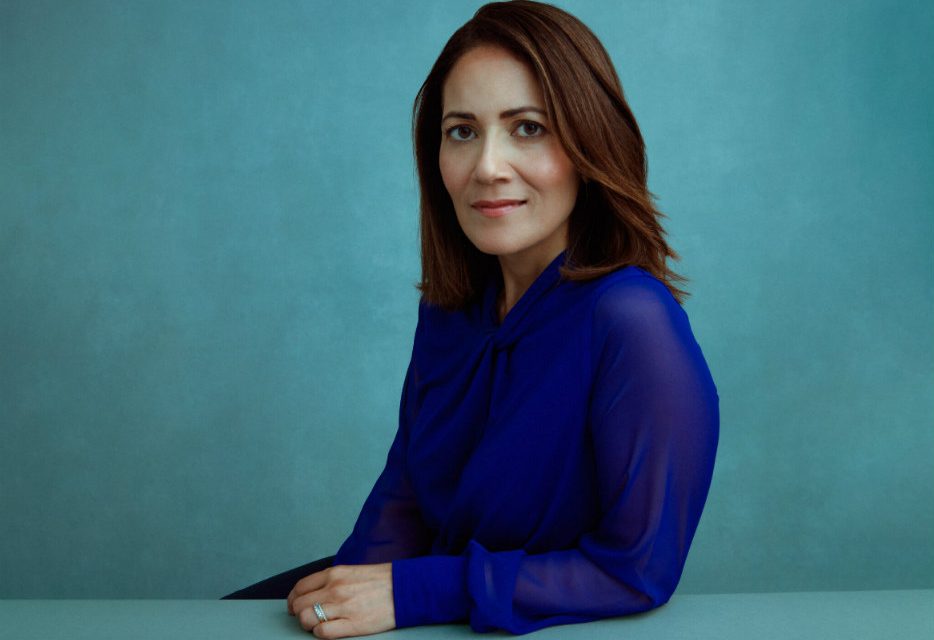
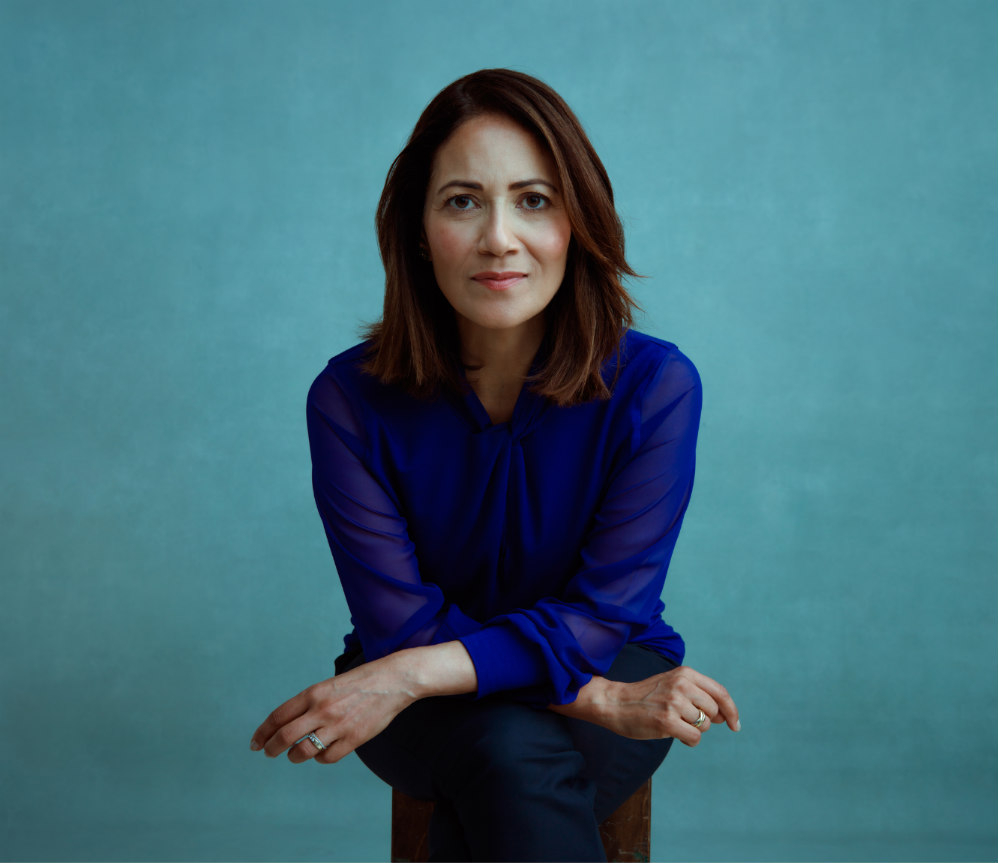
A JOURNEY THROUGH JOURNALISM. Mishal Husain is a celebrated British journalist who joined Bloomberg from the BBC, where she presented its leading news programme Today on BBC Radio 4 for over a decade. Before joining Today in 2013, she was an anchor on the international news channel BBC World News. In 2024 she was awarded the Charles Wheeler Award for Outstanding Contribution to Journalism by the British Journalism Review. Mishal has written a Sunday Times Top Ten bestseller family memoir, Broken Threads: A Family From Empire to Independence, and The Skills: How to Win at Work.
17 minutes read time.
You can listen to the podcast of this interview here.
Mishal Husain, you are now the editor at large for Bloomberg Weekend and your newly launched global podcast The Mishal Husain Show?
I’ve made my name at this stage of my career in journalism as an interviewer, primarily. It’s essentially an offshoot of my life’s work as a journalist. The art of the interview is the art of in-depth conversation, that I now have through Bloomberg Weekend. In this age of AI where so much discourse is dominated by the soundbite, the interview is such a valuable means of communication.
What sort of interviews have you made?
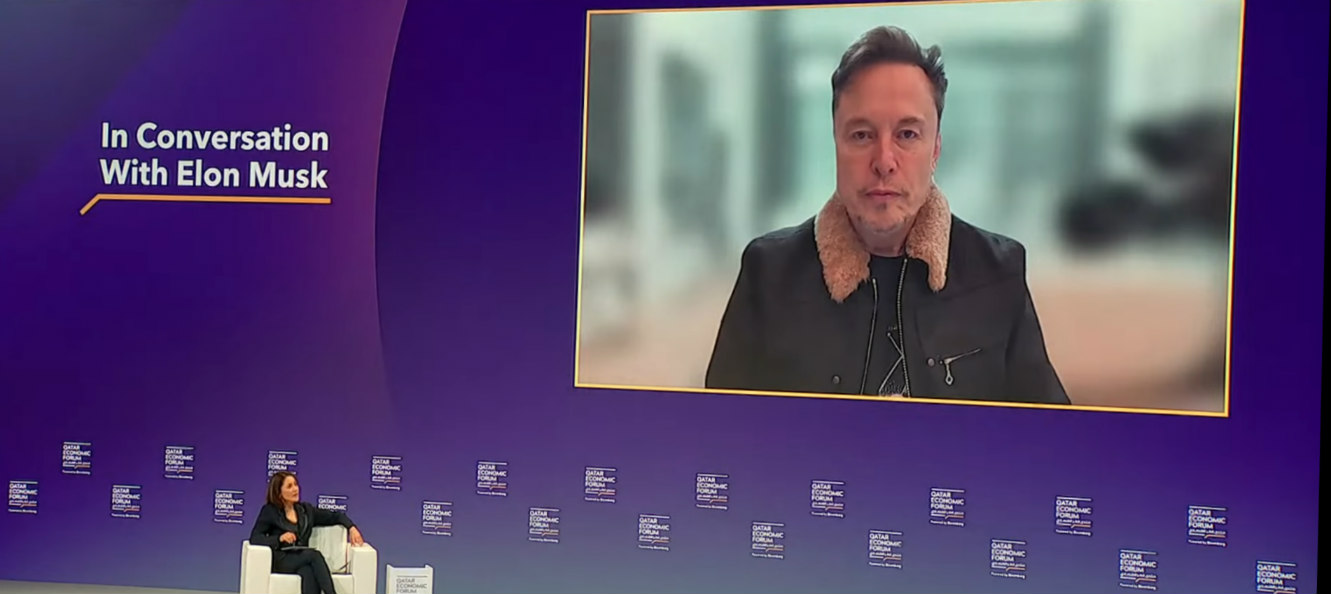
Many political interviews. I also spoke to Rishi Sunak and Keir Starmer in a debate format in the high pressure days before the last UK general election. These are high stake conversations, because people are vying for political power, and so a lot rests on how they feel they come across in that moment. At Bloomberg, my first interview was on stage with Elon Musk. He was in the US, I was in Qatar, it was a conference type event. Those Weekend Interviews led to the launch of my video podcast, The Mishal Husain Show, where the first interview a few weeks ago was the Canadian Prime Minister, Mark Carney. I’ve talked to many kinds of people in my life: people who’ve had extraordinary personal experiences, people who have deep expertise, or people who either want or have power of different kinds.
“The Elon Musk interview is amongst the most difficult that I’ve done.”
Mishal Husain, the beauty of the interview format is that it does not date and is a witness of a person and his/her very word. It’s also difficult to dispute because the person who is interviewed is responsible for what he or she answers to the question.
Yes, but if you’re not thinking hard enough ‘What are the questions I’ll ask that stand the test of time?’ If you are too gripped by the heat of the moment questions, then it can date quite easily. I always want to zoom out slightly and think, What will I still be proud of asking and will still be relevant in a year’s or five years’ time? Also, the difference between what I do and what newspaper or magazine profile interviews do, is that they can paint around the words. They can say, This is where we spoke, and This was how she looked as she answered the question, they can add all the context. I can’t fill in around the edges later on.
Is TV and newspaper journalism under threat from social media?
Yes and no. Yes, because these models are disrupting traditional journalism and some of that is important, everyone needs to move with the times. Often people will say, I saw it on TikTok, or I saw it on Instagram, or on Facebook and the original source gets lost through the platform they see it in. But social media is an incredible news source for a journalist. Even though X is a different kind of platform in the Musk era than it was before, I still see commentary or bits of information that I wouldn’t necessarily have seen elsewhere. I cannot imagine the world where I seal myself off from these places, however tricky these platforms are at times.
Do you feel a great responsibility to give accurate news in a world full of fake news?
Not every journalist feels that’s an imperative, but it’s always been part of my working life, at the BBC and now at Bloomberg, where I agonise over What is the precise source of this information? I knew that my Elon Musk interview was likely to be contentious, because I’d seen enough of him talking to journalists to know that that would be the style. I thought really hard about everything that I put in a question. Could I back up the precise words in the question and the broader thrust, Why am I going down this particular avenue? What is the evidence for that? Sure enough, in the course of the interview I had to back up why was I asking in this way, about Tesla, or about Starlink, or about Doge. The facts are part of your research, but they have to be at the heart of the individual questions you ask.
Can you prepare an interview too rigidly?
You have to be in enough command of your subject material to be able to then be spontaneous, because the best conversations are. Otherwise you’re going to end up with a question that’s a non sequitur, or miss the opportunity to follow up. The Elon Musk interview is amongst the most difficult that I’ve done. I had to refer to the savings that Doge was actually making, compared to the two trillion dollars that he had said before Donald Trump’s election. That kind of information you either have to implant in your memory, or have it to hand to refer to, because it does strengthen what you’re saying.
What is your impression of Elon Musk having interviewed him?
That he’s a huge brain and a visionary in his field. What he has created through Tesla is not just one company, but has lit the spark of an entire industry of electric vehicles. He is a pioneer and has the kind of mind that can see things others can’t. Starlink is incredible in the mobile communications world. Every Ukrainian frontline position will have its own Starlink dish, many of these are now paid for by the EU. It’s at the heart of communications in places where other forms are being jammed, and out of the way places. So there’s tremendous vision there, but people are imperfect. People are drawn in different directions with their politics and their instincts, and we can see this through his X feed. People can make their own their own judgments on that. He is complex, for sure.
“I’ve realised that we are now, perhaps increasingly, again in an age of division.”
Mishal Husain, you recently gave the prestigious Romanes lecture at Oxford University.
It was a tremendous honour to be asked to give Oxford University’s annual public lecture in the Sheldonian Theatre, where this wonderful ancient university’s ceremonial occasions have taken place for centuries. That kind of request really focuses the mind. I was apprehensive, in the sense that my life’s work has been about bringing out other people’s stories, and here I was speaking in my own right with this immense platform and sense of responsibility. What could I bring to this series of lectures, running since 1892, the first given by the British Prime Minister of that day?
Churchill was also one of those that gave this lecture before you and he too was a journalist?
Yes, I did ask the organising committee, Am I the first journalist to give this lecture? The answer made me laugh because they said, There are others who worked as journalists before they went on to do other things, such as Winston Churchill. I thought about what I could bring that was unique, and I did talk about my heritage; my father came to the UK not long after he qualified as a doctor in Pakistan. When I began my career as a journalist, 30 years ago, I didn’t think I would ever be talking about my faith, or my heritage, or my background, because I thought We’ve moved beyond those times, we’re in an age of equality, these things don’t matter. But I’ve realised that we are now, perhaps increasingly, again in an age of division.
How did you address this in a high-profile lecture of just 40 minutes?
I chose to look back in time and to share some of the lesser-known aspects of the way that Europe is connected to what we might think of as the Middle East. I ended up talking about how the Quran has a strong tradition of inquiry and reason within it, and about the link between Muslims and the Renaissance. I pointed out that we can trace the great architecture that we see in Notre Dame in Paris, the Doge’s Palace in Venice or Westminster Abbey in London, to Christianity and Islam in the Middle East.
You also see that influence in poetry?
Yes. The translations of Rumi’s work that are so popular in America that he’s often called ‘America’s best-selling poet’ – the Islam that is part of his poetry is essentially erased. That to me is so sad and such a missed opportunity. Imagine going to see one of Michelangelo’s Pietas, or seeing any depiction of the Madonna and Child, and thinking This is just a mother and baby or This is a man, without knowing that it’s Jesus just brought off the cross, the symbolism imbued in those kinds of images. It is not only a terrible omission, but actually wrong not to be able to see someone like Rumi and understand him in his context.
You were born in England and raised in the Middle East. You are English but because of your heritage do you consider yourself a bridge between worlds?
Perhaps. When younger people see me that way, I do feel that sense of responsibility. It’s not something that I can or should resile from. A few years ago there was a younger Muslim journalist at the BBC who said to me, I really notice that you don’t hide the fact that you’re Muslim. I looked at him with such sadness, the fact that he was even articulating it in this way. Look at me, look at my name. It’s just not possible to hide even if I wanted to. We are all a sum of our parts.
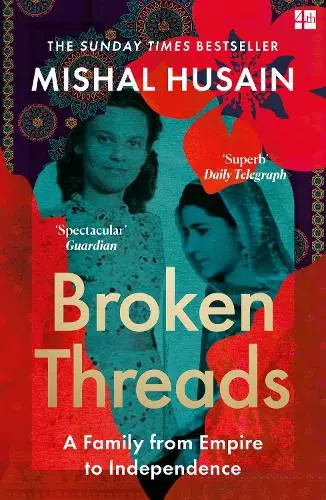
Broken Threads: My Family from Empire to Independence by Mishal Husain. Published May 2025 by HarperCollins Publishers Limited

The Romanes Lecture is the annual public lecture of Oxford University. A most distinguished public figure from the arts, science or literature is invited by special invitation of the Vice-Chancellor.
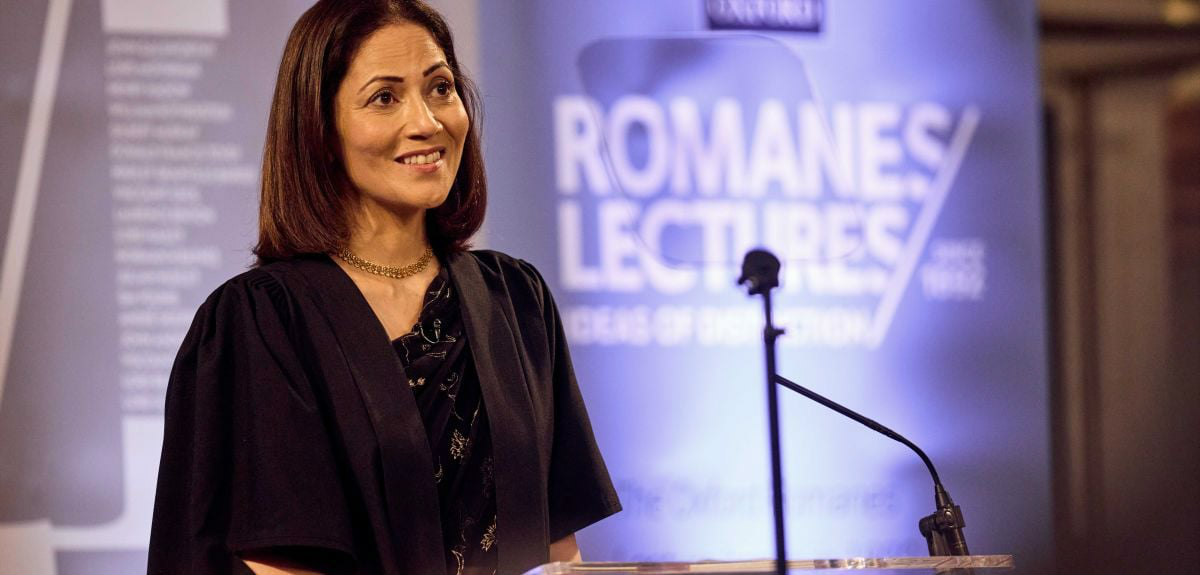
‘Empire, Identity and the Search for Reason’ The lecture took place on Tuesday 14 October 2025 at 5.30pm in the Sheldonian Theatre.

Mishal Husain
“I hope that in one way or another we still have people who are going to search for the forgotten, overlooked stories.”
Mishal Husain, with your background do you sometimes see things a fellow journalist or editor has not noticed?
Yes, and I’m fortunate that I’ve worked in two news organisations where views and sharing knowledge or expertise is welcome. There have been – and there will be more – times when I say, But have you thought about it this way? or Have you noticed this? or Here’s a detail we could bring in. There’s a long and fine tradition of people through the ages pointing out what perhaps the majority don’t see. When I stood in the Sheldonian Theatre to give the Romanes lecture, I gave two examples. One was the fact that when those lectures began in 1892 there would have been very few women in the room. The UK was decades away from Oxford awarding degrees to women, and even more decades away from a woman giving that lecture for the first time, which didn’t happen until the 1960s. The other example was that the two lawyers who, after the Second World War, were at the absolute forefront of defining – and working on getting definitions of genocide and crimes against humanity into international law – were both Jewish: Lemkin and Lauterpacht. They knew from their own bitter experience how their relatives were slaughtered in the Second World War because they were Jewish. They brought that knowledge, that deep personal pain, into their professional work in a way that became part of our post-war order, that such crimes have to be recognised for what they are and codified in some way.
Why did you become a journalist instead of the lawyer you studied to be?
Honestly, most aspects of law I found quite dry. International law was not one of them, that’s why I chose to do my Masters in it, but I realised that if I joined one of the big law firms, then probably contract and corporate law would be a big part of my working life. I thought it wouldn’t hold my attention. I grew up in the United Arab Emirates, and when people are in an expatriate community or part of a diaspora they’re often big news consumers. They need the news to keep in touch with the countries that are part of their lives. So news was the background to my life, and I wondered if I could have a career as a journalist. We had no journalists in our family and when I told my parents they said, How will you earn a living? And I said, I’m not really sure, but I’d like to have a go. I will say I’ve worked hard, but I’ve also been very lucky. I have had an incredible career and my parents did eventually come around to the idea that journalism was a good profession.
Has your way of being a journalist changed over the years?
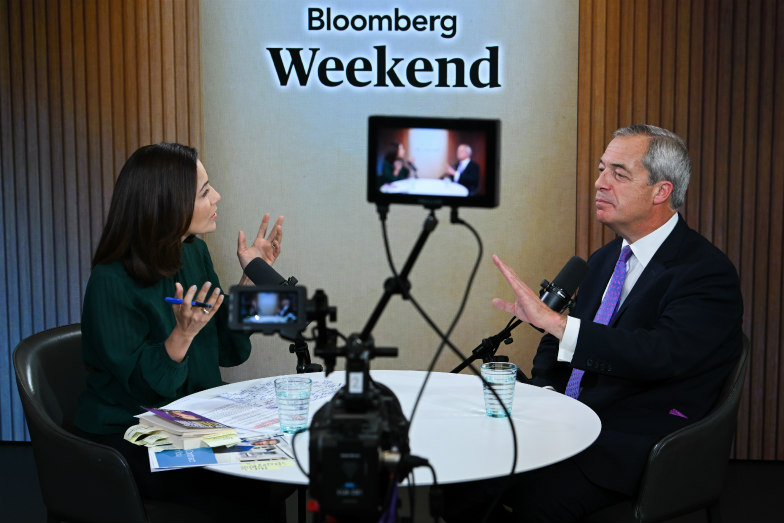
Yes, I have grown in confidence. Faced with an interview like the one I had with Elon Musk, or with Nigel Farage, or some of the harder political interviews, if you haven’t got enough experience, enough miles under your belt, it can be hard to hold your nerve when people are trying to throw you off your course. I’m a more experienced journalist now, so I’m a more confident journalist. I’m probably a bit freer too, no longer worried about What’s the next important question? I’m more likely to go with the flow and with whatever I think makes for the most interesting conversation.
When your subject says something that you really don’t like, how do you react?
Sometimes I don’t react. Nigel Farage at one point said to me, ‘Listen, love.’ It’s a particular way of speaking to a woman in a moment when he wasn’t happy with what I was asking him. Elon Musk called me an NPC, a non-player character. NPC comes from gaming. It’s the person who’s more robot than human, not the same as the intelligent human. So that was quite something and again, I chose to ignore it. I’m not saying that’s always the right answer. But these two instances that I’m citing were at moments when I didn’t want to be derailed from the question track.
Are you ever shy or embarrassed in front of the person you interview?
People are often trying to intimidate in one way or another. That goes with the territory.
Is being a journalist a job that you recommend to young people?
Perhaps in the future we won’t think of it as journalism, more as content. The most important thing to me is the quality, and I hope that in one way or another we still have people who are going to search for the forgotten, overlooked stories, the ones that lead to some kind of change or some kind of justice. I hope that there are the funding models that allow that. There are extremely wealthy individuals who are choosing to put their money towards news, not always in a way that’s going to look at the world through a wide lens, sometimes trying to make sure that the world appears through a particular lens. But good news content requires funding. It requires people to pay journalists. That’s the real challenge of the future.
Mishal Husain, thank you very much for your time and for being with me.
ENJOY THIS INTERVIEW? SHARE IT WITH A FRIEND.


