
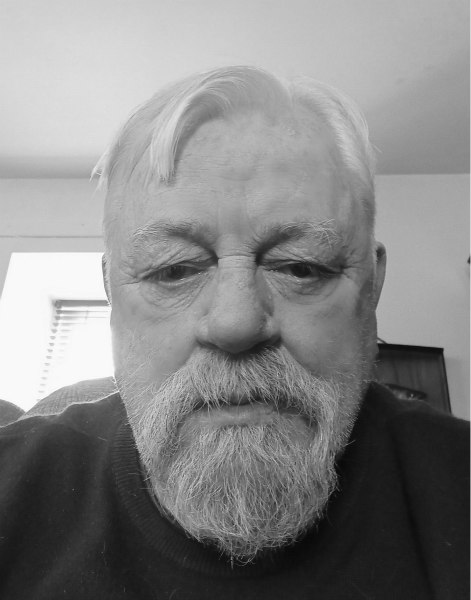
A LIFE IN TRANSLATION. Alastair McEwen was born in Dunfermline, Scotland, in July 1950. He is a man of letters, a former teacher and, above all, one of the most distinguished translators of Italian literature into English. To date, he has published over 100 book-length translations (novels and non-fiction), essays, articles, and poems, plus several feature film scripts and operatic librettos. He has translated some of the most important Italian writers of our time: Umberto Eco, Roberto Calasso, Antonio Tabucchi, Fleur Jaeggy, Alessandro Baricco, Aldo Busi and many others.
20 minutes read time.
You can listen to the podcast of this interview here.
Alastair McEwen, now we have artificial intelligence, which can translate almost instantly. What is your reaction? Are you worried?
I can say immediately that I am worried, although perhaps not for myself. I remember using the very first machine-translation systems many years ago. They were awful. Now they have become remarkably clever, and I believe they have already bitten quite a large chunk out of the translation market.
Some translators tell me that publishers no longer offer them translation jobs as such. Instead, they say, “We have put the book through Google Translate. Here it is — edit it for us.” Naturally, the fee is far lower than it would be for an actual translation.
So yes, I am concerned, particularly for younger translators. I suspect that translators, as a profession, may eventually go the way of the dinosaurs. If these systems are already this good, and they are going to become better, it is difficult to see how the profession can remain unchanged.
AI is not changing only your profession; it is eliminating or transforming many professions.
Definitely. I recently did a few experiments and was astonished by how well it performed. The one thing it consistently gets wrong is the gender of the people speaking. It will say “he” when it should say “she”, and vice versa, apparently at random. Apart from that, it can manage extraordinarily difficult material. Where it still struggles is with nuance, irony, wordplay and jokes. But the basic machinery is already there.
“One of the great pleasures of translation: you are constantly learning about subjects you previously knew nothing about.”
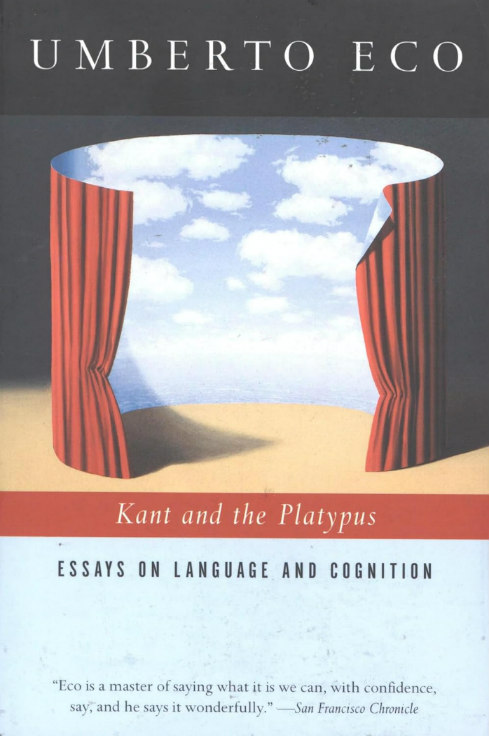
Umberto Eco’s Kant and the Platypus translated by Alastair McEwen
Alastair McEwen, you became a translator many years ago, when you were living in Milan. You began as a teacher. How did you become a translator, and who was the first person you translated?
The first was a journalist called Michele Marchianò, who had written a book about Ferraris designed by Zagato, the famed coachbuilders. At the time, my partner was an American opera singer, beautiful but mad as a hatter. We were invited to dinner by friends, and I met Marchianò there. After about half an hour he said to me, “Your Italian is pretty good. How about translating my book?” And that was it. I knew nothing about motor cars. I ended up translating about twenty books on cars and motorbikes during the early part of my career. I hadn’t a clue what I was talking about.
You became an expert in motor cars?
A kind of fake expert. But that is one of the great pleasures of translation: you are constantly learning about subjects you previously knew nothing about.
How did you move from motor cars to writers as sophisticated as Umberto Eco, Roberto Calasso, Alessandro Baricco and Antonio Tabucchi?
My wife (I was still married at the time) told me that if I wanted to get into literary translation, I had to go to book launches and literary events, approach authors and introduce myself. So I did. A lady named Carmen Covito had written a rather good book (La bruttina stagionata) that Aldo Busi was promoting. I translated some of it, Busi read it, and then he said, “Would you like to do something of mine?” That was how I entered literary translation.
I eventually worked on three books by Busi, although none of them was published. He had previously been published by Jonathan Cape in London, but he had a rather violent argument with them over the telephone. That relationship came to an end. It was unfortunate, because it was really only about money.
When you translate a writer such as Eco, do you sometimes become an editor as well and suggest that something should be cut or changed?
I certainly make suggestions, especially when I find mistakes. And that can be rather awkward. It is not always easy to tell someone like Umberto Eco that he has made a mistake. I remember translating Kant and the Platypus. There was a passage that was rather questionable. Eco joked, “I should have written that bit in German. Everybody respects philosophy if it is written in German.”
When I find something superfluous, awkward or clumsy, I try to mention it diplomatically. The author is free to accept or reject the suggestion. But in my experience, most writers are grateful.
AI can produce a literal or technically competent translation, whereas you intervene, interpret and sometimes even act as an editor.
Exactly. And this becomes particularly important with literary work.
Especially poetry, which must be extraordinarily difficult to translate.
Poetry is murderously difficult. I have translated only one book of poetry, and I am still not sure whether I did it well. You cannot translate a poem word for word, because then it would cease to make sense and, more importantly, it would cease to be poetry. You have to invent another poem based on the one you have just read, but in another language. That is extremely difficult. If somebody offered me a book of poetry today, I would probably say no, thank you. I am not a poet. At least, I used to think I was, but then I became an adult.
Among all the authors you have translated, who was the most difficult?
People often assume that Eco is difficult, but he is actually very clear. He is rarely vague or inaccurate. Calasso is difficult because of the thousands of references to the classical world. You encounter an obscure pre-Socratic Greek philosopher, for example, and you have to discover exactly who he was and what he meant. But it is difficult rather than impossible. One of the hardest was probably Antonio Tabucchi. He was a brilliant writer and a real craftsman. He could do astonishing things with words, and capturing his voice was not easy.
“Translations change because language changes.”
Alastair McEwen, Tell me about your craft. Suppose a publisher sends you a novel, what do you do?
You might think the obvious thing would be to read the entire book first. But I do not always do that, particularly with novels. I want to experience the book as a reader experiences it—the surprise of turning each page. I don’t want to know what is going to happen. So I read enough to understand the flavour and the voice, and then I translate page by page. If I discover at the end that I have misunderstood something, I can usually go back and correct it. With non-fiction, philosophy, art history and similar subjects, I normally read the entire book first because I know I will have to do a great deal of research.
Writers all have their own methods. Some write in the morning, some at night. Some write for years; others produce a book very quickly and revise it afterwards. What about the translator? How do you work and how much concentration does it require?
Concentration is everything. But you cannot maintain complete concentration all day. I find that if I work for more than three or four hours, the quality begins to decline. So I think it is best to stop after about four hours. Writers are the same. Some can produce astonishing amounts very quickly. Edgar Wallace, I believe, once wrote a detective novel during a transatlantic crossing, in about five days. Other writers take ten or fifteen years.
How long would it take you to translate one or two hundred pages?
It varies enormously. I have sometimes spent three or four hours trying to get a single sentence right — or even searching for one word that really fits the situation. In general, however, I can translate about 2,000 words a day.
Italian and English are very different languages. How do you reproduce an Italian writer’s style in English?
I think I do it unconsciously rather than consciously. I have occasionally been told that I captured an author’s style, but I honestly don’t know how I did it. Sometimes a writer’s voice resonates so strongly in your head that the translation simply seems to emerge in the right way. Other times it doesn’t. One of the best translations I ever did was Alessandro Baricco’s Oceano Mare. I felt a particular affinity with his style. I cannot judge whether I truly captured it, but other people told me they thought I had.
And yet translations are often invisible. Books are reviewed without mentioning the translator.
That is a great pity. Translations are not reviewed very often unless the author is extremely important, such as Eco or Calasso. Publishers sometimes do not even mention the translator, or the fact that the book has been translated, although they are supposed to. I think that is completely unfair.
We all read Russian literature in translation. We read Tolstoy, Dostoevsky and others in Italian, French or English, but we cannot know exactly what the original sounds like. The translator therefore has an enormous responsibility.
And sometimes a classic is translated several times. William Weaver translated The Name of the Rose, for example, but another translator could theoretically translate it again. Why?
Because translations age. Some age well, others badly. The classic English translation of War and Peace, for example, has aged rather badly. It is beautiful English, but the translator took too many liberties and invented quite a lot. More recent translations are considered much more accurate. Translations change because language changes. People’s expectations of literature change, and their tastes change. Over several decades, all these things move.
And now we have another enormous change: the language of the internet. Young people communicate constantly through their telephones, and new expressions appear every day. What do you make of this new language?
It is growing exponentially, so quickly that it is almost impossible to keep up. Billions of people use the internet, and everyone contributes something. I read American newspaper articles about the internet and constantly encounter words I have never heard before. Ironically, I then have to go online to discover what they mean. I imagine modern writers are inevitably incorporating some of this language. For every hundred new words invented, perhaps two will survive and eventually become part of standard English. In fifty years there will probably be astonishing changes in literature and writing generally. Fortunately, I won’t be here to see them.
Umberto Eco’s Five Moral Pieces translated by Alastair McEwen
Umberto Eco’s On the Shoulders of Giants translated by Alastair McEwen
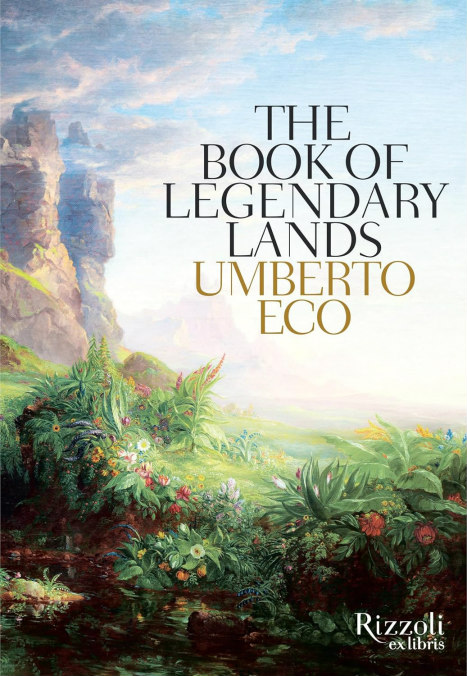
Umberto Eco’s The Book of Legendary Lands translated by Alastair McEwen
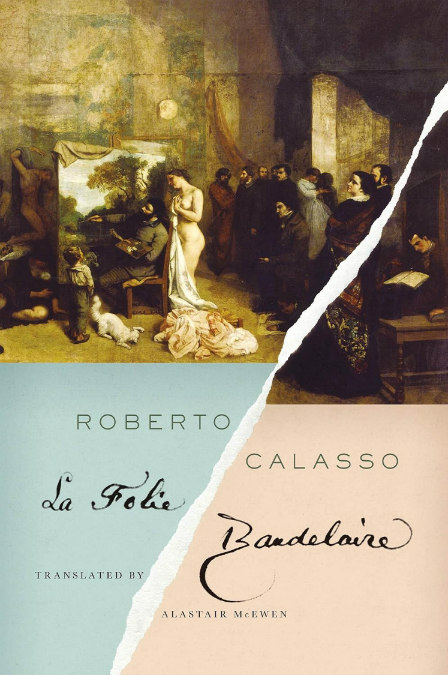
Roberto Calasso’s La Folie Baudelaire translated by Alastair McEwen
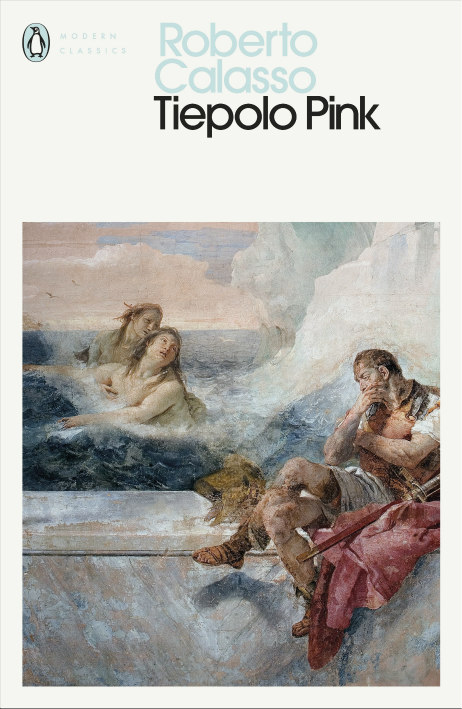
Roberto Calasso’s Tiepolo Pink translated by Alastair McEwen
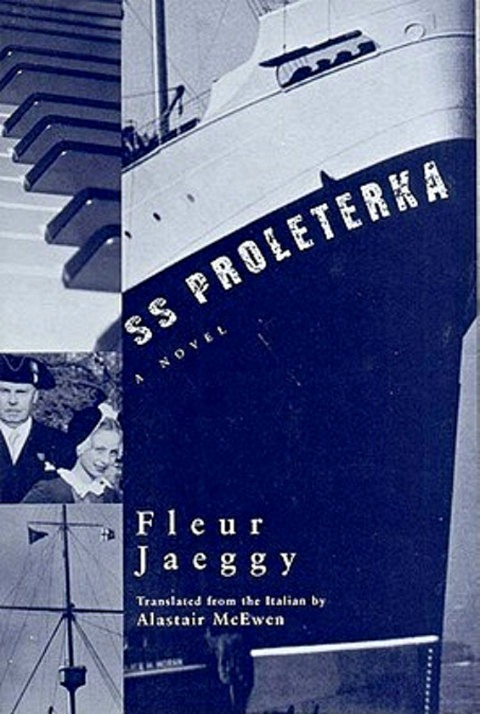
Fleur Jaeggy’s SS Proleterka translated by Alastair McEwen
“If you stop reading for a month, the modern world moves so quickly that you can fall behind to an extraordinary degree.”
Alastair McEwen, English itself has also become a kind of Esperanto, the Latin of our time. There is British English and American English, but there are also writers from India, Africa, the Caribbean and elsewhere who write in English. What is English now?
It is rather like the mythological Hydra: it has acquired many heads. India has its own form of English; so do many African countries. There is Caribbean English, Australian English and many others. They are related but also distinctly different. What fascinates me is that writers from countries that were once called the Third World are producing extraordinarily interesting literature in English. Their English is English, but at the same time it is not quite the English we traditionally recognise. Sometimes it has a very powerful effect. It is a fascinating subject, although I don’t pretend to know enough about it.
How do you keep yourself up to date and remain a good translator when language is changing so quickly?
The answer is very simple: read. I read virtually all day. I read newspapers online, magazines, and subjects that interest me—astronomy, science, history. You have to read eclectically. You cannot remain current if you only read one kind of material. I subscribe to so many newspapers and magazines that it is becoming rather expensive, but it is the only way to keep up. If you stop reading for a month, the modern world moves so quickly that you can fall behind to an extraordinary degree.
Are there translations you did years ago that you regret and would like to translate again?
Definitely. I almost never read things I translated years ago because I am terrified I will discover a million mistakes. I am exaggerating, of course, but I know I would be dissatisfied.
Have publishers ever asked you to retranslate something ten or twenty years later?
No. It would be nice if they did, but it has never happened.
When you finish a book and send it to the British or American publisher, is your work finished?
Not at all. A good publishing house edits the translation and then sends you the proofs. The editor will have dozens of questions: Is this right? Is that right? Why did you translate it this way? You have to answer, explain or correct. Really good publishers go through the process twice, sometimes even three times. When I worked with Alfred A. Knopf and Harcourt Brace Jovanovich, I sometimes saw two or three sets of proofs before the book went to print.
American publishers are particularly careful because of litigation.
Yes. Sometimes the care approaches paranoia. America is a country where litigation is extremely common, and publishers are very conscious of every possible source of legal trouble. You have to read your contract carefully because there are all sorts of clauses designed to protect the publisher.
Did you meet all the writers you translated?
No, only some of them. I met Umberto Eco many times. I went to his house in Milan and to his country house at Monte Cerignone, on the Adriatic. We were not exactly friends, but we became quite close in certain ways. Eco was wonderful about checking translations. We would go through them together, and he was meticulous. Roberto Calasso was similar. I met him several times, as well as his wife, Fleur Jaeggy. Their house in Milan was wonderful: old, slightly dusty, with books everywhere. There were piles of books on the floor and on every available surface. It felt like entering an ancient library.
Eco had an enormous library.
About 30,000 books in his Milan apartment. It was astonishing. And the apartment was a kind of Wunderkammer, full of strange objects. There was even a glass jar containing a pair of preserved dog’s testicles, which he was particularly proud of. It was horrible.
Did you have fun together?
Oh, yes. Definitely. Whenever we met, one of the first things Eco would say was usually, “Have you heard this joke?” He loved jokes and knew hundreds of them. He also loved old songs, particularly songs with an obscene element. He was one of the most interesting people I have ever met. He seemed to know something about everything. You could mention almost any subject, no matter how obscure, and he would have something to say about it. He once told me, speaking about writing, “I would write in the shower if I had water-resistant paper.” He simply couldn’t stop writing. He was a lovely man and a great loss to humanity. I think of him often. I translated his Bustina di Minerva columns for twelve years, almost until the end of his life, so our contact was very frequent. Some of those pieces were exceptional. To be witty and intelligent about an obscure subject in a single page is extraordinarily difficult, and Eco managed it.
Italian writers have another difficulty. Italian is a beautiful language, but it is spoken by relatively few people in the world. Do you think the Italian writers you translated are truly writers of world stature?
Absolutely. But there is no question that Italian literature is at a disadvantage internationally. Publishers and agents have told me several times, “The book is really good, but it is Italian.” In other words, they assume it will not sell. Books translated from Italian often do not sell. There are exceptions, of course, but the problem is real.
You knew William Weaver, who translated The Name of the Rose?
Yes. We met several times. Once my wife and I visited him at his house in Tuscany, near Arezzo. He showed us an extension he had built with the money he had earned from translating The Name of the Rose. He called it the “Eco chamber.” When I visited Arezzo, I also had the privilege of meeting Giorgio Bassani at dinner. By then, unfortunately, he was suffering from dementia or Alzheimer’s, I don’t know which. I had admired his work enormously. I remember that he was immaculately and tastefully dressed. He was with his American companion, Portia Prebys. We sat down for dinner and he was already confused about the sequence of the meal. It was painful to see such a fine mind decline. That is one of my greatest fears.
Are you working on anything new at the moment?
I am. I am translating a children’s book.
A children’s book? After Eco and Calasso, perhaps that should be easy!
On the contrary. It may be the most difficult translation I have ever done. It is for children between five and eight years old and contains only about 2,000 words. But I have been working on it for three weeks and I still haven’t finished. The two principal characters are called Monsignor CommisiFA and Monsignor VeliamounPO. Their names contain the sounds “Fa” and “Po”, which are also their nicknames. How do you translate that? And the entire book is in rhyme. Rhyming in Italian is one thing; rhyming in English is another kettle of fish altogether. I told the author that I had translated Eco and Calasso and other difficult writers, but that this was harder. And it really is.
Then perhaps you should translate Pinocchio again — a children’s book that is also a book for adults.
Why not? I haven’t done it, but it would be a wonderful challenge. The English versions I have read are all rather old. It would be interesting to modernise Pinocchio without losing its character.
Then we shall speak to our friend who runs the Pinocchio Collodi Foundation and tell him that he must give you the opportunity.
I would be very happy to do it.
Alastair McEwen, it was a great pleasure to speak with you. Thank you very much for this conversation.
ENJOY THIS INTERVIEW? SHARE IT WITH A FRIEND


