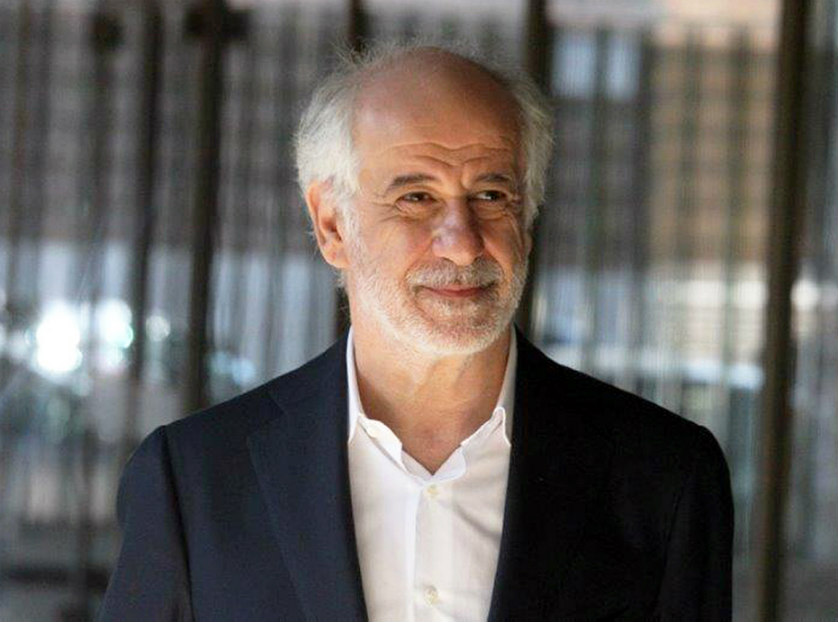
MASTER OF THE CRAFT OF ACTING. Marco Antonio Servillo was born in Afragola, Italy, in 1959. He built a rich theatrical foundation by founding the Teatro Studio in 1977 and co-founding the influential company Teatri Uniti in 1987. He achieved international film renown through his frequent collaborations with director Paolo Sorrentino, delivering unforgettable lead performances as real-life political figures in Il Divo and Loro, as well as starring in the Academy Award-winning The Great Beauty (La grande bellezza). Widely celebrated for his commanding voice, expressive range, and striking physical transformation on screen and stage, he has won multiple European Film Awards and David di Donatello awards, and was ranked seventh on The New York Times list of the 25 greatest actors of the 21st century.
23 minutes read time.
You can listen to the podcast of this interview here.
I am with a great Italian actor whom nobody knows as Marco Antonio Servillo but as Toni Servillo, who is, incidentally, the brother of Peppe Servillo, a famous musical artist. Toni Servillo, did you start out in opera?
No, I started out in spoken theatre and, whilst working, I was approached by a great artistic director at La Fenice, Mario Messinis, who saw my production of Molière’s The Misanthrope and asked me if I’d be interested in directing an opera. So I directed my first opera at the Teatro La Fenice in Venice, several years ago now, and over the course of a dozen years I’ve directed several more: in Aix-en-Provence in France, at the Teatro di San Carlo in Naples, in Lisbon… It was work I carried out alongside my work in spoken theatre. In fact, most of the operas I’ve had the pleasure of staging have a clear theatrical background.
You directed Eduardo de Filippo’s Saturday, Sunday and Monday, Carlo Goldoni’s Holiday Trilogy, and Elvira in a production dedicated to the French actor and director Louis Jouvet. Does theatre still play a big part in your life?
Absolutely. I’ve never regarded the theatre as a stepping stone to success in film. On the contrary, cinema came into my life quite late – I was already in my forties and had many years of stage experience behind me. I’ve never missed a theatre season to make a film.
“The theatre offers you the opportunity to engage with personalities that are the result of profound reflection and great poetic achievements.”
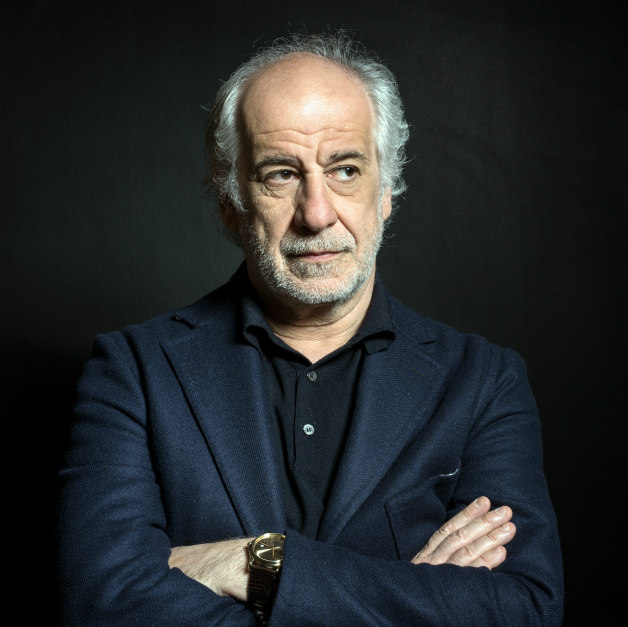
Toni Servillo © Nicolas Spiess
Toni Servillo, for an actor, what is the difference between working in the theatre and making a film?
It’s an interesting question that would require a great deal of time to explore in depth. For now, I’ll simply say what I believe, which is that cinema is essentially the director’s domain. An actor can illuminate a significant part of a film with their talent, their personality and their dedication, just as a great director of photography brings light to a film or a great composer does with a soundtrack. However, the person who instils the ultimate meaning of a cinematic work in the viewer’s heart is the director, because they are the one who first conceives and writes it; then comes the filming stage, followed by another crucial stage of creation: editing. The director has total control over all of this, which establishes their full authorship over a cinematic work. In theatre, however, all of this relates, in my view, to the actor’s work. It is the actor who, in the theatre, brings to life in the audience’s hearts the values of the performance they are witnessing. In theatre, the actor’s work is central; theatre offers a continuous, ongoing reflection on the meaning of the craft, a daily intimacy with the craft. Consider that in Italy a film takes an average of eight weeks to make; the most expensive ones can take up to ten weeks, twelve at most. An actor in theatre, as has happened to me, may be lucky enough to go on long tours lasting as long as three or four years, so imagine the intimate relationship the actor has with the character they play. The character accompanies them throughout their life – they are always together.
Does that mean you end up being repetitive?
It’s exactly the opposite. Repetition can become tedious if you’ve reduced it to a routine, but if, on the other hand, you remain vigilant in your efforts to explore the character more deeply, to change direction, and to take cues from what you’re doing to move in a different direction, you maintain a living relationship – which is exactly the relationship a craftsman has with a piece of wood or with clay. You work on the character. You work on it constantly.
Does the character improve?
If you’re lucky, yes, but it can also get worse. The fact is that the approach isn’t one of mindlessly repeating the same thing over and over, but of working constantly at it from different angles, adding to and subtracting from your relationship with the character – which stems precisely from the input your relationship receives from everyday life and from your various encounters with the audience. I’ve been on long tours abroad with both Goldoni and Eduardo de Filippo, and gained numerous insights from the reactions of foreign audiences, compared to those of Italian audiences. Acting is a craft. You never stop working on it, and like all crafts, it has an artisanal element. This means that the project at hand – in our case, the character – is open to adjustments, modifications and refinements.
You’ve been a hugely famous film actor for years now – I came to understand you better after seeing La trilogia della villeggiatura at the Teatro Carignano in Turin. You’re the same actor as in the films, but clearly the theatre audience has a different connection with you.
This hasn’t just happened to me. Behind me stands a whole generation of truly great actors.
People go to the theatre to see the actor. For example, I’ve been to see Pirandello’s Henry IV several times because of performances by different actors.
Of course. In a way, this also contains the answer to your previous question. Every character acquires an identity through the interplay with the personality of the actor bringing them to life. So it’s also an interpretation – a different interpretation.
There’s a film that acts as a bridge to what you’re saying, and that’s Roberto Andò’s Strangeness. In that film, you play Pirandello at the tumultuous premiere of Six Characters in Search of an Author at the Teatro Valle, an intersting role in the light of what you’ve said.
Yes, that’s true. It’s a film that enjoyed considerable box-office success, partly because Andò – who is a very refined director, also from an intellectual standpoint – in this project pitted me against two magnificent comic actors, Ficarra and Picone. This pairing aroused great interest, which was inherent in the very essence of the work, and that is why I was so fascinated by his proposal to tackle Pirandello. The film explores the creative process, recounting – in a manner that blurs the lines between reality and fantasy – how, at a certain point, this idea came to light in the mind of this man, an idea that went on to revolutionise 20th-century theatre: namely, that of characters who take to the stage to assert their place and demand to be told. Thus, the film – in a light-hearted yet fascinating way, from the perspective of exploring what creativity is – recounts this process. It does so because, on one of his returns to Sicily, Pirandello came into contact with a troupe of amateur actors; watching them, observing them as they attempted to tackle the theatrical material, and secretly watching their rehearsals, Andò imagined that in his mind there was this strange notion: that at a certain point, six characters in the flesh would emerge from the audience to assert their desire to be portrayed.
“When I first started out in this profession, I never would have imagined that films with a distinctly Italian flavour would go on to have such an international impact.”
Toni Servillo, you went on to make other films with Andò: The Blunder, The Confessions and, above all, Long Live Freedom, where you faced the challenge of playing two characters, twin brothers who are very different. One is a politician on the wane, who runs away and disappears, whilst his brother – a philosopher and professor who makes very general and strange speeches – enjoys incredible success.
This dual role also has a somewhat theatrical origin. Andò is a theatre and film director as well as being a highly accomplished writer. In theatre, there is a tradition dating back to the 3rd century BCE Roman playwright Plautus, passing through Molière and extending to Goldoni, of twin characters who are often played by the same actor. I’d never done this in the theatre before, and it was a thoroughly enjoyable experience to do so on the big screen. As you said, it involved playing twins: one is a left-wing party secretary whose popularity is plummeting, which sends him into a depression that causes him to flee and become untraceable. His office, in desperation, discovers that this party secretary has a twin brother who is a philosopher and, to continue the election campaign, they put him in the other’s place. This philosopher, who, although rather eccentric, also says some very serious things, boosts the party’s popularity – almost unwittingly – because, through his speeches and his personality, he makes up for a missing element: passion. It was brilliant because I asked Andò to play all the scenes featuring the depressed character first, so that I could build the other character’s euphoria on top of that depression. It was a fascinating approach that has earned this film a great reception, and not just in Italy.
As you said earlier, in cinema the director is fundamental. Another important director in your life is Paolo Sorrentino, with whom you’ve made many films.
Yes, including my first film as a lead actor, L’uomo in più. I owe a great deal to Paolo Sorrentino because he was the first to entrust me with this responsibility.
Then there are films in which you portray highly complex and real-life figures who have shaped the political life of Italy. You play Andreotti in Il divo, Silvio Berlusconi in Loro, and Mattarella in the film Grace. What is it like to play these roles?
In the film Grace, the character of the President of the Republic is not based on Mattarella. It reflects the fact that we have great affection for President Mattarella, but the character is not modelled on him. We drew inspiration from several Presidents of the Italian Republic who share the traits of being widowers, legal experts, having only one daughter, and being Neapolitan. This is a fictional character. Conversely, in Il divo and Loro, these are two real-life figures, and it was no easy task to measure up to them. For me, the work consisted above all in avoiding a slavish imitation, but rather in embracing Paolo’s desire to place these characters at the centre of a narrative where they became very powerful symbols of a total shift in the history of the relationship between politics and the country. In Andreotti’s case, politics was still a world of mystery, of palace intrigues, and of secret strategies for seizing power. Whilst preparing for the role, I sought information not so much from the videos and film footage that abound in satirical television programmes, but rather through what great writers had observed about the Christian Democrats. In particular, I happened to read some articles by Giorgio Manganelli in the Corriere della Sera devoted to a Christian Democracy congress. At the end, he remarked that an atmosphere somewhere between the mournful and the clerical pervaded this setting, and this went some way towards shaping the way I portrayed the character. Conversely, in Loro, with Berlusconi, the political landscape shifts. The physical presence comes to the fore – not just his own, but that of many others – along with the constant election campaign, television and the spectacle.
Did Berlusconi and Andreotti contact you?
No, I’ve never met either of them or anyone from their families. I worked on what the script dictated, in consultation with Sorrentino.
In the film The Great Beauty, also by Sorrentino, you play an extraordinary character.
With Jep Gambardella, the film’s protagonist, the approach was more rewarding and less taxing, because when you’re playing a real-life character, of whom the audience already has a very precise idea, the actor feels constrained in their ability to give free rein to their imagination. You have to constantly grapple with the idea the audience already has of that character. Jep Gambardella, on the other hand, is a completely fictional character, so I felt I could move more freely, exploring his human frailties, but also his likeability.
Did you enjoy getting into that character?
It was great fun. I think I’m also echoing Paolo’s view when I say that he’s now an iconic character – even if that term is a bit overused – known even outside Italy; we now refer to him as if he really existed. I remember that the French, when the film was released, coined a new term: the ‘Jep attitude’ – a way of being ‘Jep’ in the world. That film took us by surprise. It exceeded all our ambitions and expectations. It’s a film that sort of fell into our laps, happily, and now has a life of its own. The audience has really taken it to heart.
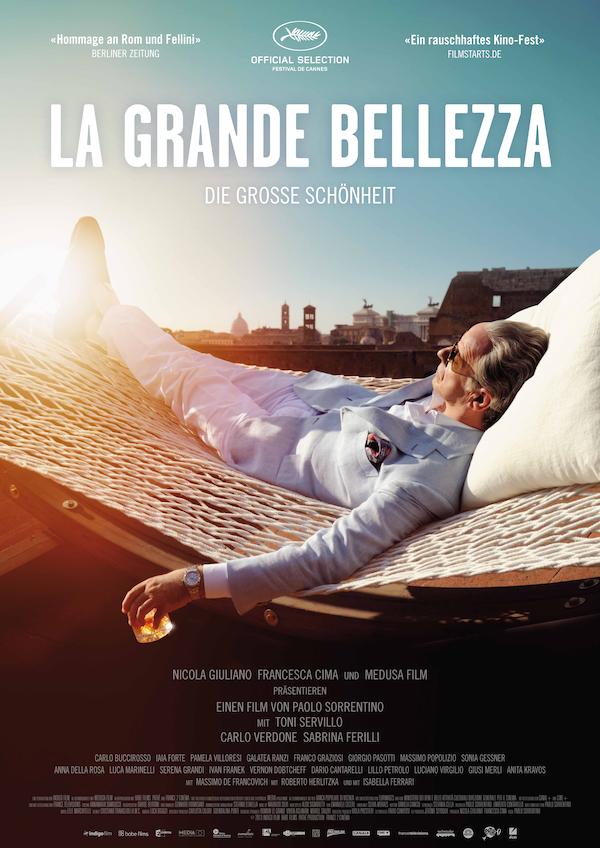
A cinematic masterpiece that captivated audiences and critics alike, The Great Beauty achieved remarkable international success, earning the Academy Award for Best Foreign Language Film and becoming a landmark of modern Italian cinema.
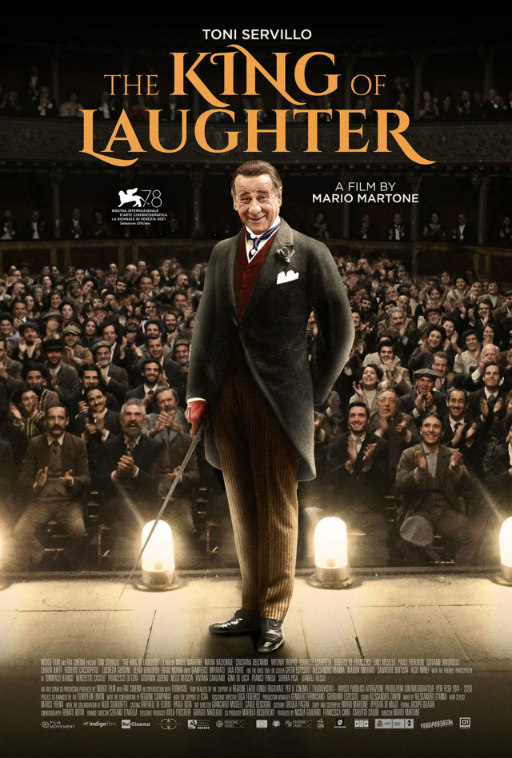
A celebrated Italian drama that captivated audiences with its powerful storytelling and standout performances, The King of Laughter earned critical acclaim and solidified its place as a memorable film about the life and legacy of playwright Eduardo Scarpetta.
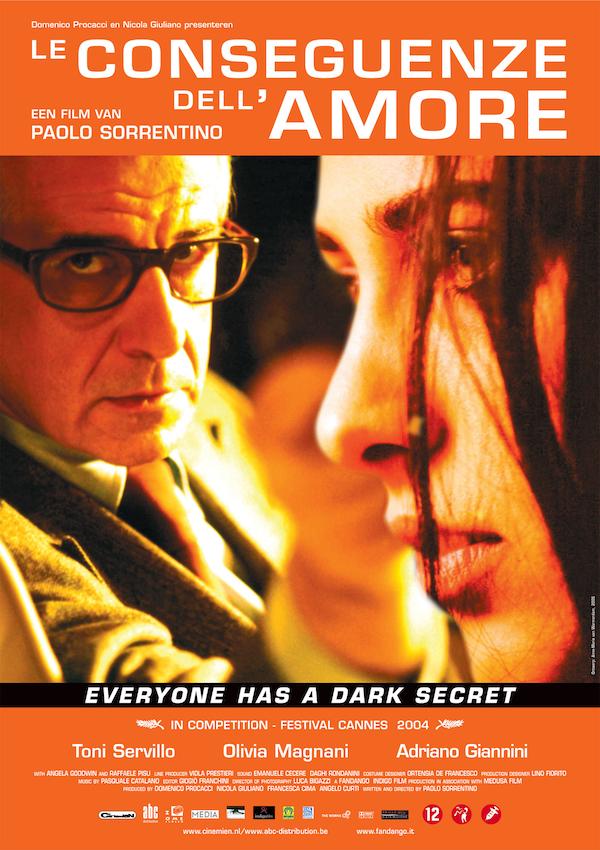
A critically acclaimed Italian masterpiece, The Consequences of Love captivated audiences with its elegant storytelling and earned widespread international recognition, establishing Paolo Sorrentino as a distinctive voice in contemporary cinema.
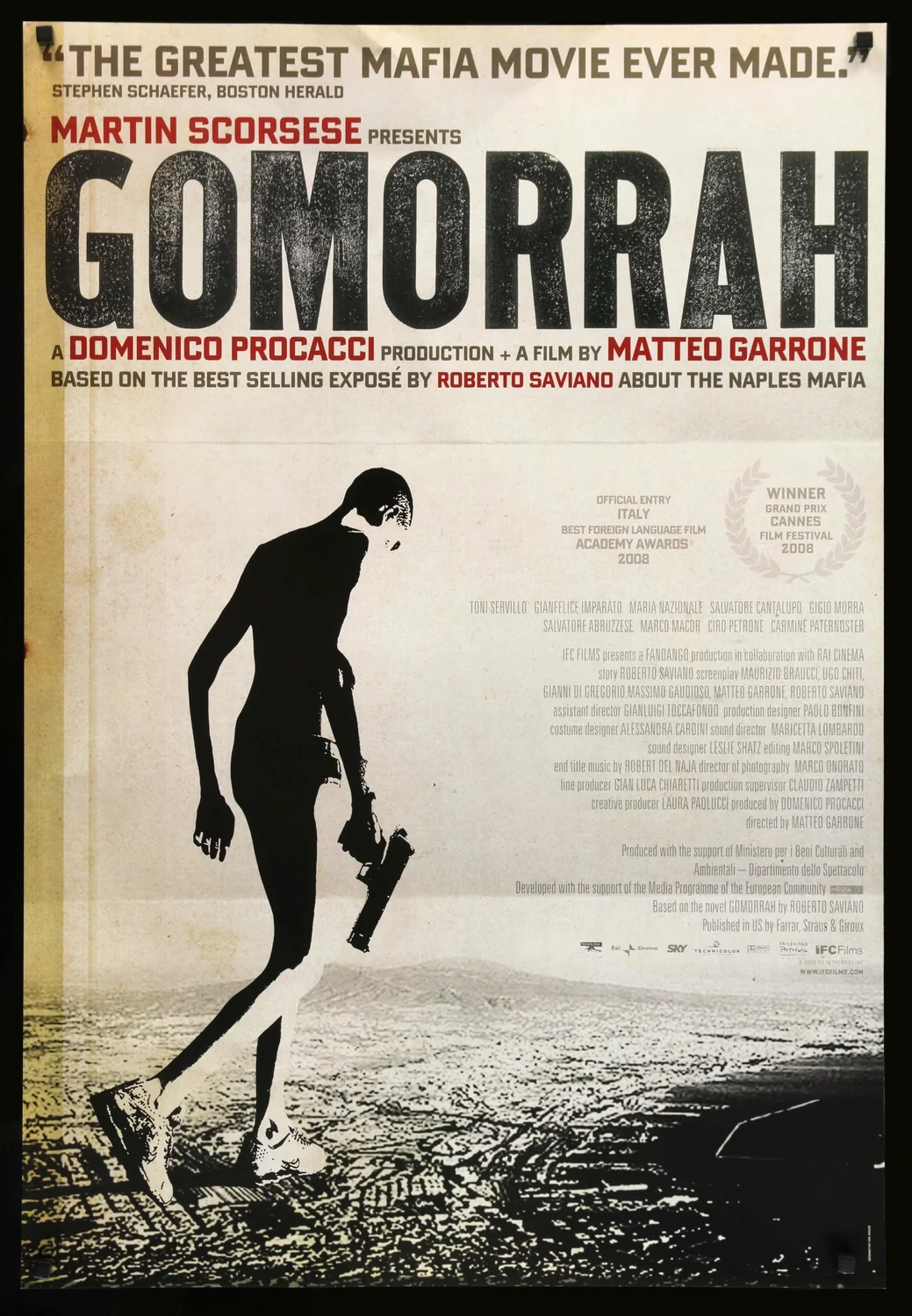
Toni Servillo plays Pasquale in Gomorrah, a stark portrait of power and violence within the Neapolitan underworld.
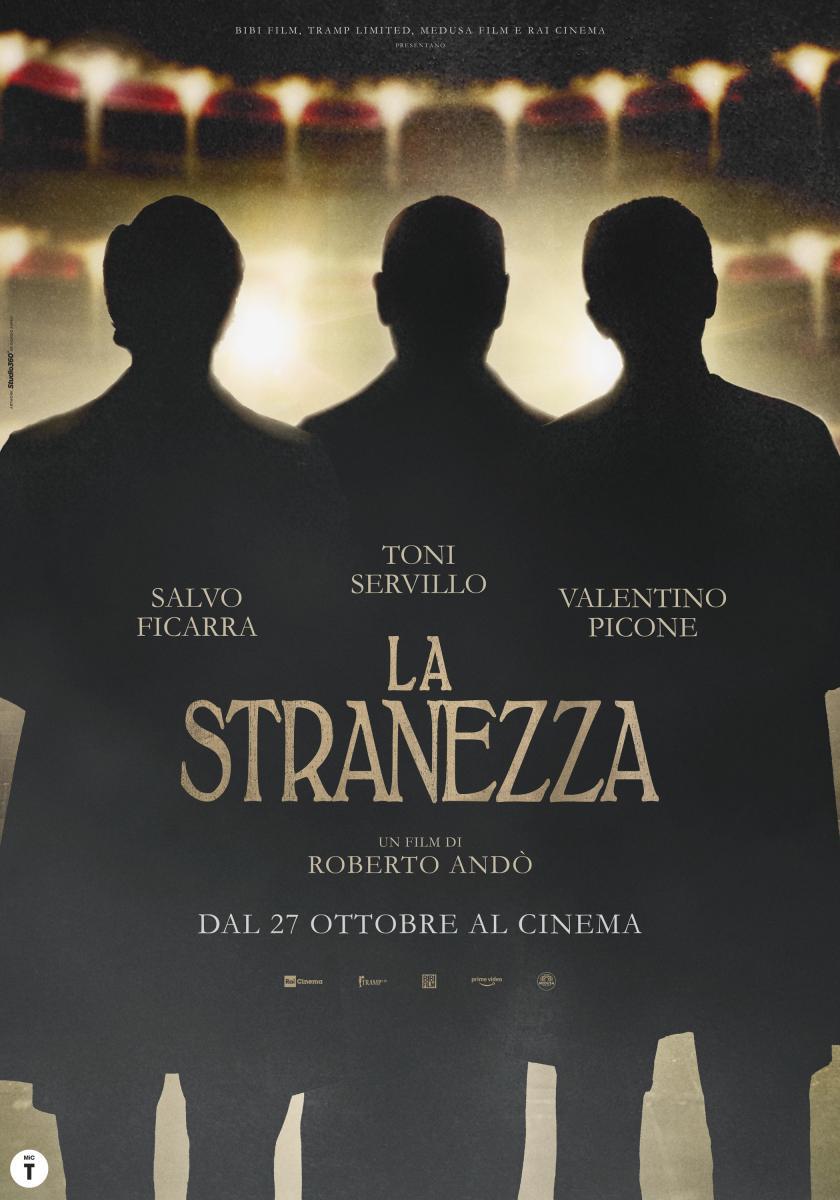
A celebrated Italian film that won critical acclaim and multiple awards, La Stranezza captivated audiences with its witty storytelling, brilliant performances, and vibrant portrait of Sicilian theatre and Luigi Pirandello.
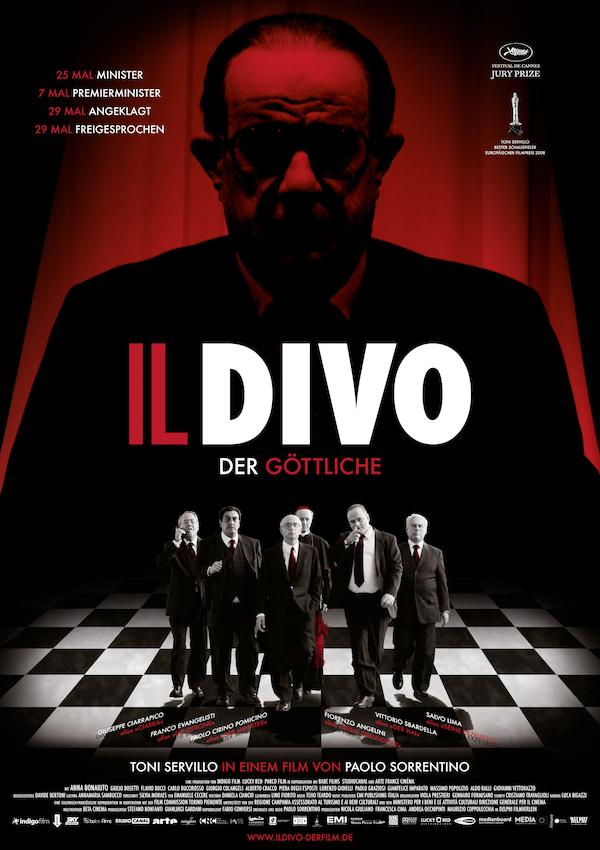
A bold and critically acclaimed political masterpiece, Il Divo earned international recognition and prestigious awards, establishing Paolo Sorrentino as one of Italy’s most distinctive contemporary filmmakers.
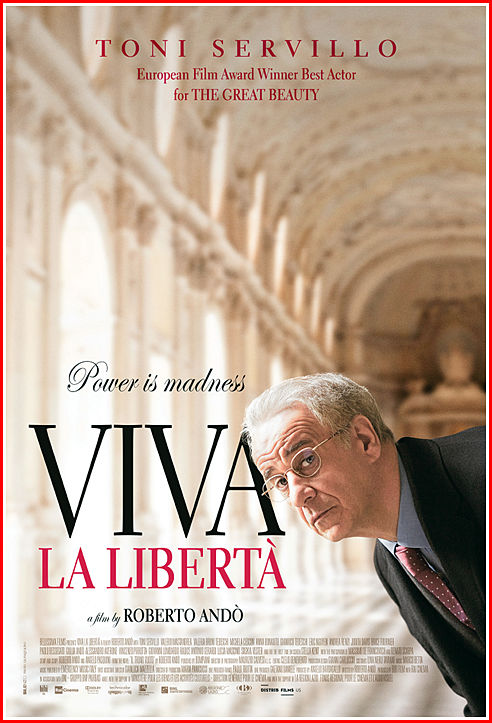
A witty and thought-provoking Italian political drama, Long Live Freedom earned critical acclaim for its sharp storytelling, memorable performances, and brilliant blend of satire and politics.
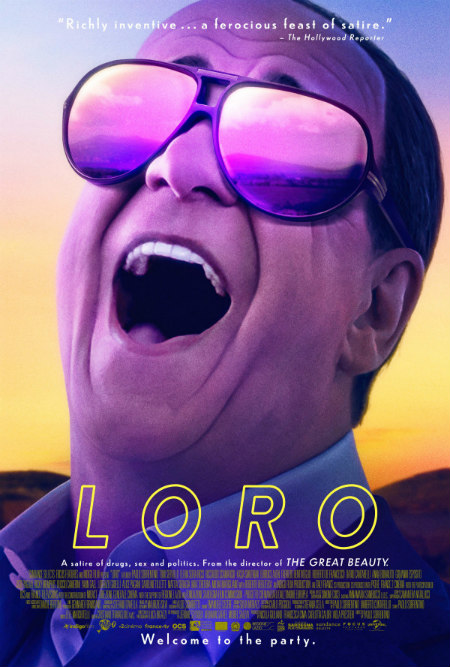
Toni Servillo plays Silvio Berlusconi in Loro, Paolo Sorrentino’s provocative portrait of power, excess, and political spectacle.
“Whether I’m a brilliant artist, a chess player or a terrible criminal, cinema is an illusion. That’s the beauty of cinema.”
Toni Servillo, for you, as an actor, is it the same thing to step into the shoes of a nasty character as it you did in the film Gomorrah?
No, it’s not the same thing. The beauty of this profession lies precisely in the opportunity to bring different characters and individuals to life. In the case of Gomorrah, Matteo Garrone’s wonderful film, my character was a genuine criminal, but with a managerial façade. He looked like a respectable, elegant manager, well-presented, but in reality his job was to bury large quantities of waste in areas used for farming or near residential areas.
How do you get into character?
I don’t know. Let me quote a lovely line from Ettore Petrolini, who was a true genius. When asked how he got into character, he replied, ‘Through the door.’ It involves a lot of study, a deep dive into the script, and many conversations with the director. Then you draw heavily on your imagination. You try and try again. You reason. You think, you spend time with the character. I don’t find that a character stays with me after a film. I find that a bit of a romantic notion. Once the film’s finished, it stays there on the screen. What interests me is what it evokes in the viewer’s feelings and mind. However, I can’t deny that while you’re preparing for it, the character stays by your side for a long time. In some way, they give you something and you give something back to them. It’s always a compromise, a ‘ ’ clash of personalities. To return to what we were saying earlier, the theatre offers you the opportunity to engage with personalities that are the result of profound reflection and great poetic achievements. Engaging with Shakespeare’s Hamlet or Molière’s Alceste in The Misanthrope means engaging with personalities so complex that they’re almost frightening at first. Then, however, you try to find common ground between your own personality and theirs. They blend and merge, and this is what we try to do in cinema too.
What is your relationship with Toni Servillo when you see him acting in a film?
I must admit I don’t watch them much. Before, when I heard actors say they didn’t watch their old films, it struck me as a bit of a ploy; but actually, I understand why – because it’s a terrible reminder of the passing of time, so it’s better not to watch them.
Is it like in the theatre, where you feel you’ve improved?
No, because this chance to improve – to revisit work you’ve already done in the hope of making it better – is an opportunity that theatre offers.
Film characters, especially fictional ones, become iconic. You say that a film belongs to the director, and that’s true; yet, just as in a novel, the audience remembers the character.
I understand that, but they are the author’s creations. Cinema has an enormous power of fascination because everything is on a grand scale. For example, if you want to create the illusion that, at that moment, you’re entering a character’s mind, you slowly zoom in with the camera on their gaze, and that alone is already very emotional and etches itself into the viewer’s memory. In Strangeness, Andò devoted many close-ups to the gaze. I knew he was trying to capture Pirandello’s gaze during the first of Six Characters in Search of an Author; that gaze had to encapsulate ambition, fear of failure, diabolicalness, an explosion of creativity, and a jumble of thoughts. Cinema brings this to life on the big screen. Today, for younger generations, this form of storytelling sometimes replaces the novel – which is, in fact, what shaped our generation.
Your 2026 film Trick is by Mario Martone, a director you’ve reunited with after a few years and with whom you previously made Death of a Neapolitan Mathematician.
It was his first film and it was also my first film. I’m very close to Martone, with whom I’ve made many films. The latest is Trick, which was presented at Venice and is due for release next year. Before that, I’d made a film with him about Eduardo Scarpetta, The King of Laughter – a wonderful experience, and another way of paying homage to the theatre through cinema.
Trick, on the other hand, is based on a novel by Domenico Starnone, in which you play Mario’s grandfather, who has to cope with this child.
It’s a fascinating story because this man is an artist, a great illustrator, a widower who has lived far from Naples for many years. In Milan, a publishing house has commissioned him to illustrate a short story by Henry James, The Jolly Corner, which tells of a man who returns to the house where he lived as a boy and there encounters the ghost of what he might have become had he stayed there. In a way, this is what happens to this illustrator when he returns to Naples after many years because his daughter, due to work commitments, doesn’t know who to leave her five-year-old son with. This man, who finds himself reflecting on old age, the meaning of his work, art, his past and his origins, has to do all this whilst his little grandson – who is a real handful – sets the pace of his days. It’s a lovely film because it sparks so many thoughts on old age, the concept of life, and ideas such as failure and ambition – yet in a very light-hearted way.
Do all these films and directors – Martone, Garrone, Andò, Sorrentino – show us that Italian cinema is still very much alive and thriving?
Yes, I’d say so. The directors you’ve mentioned have all enjoyed, albeit in different ways, enormous success both in Italy and abroad. The latest Venice Film Festival rightly highlighted a generation of thirty-somethings, just as happened with us a few years ago, and I believe there’s a wonderful interest in Italian cinema.
Do you feel recognised internationally as an Italian actor?
I’d say that when I first started out in this profession, I never would have imagined that films with a distinctly Italian flavour would go on to have such an international impact. It’s been a great source of satisfaction, a great joy.
What are you working on now?
Gabriele Salvatores’s new film. I’ve already made a film with him, Casanova’s Return, based on the novel by Arthur Schnitzler. This time too, Gabriele is making a film based on a very fine novel, which is also a major publishing success from Adelphi, The Lüneburg Variation by Paolo Maurensig. It’s a story about chess, set against the backdrop of the tragedy of the Holocaust, but above all it’s a story about mad chess players.
When you play a role like this, do you have to learn all about chess?
You do your research, but then cinema is all about illusion. Whether I’m a brilliant artist, a chess player or a terrible criminal, cinema is an illusion. That’s the beauty of cinema.
I can see great joy in your smile. Where can we see you on the stage?
Last May, at the theatre – and it’s an experience I’d like to repeat in the autumn of 2027 – I staged Giuseppe Montesano’s Le voci di Dante with the Piccolo Teatro di Milano. It was a wonderful experience, and it would take a long time to go into it in detail. I recited Dante in churches and in the main basilicas of Lombardy’s most important cities.
What does ‘reciting Dante’ mean?
It means reciting cantos from the Divine Comedy. We gave our final performance of The Voices of Dante at Milan Cathedral on 11 May, 2026, which was very well attended by the public. It was wonderful to bring together an audience of believers and non-believers in churches to celebrate the value of the word, and to try, through theatre, to evoke that emotion which, in my view, theatre should mean for the audience: a shared presence transcending time – a shared presence of values from the past that project into the future, a shared presence of characters from the Divine Comedy such as Ulysses, Paolo and Francesca, Saint Bernard, Count Ugolino and the audience members themselves. The power of theatre lies in evoking the power of such a co-presence that prompts us to reflect.
Toni Servillo, thank you very much for this conversation.
Toni Servillo leading portrait by Pietro Coccia
ENJOY THIS INTERVIEW? SHARE IT WITH A FRIEND