

A MISSION TO MAKE PEOPLE LAUGH. Gad Elmaleh is a stand-up comedian. Born in Morocco, after attending French schools in Casablanca he went to Montreal for 4 years. He was a political science student for a year, worked on radio, wrote humorous stories and played them in night clubs. In 1992 he took The Cours Florent theatre course in Paris. Through his one-man shows Décalages and La Vie Normale Gad was revealed as a humorist, and he is an actor who starred in various movies. Gad has two sons: Noé with actress Anne Brochet, and Raphael with Charlotte Casiraghi.
You can listen to the podcast of this interview with Gad Elmaleh here.
Glad Elmaleh, are you happy with your choice of career?
When young people say they want to do stand-up comedy and ask for advice, I tell them that if you want to do it this is not really interesting, but if you need to do it, this is great. Because you need to need comedy. You need to need to make people laugh. This is a language and a way of looking at life, and that’s how you are going to make people laugh. This is how it is for me and so, yes, I am happy.
You made your family and friends laugh when you were young?
Recently I talked to my mom and we got really close and then she said something that was really moving, that whenever there was something sad in the family – she would get in a fight with my dad, or my brother would not do good at school, or my sister would do something – the first thing I would do was make all the family laugh so we didn’t fall into some sadness. That was a defense for me. I would make people laugh and be the performer for a kind of anesthesia.
“I love doing movies, but there is nothing I found in my life that can equal and get to the same level of intensity, excitement, adrenaline as the madness of the live performance.”

The stand-up comedian Gad Elmaleh
Gad Elmaleh, it is in the true nature of people to laugh, even though there are many sad news in the world?
Yes, and that might be a little bit Jewish too. I am Moroccan but I’m also Jewish, and the Jewish sense of humor is a way of life. I am also Arab from my culture and I speak Arabic, so I have this double culture. My comedy is Sephardic, but it’s also Arab. It’s hybrid, and I like that.
People in France love it. Did you also take your humor to America and perform in English because you wanted a universal language?
Probably, but less than a strategy it was more a challenge. I started over, basically. It was only five years ago when I went to America. I was very known in France, becoming famous with the comedy and happy with it, and then I needed something that could really challenge me. Obviously, there is this American dream, and, by the way, my special on Netflix in English is called American Dream. Because English is not my mother tongue this is a huge challenge.
In America you became good friends with Jerry Seinfeld?
Jerry Seinfeld is my hero. A few years ago I was accused by the press of stealing jokes from Jerry Seinfeld, and I told a journalist that I didn’t steal only jokes from him. To be honest I would like to have his life! His wife, his kids, his intelligence, his money, everything of Jerry Seinfeld! He became a friend and a brother. We spend vacation together with our families and share a lot of things in common. He’s really the model, so strong, so powerful. He is a minimalist who always says: “Comedy is simple, but it’s not easy.”
You have your Jewish/Arabic background and French repertoire, but in America do you talk about Americans too?
Yes, I make fun of them. I talk about being Moroccan and even more about coming from France, but it’s always fun to make fun of the way Americans look at France and all the clichés they think about us. What’s great with the American audience is they are so used to stand-up that they have this sense of self-deprecation and sarcasm, and it is okay to make fun of them. Starting over for $100 a night I would go every night in comedy clubs, like The Creek & Cave in New York City. This is my gym. This is where I box. This is where I improve.
Do you write your English repertoire instead of improvising like you do in France?
The first time I did a set in English I said, “Hello everyone. Just so you know, everything I say right now is scripted. So please, don’t interact. I cannot interact with you guys because I need to script everything.” Every word I would say was scripted, whereas recently I was in Provence and it was a centre stage. There was audience in front of me, on the side, and in the back, and I improvised for ten minutes about how am I going to do this show for four audiences and did a whole body-language, slapstick number set. I cannot do this in English. Maybe I’ll be able to in a few years. I am a very shy person, I have always been, and comedy helped me so much to get in contact with people. I really do think that it’s a language.
How do your two boys, Noé the older and Raphael the younger, look at you as a father?
My two boys are so different. My little one Raphael wants to be funny, to always find a joke, and he likes to make comments about my work, saying Dad maybe you should say this or that. He wants to make people laugh, imitating his dad, and I feel his love of me making people laugh. Raphael is a performer and sometimes he waits for me in the dressing room after the stage and says, “Oh, this joke was strong. This one was not great tonight.” The other boy Noé is very smart, giving me great notes about my comedy but more embarrassed about his funny dad. Noé loves comedy, but is more interior and he’s not a performer, even though he’s a creative guy and a music composer.
Do you need a very strong memory to remember and tell all these different stories?
This is not the tough part for me because I write my material. My sister Judith is a writer and she’s very funny, so sometimes we write together. When you write your own material and you start performing in front of an audience and it makes sense, you develop the whole logic with all the rendezvous of laughter. Like a play of Shakespeare or Moliere or a line in a movie, you know your material and you know where you are going. The most difficult part for me age 53 is having every single night the same energy and desire to go on stage.
“We experienced such a peaceful relation and fraternity in Morocco with Jews and Muslims. This is quite unique in an Arab country.”
Gad Elmaleh, what do you talk about in your shows?
I really need to talk about what I experience in life. In my new show, it is that we should stop changing places, houses, people, diets. We can be happy with what we have inside. It might sound like a banality, but this is really what all my show is about. I talk about my friends who want to travel far away to find happiness. About my best friend who said he needed to find himself, and was going to India, to which I said: “Bro, if there’s really one part of the world where maybe you’re not going to find yourself, it’s India. It’s big. There are a lot of people. It’s very interesting, but be aware of that.” I also talk about money, a very big taboo in France.
French people don’t like to talk about money?
That’s what I’m talking about in my new show. Where sex is taboo in America, we have the same in France with money. I start a joke by saying this stupid line to the crowd: “Money won’t make you happy.” And then I say: “I know what you’re thinking. You’re thinking that because I have money, I can say that.” And I go: “Yes. So I know what I’m talking about. So please listen to me.” From there I develop and go to something more serious, about actually this is not what’s going to make us happy, and then I go on and on about it. Everyone wants to live longer and better and diet and hug trees and be vegan and go to seminaries and silent retreats and drink juice and walk and do yoga. Everyone is trying to do something. Relax! It’s inside of you.
You worked with Woody Allen in Midnight in Paris and with Steven Spielberg in The Adventures of Tintin: The Secret of the Unicorn, and did other movies. Do you prefer to perform on film or on stage?
I prefer going on stage. I love doing movies, but there is nothing I found in my life that can equal and get to the same level of intensity, excitement, adrenaline as the madness of the live performance. No alcohol, no drugs, no sex, no good news. Nothing is as strong as a good joke that lands and makes a whole crowd laugh.
Your movie Stay With Us is a family story that you come back to France from America and want to convert to Christianity. In your suitcase your mother discovers a little statue of the Virgin Mary and this creates a huge problem in the family. Please can you reassure or inform people if you converted to Catholicism or not?
Or disappoint! I haven’t converted. People thought I had, because my fascination and my curiosity was genuinely sincere, and my love for my brother and sisters who are Catholics and who I made the movie with. I haven’t converted, but I’ve always been really interested in Christianity. In this movie there is a part that is real and true, and that story goes like this: I’m a kid, 6 years old, born and raised in Casablanca in Morocco in a Jewish Sephardic family. Not religious, but we observe traditions, prayers, synagogue. I speak and read Hebrew, we do Shabbat at home, and every day my dad would tell me, pointing to a building in our neighborhood: “Pay attention! Don’t ever go into this building.” I didn’t even know what this building was. And it was a church. Obviously, this is forbidden in the religion, but beside the religion was the superstition of don’t go there, it’s going to be a disaster. And then also fear of Christianity.
And you are that kid?
I’m a kid. I’m 6 years old. The only thing I want to do is go in there, so I push the door and I face the statue of Virgin Mary. I was with my sister and I’m in tears. I don’t know why. I’m just so emotional and I think it’s so beautiful. The smell is good, it’s quiet, it’s beautiful. From that day I was thinking about this lady and this place, and from that story I told the whole movie about me becoming Catholic.
As a kid did you like to do things that you were not supposed to do?
Yes, and this is why I did the movie. It was a provocation also. I’m not crazy or stupid. Obviously I know that a story of a Jewish man who wants to convert to Christianity is going to make the Jews freak out. One day a woman in the street in Paris said: “But this is a catastrophe. What you did for the family!” I said: “But Madame, this is a movie about the catastrophe of a Jew who wants to become a Christian.” This is the most terrible thing that can happen in a Jewish family. Coming out to your family as a gay person would be easier than saying to your parents, “I’m becoming Catholic” in a Jewish family.
In a line from the movie someone says that it would have been different if you said: “I am becoming a Muslim.”
I’m not sure it’s going to be easier if someone becomes Muslim than Christian, but that’s a line from my best friend in the movie. He’s so stunned and shocked by the fact that my character – and I said, my character – is going to become Christian, while for him Muslim is logical. We speak Arabic, we were born and grew up in Morocco. But the perception would have been very bad also. It’s good to say at this moment, when we are going through a real tragedy in the Middle East on both sides, that we experienced such a peaceful relation and fraternity in Morocco with Jews and Muslims. This is quite unique in an Arab country.
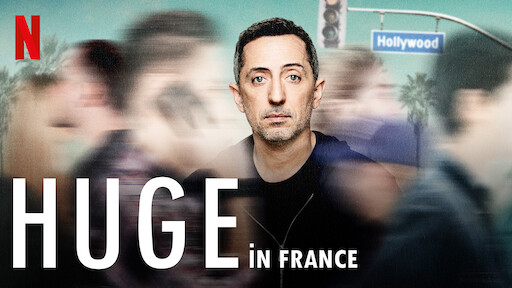
In Huge in France, eager to reconnect with his son, French comedy star Gad Elmaleh moves to LA, only to discover that he’s left all his fame and celebrity perks behind.
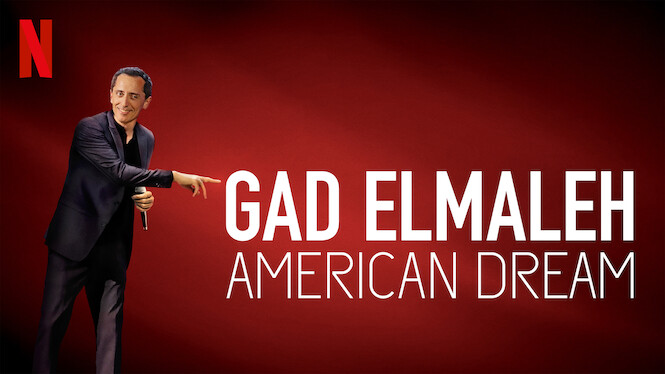
In American Dream comedian Gad Elmaleh gleefully digs into America’s food obsessions, dating culture, slang and more.

Gad Elmaleh’s take on the American Dream and his experience as an immigrant in the USA
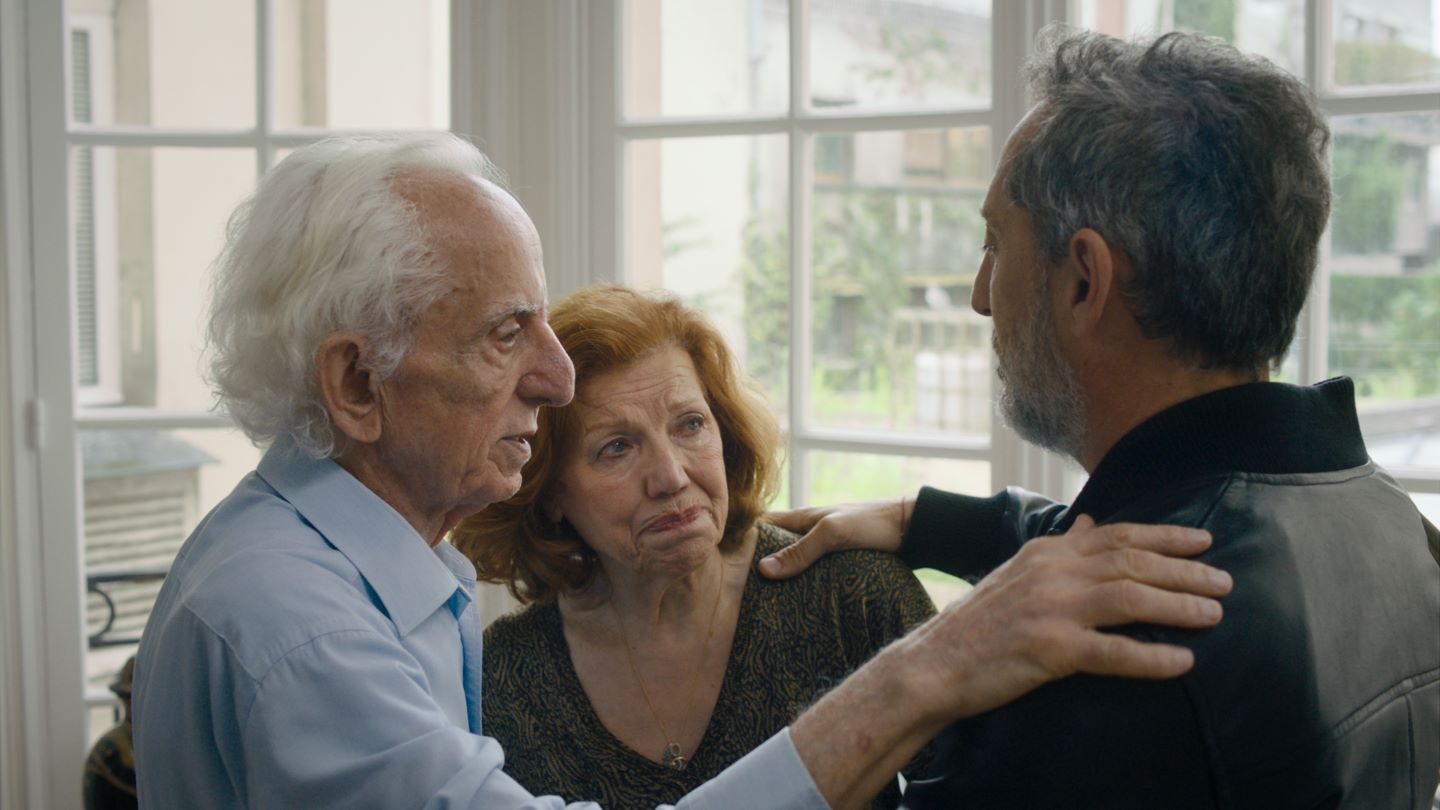
In Stay With Us after living in the US Gad returns to France hiding his conversion to Catholicism from family. When parents find out, they try to revert him to Judaism.
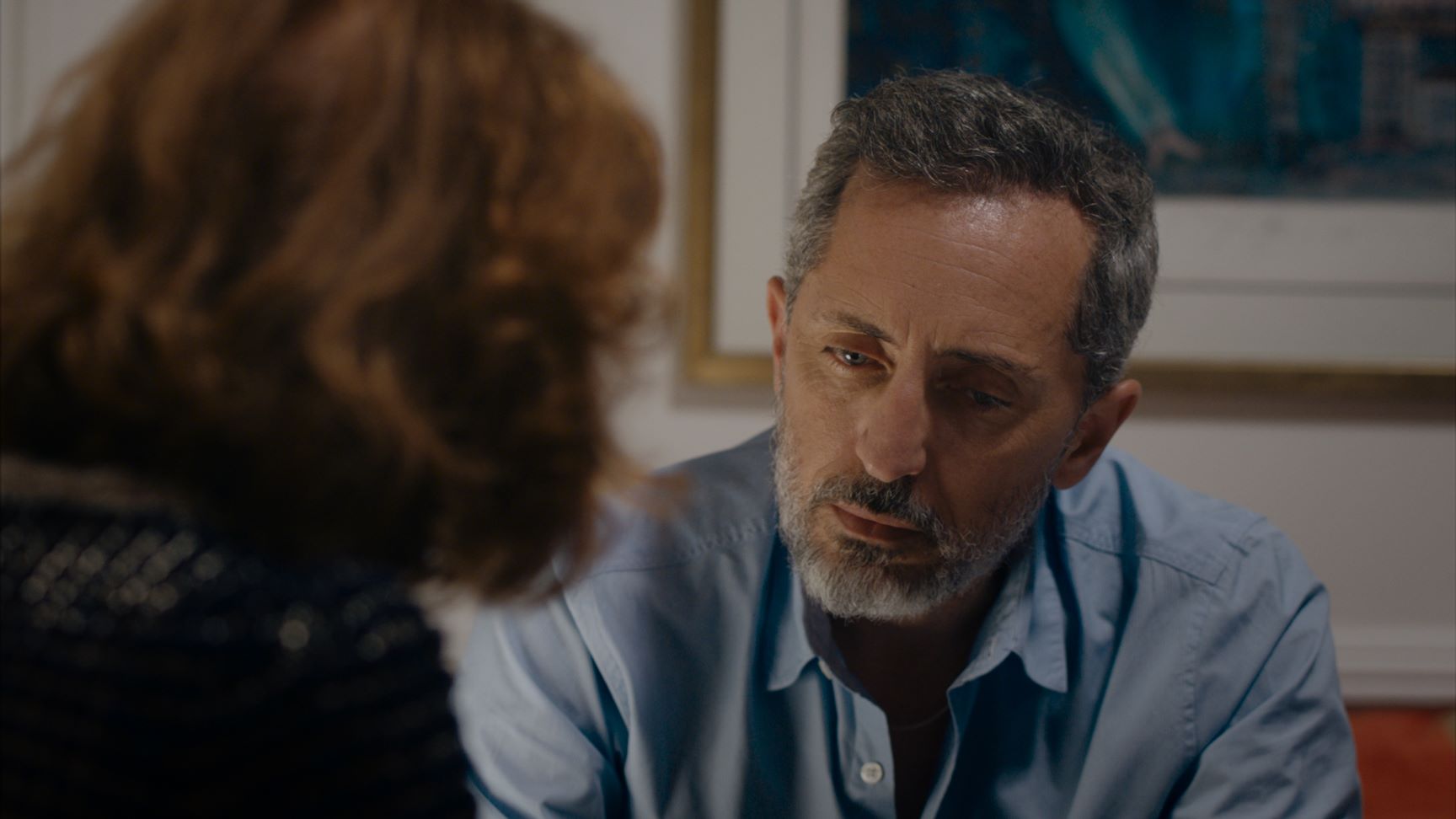
Gad Elmaleh’s comedy Stay With Us presents a heartfelt, humorous take on the importance of religious tradition in a family
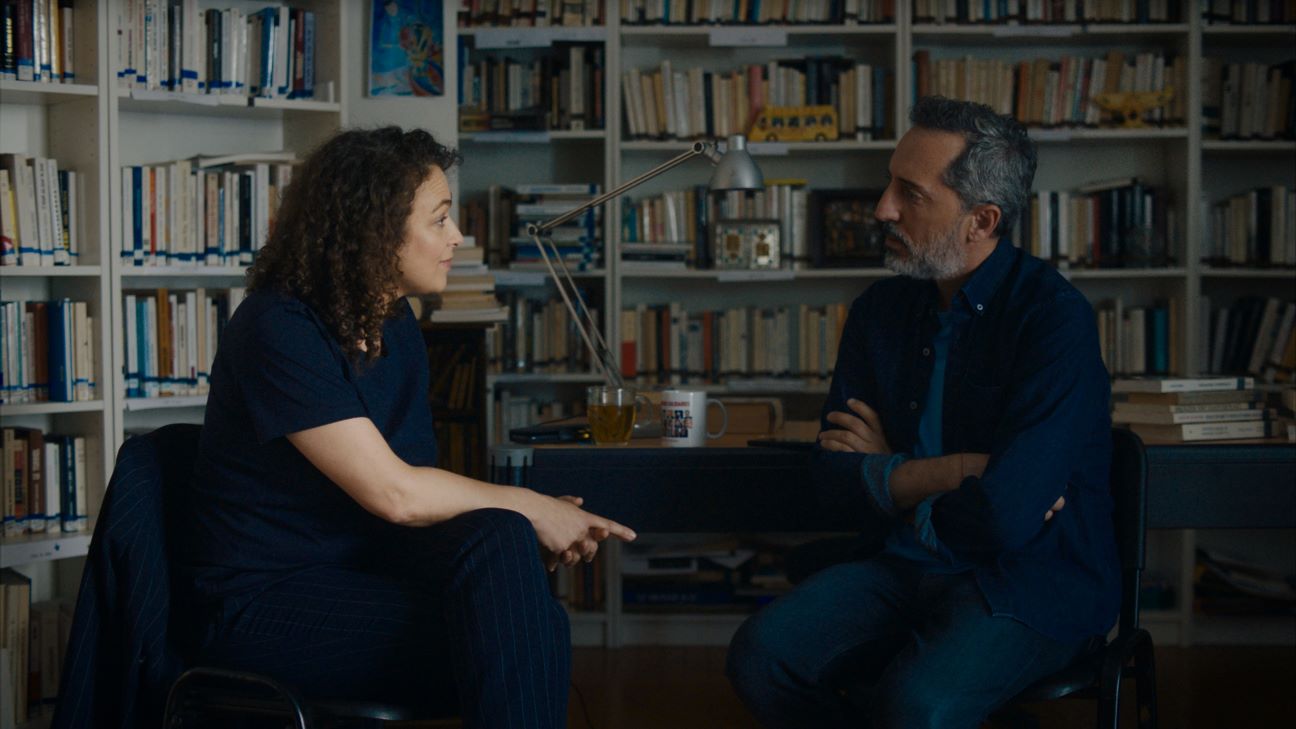
Much of the film Stay With Us is about how Gad breaks the news to his family. To add to the autobiographical element, his parents and his sister play themselves in the movie.
“Making people laugh is a great thing, but also is a therapy for a lot of people.”
Gad Elmaleh, would you like to perform in front of an Israeli and Palestinian audience together, and make both laugh about the same things?
I would love that. I’m connected to the Israeli comedy world and I know the comedians from the Palestinian side. They are my friends. I talk to them. It would be amazing if we can bring together comedians to make people laugh together. I’m not saying it is going to solve the problems, but if we can make this happen I would love that.
If something is really funny, they all laugh together. It’s irresistible.
You become like a kid, vulnerable. One of my teachers at the acting school said that what’s wonderful with comedy is, when you make people laugh, the second they start to laugh their hearts open. He said that our responsibility is to put something good there. If you can make those people laugh together, when they open their heart it would be great to put there this peace and loving feeling.
Jews love telling jokes criticizing themselves and joking about their own weaknesses. Is this one of the gasolines that makes them survive for so many years?
This is really so strong. I like this word gasoline. Yes, it’s a power. It Is how they survived. When I hear jokes coming from people who suffer and when I hear Jewish humor, I thank God we have this. It’s healing, and when you have people who suffered that authorize themselves to be self-deprecating, everyone relaxes and feels they have the right to laugh about this and that. That’s why I love Jewish humor. It’s amazing.
Do they appreciate this kind of humor everywhere you perform?
Self-deprecation is something pretty universal, and they do as long as you’re vulnerable, honestly and sincerely. People don’t want to see a comedian who is really comfortable with himself and a hero. Comedy is about how this man, under the spotlight in front of 5,000 people, talks about his weakness, his fears, his disability, awkward things, neuroses. As long as you’re sincere with that – and it takes time and it takes work – they love it.
Is it difficult for you as a Jew that Raphael’s mother Charlotte Casiraghi is a member of the Monaco royal family?
Not at all. I am not the first Jew in the world who has a kid with someone who is not Jewish. As long as each one respects the faith of the other one, it’s a treasure, a richesse, and my two sons have a kind of a double identity, they know about both. My son comes to my parents’ house for Shabbat and he’s super happy to see that this is part of his dad’s DNA and he’s part of it too. He loves being with my parents. My mom can’t wait to cook for him for Shabbat. It is something that is more a strength than a problem.
Do you still enjoy what you do very much?
I need it. My body, my mind, my soul need it. I have body pains if I don’t perform enough, because I need to go on stage. You can see when comedians get rusty. I believe in the comedy muscle. It’s something that I need to train. I need to do more. I need to try a new joke. I need to stay always sharp.
Will you return to America to do more shows?
I am not sure. I want to be better at what I do in French. Starting in Lyon, I will do my big tour for one year until the end of 2025, in France, Quebec, Canada, Belgium, Switzerland and some francophone territories in North Africa, Morocco, other countries in Africa. You’d be surprised how many French speaking people are in America too. I did shows in French in America, and it was amazing. Not only expats, but people who love and learn French. I want to dig into that and become an artisan.
With all that is going on in the world these days, you must have a lot to say?
I do, and I have also a lot of people to heal. People are suffering now. Comedians are doing a great job to make them feel better, and we need to put people together. In my audience I do have Jews and Muslims laughing together, Christians and whatever. Making people laugh is a great thing, but also is a therapy for a lot of people.
Somehow to make people laugh is like a Jewish “mitzvah”?
I’m not a rabbi, but from what I know and studied in the yeshivah there are 613 mitzvahs that we are supposed to do. I can’t remember exactly where it fits in the Talmud, in the Mishnah and the Gemara, or in the Torah. It’s written there that people who make people laugh will go to olam ha-ba, to le monde futur. But making people laugh is more than a mitzvah, it is also a mission. When I go on stage, I’m going to do my job but I’m going to make people laugh and that’s my mission. I’m going to make them happy, and I’m going to give them joy.
On stage, can you feel the audience reaction and understand if it’s a good night or less good night and so then you change things a little?
That’s endless craft. I could do a joke one night and it’s good, but not as good as last night, so tomorrow night I’m going to change one word. I swear I’m not exaggerating. Maybe stop here. Breathe… And then: Boom! Give the punchline. It changes every night. This is my passion. Our craft as comedians is to cut the fat and go to the point, and make people laugh harder and harder and be pure. This is what I am working on.
Thank you very much Gad!
ENJOY THIS INTERVIEW? SHARE IT WITH A FRIEND.


