

CONTINUING THE RENAISSANCE. Lorenzo Fiaschi is one of the three friends who founded the very prestigious Galleria Continua art gallery in San Gimignano, the town with a fantastic and famous skyline of medieval towers in Tuscany, Italy.
You can listen to the podcast of this interview here.
Lorenzo Fiaschi, how did Galleria Continua start?
Galleria Continua started in 1990 in San Gimignano. It wasn’t intended to be a profession; it was about passion. We drew energy from the heritage, the Renaissance, and the beauty and landscape of San Gimignano. Together with my two friends, Mario Cristiani and Maurizio Rigillo, we decided to open a space to try to continue all this with art and good energy. We aimed to be in the moment, to continue from the past, and to move toward the future. That’s why the name: Galleria Continua.
Were you an art historian?
No. I studied philosophy and I attended the Florence Academy of Fine Arts, the Accademia di Belle Arti di Firenze.
You wanted to be an artist yourself?
When I was younger, I did theatre and created shows as a painter. I also became a father, and opened that space with my friends. So, a lot of things happened together!
Who did you first show in Galleria Continua?
This is another strange beginning because we didn’t have any contacts in the art world, just a passion. So for the first show we decided to do something really unusual. Now a lot of people know about this because we made a documentary with Sky Arte called ‘The Ability to Dream’, which explained that Maurizio, Mario, and I all created paintings with our girlfriends. We invented the name of the artist and then held the first show and we sold some pieces for about 50,000 lire.
“We aimed to be in the moment, to continue from the past, and to move toward the future. That’s why the name: Galleria Continua.”
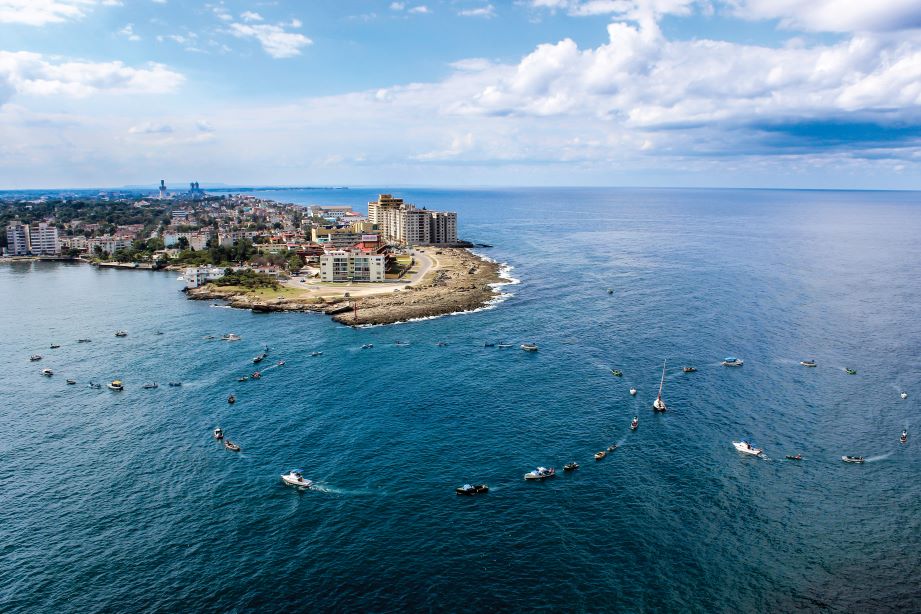
« Terzo Paradiso » by Michelangelo Pistoletto Cuba, Havana – December 16, 2014
Lorenzo Fiaschi, this was in 1990, but then you did in fact start to have famous artists?
After that show we posted many manifestos in universities and art academies, stating that we were trying to find artists who had never exhibited. We wanted to replicate the same experience that we had had with new artists. We did that for one year, and then we started to look around and see what we loved. As you can imagine, many of those artists said no, both because our space was really small and because it was in San Gimignano, which was seen as a commercial place focused on tourism.
What did you do?
We explained the idea of why we opened a gallery there and why we decided to promote culture in San Gimignano, and then some artists said, ‘Ah… good idea!’ Those artists didn’t care if we were rich, if we had collectors, or if it was good for them; they just loved to support the idea. Two of the artists who felt that way were Michelangelo Pistoletto and Daniel Buren, and their support helped our story immensely. When we started to show Pistoletto and Buren, other artists began to question what was happening in San Gimignano. The trust that we had from those two artists was really important.
What did you do next?
An incredible project that aligned with our idea and allowed us to connect with the landscape and architecture. We invited six artists — one Italian and the others from different countries — to create something like a salon, to speak together. We also invited two curators, one Italian and one from outside. We did this in various small towns around San Gimignano, places like Siena, Montalcino, Buonconvento, Volterra, and so forth.
How long did you do this for?
For ten years, from 1996 to 2005. We always invited three more established artists and three super young ones. When I say super young, I mean artists like Olafur Eliasson or Tobias Rehberger, who at that time nobody knew.
Who were the famous artists?
Ilya & Emilia Kabakov, Sol LeWitt, Pistoletto, Jannis Kounellis, and others. There is a long list because, as I mentioned, we did this for a total of ten years, therefore featuring 60 artists.
Did you discover some artists? I believe you also worked with Giuseppe Penone.
That happened later. We did a big show in the Uffizi with Penone, and we also worked with him on the side because we love to undertake private projects. Our work isn’t limited to just the artists we represent.
Who do you represent?
The list is long, we represent 70 artists. We have represented Anish Kapoor for almost 30 years. We work with Antony Gormley, Pascale Marthine Tayou, and are the main gallery for Michelangelo Pistoletto, Daniel Buren, and Ai Weiwei. We were the first to work with Ai Weiwei because we opened the first Western gallery in China, in Beijing in 2004. On that occasion I met Ai Weiwei and we started to show his work. Nobody knew him twenty years ago. We took a lot of risks because when Ai Weiwei was released from prison, we decided to hold a solo show for him in Beijing.
Did it go well?
It was a big worry, but in the end, nothing happened. A friend of mine who was a minister in China said they decided to leave us alone because the risk was too high for them if we had problems. We are well known outside China, so imagine the reaction if Galleria Continua had been closed because of Ai Weiwei!
“My idea was to build bridges to help Cuba — cultural bridges between Cuba and the rest of the world.”
Lorenzo Fiaschi, in fact Galleria Continua is not only in San Gimignano?
As I said, we opened the first Western gallery in China, and then we opened in France in Les Moulins — the first gallery in the world located in the countryside, surrounded by cows where you can hear their mooing and the sheep baaing. It is 30,000 square meters, huge. Then we opened in São Paulo, Brazil, in Dubai, and in Havana, Cuba.
Do you still have all these?
Yes. In France, we have three galleries now. In Paris, there is one in the Le Marais district and one in the Matignon district.
And you represent many more artists?
Leandro Erlich, Carsten Holler, Eva Jospin, JR….
This October you have a big show of Michelangelo Pistoletto in Paris?
We opened a big show focusing on history, featuring a work by Picasso and a work by Fontana, along with four talks: one with Carolyn Christov-Bakargiev, one with Hans Ulrich Obrist, one with Marie-Laure Bernadac—we did a show with Michelangelo in the Louvre with her. The last one is with Laurent Le Bon, the president of the Pompidou, who was previously the director of the Picasso Museum.
All these conversations with Michelangelo?
Yes, during the show on October 14th, 15th, 16th, and 17th between 11 AM and 12 PM. The show features a new series of works by Michelangelo, as well as some paintings with QR codes. After the talks, there are four paintings and each one has a QR code. When you scan the QR code, you can access the talk.
Do you also have interesting shows going on elsewhere?
In the Les Moulins gallery we have a Cuban show featuring 20 artists. It is only 50 minutes to an hour outside of Paris. And in Cuba we have Osvaldo Gonzalez, a Cuban artist who works with materials you can find in everyday places. He started using these materials because he didn’t have money to buy paints or canvases.
Is there an art market in Cuba?
No.
Why do you have a gallery there?
First of all, I love to learn. I enjoy creating relationships between differences, and Cuba is a really difficult island due to the U.S. embargo since 1958. My idea was to build bridges to help Cuba — cultural bridges between Cuba and the rest of the world. In Cuba we showcase artists like Kapoor, Pistoletto, and Buren, and we show Cuban artists outside of Cuba. It’s more of a philanthropic idea than a commercial one.
How is the Chinese market?
The beginning was very difficult because the attitude of Chinese collectors was that if the price was 100, they would ask for a 35 or 40% discount. It was impossible to do that, so the start was really challenging. But then, step by step, we created a market and brought the first Chinese collectors outside of China. So now we have some friends.
Do you also deal with Chinese artists?
Yes. Ai Weiwei, Sun Yuan and Pen Yu, Qiu Zhijie and more…
And what is happening in San Gimignano?
San Gimignano is the heart of the gallery.
You still have shows there?
Of course. We started in a garage that we no longer have, with €500 at the beginning, and after two years, we moved into another space. After three or four years, we took a risk by taking over the theatre and cinema in San Gimignano. We are happy because the owners of the space trusted us and said to go ahead. They gave us the space even though we didn’t have enough money to pay the rent, but we promised we would do our best to pay each month after one year, and it worked. That step was really important because the space is beautiful, and the artists enjoy creating something there.
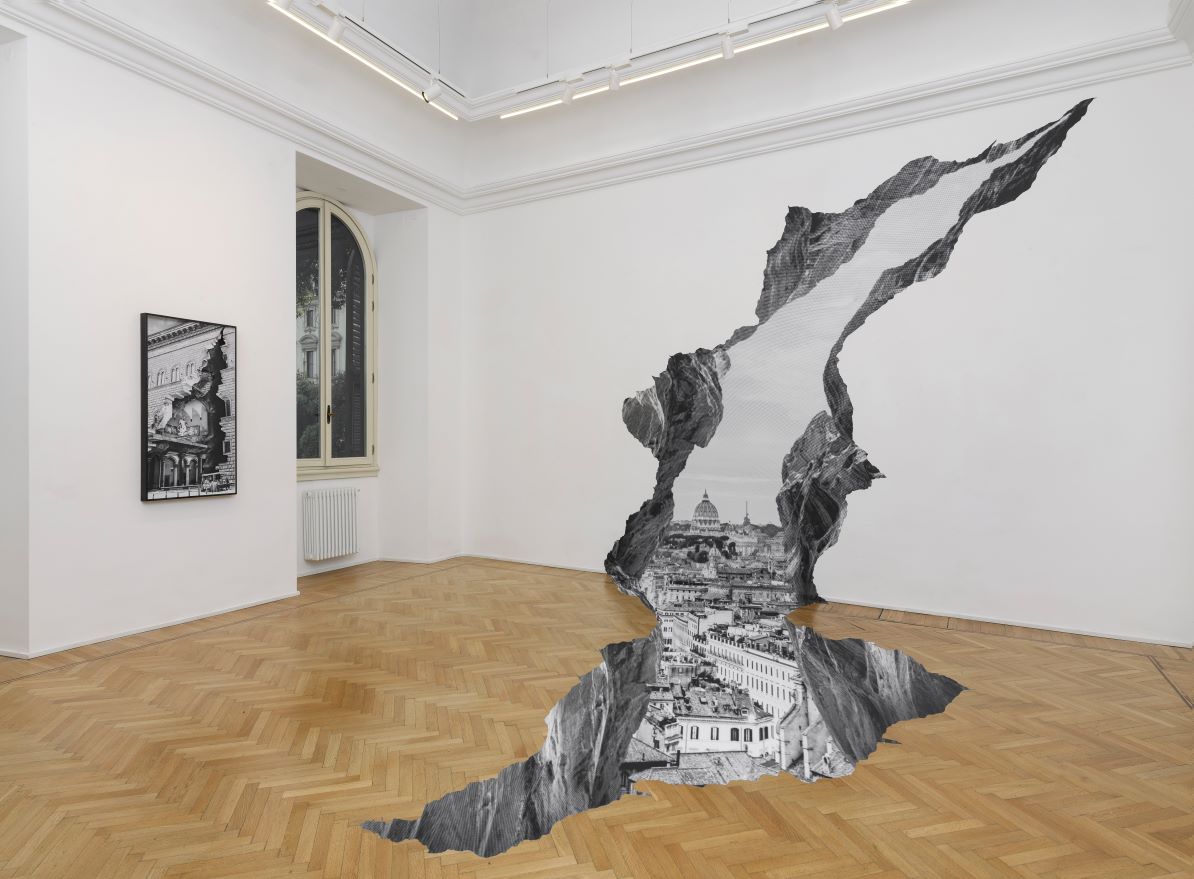
« Ferita » JR – JR2023_FR
Courtesy: the artist and GALLERIA CONTINUA
Copyright: © JR
Photographer: Giorgio Benni
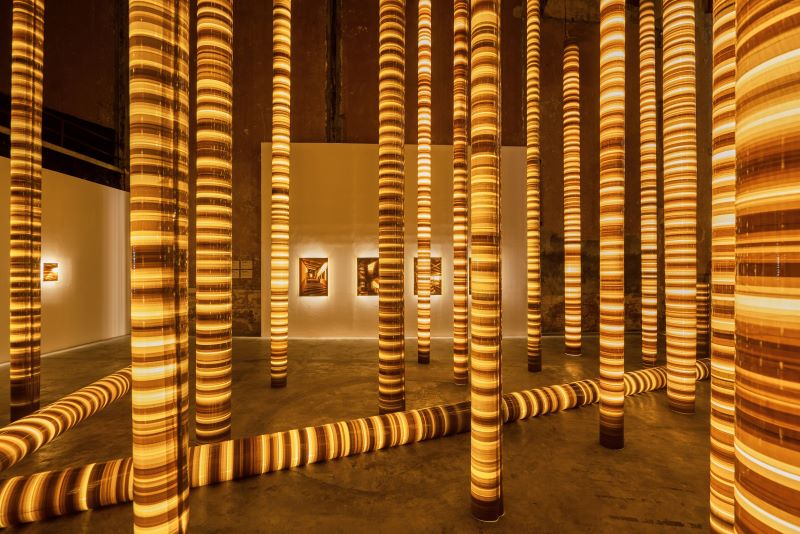
« Estados » by Osvaldo González at Galleria Continua / Habana
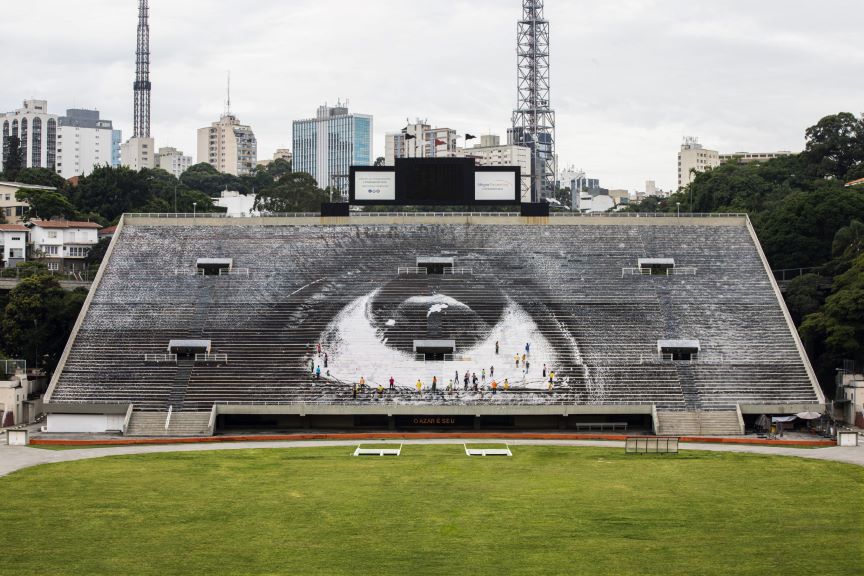
« Olho #3, Estádio do Pacaembú, São Paulo, 2020 » by JR at Galleria Continua / São Paulo
Courtesy: the artist and GALLERIA CONTINUA
Copyright: © JR
Photographer: the artist
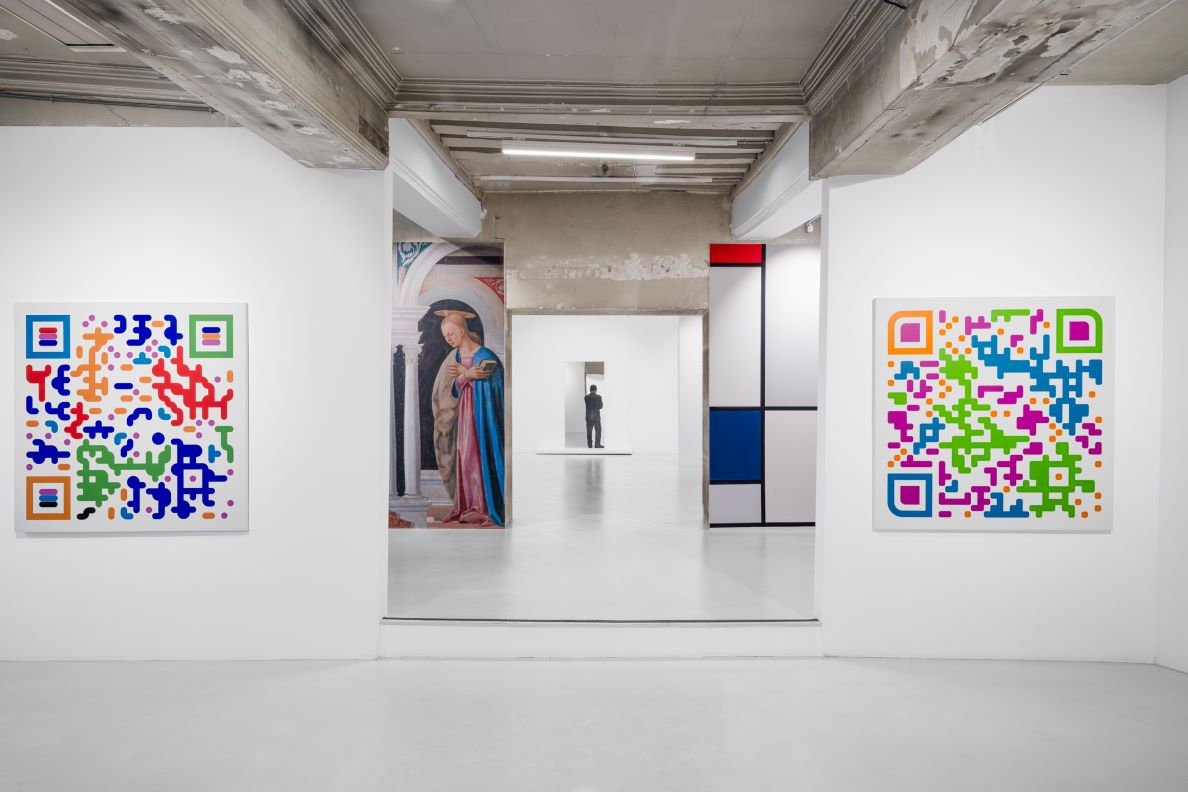
« Nouvelle Perspective » by Michelangelo Pistoletto at Galleria Continua/ Paris Marais
Courtesy: the artist and GALLERIA CONTINUA
Photographer: Hafid Lhachmi
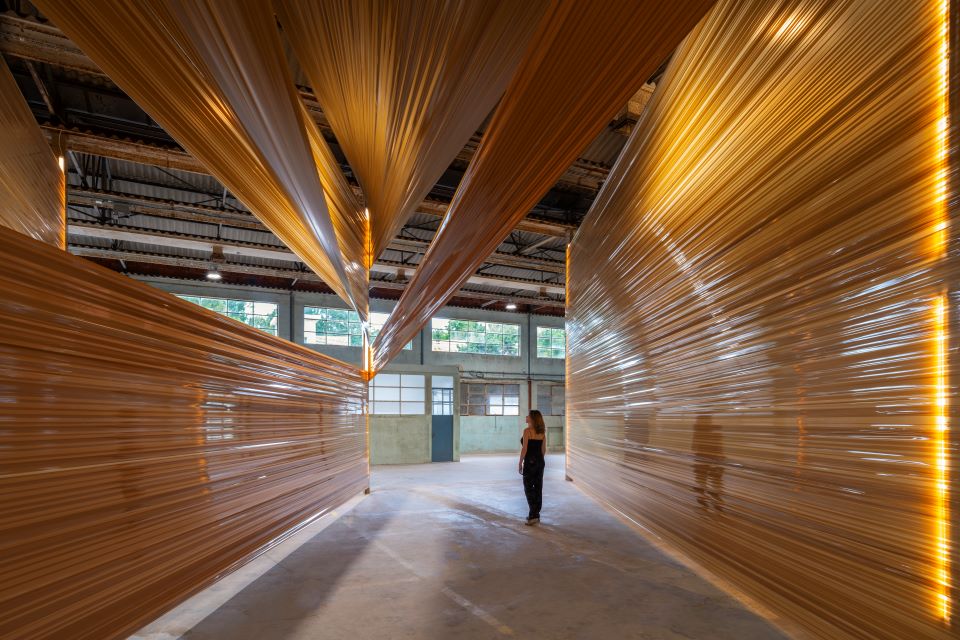
‘KALÉIDOSCOPES’ CUBA – REGARDS CONTEMPORAINS at Galleria Continua/ Les Moulins
(C) Hafid Lhachmi – ADAGP Paris, 2024-56
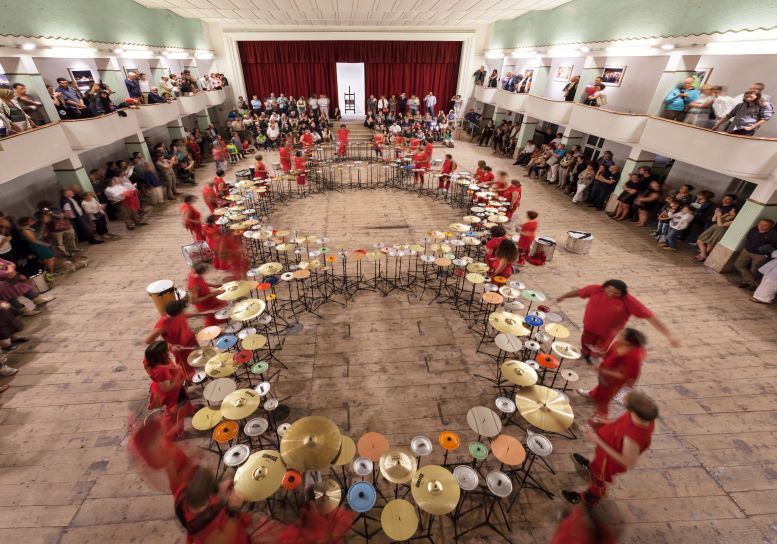
« Terzo Paradiso » by Michelangelo Pistoletto at Galleria Continua / San Gimignano
Courtesy: GALLERIA CONTINUA
Photographer: Ela Bialkowska
“It’s about seeing people happy and enjoying the projects we are doing when they say, ‘Wow!’ — creating emotions.”
Lorenzo Fiaschi, what kind of exhibitions do you have now in San Gimignano?
In San Gimignano, we have many spaces now. There is the theatre and cinema, another space, and a place on the top floor of the Piazza della Cisterna.
Where do you live now?
In Havana since July, and before that I spent the last six years in Paris because I met Laura, my wife. She’s also a curator. We met at art conferences 11 years ago, and after four years, we had a baby. Then we decided to live in Paris because I met Laura there. We had two wonderful children in Paris.
Is Laura Italian?
No. I met her in France, but she’s Cuban.
And that’s why Cuba?
In Cuba, the gallery started through Laura, who saw Michelangelo Pistoletto’s Third Paradise at the Marrakech Biennale. When she understood the symbol, she said, ‘Wow, this is perfect for my country — the United States and Cuba, the extreme.’ So she organized a performance in Cuba on the sea between the United States and Cuba, convincing fishermen to draw the sign of the Third Paradise with their boats. Incredibly, we did this in Cuba on December 16th, 2014, and the day after Obama called Raul Castro after 60 years without any connection between the two countries.
This came about because of this work of art on the sea?
We don’t know. Perhaps, because there was a lot of communication about that. We did it during the afternoon and during the morning of the day after Obama called Raul Castro to say, “Come on, we have to find a way.” That’s why we said, “O my God. We have to continue to build bridges between Cuba and the rest of the world.”
And this why you live in Cuba now?
This is for another reason: in May, Laura told me that someone proposed a project for me to do in Cuba, and we refused because it was too complicated; it’s too far away with a six-hour difference, etc. We bought a house there about three years ago, but she said that it was too complicated to do this project in Cuba — impossible. So I asked, “Why is it impossible?” She replied, “We have the kids in school in Paris; your life is more in Europe and China, and it is so complicated.” I said, “No, no, no, no. Laura, wait. I don’t want to hear in the future, in ten years, that we didn’t do this because of my kids or because of you. No, no, no.” I said, “In September the kids will be in school in Cuba” She said, “No?! You’re crazy. Are you sure?” And I said, “Super sure, because you are younger than me. I’ve already done a lot of things. You have to live your life to be happy.”
How can you run China and Cuba and France and San Gimignano?
There are directors everywhere, and so we manage well with them.
Do you travel all the time?
Yes, we travel a lot, but not only for the galleries; we also travel for museum shows and to visit artist studios, collectors, and friends.
What about this new tendency that art has to be ‘black art’ or has to be ‘transgender art’?
Art is a rainbow. We need space for everyone. However, for me, it’s also about quality. For instance, if you choose only female artists, solely to be politically correct, you risk overlooking outstanding art by men. This is a concern for me, but it’s also true that it is crucial to give a voice to underrepresented artists who have not had a platform to express themselves until now. We need to have open eyes and open hearts.
Is this an excessive moment?
Yes, it is an excessive moment to create a new balance. Sometimes you need to be excessive to have something that we need.
Is the art market having a price crisis?
It is normal. I am not worried, probably because my philosophy is quite different. When I do something I love and have a dish of spaghetti, I can manage; I am happy. It’s not about whether we sell less or more. We have to manage. There are wars and complications now, but we started with nothing. So for me, it’s not, “Oh my God.” Life is life, and the really important things are love, friendship, and health.
Do you still love your job?
Now, a lot. A lot.
What do you like best about it?
It’s about seeing people happy and enjoying the projects we are doing when they say, ‘Wow!’ — creating emotions.
What does your experience in Cuba give you?
Cuba, for me, is a prime example. Despite many economic problems, the surprising thing is that the people are always happy. There is great generosity, and they possess a wealth of knowledge and intelligence. It’s a pleasure to talk with them.
Will it be different there in the future?
They resisted for sixty years, but COVID hit stronger than the embargo. It’s very challenging for them now, and if Trump wins, it would be even more difficult. I hope for a positive change so that the essence of Cubans doesn’t transform into something like that of Miami or become Americanized. This is my hope because the soul of Cubans is truly remarkable.
Thank you very much Lorenzo, and good luck.
Portrait of Lorenzo Fiaschi by Paula Chandon.
ENJOY THIS INTERVIEW? NEVER MISS ONE. MAKE SURE YOU HAVE SIGNED UP TO RECEIVE OUR EMAIL SUBSCRIPTION NOTIFICATIONS ON THE HOME PAGE.


