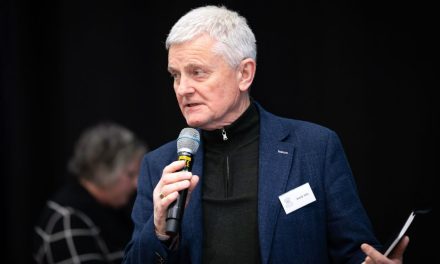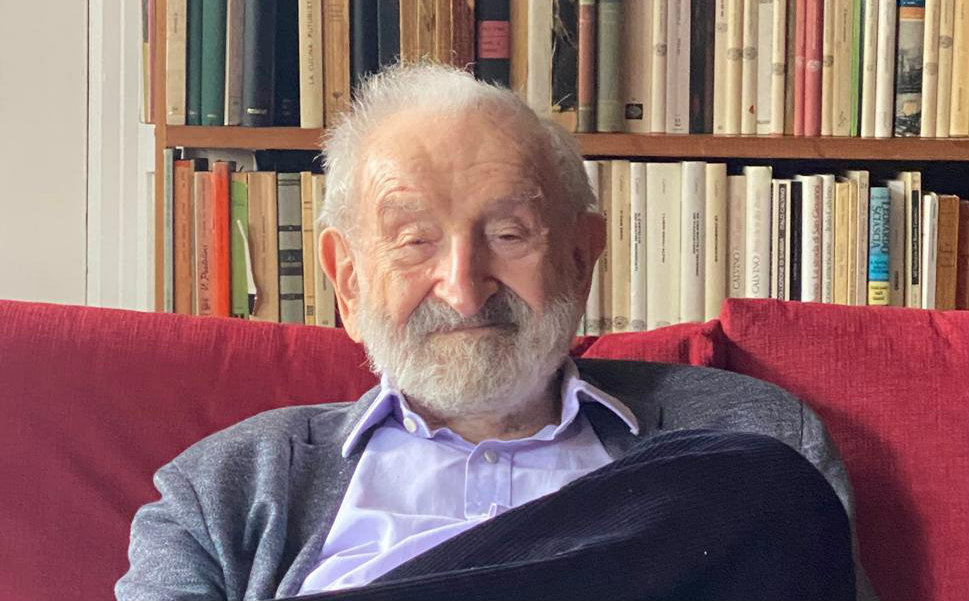
IN MEMORIAM. Joseph Rykwert CBE died on October 18th 2024 at the age of 98. One of the foremost architectural historians and critics of his generation, Rykwert spent most of his working life in the UK and the USA. He was the Paul Philippe Cret Professor Emeritus of Architecture at the University of Pennsylvania and taught the history and theory of architecture at several institutions in Europe and North America. His many influential works on architecture include The Idea of a Town (1963), On Adam’s House in Paradise (1972), The Orders of Architecture (1982), The Dancing Column (1996), and The Seduction of Place (2000). All of his books have been translated into several languages.
I visited Joseph often at his house in London’s Hampstead, and on 9th July 2021 he generously agreed for our conversation to be recorded and to take part in what would become this final interview. We publish it here for the first time because it was made to be able to remember and celebrate Joseph’s ‘gloriously erudite’, light-hearted voice at the time of his passing. Sadly, even if he lived to a considerable age, that time is now upon us.
You can listen to the podcast of this interview here.
Joseph Rykwert, what is a genius?
I can’t tell what a genius is, but I can talk around it.
Maybe we should start with architecture, as you are an architect, a writer on architecture, a professor of architecture and a philosopher of architecture?
A critic, yes.
Who are the geniuses in architecture?
Le Corbusier was certainly a genius. He was outstanding because he put architecture on a new basis. It was the end of traditional architecture, which was represented by Peter Behrens. But Behrens had died by 1930, and he did an accidental disservice to humanity, because Hitler applied for a job with him and he wouldn’t have him.
Was Behrens Jewish?
No, he wasn’t at all Jewish, though his main employer, AEG, was owned by a Jewish family.
What did Le Corbusier change?
He changed the architectural scene. Not all his buildings are perfect, and some of them let in water and others are really very uncomfortable, but the fact is that they changed the way architecture is seen. The way he treated proportion was almost unique, and the relationship between wall and window has never been the same since him. The Unité d’habitation, which was his device, was something which he really formulated in a completely new way, with internal “streets” in a large block.
Did you work with him?
I was very lucky because he offered me a job having looked at my drawings. But my mother said, “How much does he pay?” and of course he never paid people in his office and she wasn’t going to keep me in Paris while I worked for Le Corbusier for free.
“I don’t think there’s one outstanding figure in my generation, there are a lot of second rank figures but there was not one figure of the stature of Corbusier.”
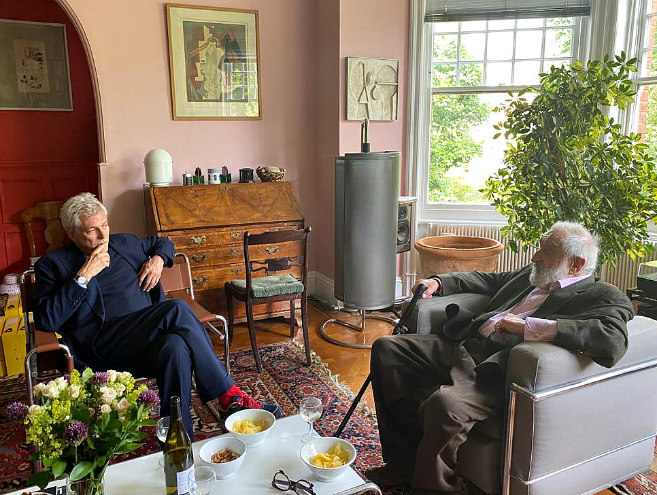
Alain Elkann and Joseph Rykwert
Joseph Rykwert, how did you meet Le Corbusier?
I knew a strange architect whose greatest achievement actually was not doing a building but was pulling Corbusier from underneath a motorboat which had wounded him in 1938 near Antibes. Corbusier was grateful, and did some small things with this architect who was called Clive Entwistle. I helped Entwistle on something else, and so in gratitude he took me to meet Corbusier in London after the war. I must have been 21 or 22, and I took a bunch of drawings and Corbu looked at them and said that with these drawings I could come immediately.
What kind of man was he?
He was brusque. He was certainly interesting. I was young and he was 50, so I was in awe, but what was I going to live on? My mother certainly had no intention of helping me. Who he was didn’t mean anything to her.
What other architects of high value did you meet?
I met Walter Gropius, but we just had a brief meeting. He wasn’t really a very talented architect. Neither Gropius nor Mies van der Rohe were very good draughtsmen. Corbusier was a fantastic draughtsman. His lectures were performances in which he drew all the time, in charcoal or thick pencil on paper, which people then took away. The others couldn’t draw. All the projects of Gropius are drawn by other people.
As a student of architecture and later a professor, which architects are the most significant for you?
The architect nearer my time, nearer my age, who was really very important to me and to everybody else, was Alvar Aalto, who was Finnish. In the kitchen I have some furniture that is by him. He was formally very inventive. Unlike Gropius for instance.
Was he a genius?
No. Well, on the edge of what is or isn’t a genius. It is Corbusier out of the two who I think will remain of importance for my generation. I don’t think there’s one outstanding figure in my generation, there are a lot of second rank figures but there was not one figure of the stature of Corbusier or of Aalto. Perhaps Frank Gehry. He’s very inventive formally.
Will the buildings of contemporary architecture last?
Some will certainly last. Some were very well built. Corbusier was quite a good builder. Again Gropius, but these are not really very well built, and he had no sense of environmental values, so did big glass facades in single glazing which just thermally are absolutely monstrous.
Italy had architects during the fascist regime whose buildings will last?
Yes, Terragni is a good example, for instance. Futurism, as far as architecture is concerned, mainly produced drawings, not buildings. And the drawings were brilliant. Wonderful drawings by Antonio Sant’Elia, who also wrote Manifesto of Futurist Architecture. But Sant’Elia will not last because he was killed very young, in 1916.
What about “Gio” Ponti, who built more than a hundred buildings over six decades?
Gio Ponti said to me once that the great architect of the generation was Corbusier. And he didn’t want me to contradict him! (chuckles). Gio Ponti was an absolutely fascinating figure. Firstly, he was very simpatico, which Corbusier wasn’t. Secondly, he was an enormously prolific designer in very many fields, not just architecture. He designed furniture, theatre sets and all sorts of other things, so he was prolific in many ways but he wasn’t revolutionary in any way. They were all slightly derivative. I personally owe him a great deal.
What do you owe him?
He took me on as correspondent for his magazine Domus, which he had founded in 1928 – two years after I was born. I was the London correspondent for many years, and I went to Milan a lot and they paid me in cash.
Milan then was a city of architects, people like Albini, Gae Aulenti, Figini, Gregotti, Pollini. What was the value of these architects?
They were not perhaps first rank. I mean with Corbusier. They were in the second rank with Gio Ponti.
Renzo Piano, Jean Nouvel, Norman Foster, Zaha Hadid…they are all second rank? This is a big statement because these people are called starchitects.
Yes, of course. Jean Nouvel rather surprised me. i was once put next to him at a table at a dinner, and I thought it was going to be a trying evening, but in fact he’s a very good conversationalist. Very nice.
But not a great architect?
No. But very simpatico.
At least! And is Renzo Piano simpatico?
Yes, Renzo is simpatico.
Gae Aulenti and Vittorio Gregotti are not great architects?
Vittorio was much better than Gae. Vittorio of his generation is probably the best architect in Italy. Vittorio, and Gino Valle who is much less known.
What about Carlo Scarpa?
He’s a kind of genius, but he was not a great architect. The details are all wonderful. Very inventive in detailing, but the buildings didn’t really hold water – metaphorically.
“Frank Lloyd Wright was a genius. Some of Wright’s buildings are impressive. I met him once, but not as a pupil. He was very antipatico, very exploitative of all the people who came to learn from him.”
Joseph Rykwert, you spent a lot of time studying and also curated an exhibition of Leon Battista Alberti. Was he a genius?
Yes, a genius from another age. He wrote splendid Latin and splendid Italian and he had a very curious mind and he was a very good mathematician. He was a contemporary of Piero della Francesca ‘s and in that class. Probably one of the most important architects who ever existed. Santa Maria Novella and the Sepulchre inside Palazzo Rucellai in Florence, and, in Mantova, San Sebastiano and Sant’Andrea.
What about Giulio Romano who worked with Raphael?
He was a kind of genius. Very inventive, prolific, but not a great architect. The buildings are entertaining. Palazzo del Te in Mantova was his best building. I did an exhibition on Alberti in the Orangeries of Palazzo del Te. I wanted to do it in a city which we should imagine was associated and Olivetti had charge of the Orangeries of Palazzo del Te. In fact I remember you were President of the Scientific Committee of Palazzo del Te, but that was after I did the exhibition.
I was, yes. Was Palladio a genius?
Yes, he invented the Venetian villa as a building type. Villa Pisani, Villa di Maser, Villa Valmarana, they were all his invention. They are extraordinary. It’s a matter of proportions and setting, a whole lot of circumstances which combines in each one of them, and each is a masterpiece.
Who are the English architects related to those we just mentioned?
Inigo Jones practically invented the Renaissance for England. He did the Banqueting House in Whitehall and works for Whitehall Palace. He also did the restoration of the Old St Paul’s cathedral, which burned down in the Fire of London. It was certainly very innovative at the time when he did it.
Why did the English imitate Palladio in their country mansions?
Because for England Venice was a kind of ideal venue. It was the first country where England had a paid ambassador. Sir Henry Wotton, a man of considerable learning. The trouble was that when he retired from his ambassadorship the government owed him £5,000, which was a lot of money then. The cash wasn’t available so they had to find him a job very quickly, and the job that was going was to be the Eton Provost. He was a candidate for that against Francis Bacon, who had written several books, but Wotton had written nothing, he’d been an ambassador. So he was made to write a book quickly, and overnight he wrote The Elements of Architecture, a book that’s still in print today in various editions.
Who are the French architects?
There are a number of Blondels. I think François Blondel, the older one, was the best. There was du Cerceau. There were a lot of architects in the 18th and 19th century. Percier and Fontaine who worked for Napoleon, and Viollet-le-Duc who restored Notre Dame and various other churches. And there were lots of great architects around the 16th century. That’s when French architecture becomes independent and, as it were, signed, like Italian architecture was. Before that there were master masons.
They were not architects?
It’s not a fixed term. They were certainly architects in the sense that they designed the buildings they built, but they were called master masons. Michelangelo called himself a stonemason, and he was a great architect. That is not in doubt.
What about Germany?
Germany didn’t produce a great architect until the 18th century. Not really. Not a major architect.
In America architects like Louis Kahn developed architecture?
Louis Kahn is practically a contemporary of mine. I succeeded to his chair of the University of Pennsylvania. He made the University of Pennsylvania the most important architectural school in the country.
Was he a genius?
On the edge.
Was Frank Lloyd Wright a great architect?
Yes, Frank Lloyd Wright was a genius. Some of Wright’s buildings are impressive. I met him once, but not as a pupil. He was very antipatico, very exploitative of all the people who came to learn from him. His mistress and the children were murdered, a terrible story. His last wife dominated him.
Who are the great American architects?
Louis Sullivan who was Frank Lloyd Wright’s teacher was probably the first. Thomas Jefferson built a famous villa, Monticello, but the first architects were brought from Europe and it’s not a great building, but it’s quite a pleasant one.
Do you like American architecture?
I don’t recognise the category American architecture. The architecture of America after the Great Fire of Chicago in 1871 was different from what went before.
What about the Rockefeller Center in New York?
It wasn’t attributable to one architect, it was a group of architects, like the United Nations building. Corbusier was dominant on the committee, but the American architects took it over and redid Corbusier’s project. Being the seat of world government makes it interesting in itself, but as a building it is not particularly interesting. It’s derivative.
What about the skyscrapers of New York, like the Chrysler, the Empire State, the Flatiron?
There’s a letter of Henry James’s when he arrives in New York for the first time after a long absence. He looks at the skyline and says, “It may not speak to me about art, but it certainly speaks to me about commerce.” There was a competition for the tallest building in the world and they had a mast, and when the Chrysler building was finished they raised the mast and for a moment it was the tallest building in the world.
Are bridges a completely different kind of architecture?
You can’t usually inhabit a bridge. Obviously there are inhabitable bridges, Ponte Vecchio in Florence and Old London Bridge were inhabited, but most bridges are not. The Golden Gate in San Francisco is an impressive bridge. In New York, the Brooklyn Bridge, the Triborough Bridge, the Washington Bridge. There is a big bridge in Porto in Portugal, the Maria Pia by Gustave Eiffel.
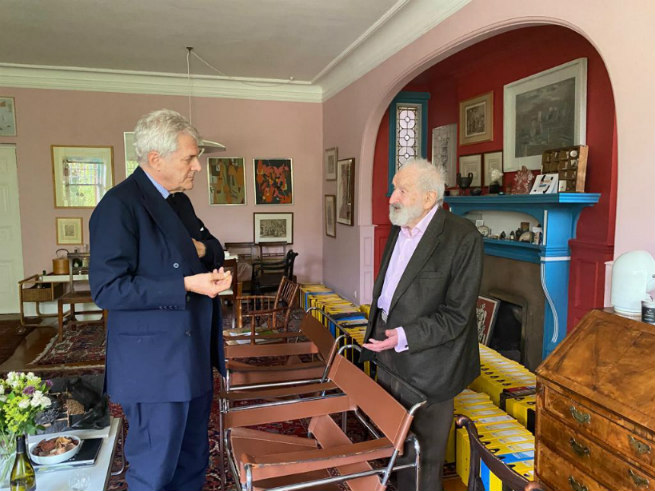
Alain Elkann and Joseph Rykwert
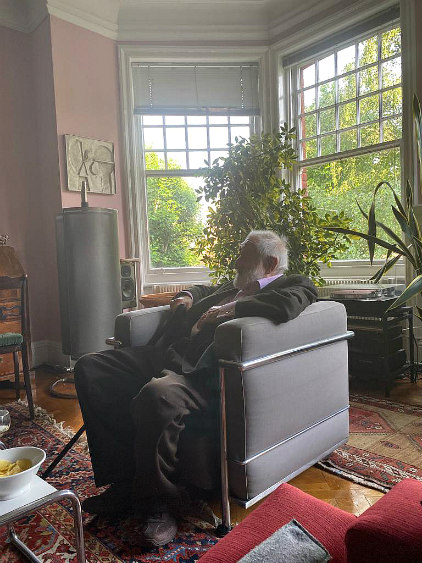
Joseph Rykwert
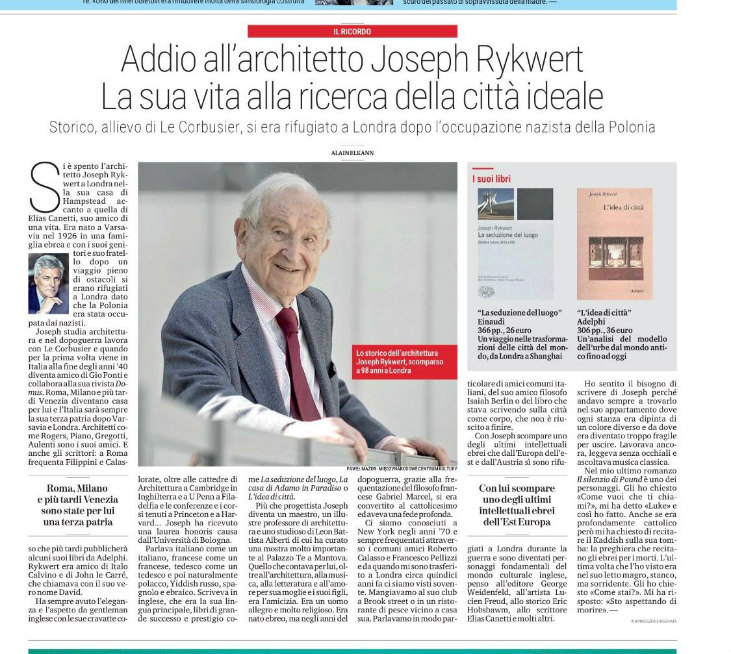
Alain Elkann’s obituary of Joseph Rykwert for La Stampa. An English translation is available here.
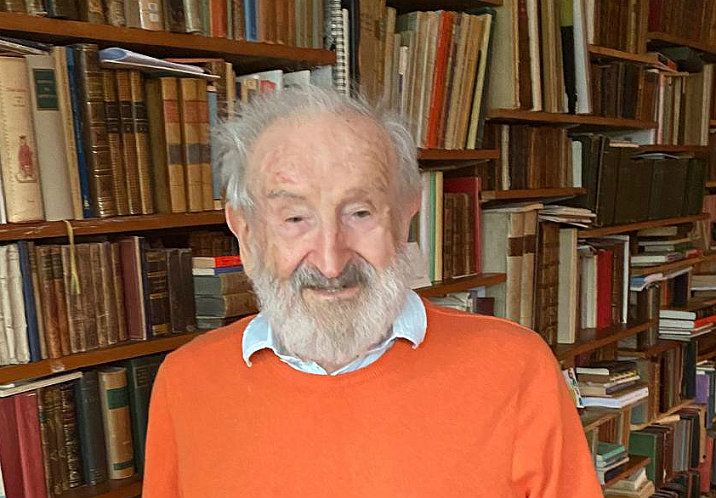
Joseph Rykwert
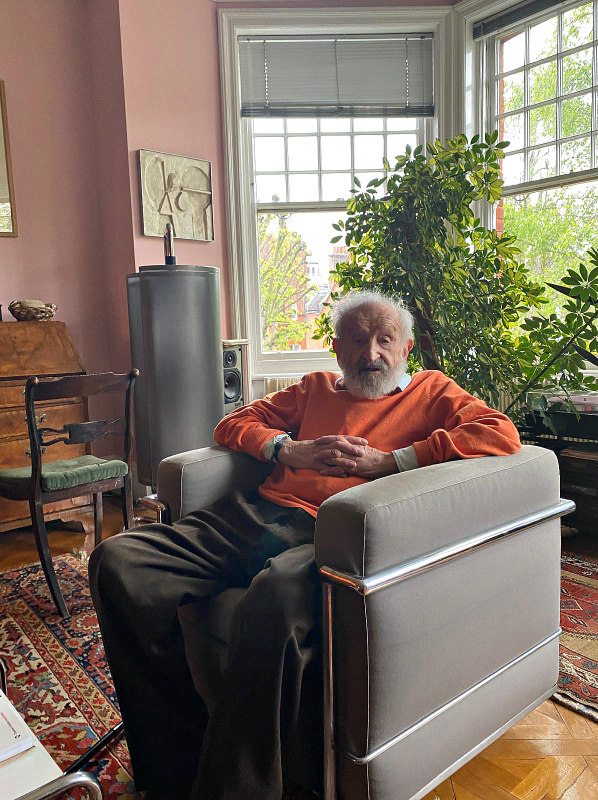
Joseph Rykwert
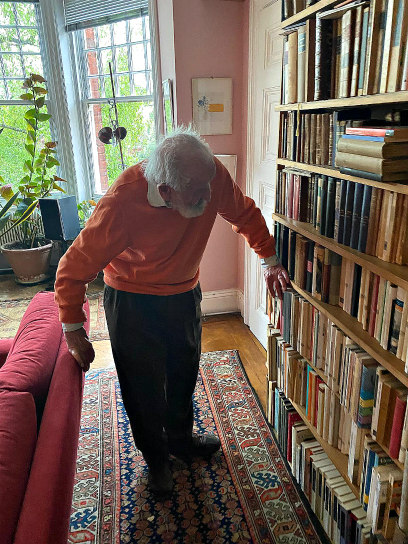
Joseph Rykwert
“I think of myself as superficial and ignorant, because I just haven’t read enough.”
Joseph Rykwert, does genius really exist in architecture, or even at all?
It depends where you want to draw the line. The line of genius is an arbitrary line which you can draw in any number of places. It’s you who started me on this business of defining a genius. How many writers would you call geniuses? Freud was a great writer of German prose, unlike Jung whose prose is not as brilliant as Freud’s. It is said there are three great arts: poetry, painting and ornamental pastry cooking.
Dante, Shakespeare, Goethe. Maybe Montaigne. Michelangelo and Leonardo are considered geniuses. Einstein is considered a genius in science. What about music?
There are the Three Bs: Bach, Beethoven and Brahms, and there’s Mozart and Haydn. There are a number of people who qualify as geniuses. There’s nothing to agree or disagree about. You draw the line where you want it.
Many people have been geniuses very young. Alberto Moravia finished The Time of Indifference age 19 but he probably was never able in his entire life to repeat the genius. Many times a writer really only has one book. Joyce makes a huge effort to write Finnegan’s Wake, but he’s remembered because of Ulysses so it’s also a damnation in a way, because at that moment you write a great thing and then the genius goes.
Yes, I’m in several minds about Finnegans Wake. It’s an impossible book. It has brilliant ideas in it. People have read all the way through it, but it’s a labour. I do think that Ulysses is a work of genius because it completely bouleversed English prose, and he makes an epic out of the commonplace.
Like Caravaggio?
If you like, yes. I admire Caravaggio, but I don’t think I like him. Piero della Francesca is one of my favourite painters. He’s not in the first rank perhaps, but I do admire Fra Angelico because of the concentration. Italian painting is my adopted world.
What did you feel when you did a trip around Italy for the first time after the war?
Amazement and enormous curiosity. I was in my early 20s and it was a new world for me. In Rome I had an introduction to Giulio Claudio Argan, who later became mayor of Rome, but at that point he was a not very important official in the Ministry of Education. He told me that when going to Venice for the first time, the important thing is not to arrive by train, so I arrived by boat. From Rome I went to Padua, and from Padua I went by tram to Fusina, and there you could take a boat which landed in Piazza San Marco.
What was your impression of Venice?
It was overwhelming. I got off the boat and we walked into the Basilica and they were singing vespers. I’d never seen anything like this or heard anything like this. Venice was certainly one of my favourite places, and I was very lucky because Anne and I bought a flat in Venice after we gave up Philadelphia. I don’t have a driver’s license and Anne was determined that I would walk as far as possible because I am very lazy. I have no relation to sport. I think sport is very dangerous.
Do you consider yourself an architect, a genius, a writer, a professor?
I don’t think I am a genius. Nothing I do is quite good enough.
Which one of your books is your masterpiece? The Idea of a Town? On Adam’s House in Paradise?
The ones which are best known are Adam’s House and The Idea of the Town, but other books are more interesting and more important. The Dancing Column book On Order in Architecture, and a late book which has been rather neglected called The Judicious Eye.
I know you have several honorary degrees in architecture. How many do you have?
In Italy I have one from Rome, Sapienza, and I have one from Trieste, and one from Bologna. In Britain I have one from Bath and one from Edinburgh. I have one in Argentina, Cordoba, and I have one in Canada, Toronto. I didn’t have one in the States nor one in France.
When I was in Rome someone called me and said, “I can’t believe you interviewed Joseph Rykwert.” And David Adjaye said, “If you ever could interview me, it would be such an honour to be next to Joseph.” What makes you so influential in the life of architects?
You expect me to answer the question? I have no idea.
I met Frank Gehry in Arles in France, where he built Luma, and I asked him, “Do you know Joseph Rykwert?” And he, from being indifferent to me, became passionate with me, and was talking about you. Do you have a special prestige among architects because you give such tough judgements?
Maybe. I admire so very few of them. I certainly do not admire myself. I think of myself as superficial and ignorant, because I just haven’t read enough.
Yes, but what keeps you so very alive? The passion for your work? Women? Music? Friendship?
All those things that you mention. I’m curious about everything. Chiefly about people. I am a social bird.
Did you like teaching?
I certainly enjoyed it. I was offered the chair of History of Art at the University of Essex, which was a new university then, and I took it on condition that I could run an MA course in History and Theory of Architecture. We advertised it and one or two people applied, and I didn’t attach great importance to it, but one day the Vice Chancellor summoned me. It was 1968, so I assumed it was trouble. He asked me what the RIBA, the Royal Institute of British Architects, had got against me. I told him I didn’t think that they even knew I existed, and he responded that they do know you exist and they know you wanted to start here the program of the History and Theory of Architecture, and they are very worried about it and told him to stop it. When I asked him what he said to them, he said he told them that professors of this university teach what they think is best and it’s none of his business. So he didn’t stop it, and it was the first program on the Theory and History of Architecture anywhere. Robert Hughes was one of the teachers on the course, and it was very difficult working with him because he would either call my secretary and say, “Very sorry, got very pissed last night. Can’t make it.” Or he would come up and do a seminar on Goya and bring his own Goya engravings. The real engravings! There was no halfway with Bob Hughes.
When I went to see Lucian Freud I told him that I just lived in New York with Robert Hughes, and that he was our common friend. Lucian said Bob had got fat.
I used to see Lucian quite a bit when he was much younger and married to Kitty, who I liked very much. She then married a Cambridge economist, Wynne Godley. Lucian was absolutely not a nice person. He was the last person I actually had a physical fight with. It was over a girl. I drank some wine out of her shoe, and Lucian objected and turned at me. He started it, but physically he was quite weak. I hit back and then we got separated, so it didn’t come to anything very much.
You also knew Francis Bacon?
I met Bacon. I didn’t know him. He was interesting as a person. Very curious.
And you were a very good friend of Italo Calvino?
Yes, Italo was my friend. He was my editor at Einaudi. But Italo wasn’t chatty.
Joseph Rykwert RIP. We could talk for hours. Thank you so very much.
ENJOY THIS INTERVIEW? SHARE IT WITH A FRIEND AND SUBSCRIBE YOURSELF TO RECEIVE EMAIL NOTIFICATIONS.