
EDUCATING THE CONSUMER ABOUT COFFEE AND TEA. DAVID VEAL has been deeply involved in both the coffee industry and the tea industry for over 40 years. He is the former Executive Director of the Speciality Coffee Association of Europe and is currently Executive Director of the European Speciality Tea Association, a position he took up in May 2019.
You can listen to the podcast of this interview here.
David Veal, how did you get involved with coffee?
I was offered a job not knowing anything about coffee, and I took that job. I’m so grateful that I did, because I’ve spent 42 years very privileged to work in a wonderful industry. For the majority of my time I’ve been in the speciality sector in both coffee and tea, which is different to commodity. The speciality sector has been largely responsible for the growth that we’ve had in the coffee industry worldwide over the past years. We used to quote coffee to be the second biggest traded commodity after oil, and that’s probably a little out of date now but coffee still is very important. Tea less so, although tea production in terms of trading exports is similar to coffee.
What do you mean by speciality sector as distinct from commodity?
Both in coffee and tea there’s no fully agreed definition of what speciality is, but people generally agree that speciality is about love, knowledge of the plant, attention to detail and the hard work that the farmer puts into the growing. The terroir is also very important, in terms of soil particularly, and also climate and other issues; and then how the coffee and the tea is processed down through the chain to the point where it’s brewed for the consumer.
“There is a commonality between tea and coffee, and that is education.”
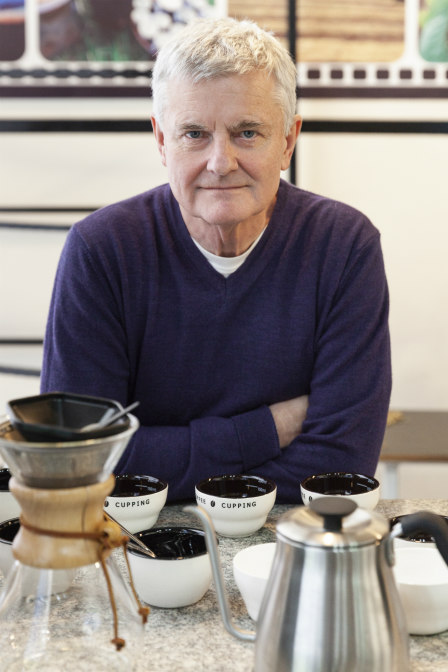
David Veal Brewing Coffee
David Veal, where does coffee originate?
Although a few people in the Yemen may disagree, it’s generally accepted that Ethiopia was the birthplace of coffee several centuries ago. Ethiopia is still a very important coffee growing country, and very different to most coffee growing countries as it consumes more coffee than it exports. Most coffee growing countries export the majority of their coffee. You can still go into Ethiopia and find wild coffee growing on the mountain slopes. From there it spread around the world, to Indonesia, to India, and eventually to Brazil which is now by far the largest growing coffee country.
What about Costa Rica?
Costa Rica produces a lot of really good coffee. I’ve been there several times and love the country and the coffee culture. I could recommend anybody to visit Costa Rica, not only for the coffee but also for its natural biodiversity, the beauty of the country and the very warm and lovely people.
Because coffee is grown in many different places, are coffees very different one from another?
Only two main varieties are commercially grown. One is robusta, a hardy plant grown in low altitudes that produces a stronger but more bitter coffee that is used in instant coffees and poor quality roasted coffees. Then we have arabica, which is grown at higher altitudes and is much more sensitive to disease and other issues. Arabica is more difficult to grow, but produces much better quality coffee with better flavours. Arabica is the coffee which people trade in the speciality sector.
Why did coffee become popular?
It has to taste good to be consumed on a regular basis. Also the restorative properties of coffee, mainly from caffeine, give you that kick in the morning and sharpen your brain when it comes to studying or debating. Coffee moved from the Middle East through Turkey into Europe and Asia, each taking on coffee as part of their own cultures, so it became very popular, but was not universally seen as a good thing. In parts of the Middle East in Islamic cultures it was banned because of its properties. For many years it was also banned and highly taxed in England because it was thought to be a seditious product which provoked revolution and anti-monarchy feelings!
Is coffee now acknowledged as a healthy product?
Most people would not recognise coffee as a healthy product, apart from the stimulation it gives the brain when needed, but there are health properties for coffee. Many studies into the benefits of caffeine in coffee have proved that the intake of coffee helps against motor neurone type diseases, but generally speaking health is not one of the main selling points of coffee.
How has coffee brewing culture developed?
Up to only 10 or 15 years ago, the most popular way in the world of producing coffee to drink was Turkish coffee. That style of coffee was brewed right through Arabia, Persia , Eastern Europe and Russia. It was surpassed in southern Europe by the espresso-based drink which came along at the beginning of the 20th century. Most people accept as an Italian thing, but French people say that it was invented in France.
What happened in the United States?
The big change came around 30 years ago when Starbucks took the Italian method of brewing coffee and, in the way that only the Americans can do, rolled out that method of producing coffee, adding lots of milk to it. It became very popular in the States, and then throughout the world. That started modern coffee culture, and obviously Starbucks don’t have a monopoly, but the cultural strength and importance of that way of making coffee accessible to the mass market made the coffee shop the new place to go and meet. In the UK, the coffee shop took over from the pub as a place to meet.
“We’re all about promoting speciality tea and fostering a speciality tea community worldwide.”
David Veal, has coffee culture grown because it has an aura of sophistication?
It has become a sophisticated drink and sophisticated way to meet people, exchange ideas and relax. It is still growing in popularity, and as health is important with the younger generation a lot of them are looking to decaffeinated coffee. The demand is growing for beverages without caffeine. More coffee is being consumed even within those countries that export most of their coffee. Worldwide it hasn’t peaked, but we are on about 100% supply to demand. Consequently coffee prices worldwide are the highest they have ever been, and will go up again this year.
Beyond countries like Ethiopia, Indonesia, Brazil, Costa Rica, are traditional tea growing countries like China, Japan and India now willing to grow and produce coffee?
Yes. China now produces coffee in the well-known tea growing region of Yunnan. Vietnam has come from nowhere at the end of the Vietnam War right up to second in terms of production. Countries are turning over land to coffee. Deforestation is a big issue. Climate change is also making things difficult for many coffee farmers. Ethiopia is one of the countries where they are suffering already. Historically coffee’s been grown between the Tropics of Capricorn and Cancer, but that is going to change because the climate is changing, so it’s not just as simple as turning on the tap and increasing production.
In countries in the Far East where they drank tea do they now drink coffee?
In the big cities in China like Shanghai, Beijing, Hong Kong and others, there is now a very strong coffee culture, as there is in Japan, but China is still very much a tea drinking country. Most Chinese tea is consumed in China. They were drinking tea 2000 years ago, and it’s deeply ingrained in their culture, as it is also in Japan. China and Russia are both really big tea drinking nations, and those two alone put tea way ahead of coffee. Tea is still by far the biggest consumed beverage in the world.
Which are the top tea consumption countries per capita?
Ireland, the United Kingdom and Turkey. In London you can visit many hotels who do excellent afternoon tea, but the mass market in the UK for tea is completely the opposite of that where poor quality tea is used and cost and price are the main issues. Badly brewed and then completely ruined by the addition of sugar and milk, the main tea culture in the UK is really bad, but it’s also possible to get some beautiful teas and a good range of teas as well.
Unlike coffee, if you drink tea, you drink two or three cups or more a day?
Most coffee people would tell you that during the course of an ordinary day they drink more tea than they do coffee. Certainly with the oriental method of drinking tea, where they use more tea but have several brews out of that, so you’ll get 3 or 4 or 5 or 6 cups out of one brew. There is a commonality between tea and coffee, and that is education. The consumer historically has not been very well educated about coffee and tea.
What do you mean?
Taking tea as an example, most people couldn’t even define tea as a product of Camellia Sinensis plants, a cousin to the camellia that any garden might have. All teas – white tea, green tea, yellow tea, oolong tea, black tea, and pu-erh fermented tea – come from Camellia Sinensis. Those six teas all come from the same plant, but they are processed in different ways to make them black or white or yellow, and then it comes back once again to terroir, climate and soils. Different countries produce different types of tea in terms of flavour profile, but also different regions within countries do the same, and even different farms within regions will produce different teas.
Which are the best sellers for tea around the world?
It is difficult to give you a straight answer, but just comparing two neighbouring countries, in the UK black tea is by far the most popular while if you go over to France, green tea is much more popular. In China they drink hardly any black tea compared with the green tea. Then we have to differentiate between mass markets and the speciality or top end market, because they are completely different. It’s a fascinating, deep subject and the more you learn about tea, the more interesting it becomes and the more you realise how little you know it.
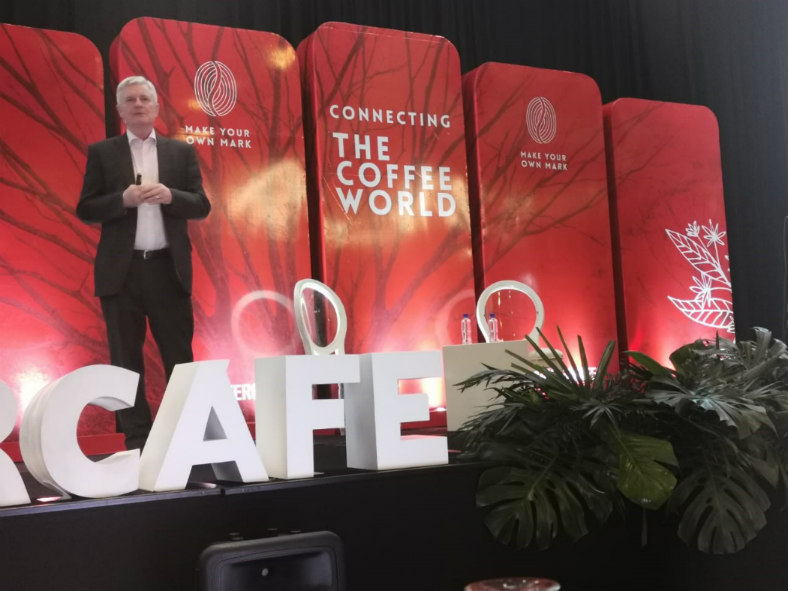
David Veal at SINTERCAFE – International Coffee Week – an annual event recognized worldwide which incorporates both sides of the coffee value chain. Each November Costa Rica becomes the meeting place for key decision makers from the most important coffee companies in the world.
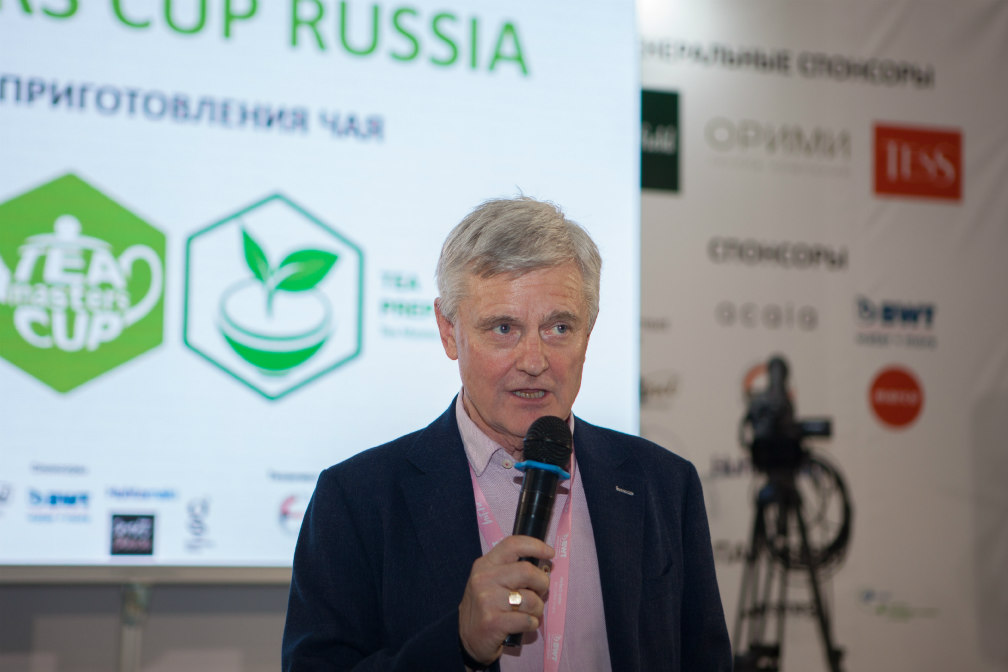
David Veal at Tea Masters Moscow
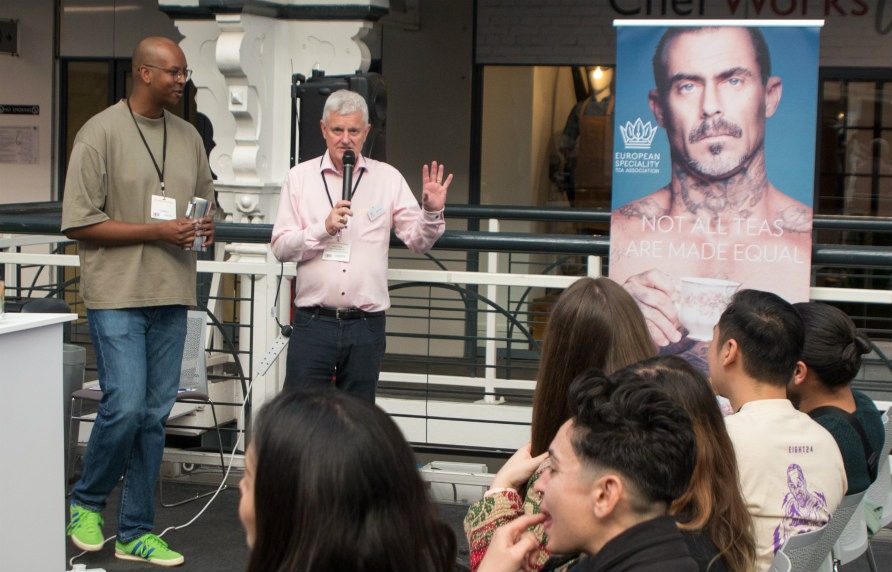
David Veal representing the aims and ambitions of The European Speciality Tea Association
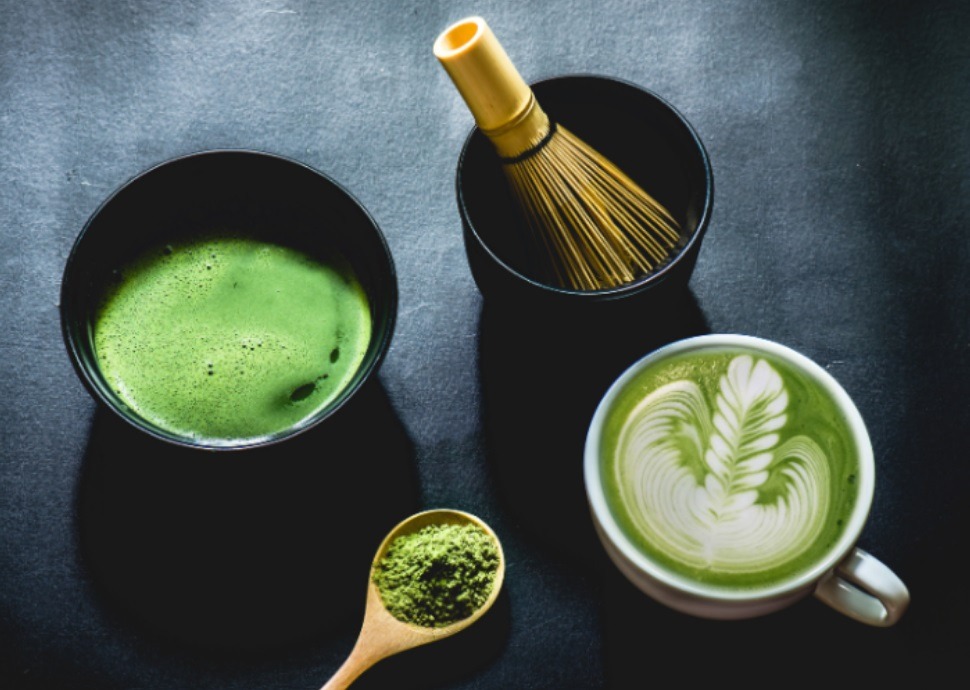
Matcha whisk and latte art
“The path that speciality tea is taking is similar to the one that speciality coffee took, but about 20 to 30 years behind.”
David Veal, is it true that young people favour coffee over tea?
There is truth in the stories that we’ve been getting over the last 3 or 4 years about coffee overtaking tea in some out-of-home markets, and in the UK in particular coffee has most likely overtaken tea, but certainly at-home tea is far more popular. In the Far East, coffee demand increased its usage exponentially but still coffee is way less than tea. Health and wellness issues becoming much more important in our societies will fuel an increase in the understanding, knowledge and consumption of tea, particularly among young people whose alcohol consumption is much lower than it is amongst older generations. In the next decade or two, many young people will experiment with things like matcha, a finely ground powdered green tea, and kombucha, a fermented, lightly effervescent, sweetened black tea.
What is your job as Executive Director of European Speciality Tea Association?
To lead the Association, which is a not-for-profit membership organisation with 350 members in 55 different countries. Those members are from all the stages of the tea value chain, from smaller and larger tea producers through to traders and wholesalers, right through to tea blenders and tea brokers, tea wholesalers, to baristas and tea shops. We’re all about promoting speciality tea and fostering a speciality tea community worldwide. We do that through education, innovation, communication, and research and development, so there are lots of different strands to what we do.
Is the speciality market going much better than the mass market?
It is, and this is the same in coffee as well, but more so in tea where 90% or 95% is completely cost led and consequently the quality is driven down. The other end of the market, the 5 to 10% which we call speciality, commands much better prices and margins for everybody. The mass tea market has great problems, and worldwide the industry is not in a healthy state. In 2022, Unilever sold off their tea division, which included the Lipton brand, because it wasn’t profitable. Almost half of the tea farms in Darjeeling are for sale because they can’t make any profit. Although there is automated picking in the tea industry, still most is picked by hand and the working population on tea and coffee farms is aging. The average age of a tea farmer is 55 years old, and the younger generation are not coming through because they don’t have any interest in farming in general. Prices are being driven down all the time. Farmers often are producing at a cost that is greater than the selling price, and with inflation costs are going up. Just transport costs alone; tea and coffee have to travel a long way to get from production to consumption.
Is the future of tea as a luxury product?
Nigel Melican, the President of our Association, says that the luxury market will be the saviour of the tea market. The tea industry is in crisis, so we will have to ensure that people start drinking better tea. This will be good for them, but will also be good for the industry as a whole. The producer or the farmer needs to make more money to enable it to make better tea or coffee, pay labourers a fair wage, and improve health and social needs. The path that speciality tea is taking is similar to the one that speciality coffee took, but about 20 to 30 years behind. 20 years ago none of the large players in the coffee market were at all interested in speciality coffee. They saw it as a niche, which didn’t interest them, but the coffee industry over the last 20 or 30 years has enjoyed a great degree of success, and now in speciality coffee you have big players like Nestlé, Nespresso, Coca Cola, and McDonald’s. I’m hopeful that the same will happen for tea further down the line. There are strains in the system now, and it has to change. It’s not just empty words. It’s a real issue.
What is your advice to anybody serious about drinking good quality coffee at home?
First of all, go to a specialist shop; a traditional shop, or an online shop. Then experiment. Go by their recommendations to the flavour profile. As important as buying the coffee is how you are going to brew it. The best thing that you can do to make a good cup of coffee is to get a grinder and grind your beans immediately before you brew the coffee. That improves the flavour whatever coffee you buy.
The people of Naples say the water is very important for the coffee. What about the quality of the water?
It is important for coffee, and in fact more for tea, because teas are more subtle flavour and so impurities in water come through much more strongly in tea than they do in coffee. It’s important to filter the water in one way and another. One of our very active members is BRITA water filters, with whom we produced a joint white paper on the importance of water. In tea, water is 99%.
What’s your view on in-home brewing methods?
You can brew tea in anything that you can brew coffee in. Two or three of the Italian espresso machine manufacturers are now producing machines where you can brew a really good tea, as long as you do it on a separate station to your coffee so there’s no cross-contamination. Most people won’t have an expensive machine at home, but you can brew in any vessel where you can connect tea to water. Use a good old-fashioned teapot, or even a modern teapot, brewing the tea for 3 or 4 or 5 minutes, not 10 or 15 seconds as often happens. Take it slow, and do a little homework as to temperatures particularly. If you drink green tea and use boiling water you’re spoiling the tea. The same with coffee. Coffee shouldn’t use boiling water, it should always be off the boil at 90 to 95 degrees. Simple things like that go back to what I was saying about how important it is to educate people. If you filter your water and clean your equipment and grind the coffee just before you brew it, you will immediately improve the quality of the drink immensely.
David Veal, thank you very much.
ENJOY THIS INTERVIEW? SHARE IT WITH A FRIEND.