EDITING A MAGAZINE OF MAGAZINES. Donatien Grau is a philologist who currently serves as Head of Contemporary Programmes at the Musée du Louvre, Paris, and is also the co-founder and Editor of a new English language magazine called Alphabet.
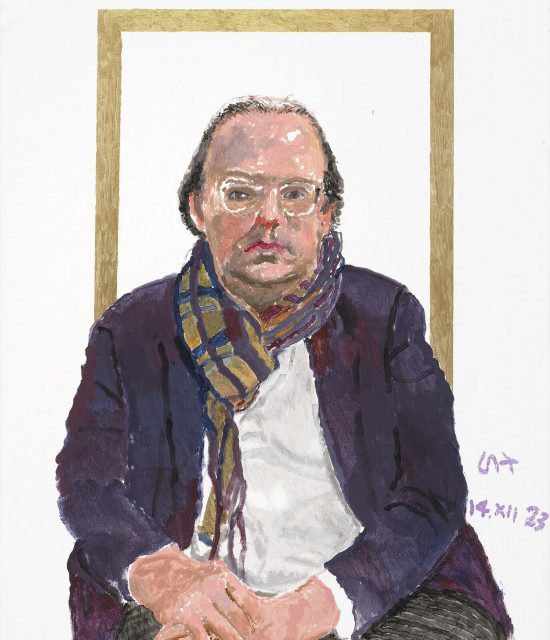
Portrait of Donatien Grau by David Hockney. “Donatien Grau, 15th December 2023” Acrylic on canvas. 91.44 x 60.96 cm (36 x 24 Inches) © David Hockney Photo Credit: Jonathan Wilkinson
You can listen to the podcast of this interview here.
Donatien Grau, how would you define yourself?
I am a philologist, that is someone who studies and works through different forms of reading. Reading is not merely a form of creativity, but also a way of being present to the world and being present to yourself at the same time, while being connected to a basis, a root, a text. I have a PhD in classical philology, and I apply that method to all the things I do.
Why did you recently write a treatise on Los Angeles entirely in Latin?
LA embodied a form of cultural imperialism that English manifests. You are Italian and French, I am French, and today we’re speaking English, a lingua franca of sorts. 2000 years ago that imperial cultural language was Latin. When John Paul Getty created the Getty Villa in California he recreated a Roman villa, because he thought the United States were the new Roman Empire. I wanted to bring that gesture of imperial translation by writing in Latin the book De Civitate Angelorum, On the City of Angels, whose title is a direct reference to The City of God, St. Augustine’s masterpiece. Los Angeles is the city of the aftermath of history, which is called postmodernism – a movement that has its roots in Ancient times. In the late 4th century AD writers would take a line of Virgil, change the words within it, and keep the rhythms – which is technically postmodernism – and I did that on Los Angeles – the quintessentially postmodern city.
“We all have many lives, and the key to the magazine is that each of those lives includes an artistic element.”
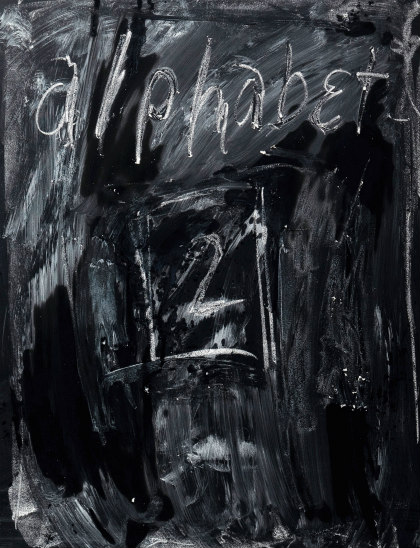
Donatien Grau: Alphabet Issue 2
Donatien Grau, what is your job at the Louvre, where you work closely with Laurence des Cars, the Director?
My title is Head of Contemporary Programmes: it was created for me. I work through the space in which the contemporary manifests itself – the fact that we are present within the museum – across academic projects, podcasts, exhibitions and collaborations. I describe my job as being like an acupuncturist, because I do apparently located initiatives that work with the energies of the entire body and can sometimes have a significant impact.
In the major David Hockney show curated by Norman Rosenthal currently at the Louis Vuitton Foundation in Paris there is a large portrait of you, and you wrote a piece about Hockney in the exhibition catalogue. Is this part of your Louvre activity?
Absolutely not. David is a friend. He appears as a character in my book on Los Angeles in Latin, and I met him in Los Angeles when he was spending a lot of time there 15 years ago. In recent times, as he sent out images of his works, he became my pen pal. Maybe four years ago he invited me to sit for him in Normandy, and that portrait was exhibited at the National Portrait Gallery in London – which was quite a thing for a Frenchman like me, especially since I studied at Oxford. Then David said he wanted to make another portrait. This one has a particular history: when he started painting me I asked him about his complicated relation to Francis Bacon. The story goes that somebody asked Bacon about him, this young man that was coming on the London art scene, and Bacon said, “It’s such a northern thing to paint one’s parents,” alluding to David’s Yorkshire origins and that he painted his father and his mother many times. David’s response was that there is more beauty in a tulip painted by Cézanne – a work that’s at the Norton Simon – than in any of Bacon’s dismembered bodies, and after that the portrait he was making of me shifted and became a confrontation of sorts with Bacon.
You have many relationships with intellectuals, artists, architects and researchers, and with your friend Thomas Lenthal decided to publish a new magazine called Alphabet, now in its second issue, in which those people could find a home. Why did you do this?
Thomas is a dear friend. He is also a leading art director in fashion, and he’s published a number of magazines. He co-founded Numéro, and System, and Paradis. He asked me to do the last issue of Paradis maybe 10 years ago, when we asked the artists to invent new museums. It was a very thick volume. After that, we wanted to do a real magazine, not a very big volume. And we thought: if you are an artist and want a place to be with other artists across disciplines, it just didn’t exist: where, you, Miranda July, will be next to Kulapat Yantrasast, or you, Marco Brambilla, will be next to Willem Dafoe or Maria Stepanova, the great poetess, or you, Francesco Vezzoli, you interview Bénédicte Savoy. We wanted to create a place in which the artists would be the authors, across culture and across disciplines.
But people say that these days magazines are dead?
The other thing that we wanted to do was to rejuvenate the model of the magazine. We wanted a ‘magazine of magazines’, with all the sections you have in the various magazines: the food section done by Luigi Serafini, the love section, the astrology section, the essay section, the poetry section, the investigation section, the diary, the film section done by Marco Brambilla. Alphabet is a meta magazine, but it’s also a magazine in which there are no journalists.
The editorial of the second issue is written by the Editor of the New York Review of Books, Emily Greenhouse?
I am the Editor, and I want the editorial to be done by somebody who isn’t me. We were very happy that Hedi El Kholti, who is an artist and runs the cult publishing house Semiotext(e) in Los Angeles, did the editorial for the first issue. The second editorial is done by Emily, who is a journalist but also a writer in her own right. Phong Bui, an artist who created the Brooklyn Rail, does the “People you should know” section. The game section is done by Na Kim, an artist who was also the art director of The Paris Review. José Tolentino de Mendonça is both the Prefect of the Dicastery of Culture and Education at the Vatican and a very prominent poet and thinker in the Portuguese language. Every figure can do something else. We all have many lives, and the key to the magazine is that each of those lives includes an artistic element.
One of the things you have said is that you want to find people who take what is serious seriously?
I’m a romantic, so I believe that certain things matter. I’m open as to what can matter, and my life changes all the time with new encounters and new conversations, but I do think that certain things are serious. Working with art is serious and extremely risky, and I want the magazine to be that space of reflection in which all the contributors take their contribution very seriously. It has humbled me that when I ask these amazing figures to please do something, they’re passionate and they make something new and expose themselves to things they wouldn’t normally. The magazine is an experimental space where things can be taken seriously, but also creatively.
The second issue of Alphabet is available. How many issues will you do in a year?
Two. We’re working towards the next one that’s going to be in the fall.
“Thinking is always in danger.”
Does each issue have a specific title, or is each one a surprise for the reader?
Each of them has an atmosphere. The first one was very experimental. The second is experimental but more literary with a lot of writers – from Joshua Cohen to Miranda July to Maria Stepanova – and artists and designers from Romeo Gigli to Rick Owens, and the architects Kulapat Yantrasast, Lina Ghotmeh, and Elizabeth Diller. It’s a creative space and the cover of each issue is designed by an artist – the first was done by Bob Wilson, the second by Laurie Anderson.
As the magazine’s Editor how do you want things to be?
I want everything to be precise, from the choice of section for each of the artists’ contributions to Thomas’ very serious and very precise design as art director that enhances that contribution. And all the rest is super precise. For example, the person who does our editing and translations works for the New York Review of Books book series. A lot of the translations – and we’ve translated in this issue from Portuguese, Italian and Russian – are by world-celebrated translators, oftentimes authors in their own right. I’m obsessed with being precise. Maybe that’s my training as a philologist.
Do you still work as a philologist?
Since I’m in meetings, have an executive job in a museum, edit and write, et cetera, I wondered last year if I was still a practicing philologist. For the Habilitation à diriger des recherches (HDR) – a sort of PhD we have in France – I went to the library of the École Française de Rome which has 200,000 volumes on ancient and medieval history in free access. I locked myself in the library from 9 a.m. to 9 p.m. with breaks at the café next door for thirty minutes every hour and a half. I was very worried that couldn’t still do ten days locked in the Library from 9 a.m. to 9 p.m. And I did. I have returned in January, in February and in April. The result will be a 500-page research on the body of the Roman emperor.
Would you describe yourself as an eclectic intellectual?
I see myself as a worker, working through text and understanding themes. I have a number of niches, and all these niches are somehow connected, but I try to be always precise and specific. Amazing friends, artists and thinkers embrace me, and that really humbles me and forces me to work better. Philosophy is thinking from the abstract to the local, but I think from the local to the abstract. That’s philology, and philology is more than anything methods of reading, and everything I do is a methodology, whether it’s editing, writing or curating.
This era is dominated by politics, why is there not much more politics in the magazine?
Epicurus said that, in order to be able act in certain spaces you have to be involved in them. I read the press, like everybody, all the time, and I’m very aware of what the atmospheric tendency is. This magazine wouldn’t have been the same five years ago. It’s important to create experimental spaces where we can redefine things: these are very much aware of the times we live in, and can be a laboratory from which to think about living differently in the world.
In these years of populism is culture and thinking in danger?
Thinking is always in danger. We’ve seen increasing polarisation all around the world, which means that the space for complexity has gotten increasingly much smaller. Culture and the art world are absolutely not separate from what’s happening. Look at what’s happening in the United States universities, and at what happened in the United States before: when I did the reopening exhibition of the Getty Villa in 2018, I had to fight for the work of Adrian Piper, an African-American artist and philosopher who is a legend and who had directly addressed Plato, to be included – and Plato was the theme of the show! Even if it was a late stage, this small, magnificent work had to be in the show, and it was. We’re now in a different era, and in moments of tension of culture and of division it is important to create shared spaces, and this is another trait of what I am trying to do.
Can you give me some examples?
In the magazine, you will have Miranda July, who is an avant-garde artist, as well as Joshua Cohen, who won the Pulitzer for the Netanyahus. I think they rarely find themselves in a shared space! Even in my daytime job at the Louvre it’s important that we have Antoine Compagnon of L‘Académie française as well as 24-year-old artists with whom we started working when I arrived – or even students at the nearby Ecole des Beaux-Arts. The notion of a shared space in which people say things that respect each other even though they have their different opinions and different and sometimes traumatic histories, is in danger.
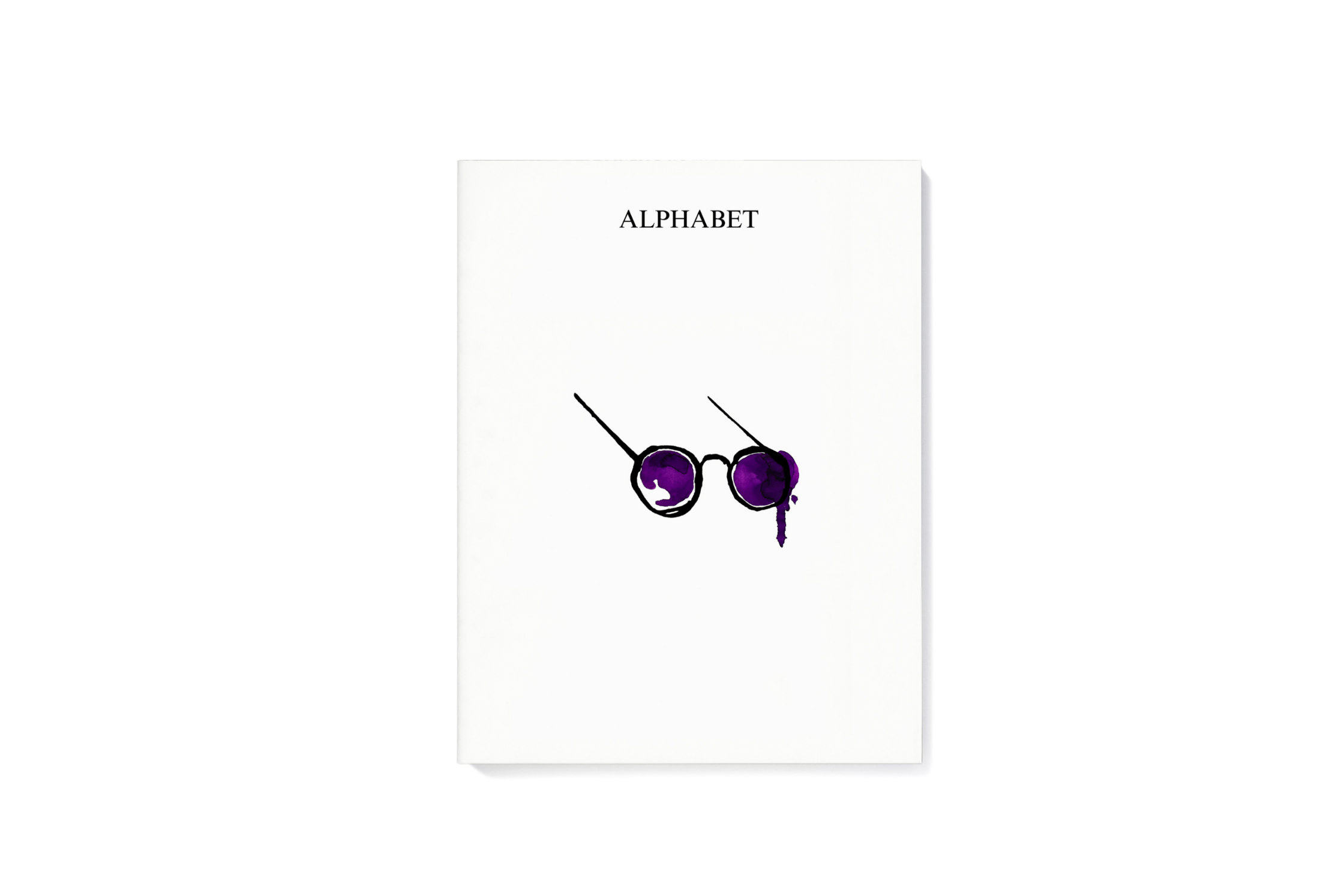
Donatien Grau: Alphabet
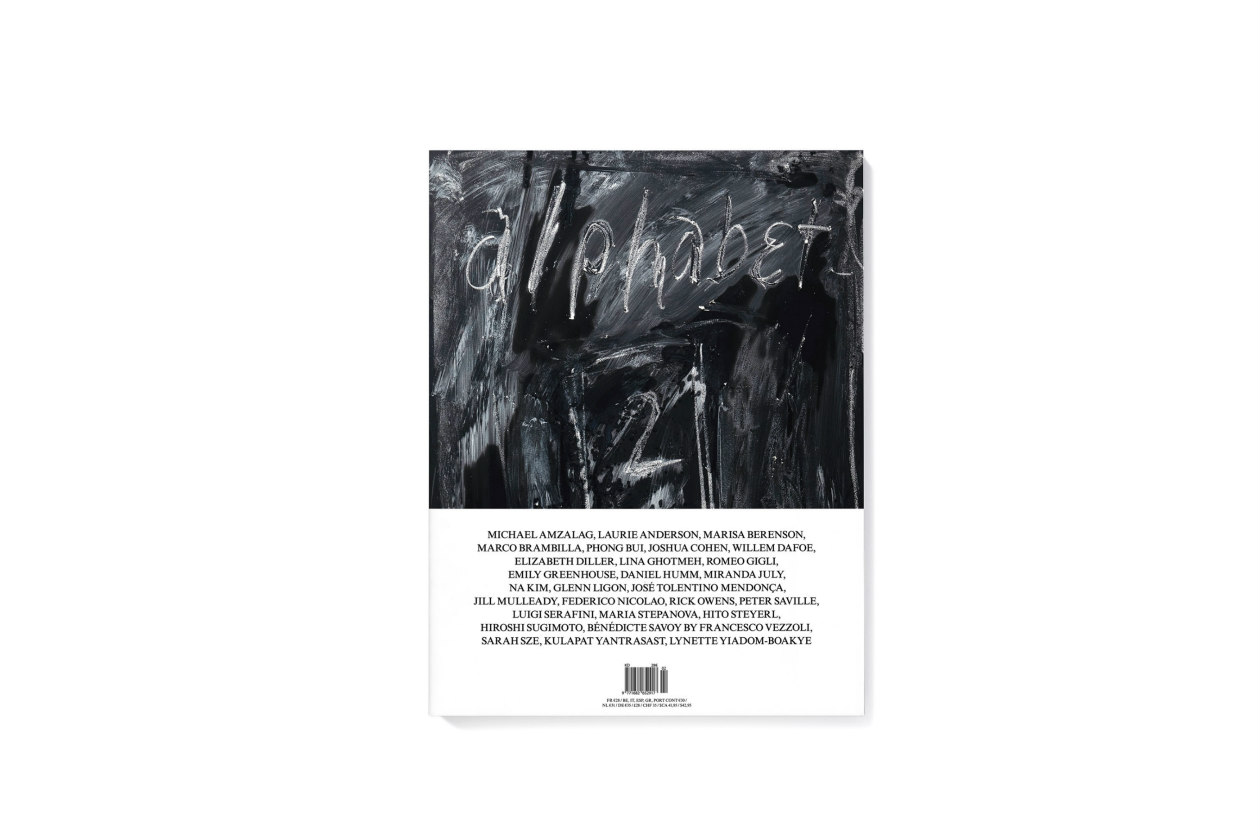
Donatien Grau: Alphabet
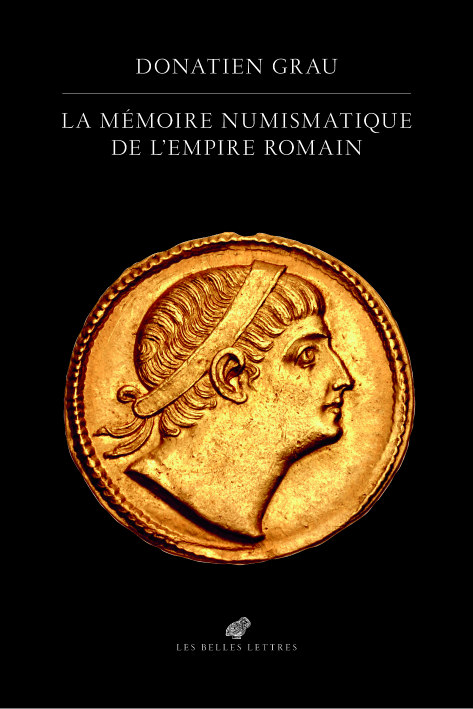
Donatien Grau: La Memoire Numismatique de L’Empire Romain
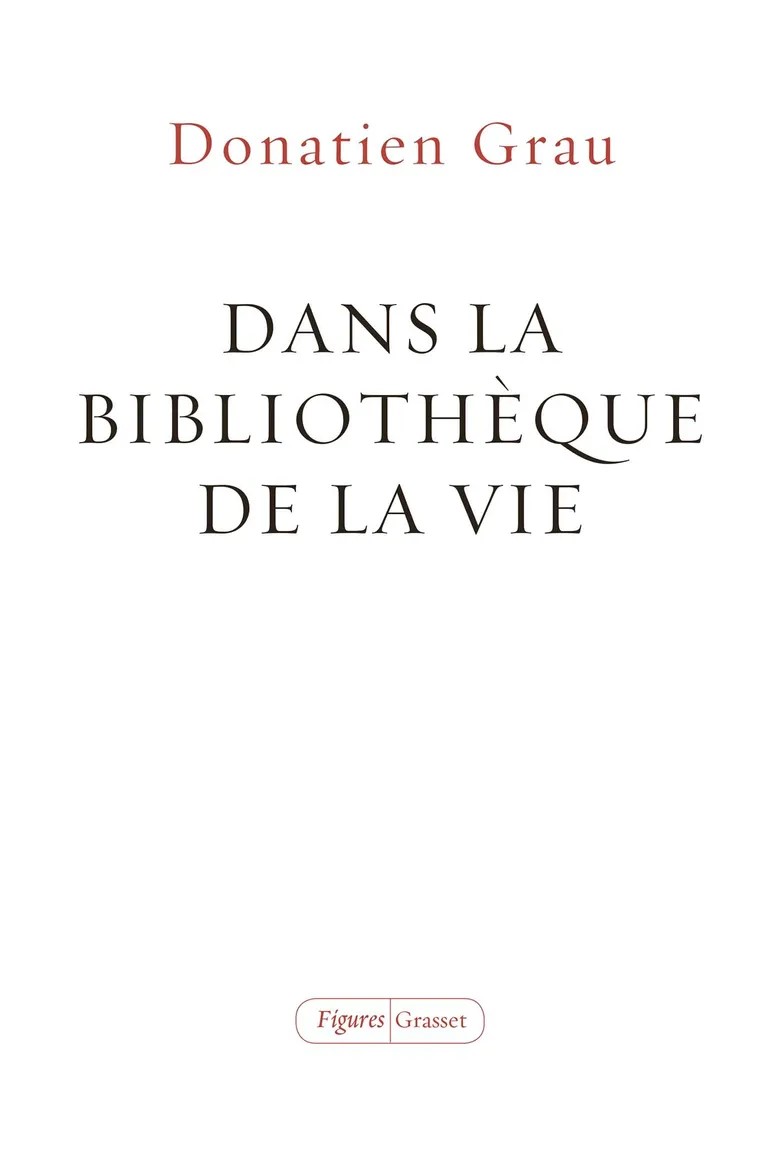
Donatien Grau: Dans la bibliothèque de la vie
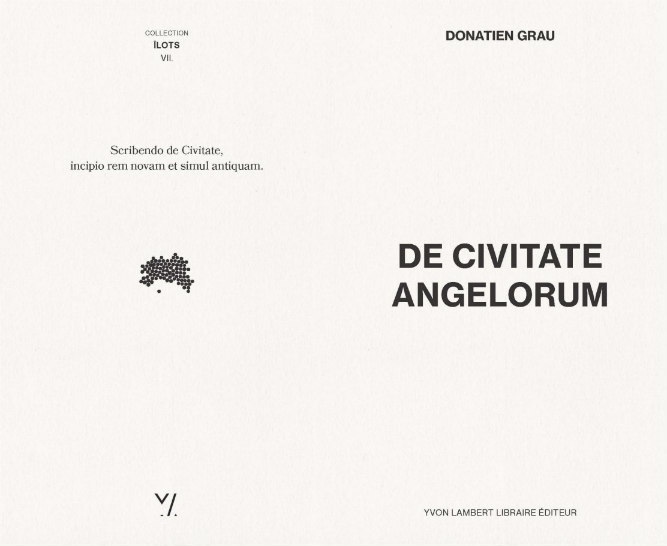
Donatien Grau: De Civitate Angelorum
“Remaining true to myself and the people who have embraced me is a really crucial thing.”
Donatien Grau, does shared space happen in Alphabet magazine?
Absolutely. I’m doing an exhibition with Chiara Parisi at the Centre Pompidou-Metz in June, and we’ve invited artists to make copies of works from the Louvre, and that exhibition includes Valerio Adami, Jeff Koons, and an artist who just graduated – Neila Czermak Ichti. These shared spaces don’t happen because perceptions of the world are polarised. We limit ourselves, and I try not to be too limited.
Does the artistic response to political upheaval vary widely?
Politics is a series of different forces and phenomena, and the work of artists like Kader Attia and Simone Fattal, who have both been involved in the Louvre community, has dealt with the many stories of the world we live in. It’s relatively rare that blatantly political work is good, but art can be very present within discussions and making things happen politically. There is the aspect of getting our mentalities to shift. Over even the last 20 years, all the movements that we have seen – whether gender, post-colonial, or race – have been very present in the world of art. David Hammons foresaw everything that was going to happen in terms of black presence and politics, and David Hockney in the mid-60s made paintings of gay joy, which in England at the time you would still go to jail for. David’s works may not come across as directly political now, but were super political at the time. As somebody who works as a public servant at a public institution, I think we can’t do anything that isn’t political and we have to be aware of it, but to keep the quality of everything we do at the highest level.
How is the cultural world today in your view as a philologist?
A recent survey in the United States found out that the first reason people want to go to museums is to socialize and be around others, and the second reason is to learn. It used to be that people went to museums to contemplate. Now there is an immense desire to learn, and institutions have a responsibility to provide that form of learning, for understanding, for framing. At the same time there is a pressure for exclusion in the world at large, and in that sense we have a duty to educate.
How do we get the knowledge that is in our institutions out into a world that today reads on its phone?
One of the things we recently did at the Louvre was a podcast with France Culture and the curators of the Louvre describing the work from the collection from its making to its interpretations. You can hear from the Louvre staff members who are interviewed by the great curator and radio producer Jean de Loisy, and it’s constant education. It’s on the website of France Culture as well as the Louvre and people are downloading it. Museums, publishing houses, magazines and newspapers have to do these initiatives. The question is : how can we connect to this audience without losing ourselves? A couple of years ago I wrote in a book called Dans la bibliothèque de la vie that people read more than they’ve ever read: of course I am aware that reading on Instagram is not the same as reading a book, but they are different intensities of a textual experience.
Who are Alphabet’s readers and where can one buy it?
We’re distributed all around the world. We ask every contributor if they have places where they would like the magazine to be stocked, so the artists of that community say , “Hey, I would like to be at this bookstore in Tokyo,” or “I would like to be at this bookstore in Brussels,” “I would like to be at this bookstore in Paris.” Then we reach out to these stores and say, “You know, so and so wanted to be in your bookstore, are you interested?” Most of the time they say yes, thereby meaning we’re breaking the boundaries between more art bookstores, more fashion bookstores and more literature bookstores, and we create this project. As André Breton famously said, if you add a drop of oil to water it changes the water more than if you add a litre of water to water. This oil is the experimental space.
How much does Alphabet cost and how long does it take to read?
It costs 28 euros in France and a bit more in different countries. You can read it any way you want. If you want to read it from the beginning to the end there is an editorial structure whereby you can do so. You can also take something that interests you and read it and then discover somebody else. The time of reading is a little bit like the contemplation of an artwork; it can be five minutes or ten hours.
Somebody told me that in museums in Asia the attention span of young people is never more than twenty minutes.
The beauty of museums is they deal with human people, and they are an extremely lively place. You never know what somebody is or is not going to experience. You never know the miracle that may or may not happen. Being a romantic I still believe in the miracle of the museum – and in the case of my other activities, of writing, editing, and research. Miracles are always possible.
What does it mean to be a romantic philologist?
My particular philological discipline is numismatics, the study of Roman coins. You hold these objects that were held two thousand years ago by people. These people have died. The image is still here. It’s a completely crazy belief that you’re connecting across time and have a direct experience of such a distant period. It’s completely romantic. It’s completely idealistic and a little stupid, but sometimes it works. I actually thought that through coins I could rewrite the entire history of the Roman Empire through a 5- or 600-page book. A little idealistic…
When you were young did you imagine your life as it is today?
Absolutely not, but I have aimed to remain true to myself: I published my first article on Roman coins when I was 15 and I’m still working on ancient Roman history. Remaining true to myself and the people who have embraced me is a really crucial thing. I met people and they changed my life. Still today they change my life. I’m very privileged because as somebody who was extremely shy and couldn’t look at you in the eyes, thanks to the people who have embraced me and supported me I’ve improved a little bit at this.
Is yours a regular career?
I’m probably wrong, but I don’t think in terms of career. I believe in public service and want to be where I am useful and to help how best I can, while being ready to always make new encounters. It can but doesn’t have to be with Laurence des Cars or David Hockney or Hans Ulrich Obrist or Philippe de Montebello, all of whom changed my life in major ways. I was very fortunate that, a couple of years ago, a young man came to me who had been a soldier in an elite section of the army and then was working to go to art school for photography. I saw that this young man was brilliant, and he still works for me now at the Louvre. His name is Nicolas Marbeau.
Does life happen by chance?
There is no such thing as chance. There is fortune.
Thank you Donatien Grau.
Lead Portrait of Donatien Grau by David Hockney “Donatien Grau, 15th December 2023” Acrylic on canvas
91.44 x 60.96 cm (36 x 24 Inches)
© David Hockney
Photo Credit: Jonathan Wilkinson
ENJOY THIS INTERVIEW? SHARE IT WITH A FRIEND.