
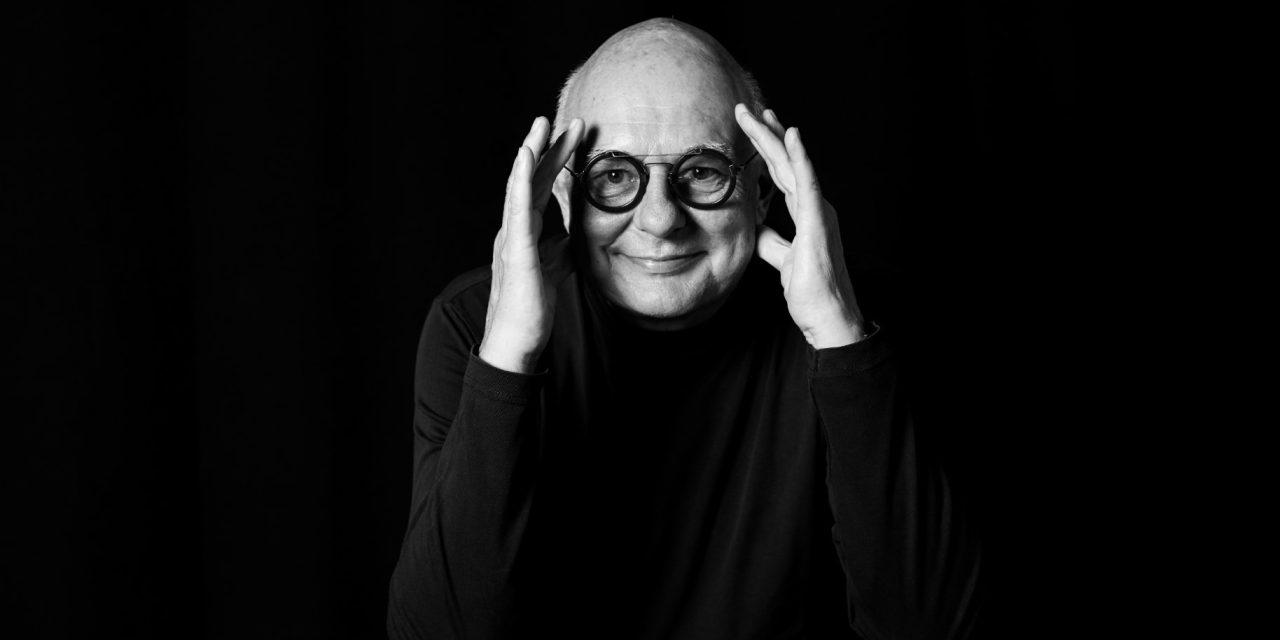
ALWAYS ON A ROLL. Rolf Sachs is an artist born in Lausanne, Switzerland in 1955 who works across a diverse range of media, from photography, painting, sculpture and installation, to interiors and set design. After studying in the US and the UK in the late 1980’s, Sachs moved to London in 1994 to focus on his artistic practice. In 2018 he moved to Rome where he opened a new studio in 2020. His work has been exhibited internationally in galleries and museums including the Victoria & Albert Museum, London, the Museum for Applied Art, Cologne, and the Peggy Guggenheim Collection, Venice. From July 17, 2025 to October 25, 2025 the Kunsthalle Schweinfurt in Germany presents Rolf Sachs: be-rühren, his most comprehensive institutional exhibition to date. The title be-rühren is a wordplay on the German verb ‘to touch’, and captures Sachs’s focus of a deeply empathetic and sensory exploration of the human condition.
21 minutes read time.
You can listen to the podcast of this interview here.
Rolf Sachs, how would you describe yourself?
I consider myself a multidisciplinary conceptual artist. I started in design, but since my school days, I have been passionate about photography. Over the past 25 years, I have had many exhibitions focusing on design, photography, and sculpture, as well as several scenography projects for ballet and opera, architectural and conceptual works, with theme-based exhibitions. For example, in a museum show called “typisch deutsch?” which explored what is considered typically German, I depicted the German soul, which is almost surprising for me because I have barely lived in Germany. I have also created many exhibitions about Alpine culture, as I grew up in the Alps until I was 19. For the past six years, I have dedicated myself to painting, exploring, and capturing the intangible, and bringing it into reality.
Is this major show in the Kunsthalle Schweinfurt a survey of your multidisciplinary oeuvre from 1990 to today?
Yes, it is, and it is taking place in the hometown where the Sachs family originates, where we had our family industries that my great-grandfather founded at the end of the nineteenth century. I have never lived there myself, but they have a striking museum and invited me to create an exhibition. It is a large space, over a thousand square metres, so for the first time I can show the full depth of my oeuvre.
“What has always moved me most deeply is the human soul.”
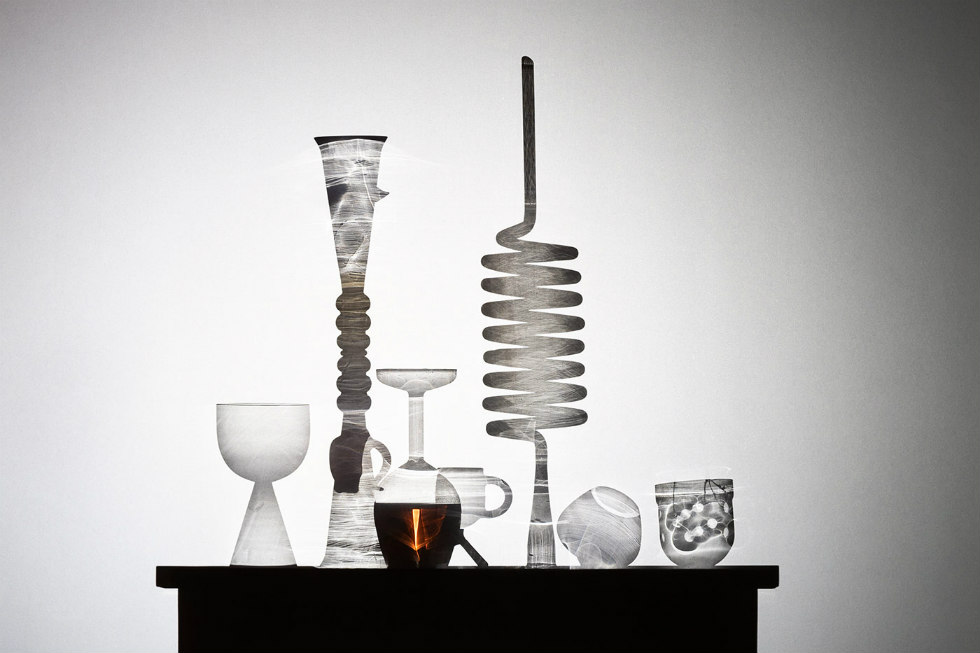
Rolf Sachs: Souls Gathering, 2022, Courtesy Rolf Sachs
Rolf Sachs, will there be many works including modular furniture, photography, sculpture, paintings, all sorts?
I sometimes wish I had studied art formally, but on the other hand, had I done that, I probably would have ended up in just one discipline — art schools tend to narrow your focus. Artistic sensibility is something you’re born with; one can’t learn it. It takes time to understand whether you really are an artist. I’ve always had an interest in working with many different creative forms, which is somewhat unusual, I now consider myself lucky to have been able to express myself in so many ways.
Inspired by Joseph Beuys, the famous German artist, are you a minimalist or a surrealist?
It is essential for people to visit my studio to truly understand the spirit and depth of my work. I consider myself a conceptual artist. Nearly everything I create is driven by a concept, whether in design, photography, or painting. Artists like Beuys influence me, and I also love surrealism, and I think every artist appreciates it and explores it from time to time. But my creative alphabet is minimalist. I try to avoid any decorative elements. When I worked on furniture, I aimed not for ‘les arts decoratifs’ but for what I like to call ‘les arts emotional’, creating pieces that carry another attribute, a new concept, something erotic or sensual. I deconstruct furniture to introduce new free language. Everything I work on must feel authentic. If something has existed before or someone has already done it in a similar way, I immediately look for the next idea.
Are you also inspired by your well-known sense of humour?
My personality naturally comes through in my work, and a sense of humour is an essential part of who I am. I believe a certain lightness of being is important for every human. While it may not be present in every piece, there are several where that playful spirit is clearly recognizable.
Your current studio in Rome is on the ground floor of a late 19th century apartment bloc?
Yes, it is in Prati, it is an old parking garage that has been renovated, and it’s now my studio. It’s a bit of a Wunderkammer—a cabinet of curiosities. When you step inside, you’re surrounded by all sorts of inspirational objects. Many people come to Rome for its museums, and quite a few visitors also find their way here. It’s become my think tank, a place where I can truly develop creative ideas.
Do you find the light of Rome very beautiful and inspiring?
Rome has incredible light. It’s a very stimulating place to live and work. There are certain cities where artists can work and feel a special sense of freedom, and Rome is one of them. It also has a bit of an edge, similar to what you find in London, New York, Paris, or Berlin. Rome simply works. The Italian way of life and the mindset of Italians are undoubtedly sources of inspiration for creative individuals.
Why did you come to Rome?
Love is the reason. I met my partner, Mafalda von Hessen, with whom I feel incredibly in sync. We are both German, though neither of us has barely lived in Germany. We have shared the same circle of friends for a long time, and our parents have been friends for many years as well. It is a very happy time in my life, especially now that I am dedicating myself completely to my artistic practice. Artistically, I am exploring new depths. It is a fantastic feeling to stay young in spirit while gaining a certain maturity, especially as I focus on painting, probably the pinnacle for an artist.
How did you decide to become a painter?
As a child, I didn’t think of myself as particularly artistic, as I assumed everyone was creative. Over time, I realized how deeply rooted it was. I started designing furniture for my own house, and a gallerist suggested I show it publicly. That opened the door. I’ve always had a lot of ideas. If I had more time, I could do even more. My father was a passionate amateur filmmaker, and later I got him into photography, a discipline that continues to fascinate me. I could even imagine having three photography studios, each exploring a different concept.
Is your special way to do photography with movement?
Yes, it is. I mostly move the camera intentionally to create a sense of vigor. When I photographed Bernini’s sculptures at the Villa Borghese at night, I used this technique to evoke their emotional presence. It’s a specific concept—not entirely new, but rarely explored in depth. A Hungarian photographer in the 1930s experimented with something similar. While many photographers use camera movement, I aim to push it further. I’ve also developed a series I call shadow photography, using glass objects. Like people, glasses may appear similar, but their shadows are always entirely unique.
“I paint mostly with my fingers”
Rolf Sachs, do you do both figurative and abstract paintings?
They’re mostly abstract, though sometimes a figure appears. One concept, the froissage, involves crumpling the canvas, applying resin from behind to give it structure, and then painting on that uneven surface. Everything I do is ultimately about people, empathy, and the desire to evoke freedom and empowerment. I find that I cannot fully bring the soul onto the canvas with a brush, so I paint mostly with my fingers. Using my hands feels more direct and intimate, as if somehow transmitting one’s feelings to the canvas or paper.
You also worked in the early 2000s as a set designer for the opera in Monte Carlo?
Yes, they asked me if I would be interested to do a ballet set design for Jean-Christophe Maillot, the director of the Monte Carlo Ballet. I ended up creating four ballet sets, and for someone creative, it is an incredible world to dive into. After working on the ballets, they commissioned me to design two operas, so I had the chance to work on Gounod’s Faust and Bellini’s Norma.
You said you also exhibited on the idea of what it is like to be German?
My mother passed away when I was very young, and I was raised by my grandmother, who was very German. During those formative years, I developed a deep sense of what ‘Germanness’ feels like and what it means. Later, when I was invited by the Museum of Applied Arts (MAKK) in Cologne, I created a show based on this idea. I developed the concept and made an object for each of the traits I saw as typical of a German.
One piece addressed the unthinkable era of Nazi Germany, but most of the work focused on more philosophical characteristics, as well as the more recognizable ones—like punctuality and bureaucracy. I also explored deeper, more introspective qualities such as melancholy and Angst—a word that’s distinctly German and known around the world. These traits, I found, are not shared in the same way even by Swiss or Austrian culture, despite sharing the national language. Every culture has its own unique psychological and emotional DNA.
Born in Lausanne and raised in Saint Moritz, are you very attached to Switzerland?
I am definitely attached to Switzerland, without question, but I would not say that I consider myself Swiss. I was born there and spent most of my upbringing in Switzerland, but I am half-German and half-French, with a Swiss background. Overall, I see myself as European.
And now you live in Italy?
Yes—and before that, I lived in London. My artistic language is probably much more German than French. Traditionally, the French have leaned more toward the decorative, even at times when others were deeply engaged in conceptual work. For example, in the 1930s, France was still home to designers like Majorelle and Ruhlmann, while in Germany, there was a strong focus on more conceptual, avant-garde art, like the Bauhaus. You also had other modern movements like the Viennese School or De Stijl.—all of which stood in stark contrast to what was still popular in France at the time.
Bauhaus was interesting across a number of fields?
Absolutely, and even before Bauhaus, there was De Stijl, if you think about artists like Mondrian, Rietveld, and Doesburg. Mondrian was purely an artist, while Rietveld was a carpenter who created furniture and architectural projects. They were already bringing different disciplines together. The Bauhaus then turned this approach into a formal school.
Are you a grandchild of the Bauhaus?
Yes, the Bauhaus marked the beginning of modernism and remains a deeply important movement. I feel a strong connection to its legacy and continuing influence. Unfortunately, it has often been misunderstood—leading to those postwar building blocks that claimed its spirit but lacked its essence. Many missed the careful proportions and the tactile sensitivity that were so central to the original vision.
How do you spend your day in Rome?
Every day, I am in my studio by around nine thirty for seven or eight hours, including weekends. In fact, I especially enjoy working on weekends because I am alone and have complete freedom. I turn the music up loud and immerse myself in my creative work. When I am in the studio with my assistants and everything going on around me, I am probably not quite as free, but I try to spend as much time there as possible. Contrary to what many people might think, artists are some of the busiest people in any profession. In many ways, we are always on a roll.

Rolf Sachs: Cancan 2022
Courtesy Rolf Sachs Studio
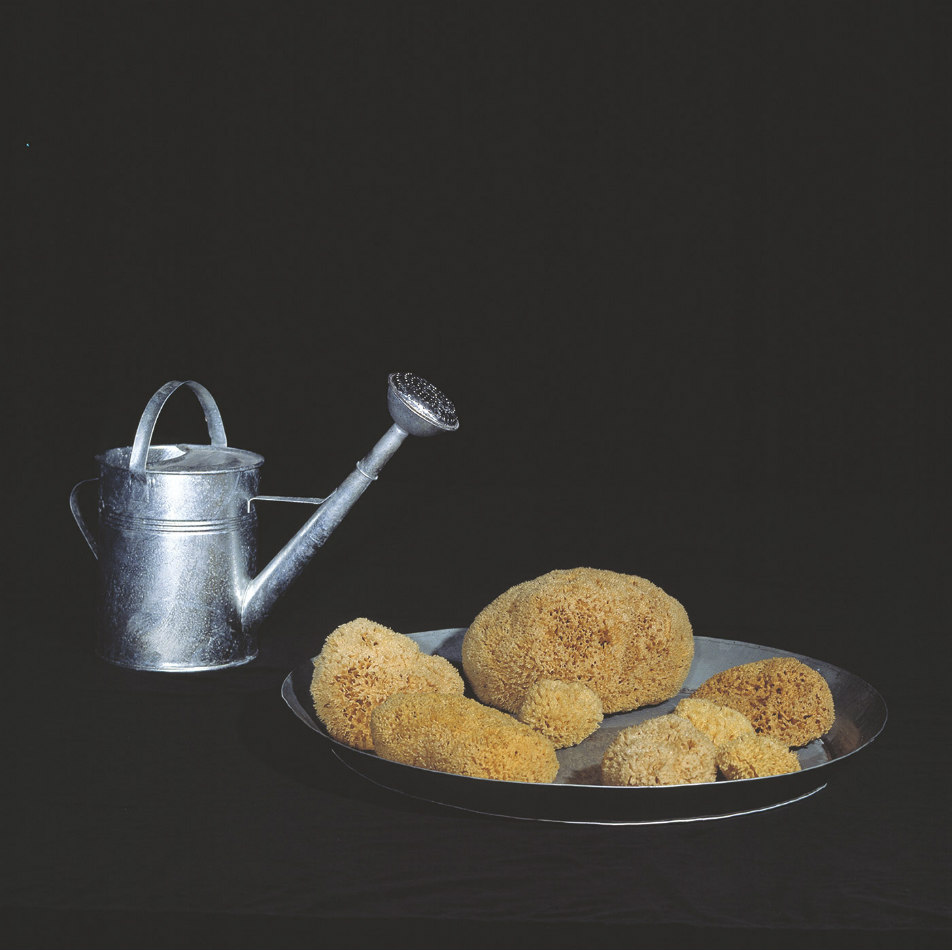
Rolf Sachs: Humidifier 1994
Copyright Manfred Erber

Rolf Sachs: Allure 2025
Courtesy Rolf Sachs Studio
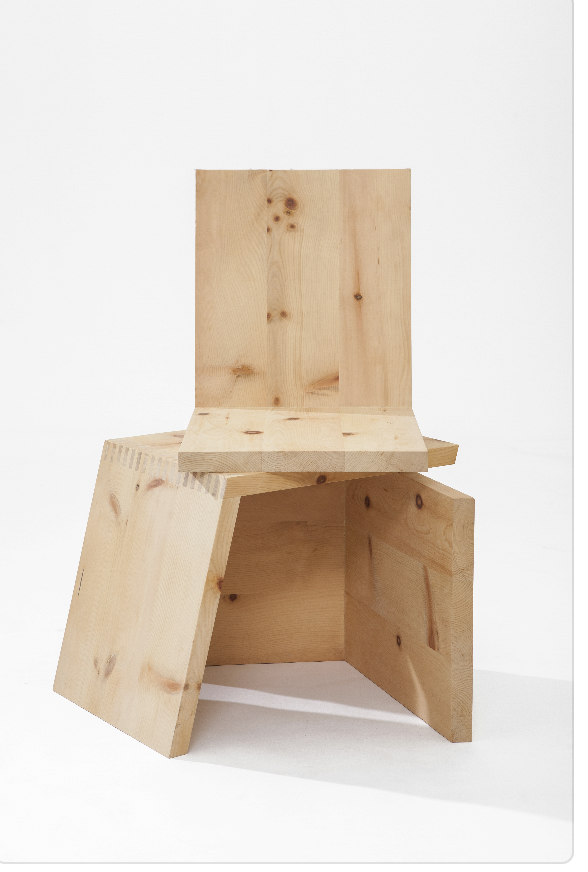
Rolf Sachs: 3 Equal Parts Revised 2008
Courtesy Rolf Sachs Studio
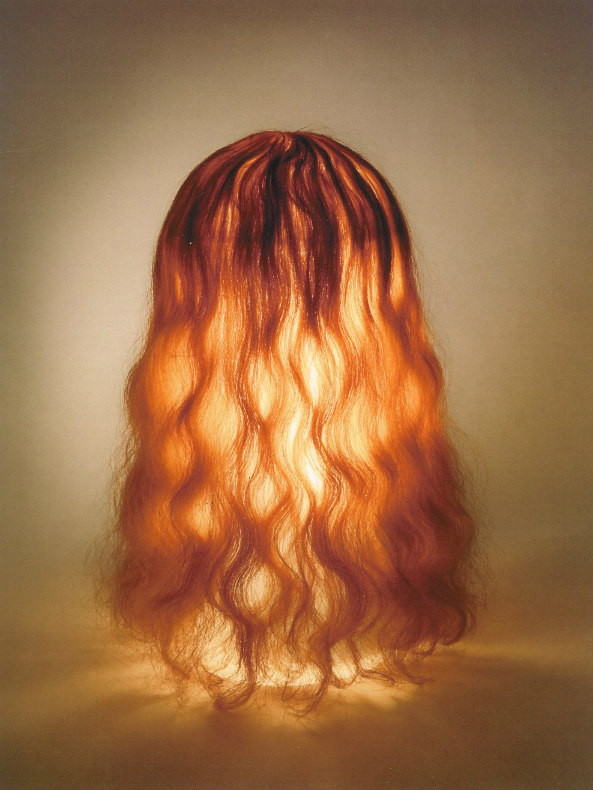
Rolf Sachs: Rita Wig Light 2004
Copyright Phillips de Pury NY
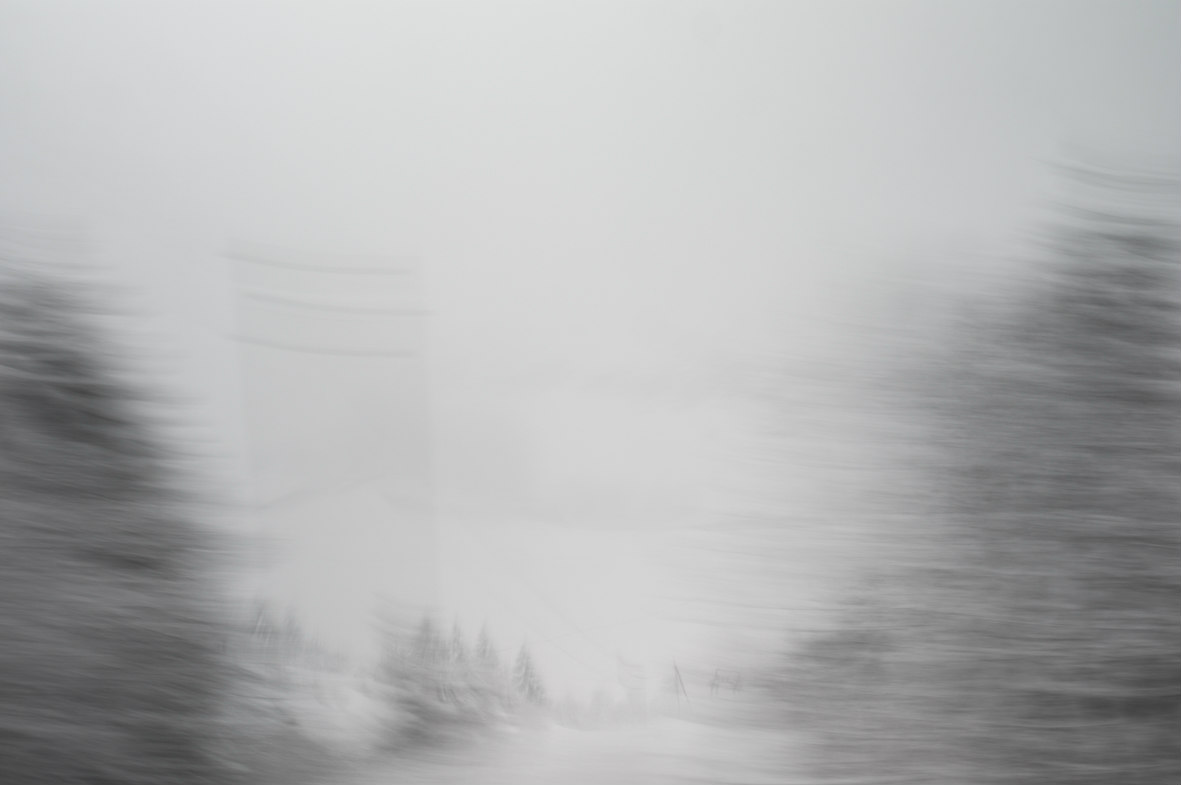
Rolf Sachs: Camera in Motion 2013
Courtesy Rolf Sachs
“My studio has become my think tank, a place where I can truly develop creative ideas.”
Rolf Sachs, does an artist need the studio?
Yes, absolutely. You need all your materials and all the tools around you. Even if you try to set up a second studio somewhere else, there is always something missing. An artist needs a home base, a kind of laboratory, where you can fully expand your work and your creative activity.
You have a kitchen in your studio and like to invite people there for lunch?
Yes, it is very important to me to serve the team and guests a good lunch, hopefully creating an inspiring time. We have a wonderful lady who prepares meals for us while working in the studio, and I often invite guests to join us. Sharing meals is part of the creative process for me, because I am deeply interested in the soul of people and in truly connecting with them. I had the same practice in my studio in London for many years.
How do you feel about the art world today?
I think the art world is going through a bit of a crisis. The past twenty years were remarkable, and even ten or fifteen years ago, I sensed instability ahead—but somehow, it kept thriving. Today, while there’s still strong work being made, there’s also work that, to me, lacks real depth.
We’re living in a time of heightened political correctness, which I see as a positive shift. It has brought long-overdue recognition to artists from diverse backgrounds, particularly women, who are finally being celebrated on equal footing. I hope to maintain my own place within the art world, and that my show in Schweinfurt will convey the depth and authenticity of my work to a broader international audience.
That said, we are also witnessing a rise in egoism and self-interest. Respect and tolerance feel more vital than ever, especially as parts of our civilisation seem to have taken a step backward. The pendulum may have swung too far in one direction—we need to find a new balance. The growing extremism and nationalism in today’s world echo aspects of history that are deeply unsettling.
What’s happening to the universities in the United States?
Literally all the unthinkable things. A few years ago, you would have said this is impossible. It is a catastrophe for the world to see America flexing its muscle in this way. Unfortunately, the United States has significant power, both politically and economically. For four years, Trump and his supporters have been preparing for this presidency with various think tanks, and now he is following a clear program. They decided three years ago how to dismantle the liberal world and democratic values, and they are moving step by step through their agenda, targeting law firms, the courts, the universities, and so on. It is both tragic and frightening.
Do you think this will give Europe some strength to wake up?
Yes, I believe so, and not just in terms of defense, where we have been far behind. In that area, we will hopefully become more independent, because until now we have been completely reliant on the United States. I also hope that, economically, we will start to nurture our local markets more, although it will certainly be challenging. In Europe, we have an incredible society built on a free market but with a strong social component. This leads to very high wages compared to America, China, and many other countries, which makes it more difficult for us to stay competitive, especially when potential tariffs are added to the mix. President Trump does not seem to consider that in his country, twenty-five percent of people live below the poverty line. In Europe, we do not have that situation. People here generally live at a certain standard, but to achieve that, we pay higher wages and must accept higher taxes.
What is the future for Germany?
Germany is going through a period of uncertainty and significant challenges. The country’s major industry, the automotive sector, is under pressure, caught between the transition to electric vehicles and its legacy of combustion engines. Ultimately, German cars may end up far more expensive than their Chinese counterparts, which are already impressively high in quality.
Another issue is the noticeable decline in working hours, Germans are now working about thirty percent less than in the past, and fewer hours than people in neighboring countries like Poland. This inevitably impacts GDP. While productivity remains strong, it’s clear that both Germany and Europe have grown too comfortable.
With the current stance of the United States, perhaps this will serve as a wake-up call: we need to work harder, think longer-term, and become more innovative to stay competitive in the global economy.
Are you in some ways a political artist?
No, I am not a political artist, but interested in politics. For me, my focus is much more on human connection, on values like empathy, tolerance, respect, and how people interact with freedom of thought. We all try to be free in our minds, but none of us truly is, because everyone carries their own problems and burdens. The conflicts in Ukraine and Gaza do, in some way, influence my work, and I could imagine creating pieces that touch on these themes. However, it is not my primary focus. There are other artists who are very dedicated to environmental issues or other specific causes, but what has always moved me most deeply is the human soul.
And you live in Rome, a special city where on one side there is the political life of a normal European country and on the other side the Vatican?
Yes, the Vatican was recently at the centre of the world’s attention for two or three weeks, not only because of the Pope’s passing, the election of the new Pope, the conclave, and the first Mass, but also because at the same time Rome was hosting events like the Italian Open and various other sports competitions. It was quite incredible. For those weeks, Rome was truly omnipresent on the world stage.
Are you ultimately tranquil in Rome?
Yes, fortunately, where I live, I do not feel it too much. However, I have many friends who live in the centre of Rome, and tourism has become a real problem. Like in many other cities, there is an issue with overtourism.
In any case, now you give up everything for painting?
Yes, it is an inner force that drives me. Mafalda feels the same way; she is also painting, though she works in figurative style. We both inspire and push each other, and in the end, it all comes down to working, working, and working. Through this dedication, the work gains depth and becomes more interesting as I continue to experiment and explore new possibilities. I am always inventing new concepts and new ways to express and transcend emotion.
A famous French writer Flaubert said, “Le talent c’est travailler tous les jours,” – talent is to work every day?
That is absolutely right and one has to. It is not just about working every day, but as an artist, it is wonderful because your mind is always engaged. You are constantly thinking, yes, I want to try this, I want to explore that, I want to experiment with something new. It can involve anything, from different materials and colours to new concepts.
Good luck for your exhibition at the Kunsthalle in Schweinfurt that starts on July 18. Will there not also be a beautiful monograph book that you have curated yourself?
Yes, there will be. It will be an illustrated 300-page book, with a number of editorial contributions, dedicated to my practice, edited by Coralie Malissard and Salvatore Lacagnina and published by DISTANZ.
Rolf Sachs, thank you very much.
Portrait of Rolf Sachs, Photography by Katja Meuli
ENJOY THIS INTERVIEW? SHARE IT WITH A FRIEND


