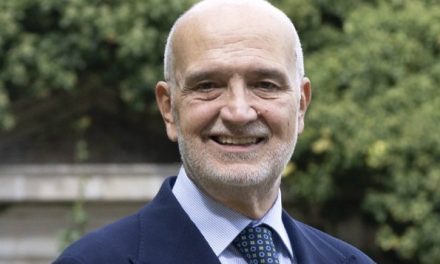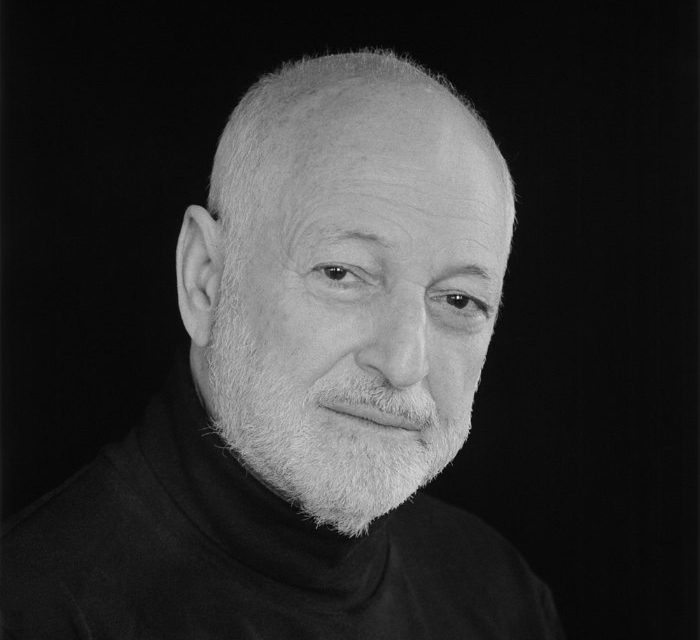
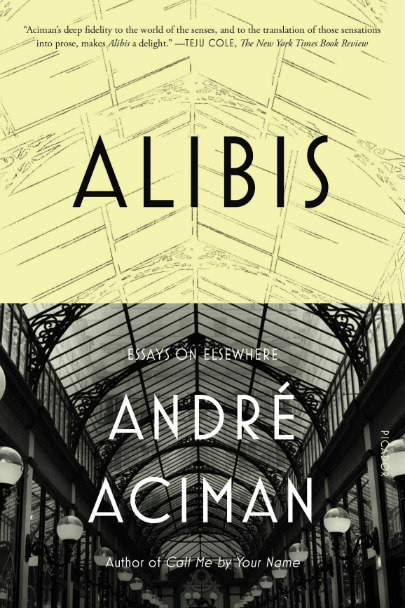
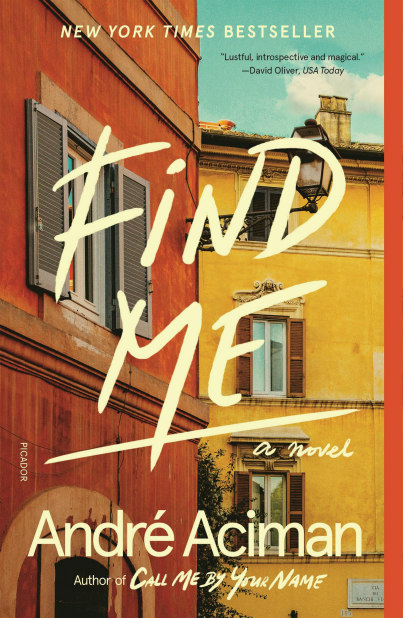
PASSION COMES WITH AN EXPIRATION DATE. André Aciman is an Italian-American writer. Born and raised in Alexandria, Egypt, he is the New York Times bestselling author of Call Me by Your Name, Out of Egypt, Eight White Nights, False Papers, Alibis, Harvard Square, Enigma Variations, Homo Irrealis, Roman Year, and Find Me. He is currently a distinguished professor at the Graduate Center of the City University of New York, where he teaches the history of literary theory and the works of Marcel Proust. Aciman is the editor of The Proust Project. He lives with his wife Susan Wiviott in Manhattan. His latest book Room on the Sea was recently published by Farrar Straus & Giroux.
26 minutes read time.
You can listen to the podcast of this interview here.
André Aciman, why are you so interested in Marcel Proust?
I love Proust. The reason why I discovered Proust is because my father was a big Proust lover, and so I decided to love Proust as well. I read the first few pages of Proust, and I decided that it was not for me because it was exactly like me. Which is everyone’s experience. So I put it away for a few years and then I read the whole Recherche (In Search of Lost Time) and I’ve been reading it since then time and time again.
Is Proust the most important writer of the 20th century?
No. I consider him the most important writer of the French language. Of the English language we have James Joyce, a contemporary of Proust, and both died early. The two of them will definitely stand the test of time. The language of Joyce is still the best language that there is in the English language in the 20th century. The same goes for Proust’s French. I don’t want to quarrel with people who suggest that other writers are just as good. It’s a waste of my time and it’s a waste of theirs, because I will never convince them and they certainly will not convince me.
“My entire life has been one of displacement”
André Aciman, born in Egypt in 1951, in 1965 you had to leave the country of your birth and went to live in Rome with your mother while your father went to live in Paris. You wrote about this in your book Roman Year?
I don’t ever want to go back to Egypt. I went back once and that was sufficient. It’s not the same Egypt I knew. I would go back as an anthropologist, but I’m not an anthropologist. I have no interest in finding out what has changed and what has remained the same. As far as I’m concerned, the people are no longer the same. They’re all Egyptians, which is rightfully so, but at the same time the Greeks, the Syrians, the Italians, the French, the English, all have left. The cosmopolitan society in Cairo and Alexandria so well described by Lawrence Durrell has totally and permanently gone and I don’t know what’s there and I don’t recognise it.
You moved to America in 1968 when you were 17 years old, so have lived in New York for a long time. Do you still have this feeling of nostalgia, of sadness or displacement?
Oh yes, it’s never going to go away. It’s not nostalgia because I don’t want to go back, but my memories have been shaped by my experience in Alexandria: the early Alexandria, and the later Alexandria that I am trying to forget and cannot forget. There are moments in Alexandria that are still resonant with me, and I like them and I go back to them, but by and large they have been displaced also because sixty years have gone by. I go back to Italy twice a year, and I love Italy and I love Italians, and Italy is really my home. New York will be my ersatz home but i don’t think it can become my full home.
Where do you stay when in Italy?
Rome is my Italian city because I like Rome the best, although I love many parts of Italy. I love them all and I like Italians. Italians have been extremely kind to me and I usually stay for a month or so at the American Academy on the Janiculum Hill, and I’ve been in many of the hotels. I’ve written about the hotels in Rome.
You speak Italian, do you still have your Italian passport?
No. I abandoned that passport because at the time I had to say no to the Italian citizenship in order to acquire the American citizenship. I am very sad that this has happened and it has become nearly impossible for me to reacquire my Italian citizenship. My entire life has been one of displacement, of trying to belong in a society in which I know the language, but I don’t know the idiom of the people that I live with. I know English perfectly well, I know Italian quite well, and yet I don’t belong to the Italian people, I don’t belong to the American people, I don’t even belong to the Egyptian people.
Your family is Sephardic Jewish. Do you belong to the Jewish people?
Not really, I was never bar mitzvahed. I do not believe in anything. I don’t like religions. And I don’t like flags.
I imagine you don’t like what’s going on in Israel at the moment?
It is very complicated. There are too many sides of the argument. My position is that I understand the anger of the Israelis because 1300 people were killed and I understand that some wanted reprisals, but they’ve also killed 50,000 people , if not more. That’s unacceptable. And for a Jew to be guilty of what everyone calls a genocide is highly, highly problematic.
What about what is going on in the American universities today?
It’s problematic too and very complicated. It’s unfortunate that there is a constant confusion between Jews and Israelis, to say nothing of Israel’s prime minister and his cohort, many of whom are incomprehensibly unapologetical.
“I’ve always been a very hesitant lover”
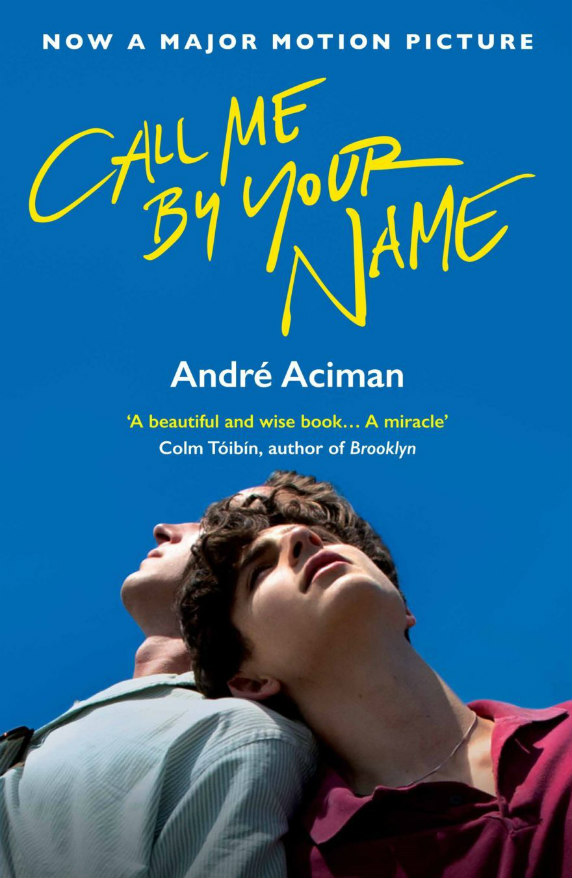
André Aciman, you wrote a bestselling novel called Call Me By Your Name, which won the Lambda Literary Award in 2007. Call Me By Your Name is also very famous because of the film made by an Italian director, Luca Guadagnino. What was your relationship with Guadagnino and the movie?
Guadagnino is a wonderful person. I met him. And I do like him. He took the script, altered parts of it, and left us with a gem. He located the house by a lake, not as I had it by the sea, but that hardly changed anything. I like and respect what he’s done to the story. There were some cuts, which I expected as well, so I was very pleased with the general reception of the film especially. That the film is now a worldwide success story does not displease me in the least.
It became a kind of cult movie in the homosexual world?
Oh, beyond the homosexual world. It has become a cult movie with everybody, and people read the book. Now there’s a second generation of people who read the book and that’s also not unwelcome.
Did you expect this?
No, not at all. In fact, I was invited to go to Sundance, where the film was first shown, I said, no, it’s too cold, there won’t be enough room, and I would much rather stay in New York and I’ll buy the movie when it comes out in DVD. That’s what I expected. I had to go and see it in Berlin for the first time because it was also showing in Berlin, so I missed the applause of the first session, but I went for the second session and that was lovely.
Do you understand why your book and the film have been so successful?
Let’s talk about the book first. The book is focused on Elio, who is fundamentally thinking about desire and realising that he desires Oliver from the very start. There is no ambiguity about what he wants, but he fears he will be rejected and every single person understands the fear of rejection. That’s one of the reasons why the book is so successful, because it analyses, in a very Proustian manner by the way, the reasons why Elio is totally paralysed and reluctant to tell Oliver what he feels for him. I needed that mounting tension as a writer, because I’m not good with plots. I hate plots and so I avoid them. The movie is also successful because it tells a gay story – there’s no question it is a gay story – but it also tells the story of what happens to someone and to a couple when they fall in love. It becomes a love story and many people will disregard the fact that it’s about gay people and regard it as a tale about falling in love and losing the person that you love at the very end of summer. It addresses all the subjects that I thought I knew: love, desire, hesitation. I’ve always been a very hesitant lover and person in general. Ambiguity is essential to me, so I divulged all my tensions in the book.
What do you mean by ambiguity is essential for you?
Because in every desire I believe there is also a desire not to desire. You catch yourself desiring someone and you say no, there’s no point, it’s never going to happen, I have to quelch that desire, and in a way that is what the story is also about. It’s about the reluctance of engaging with life until life just takes over. It is autobiographical not because there is a man in my life but because there have been several women in my life that have occasioned this reluctance of mine always to come to the fore.
You wrote many other books and say you consider Eight White Nights your best book. Why?
First of all, because it is written with a degree of style that I happen to like. It’s not hasty, it’s slow, but it’s also my best book because it’s about two individuals, a man and a woman, who meet at a party and who decide to go and see a movie every night. There’s a festival going on, they’re watching the festival. It addresses some issues that are inside of them as well, but let’s leave that aside. The novel also tells a story of two people who know they will sleep together, but prefer to let the romance last a bit longer than normal. It is that desire for romance, which in today’s world does not exist very much any longer. Romance is easily consumed and moves on to other things. These two characters, however, know that they may not want to consume it because they know that after they sleep together they may not want to remain lovers. Passion comes with an expiration date, so they forego having the passion for a while in order not to meet the end of the affair. Eventually, they will sleep together. They know they will. In fact the book ends with their desire finally becomes irresistible. But it ends slightly ambiguously, and I don’t want to know what happens next.
Falling in love, how to keep love, shyness vis-a-vis love, the insecurity of love, all this is very important in your work?
Yes, love itself is never permanent and always changes – as you know, as everybody knows. It changes by the minute, by the hour. You could be in love with a person then you can get to hate them and then at night you love them again.
Talking in terms of Tolstoy, for instance, are you in favour of affairs or marital life?
In that respect, I am very Proustian. Every affair, however passionate you are for Vronsky or for Pierre or whomever, eventually you get married and another series of emotions come up, but the original passion may not last that long. It becomes something else, and I think that that’s not an unwelcome change.
Marriage is very important in the Tolstoy mind but not in his own life?
Poor man. He didn’t like his wife and she was a very strong woman and I don’t think they were very happy together. But he loved his daughter. He escaped his home and died in a train station. I don’t know of anyone else who has described jealousy so well as Proust has, in the case of Albertine Simonet and in the case of Odette de Crécy. In both cases they are perfect. I don’t know of anybody who could do better. Tolstoy does not come close.
Do you describe jealousy in your books?
No, I describe the absence of jealousy. In other words, I know she’s cheating on me, I know she has somebody else, why am I not jealous? That’s what one of my characters asks himself. He is not jealous because either I have never been jealous and therefore maybe never been in love, or I find that jealousy is really an unnecessary, obsessive, compulsive reaction that we have – not vis-a-vis the woman, but vis-à-vis everything else – vis-á-vis ourselves especially. It has nothing to do with the other person, because when you’re jealous of someone, you’re not just jealous of her, you’re jealous of who she is when she is not with you. So you don’t even know what to be jealous about because she’s somebody else when she is with someone else, and you can’t begin to know who she is with that someone else. She has other appetites. She has other things that she wants to talk about that she’s never mentioned to you. So now you are jealous. I don’t like jealousy. I’ve experienced jealousy in my life and I hate it, so if I mitigate the price of jealousy by not feeling love, so be it.


“I am not interested in the towels and the sheets”
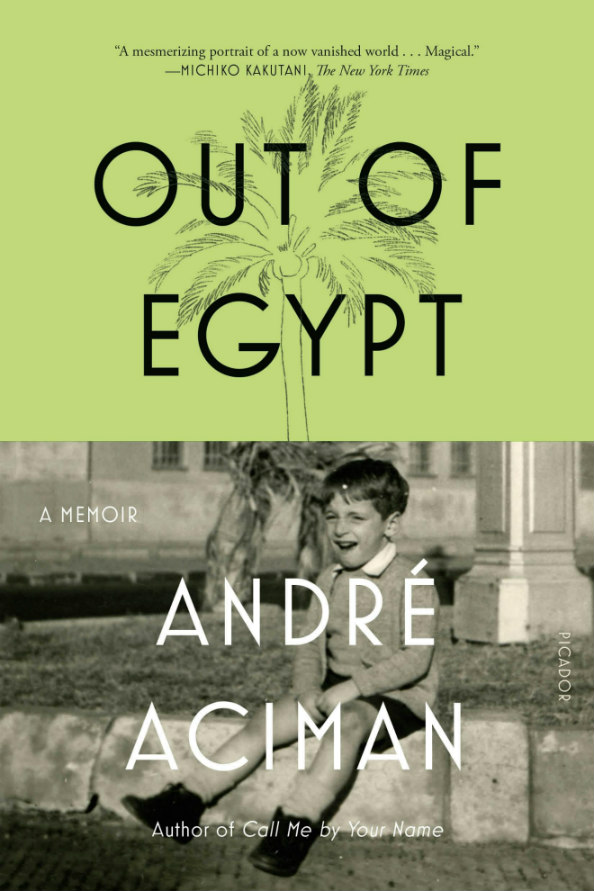
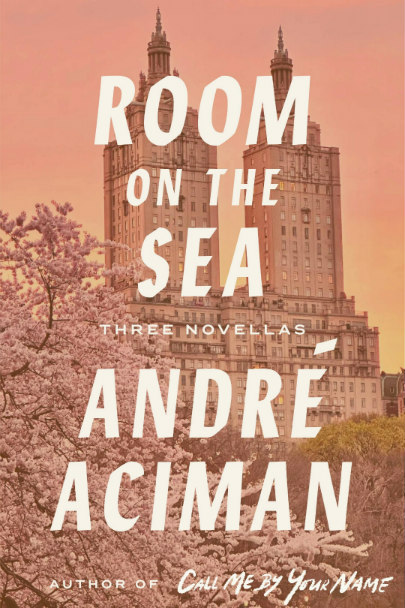
André Aciman, what is your new novel Room on the Sea about?
Room on the Sea is really several stories, novellas, but one novella in particular is about a couple of a certain age. They’re both past their 60s, and they meet in a jury selection room. He’s a retired lawyer and she is a practicing psychotherapist, and he tells her what she should say in case she gets examined by one of the lawyers. And she says exactly what he’s coached her to say, and, of course, she is released and so they have lunch together. They have lunch again the next day. They have lunch again the third day, and they realise that something is going on between them. At some point they decide to go to his house at the beach and at the beach, they have something that happens, and after that they decide that maybe the thing to do is to go to Naples. They go to Naples because his mother was Neapolitan and had met his father when the latter was a soldier. They got married, she moved to America, and yet he has a sense that something about him needs to go to Naples. She is just as curious as he is to go back to Naples because they saw together a painting that happens to be by Picasso, and they decide that this is the place that they want to go to. And so they do.
Is love the most important ingredient in novels?
Yes. Besides love, you need tension. If there is no tension, then nothing happens, and then there is nothing going on. You need to have tension, and for me, the source of all tensions between human beings has to do with desire. Desire generates a kind of tension between a man and a woman, or between a man and a man. You need the tension, and for me desire is the answer to the situation. Whether the tension is going to last forever, whether desire is going to last, that’s another question, and frankly, I’m not really qualified to speak about that. I always end stories with no real closure. They’re left en suspens because I don’t like to close an issue, so all my novels end up really with an unsatisfactory ending, but that’s the ending that I understand. So you never know if they’re sleeping together again, or if they will meet again, or if they’ll find happiness again in the future. You don’t know. I find that once you have established that people do desire each other, then you have to end the tale. Are they going to get married? This is the typical resource that Jane Austen has, for example. I don’t like to talk about books that have not appeared yet, but my new book is a story that has essentially a lot of tension, but it’s not going to lead to where you expect it to lead.
You like the first part of love, and then once it happens you don’t care about the issue and how it will develop?
Absolutely correct. The way I describe it sometimes is, if you have a couple who are very happy together, what will they do on Sunday afternoons? They will probably do the laundry in America, and if they do the laundering they will clean and fold the sheets and the towels and frankly I am not interested in that. As a person I am very interested in family life, but as a writer I’m totally uninterested in what happens. I do talk about the fact that my parents did not get along, and I think they should have divorced a week after they got married, before I was born. It was clear that this was not going to be a happy wedding, and it was never a happy wedding. They fought all the time, which is also why my father decided to live in Paris, and my mother stayed in Rome. Besides that, family is extremely important to me, but not when I’m writing about family. I am not interested in the towels and the sheets. Absolutely not. I have three sons. They’re all married, and I adore them and I’m very close to them and I speak to them at least twice a week, if not three times and more, but as a writer my interests are totally different.
Which modern writers of international literature have you liked?
I’ve read a lot of writers who have not generated a compulsion to want to read them again and again. Non-fiction works are far more compelling to me right now than works of fiction that don’t address issues that I consider important. If somebody else did what I want to read and what I believe in, then I would welcome them a great deal. I just happened to read recently a novel that I liked a lot, until the ending, which I thought was not good. But I liked the short novel by Coetzee called The Pole about a Polish man who was a musician. It was very interesting, poetic.
Are you interested in the poetic romantic aspect?
I am, one cannot help but be a romantic, even if you disclaim it all the time. I thought I was going to be a poet until I was 17, 18 years old. I wanted to write poetry, then I realised that my poetry made too much sense. It was not ambiguous enough. Today’s poetry is so ambiguous that I don’t understand it, so I realised that I should turn to prose instead. At that point, I realised that my prose itself is very poetic; and I want it to be poetic, and I like that. It’s not poetic prose, it is a form of poetry. I love anaphora, for example, as a figure and it works for me, and I love to write long sentences when I have to.
You are also a professor, a teacher. Does literature nowadays mean something to people?
I don’t know. If they read a few plays by Shakespeare they would understand themselves far, far better than they would if they’d read any of the novels that exist today. They all read the exact same novels in high school, which is a catastrophe.
Does your work have some impact?
No, the only book that has had impact is Call Me by Your Name and it was hastily written; it took me about three and a half months to write it. Nobody reads the books that I consider very valuable and profound, so in the end every book I’ve written is not going to stand the test of time. I will die and nobody’s going to read me, and it’s fine.
You’re very pessimistic about your work?
One has to be. I was having a walk with a gentleman who was the president of the New York Public Library and he thinks that AI has produced fantastic things. Pretty soon AI will write novels for us that are better than the novels we love. Where are we going? I don’t know.
Are you worried and sad about this?
No, because the novels are going to be better, and so maybe I will start reading them again. If it’s a good novel and it stands whatever criteria I have, then I want to read it. AI will probably compose better symphonies than Brahms, Beethoven and Mozart. It will do magnificent things, just give it a few years, it’s getting better and better.
What are the humans going to do?
Nothing. They’re going to either consume it or they will find that they have been entirely replaced, which is a terrible option and I’m glad to know that I probably will not live in that world. Of course it threatens me, but I’m curious to know what the next steps are. The way AI is working out today, I suspect that we might get better philosophy, but I won’t be around. For the time being, it’s controllable. Whether it becomes uncontrollable, that’s a different issue.
Elias Canetti, who wrote many books, from Auto da Fé to Crowds and Power, lives in London and says in an interview, I love to think in German when everybody around me speaks English. Are you a bit like this?
Elias Canetti’s first language was Ladino, the language that I heard my grandparents and my father speak, because my mother didn’t know it. But I grew up speaking French. I learned Italian very early. And I knew Arabic, of course, because you had to know it at school. But fundamentally, the real language of Canetti was a mixture already. He was always going to be displaced, the way I am always going to be displaced. You cannot avoid that.
How will AI contemplate the many different kinds of displaced people?
It will imitate them very easily. I once asked an artificial intelligence a very simple question: to imitate my style for a lasagna recipe, and of course it imitated me perfectly. In fact, I was embarrassed because it was perfect. I did it as a joke for various people and they all laughed because they thought it was very funny. And it is funny. And it will imitate displacement very easily too.
Will artistry and talent become irrelevant?
They’re threatened, but I hope not, because ultimately some of the great poets cannot be imitated. I can refuse to believe that the great composers and the great painters can be imitated. You can imitate Monet in painting. Yes, you can do that, but you cannot create Monet. You can imitate a late quartet by Beethoven, but you cannot create such a quartet. At least, not now.
At the beginning of our conversation you said that the ultimate English writer of the 20th century is James Joyce, who at the end of his life wrote a bizarre book called Finnegans Wake, very difficult to write and very difficult to understand. Can something like this be repeated? Artists, writers, musicians, creative people and scientific people, all have this curiosity to go further, to look forward to new inventions, new techniques, new things. Do you think that this can possibly be substituted?
It cannot be substituted. Not now, at least. But I do hope that artists and scientific minds will go further, have to go further.
Ulysses of Joyce ends with “yes”, and you end our conversation with no.
It’s not no. It’s I don’t know.
I don’t know. Okay, so André Aciman thank you very much indeed for this interview.
Lead portrait of André Aciman by Mariana Cook
ENJOY THIS INTERVIEW? SHARE IT WITH A FRIEND.