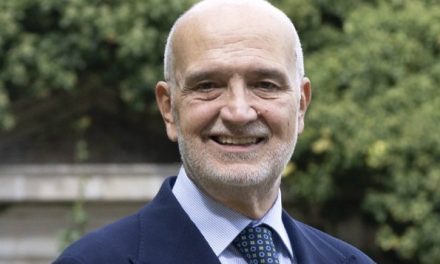
TOWARDS THE ULTIMATE GALLERY. Thaddaeus Ropac is an Austrian born gallerist specializing in international contemporary art. He founded the Galerie Thaddaeus Ropac in 1981, and today he represents more than 70 artists with galleries located in Salzburg, Le Marais and Pantin in Paris, London and Seoul. In September 2025 he will open his new 280 m2 space in Palazzo Belgioioso in Milan, with a show titled Georg Baselitz and Lucio Fontana, L’aurora viene (The Dawn is Coming).
30 minutes read time.
You can listen to the podcast of this interview here.
Thaddaeus Ropac, why so many galleries?
It is not a necessity, but it is a possibility. The gallery system has changed. It became international, then global. Our artists live in Europe, in America, in Asia, and our clients, the museums, the institutions, the exhibitions we organise or help organise, are also as international. With our gallery spaces, we want to inspire our artists to do exhibitions. Art fairs have become important for gallery work and to inform a larger audience, but at art fairs we are reduced to small booths with bad lighting and crappy walls. In gallery spaces which we carefully curate and think about with architects and the best lighting designers, we try to create an atmosphere where artists feel that this is a space which deserves their work and that there is respect for their work – a space that invites an artist to create, sometimes for the space.
By far your biggest gallery is Pantin in Paris, a former boiler factory whose enormous halls you transformed from an industrial to a cultural space?
It’s a huge space, so artists have to think very carefully what to show there. For certain artists it’s just too big, and instead they love to work with the other space we offer in the centre of Paris at Le Marais. Art needs to be shown in spaces that inspire the artist. It has to be respectful, and to create an excitement. If you have one space which has all these elements, you can create a different one. By growing, you just add beautiful, inspiring spaces, but it is not a necessity, some very successful galleries work with just one space.
“Milan is the heartbeat of Italian art making.”
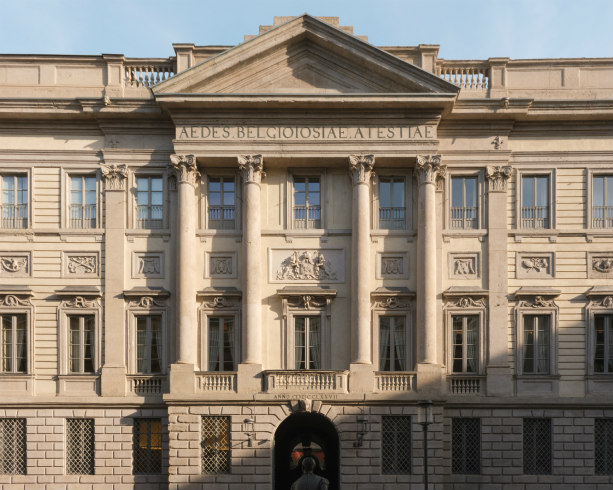
Palazzo Belgioioso, Milan.
Photo: Adriano Mura
Thaddaeus Ropac, does growth have something to do with the art market, which itself became so big?
Over 40 years I’ve seen how art moved from the ivory tower in the 1980s to the centre of life. Contemporary art became something which people feel really connected with and much more inclusive. Exhibitions in museums and institutions are created for hundreds of thousands of visitors, sometimes up to a million for one exhibition! In general, galleries show the new production of an artist, bringing the works from the studio to the public, an important role.
Your first gallery was in Lienz, Austria, in 1981, then Salzburg in 1983. In 1990 you first opened in Le Marais, Paris, then Pantin in 2012. In 2017 you opened in London, in 2021 Seoul and now Milan in 2025. How did you make this trip?
There’s always a few years between the galleries, and we grew very organically. The last gallery opened five years ago and I felt it time for another space. I try to go to places which excite me, and therefore might also excite and inspire the artists. Salzburg is the place I started. Paris was the city of my dreams, and Le Marais is maybe still our flagship. London has such an incredible history in the production of arts but is also a huge marketplace. Pantin was the necessity of a large space. I wanted to create one gallery where the truck can drive in and there’s no limit of weight and size. It’s 5,000 square metres, a monumental space.
Why did you open in Seoul?
Asia is part of the future. The art world was defined over hundreds of years by Europe and North America who defined where art is produced and how the canon is written. This has changed. The last 20 years have taught us that Europeans and Americans had an inexplicable ignorance towards the rest of world, to Latin America, to the Middle East, to Asia in particular, a huge area which already does and will even more in the future add tremendously to art production. An exchange between the culture of Europe, of America and of Asia is necessary, and it’s urgent. In Asia with its long history of art making, I felt there was a concentration of talent in Seoul and we wanted to add some of this talent to our roster. We thought bringing our European and American artists to Korea, we will find the audience, and after five very successful years there it was the right decision.
Why not in China?
China is exciting, but I could not consider opening a gallery in China as there is no freedom of expression, and to work in a place where everything is controlled and censored just did not excite me. We organised a few exhibitions in China for some of our artists. We had to give the list with the images, and then three months later, very anonymously, a list came back with black lines of those crossed out. No explanation, no way to discuss it. Censorship is one of the biggest enemies to the cultural world and to artistic production, and therefore I couldn’t consider China now. To me, the most exciting countries in Asia at the moment are Korea and Japan.
Why did you never open a gallery in America?
America accounts for 45% of the market, so it is the biggest and most important market. We participate very actively in this market, and we show very important American artists from major American estates like Rauschenberg, Judd, Sturtevant; and we work with great living artists like Alex Katz, David Salle, and Tom Sachs. We work with many of the great institutions across America, and have very important collectors to whom we are able to sell art, but I didn’t open my own space, because this activity happens by our team constantly visiting America and working on projects, but also many Americans just knowing what we’re doing because Paris and London are maybe the most visited places Americans go to. The contact is great and working, and I think America is simply too important to do a gallery with the long hand. Some of my European colleagues became successful in America by moving and doing it from there, and I never was ready to do this. I would not give up living in Paris, and I didn’t want to have a small gallery in New York, which is easy to do. If I would do America it would have to be big and bold, and you cannot do it with a compromise and visit every two months or so.
Why did you choose Palazzo Belgioioso, built by the great architect Giuseppe Piermarini, who finished it in 1781, for the next gallery location?
I always wanted the ultimate European gallery, and with our strong activity within the German speaking world, France, and England, Italy was just missing. It had to happen. Italy is the beacon of European art making, so not to have something in Italy is almost absurd. For years I said we have to do something in Italy, one of the most inspiring countries in art making over centuries. I looked into Naples, Rome, Florence, Venice and Milan, and really analysed each place. Milan in the 20th century was the most exciting place regarding art creation in Italy, entire movements like Arte Povera were invented there between Milan and Turin, and the academies were the most radical, even up to today. Catalan lives in Milan. Some of the greatest artists ever created in Milan, like Fontana. Therefore it was almost clear to go there. It has the most active museums, and younger Italian artists or international artists feel Milan is the heartbeat of Italian art making. It is the place in Italy which gave the most to the contemporary art world within the last hundred years.
Your opening show in Milan in September is with Georg Baselitz, a German artist with his own strong links to Italy, and Lucio Fontana.
In the opening show, we wanted to reflect one part of our DNA and we wanted to give a reference to Italy. We wanted to take Baselitz as one of the most important living artists and we were working with Baselitz for decades and he has a studio in Imperia. He doesn’t use it so much, sadly, because he’s not so mobile, but he was there for many years and Italy inspired him. He had a very strong relationship with Fontana, so to take one of the most important Italian artists of the 20th century who inspired one of the most important living German artists and to show them together, to show how Baselitz was influenced by Fontana and to show some masterworks of Fontana was just an ideal opening show. But actually there are two opening shows.
What is the other one?
Baselitz Fontana is two men followed by two women in the second show, and we see both of them as our opening. The second will be Valie Export, the Austrian feminist artist, again part of our DNA and coming from north of the Alps, and we’re showing this work with a very important Italian feminist artist called Ketty La Rocca who is internationally not very known. But we wanted to take, again, an artist like Valie Export, living and a big feminist all her life, and show it with an Italian artist who was incredibly important but didn’t get the international profile she deserves. It was important that we do this opening with four figures and with an Italian context. We have a lot of experience, but with a space there, in all my modesty, I want to really learn. I want to add to the Italian art scene, but I also want to see what is there that we could contextualise.
Will you be promoting younger Italian artists?
We have done this very successfully in London and in Korea. Italy will be another place where we can really also create a connection which contextualises the artists we work with, with exciting new positions out of Italy.
“We represent around 70 artists and estates.”
Thaddaeus Ropac, how do you organise the artists you represent in your spaces in different parts of the world?
Now, with seven galleries internationally spread, it’s becoming more and more complicated to build a programme. When Milan is up and running, we will do between 35 and 40 exhibitions per year in all our different galleries, a big number. This is not me who is doing this huge organisation but a team of almost 150 people. The leading team, the curatorial team, and the content team all work together. We have constant meetings, often over Zoom, but often also we meet at a certain place and discuss our programme and discuss new artists. Each of our senior directors works with four or five artists and estates. We represent around 70 artists and estates, and so each one is very close to their artists and knows exactly how much an artist can do and in what kind of rhythm artists can show. So this is a puzzle which many people work on and we discuss, decide and build this together. That’s the only way to run a gallery of this scale.
Nevertheless, you have your own taste and a personal passion for another Italian artist who is a little less well-known by the larger public?
The first time I discovered the work of Medardo Rosso, who is not an obvious name, I was taken by it and I was very happy that in 2017 Julia Peyton-Jones curated this Medardo Rosso exhibition in London, the first one this artist ever had in the city. It is really astonishing that such an important artist was not even shown in a place like London. This was first a personal discovery, then I was able to collect a few of his works and then I was able to do an exhibition. Which didn’t really make sense in a contemporary gallery, but I allow myself these little eccentricities!
Who else like this do you admire who is not so well-known?
I also admire another Italian artist who is not alive anymore, Emilio Vedova from Venice. When I decided to do my first gallery in Salzburg, he was running this very free-spirited, highly intellectual academy created by Kokoschka who had already had passed away. So I was confronted with Emilio Vedova when I was very young and I admire his work and was very happy when we were able to work with the estate and the foundation and to help that this towering figure in Italian painting gets a bigger recognition in the international artworld.
There are a lot of very important and well-known artists within Korea. Do you make them well-known in all your different countries and galleries?
Yes. I was going to Korea for many years and started to work with the Korean artist Lee Bul in the late 90s and followed her career to an amazing success. We just started to work with a young artist in her late 20s, Heemin Chung. We’re showing at the moment in our Seoul Gallery a very important artist from the 70s Lee Kang-So, and in September we open the show in Paris where we recreate the piece he has done for the Paris Biennial in 1975. 50 years later, we’re bringing this artist who is highly important in Korea but very little known in Europe. It is very exciting to work with these Korean artists and bring them to our European galleries, showing them in Korea also. So we bring European artists to Korea, but also bring Korean artists to Europe.
How do Koreans react to European artists?
With a lot of curiosity. We are now in Korea for five years, and are already planning the second shows for certain artists. First, it was exciting that all these artists had their first show. For many of them it was a surprise. We didn’t know how the artworld would react to the artists we are presenting there, from Martha Jungwirth to the estate of Rauschenberg, from Tom Sachs to a very young British artist, Oliver Beer. Each experience was very different, and each one was slightly unexpected. Sometimes it was more successful, sometimes it was less, so then we think, okay, we have to work harder to make it a success. Other shows were overwhelming in their success.
Are you prudent or a risk taker in this competitive world of art, full of difficult collectors and museums?
I’m curious, and I have a passion for art and culture that drives me. There are also other things which fascinate me. In the art world you have to have talent to recognise art, or sometimes to differentiate a more important painting from a lesser one. You can learn this, but not entirely. You have to have a gift to be able to recognise which one is the more important work by known artists and for young artists you need to see the potential for a bigger career. It’s hard work to make this happen, and you need a lot of luck, and I’m really happy to say that I had a lot of luck in my life.
You were lucky with Andy Warhol who didn’t have a gallery in Austria and you, very young, showed him in Salzburg?
Yes, this was luck. I did an internship for Joseph Beuys, and it was the Documenta in Kassel in 1982 when he was doing his big project, 7000 Oaks. We were planting these trees and it was hard work for a year. At the end of this year we had a little party with the other assistants and Beuys was very open and he offered help. I asked him if he would give me a show, which he did later, and I asked him a second thing. I said, “You’re a friend of Andy Warhol. I would like to meet him and I need a recommendation.” He took a napkin and wrote, “Dear Andy, please meet this talented young man, Joseph.”
This was your ticket to America?
I arrived in America the first time and I was able to meet Andy Warhol and he introduced me to Jean-Michel Basquiat. I had these now legendary early exhibitions with Basquiat. It was luck, but also determination on my side. I wanted to go to America. I wanted to meet these artists. I wanted to meet Leo Castelli. I was lucky he was my big mentor and became a friend, somebody who trusted a very young man. I was also lucky that Leo felt a bit Austrian, because he was from Trieste which when Leo was born in 1904 was still part of Austria, so his first language was German and his father worked for a bank in Vienna. I also had this complicity with certain artists and important figures in the art world, maybe with my passion which I brought in – there was nothing else I could offer. I would go to Leo and ask him to introduce me to Rauschenberg and to do an exhibition. What could I offer to him or to Warhol? Nothing. I was just a young man who had passion and not even experience. I learned by doing. I learned by making many mistakes and trying to do it better the next time around.
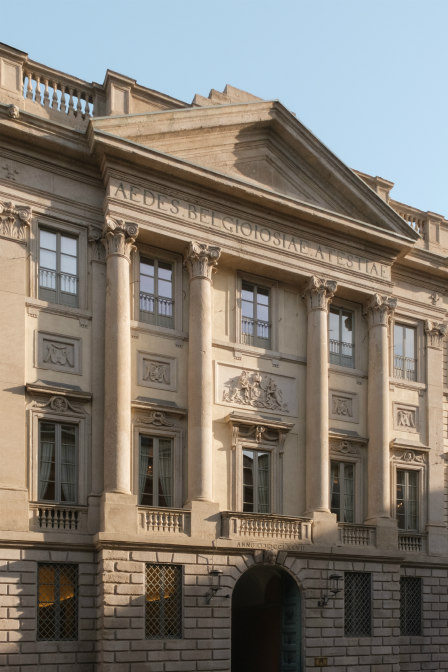
Palazzo Belgioioso, Milan. Photo: Adriano Mura
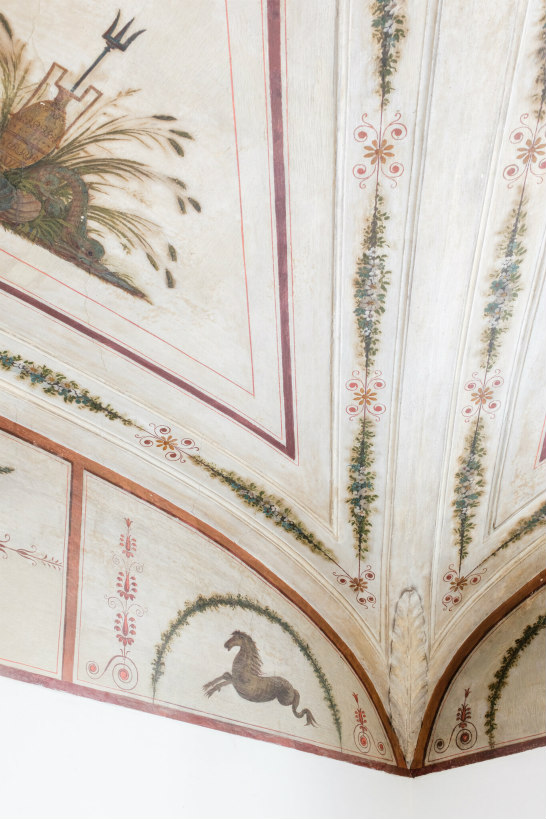
Palazzo Belgioioso interior, Milan. Photo: Adriano Mura
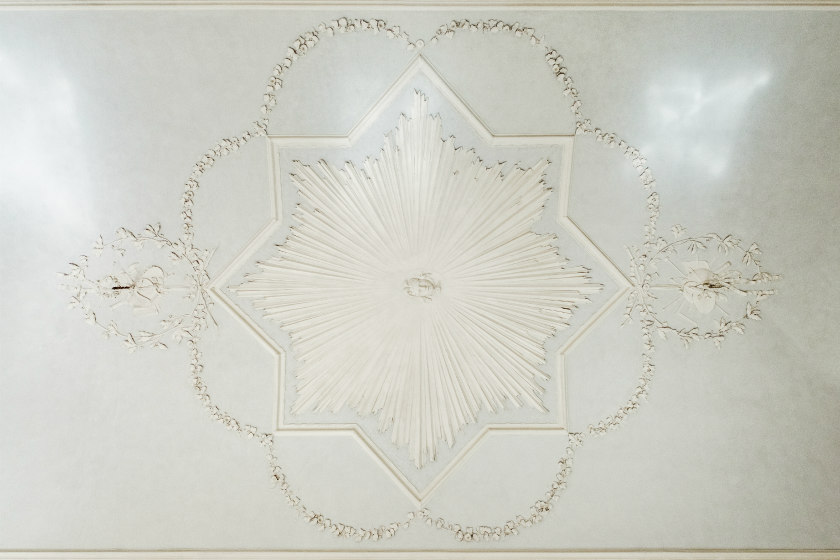
Palazzo Belgioioso interior, Milan. Photo: Adriano Mura
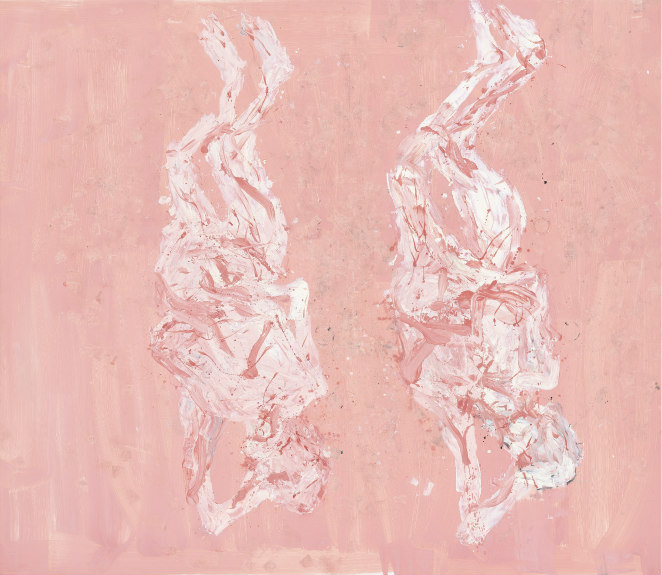
Rosa riposa, 2019. Oil on canvas. Image 304 x 350 cm. Frame 308 x 354 x 5,5 cm (GB 2364). © Georg Baselitz. Courtesy Thaddaeus Ropac gallery, London · Paris · Salzburg · Milan· Seoul. Photo: Jochen Littkemann
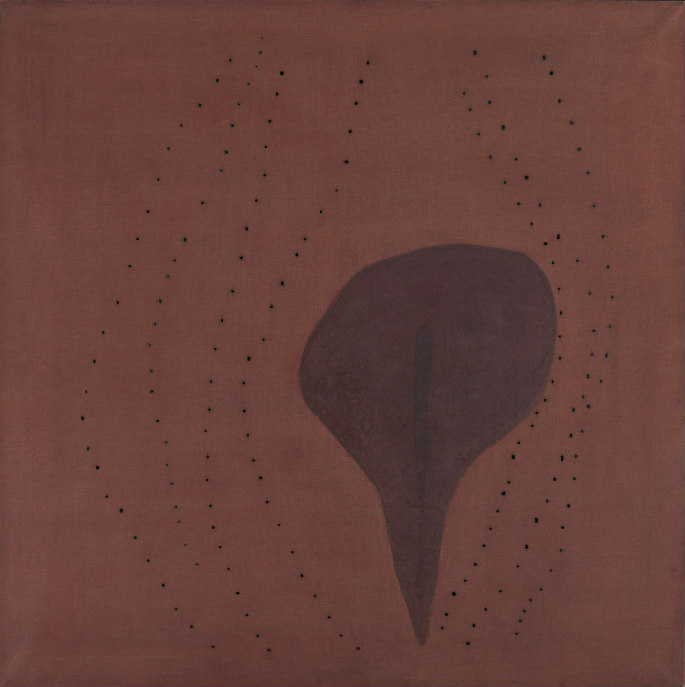
Concetto spaziale, Forma, 1957. Aniline and collage on canvas, holes. Image 150 x 150 cm. © Fondazione Lucio Fontana, Milano, by SIAE 2025
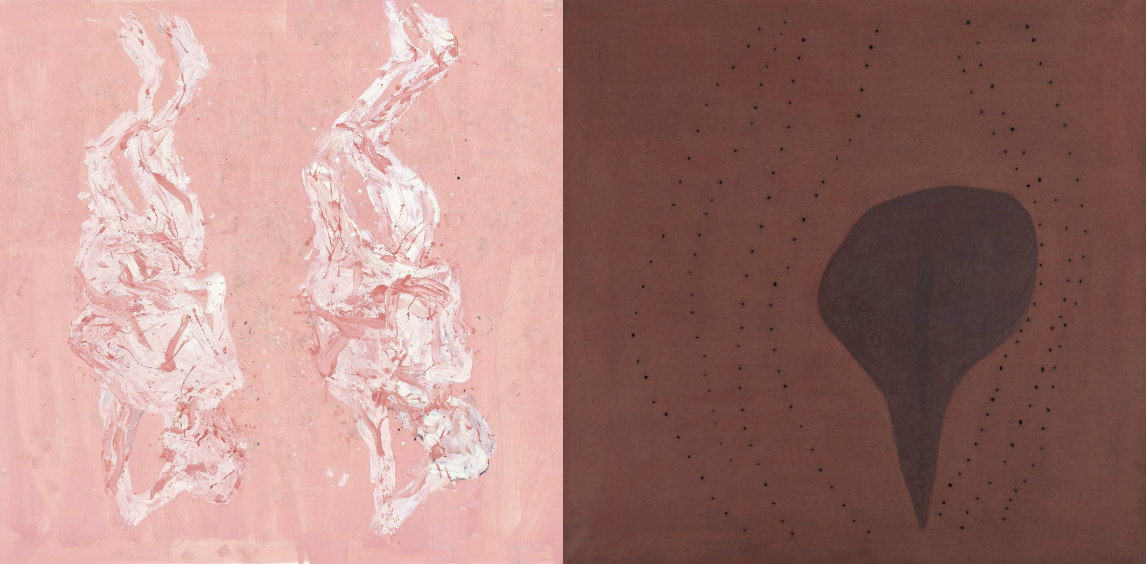
Georg Baselitz & Lucio Fontana
L’aurora viene
“I was able to help some incredible collectors to build their collections over the last decades.”
Thaddaeus Ropac, today you have a portfolio of many very famous artists, and there must be competitive jealousy between them. Are you a very diplomatic person to manage this?
This is what people say about me and it’s helpful to be diplomatic, to solve situations and problems. A gallerist is different than an art dealer who finds great artworks and buys and sells them. I’m doing this also, but our main business is the work of a gallery, representing artists, building with them, helping them to get recognition when they’re very young, organising exhibitions in your own galleries and then convincing museums and institutions to show them; and taking away problems from their shoulders. For all of this you need a talent, because they’re very different tasks you have to do, and every artist is very different in his or her approach. One artist is very shy and doesn’t want to have any public, another one is more open and easy to convince. Some artists don’t give any interviews and you still have to make the media happy by whatever you can give them, so every situation is different.
You are not just in it for the money?
Money plays an important role today, because the art world became such a marketplace and art became expensive. There’s a big responsibility towards the financial part of how the art world functions, and success is measured by a price of an artist. Artists are the ones who care least about money, but money represents their status, therefore it is important. An artist looks at another artist and remarks for how much the other artist is selling his work. This creates a world which is very competitive but more importantly it is defined by the significance of institutional exhibitions. So you have to be able to deliver all of this and help the fame of an artist to grow and to have their price fixed within the market on the same echelon as their contemporaries.
In your very successful career did you have some failures, unhappy artists who abandoned you?
Yes, of course. Often, when something shines very bright, you fail to notice the difficulties. You speak a lot about the successes and less about the failures which are there to be conquered, and help you learn. If everything was easy and turned into success, this would be the ideal world. We all deal with failure, be it in business or in one’s personal life – and we can choose to use it as an experience.
Do you put on a different programme in Seoul because you know exactly what is successful there versus what is successful in London?
No, not at all. We believe in our artists and their potential. We want to work with them wherever they want to be shown, not only in a place where it is very successful but also in a place where it is harder, where we feel we have to make it a success and it’s not the given. We tend to ignore the taste of collectors, we do what we think is right and we hope that the collectors follow. We do not just make programmes according to the taste of certain regions.
Is there a big competition between the galleries and the auction houses?
The art world has many different elements, and the auction world is a very important element because it can help to give artists fame and financial strength. Galleries are limited in their reach and also in the way success is made public. An auction house is very public and sometimes the price is decided by only two collectors who compete. We don’t do this. We set the price which we feel is right, and we hopefully grow this price over years, constantly, for all of our artists, and we stick to the price. An auction house is more spectacular because they can create sensations. We’re not interested necessarily in the sensations, because sensation is misleading. If two people decide they want something, it doesn’t make the importance of an artist, it’s two egos who want to go for something. We have to be the opposite side.
What is this opposite side?
We have to build a broad, serious base for our artists’ careers. Auctions give relevance on the financial sector. They give weight and confirmation to collectors that these artists have not only an artistic and institutional success, but also a financial success. The auction house is a useful tool for us, but often we are really opposing the way auction houses are working and the way auctions houses are pushing prices to an unrealistic speculation, which is not in our interest. We have to weigh against it, and we do. In a way, it is competition, but in a way, we depend on each other.
How do you manage to deal with the many different types of collectors?
The art world really exploded in the last two decades, so we have many new participants, and very different types of collectors. The very classical collector trained their eyes by going to exhibitions, learning about art and – if they have the financial means and possibilities – they start to collect and follow the artist and create their own taste. Some of these collectors became very famous because they were tastemakers who other collectors followed. Then you have collectors who don’t have the same passion or sometimes time to learn, because to really understand art you need time to travel, see exhibitions, speak to artists, go to studios and see as much art as possible. Some people who want to collect just don’t have the time because they run big businesses and are very occupied, so they follow an advisor.
Have you helped many collectors?
I was able to help some incredible collectors to build their collections over the last decades. Sometimes it’s an experience you do together. You help the collector to discover a certain artist if you feel it’s the taste of this collector, and then you make sure that he can follow the artist and see exhibitions. They need your guidance because of their lack of time. Sometimes they grow and get so passionate that at the end they put more time than they would have ever thought into this. Then you have collectors who follow advice and take an art advisor, follow a gallerist, sometimes follow an auction house, who tells them this is the thing to buy. And then you have a category which is the one which we like the least, I have to say. We try to avoid them and those are the speculators, who understand that the art market has ways to, with a certain clever mind, discover an artist before another one does, buy it and then sell it, so they buy art purely to resell it within a short period of time.
Is this also dangerous for the artists?
Yes, so this is the one category we like to avoid doing business with. Out of experience of four decades in the art world you almost smell the speculators. There’s nothing wrong, in legal terms. We’re dealing with a lot of money, so people have the right to say, my God, I’m spending a lot money so I want to absolutely be sure what I do with it. Over periods of time we have proven that it can be very profitable, when you just reduce it to profits, but we have a responsibility towards the artist to place their work in the best possible hands. You get something unique and you have to decide to whom you give it, so I want to give it to the best museum or to a serious collector who really understands it, values it, appreciates it.
Nowadays artists are paid a lot of money so has the whole art world changed?
No, the big European royal courts were competitive about artists like Rubens and van Dyck. When Charles I of England in 1620 visited his colleagues in the courts of Madrid or Vienna, he realised, they were collecting contemporary art, which did not happen as much in England at that time. He became incredibly competitive and did everything to lure van Dyck or Rubens to London. These artists were paid exactly the same amounts of money as the top artists today get. This is not an invention of the 20th century. The biggest, most important and most influential artists of their times were always very highly rated.
As young international people come into the art market does this change it?
People are afraid at the moment. The art market is going through a bit of a difficult time, but this has to do with the geopolitical problems we are facing now. There’s war in Ukraine, in Israel and Palestine, and there’s an unreliable American president, so art collecting is maybe not the first thing many people have on their mind. There is also a huge transfer of wealth in Europe, the biggest since the Second World War, and there are fears as to how a new generation will inherit and spend their wealth the way they think is right. They will have their own taste, and not continuously follow their parents’ generation.
Some in the art world fear that the next generation will not necessarily be interested in the artists they believe are the most important?
I’m not afraid of this. I think if young people come into the market with their changed desires they’re more than welcome, because they will give the art world its own personal grit and it will change. But they won’t change the canon of the most important artists, which is not written by the market buy by the institutions, the curators, the critics, sometimes the collectors and the gallerists. The decision of who are the most important artists is a very big and complex one, and it’s not for the market to decide it. The fears we are talking about today about the change of taste is purely a market level discussion, and that’s not where the canon is discussed.
Are you still as excited and enthusiastic as at the beginning?
Yes. I’m lucky to be successful for many years. I was afraid that at one point it might become a routine, and some of it is a routine and it’s good like this because otherwise you go crazy, but I’m really happy and feel privileged that I still get passionate when I come to a studio and see great art. It doesn’t matter if it’s an artist I work with for 30 years and we have done 10 exhibitions, or a young artist. We’re just showing a very young artist, the youngest in our programme. Her name is Eva-Helene Pade, she’s Danish, and we are preparing an exhibition in London, and I tell you, going to her studio gives me the same kick I remember 20, 30 or 40 years ago when I went to artist studios and discovered something new. It’s luck also to keep this passion and to be able to still get so excited and sometimes I’m surprised, but this is what drives me, not the business.
Do people sometimes say you only open another gallery to do more business?
Business is necessary, and when you have a big, expensive structure it becomes inevitable. Many people work in this company, there are salaries and rents to pay. So financially it has to work, but this is not the part that motivates me. What drives me is that as a gallery you are able to play a certain part in the making of art. I have had the privilege of being part of almost 50 years of art making, hopefully at some point it will be 60 years. Having this ‘influence’ interests me more than any financial aspect.
Are you sometimes disappointed by an artist and if so how do you react to that?
Every artist deserves honesty. Anything else is of no use, not to the artist, not for yourself. I have had difficult discussions, and I try to be respectful and tactful, but sometimes I have just felt that a work was not finished or not yet on the level of the artist. Often, we found a solution like postponing a show to give the artist more time. I learned to be very open about this, and I think artists value this highly.
Maybe not in that first moment, but later perhaps?
At the end of the day when the outcome is something everyone is satisfied with, this is what counts. Artists are much more receptive to criticism than you might think. Sometimes an artist is looking for something new and doesn’t yet know where it’s going. You have to create a situation of trust, then you can really build strong relationships over many years. Honesty and openness is the only way to move forward.
Is your ultimate art to create desire?
No, desire can be misleading. The ultimate way to look at art is in terms of its cultural relevance. Only when art is relevant on a wider scale does it have the potential to become part of the canon.
Thaddeus Ropac, thank you very much for this long and very interesting conversation.
Photo of Thaddaeus Ropac by Romain Duquesne
ENJOY THIS INTERVIEW? SHARE IT WITH A FRIEND,