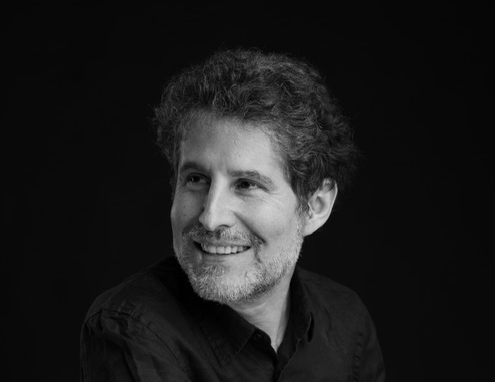
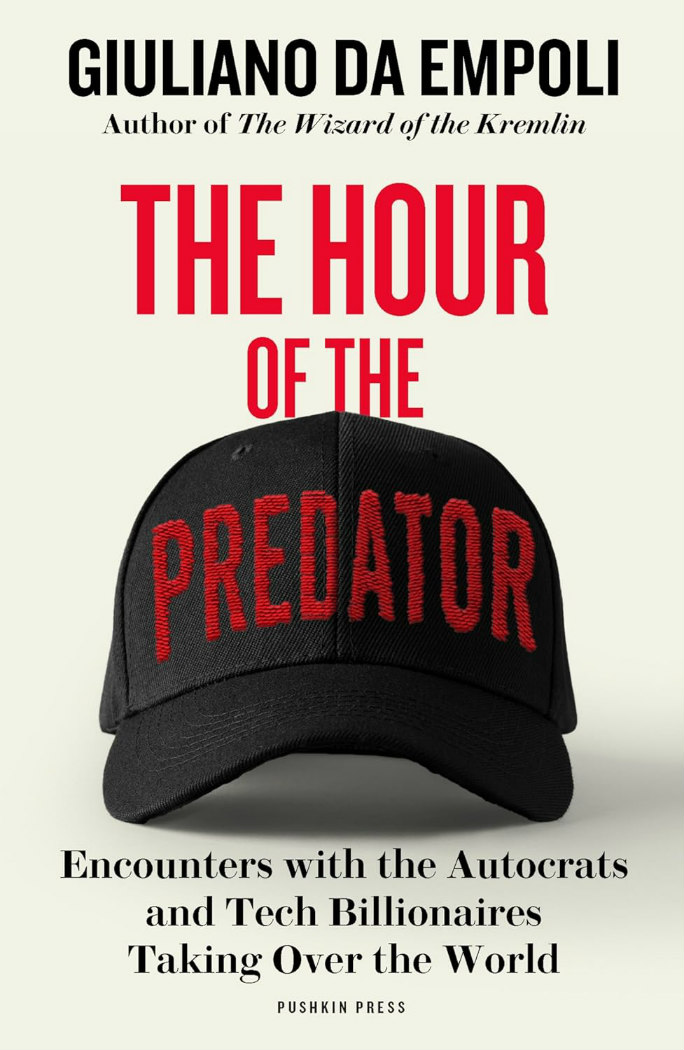
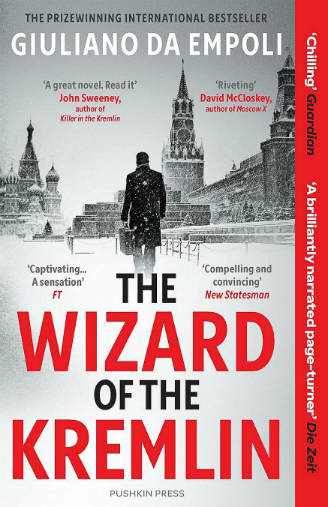
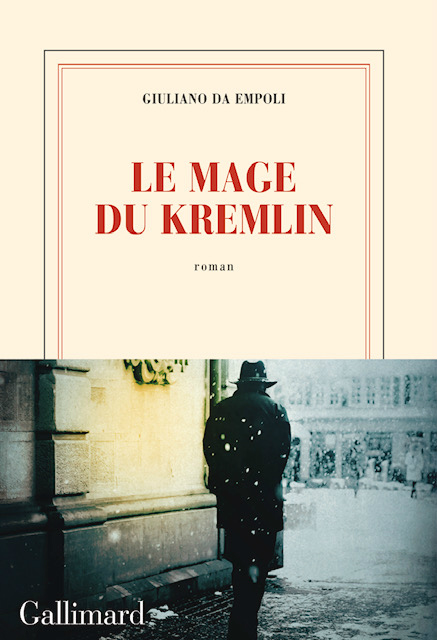
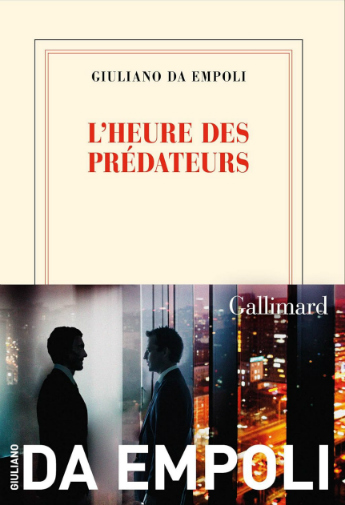
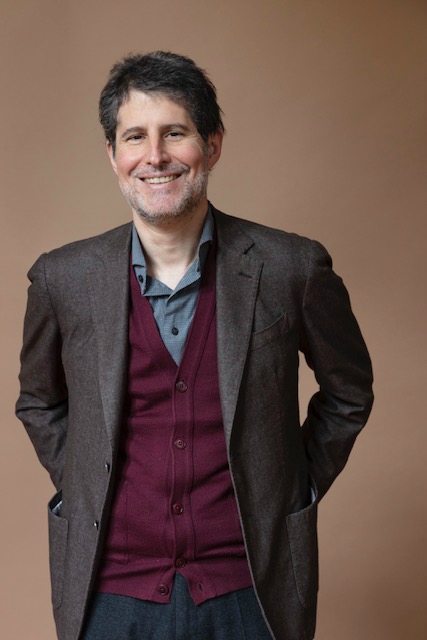
IMPERIAL PLAY. Giuliano da Empoli was born in 1973. He is an Italian and Swiss writer and political scientist living in France. He was a senior advisor to Italian Prime Minister Matteo Renzi. His debut novel The Wizard of the Kremlin became an international bestseller and was translated into 35 languages. A 2025 film version stars Jude Law as Vladimir Putin. His latest book The Hour of the Predator is currently France’s best-selling non-fiction title.
23 minutes read time.
You can listen to the podcast of this interview here.
Giuliano da Empoli, how do you define yourself: an intellectual, a writer, a possible politician, a spin doctor, or all of this?
I’m a walking existential crisis. My main feature is exactly not being any of those categories. I’m specialised in nothing. I teach at university, but I’m not a university professor. I advise politicians, but I’m not a politician. I write books, but I don’t consider myself a writer. My main feature is curiosity, crossing different worlds, maybe establishing some connections between them and having a relatively peculiar perspective
Is writing the fil rouge of your life?
Yes. The one thing I’ve done my whole life since childhood is writing in different capacities. A few of my books were just supporting an activity that I had. Writing was something that I was doing on the side, or that I did to do my job better. I am now a full-time writer.
“These characters could originate from a Machiavelli book or a Roman history book.”
Giuliano da Empoli, which language do you write in?
I’m half Italian, half Swiss – and half French! Italian used to be the language that I spoke and wrote best. Now I use it less. There’s no language that I don’t make mistakes in, even in Italian writing or speaking. I use French as my main writing language, but I still make some mistakes in French when I write or speak. When I write I don’t worry about the language in the first draft. I start a sentence in one language and finish it in another, usually Italian and French, but then some English too and, like my mother, I speak some German. A European mix.
Do you consider yourself European?
If I had to give just one national citizenship, I would say European.
Why did you write your novel The Wizard of the Kremlin in 2022?
For purely personal reasons. Back then, I was mostly a geopolitical consultant, working with think tanks, universities, and some governments, and I was a non-fiction author. I also owned Volta, a think tank in Milan, so the novel was purely a personal side l project. Aged 45, I felt like writing something different from what I had done previously. Geopolitics and current events might be topical when writing them, but soon enough probably won’t be anymore, and I wanted to do something more timeless. I wanted something of mine that my daughter – who was very young at the time – could read when she grew up, and that she would still be able to read 20 years later without being a geopolitical PhD student.
You have met and travelled with very powerful men and women politicians. Do they make good characters for a novelist?
Yes, it’s not by chance that power circles have always been the object of novels and other media. It’s an environment where you have a particular kind of ambitious, power-hungry character, violent even if not physically violent. They live in a very high-stakes, high-pressure environment, and power magnifies their human qualities and flaws, so they’re amazing material for novels.
You had Putin in your first novel and in your new nonfiction book The Hour of the Predator there is also Donald Trump. Is he a candidate to be a character of yours?
The problem with Donald Trump is that he’s so unbelievable that it would be difficult to put him in a fiction novel, because fiction needs to be believable. Reality doesn’t have that problem. Reality can be as absurd and as unbelievable as you want. Now he’s part of our lives, so we’re somehow forced to believe it, but practically every day he does something that most of us go: This is just impossible. If you attempted that in a novel it wouldn’t work, because it would be considered too absurd. Maybe this is also why I have put him in a non-fiction book The Hour of the Predator, that I tried to write somewhat like fiction, with character and detail. But it is non-fiction.
The Hour of the Predator is made up of short stories featuring prominent characters such as The Secretary General of the UN, Putin, Milei the President of Argentina, Trump, Trudeau, even the former Italian President Francesco Cossiga?
Yes. There’s many books about current events and these same characters and essays that explain this and that and some are good, some less good, but the idea here was to try something else. It was to use the tools of fiction such as character description, atmosphere-building, detail, and a first-person narrative, to create those snapshots or short stories.
Why do you even describe in detail the rooms and the corridors of power?
The idea is to immerse the reader, like fiction does, whereby you’re transported into the scene. My perspective is a peculiar one because I’m not a journalist or academic. I am a witness. I’m not outside the room, I’m somehow inside, but I’m not an actor either. I like peeking and looking. It’s a position that many have had, but it’s also not so common, so I tried to exploit it and write from that perspective.
“The predator’s political miracle is bypassing rules and laws, transgressing and wiping out the system as we know it to impact the problem that nobody could solve.”
Giuliano da Empoli, in one vignette you compare the future king of Saudi Arabia MBS, Mohammed bin Salman, with Cesare Borgia who Machiavelli admired for his ruthlessness and cunning?
When we were about to meet MBS, the person accompanying me knew him very well, saying: The Crown Prince is an extraordinarily sweet man. That struck me. I was with the French President Macron, and MBS is this very big man. Macron and I are not so big, and with his warriors surrounding him MBS was towering in a very smiley, almost childishly sweet way. And the bear hug! He does have the size of a small bear. But then there’s this incredible scene that I tried to describe in the book, which also occurred in The Ritz Carlton in Riyadh, where we met him. It is Riyadh’s most luxurious hotel, where many business and official meetings occur. That’s where, a few months after he was designated Crown Prince of Saudi Arabia and when he was still apparently in a not-so-solid position, he invited 350 of the main authorities of the country to the royal palace with different pretexts. When they arrived they were actually taken to the Ritz Carlton, their phones were confiscated, and they were each left alone in their room. The next morning, a person from the hotel gave each one of them twelve pairs of white socks and underwear, and twelve white t-shirts and they were told that they were guests of the Crown Prince for an indefinite time. Each was interrogated and had to negotiate, either relinquishing their position, making allegiance to the Crown Prince, or giving back billions of dollars, all sorts of things. This struck me as such a Machiavellian scene. That’s why the parallel with Cesare Borgia, the model for Machiavelli’s prince, was really easy. It’s what Borgia did one New Year when he invited his allies to Senigallia to celebrate taking the city. He imprisoned and he actually killed everyone – and Machiavelli was a witness.
Why do you describe the character of the leaders of today as predatory?
The parallel with Machiavelli’s time is not just a literary pretext. In early 16th century Italy, the small, very civilised republics and states of the Renaissance were wiped out by a French invasion, but especially by a technological revolution, which was the invention of heavy artillery. Before, the towns had walls around them, so defence had an advantage, but with heavy artillery the aggressor can destroy walls and take the town. When aggressive technology progresses there’s a premium to aggression, and Machiavelli writes about illegitimate princes and chaos and exploiting that. Today, we’re again in a similar situation. In the military we see that in part, with cost-effective drones that can cause huge damage, or cyber-attacks, but it’s the case in our society beyond the military. It’s in our political system, in the way we live. Since we’ve moved to digital a very aggressive campaign on the internet costs nothing but has a very big impact, and protection against it is almost impossible. Characters like Trump and MBS, and other examples in the book, are very aggressive ones that move fast and break things and there’s a price to their fast, swift, even rash action. These characters could originate from a Machiavelli book or a Roman history book.
Sometimes all the previous rules we had now seem almost irrelevant?
Yes, again, our life and public conversations are moving into a digital sphere that has different rules. The digital sphere is imposing its unregulated logic onto the physical world and democracies. But it’s not just that. Many people feel that we’re stuck. That nothing happens. That you can vote right or left but the problems remain or grow worse. Facing this situation, you have a guy – because it’s always a guy, until now there is no example of a female predator – who shows up and basically promises a miracle. A miracle in theology is God bypassing human laws to produce a specific impact on reality. The predator’s political miracle is bypassing rules and laws, transgressing and wiping out the system as we know it to impact the problem that nobody could solve. This is a very powerful promise in a world where people feel that power doesn’t exist.
Is the recently elected Democratic mayor of New York, Zohran Mamdani, also a predator?
I don’t know if he fits the description exactly, but he’s certainly part of the same dynamic of having an overheated environment in which the most extreme solutions, leaders, and arguments, prevail. It’s mostly outsiders who promise to break the rules. Mamdani is maybe not conflicted with justice and the law, as Trump can be, but he participates in this kind of spiral, whereas the excluded people are those actually considering that problems are a bit more difficult and not black or white.
You became involved in the political world at age 22. It looks like the importance of parties has reduced since then and people vote for a person more than a party?
Some people say that politics has become show business for ugly people. If you can’t be an actor or a rock star you can be in politics and get the same kind of attention without needing to be good-looking. The entertainment element aside, most people are dissatisfied with the system, and so all the political values are reversed. Competently dealing with politics itself, having experience, being in a party or being part of a structure, used to be what you needed to do to have a political career. These are now all negatives. If you look at political debates in Argentina, recently in France, the Biden Trump debates, and certainly the 2016 Clinton Trump debates, the one with all the answers who looks competent is losing to someone who promises to disrupt and explode the whole system. Because if you’re dissatisfied with the system, you must change it.
In what kind of world do we live today?
I think there are two types of predators. There’s these ancient power figures like Trump and Putin and so on, who look shocking to us but throughout history you’ve had such figures. They’re very ancient in some ways, but they now havean explicit alliance with the tech predators, who are very new and are building the new reality. This is a shifting story that I try to tell in the book, because those tech guys were once just young people with hoodies, who looked very different from traditional business people. They would show up and pretty shyly meet politicians who didn’t really understand that theirs was not just a business model, that it was broadly about changing society, governance, and almost reality. The power balance has shifted over the last thirty years. There was a long time when the tech people thought they were going to be regulated and taxed. Then they realised this was not going to happen, and today if you look at Trump with all the tech people that surround him – not just Elon Musk – Trump still appears a power animal and commander-in-chief of the army, but the tech people are very close to being in charge. If tomorrow, for example, JD Vance, the Vice President, replaces Trump somehow, then the balance will have shifted. Because JD Vance is already probably an employee of the tech people. It’s already been happening. There’s basically a new power.
The Silicon Valley people were all Democrats and suddenly now they are all with Trump, saying how good he is?
Yes, this goes beyond the opportunistic behaviour which is natural in economic elites. For example, everyone says Musk is nuts, because he supports Bolsonaro, Milei, and the far right in Germany and in the UK. But he’s not nuts. I mean, maybe he is, but that’s not the point. He is explicitly doing something that all the others are doing implicitly, which is to be much more at ease with outsider extremist political characters than they are with the old political bureaucrats and technocrats. It’s very logical. They all want to move fast and break things. The old and new are converging and squeezing everything that’s in between, which is basically liberal democracy as we know it.
“I’m a very strong pro-European and I want a European Federation. I want Europe to be politically united.”
Giuliano da Empoli, while India and Russia are both important, political analysts and economists say that today China and the US are the two Empires and one is on the defensive and the other is expanding?
As a European, I’m a bit scared of that. During the Cold War, paradoxically you had two different conceptions of a human being: the capitalist, free entrepreneur who was the individual Westerner, and then the new socialist man that served collective wellbeing. In the new Cold War, the idea of the human being that the Chinese Communist Party and Google have is practically identical. They both think that the individual is problematic because you can’t really predict and control it, but if you have human behaviour constantly producing granular enough data, with complete surveillance you can control collective behaviour. The Chinese Communist Party does so for political rule. Until now, big tech has done so mostly for commercial reasons, to sell stuff and ads. It’s a very centralised model of power, where technology is not in the service of the human being. It’s a technology of control. A different, European idea is missing, but up to now we haven’t been capable of producing a world where technology is really empowering and not something simply used to control you, either for political reasons or to sell you stuff, but is something that is actually compatible with liberal democracy and a certain quality of life. Paradoxically, the US and the Chinese models are converging, because they’re competitive. US technology used to be commercial, and now it’s becoming a matter of national security, so all the Silicon Valley tech companies, developers of AI and new enterprises partake in the geopolitical struggle for supremacy. We, as Europeans, are not, and can’t be, neutral.
Trump wants to win the Nobel Peace Prize and the US has a Department of War, while in Europe we have the Euro but no European army?
The Department of War more explicitly proposes an imperial model, as there’s a project in the US which is to basically move from the Roman model of Republic to Empire. There is this now very explicit imperial play, and symbols are important. The size of the White House’s ballroom is visualising the idea of a regime change in the US, a regime that will not be liberal democracy anymore, and the tech push is contributing to that. Then you have the Europeans, who feel powerless. We are obviously, from a military perspective, defenceless, even technologically quite powerless. We are in a position of submission, made explicit now because again like in ancient Rome you have an emperor and we are a province. While you have a nice smiley emperor, even if you’re a province you believe you’re doing well. Then you have an emperor that’s more like Nero or Caligula, and you understand a bit more who has power and who doesn’t. But we shouldn’t believe that our model is the past and that this is the future, because it actually isn’t. Peter Sloterdijk the German philosopher says that Europe is a federation of failed empires. It is true that 80 years ago the empires catastrophically failed, and ever since we’ve been trying to invent ways of being together. These are still evolving and look very weak beside these new empires. This invention is rule-based, so of course it’s slower. The charm of Trump and all the others is how fast they are. Every day Trump produces velocity, a fast decision, and it doesn’t really matter if it happens. If the next days he produces a fast decision in the opposite direction, it doesn’t matter because the hypnotic effect of this velocity is so strong. The lesson for us should be not to give up on our model, but to be much more ambitious in what we want for it and much more radical in pushing for what we want. If there’s one advantage of Trump and all the others, it is that they show that the impossible is possible. That’s a great thing. I’m a very strong pro-European and I want a European Federation. I want Europe to be politically united. I never dared say it until now because every time you said you want a European political union, you knew that many people would oppose it, but at this point the backlash is there anyway. So, I think pro-Europeans should work for it. Mario Draghi, the former Italian Prime Minister who’s also a very staunch pro-European, for the first time in Spain a couple of weeks ago said we need a Federal Europe, pragmatic, done the right way, just a few countries starting on a few things. In my memory, it’s the first time that he started using words like that.
Is it OK that Germany is going to have the strongest army in Europe again and plans to have 100,000 conscripts by 2029?
That is frankly historically worrisome. If we have a new, solely German army, we’re going to a very bad place. Exactly like it was at the time of the Euro and reunification, the price for allowing Germany an army again should be that it’s a European army.
With the strongest army, will Germany also command the European army?
We’re not there yet. The current situation is that the German army is pretty disastrous. Although now they’re the only ones who have huge resources to invest they’re very far from having any possibly performing army and they don’t have the nuclear weapon, while France and the UK do. It should be a bargain, a negotiation, and in exchange for big defence investments, we should – like with the Euro – have a common army, not a German army. Which is possible. Why would it not be?
Margaret Thatcher and Angela Merke were very strongwomen. Is there a strong European personality that could represent Europe?
No, since Ursula von der Leyen is not greatly representing Europe. If in her place we had someone like Mario Draghi things would progress at a different pace at the European level. Of course, he’s not the leader of the future because Mario Draghi has done his parkour, but it’s a process, and anyway you would need someone like Draghi who’s not going to be king of Europe, because nobody would accept this.
27 countries as states are not so easy to manage. In America they are federated but don’t have the history that Europe has?
You can’t do it with 27. But you can do it with coalitions of the willing, exactly like they did for Ukraine, starting when there were just four of them focusing on something important and trying to do it. Ukraine is difficult, but progressively other European countries go in the same direction and there’s a process. It’s still not enough, but it’s progress from before. So you create another coalition of the willing, and this one’s subject is digital.
Can you tell me what is your next book?
I can’t tell you so much, because I’m still writing it. It is a novel, but it is still relatively close to reality. It’s not a Russian novel, and has no Russian characters, so it’s not a sequel to my first novel. The idea is again to blur the boundary between reality and fiction, maybe more than in the last one. This time, I would like readers to be unable to see this boundary exactly.
Do you spend a lot of time studying in order to write?
I aim for precision, even when writing fiction. When writing non-fiction, of course one should be accurate, but even when I write fiction, the political context, or even physical, in the description of Putin’s office with Japanese samurai armour in front of the door, that was real. It’s not something that I invented.
Have you now stopped your political life?
Yes. I don’t have a professional life. If I’m invited somewhere, I go if I find it interesting, and then in conversation I might give my advice. But I’m never paid for that because if you want to write about all this and be free to say whatever you want it’s better not to be a consultant to anyone.
We will see if you will become the President of the European Federation in your old age! What kind of radical ideas can bring about a form of government for you to preside over which is altogether more balanced and more human?
The political system needs to evolve. Being half Swiss, I see the Swiss political system took centuries to evolve, but it’s the best I know in terms of combining grassroots rule with a big decision referendum system, giving the people the feeling they have a say whilst distributing power. To me, it’s much more promising and functional than the political systems we have. So if we build a new European political system, it should resemble Switzerland’s. Actually, it’s significant that Switzerland is not part of the European Union because it means it’s an unsatisfactory system for them.
Thank you Giuliano da Empoli. That’s very interesting and we eagerly anticipate your next book.
ENJOY THIS INTERVIEW. SHARE IT WITH A FRIEND.