

REALISING WONDERFUL IDEAS. Colin Bailey is a British art historian and Director of the Morgan Library & Museum in New York City. He is a scholar of eighteenth and nineteenth century French art, with a specific interest in the artist Pierre-Auguste Renoir. For the first time ever in America, Caravaggio’s Boy with a Basket of Fruit is on show at the Morgan.
23 minutes read time
You can listen to the podcast of this interview here
Colin Bailey, how many years have you been Director of the Morgan?
I’m in my eleventh year now, so ten years and a few months.
Did your interest in Renoir come from being Curator for European Painting and Sculpture in the Philadelphia Museum of Art from 1985-1989?
Yes, I started my career with French 18th century artists and the great collectors in the 18th century, and then I got my first job in Philadelphia. I was asked by my boss to write on Walter Annenberg’s Impressionist Pictures, and that was the first encounter with Renoir, and particularly Renoir’s portraits, but Renoir in all forms. That’s now forty years ago, and since then I’ve kept an interest in both the 18th century French artists and Renoir and Impressionism, Watteau, Fragonard, Chardin, Boucher, Greuze and David. With Renoir it’s been a long and very fortunate connection.
“Renoir Drawings is a survey of Renoir working on paper, drawings, pastels; and then how some of those drawings relate to paintings and even sculpture.”
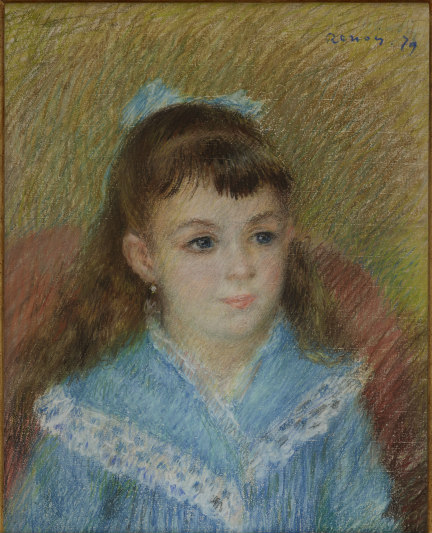
Pierre-Auguste Renoir: Portrait of a Girl – Elisabeth Maître (1879)
Colin Bailey, at this very moment you have an extraordinarily interesting exhibition titled Renoir Drawings here at the Morgan which you curated?
It’s a survey of Renoir working on paper, drawings, pastels; and then how some of those drawings relate to paintings and even sculpture. The exhibition will go to the Musée d’Orsay in March, and it’s a beautiful show if I say so myself. It was six or seven years in preparation, but we were extraordinarily lucky in getting wonderful loans. Renoir is a very prolific artist and he starts drawing very early on in his career and then he picks it up again when he’s questioning how Impressionism is really playing out for him. Then he never stops drawing. It’s been a long time since a show was devoted to these works on paper because they are fragile, so they’re not on public view all the time, but they can be safely shown.
Where do they come from?
The Morgan has five, the Met has seven or eight, but the biggest lender is the incredibly generous Musée d’Orsay. Museums like the Philadelphia Museum, the National Gallery of Canada, and the Art Institute of Chicago have been very generous as well. We’ve also found a lot of private collectors. This is what these large exhibitions require, and that’s why in some ways we were lucky to have such a long birthing of it of six or seven years.
The Morgan is both library and museum and you just opened another incredible exhibition that comes from the Galleria Borghese in Rome?
Yes, this is another collaboration through FIAC (Foundation for Italian Art and Culture). We’re so delighted that we were able to do this. We had always wanted to have an opportunity to bring the great Caravaggio Boy With A Basket Of Fruit to the Morgan. Caravaggio was only 39 when he died, a young man, and in his career he didn’t draw. He was just painting and working through directly on the canvas. However, he is such an important figure and while Mr. Morgan did collect Italian Renaissance and 17th century paintings, never a Caravaggio, so there is just a remarkable appetite, and particularly to see this great early masterpiece of this young overripe boy, carrying a basket of fruit and looking directly at us. Our head of curatorial, John Marciari, was also able to put together some fabulous loans not by Caravaggio to show the traditions from which Caravaggio emerges and his impact on artists following in his wake. This is an exquisite exhibition.
He also has included a portrait of the man who owned the painting, or perhaps we should say who stole the painting?
We have a wonderful drawing of Scipione Borghese, an early robber baron art collector. He was so passionate that he just took Cavaliere d ‘Arpino’s collection from him and put it in his own collection. He just stole Raphael’s Deposition, which was in a monastery in Perugia and is now one of the great paintings of the Galleria Borghese. Over the years, he built an amazing collection, and then Prince Camillo Borghese, in the late 18th century, began commissioning works by Canova as well. So you have Bernini and Canova, and you have these amazing paintings, and one of the most beloved Caravaggio’s is Boy with a Basket of Fruit. It’s really thrilling to have this in New York.
And you show it among other related artists?
Poussin claimed that Caravaggio destroyed painting because his type of painting was so radical, his naturalism and his vibrancy was so initially shocking, and then of course it is continued by other artists so we wanted to show his roots in Milan and in Lombard painting. We wanted to show an artist like Arcimboldo, who is fascinating and fabulous, but not anything like as well-known, who Caravaggio would have looked to. Then we have some examples of how someone like Annibale Carracci, who’s a very ambitious artist, is also painting the same type of picture, not in the same way but to give you a sense of context and to focus you on a few really excellent examples to understand where Caravaggio came from.
Does this painting of the boy give you the sense of the exceptionality and the originality of Caravaggio, who is himself so young when he painted this masterpiece?
He’s probably just arrived in Milan in 1595, so he is 24 years old and he doesn’t attach himself to an aristocratic or a papal family. He’s working as an individual contractor, but he has to work in workshops and he is painting heads and fruits for Cavaliere d ‘Arpino, for Antiveduto Grammatica and other artists. He is basically at this point positioning himself, and by 1600 – so not very long after this, within five or six years – he’s recognised as the most excellent painter in Rome. You can look at this wonderful basket and there are leaves that are turning green, perhaps insects somewhere around. It’s ripe, as is the young man who’s carrying them. He’s quite ripe as well. You have a feeling of sensuousness and tactility. It still has a very strong impact.
“We also are a teaching institution, so we want to put a light on Caravaggio in a slightly different way.”
Colin Bailey, in your remarkable Morgan Library a few days after that you will open another exhibition, this one of “Pietà” (or “Dead Christ Supported by Angels”) by Giovanni Bellini, currently on loan from the Museo della Citta in Rimini, Italy.
It’s an extraordinary painting which we can show here using the model that FIAC (Foundation for Italian Art & Culture) established of opportunities where single great works might come to an American institution. This programme started with La Fornarina from Raphael, a fantastic beginning about 20 years ago. Venetian Heritage had restored the Bellini picture, a painting that was initially on panel and then was transferred in the 1950s from the panel that was really warping onto canvas. It’s a very beautiful project but it was very, very delicate and it has been in Rimini ever since. It was cleaned, and the cleaning has really transformed the picture and gave the opportunity of where else it could be seen before it goes back to Rimini. The opportunity of bringing it to the Morgan and putting it in Mr. Morgan’s Library was fantastic.
This restoration was made by Venetian Heritage?
Yes, Venetian Heritage, a charity, is a great supporter, particularly of restoration and of building projects, and gave us the opportunity to have something that has been restored and been out of the museum for a while. Rimini was very generous in saying, yes, we can extend it and it can come across the Atlantic. So a great Bellini, and it’s being joined by a Perugino from Perugia in the middle of February. So we will have Caravaggio, The Boy with a Basket of Fruit, which is the central loan project, and then in the Morgan’s West Gallery we will have two masterpieces by Bellini and Perugino on loan from Italian Museums, so we’ll have three Italian cities representing themselves.
Do you prefer to do exhibitions with just a very few paintings so you can concentrate on them or to show many paintings?
We love to do both types of things and both have real value, particularly the bringing over of an icon like Caravaggio’s Boy with a Basket of Fruit. Most people will only see it when they go to Borghese. To have that in New York for three months is really a fantastic opportunity. But then we also are a teaching institution, so we want to put a light on Caravaggio in a slightly different way, to show how he emerges.
Are you going to host lectures?
We’ve got a fantastic trio of lectures: John Marciari, who’s the exhibition curator, Keith Christensen, who is a renowned specialist of Caravaggio and part of FIAC, and then Francesca Cappelletti, who is the director of the Borghese, is coming to lecture as well. These are all on Fridays. We’re very hopeful that people will come to hear these free lectures by three very great specialists.
How can you manage a library and a museum together?
The library side is a collection of rarities, also of archives, of literary manuscripts as well, of mediaeval illuminated manuscripts, of photography, of music manuscripts. When we say library, we mean special collections in a library, and those are offered to readers, researchers and specialists. We have a print reading room for access to these, that’s how our library function works, but at the same time we want to show these works in exhibitions and installations, to make them alive for the public.
How would you describe the relatively small institution of the Morgan Library?
Living in any large city, in Rome or London or Paris, its cultural institutions can thrive in different scales and with different specialties as long as there is confidence and support and ambition. Morgan was the greatest collector of his age. Most of his art went either to the Met or to the Athenaeum, or even to the Frick because they bought things after he died. The Morgan was primarily a library collection and then it began to grow. It was always interested in Old Master drawings, but then in the 1980s and ‘90s it began to collect 19th and even early 20th century drawings. In 2004, we created a Department of Modern and Contemporary Drawings. In 2012, a Department of Photography. These are both growing, and we have this fantastic music collection. We can do a show on Mozart, we can do a show on block books, or we can do a show on Enheduanna and the Seals of Ancient Mesopotamia, and they are all generated in-house.
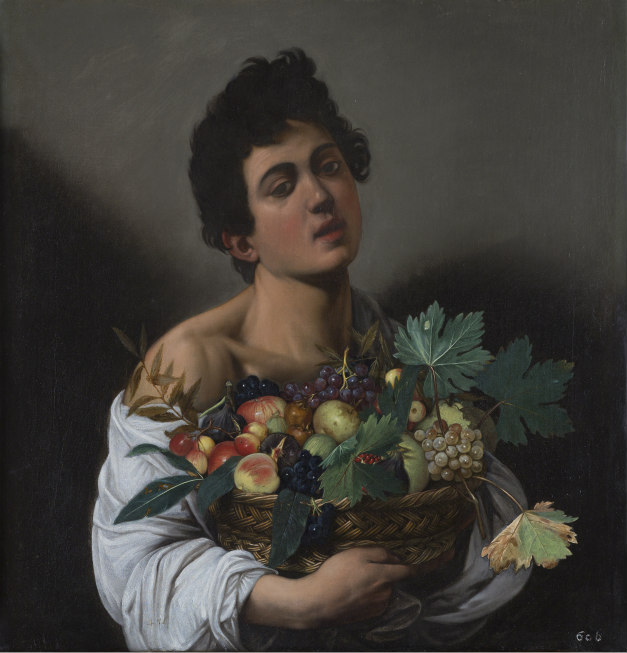
Michelangelo Caravaggio: Boy with a Basket of Fruit (1593)
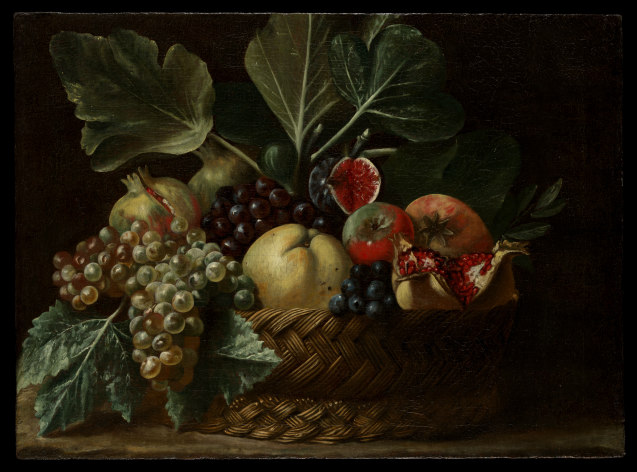
Bartolomeo Cavarozzi: Basket of Fruit (1620)
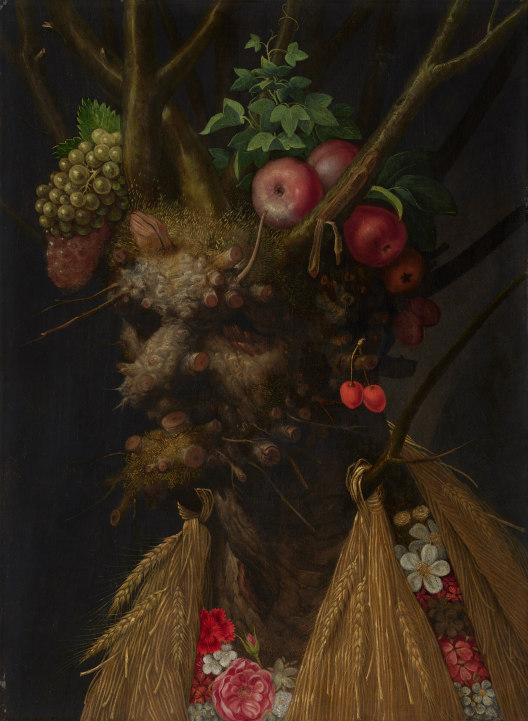
Giuseppe Arcimboldo: Four Seasons in One Head (1590)
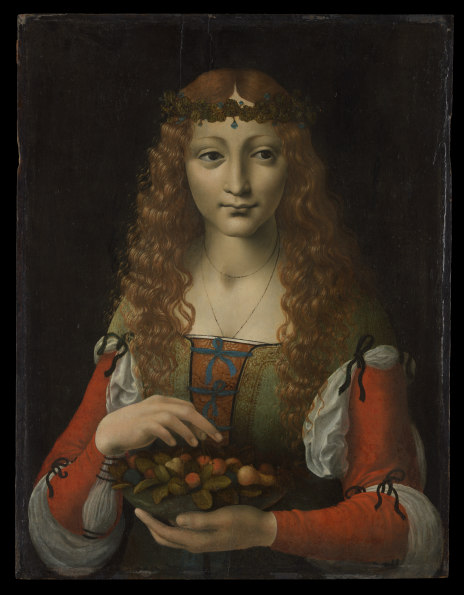
Marco d’Oggiono: Girl with Cherries (ca. 1491-95)
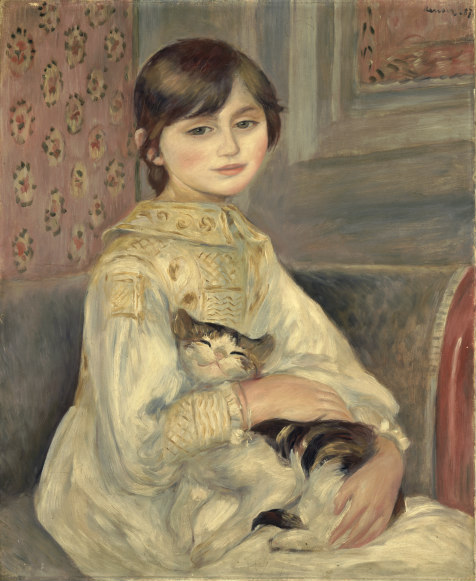
Pierre-Auguste Renoir: Child with a Cat or Julie Manet (1887)
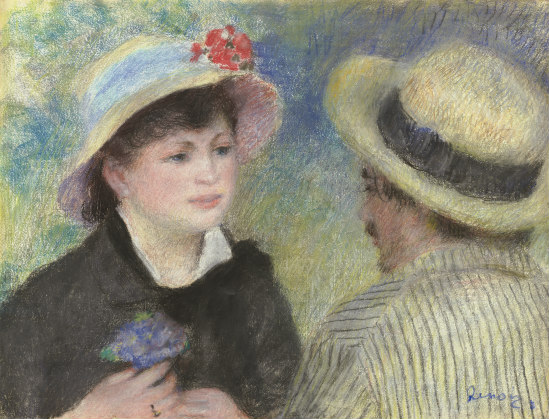
Pierre-Auguste Renoir: Boating Couple (1880–81)
“My first job is just to keep telling everyone how interesting and lively and rewarding the Morgan is and making sure that it is.”
Colin Bailey, how many people work with you?
The Morgan has a staff of around 125 full-time positions and maybe another 75.
You are the director, but then you also have curators?
I’m the director and we have eight curatorial departments and each of them have at least one or two curators. Then we have a fantastic conservation department that works on works on paper of all sorts, and then we have an education department. We have a large development department. We are a mini-Met, and we find things that we can introduce to New York audiences where there’s an appetite for that.
You’re incredibly respected by and involved with these other New York institutions.
It’s very gratifying for you to say that.
What icons do you have here?
Among our icons are three Gutenberg Bibles, which is a very rare thing to have. We have some of the most beautiful early mediaeval reliquaries, the Stavelot Triptych or the Lindau Gospel. We have fantastic drawings by Dürer, by Parmigianino, by Watteau, by Renoir, by Degas, by Van Gogh. We have 20 letters that Van Gogh sent to his friend Émile Bernard, where he drew all the things he was talking about. And we have a fantastic collection of Rembrandt, of Guercino, of Carracci.
During your nearly 11 years here, did you buy some things?
I did. The curators are very acquisitive, so we are very active. I’m very proud that Georg Baselitz, the great German artist, chose the Morgan along with the Albertina in Vienna to give 50 drawings to both institutions, and we did that during COVID. Artists like George Condo have decided that the Morgan should have their work. We were given this fantastic large Renoir drawing of The Great Bathers and we were able to acquire beautiful drawings by Boucher. We’ve had wonderful gifts for our centennial, including a most beautiful drawing by Balthus. I could go on.
Do people also make donations?
Yes, we are a very good home for certain types of art works. So for instance, a very generous couple, Elizabeth and Jean-Marie Eveillard, who are very involved at the Frick, decided that they would like to leave some drawings to The Morgan and some drawings to The Frick when they die. These are called promised gifts, and what this means is that the works can be enjoyed at home and sometimes we will borrow them but they are going to be ours at a certain point, and the donors know that they will be well looked after. They’ll be cared for. They will be conserved. They’ll be studied and they’ll be used.
You were born in England, why did you decide to spend your life on the other side of the Atlantic?
It didn’t feel like a decision. I came to America for the first time when I was 25 for three months and I loved it, but I had no plans. I was living and working and studying in Paris, and I felt that was my city but at that time there wasn’t going to be a position for me, either teaching or in a curatorial position. I had an opportunity to spend one year at the old Getty Museum in Malibu, which is now the Villa Getty, and that experience of working in a museum and the different types of opportunities for research, scholarship, but also communicating to different audiences, was unlike anything I’d ever experienced and led to a desire to work in the museum world. I would have loved to come straight away to New York, but there wasn’t a position in New York. And so I was lucky enough to be able to go to Philadelphia, a very important museum, and The Kimbell in Texas. They are wonderful places.
As you are still a little bit a European or an English man do you think American people are very interested in art and are very proud of their collections?
The Met was founded in the 1870s, so it’s not going back to Scipione Borghese who has a collection in 1600. These are relatively young institutions and everywhere there’s such a commitment to the power of museums and the pleasure, the enlightenment but also the joy of being in front of great art of all periods, and many, many large centres have built fabulous places. I feel that pride is something that is continuing.
There is also this idea that people give back?
Great people like Frick and Morgan and Huntington and Isabella Stewart Gardner from the beginning of the twentieth century. They had been very committed to making fortunes, unscrupulously and ruthlessly as well, but they derived enormous satisfaction from different types of art and that nourished them, and they were giving back. They were using the opportunity then to create, either add to large museums in Boston or Chicago or the Met, or create their own museums. We see that even in California with the Getty and the Norton Simon. It’s a long tradition in America, where, apart from the National Gallery in Washington, they’re all private institutions, and, more and more, even the National Gallery in Washington relies on private philanthropy as well, to do certain things. We are very fortunate. Museums have their endowments that are managed by their board and that spin enough money to make an institution viable, but that is very important. We are not reliant on city, state or federal funding.
You’re very independent?
We are. Of course, we have to follow moral, ethical, financial rules, but we are independent and I think that independence has to be valued and cherished and managed carefully. Because you want to be aware of what you’re doing and that you’re doing it appropriately.
Donors seem to become very attached to their museum. Is it a big commitment?
There is a commitment and you’ve seen this in Italy and France as well, where there are people who are either collectors or they are people who have an interest, particularly in an institution. The museum has ways of making them feel engaged and opening the doors to them so that they can see things and can become involved in programming. It’s a really vibrant cultural world, and the economy is relatively strong and that means people have confidence and they are prepared to support the projects that they admire and are proud of their museums.
What is your job?
My first job is just to keep telling everyone how interesting and lively and rewarding the Morgan is and making sure that it is. That its projects are well funded, and that its curators are the best we can find.
Is there a lot of competition?
One of the pleasures of New York is, you can be a supporter of the Met and the Morgan and MoMA. You don’t have to just choose one. But we are aware that some people are interested particularly in the books and the literary side of the house, and the music side of this house is one way we can encourage that perhaps is not available to other institutions. And then our drawings department is so renowned and that was largely because of a man called Eugene Thaw, who was a great dealer and a great collector, and so we have a tradition. We’re known for this. We’re also known, I think more and more, for being a welcoming and enjoyable place to come. We have free Friday evenings which are always full, we have one Sunday a month free for students, and we have a lot of programming. I’m very proud of the fact that any show we do is well discussed. You get good information on the walls and in a book, and you have opportunities to really see something in a beautiful setting.
Something else unique at the Morgan is the covered atrium where people can meet and eat?
Alain, you have had lunch with me at the Morgan many times, and we sit in the Gilbert Court, which is Renzo Piano’s huge atrium in the middle of the building, in a house that is scared of light – because none of the works can live in natural light, the idea of having a huge welcoming space that feels like you’re outdoors was a stroke of genius on part of the board and of Renzo. It’s not open air of course, it is under an atrium, it is glazed, but you see the world around, you see light and you see people coming through.
It is not usually like that in New York.
No, it’s true. It is somewhat unusual to be in the very heart of a building and to be able to sit and you’re not in anyone’s way. The food service is not interrupting you. In fact, it is just part of the pleasure.
Do you also have concerts?
We have a fantastic concert programme. We have Mozart from the Mozarteum in Salzburg coming in March. So Caravaggio and Mozart, both of them wunderkinder, will overlap for a while, and we will be having a lot of music around.
It really is quite an achievement to bring this Caravaggio to America?
You learn that if you have a good idea and you have support for it, it can happen. It may not happen quite as you hope and in our case we had a couple of diversions, but it can happen. And it happens because, I think, of the reputation of the Morgan, the seriousness of the institution but also the friendliness that we’ve established.
Perhaps it’s also the fact that you really wanted the Boy with a Basket of Fruit by Caravaggio?
We’re very lucky that the wonderful director of the Borghese, Francesca Cappelletti, is very sympathetic to these exchanges, and this is a question of personality as well. I’m just delighted to have a Caravaggio. It is wonderful. Also such a great Caravaggio, such a meaningful Caravaggio, because it is an icon of his work. I am very proud to have achieved this. It was not on my bucket list as director, but it was a joy to be able to work with my colleagues in Paris and the team, the two French and two American.
It’s good to know that in the world of art, of museums, of institutions, there is still friendship, personal relationship, taste, and there’s also a lot of seriousness and passion. It’s not a job like another.
We’re very lucky, those of us who live in this world and are able to see things come to fruition. It’s a wonderfully rewarding career, a mixture of all sorts of things. The institutional respect Borghese – Morgan, the personal friendships, and respect among the curators and the director, and then the world that is so excited, our supporters who made it possible. You can have wonderful ideas, but they need to be realised, and realising them is costly and also time consuming. So, yes, it’s this whole mélange.
Thank you very much, Colin Bailey. Good luck for all these so many projects.
Thank you, Alain.
We would like to know if you have others in your dream. What would you like to do in 10 years?
That’s the next conversation.
Thank you!
ENJOY THIS INTERVIEW? SHARE IT WITH A FRIEND


