
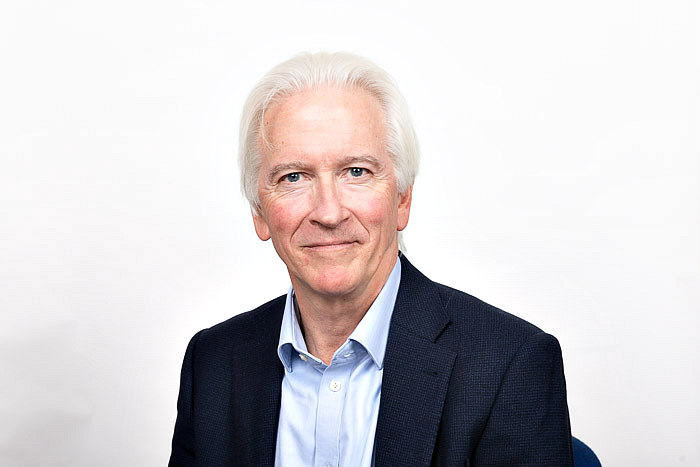
HISTORIAN OF THE ARABS. Professor Eugene Rogan is Director of the Middle East Centre at St Antony’s College, University of Oxford. He has a B.A. in economics from Columbia, and an M.A. and PhD in Middle Eastern history from Harvard. Among many other titles, he is author of The Arabs: A History which has been translated into 18 languages and was named one of the best books of 2009 by The Economist, The Financial Times, and The Atlantic Monthly.
19 minutes read time.
You can listen to the podcast of this interview here.
Eugene Rogan, can you please tell us in a few words, who are the Arabs?
The definition is elusive. The Arab world spans from the Arabian Sea overlooking the Indian Ocean to the Moroccan shores of the Atlantic. The diversity of dialect, of cuisine, of architecture, of history, means that many of the people we call Arabs can’t even communicate easily with each other, but I would say briefly that the Arab peoples are the people united by the Arabic language and by a common history dating back to the prophetic revelation and the origins of Islam, and that they are self-recognizing through membership of organisations like the Arab League. Any country that wishes to be a member of that body is culturally, politically, linguistically Arab.
Where do they originate?
The Arabs originate from the Arabian Peninsula where you have a mixture of many different ethnicities and groups, many of whom have been lost in the mist of time. If you take the Bible as a text and look at the area from the Eastern Mediterranean, the Levant, right through to Arabia, you run into Canaanites and Philistines and Edomites, people that no longer exist. We know of others from their ruins, like the Nabateans, who no longer exist as a people. But we can definitely say that Arabs, as we know them today, speaking the Arabic language, emerged from Central Arabia, composing magnificent poetry before the advent of Islam; we have the famous Muʻallaqāt, the hanging poems of people like Imru al-Qays. So we know that you had a fully developed Arabic language with a rich literature already in the 6th century and we retrace this to Central Arabia and South Arabia around Yemen. That would be the place from which the Arabs originate. When we think of the Arabs spanning that vast geography reaching right to Morocco, that is a function of the Arab conquests that come with the advent of Islam.
“The Arab peoples were never reconciled to being colonised by the British and French.”
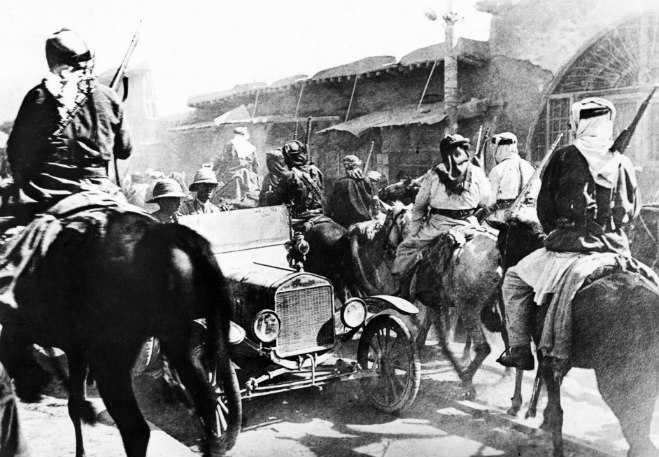
Arab Army and British motor car in Damascus, 1918
Eugene Rogan, in 1453 the Ottomans seized Constantinople and renamed it Istanbul. The Turks then took control of many countries, including those of the Arabs, who however seem to have lived quite well in their remote provinces of the Ottoman Empire?
For people in the Arab world to come under Ottoman rule just meant that the centre of government was farther away. It had been Cairo under the Mamluks, now suddenly it was Turkish-speaking elites in remote Istanbul who left the peoples of the Arab provinces to speak their own languages. The Ottoman Empire was itself a polyglot cosmopolitan empire peopled by Armenians, Greeks, Kurds, Turks and Arabs. All these different languages and cultures were left more or less to their own devices as long as they obeyed the law and paid their taxes. Under that system, for most of the provinces for most of the Ottoman centuries it was business as usual, and they adapted very well to Ottoman rule. You had the periodic fairly normal revolts against their government that happen when people find taxation or law not to their liking, as happens everywhere, but the Ottomans were strong enough and established enough through empire to be able to address those periodic revolts and to keep a constant governing culture that would have over 400 years’ presence.
Did the Ottomans therefore greatly influence the Arab way of life and thinking?
Inevitably. In a very real way, the Ottoman rulers were setting the rules, and the Arabs had to live by Ottoman rules set by the Turks. That would be the case until the 18th century, when land ownership or tenure gives local leaders a chance to emerge as potentates in their own right under Ottoman rule. Right up until the 18th century, the Arabs were people ruled under terms that they did not find objectionable. Starting in the 18th century is the new phenomenon of Arabic speaking local leaders, who will use land tenure for accumulation of large properties, and the taxes that come with it, as a power base by which to rise up and challenge Istanbul’s rule.
Was the Muslim religion very influential throughout?
Religion was important anywhere in the world in the early modern period. Look at early modern Europe, the importance of Catholicism or the wars that emerged over the schism of Protestantism from Catholicism. Even in Europe’s history, if you go to the early modern period, there was no room for agnosticism or doubt. Religion was a central guiding principle of state and society, and that was true in the Ottoman Empire. The majority of the population in the Ottoman lands was Sunni Muslim, so in that sense they were very comfortable.
The Ottoman Empire fell in 1922 after the end of the First World War, and the new ruler of countries from Morocco to Saudi Arabia was the colonizing Anglo-French alliance?
The Ottoman Empire made a fatal mistake under their Young Turk leadership. They went into the First World War, which began very much as a European conflict. There was no Ottoman cause in this war, but the Ottomans, for their own strategic reasons, opted to enter the war on the side of Germany. From that point forward, the fall of the Ottoman Empire becomes a chronicle of a death foretold. For the first time in their history, they were at war with the three most powerful European states: Britain, France, and Russia. They had never faced such dangerous enemies combined. They fought an incredibly good war, and I tried to capture the ways in which the Ottomans pressed the British, the French and the Russians in the course of the First World War in my book, The Fall of the Ottomans. But all through that war, in addition to the military campaigns, there is a diplomatic history in which the British, the French and the Russians discussed how they would partition the Ottoman Empire once they had defeated it. This is business as usual for Russia and France, who had been looking to secure geostrategic territory in Ottoman lands right through the 19th century. Russia wanted Constantinople, they wanted the straits linking the Black Sea to the Mediterranean, they wanted more territory in the Caucasus. The French wanted Syria and Cilicia. Interestingly, the British entered World War I with no known territorial ambitions in Ottoman lands. They had always seen the Ottoman Empire as a convenient buffer, keeping Russia out of the Mediterranean world and limiting French imperial ambitions. But they got in the game with enthusiasm, with famous agreements like the correspondence between Hussein-McMahon, the Sykes-Picot Agreement and the Balfour Declaration. Britain and France decided not only to kill the sick man of Europe, but to dismember him as well, giving rise to a partition of Ottoman territory in the Eastern Mediterranean to the states of the modern Middle East as we now know it.
“The idea of united Arabs has been enormously appealing to Arab peoples right through the 20th century.”
After the Second World War, around the time of the creation of the State of Israel in 1948, these countries start to claim their independence, even while a million French people are living in Algeria. You describe the changes that happen in your book, The Arabs: A History, and we come to the age of Arab freedom, the great influence of religion, and the oil revolution in the ‘70s that completely changes the picture?
Yes, these are all issues and questions that motivated the structuring of my book, The Arabs. The Arab peoples were never reconciled to being colonised by the British and French. They believed that Britain had promised them an Arab kingdom in return for their having risen in revolt against the Ottoman Empire, and their partisans argued that they did not need to come under French or British tutelage in statecraft, they had all it took to rule themselves independently. The Arab peoples saw it as a betrayal, that, as they came out of Ottoman rule, they found themselves coming under European colonial rule, leading to a history of resistance right through the years between the First and Second World War. This made the Middle East the hardest region in the world for European imperial powers to digest, and, far from proving to be prizes of the First World War, this real estate became a huge liability for the French and the British empires who absorbed the Arab lands just at the moment when nationalism was becoming a global phenomenon. By the time you get to the end of the Second World War, France having suffered defeat to Nazi Germany and Britain only just surviving the war victorious, their inability to maintain imperial power against the determined wishes of the Arab peoples for independence was clear. They could no longer sustain it.
And the proponents of the Cold War?
Yes, as the Arab world emerges into independence, these countries find themselves almost immediately constrained by a new game, no longer empire, but the Cold War. And once again, being forced to come under the domination of either the Western Bloc led by the United States and Europe, or the Eastern Bloc of the USSR and its Eastern European allies. Military assistance and economic development aid were the two tools by which the Soviets and the Americans were able to force Arab states to pick sides in the Cold War, and it’s something that the Arab peoples were very uncomfortable with. They were looking for genuine sovereignty, genuine autonomy. They had broken the shackles of imperialism only to come under the new constrictions of the Cold War.
They were and still are a community of nations, not totally united in their thinking about Israel?
The conflict with Israel has evolved over 75 years, and Arab perspectives on Israel have changed very much over those 75 years. We’ll come back to Israel in the Arab world, because it deserves an answer in its own right. What I would say is that the idea of united Arabs has been enormously appealing to Arab peoples right through the 20th century. We called it Arab nationalism, the most legitimate form of nationalism in the eyes of the Arab peoples who saw their division into nation states like Syria, Iraq, Palestine, Egypt, Jordan, as a divide and rule strategy by the imperial powers. There was this dream that if the Arabs could all unite into one large superstate, they would be a power to be reckoned with along with the other great powers of the day. They had the human capital, they had the natural resources, they had oil, they had a geostrategic location; they could be a player – if only they could overcome the divide and rule imposed by European imperialism. For the Arab peoples, that made Arab nationalism the strongest political force of the 20th century.
But their experiences struggling for independence in Syria, in Iraq, in Egypt, created nation states with their own national interests?
Yes, we saw this in the brief moment where Egypt and Syria united to create the United Arab Republic between 1958 and 1961. What happened was an Egyptian colonisation of Syria, and the Syrians hated it. They wanted their sovereignty back, and three years later they shattered the dream of Arab unity and seceded from the United Arab Republic. It was only after defeat in the Arab-Israeli War of 1967 that people began to despair of secular forms of politics and increasingly to turn towards religious forms of transnational politics. This was inspired in no small part by the success of religious authorities in Iran overthrowing one of the most deeply entrenched military dictatorships, the Shah of Iran, in 1979. Where Muslims came together, they could overthrow a corrupt government, and they came to believe that perhaps it would not be through pan-Arab action, but through pan-Islamic action, that the people of the Muslim Ummah could emerge as a player in the world, a power in their own right, and not be dominated by others.

Eugene Rogan: Gli Arabi

Eugene Rogan: The Arabs

General Edmund Allenby’s entry into Jerusalem, 1917

Eugene Rogan: La Grande Guerra Nel Medio Oriente

Eugene Rogan: The Damascus Events
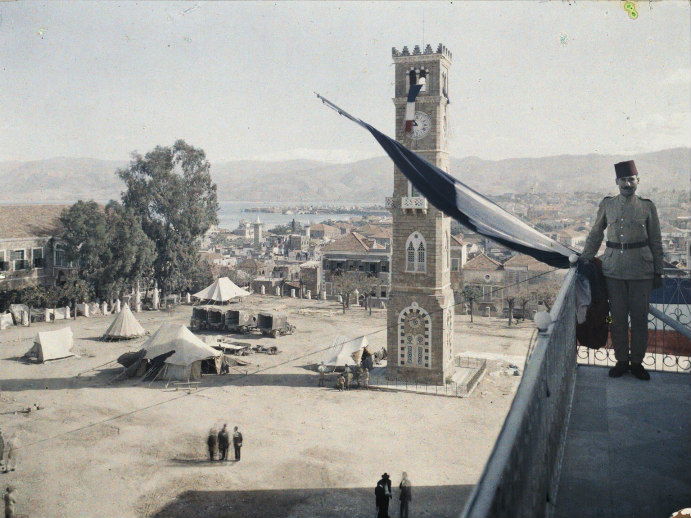
Beirut’s Grand Saray under French administration, 1919
“Almost all the governments right through the Middle East are nation states governed by constitutions. The opposition is Islamist, but not the form of government.”
Today countries like England, France, Italy, Germany, and even the United States, fear this Arab religious movement?
The fear is mutual. Particularly since the 9-11 attacks on the United States and then the violent attacks witnessed in Spain, in Britain, the Bataclan massacre in France, there has been a sense of a West under siege by Islam. But if you go to the Arab world, they have a sense of a Muslim world under siege by the West, with the invasion of Afghanistan, of Iraq, of the imposition of democracy where many of the partisans of Islam see Islam as the solution. The slogan of the Muslim Brotherhood is: “Islam is the solution.” But while there is something mutual about this fear and loathing between the Western world and the Islamic world, it’s a false dichotomy, because when we talk about Islam uniting the Arab world today, Islam only unites people in opposition. In fact, we are still dealing with a very secular Arab world. Almost all the governments right through the Middle East are nation states governed by constitutions. The opposition is Islamist, but not the form of government. The experiments that people have had with creating Islamic states in the Middle East, like in Sudan, have not ended successfully. They have been overthrown. You could say Saudi Arabia is an Islamic state and the Saudis themselves will say that their constitution is the Qur’an, but look at the reforms of MBS in Saudi Arabia and you realise that, even there, the state is trying to draw a line between an opposition that defines itself in Islamic terms and the government.
Have there been movements that have united peoples from across the Arab Islamic world?
One thinks of al-Qaeda as such a movement, where Algerians and Egyptians and Iraqis might find themselves in Afghanistan fighting a jihad, but it’d be wrong to say that that meant that Iraq and Algeria and Saudi Arabia were all part of a greater Islamic state. That initiative, attempted between Iraq and Syria in the 2010s, was briefly successful and ultimately overcome by outside forces breaking the Islamic state in Iraq and Syria, ISIS or Daesh, but also from within by people who found the methods by which ISIS imposed its tyranny completely repugnant right across the Arab Islamic world. So I wouldn’t talk about the triumph of the march of Islam, but I would say that it is certainly one ideology which has shown great appeal, particularly to young people feeling disenfranchised, humiliated, feeling that their religion isn’t respected or that their countries are dominated by outside powers. For them, yes, Islam is the solution. The Muslim Brotherhood has been advocating that view since the 1920s, for over a century.
Do you think one day all this will finish?
The problem right now that makes it very hard for us to imagine the Middle East at peace is that the people in power are the very ones who have the least investment in peace. The current government headed by Khamenei in Iran is very vulnerable. It does not have the strength to make the concessions that might lead to peace, whether it’s about the nuclear deterrent, relations with the United States, or relations with Israel. And the same applies to the government of Israel, which is in every regard the most radical right-wing government Israel has ever had. There are people in this coalition that would never have been acceptable to an Israeli government in the past. The only way change will happen is when governments come to power who have the will to change the formula and have the strength to apply that change. At the end, I wouldn’t be looking to Iran as the critical country here. I would look to Israel. Change lies in the hands of Israeli voters, because as a democracy, it’s what Israeli voters choose that will determine what the policy of Israel will be. Israel is at the moment deeply divided between those who are advocates of the government of Netanyahu and those who think that he’s avoiding justice and believe that he should be out of government.
What role can the key Arab states, the Emirates (UAE), Qatar, Oman, Kuwait, play in this region?
They are all countries that do have the resources to provide for their citizens, even though they don’t meet the West’s expectations of democracy or representative government. They are the new Middle East. They are countries that rule with, by and large, the majority consent of their populations. They’re able to deliver for their populations, and they’re countries that have shown a willingness to reach out to Israel, to try and stabilise a region. The centre of gravity in the Middle East I grew up in was places like Beirut, Damascus, Baghdad, and Cairo. That now is the old Middle East. Decision-making and meaningful politics in the Arab world today takes place in Riyadh, in Abu Dhabi, in Doha, in Kuwait, in Oman. No surprise that it’s in Oman that America talks to Iran, or that it is in Doha where Israel talks to Hamas. They have an important role in stabilizing a very unstable region.
Eugene Rogan, it was very interesting to talk to you about the long history of the Arabs, and let’s hope that things will go better in the future.
ENJOY THIS INTERVIEW? SHARE IT WITH A FRIEND.


