

COMPLETELY FRESH. Ai Weiwei is a contemporary artist, writer and humanitarian activist. Born in China in 1957, from 1981 to 1993 he lived in the United States. He currently has three exhibitions in New York: Child’s Play is at the Vito Schnabel Gallery at both 455 W 19th Street and 360 W 11th Street, and What You See is What You See is at Faurschou New York, 148 Green Street, Brooklyn. Ai Weiwei’s exhibitions run to late February 2025.
You can listen to the podcast of this interview here.
Ai Weiwei you now have three exhibitions on at the same time in this city which has been very important in your life?
Yes. It was during my age from 24 to 36 and is a full circle of the zodiac – 12 years, and that’s probably the most important period of time.
A time when you read The Philosophy of Andy Warhol and your artistic development was influenced by Marcel Duchamp and Jasper Johns?
Yes. I think I’m pretty fortunate to come from a communist society right after the cultural revolution. You couldn’t imagine how my life was. My father was 20 years in exile in my growing up.
Your father the Chinese poet?
Yes, he was the most important one, but he was exiled. He was almost forbidden to write for over 30 or 40 years. It is a very, very cruel tool, to forbid a writer to write, but he had to go through this re-education. Anyway he studied in Paris and he loved art and that’s why I did the water lilies. It’s really in his memory. You can see a black hole there.
“I don’t belong to anywhere at all or to any group, and I’m still trying to find out what is left, as a human and as an individual.”
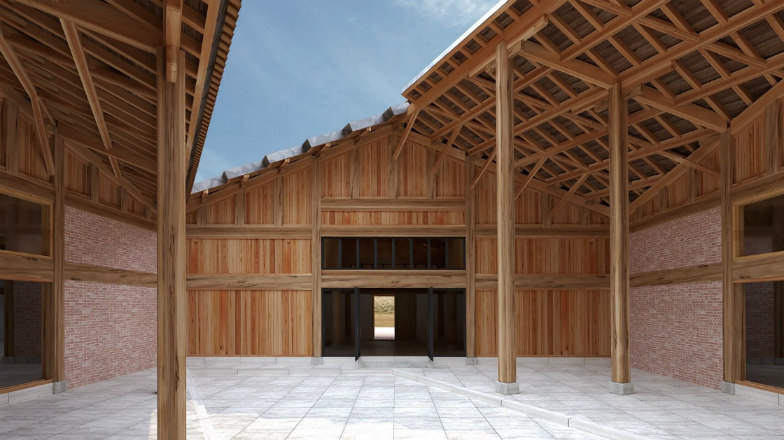
Ai Weiwei’s Portugal Studio
Ai Weiwei how was your childhood in your father’s exile in China?
We have been pushed away from Beijing to a most remote area. My family was just like any refugees you see today, but more tense and in a very much worsened situation because it was punished. Refugees are not necessarily punished, but he was insulted. That’s my childhood.
You wrote a beautiful small book called Humanity, published by the Princeton University Press. Is all your life an action in relation to displacement?
Growing up in such a condition you have begun a lifetime duty and an obligation to speak for the people who lost their voice or who never had a voice. As an artist I’m very privileged just to give my expressions, and those have to relate to my personal life.
Being the son of an important poet must be a proud but difficult heritage for a child. How did you decide to be an artist?
I never decided. I was born an artist. I guess everybody may become an artist, but while you are growing up those chances are just not there. Even with me, my father will never wish me to become an artist or writer because that only means this is a very dangerous position. Millions of people are being punished when they have individual expressions.
You mean in China?
China, but still today in the world. Even in the West, if you wanted to truly be individual you also could get into problems. The whole education is trying to teach people behaving: Be safe and be a good boy.
You started by painting, and then turned to many different artistic techniques, including films, sculpture and porcelain. How did you move from one to another?
It’s my instinct, or my character of so-called being an artist, that means I have free choice, and that can be subversive and so I have to do things against myself. I have to do things I am not familiar with, but I feel are a challenge. That’s why all my work is quite surprising when it comes out. Even to me it is completely fresh. That gave me a reason why I’m still doing it. Otherwise, why should I do it?
Your main studio is now in Portugal and appears in a beautiful painting which is part of the Child’s Play exhibitions, but in the past you had a studio in China and in New York and elsewhere. How did you move from one place to another?
I never had a home, even in China, because as a punished one you don’t have a home. Or, as Karl Marx once said, the working class don’t have a nation. They’re just like my father, being punished at so-called home. I am a traveller, and in each place I would like to have a location I can relate to. That’s why I built my studio in Portugal, at the western end of Europe, and that studio is exactly the same shape as the studio I built in Shanghai which was torn down right after it was built. I thought that maybe now I have a piece of land I will rebuild it, but I don’t want to repeat it so I will use a different method. Instead of using concrete bricks I use the Chinese temple structure, which means the buildings are made of wood with special skills. The whole structure is made like furniture, so there’s not a single nail in this huge complex.
In these New York exhibitions you show mainly works started many years ago. You started using LEGO, or its Chinese equivalent Woma, with Alcatraz in 2014. How did your use of LEGO come about?
You can use it from a so-called artistic point of view because it’s readymade and it’s plastic and it’s seen as something easy and cheap. Art is always being presented as something precious and with a uniqueness, but I love the quality of LEGO. It is only about forty colours, so it’s a challenge to use forty colours to make a very artistic, profound or complicated colour structure. It’s like a game.
How do you achieve it?
The bricks are the brush in your hands. For every inch or every millimetre I decide precisely what colour the brick will be to keep with the composition. It is like the new digital language. All those pixels are precisely located so you can send that design to anybody who can make it according to the design. Many of my works I never touched, because the design I finished is so clear, digital and precise. This technique is not new. From Roman time, or even earlier Greek time, you have mosaic, which is exactly the same, but now it is a much better modern mosaic.

Ai Weiwei: Child’s Play installation view at the Vito Schnabel Gallery at 455 W 19th Street
“Prison is one kind of human condition.”
Ai Weiwei why do you take several different approaches, from homages to old masters to works inspired by films to self-portraits?
As an artist you have to deal with different senses, subject matters and concepts, and have the skills to structure the presentation. The language has been carefully chosen. These artworks somehow relate to my personal understanding of what happened in the past. In a self-portrait I see myself as Cezanne sees an apple or an orange, or Van Gogh sees a pair of shoes or his own many portraits. You only borrow something to extend your practice, and as Jasper Johns once said, you never change subjects you only change the interpretation. My LEGO work is a completely new interpretation. No one challenges me and there is no competition, and I feel so good about it that I can use it in every direction.
A beautiful painting of yours reminds me of Jacob’s Dream by Ribera in the Prado. A body is lying on the beach and it’s not so clear that it’s you, but is it a very special self-portrait?
It’s a gesture I did when I was filming refugees pushed into the Greek island of Lesbos. They came from Turkey, and I was on the shore, desperate to see those people who are like a rock that comes from outer space and landed there. They don’t speak the same language, they don’t have the same religion, even their facial expressions are completely different from the West. There are women and children, crying, climbing out of this dinghy boat, and many dead, because the ocean could be violent. Alan Kurdi is one little boy who was found on the shore. I didn’t see his body, but his image was widely presented. I was busy filming and trying to get the real Information out, and a journalist said he wanted to do a cover story and asked if I could do a gesture. I said yes of course, but that image generated predictable criticism and people said this artist is using this, how bad, how cheap that he’s doing it. I don’t see things that way. Life and death is related, and we see the deaths of children every day. Let’s not pretend that’s just one single case. His brother was just 50 metres away on the shore.
Is the displacement of people something you feel very deeply about?
It is. It could be me.
You are a Chinese man who spent a lot of your life in the Western world. Today America and China are the two big powers. Are you a bridge?
I function more as a self-destruction bridge. Millions of people say they are always trying to find who they are, but I’m always confused and trying to find out who I am not. Only by finding out who I am not I may be able to find out what I am. I don’t belong to anywhere at all or to any group, and I’m still trying to find out what is left, as a human and as an individual. I have to always come back to this very essential question. And in another sense it doesn’t matter at all.
Is it stronger to express yourself with films or is painting stronger?
Life is like a leaf on the tree landing in the river. You flow away and change your position and the views of the shore are constantly changing. It’s fate, not something you can decide. People think they can decide. That’s a misunderstanding.
Water and trees are important in your work?
Yes, and maybe in that part I am Chinese. For the Chinese, in poetry, in literature, the sentiment is always related to nature. It’s a primitive type of sensitivities: water, or trees, or plants, or animals. We always think we are part of it. Fortunately, we are part of it, but very often we forget. Maybe also that’s fortunate. I don’t know.
You mean we are not the only masters of this world?
To exaggerate too much the position of the human being is self-indulgent. We think we can dominate everything, but that is so ridiculous. Even the planet and the universe is just dust. We are so fortunate, and at the same time we are killing each other. We lie to each other. We do all those nonsenses. All the time. Human history is like that. We are in the middle of it, if we are not stupid enough to finish the human species by doing that.
Was it terrible for you, an artist, to be in prison?
Sorry. It is not so terrible. Prison is one kind of human condition. In America I’m going to visit an inmate who is on death row now for over 20 years, still waiting for the call. He became a poet, a good writer and a good artist and he really wants to see me. So, as I am taking this occasion of exhibition to come to the United States, I am going to visit him.
Because you went through a similar experience?
This is true. But it’s the human condition.

Ai Weiwei: Child’s Play installation view at the Vito Schnabel Gallery at 455 W 19th Street

Ai Weiwei: Child’s Play Installation View at the Vito Schnabel Gallery 360 W 11th Street

Ai Weiwei: Surfing After Hokusai 2023
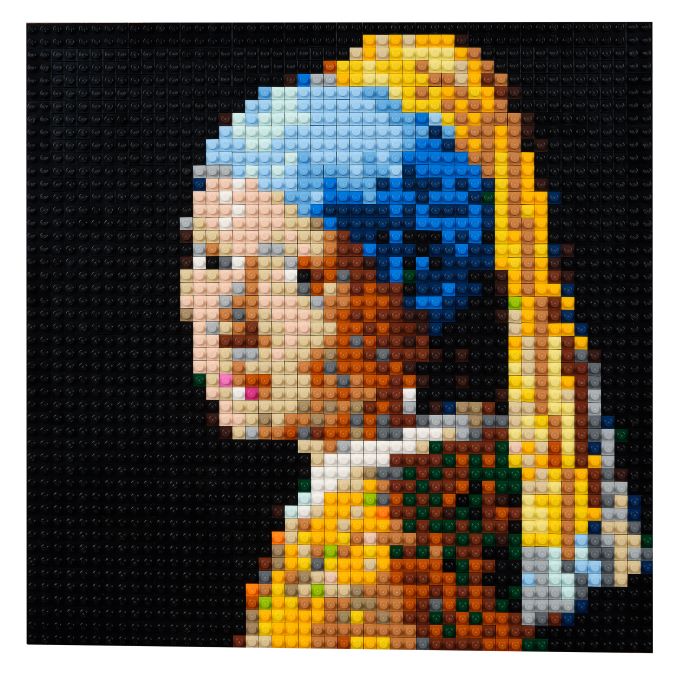
Ai Weiwei: Girl with Pearl 2022
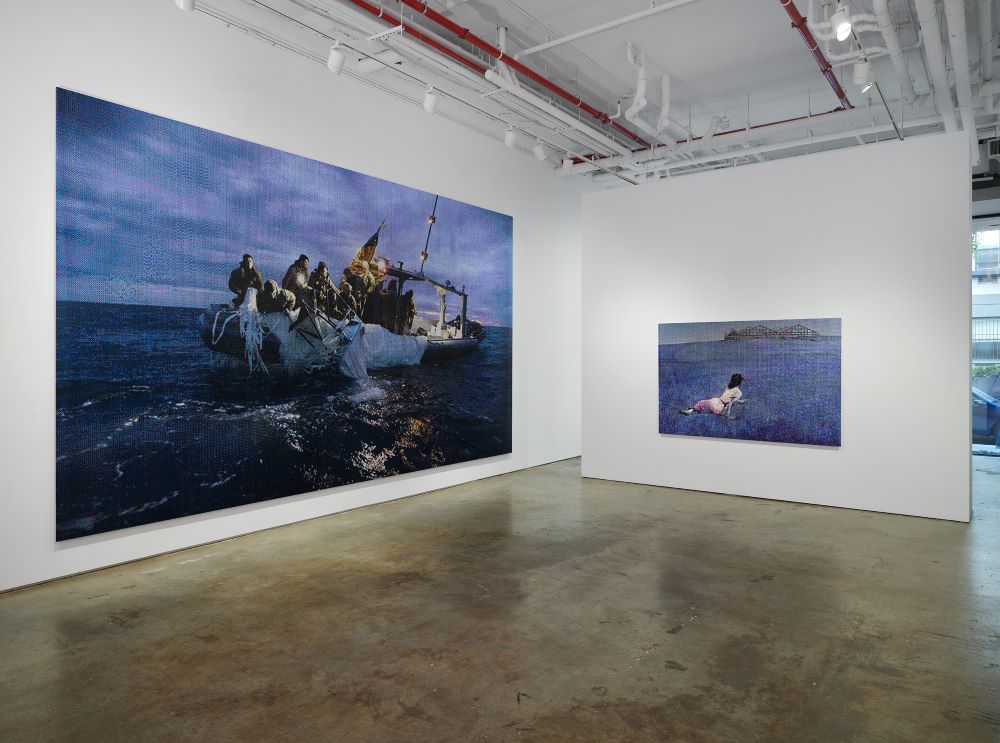
Ai Weiwei: Child’s Play installation view at the Vito Schnabel Gallery 455 W 19th Street 2024

Ai Weiwei: Christina’s World 2023
“You have to act out what you believe and make some actions, not just to change the world, but it’s really self-teaching to change yourself. I change daily.”
Ai Weiwei how is it when you cannot express yourself when your whole life is to be an artist?
They hold you by this kind of military police who are just 19 or 20 years old and they have a curiosity. They look at you without blinking their eyes, very still, very well dressed in military uniforms. And I have to stay sitting in front of them, also very still. I cannot scratch my head or do anything. Just sitting there, I look at them and they look at me. But they are human beings, so if I change positions, they are also the true prisoners. Later we built up a secret way to talk because there’s cameras everywhere. They call me old man. They don’t know my name.
They found out who you are?
Later, after communication. They think this guy must be important because they only deal in very top important state prisoners in this secret location. They don’t know where they are. After they got into the army, they were put in sealed vans and moved there, and for 2 or 3 years that will be their world. They said to me: You may be out after a while, but our life is also in prison.
Were you frightened?
I was only worried once, when the interrogator said, Listen. You may be sentenced for 13 years. After 13 years you will come out of jail and your son will never recognise you. At that time he was only two years old, and that hit me very badly. I will come out when certainly my son is already 16 and he will never recognise me. That’s heavy. When something is so heavy, you cannot communicate it with anyone.
You experiment in many things. In Faurschou there are military casques made in porcelain. Are you also an artisan, because there is great craftsmanship in your precisely detailed work?
I’m very privileged as a Chinese to have such a long tradition in things like furniture making and even silk and weaving. I can’t say I am expert on those. I always question why they have to carve this piece of jade when it takes them years to do. What made them to do that in the iron or bronze age time? It is still very fascinating and I’m a collector.
Why do you collect buttons?
Someone said that the factory is going to close and they have a huge amount of buttons and there is nowhere to put them. I said, No, no. What a waste! They want to sell to me and I said, okay! And I bought it. Very often I don’t know why I do things, because what’s different between me and most people is people are so rational and so logical and, as an artist, I’m not so rational and logical, I just think that must have some use. Then, later on, I find out things that are very interesting. My sense to relate to buttons is from a little story when we lived in Xinjiang, where my father was exiled. We were living there and you couldn’t even call it a house, it was a hole underground. My brother went to another province to see his cousin, and his cousin was there to see him off from the station, running alongside the train. When my brother reached out from the window, my cousin gave him something in his hands and the train takes off. They have to ride this train for 72 hours to my location. There were so few buttons at that time in China, it was very hard to find a few buttons. If we lose our buttons we lose them forever, and we couldn’t even buy one. There’s no shop or no anything, so when we have some we always make special stitches to make it solid. The button has some meaning for me as rare and precious, but there is also a meaning that came out later. When I was in detention all day, I was looking at the uniforms of those military police’s buttons, very specially designed in a Russian style.
How will you use these tons of buttons?
It’s just like sunflower seeds. You can cover the whole street with buttons, but I’m not going to use them that way. I will use buttons only as buttons. That means as stitched to a fabric. I keep 30 tons of them in a warehouse and I spent a lot of money just for storage, but now I’m going to use them in an exhibition in Manchester, the first industrial revolution city. It will take two years to accomplish that project.
How did you create all the sunflower seeds you installed at Tate Modern Gallery in London in 2010?
Every single one of them is crafted and hand-painted and fired. To make that is very much like making the highest quality porcelain. You have to go through 20 procedure stages. It’s only 100 million seeds, one tenth of the Chinese population, but it is like an ocean.
Why do you like cats and have many?
On the internet in its early time in China there was a little movement about animal protection, and one day I received a call from young people who said, Weiwei we need your help. They found a truck full of cats that was going to be delivered to another province where they were going to use them for restaurant cooking. This was shocking. A group of activists stopped the truck on the highway at a pay toll, so we got over 400 cats, so beautiful, but terribly scared, squeezed together, maybe for days, so they cannot even have a water consumption. We all had to take care of some, so I took 40 of them, one tenth of this 400. I have a studio. I have space. We have people who love animals. So I get to know those animals and they are individuals. They all have a strong character. If we do an interview one of the cats, 来来 Lailai is his name, is always there, listening to the whole interview. Every time he will be there. I think he somehow must be a spy from the secret police. He never misses one interview!
Do you have a special relationship with cats?
I like them, they are never too close to you and they’re not predictable. They’re very independent, and I also like that I don’t have to walk them, and they are cleaning themselves. Every location we have cats. In Portugal we had two homeless cats, and one just gave birth to eight.
How much time do you spend in Portugal?
I can spend my whole life, but also I don’t have to spend a day, because I don’t attach to anything. My privilege is if you tell me to go tomorrow to an unknown place, I also can settle there.
But how would you work? You make such big paintings.
First, to work that way is not necessary. You can work by cooking, by cleaning dishes, by doing anything. You can plant and grow a tree. There are a million ways to work.
Do you have a routine?
No, and if you come to my studio you will not see a single artwork hanging on the wall. I don’t like to see my work. It’s okay for it to be in other locations, like a gallery or museum for the public to view. But my relation with my work is do it and forget about it immediately, right after I finished.
How does your work come into your mind?
I don’t have a regular job. I don’t have a regular routine or discipline. It would come in the middle of the night, or in an airport, or in some hotel, and then some strange ideas come. I don’t have the habit to take notes in a notebook, which I did when I was young, but now you have the iPhone.
Do you sometimes draw?
I used to draw the most, but I produced so much I had to stop it, because I knew I would become a Van Gogh and it will drive me crazy. My mom never recognised my art. She threw it away or gave it to friends who appreciated it, so I don’t have early works.
Do many people work with you?
I can work by myself, I’m a very handy person. And also I can have the whole world working for me. Working is a way of communication, and giving birth to those works is meaningful. You also need the male and the female, or some kind of new technology, you cannot just do it by yourself. Maybe very soon we can give birth just by ourselves.
Why was the conceptual artist Marcel Duchamp so important to you?
Certain artists interest me. Like Duchamp, or Jasper Johns or Andy Warhol. They found their own language and their perspectives are pretty shocking and they opened possibilities.
And you are one of them?
Of course, I belong to that family and I’m proud of it. I never dreamed I’d be one of them, but I definitely am.
At the end of the day, what is to be an artist?
I don’t really know. A very sharp and clear vision. And then you have to understand our humanity.
Do you also love to write?
Yes, that’s my ultimate, and I adore the people who can write. I think that’s the most important gift. My book 10000 Years of Joys and Sorrows took me ten years to do. I’m still writing a few books, but I don’t know how long it will take.
Your book Humanity is a kind of philosophy of life in short chapters?
Yes, it’s very much like Andy Warhol’s philosophy book or early Greek philosophers or Confucius. They don’t write a book, but they do teachings. I am a bad teacher. I only try to teach myself.
Why is your favourite word action?
I think that’s the character of life. If people are only thinking or talking and not acting out what they believe, that will be very much like a fake, like a hypocrite, and I hate hypocrites. You have to act out what you believe and make some actions, not just to change the world, but it’s really self-teaching to change yourself. I change daily. You can change positions. When you sleep and this side is not comfortable then you move the pillow and you turn to another side, then you are so tired that you’re falling to sleep.
What is your vision of the world today?
If you look at the world, basically after the industrial revolution we could set a certain course for the information age, or AI age. We are moving so fast in so-called technology because that generates a huge profit and can dominate in many ways for profit making. Humanity is the fast-deteriorating area, much worse than the so-called environment ruin. People fight for protecting the environment, but the real environment we have to protect is humanity.
And we are killing our humanity?
We are poisoning it, not just killing. Killing maybe has the easier job, but to be poisoning it we make a new type of a human, which is a very poor condition, not having a strong soul, not to have a strong passion and believe in that way to act and to be yourself. Completely destroyed by education, by mainstream media, by social media. It is disappearing. We have become very crude individuals.
This is the way we are going to go?
Yes, this is the way. We cannot stop it. It’s like a rock. Once it has broken loose from the top of a mountain it will start rolling and it will cause big disasters. But I very well accept it because this is capitalism. Everything is measured by one single measurement, which is so-called success. What is success? It means you make more money. This is horrible.
Are you sad?
No, we should luckily and happily see the end. As humans we would only have one end and the end is coming. It is a beginning maybe for happier other animals, like other plants. Other lives.
Thank you very much.
Portrait of Ai Weiwei courtesy of and by Ai Weiwei Studio.
ENJOY THIS INTERVIEW? SHARE IT WITH A FRIEND AND MAKE SURE NOT TO MISS ANOTHER ONE BY SUBSCRIBING YOURSELF. IT’S FREE!


