

CRUCIAL QUESTIONS AT A PIVOTAL PARIS MUSEUM. Christine Macel is an art historian and curator who began her career at the French Ministry of Culture as an inspector of artistic creation at the Delegation of Fine Arts. Christine established and ran the Contemporary and Prospective Creation department of the Musée National d’Art Moderne Industrial Creation Centre at the Centre Pompidou. In 2017 she was the Director of the Venice Biennial, and in 2022 she was appointed Director of Musée des Arts Décoratifs in Paris.
Christine Macel, why did you switch from contemporary art to decorative art?
I was looking for a new challenge after 22 years at the Pompidou. I felt that I had achieved all that I could dream about for the collection and the exhibition program, and I had also had the experience of the Venice Biennial. The Musée des Arts Décoratifs was the place from the ‘60s to the ‘80s where the vision of a transdisciplinarity of the arts, from fine arts to decorative arts, was defined with huge visibility by its famous director François Mathey. This institution was at the cutting edge of modern and contemporary art, showing for example – for the last time in Paris – Picasso’s Guernica, but also inventing a model of museum that included art with outsider art: craft, car design etc. and a lot of exhibitions questioning the very definition of art, such as Art and artisanat or Qu’est-ce que le design? And don’t forget that the Centre de Création Industrielle that was transferred to the Musée National d’Art Moderne at the Pompidou was founded at Musée des Arts Décoratifs by François Mathey. The DNA of this museum that is reflected in its collections, which are partly unknown, was my first motivation, since as an art historian I also had a vision where contemporary art was in dialogue with other types of art and creation, such as dance with Dance Your Life, decorative arts, jewellery with Women in Abstraction. I am interested in rewriting art history in a horizontal manner, dehierarchising categories in terms of value as well.
In other words, you have an interdisciplinary idea of art?
Very much. I also like the idea of art and creation in their sociological dimensions. One of my interests is being informed both by cultural studies and the French tradition of the École des Annales that was renewed in the 1980s by ground-breaking historians, from Georges Duby to Philippe Ariès or Michelle Perrot. It is all about the history of sensibilities. I am also more interested to consider art from the point of view of the artist than the critic. This means to see how an artist evolves from visual arts to music, scenography, dance or food. This is one of the main aspects of modern art and contemporary art that I always found so enriching. In my Venice Biennial the first chapter was dedicated to the artists and their universes, the influences they receive and their process of creation. You might remember Franz West’s Canapé that was twisting the categories of art and design, the artist sleeping on his own art piece. Not doing as a preparation of action. I included a lot of mediums in the exhibition, including craft, textile, tapestry and ceramics, questioning in a provocative manner the link with practices that were considered as not “pure” in the Pavilion of Traditions. For example, Anri Sala created an installation with a wallpaper, and Teresa Lanceta showed her textile wall-hangings.
“Our approach is not elitist and with a lot variety, with a discourse that speaks to everyone.”
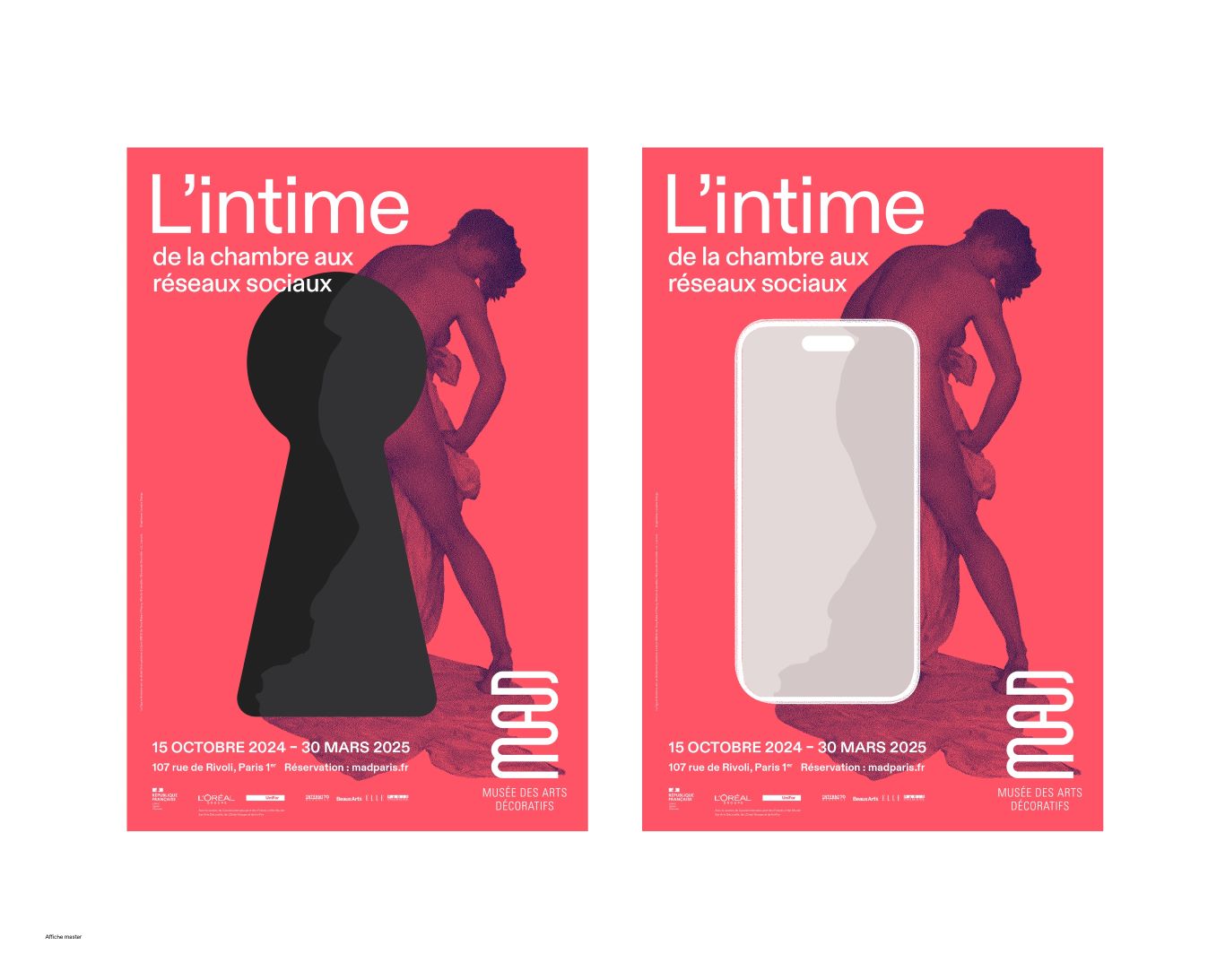
Graphic identity of the exhibition “Private Lives: from the Bedroom to Social Media” © Lacasta Design
Christine Macel, at Musée des Arts Décoratifs you have an important fashion and jewellery exhibition that started in April and ends in November?
Yes, it is a new hanging of the modern and contemporary collection from levels 5 to 9 of the museum, where you have an incredible view of the Parc des Tuileries. We are exhibiting 30 fashion designers in this Parcours Mode Bijoux Design – from Balmain to Hermès, from Dior to Rick Owens – as well as 100 jewellery pieces from our rich collection of 12,000 pieces, which is the most important jewellery collection in France
What kinds of jewellery do you have on display?
For example, you can see a recent amazing donation of Art Déco jewellery from Jean Desprès, pieces from Van Cleef & Arpels and Cartier, as well as Ettore Sottsass and the young Marion Delarue.
You also have an exhibition about department stores?
The Birth of Grands Magasins tells the story of the transformation of the city of Paris in the middle of the XIXth century. It shows the rise of the bourgeoisie, the development of capitalism and industry, and consequently the birth of a new type of department stores – such as Bon Marché, Le Printemps, la Samaritaine or ultimately Les Galeries Lafayette – until the creation of their own workshops exhibited in their own pavilions at the famous Exposition Internationale des Arts Décoratifs in 1925. That was the triumph of Art Déco and the International Style, in Paris and then globally.
You must have a very large collection of objects?
In fact about 1.4 million objects! 15 curators work in several departments, including works on paper, photography, wallpapers, furniture and decorative arts from the Middle-Age to Art Nouveau, works in glass, modern and contemporary design including Art Déco, fashion and textile, publicity and graphic design, Asian arts (the first such collection in France). It is therefore a vast and still to be discovered collection. For example, 80% of the pieces exhibited in The Birth of Grands Magasins – billboards, fashion, toys and furniture – are from our collection!
Is the museum strongly linked to fashion and design?
Fashion and textile is the most important such collection in France, with 120,000 pieces. Our collection of modern and contemporary design – from Jean Prouvé to Memphis and the Bourroullec – is the only permanent one exhibited in Paris. But it is only a part of our collection. Of course, fashion exhibitions are among the most successful. Recently the amazing show of Iris Van Herpen reached more than 350,000 visitors.
“What interests me is what these works and objects reveals in terms of changes in society.”
Christine Macel, how do you receive and store all these collections?
The Musée des Arts Décoratifs is an autonomous museum with a national collection, but it remains part of an association founded in 1864 by industrialists and collectors who intended to bring together beauty and industry. They first installed a museum and library on Place des Vosges, then exhibited their collection in the Palais de l’Industrie, and were afterwards looking for a place. In 1905 the state gave the Pavillon de Marsan, the north-western wing of the Palais du Louvre, to the association called UCAD (France’s union of decorative arts) in exchange for their donation of the collections to the state. Historically, it is a museum of collectors and donors. Most of our acquisitions are donations and we also receive important legacies. We have several groups of patrons. Our International Circle is chaired by Anne Dias and Pierre-André Maus, and there are two active groups dedicated to drawings and design.
One should also not forget the Musée Nissim de Camondo, which you also run?
Yes, this is the fabulous donation to the state from Moïse de Camondo in 1934 of his hôtel particulier in rue de Monceau, along with all the furniture, artworks and objects of the XVIIIth century that he collected. It has remained intact since then thanks to his testament. It is a beautiful as well as very sad story. Moïse de Camondo was one of the heirs of Abraham de Camondo who came to Paris from Turkey. His cousin Isaac gave a large collection of Impressionists that you can see nowadays at Orsay Museum. Moïse’s son Nissim was killed at age 18 during the First World War, fighting for France. Moïse, who was inconsolable, focused on his collection, and decided to give all this patrimony to the state. His daughter Beatrice could not imagine that she would be imperilled by the French state to which the family was so generous, so did not leave France during the Nazi occupation but was ultimately sent to the camps with her children, where they all died. It is even more moving when you think of this dramatic story to visit this unique place that reflects an exceptional way of life in the first 30 years of the XXth century.
How many visitors do you have to the Musée des Arts Décoratifs and the Camondo Museum?
About 650,000 visitors a year. Last year we reached one million. It depends on many factors. The Musée Nissim de Camondo welcomed an increasing number of visitors last year with about 60,000 entries.
Isn’t this all very different from your previous career at the Beaubourg, where you were curating contemporary artists like Nan Goldin and Sophie Calle?
I cannot separate things. I called one of my exhibitions The Promises of the Past, after a sentence from Walter Benjamin, because the present cannot be explained without the past. An art history background gives another approach to contemporary art. That is why in my next exhibition that opens on 15th October I explore in a transchronological manner a concept that is the sphere of private lives and of intimacy and its major changes, with works and objects that run from the XVIIIth century to now. You will see bourdaloues (chamber pots) from the XVIIIth century, Le Verrou (The Lock) painted by Fragonard, design from Eero Saarinen to Pierre Charpin, as well as contemporary artworks from Nan Goldin, David Hockney and Zanele Muholy. What interests me is what these works and objects reveals in terms of changes in society.
Can your museum be compared to the Victoria & Albert in London?
Yes, sure, we are cousins and collaborate sometimes. We were founded around the same time and in the same spirit of the industrial revolution and the context of the first famous universal exhibition in Crystal Palace in London in 1851.
Do you exchange a lot of objects?
We are indeed in constant dialogue, we exchange loans, and we also sometimes share some programs in terms of exhibition.
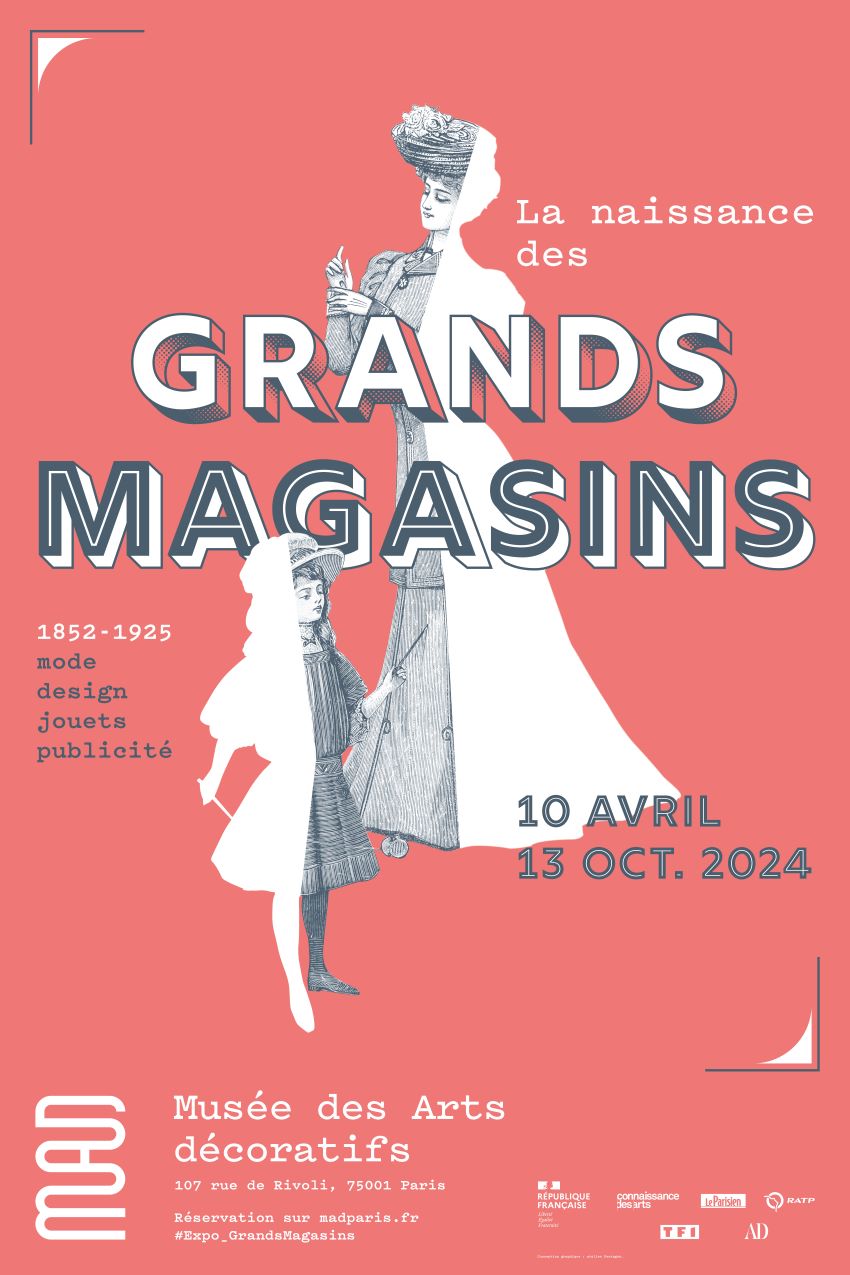
Graphic identity of the exhibition “La naissance des grands magasins” © Atelier pentagon
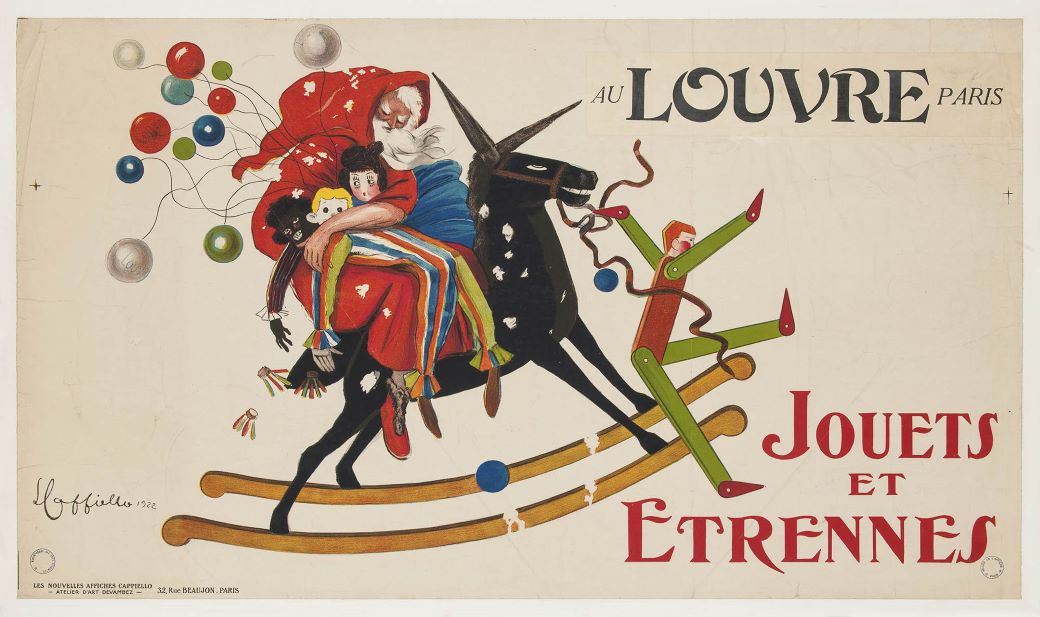
Leonetto Cappiello (1875-1942), “Au Louvre. Jouets et étrennes”, 1922. Poster, lithograph © Les Arts Décoratifs / Jean Tholance (exhibition “The Birth of Department Stores. Fashion, design, toys, advertising. 1852-1925”)
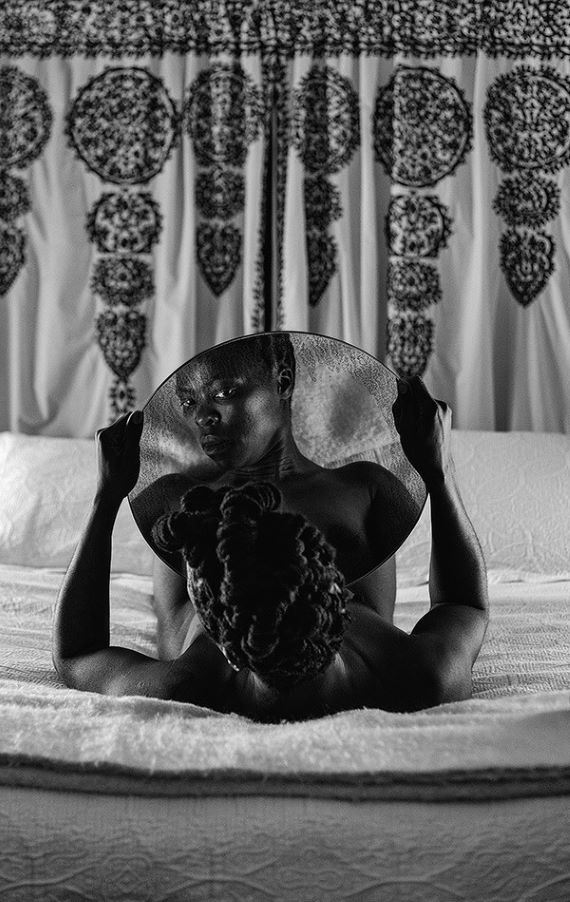
Zanele Muholi, “Bona, Charlottesville” © Galerie Kvasnevski (exhibition “Private Lives: from the Bedroom to Social Media”)
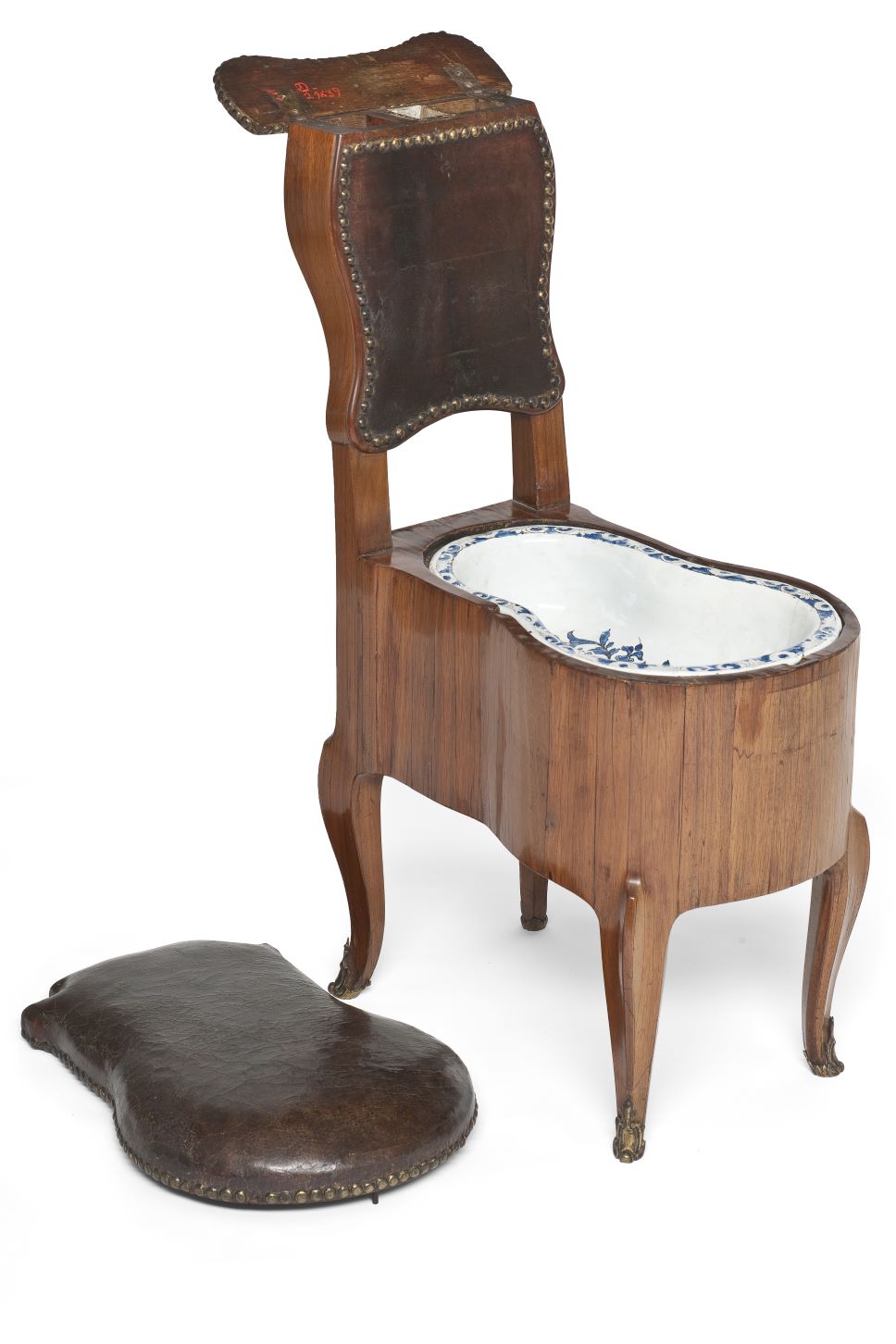
Anonymous, Bidet 18th century, oak, leather, faïence © Les Arts Décoratifs (exhibition “Private Lives: from the Bedroom to Social Media”)
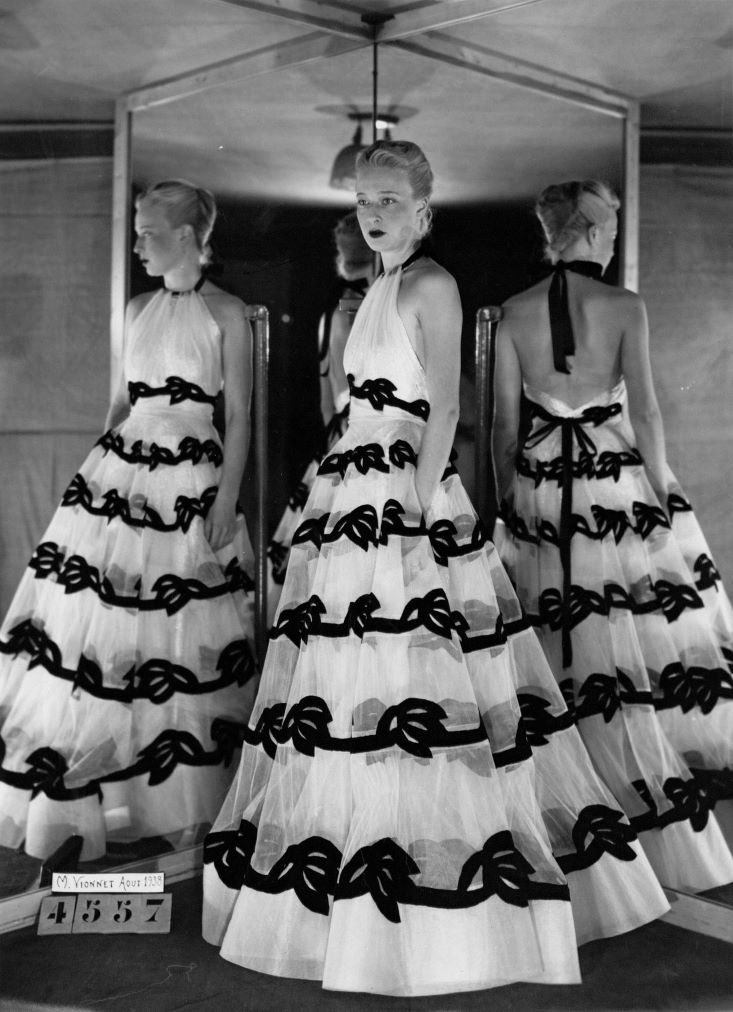
Madeleine Vionnet, evening dress, winter 1938-1939, gelatine-silver print © Les Arts Décoratifs / DR (exhibition “Fashion in the making : Photographs of 1920s and 1930s designs”)
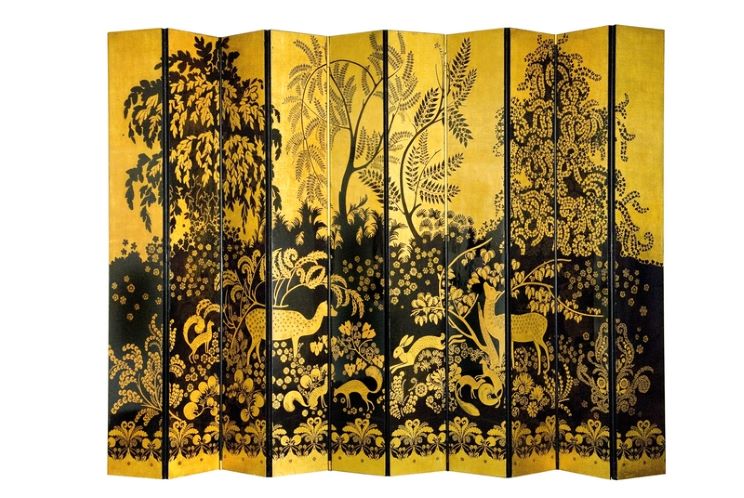
Armand-Albert Rateau, “Hinds” ten-leaf folding screen, circa 1921-1922, lacquered and gilded wood © Les Arts Décoratifs (reinstallation of Art Deco Collections and exhibition on the 1925 International Exhibition of Modern Decorative Arts)
“Our museum reflects mainly occidental history and the French way of life for the majority of its collection.”
Christine Macel, nowadays there is a great interest in French interior architects like Le Corbusier or Prouvé. Do you have a big collection of this kind of item?
Yes, as I said, we have the most significant collection of modern and contemporary design exhibited permanently on 5 floors of the museum, with works from Jean Prouvé, Le Corbusier, Charlotte Perriand, Roger Tallon and so forth. And at the moment, our new hanging is creating a dialogue with jewellery and fashion, since there was always a link for artists or fashion designers between these predefined categories.
Fashion designers such as Coco Chanel, Yves Saint Laurent, Karl Lagerfeld, just to say a few, all interacted with the world of art in their own houses and collections, but also in fashion shows?
Indeed. That is why I decided to make an exhibition dedicated to the first artistic director of the XXth century who radically changed fashion as well as the definition of the fashion designer until the 60s. Paul Poiret, from whom we have a never-exhibited major collection, was a fascinating personality of the 1910s and 1920s. After Worth he changed definitively the world of fashion. He liberated the body of women, removing the corset, used vivid colours, was influenced by the Orient, but was also the creator of the first perfume in fashion with his Parfums de Rosine. He founded the first workshops of decorative arts with Les Ateliers Martine, he wrote a book of recipes, collected modern art, organized famous parties with amazing decors, and wrote many books including his own biography.
Did you not recently do an important exhibition of the Italian fashion designer Elsa Schiaparelli?
Yes, it was a huge success, and again based on her donations to our museum.
Are you particularly interested in Middle Eastern art?
Yes indeed. I founded a group of collectors from the Middle East at the Pompidou. With amazing collectors and patrons, we built in less than ten years a significant collection of modern and contemporary artists, from Lebanon to Saudi Arabia etc. I am still close to these regions, and in the Musée des Arts Décoratifs there is still a lot to do to be more global. But don’t forget that our museum reflects mainly occidental history and the French way of life for the majority of its collection. The department of contemporary design run by Juliette Pollet will be more open to a global approach, even though we are now for geopolitical reasons in a moment that I would call post-global.
Nowadays there is no longer such a complete difference between one country or one continent and another?
We are far from uniformity hopefully. But what is striking since the late ‘90s is the redistribution of the map of contemporary art, with no more one centre but numerous centres – although New York remains a place of recognition for many. In the last years, Paris also became a pivotal city in this matter.
What do people look for in your museum?
Our enquiries reveal that they look for beauty and wonder, as well as for thematics and issues that make them reflect and learn. Let’s say both aesthetic experience and knowledge. That is quite fair I guess!
You even have a toy collection. What do you have?
We have about 12,000 toys, mainly from the XIXth and XXth centuries. That collection was founded by François Mathey in 1975. It is the most important such collection in France, with a very active program of exhibitions. For example, Barbie was a huge success. The next show I programmed is My Teddy Bear. That will open for next Christmas, as we own about 400 teddy bears in our collection.
Do you often change the main display of the collection?
The display is quite stable, excepting some rehangings such as Parcours Mode Bijoux Design, but I intend to renew it in the next years. We are precisely working on that at the moment, to create a new narrative with a more contextual and sociological approach to the objects.
Do you work closely with Mobilier National?
We are in dialogue and exchange about design and ceramics mostly, with Hervé Lemoine who runs the Mobilier National as well as with René-Jacques Mayer, who is in charge of the wonderful Musée de la Céramique in Sèvres. But our missions are quite different.
Do you very much depend on donors?
Indeed, donors are crucial to our museum and very generous, and our detax system allows American and French donors and many others. We also have many sponsors. For example, Lacoste for the exhibition Fashion and Sport, and L’Oréal for my show Private Lives, from the Bedroom to the Socials, and many others. It is quite exciting to have this dialogue with so many different generous people and brands. We are showing two donations at the moment: two creations of Olivier Rousteing for Balmain, as well as the Black Virgin from Stéphane Rolland – magnificent!
Was it an important experience for you to curate the Venice Biennale?
Yes, it was a great experience to have this freedom as a curator, thanks to Paolo Baratta, the President of the Biennial in 2017, and its wonderful team. It was both a human and artistic experience where I could express my vision of art and artists, and work with hundreds of them from all continents and types of practices, with a narrative that I wanted to be a new humanism, leading from the self to the common, the earth and the spiritual.
Is there a lot of interest today in the decorative arts in general?
We have a lot of public of all generations, including a lot of young people, who feel comfortable in our museum and that tell us about ways of life with ground-breaking scenographies. Our approach is not elitist and with a lot variety, with a discourse that speaks to everyone.
What is your next project?
My next exhibition, which I am curating together with Fulvio Irace, is a statement about my way of rethinking exhibitions and the way one can show decorative arts. Private Lives, from the Bedroom to the Socials explores the major changes that artworks, objects, images, new technologies, influence and social medias reveal in our daily life. I want to show objects that speak about the very intimate life of the past and the present, to understand our ancestors and ourselves. This mirror should open a reflection from the visitor about his or her own use of objects. The main question for me is a dialectic dealing with our private life: is it too much a focus in an individualistic and narcissistic society, or is it in danger with the development of social medias and surveillance technologies? Or both? Art, decorative arts, and design in particular, can lead to these crucial questions.
Christine Macel thank you very much.
Portrait of Christine Macel © Guillaume Ombreux
ENJOY THIS INTERVIEW? SHARE IT WITH A FRIEND.


