
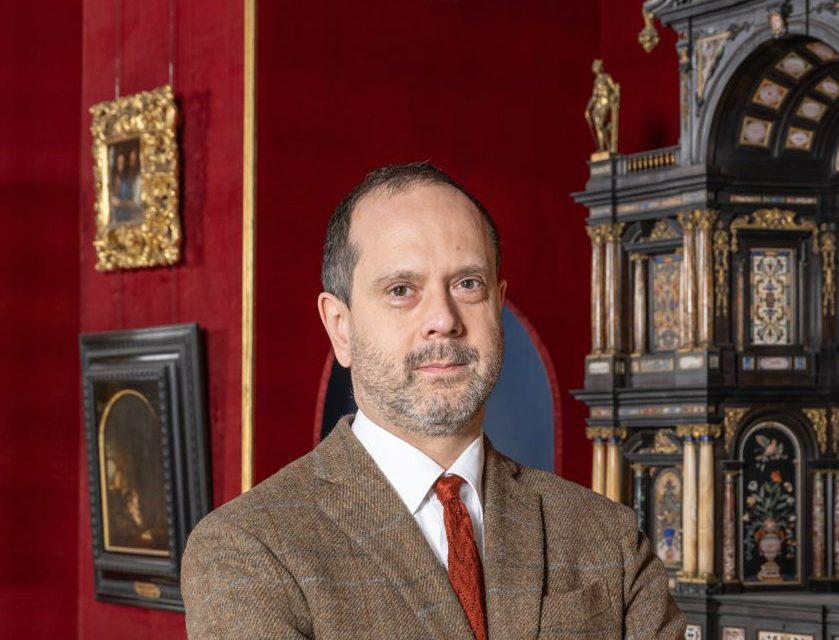
ANTHROPOLOGY REGENERATES CULTURE. Simone Verde is a museologist and art historian who was appointed Director of the Uffizi Galleries in Florence, Italy, in December 2023, replacing Eike Schmidt who moved to Capodimonte. From 2014 to 2016 Simone Verde was head of scientific research at the Louvre in Abu Dhabi, and from 2016 to 2023 he directed the Complesso Monumentale della Pilotta in Parma, Italy, whose total restoration and refurbishment he completed. Verde studied Theoretical Philosophy in Rome and Paris, has a doctorate in Anthropology of Cultural Heritage, and a degree in Museology and Art History at the École du Louvre.
26 minutes read time
You can listen to the podcast of this interview here.
Simon Verde, how do you feel as Director of the Uffizi Galleries?
I feel a huge responsibility. Uffizi is the most important museum in Italy and one of the most important museums in the world. Last year we achieved 5,300,000 visitors, which is another kind of responsibility, because we have to propose to them a museum that is at the level of their expectations. At the same time, the Uffizi is the flagship of the Italian museum system, so I also have the duty to represent the Italian museums in the world. We are working very hard on international collaboration projects in order to expand the web of our connections, but also to promote our heritage in a deeper way. There are new audiences in Italy, while an important percentage come from different cultures and different continents. We have to propose to them a museum that is part of their imagination and their education.
Is it your problem that you have a great museum in a very old space in the centre of a touristic town?
We try to transform problems into opportunities. We receive our more than five million visitors in tiny spaces, because the Uffizi Palace was built in 1562. Imagine how the function of this palace has changed in those almost five centuries! So first of all we are changing the services for the visitors. We will have a new entrance for the museum, because the entrance now is absolutely unfit to welcome this huge number of people. And we’re working on a new, more accessible museography, to speak to all these people, to communicate and to promote our collections. We need to let them understand the values or the artworks that we manage every day in a different global context.
“The strength of art, of heritage, is its capacity to regenerate itself through centuries and time and cultures.”
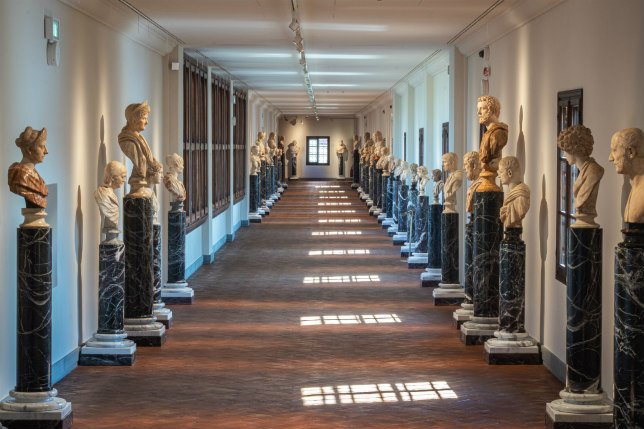
Vasariano con busti
The recent (2025) restoration and new exhibition layout of the Corridoio Vasariano (Vasari Corridor) in Florence, where over 50 ancient Roman marble busts are displayed along the passageway.After being in storage for decades, these Roman imperial-era busts were reinstalled in the section of the corridor that passes over the Ponte Vecchio, following the corridor’s reopening in late 2024.
Simone Verde, what is so special about the Uffizi?
We call it the Uffizi, but we should call it Uffizi Galleries in plural, because the Uffizi includes Palazzo Uffizi and Boboli and the Vasari Corridor. We have the Painting Collection which is known everywhere in the world, but we have also the second most important Antiquities Collection in Italy, after the Vatican Museums. This is between Palazzo Uffizi and the Corridors of Uffizi. Then we have the Porcelain Museum, and we have the Fashion and Costume Museum, the third collection of this kind in the world for number of pieces. We have The Medici’s Treasure. We have the second modern art gallery in our country on the last floor of Palazzo Pitti, and we have The Royal Apartments and The Gardens. At the moment we are working on the donation of a very important private collection of Islamic art, because we have to be as diverse as possible in terms of collections of cultural opening on the global level. Islamic art, which was so very important for the development of the Renaissance itself, absolutely has to be represented inside our institution.
The Louvre has its iconic painting La Giaconda and is an encyclopedic museum, whereas the Uffizi more akin to the Prado or the National Gallery in London?
The Louvre is an encyclopaedic museum because of the colonial history of France. The Uffizi Galleries are not an encyclopedic museum, but what’s really special, important and unique at Uffizi is that the model of the European Western museum was born at Uffizi. This is thanks to the brilliant idea of Francis I to mix the Italian studiolo, the German wunderkammer and the French galerie. This created a system of displaying that has been copied in the rest of Europe for centuries, creating the museum as we know it nowadays. The Uffizi is a sort of encyclopedia of the history of museology, because after the invention of the institution by Francis I it passed through all the major phases of the history of museology over the centuries. Under my direction the Uffizi can try to bring contributions to the international debate about these now so very fashionable institutions. This is not because of the encyclopaedic constitution of its collection, but because it’s a sort of encyclopedia of museums through the examples and the layers of history that we have in our buildings.
How long does it take to visit your incredible museum complex?
We provide a three-days ticket, knowing that a proper visit of such a museum has to take time. We don’t want to use galleries as a passage for tourists. Galleries are places of reflection, even of relaxation or meditation. The most important thing is to give visitors the opportunity to know and to understand which are the things that are possible to be seen. At the moment we don’t actually have visitors, we have mostly tourists who accede to a standard offer. We need to change this, to give the possibility to people to act, not as tourists, but as citizens in our museum. Then they can choose what they want to visit, knowing the history and the layers of this history, even the richness of our collection. This is why, after making the new entrance, we are going to create – and the bid is about to close – the biggest history of collections section in the world. It will be 1,500 square metres in which visitors can be introduced to the history and the variety of our collections, before getting inside the museum.
And thereby make the choice of where to go?
Yes, but also, since the museum has to be a place for cultural emancipation, to start with the history of the collections is a way to let people better understand how the cultural values we are offering them have been constituted in history, socially and politically. It’s a way to help a visitor be much more conscious of what he or she is going to see.
Which are the iconic masterpieces of the Uffizi?
We have the Botticelli Birth of Venus and Primavera, the Michelangelo Doni Tondo, and three Leonardo’s. But we want to change the perspective and try to speak about the artworks not as icons but as documents of history. Otherwise the museum is not going to do its job and we propose not a cultural offer but a touristic offer. The museum is a public entity, a state institution, and has to promote knowledge and consciousness. The mission and even our challenge is to be able to give those high numbers the tools to understand our collections in a way that could be possible even with much smaller numbers.
How many works do you have in total?
That is an impossible question to answer. We have 70,000 pieces for the Museum of Costume and Fashion, between 2 and 3,000 pieces for the painting collections, and hundreds of pieces of the Imperial Apartments and the Palatine Gallery. It is possible to have a number, but we never really tried to get one!
Why do you also organise exhibitions?
Because exhibitions are a tool to update the audience and promote among the public the latest achievements of scientific research. That’s the only way, from my point of view, that exhibitions are legitimate, because they provoke stress to the artworks. The 2025 exhibition “Florence and Europe. Arts of the Eighteenth Century at the Uffizi” was a way to show to our public part of the collection that is actually in storage. Our entire section about these centuries is not visible at the moment because the wing that is supposed to host them is under renovation. The most important exhibition which we are organising at the moment is about Lorenzo the Magnificent’s collection. “Magnifico 1492” is going to open on November 30, 2026. We are going to reconstitute the three battles of Paolo Uccello.
But those three battles are not all in Florence, so how will you do that?
One is at the Louvre, the other at the National Gallery, so we are going to borrow two of the three pieces. We’re going to put those pieces together because it’s related to research on the invention of perspective in Paolo Uccello’s work. We want to propose a reconnection of those three paintings in order to let people better understand how scientific and mathematical and geometric research worked at the time of Paolo Uccello.
Will it therefore really be a Paolo Uccello exhibition?
No, he is at the core, but we are going to have more than 150 pieces coming to Florence for this exhibition. We are going to recreate the connection between the art pieces, the jewels and the artefacts in Lorenzo the Magnificent’s collection. He died in 1492, and I’m starting from the death point, because it’s very symbolic. Here is the moment in which America was discovered. We are going to recreate the concepts, and even the criteria, of the 15th century collecting practices. We are going to recreate the spaces as they were, in order to try to understand which were the connections between those objects that were in those different rooms. Today, following the classification of 19th century academic thought, they would be dispersed in different genres. This goal of this exhibition is an important project because it’s a way to verify practically and really the validity of scientific research.
Why did you choose Paolo Uccello to be at the core? Was he very important during the Lorenzo the Magnificent period?
Because Paolo Uccello was one of the most important researchers in perspective and one of the most intellectual artists at this time. By the way, the paintings we are talking about belonged before to another family, and Lorenzo wanted them badly and so obliged them to sell to him. They were dispersed during the second half of the 19th century, so after 150 years they are going to be again together, which is an event in itself. It will be a way to better see and understand how his perspective ideas worked in reality in painting, reporting all these pieces together. We are even trying to understand the height at which they were displayed, because perspective has a focal point and whether it works or not depends on where you look at it from.
When thinking about perspective, most of the time don’t people think first about Piero della Francesca and Masaccio?
Yes. Paolo Uccello’s perspective research work was somehow forgotten because it was so scientifically inspired that he tried to create a bifocal perspective display. In his paintings you have two focus points, because each eye of course has its perspective system. Since this approach was abandoned afterwards, his paintings were somehow put aside.
“The icons of the museum are promoted by social media, and this is both an opportunity and a problem.”
Simone Verde, why was the Medici family so incredibly important in collecting art?
They were politically weak, and they needed art as a form of propaganda to become politically strong. The Uffizi was created because the last Medici gave their collection and they could continue being as they are thanks to the donation of Anna Maria Luisa de’ Medici. That wasn’t the case for other aristocratic, ruling families in Italy. For example, the Gonzagas sold everything they had to Charles I of England. So that’s the big chance we have in Florence.
How does the national state system of museums work in Italy?
We are autonomous, but not independent. So we are a branch of the Ministry but we have a managing autonomy. We have a board, we have a scientific committee, but at the same time we have the periphery office of the ministry. At the Uffizi we are naturally at the head of this museum system for historic and even numbers reasons. The museum system is composed by more than 400 institutions, from archaeological sites, small museums to big national museums.
Why is the Renaissance and travel to Florence such an important part of the culture of Americans and Anglo-Saxon people?
For the same reason it is so important today for the Chinese. There’s a huge interest from the Chinese government, not just among the Chinese audience, for the Renaissance. In the 19th century the Renaissance became the mythic place of origin of capitalism and industrialism, and Renaissance was reinvented at that time. An important industrial country like China has exactly the same interest now as there was in England in the 19th century.
Do Chinese and American visitors look at the same things or do they have different interests?
Everyone more or less looks at the same things because the icons of the museum are promoted by social media, and this is both an opportunity and a problem. That’s also why we are working so much on the history of our collection. I discovered this year the funny story that for the Chinese now it’s very fashionable to buy art history manuals or books. What they then look for in our museum are the originals of the paintings they saw in pictures in the books they bought.
Of the 5 million who come how many are Chinese?
Between 10 and 15 percent. It’s a huge percentage. Local Italians also come, and we have opened a space dedicated to small exhibitions in order to attract local people. The museum is such a big touristic attractor that they lost a bit the connection with the institution, and we are trying to recreate a strong local link. Another thing we did, and it’s working quite well, is we created a sort of Uffizi University with classes every year. It’s free, and it’s open to everyone, and people are responding in a very enthusiastic way.
How come museums today are no longer the preserve of an elite but enjoyed by the masses?
Because we live in a world in which modernity is an ambition for everyone. Museums somehow display the achievements of different nations and populations and cultures in this path to modernity. That’s why museums are so fashionable in the East. It’s part of the industrial and economic success, and it’s a showcase of all this success as well. That’s why the most important paintings or artworks that are displayed in our institutions became brands. This is a big attractor, but we have to use this attraction to propose something different to this audience that is not as cultivated or even as educated as before.
The museum is not just a place where you go to take a selfie?
Exactly. That’s a way to show that you were able to touch the original brand but at the same time it’s our contemporary way to regenerate the aura of art. The strength of art, of heritage, is its capacity to regenerate itself through centuries and time and cultures. We don’t have to condemn the fact that today it works like that, but we have to interpret this new direction that it has taken. It’s the only chance we have to make these pieces survive through our time and to be given to future generations.
In Italy people pay for a ticket to visit museums. Do you make enough money from ticket sales to survive?
We give 40% of our budget to the Ministry! In fact, we finance the Ministry instead of getting resources from the centre.
What does it mean to be Director of the Uffizi?
Nowadays, especially with all the culture and social changes we were talking about, being the director is a multitasking job. We are obliged to be active in so many fields in so many sides of our institutional activities that it’s a crazy job.
Do you give a lot of consideration to funding and the raising of funds, as do museum directors in, for example America?
We are constantly increasing our incomes so the managing activity on the economic and financial side is important. The main difference between museums that have no ticket because they are free and museums that have a ticket is that you have a budget coming from your ticketing. Of course, if a museum is free, you have to look for funds in a different way, so you are anyway active as a manager. If you have a ticketing system the most part of your managing activities on the financial side is on how to create ticketing formulas that work for the museum.
Is it your personal philosophy that museum entrance should be free, or is it a good thing that they are paid for?
There are different ways everywhere to be accessible to everyone. In Italy, we have one Sunday per month in which everyone can come for free. In France, you have free access according to your social status. If you are unemployed, you can visit the museum for free, for example. In Anglo-Saxon countries, museums are free because they are also the obligation of the aristocracy to give back culture and heritage to the population. These three examples are part of three social and political traditions, but every one of them has studied a way to be accessible to everyone.
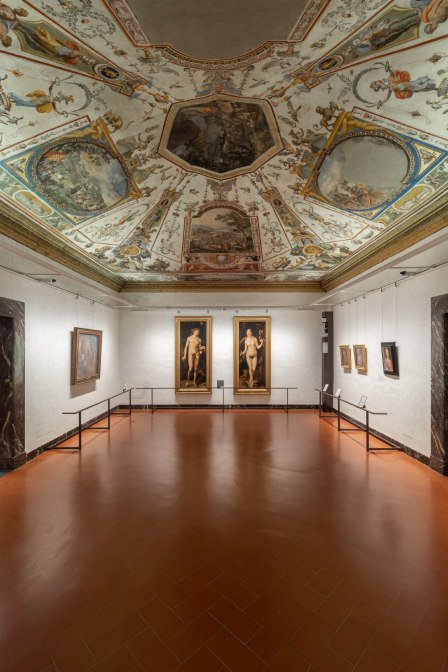
Sale Rinascimento d’Oltralpe
“Renaissance Rooms Beyond the Alps” : the recent rearrangement of the rooms dedicated to Flemish and German painters (masters from beyond the Alps) on the second floor of the Uffizi Gallery in Florence.
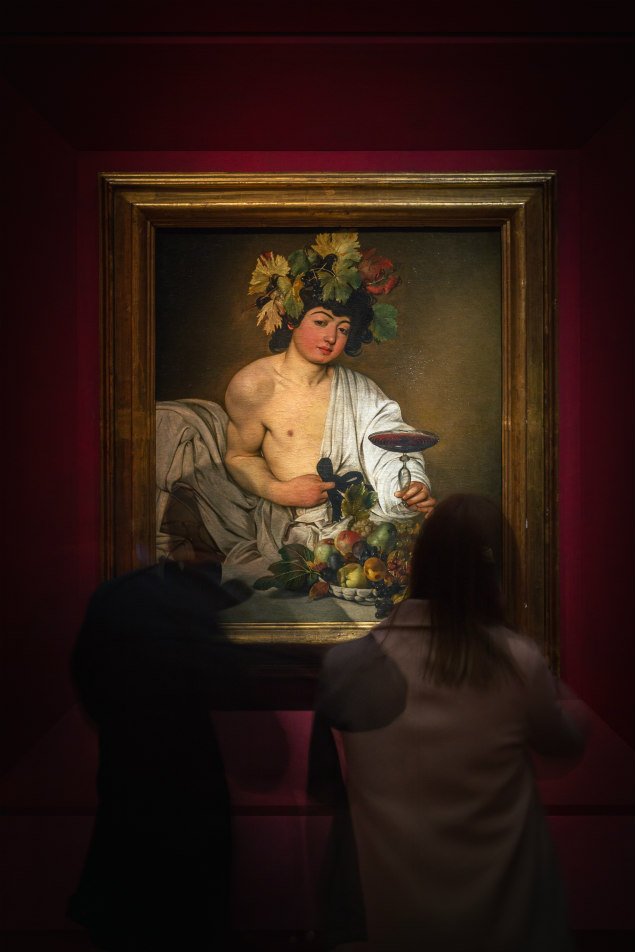
Bacco Caravaggio
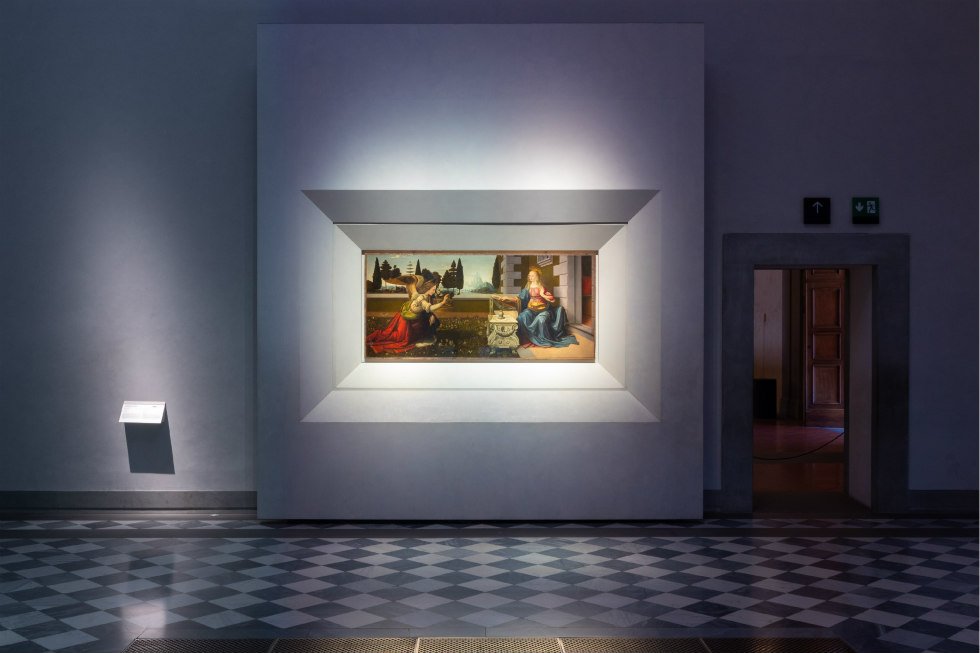
Annunciazione di Leonardo
The Annunciation is a painting by the Italian Renaissance artist Leonardo da Vinci, dated to c. 1472–1476. Leonardo’s earliest extant major work, it was completed in Florence while he was an apprentice in the studio of Andrea del Verrocchio.
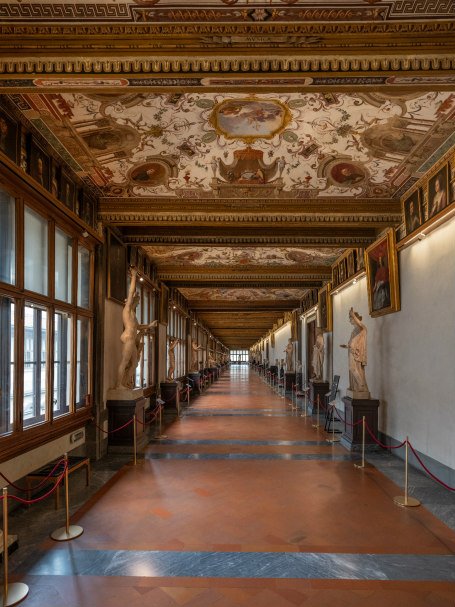
Corridoio di Ponente
The West Corridor, or Third Corridor, is one of the three corridors of the Uffizi Gallery in Florence. Characterised by ceilings frescoed between 1658 and 1679 by artists such as Giacomo Chiavistelli, it houses numerous classical works of art and extends along the west side of the building.
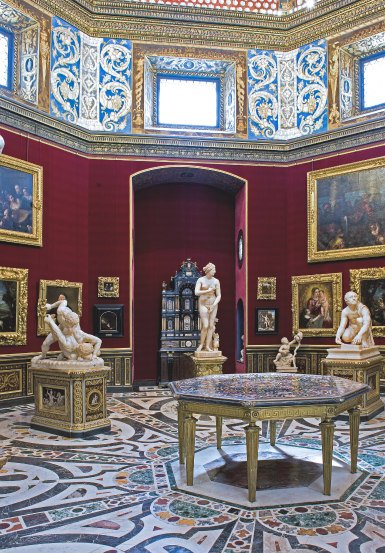
Tribuna
The Tribuna of the Uffizi is a celebrated, octagonal, domed room within Florence’s Uffizi Gallery, designed by Bernardo Buontalenti between 1581 and 1584 for Francesco I de’ Medici. As a “Wunderkammer” or cabinet of curiosities, it was designed to display the most prized masterpieces of the Medici collection, representing the four elements (earth, air, fire, water) through its opulent decor.
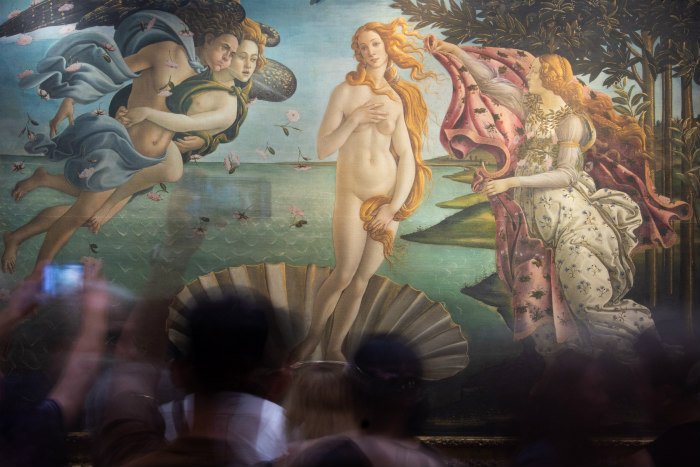
Nascita di Venere, Botticelli
The Birth of Venus is a painting by the Italian artist Sandro Botticelli, probably executed in the mid-1480s. It depicts the goddess Venus arriving at the shore after her birth, when she had emerged from the sea fully-grown. The painting is in the Uffizi Gallery in Florence, Italy.
“We have to be a universal museum in terms of audiences. That makes the work we do much more complicated.”
Simone Verde, with many works in storage you could make hundreds of exhibitions, so why do you still buy other new works?
For two reasons. At the Uffizi, we have absolutely to buy because, from the 80s, this institution has been transformed into the Renaissance collection museum. In fact, the Uffizi was born in the 18th century as an encyclopedic museum for Italian schools of painting, and since our collections represent Italian painting we have absolutely to fulfil this obligation. So we are trying to fill the holes that we still have in our collections. The second reason why museums in general have to continue acquisitions is because scientific research changes. Sometimes we discover that the painters, the sculptures, or an object for a fashion and costume museum, or for a treasure section, was much more important than we thought before. Acquisitions are the only tool you have to make the collections entirely and fully representative of how the history of a specific period worked. They can reintegrate pieces that in the past were not considered important for ideological or political reasons. For example, in the 19th century everything that was not considered pure and an aesthetic of a national point of view was excluded. Now we discover that artworks that are the product of cultural connections or predations were very important for the reinventions of national art history movements. That’s why acquisitions are very strategic.
Is there a lot of competition between museums on buying a certain painting or object?
Yes, of course, and we have a budget, but we modulate the budget according to the opportunities we have. We don’t want to be a museum making acquisitions systematically just to make acquisitions. Just after I had been appointed, in 2024, we bought The Mystical Marriage of Saint Catherine de’ Ricci by the French painter Pierre Subleyras. It’s a very important masterpiece, and is now integrated in the collection – and by the way was displayed in the 18th century exhibition. This year we bought another very important painting, the very beautiful Portrait of a Moor by Ceruti. It is displayed now at the Uffizi in the ground floor spaces. In 2025 we also bought The Witch, an aesthetic manifesto by Salvator Rosa that is a real masterpiece.
Do you also sell some things?
No. This is forbidden by law. We cannot, because it’s all part of the Italian state properties. You would need a constitutional law to sell paintings from the Uffizi. Of course we can exchange, and we can do long term loans.
In some countries, such as America for instance, families give their collection to a museum. Is it the same in Italy?
Yes. A very important donation happened a few years ago at the Capodimonte Museum when Sylvain Bellenger was the director. It is the Arte Povera collection of Lia Rumma, one of the most important collections of this movement in the world.
Do people come to see modern or contemporary art in museums like yours?
It’s not a Contemporary Art Museum, even if we have contemporary art exhibitions, such as that of a very magnificent Chinese artist called Lin Wai-Yi we are going to have in September 2026.
There was a certain moment when Italian contemporary artists were mixed with the old masters, like Pistoletto in the Louvre and Penone in Uffizi. Are you favourable to this idea?
It was important to do activities and projects like that at that time. I think that that time is now over. It was a way to let people discover contemporary art in a moment in which contemporary art wasn’t that popular. Now we have the opposite. People are much more attracted by contemporary art than by ancient art in general.
Is it true that young people all over the world are becoming more interested again in old masters?
I don’t have any data to give you an answer. It’s true that our museum is full of young people. But it is not so much a question of age, but of social extraction. It depends on young people from which kind of social context. We have to be a universal museum in terms of audiences. That makes the work we do much more complicated.
Very simply, people go to Florence for art?
It’s true. But before we had travellers, today we have tourists. Which is different. A traveller is a 19th and 18th century myth, part of the Grand Tour ritual that was part of the education and of the building of the individual. Today they come to have different experiences. Normally Florence is a stop on the high-speed train coming from Milan, sometimes Venice, and going to Rome, and sometimes Naples. It’s more and more just a stop. This is a global phenomenon, not just Italian. We have also a sort of grand tour of the East: people go to Dubai and then they go to Abu Dhabi and they visit the museums where, by the way, I worked. Afterwards they go maybe to Singapore where you have one of the most important and amazing museum systems in the world. We have to transform those stops into opportunities for education.
Is working in Italy very different to working in Abu Dhabi?
It’s absolutely different, but there are a few similarities. In Abu Dhabi we had to invent the museum formula, and we had also to reinvent our past in order to make it interesting for culturally different populations. But we have the same challenge with the new generations, so while it was very different, somehow we have the same challenges at home. That’s why it was a very important and fruitful experience for me.
Is it your job constantly to reinvent?
There is another word that was used during the French Revolution when the ontology of our work was codified – and that word is to regenerate. Of course, invention can be part of regeneration, but in regeneration there is the fact of not to betray the collection.
Do you also have a large facility for restoring paintings?
Not just paintings. There is a lot of conservatory work, and we just launched for the first time in history the restoration of all the statues that are displayed in Boboli. More than 250 statues, a few of them are very important pieces from the antique world. For 2026 this is the main activity in this field for our museum.
Why did you do a PhD in anthropology?
To regenerate culture, you have to be an anthropologist, even if, of course, you also had to be an art historian. To better understand the values that art history tells you and to better understand which were the functions and how to regenerate them in present times, you have to be a real anthropologist.
And also a philosopher?
Anthropology is a way to conceive philosophy. Anthropology is useful because it is a way to study and understand how people create a world in order to give a sense to life and to survive. Art is part of this basic exigency, to survive and to give a sense to life.
Simone Verde, thank you very much for this conversation.
ENJOY THIS INTERVIEW? SHARE IT WITH A FRIEND.


