BRAVE AND DETERMINED. Karla Otto built her eponymous full-service brand-building communications agency into an organisation which handles press, communications strategies and events for many global brands and operates from 15 cities across the world. Today her company Karla Otto is part of The Independents, a worldwide group of industry leaders across luxury and lifestyle, and she herself no longer participates in its management.
Karla Otto, you grew up in Germany, in a little village not far from Bonn?
Yes, and since I was 16 I really wanted to get out. I wanted to spend a year of travel before university, to see what’s out there. It was a dream that my parents hoped I would have forgotten about by the time it should be done, but, with a mixture of trust and naivete, they let me go into the unknown. My goal was to go all the way to Japan, crossing all Asia by myself, which I did.
Why did you want to go to Japan in particular?
While still going to school I would go to nearby Bonn, the capital of Germany at that time. Bonn was super international, a small town with a few locals and then all these foreigners. That made me become a little bit more open-minded. I was very interested in film and theatre, and they had a cinema in Bonn with movies in foreign languages. They did a two-week series showing Japanese movies, like Ozu and Mizoguchi. I went to see every movie that was on, and it was mind blowing. I asked myself, ‘Which planet is this Japan on?’
“If you do communications you really need to love people, understand how they think and what they need.”

Jean-Paul Gaultier and Karla Otto
Karla Otto, seeing these movies made you want to go there?
I got fascinated by this country that I knew almost nothing about, and a few months later I went to the Olympics in Munich for the cultural program. The Japanese avantgarde theatre group called Tenjō Sajiki was performing there. They don’t exist anymore, but at that time they played all over the world and they were absolutely spectacular and surprising. They were very interesting and we started to talk and became friends. I saw them a few more times, in Frankfurt and in Amsterdam, and then I decided I would go across Asia all the way to Japan.
Where you became a model?
That was a lucky incident. I had decided to study at university in Japan and on the side I was teaching English and German. Somebody stopped me on the street and said he would really like to do pictures with me and introduce me to an agency. I’m always open to everything, and so we did a test shoot and the agency he introduced me to took me on. Halfway through the second semester I had to stop studies because I started to work as a model in Tokyo and it was too hard to do both, and I thought it a worthwhile opportunity to explore.
You also worked as a model in Milan and Paris?
That came later. They connected me to agencies in Italy and Paris, to go and work there for maybe a year and then come back. I went first to Italy and started to work and then I went to a really nice agency in Paris. But then I went back on a second Asia trip because of my friend who talked me into doing that again to see it with different eyes. So I did another trip to Asia of a little less than a year, but the end of that trip was India and the Maldives, we did not go as far as Japan.
How come back in Milan you met the noted fashion designer Elio Fiorucci and he asked you to be his press person?
I met him at Torre Di Pisa, my favourite restaurant in Milan at that time. He was sitting at the next table and we started to talk because of our dogs. We talked so much we were the last people to leave the restaurant. At the end he told me that he would love me to do his press with foreign countries.
Because you spoke Italian, German and English and had fashion experience?
Yes, and at that time there were very few people with extensive fashion knowledge. I had worked with editors, photographers and designers, with people from the industry, and he thought that was a good qualification to do the job. I stayed with Fiorucci for a year and a half, and I loved what the company was doing. He was very innovative.
In due course you left Fiorucci and became independent and in 1982 created your own company, Karla Otto?
Yes, I started to work with Adriano Goldschmied and he had brands like Diesel, Replay, Katharine Hamnett, all this streetwear, very interesting at the time. He wanted me to consult on the Japanese market. Two designers who were working with him – David Mantej and Evelina Barilli – were about to launch their new fashion line and had decided to do a brand together called Bo-Bo Kaminsky, produced by Adriano’s Genius Group, and they asked me to do PR for their brand. That’s when I decided to do my PR company. Everything came by chance. No planning. No business plan. No dream.
Nevertheless your agency became established quickly?
Yes, Bo-Bo Kaminsky became an instant success because they had done something very innovative which was embraced very quickly by the press. Then I got Sybilla, a new Spanish designer. I found her Gibò, a company where she could do the best production in Italy. The owners of this company introduced me to Gaultier. I went to see his show in Paris, and he asked me to work for him after that.
What qualities of yours made you so attractive to the world of fashion?
I was very interested in the creative part, and I had very strong affinity to fashion so I understood talent. I saw how I could help these designers to get quickly understood by the press.
The German fashion designer Jil Sander also became your client?
Jil was already very successful selling-wise when I met her through a much more formal approach. She had heard about me, and that I’m German, and she asked me to come to Hamburg. She was the most important designer in Germany, and I saw all the possibilities to help with her communications. I had a formal meeting with her and her assistant in Hamburg, and she decided to join the agency.
What did you do for Jil Sander?
A lot. She was an amazing designer with amazing product, but she was not doing any shows – which she did not believe in – nor much press outside of the German speaking market. As Italy was an important market for her we started with communication in Italy. After a year and a half I managed to persuade her to do a show, which made a big difference in how she was perceived as a designer. I put together a team who helped her with the show production and then she was launched, and all the press worked around it.
“Everything came by chance. No planning. No business plan. No dream.”
Karla Otto, was it amazing to work with people like Miuccia Prada?
Yes and I still really love her and what she does very much. She is one of my favourite designers, the kind of clothes she does resonates very well with me. She is an intellectual woman who is not just making a garment. I started to work with Prada in ‘89 when they began to do the clothing collection. We worked together internationally and I was doing everything out of Milan.
Miuccia Prada and Karl Lagerfeld matched the world of fashion and the world of art?
Especially Miuccia. More than any anybody else at that time. The Prada Foundation started long before the building. They were doing a show a year with really important artists.
How could you handle all these different competitor designers at the same time?
I had a very strong work ethic. I would never talk to one designer about another designer, each one was unique. In an agency different teams are needed for different clients and . you need to find the right people to support you. You need to understand that the designer will like to work with this person. I never analysed it, but you require a lot of psychology in this job.
First you had offices all over Europe, then America, then also in Asia. Were these not different worlds in which to operate?
Yes, but I developed them slowly. The first office I opened was Milan in ‘82. In 1990 I opened Paris. A few years later I added London. We needed to be able to work on a broader scale for the clients, especially for Jil Sander and Prada I needed more offices. Later I also opened New York, and we did LA because we needed to do the VIP part with stars dressed by the designers on the red carpet. Then Asia was developing big time, and everybody was asking for communications in Asia.
However Japan became less important?
Unfortunately, yes. In Japan the hot moment was from the middle of the ‘70s and all through the ‘80s and ‘90s. Then suddenly it slowed down, and China was becoming a very important market and there was a request for press, first in Hong Kong then Beijing and then Shanghai.
Designers have to come out with new collections continuously, like every six months?
In the beginning it was every six months, and then it became much faster. It is an incredibly difficult job with a very fast pace. I have a lot of love and compassion and admiration for them.
How much did your job change because of digital technology?
Change is unavoidable, there is continuous evolution. Our job changed, and it became so fast and the traditional press became less influential and the new influencers and the internet came. The time when we had a show and photographers had to sign something agreeing not to release these pictures until 3 or 4 months later ended. Suddenly you had instant publication online, and a lot of clients were very concerned about being immediately copied. But it was unsustainable not to be online because everybody was. That became the new thing. It was really a big step. Everything before then was so slow compared to how things go now. Unbelievable. Before it was rare to see the images of a show a week after if you had not been invited. A few years later you could see it instantly, because the show was online.
Are there any star designers today?
You still have stars, but not as distinct as that period – and this is not because they are less good. It was a different moment with many less talents, and the ones who were good had a lot of visibility. Now there are so many, and actually many good ones. And many bad ones. t’s very different than when that brand belonged to Saint Laurent and it was all his. Or Prada or Jil Sander or Versace or Armani. Now it is a more industrialised fashion system. There is so much more knowledge than at that time, all the knowledge of the past 40 or 50 years is readily to hand. They can also promote themselves easier through social media, which didn’t exist when you had to rely on magazines, newspapers and television. Now, even if you don’t sell, you can start promoting your collection.
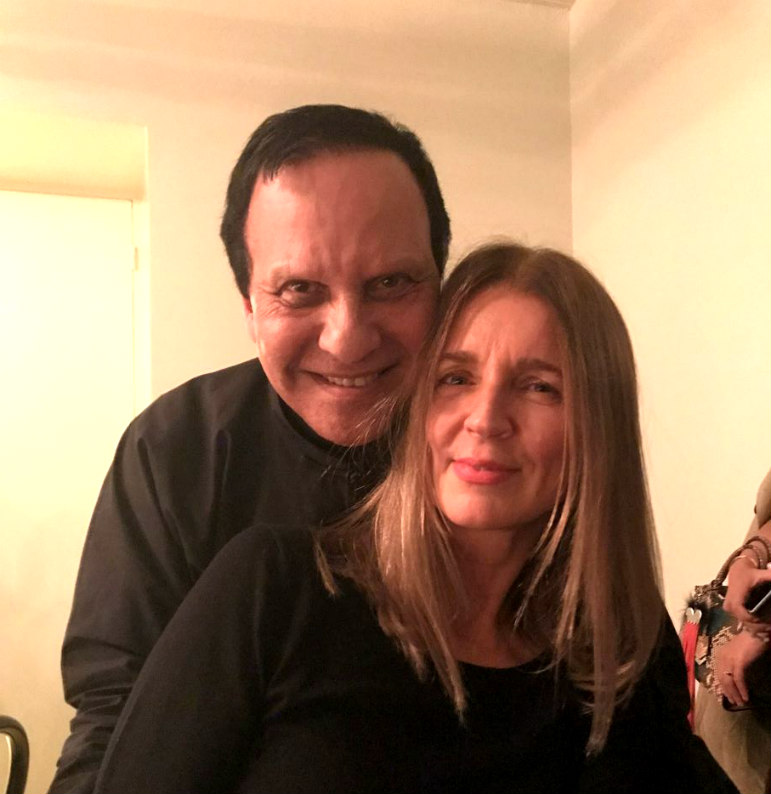
Azzedine Alaia with Karla Otto

Karla Otto
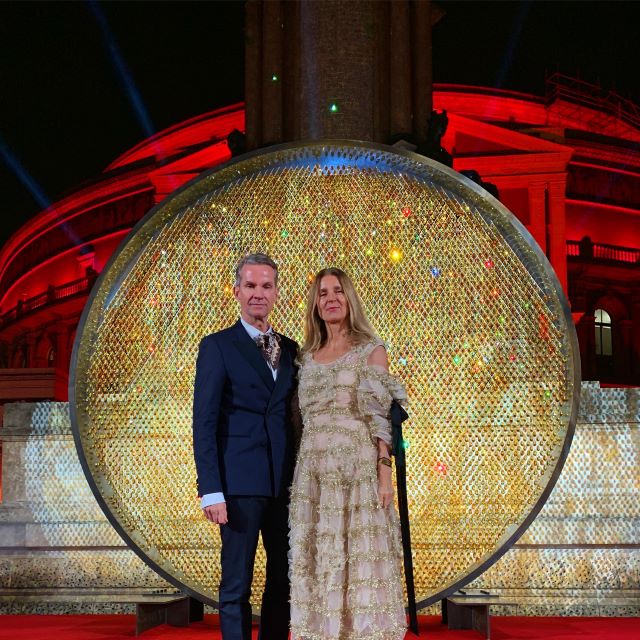
With Alexander Werz, CEO of Karla Otto
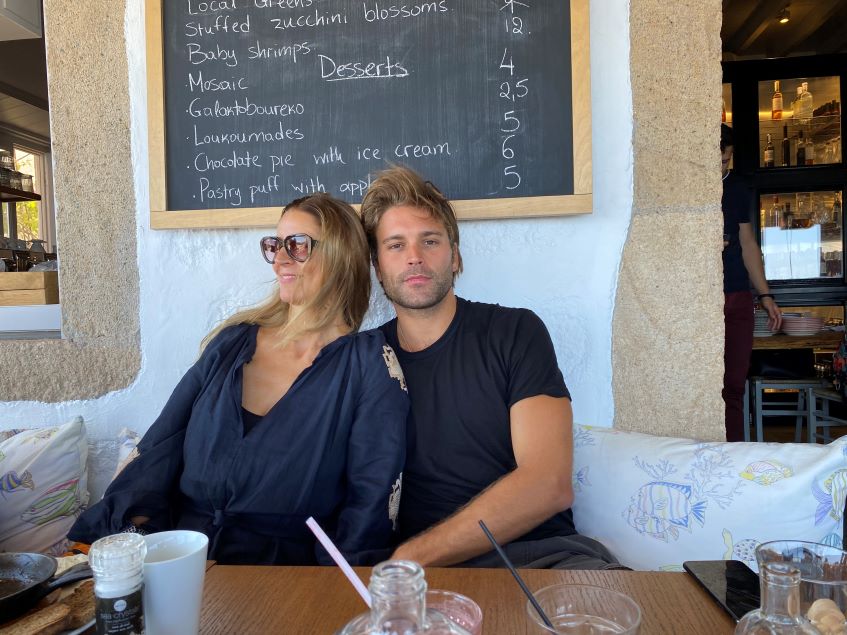
Karla Otto with her son Charles Otto-Berthoud
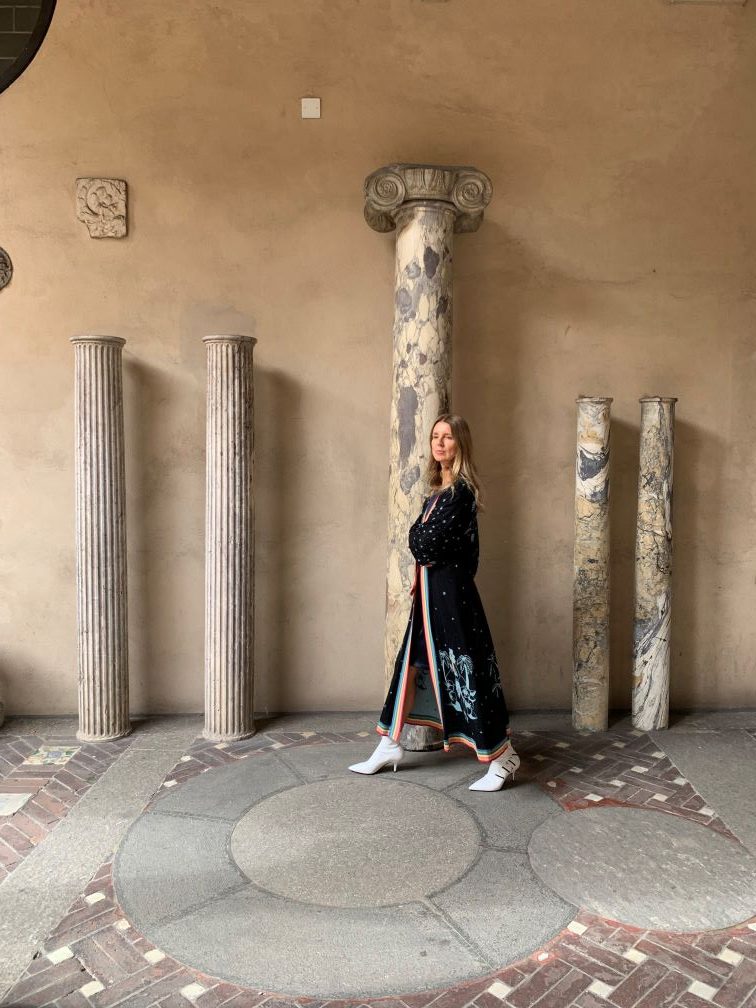
Karla Otto
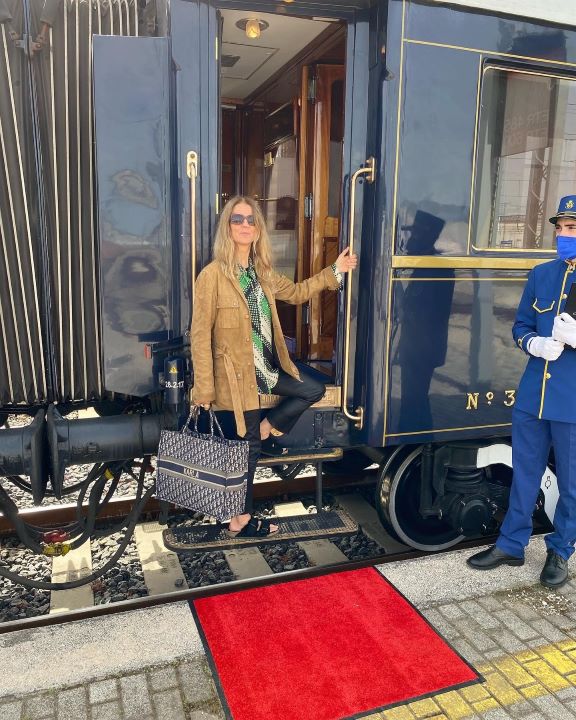
Karla Otto: The journey continues
“I really wanted to get out while I am still in amazing shape and can do everything I want.”
Karla Otto, you started with Fiorucci, now there are H&M, Uniqlo, Zara and others like that. Did you also work with these large groups?
For example, with H&M we did almost all the designer collaborations. Twenty years ago that was a very innovative concept. The first designer collaboration was with Karl Lagerfeld, the top star. He was doing Chanel and Fendi and he had his own collection, and he wanted to do H&M! I don’t think he only did it for the money. I worked with Karl for quite a few years and he really liked to provoke. He was also very provocative when he started to work as a photographer and do his own campaigns. He was the first one who did multiple jobs, which now is very common.
In all this, how was your life?
My life was a lot of work, and also a lot of travel, but travel is not heavy on me, because I trained myself so young to be in different environments all the time. My private life was time limited. It was about August, Christmas and Easter vacations. There were some openings where everything would shut down in our industry.
In the end you created a big company with many employees?
When I sold seven years ago I had 380 employees; and 8 offices in 6 different countries.
Nowadays instead of having many offices you have many houses, but where is home for Karla Otto?
Switzerland is truly my home. That’s where I live.
After years of hard work, was it a difficult decision to sell your business and to stop?
No. It probably would have been a difficult decision to take, but during Covid I was only in one place, in St. Moritz. Without travelling. Without going to dinner. Without everything. The life I was leading until then all at once completely disappeared; and I loved it. Wow! Finally! No plane to take. I could stay in the same place every single day. Eat at home. It give me time to think because out of the blue I was still. I was only used to being in this hamster wheel, running, making sure everything is happening, that everything gets done and everybody’s doing the right thing. Suddenly there was not much to do and by the time the second lockdown came I decided that time is more precious now for me than more money or more work or more success. I really wanted to get out while I am still in amazing shape and can do everything I want. I had the company for 40 years. A long time.
What does the future hold for Karla Otto?
Fun without the stress.
Did you make many good friends in the world of fashion, which seems to be a friendly club in which everybody kisses each other?
A few yes, absolutely. But how many friends can we have in the end? Not so many, because if you have friends you always have to keep that relationship going and it requires time. Now in fact I see more people, and I love it. Before, I was always exhausted in the evening. I was working all day. Saturday. Sunday. Travelling. During the vacation my phone was always on. People could call me any time – except when I was asleep (I switched my phone off). It was intense.
Did you sometimes have major fights with the designers?
Of course not. With the designers I cannot remember one fight. I consider myself quite a balanced person, so I can easily deal with the ego people and I don’t like the energy gossip creates. You will never hear me gossiping.
Is the fashion world capricious?
Yes, but I grew up in that world. I started to see it from the bottom, working as a model, hearing different things from the makeup artist, the hairdresser, the photographer, the assistant, the designer, the magazine people. I moved into that world very young, so I lived every level. I’m a very flexible person, easy and adaptable, and I liked it as much the last day I worked as when I started.
Could your job really change the destiny of a talent?
Absolutely. It really does. It can accelerate the success. Big time.
Is there still a big future for fashion?
People will always have the desire to own a new beautiful accessory or certain clothes. For one thing, maybe that’s a major thing, to be part of that group with whose images we are bombarded. You see all these images about the big brands everywhere, and in some small way you belong to that group. Clothes will never stop, because we like to express ourselves through the way we dress.
Are you a spiritual person?
Yes. I cannot imagine life without that, but no religion for me. Of course I cannot say I didn’t change with success, but I’m very much the same person as when I started my journey.
Have you formed many people?
Yes, inside my organisation I hired a lot of people fresh out of university and tried to form them. Some people started in my organisation as an intern and later became director of an office or something like this.
What do you advise young people?
You need to have passion for your job in order to do it well, because it weighs on you to go to the office if you do a job which you only like a bit. If you do communications you really need to love people, understand how they think and what they need. You need to be very receptive, and you need to be determined – not to be discouraged quickly – and you need to work hard.
We know you have always been brave because you went from a village in Germany through Asia to Japan, but is there something you are afraid of?
I don’t have irrational fear and I also am a very positive person. I always think that even if it is a difficult situation, everything falls in place, because this has been my experience. You can go through a rough time, but at the end it always adjusts itself.
Thank you Karla Otto, for this interesting conversation and this great conclusion.
All images courtesy of Karla Otto.
ENJOY THIS INTERVIEW? SHARE IT WITH A FRIEND.