

PASSIONATE ABOUT HOW PEOPLE RELAX. Andrea Wong has vast experience in the leisure and entertainment industry on both sides of the Atlantic. Wong was President, International Production for Sony Pictures Television and President, International for Sony Pictures Entertainment based in London. Prior to that, she served as President and CEO of Lifetime Cable Networks. She now serves on the boards of Liberty Media Corporation, Roblox, QVC Group, and Hudson Pacific Properties.
You can listen to the podcast of this interview here.
Andrea Wong, you were born into a Chinese American family but now live in London?
Yes, my great-grandparents came to California from China around 1900. I am the third generation born in the US and the eldest of five. Unfortunately, I don’t speak a word of Chinese. I grew up in Silicon Valley when it was exploding. Apple, Hewlett Packard and IBM were down the street, and everybody told me to be an electrical engineer because I was good at math. When I was in high school, I thought my destiny was to study electrical engineering at the best university I could possibly get into, hopefully follow that by going to Stanford business school, and then become a marketing executive at Apple. That has obviously changed a lot!
To progress your career, you first left California when you were accepted at the Massachusetts Institute of Technology (MIT)?
Yes, I loved being in Boston because I was desperate to meet different kinds of people and see different places. Electrical engineering was not something I was brilliant at, but I got the degree and had a couple of summer jobs in engineering, and then I got lucky with a summer job trading stock options. I realised at that moment that someone would hire me to do something other than being an electrical engineer, so I went to Wall Street for a couple of years as an analyst at First Boston, an investment bank that doesn’t exist anymore, in the group issuing high-yield bonds. A great education for anyone coming out of university.
“Everyone knows what it feels like to fall in love, to date, to be dumped.”
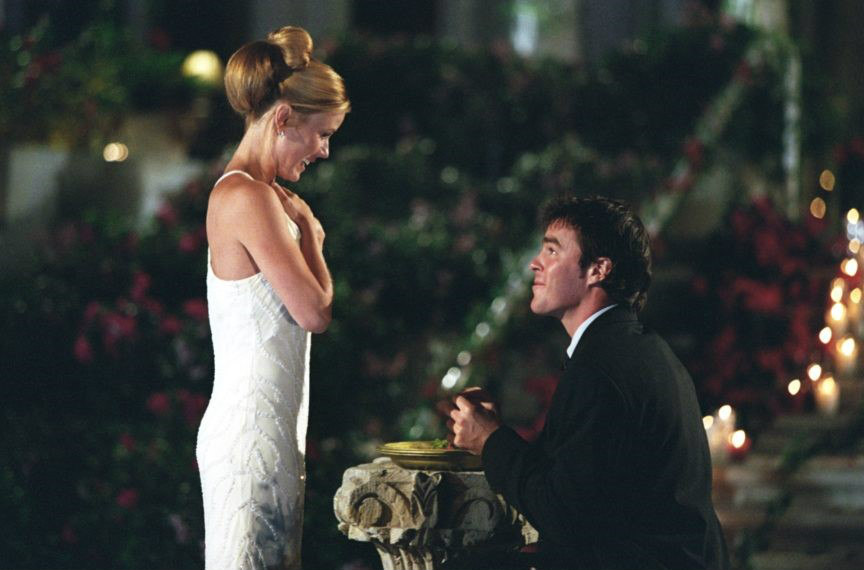
The Bachelor and The Bachelorette
Andrea Wong, then you went back to California and Stanford Graduate School of Business?
Stanford was a very free-thinking and entrepreneurial environment, and I spent the two years I was studying there figuring out what I wanted to do with my career. I realized that I am fundamentally interested in how people relax and use their leisure time, how they escape. I spent a lot of time talking to anyone I could and reading anything I could find about the worlds of film and television, travel and leisure, food and wine, and luxury goods.
How come you then worked at ABC News?
I decided through a confluence of events that I had to be a TV news producer, but I had zero experience that would qualify me. I begged for a job all over the news world, and ABC News finally gave me a bottom level job in New York. I started all over again as a PA/researcher at Primetime Live, an hour-long news magazine, and I loved it. Some of my best friends in life are from that period.
And then?
I got lucky again, because Bob Iger, at the time the COO of Capital Cities/ABC (and now the long time CEO of The Walt Disney Company), an American media company, asked me to go work for him as his first Chief of Staff. After three years the Walt Disney Company bought us, and I worked with Bob as he was merging Capital Cities/ABC into Disney. I got to learn the businesses of the ABC broadcast network, our tv stations, cable (such as ESPN and The Disney Channel), radio, and publishing. It was a fantastic job!
Next?
I knew that if I wanted to truly get ahead in the business, I needed to move to the creative side and prove that I could be successful developing tv shows. So, I asked Bob to help me get a job on the creative side of ABC. In 1998, I moved to Los Angeles and took a job that no one wanted, running the division that did Bloopers specials, America’s Funniest Home Videos, the Oscars, the American Music Awards and our late-night franchise. Everyone who was in Hollywood in television at that time wanted to be in comedy or drama, reality television was an unknown quantity. Then the world of unscripted television exploded.
What was the first big hit you developed?
I developed and put The Bachelor on TV in April of 2002. 22 years later, it is still one of the highest rated shows on ABC — a huge, very valuable franchise with probably four different versions of it on ABC right now. The Bachelor is like the Dating Game on steroids; one man starts out by dating 25 women and slowly narrows it down every week, giving out roses in a ceremony. He gets engaged in the last episode. We also did the reverse — The Bachelorette, one woman dating 25 men. Then I developed a number of other successful shows, including Extreme Makeover: Home Edition, which we won an Emmy for. And the final big hit was in 2005, when I brought Strictly Come Dancing from the UK to the US, where it’s called Dancing with the Stars. That show also still continues on ABC.
All this demonstrated your creativity?
Yes, and then I wanted to combine that with my business background and run something. That’s how I got the role as CEO of Lifetime, one of the last standalone groups of cable networks. It was the most powerful cable network for women in the U.S., but the brand was fatigued, the programming felt tired, and it needed fresh air blown through the whole thing. With a great team of people that I loved working with, we put a hit drama on the air called Army Wives and we put really high-quality biopics on about strong women. I made a deal with Harvey Weinstein to buy Project Runway, which was the biggest hit on cable for women, and moved it from Bravo to Lifetime. We refreshed the brand and this all drove our revenue and profit to record heights.
“Dancing With the Stars was the most visually arresting show I’d ever seen.”
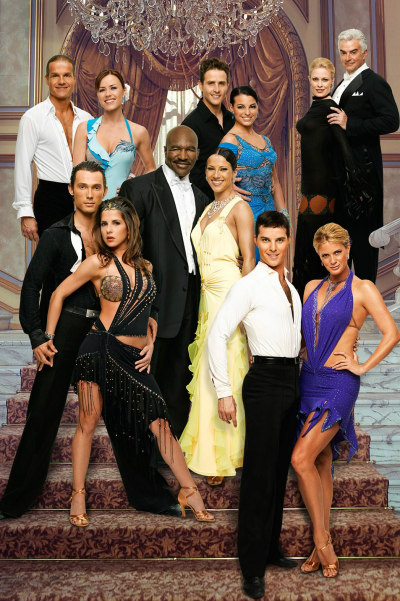
Dancing with the Stars
Andrea Wong, how do you decide what TV shows to pick?
Picking shows is pretty scary because at least 9 out of 10 are going to fail. I think the best shows have an emotional resonance that is universal in people. The Bachelor is about love. Everyone knows what it feels like to fall in love, to date, to be dumped. Dancing With the Stars was the most visually arresting show I’d ever seen. With people dancing live in front of 20 million people, the stakes are extremely high, and it’s beautiful, colorful, back door sexy. I thought this show was either going to really work or it was going to bomb, but it was not going to be middle of the road. So, let’s roll the dice and try to create a hit, and if it doesn’t work it’s not the end of the world. But if it hits, it’s really going to hit. Thank goodness it did! This business is really hard, a gamble, subjective. No amount of data or research can tell you what will work.
Why did you move to Sony based in England?
Sony put me in charge of everything outside the U.S. in television production and representing the studio. I had always wanted to live outside the U.S., and this was an exciting opportunity to learn how to do business all over the world. The U.K. is the second biggest TV market in the world, and I saw lots of opportunities for us. The first thing I did when I arrived in London was buy Andy Harries’ production company, Left Bank Pictures. We went on to produce and sell The Crown worldwide. In addition, I got to work in all of these different countries, running production companies and selling to networks. For example, my Italian production company would sell game shows to RAI 2, and my German production company would sell dramas to German networks, and we produced comedies in Russia.
Has The Crown been globally successful?
Yes, Netflix was very smart. They decided to buy it at a time when they knew they were going to grow significantly internationally, and they recognised how many countries the Queen touched, tapping into very common themes in people’s lives. Everyone understands family drama. It is also great to watch something very aspirational with the same challenges you have in your life. A large part of the reason The Crown was so successful is because it was perfectly executed, written, directed, acted, and produced. The budget for the first season was the highest ever for an hour produced in the U.K., and every penny was on the screen. It was a beautiful show that we are immensely proud of and it was great to be a part of.
How long does it take to know if a show is a success?
At ABC and Lifetime, you knew the next day. In an extremely stressful phone call to the ratings line at 8:00 in the morning I would see how The Bachelor or Dancing with the Stars or Army Wives rated. But when you sold to Netflix, they didn’t give you total numbers of people who watched it. You only got a sense for whether it was working from word of mouth and what people wrote.
In your experience what is the difference between an American and a British or European audience?
When I was in the U.S., I looked at a lot of British shows to potentially adapt them in the U.S., like Strictly Come Dancing, Wife Swap, and Supernanny, all of which worked for us on ABC. I found that a British audience prefers that a show be more languid and would prefer not to be told how to think or feel, so British editing has less “punctuation”. Brits would like to figure it out themselves. In contrast, Americans want to be told how to feel, and so you hit the viewer over the head with emotion through editing and through music. That is a very big difference in the way shows are made between this country and the U.S., even though it’s two countries speaking the same language. The opportunities are largest in the U.S., and the U.K. is the second largest, at least in the entertainment business.
I found that every country is different. Some countries will tolerate more non-local content than others, where you need to do a lot of localized content. For example, there is a huge appetite for dramas made in German in Germany, and real demand for local language comedies in Russia.
Why did you stay in London after your involvement with Sony ended?
I made the choice to live in London because I love London. It was the first time I’ve made a lifestyle choice instead of a professional choice in terms of where to locate. There wasn’t an obvious full-time job for me to do here, but I love sitting on the boards that I sit on.
One of these is Liberty Media, the American mass media company that includes Formula One Group?
I love being on the board of Liberty Media. And the combination of top-notch engineering, stunning and highly effective design, and the raw testosterone and speed of Formula One makes it intoxicating for me. I have been passionate about the sport since Liberty Media acquired Formula One nearly eight years ago. It’s been such an interesting evolution of watching that sport grow dramatically over that course of time, and to see the influence and the impact that Drive to Survive, the TV show on Netflix, had. When we bought it, our goals were to make Formula One more competitive and more interesting and popular in the U.S., and the leadership of Formula One managed to do that and really grow the sport. I also ended up on the advisory board of McLaren, which I have very much enjoyed.
I am very interested in sports and live events. In this world where everyone’s on their devices and everything is on demand, the only things that gather people and that you have to consume in real time are sports and live events.
“You have to do what you love. You have to do what makes you want to get up in the morning.”
Andrea Wong, you are also on the board of the online game platform Roblox?
Silicon Valley based, Roblox has nearly 400 million monthly active users and 7 billion hours of usage a month on the platform. Game developers have put over 40 million games and experiences on the Roblox platform, and our users – ages 9 to 25 primarily – play on the platform and monetize them. Then we pass back earnings to the game developers.
Is the attention span of young people very short?
The average person who plays on Roblox plays for about 2.4 hours a day, and that’s a long time. Part of it is social, and they’re moving from experience to experience with their friends during that time. Hugely increasing in popularity among young people, they say let’s go play Brookhaven or Adopt Me and I’ll meet you there at 3pm after school. With five of their friends they might be in their homes, not with each other, but their avatars are on the Roblox platform and they play together and talk to each other for hours. There’s a lot of self-expression, because you have your own avatar that looks how you want and is clothed how you want, so you have this opportunity to define yourself in a virtual world.
Is game development a high-risk environment like TV?
A lot of game developers on Roblox are very young, and started doing this early in their lives. They have the tools and they learn technologically how to build these games, so the stakes are pretty low for them. They’ve played so many times, they have a sense from experience if a concept is going to work. Roblox has created this industry of very young people creating games and making money from them. As an example, one of the highest monetizing games on Roblox is Dress To Impress, which was made by a 14-year-old girl who was 17 in 2024 – quite impressive.
Is watching TV series and playing games educationally harmful?
I don’t believe so. I’m interested in how people relax, use their leisure time and escape. There is time in people’s lives for that, they don’t have to be learning 24 hours a day. It’s okay to rest once in a while. I think having leisure time is good, and the way people use their leisure time continues to evolve, which I find fascinating. The key is to understand that evolution and give entertainment to people in the form they want it.
Which is?
An example is the rise of over-the-top platforms – Netflix, Hulu, Apple TV etc. The audience demanded that they be able to watch their content when and how they wanted to, not linearly, and not have to wait till 9 on a Friday night to watch an episode. If you go where the consumer wants you to go, you’re going to win, and so the question is, where does the next generation of people want you to go or how do they want to consume their content? How do you take IP or good storytelling or whatever your content is and make it appealing to the demographic that’s growing up right now?
Do you know the answer?
I am constantly thinking about it. That is one of the benefits of being on all these boards and talking to people all the time! (Laughs) If I had the magic bullet, I wouldn’t be sitting here.
How do you define yourself?
I call myself a pluralist, involved in a lot of public and private companies, and charities also. I have the luxury of being able to do things I’m interested in and that allow me to learn. For example, I sit on the board of an influencer marketing company called Whalar, and being involved in that is a way I can keep myself young and understand what’s going on in that space. I learn a lot from just talking to people, and then it usually informs something else I’m doing. I really enjoy being able to jump around and be informed by a lot of different things.
What would you advise young people?
I don’t have children, so I feel very honored when my friends ask me to mentor their children, which happens a lot. I say, especially to girls when they’re going to university, if they have any appetite for science or engineering at all, they should study STEM (Science, Technology, Engineering and Mathematics). You cannot go wrong because if you have a foundation with a STEM degree, especially as a girl, you will be better equipped. But I would not recommend anyone studies STEM if they don’t like it.
Another key piece of advice I give is to figure out what you are passionate about. You have to do what you love. You have to do what makes you want to get up in the morning. If you don’t want to jump out of bed and do something, do whatever work you’re choosing to do, you should move in a different direction, because you’re never going to be as good at it as someone else that does love it. I advise people to be brave, to be bold, to not be afraid to make changes. Especially people in their 20s. What do you have to lose? I changed careers five times in my 20s. And related to that, I tell people that if you’re not failing, you’re probably not taking enough risk or trying hard enough. It is ok to fail….
Overall are you pleased with your choices?
Yes, very much so. I have no regrets. I often think, and this is important, that I’m really, really lucky. And I am very grateful for that every day….
Thank you very much for being with me.
Thank you.
Portrait of Andrea Wong courtesy of Liberty Media.
ENJOY THIS INTERVIEW? SHARE IT WITH A FRIEND.


