
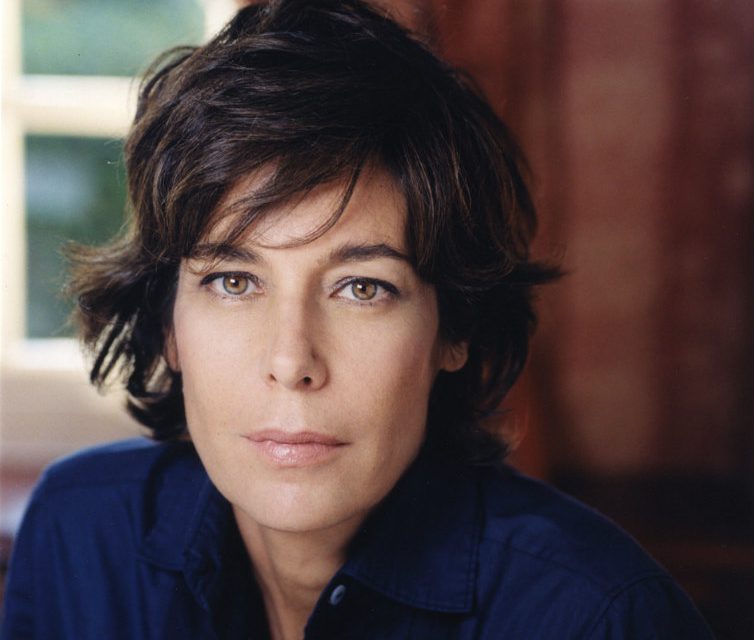
MISS SPENCER. Christine Orban is a French writer who was born and raised in Casablanca, Morocco. She lives in Paris and is the author of more than twenty bestselling novels. Her recent book titled “Mademoiselle Spencer” is about Diana, Princess of Wales. It will be published In Italy as “La Signorina Spencer” by Libreria Pienogiorno on July 31st 2025.
20 minutes read time. You can listen to the podcast of this interview here.
Christine Orban, why have you recently specialised in novelizing the lives of women with a tragic destiny such as Marie-Antoinette, Virginia Woolf or Princess Diana?
My work has been shaped around women. The difficulty with Diana was to submit to her destiny. That is difficult for a novelist. I cannot change anything; the hand of fate is stronger than mine. I recently discovered why I wrote about these women; they all died at the same age as my sister Corrine. My book “One Day My Sister Disappeared” is about her, and was published by Random House. Diana, Jacqueline Pascal and Marie-Antoinette all died at about the same age – between 36 and 37 years – as my sister. I unconsciously have to continue those unjustly interrupted lives. I write very closely about Diana, with an inside camera as if she was my little sister, to understand her. I try to write as closely as possible her emotions, her sorrows, loneliness… This is the first time as a writer I used the first person. I used her very words as often as possible, as if Diana was herself writing.
Your book could almost be a biography because you novelise the real story of Diana Spencer from childhood, so you invent part of it, and part of is the true story. How do you build such a book?
It needs empathy, and it may take a little love to go beyond appearances. I have always defended women who are victims of their appearance and I worry about hasty judgements. I did seven years of law – if I hadn’t been a writer I would have specialised in defending women. I speak in the first person and I slipped into Diana’s shoes so much that I felt like I was becoming a golden haired-blonde-princess! – to parody the American writer Carol Oates, who says she was becoming “a golden haired-blonde doll” when writing about Marilyn Monroe. I can understand this and was careful not to become a crying princess. I had to hold my pen. Diana thought she was chosen by a man in love, but she was chosen by an institution at work! By the Queen Mother, by her grandmother Baroness Fermoy, and by Queen Elizabeth. That was the misunderstanding that she only realised after the marriage. It’s a clash between an ideal of a bourgeois marriage – a marriage built of love – and a Royal marriage.
“Diana thought she was chosen by a man in love, but she was chosen by an institution at work!”

Christine Orban at her desk © Anthony Quittot
Christine Orban, maybe Diana’s marriage was to a family institution, but you say she would have loved to have been loved by the Prince of Wales and in the book she is constantly disappointed by his coldness and completely obsessed by another character which is Camilla?
Yes, of course, Diana was in love with the prince, like lots of English young girls. She was conditioned by her family for such a marriage; her father was equerry to King George VI and then to the Queen, as were her two grandmothers. For her it was a fairy tale to be chosen by the prince, that’s why the disappointment was so enormous. The beginning and the end of my novel was determinant. I start with her first trauma, when her mother left for another man. She thought – and I can feel it – ‘If my mother doesn’t like me, nobody will like me.’ She remains the wounded little girl she once was. She will carry the trauma of abandonment with her indefinitely, and it’s hard for a cheated wife. That’s why her despair grew to such proportions. When she discovered gifts, phone calls, rendezvous, she tried to commit suicide in many terrible ways. She self-harmed, starving herself and throwing herself down the stairs when she was pregnant expecting the future king, which necessarily seems like a message addressed to the royal family. She is traumatised and lacks maturity.
You have great sympathy for her discomfort, for how she felt herself an intruder inside the Camilla and Charles love story that was forbidden by the Crown?
We can see it in the photos, and we have to go behind the clichés and to analyse the clichés. She’s smiling, but we can see sorrow in her eyes. The smile is artificial. At the beginning she tried to hide it. At the beginning she’s not very comfortable or sexy; later she’s going to become this icon. The book is also about a shy but well brought-up girl with a good education who will transform herself into one of the most popular and most loved women in the world. Later, out of anger, disappointment and vengeance she will disobey, and wear the black dress of revenge and take lovers…
How did you study and prepare yourself to write this book, because as well as a lot of imagination there is lots of the real story in it?
I read all the newspapers. An incredible amount of coverage was devoted to Diana. I read all the interviews of Charles, her sisters, her brother, and what Diana said. I read what she writes – there is not a lot – so it was much more difficult than to write on Blaise Pascal, with whom we have lots of letters and of course Pascal’s thoughts. For Diana I had to analyse her body language, her look; she tells a lot with her body. It’s a different kind of work, and my passion for psychoanalysis was useful to me. I can feel the way she looks, and I get used to her. She has no poker face; she gives a lot away. I didn’t read so much her biographies – I wanted to be face-to-face with her. It’s her and me. Her in me. That’s the way I work, and also with intuition. As Stefan Zweig wrote: “Intuition goes further than a cold document.” Novelists have the right to intuition, unlike pure historians.
Were some people angry that you fictionalised her story?
They could be, but not as far as I know. Maybe I won’t be translated in England. When Andrew Morton wrote “Diana, Her True Story” it was hard for him to find a publisher, because the family is powerful and some journalists and publishers were afraid. Maybe today the King doesn’t want stories to be heard about Diana, about the failure of their marriage, but Diana has entered history and it is because of her historical figure that I treat her. Diana became a myth, and preventing the publication of a book is unfair for descendants.
Do you also feel sympathetic towards Charles?
Yes, I have sympathy for him. I’m sorry for him. The book is not a charge against Charles. I say there are two victims: Charles was a victim too, because he could not marry the woman he loved. On top of everything, he wasn’t going to please his parents by being happy with Diana. The fairy tale is Charles and Camilla; that’s the magic story. Diana knew it – but late. Too late.
You describe how Camilla even tries to have a relationship with Diana?
Everybody tried. Camilla tried to be friends with Diana. Charles tried to love Diana and to leave Camilla, and he promised this to his father. They all tried, but sometimes it’s impossible. It’s hard to fight true love. They continued to see each other. It was not the right way, but they had no choice, and Charles and Camilla hung out in the same circles, like hunting and horse riding.
Diana transforms herself from a shy young woman into an icon of beauty who has affairs but at the same time is close to humble people including Mother Teresa of Calcutta, and Charles becomes jealous and the royal family are upset by her success?
She was blessed. Charles didn’t love her as much as she would have liked. She realises that and goes where people do love her, to the press and the public who open their arms to her. The sumptuous photos of her make her realise how beautiful she is. She realises that beauty is a force; she realises people are in love with her. She did not manipulate the press as she was accused of. She goes towards those who open their arms to her. It’s human. The story began when they were in the Bahamas and she was photographed wearing a bikini on the sand. She was magnificent, and Charles and the family were angry about that, so she realised that she is the one who takes the light. She eclipses her husband; the revenge is not calculated. The fight with the family begins.
“She eclipses her husband; the revenge is not calculated.”
Christine Orban, why was Diana so attached to the idea of being loved by Charles, because many times kings and queens were friends who knew why they were married and each had their own stories?
You mentioned the problem: Diana wanted to be loved. Not to be a queen.
But she accepted to be a queen and knew where she was going.
She certainly knew the constraints of royalty, but not necessarily the pain of infidelity. Her grandmother told her: “You react like a bourgeois, you want a loving marriage but you’re not a bourgeoise. You’re going to be a queen.” The grandmother – who was the Queen Mother’s confidante – must have known about Charles’s affair, but nobody told Diana about it. Diana was young and innocent when she got married. She knew about Madame C too late, as her sister Sarah tells it: “Her face was already engraved on all the cups of England. When she has more than doubts, it will be too late… 3,500 guests invited , thousands of diamond beads sewn on the dress and the 8 metre train ready to be hung.” One can assume that she had imagined her youth and beauty would be enough to win Charles over. Diana dreamt of a fairy tale, and she was so disappointed. She wanted love. She got hell. Maybe she was looking at her mother who left. In the newspapers her mother was considered an infidel and her father an alcoholic. Diana was looking for love and she felt alone. The royal family was quite a cold family. Sarah her sister could not help her, as she was against this marriage. Diana wanted to talk with the Queen about her heart problems, but the Queen was not the right person to be her confidante.
Her sister Sarah could have married Charles. Why did she say she would rather not?
She didn’t want to lose her freedom. She was not in love, and she didn’t need to be married to the Prince of Wales. Her family is the noblest family in the kingdom; she was strong enough to refuse. Virginia Woolf’s response about snobbery amuses me a lot. She replied to a journalist who asked her if she was a snob: “Yes, because given the choice between an evening with the Prince of Wales and an evening with Einstein, I rush to the Prince of Wales.” The Spencer family didn’t need to be snobbish. At the same time, Diana fell in love with Charles when she was eight years old, sitting in front of the television watching the investiture of Charles as Prince of Wales by his mother. That day was her birthday and her father had an elephant brought into the garden to cheer her up.
You have moments of tenderness when Charles is suddenly very nice to her, plus she was the mother of his children, so he did have feelings for her?
One of the first times Diana spoke to Charles he found her so naïve, when she told him: “I saw you walking behind the coffin at the funeral of your uncle Mountbatten, you seemed so sad, so lonely. I think you need protection.” I didn’t correct these words; I left them with all their naivety. Yes, it was so naive that the prince maybe, at hat moment, became intrigued by her. Charles is a hero of Greek tragedy, torn between the love of a woman and the love of power. The problem is that Diana was also a tragic heroine. Charles cannot choose. Diana chose. When she called on the BBC, she chose the end of the comedy.
Diana uses the press for her own private feelings and at the very end he sadly dies somehow also because of the press?
She wanted to re-establish the trust, going beyond glossy images, but “trust is like the sun, it make everything visible, but you cannot look at it.” (Victor Hugo) Maybe she used the press to talk with her husband – she said he didn’t listen to her. She wanted to tell him what she was feeling, and that’s why she called on the TV. But there were 23 million people looking at her, she was not just talking with Charles, but she speaks like she is just talking with him and it becomes an enormous scandal.
Does she move you?
Yes, she became a character. A princess who doesn’t care about social, historical, or protocol constraints, talks with the BBC as if she was talking with her husband. That excess of transparency doesn’t exist in real life. She of course was completely lost and desperate and swindlers took advantage of her despair.
Do you end the book with the BBC interview because it would have been too traumatic for you to write about the tragic car accident?
For me Diana sacrificed her life with the BBC. What she became after that is not very interesting and the end is very well known. My mission was to understand what transformed this little very polite girl from a family of high aristocracy into this Fury, into this Valkyrie, in front of the BBC. She did a sort of striptease in front of the camera, a striptease of her soul. I wonder what they did to her? And why does she go too far and exaggerate? That’s my subject. She cannot seduce one man, so she decided to seduce all the men.
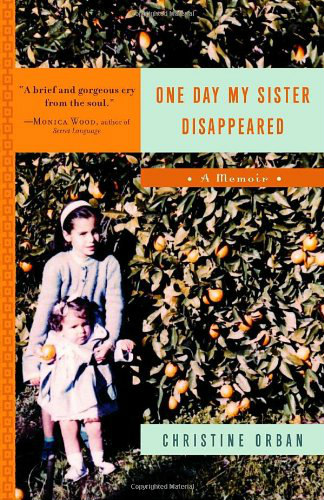
In spare and tender prose, Orban reflects on the death of her younger sister, Maco, and her presence, which endures.
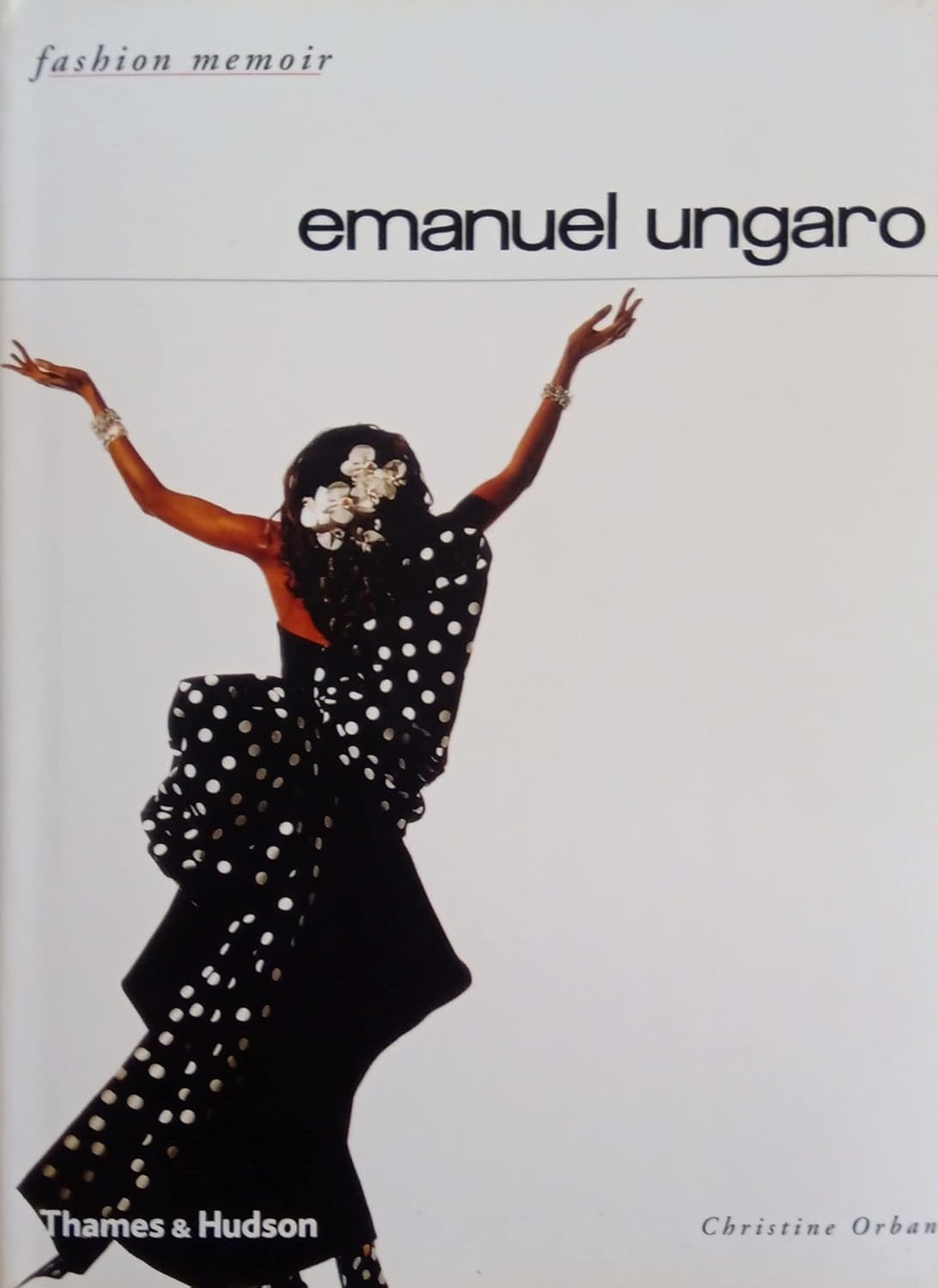
The Greek statue, the Oriental veiled beauty, the Parisienne, the gypsy, the diva – all these incarnations of women and more are captured in the creations of Emanuel Ungaro.
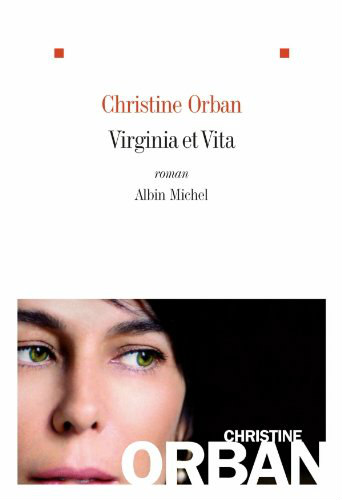
Virginia et Vita is a work of literary fiction. The novel explores the life and love of Virginia Woolf.

Christine Orban with the completed manuscript of Mademoiselle Spencer
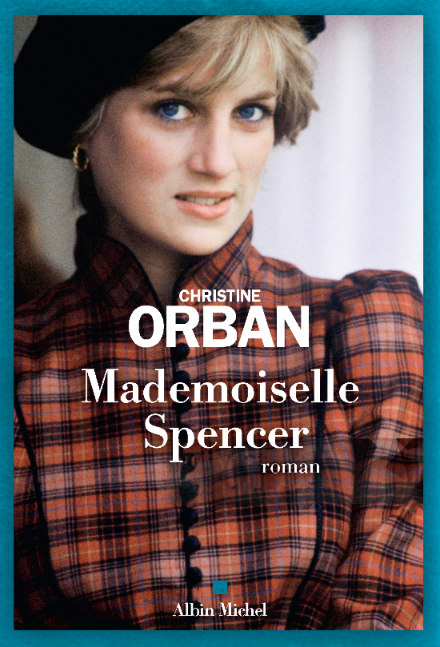
“Mademoiselle Spencer” is a historical novel by Christine Orban, published onJune 26, 2025. The novel is written from the perspective of Diana, Princess of Wales, focusing on her life before and during her marriage to Prince Charles.
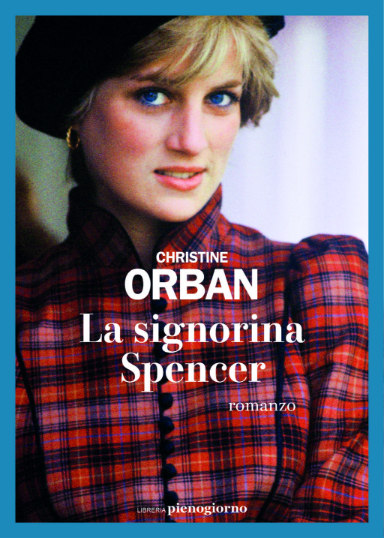
“La Signorina Spencer” is the Italian title of the book “Mademoiselle Spencer” by French author Christine Orban.
“I cannot live without recreating the world, probably hiding myself.”
Christine Orban was Diana happy to have become the most famous woman in the world?
Her success was a consolation, but she paid the price; she always had cameras around her. She found her own way of helping people all over the world – people sick with AIDS, children – and she had a good relationship with Mother Teresa. Her path was there, more than in the social evenings and the dances with Travolta. Even if dancing at night does not diminish a woman’s values.
Was she a good mother?
Of course. That’s the centre of her life. But, like her mother, she leaves.
Why when they wish to be seen to be doing good things do her children often seem to emulate the mother?
Harry would do the same as her and looks like his mother; not William. A specialist of the royal family told me to send the book to Harry and William. I just did, without expecting anything. I wrote about Diana very sincerely. It was not really a subject for me. Virginia Woolf was a subject and I studied the vampirism of a writer through Orlando and Vita, while Diana was a very good surprise! She imposed herself on me after seeing Fräulein Else by Arthur Schnitzler, an incredible play of mirrors between two characters, maybe because I have trouble with women’s preconceptions and women crushed by fate.
Is your Mademoiselle Spencer your own personal Diana?
It’s the book she should have written and that I wrote in her place while staying as faithful as possible. For me the title “Mademoiselle Spencer” expresses Diana’s resistance to adopting an identity in which she did not recognise herself. I invented very few things. I’m going to give you two details just for fun: I met him once, the Prince. I noticed that he has navy-blue eyes … and navy-blue eyes are like the sea, and I imagine Diana loves the colour of his eyes and dives into this black sea… I also imagine that she likes his ears, because they give a reassuring sense of vulnerability to this majestic prince. These are my only two very personal interventions et je m’en excuse! I can say that Diana joins the Pantheon of my imaginary best friends!
While you write you live nside Diana’s emotions and become obsessed by this character who becomes you. When the book was finished and went to the publisher did you feel empty?
It was very difficult to finish my book and to give it to my publisher, he had to come and take the book. I’m like Penelope who makes her embroidery again and again. I write 10, 12 times; I correct and correct by hand. Like Freudian analysis, a book is never finished. For me parting with my character is a heartbreak, but all my characters stay with me. I feel close to Marie-Antoinette, to Virginia Woolf, to Josephine, to Jacqueline the sister of Blaise Pascal living at the Jansenist convent Port-Royal, and now to Diana in Kensington Palace. It’s exciting! They are all my imaginary friends.
Now you have written more than 20 books, but what did your family expect you to be when you were young?
I studied to be a lawyer, like my father wanted, but after seven years of study and fulfilling my duty I went where my heart took me.
Where do you write?
I write in Paris in my office. I am in love with Saint-Germain-des-Près, it’s like a village. When I travel, I write only if my book is committed, because I always start at home.
Do you write longhand with a pen or on a computer?
Both. I print it out and afterwards I correct by hand, and I rewrite by hand. Then I retype it. It’s a long process.
Do you work for many hours a day?
I need my all day long. I take very few rendezvous when I’m writing, and never in the morning. I get up very early every morning and at 5 or 6 I’m here with my petit-déjeuner and work until lunch time. Sometimes I have a light lunch, I walk along the Seine after lunch, and I read and correct in the afternoon. My husband thinks I am a Jansenist!
Can you live for a few months without writing a book?
I don’t know… It’s not often happened. Writing is really my second life. Reality doesn’t satisfy me enough. I live with one foot on the ground and the other in the cloud. I cannot live without recreating the world, probably hiding myself. That’s why I suffer when I write about a real-life person. The game is over, now all I have left is to understand. I know exactly what my next book is, and it’s very special – I begin my 26th book with the same emotion as the first. But I cannot tell you about it now!
Christine Orban, thank you very much.
Lead Photo of Christine Orban © Carole Bellaïche En normandie
ENJOY THIS INTERVIEW? SHARE IT WITH A FRIEND.


