
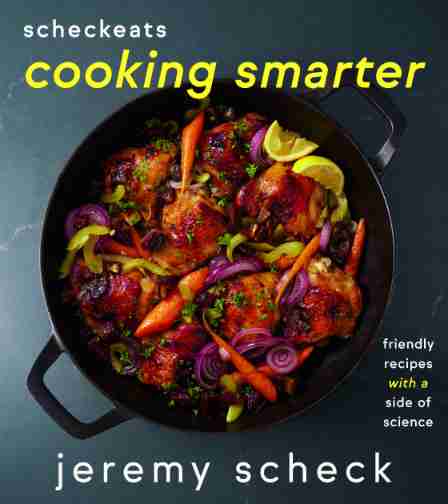
COOKING SMARTER. Jeremy Scheck has charmed a new generation of home cooks with his simple tasty recipes and reliable culinary know-how. He is the author of ScheckEats―Cooking Smarter: Friendly Recipes with a Side of Science and has been featured on the Today show, The Washington Post, Bloomberg, BBC Radio, People, and Access Hollywood, among others. A graduate of Cornell University with a double major in Spanish and Italian, and significant coursework in food science, Jeremy was brought up in Washington D.C.
26 minutes read time.
You can listen to th podcast of this interview here.
Jeremy Scheck, what is “ScheckEats – Cooking Smarter” about?
My cookbook is about easy, accessible recipes. The main thing that makes it different is that the recipes are based on a set of staple ingredients. If I ask for a certain condiment, then I give you several recipes to use it in, and there’s only 10 spices that are used across the book. People don’t want to be shopping at a million different places, or using a recipe and there’s 30 different ingredients. There’s also no electric mixers required for all of the baking recipes. It’s inspiring people to get in the kitchen and create wholesome food without as much of a barrier to entry as some other books might have.
How did it come to your mind to go to Cornell university to study to become a cook?
I had never heard of food science as a child until one of my sleepaway camp counsellors told me that he was going to study food science at Ohio State University. I must have been 15 or 16, and it really interested me. Around that time, I got a job at a local bakery in Washington, D.C., and I was thinking about colleges and university and what I might want to study, and it just kept coming back as something that I was interested in. I was in an International Baccalaureate high school, which gave us a lot more freedom when it came to the types of projects we did, and so whenever I had a chemistry or biology or even math class that I needed to do a project for, I would always find a way to make it about food. I would write a statistics paper on different ways that you prepare a cake and how that affects the density or how the different proteins might affect the texture of a cookie.
“The book evolved into being accessible more broadly and not directed only for students.”
Jeremy Scheck, were you cooking?
Yes, every single day I would make something and bring it in for my friends the next day at school. To the point that some friends would even start to get hungry in expectation of my treats, and if on the rare occasion I didn’t bring something in that day, they would be actually hungry because they were so used to me bringing something in every day.
Was there special cooking in your family?
My mom is a very competent cook. I’m one of four brothers and she always cooked for us out of wanting to have wholesome, nutritious food, but it’s not a passion of hers by any means. I started off baking more because my mom had dinner handled and she also was very health conscious, so by me making my own sweets was a way for me to have sweets at home since we didn’t have a lot of processed foods available at home. My paternal grandmother is also an excellent cook and I might have gotten the recipe testing and writing genes from her, because I still have a very large archive of hundreds of her recipes and I love to cook with her. She would do very elaborate holiday meals and she’s still alive, but she’s a lot older now. It’s nice to be able to take over and recreate her special recipes because my uncles, cousins and siblings definitely expect the same things that she used to make 20 years ago, and even before I was born! When I got the job at a bakery, I also started writing my food blog and I thought, ‘I love food, what if I took it seriously for a little bit and see where it takes me?’ That led me to apply to Cornell for Food Science, and I ended up taking a third of my classes related to food science.
Were you influenced by the Slow Food Movement of Carlo Petrini or by Alice Waters?
I was still in high school when the series and book Salt, Fat, Acid, Heat came out by Samin Nosrat, an Iranian-American chef, and she worked with Alice Water at Chez Panisse. That was my first introduction to that world. She showed a lot of the science behind cooking and was an early inspiration for me. I got more interested in Slow Food once I started learning the Italian language at Cornell. I had secured an internship with Eataly in New York City my sophomore year of college which ended up being cancelled because of COVID. That’s when I started making my videos but I thought I was going to work in marketing for Eataly, and they’re very involved with the Slow Food Movement.
Why did you take Italian and Spanish at Cornell?
I went to a Spanish elementary school right outside Washington, D.C., in Maryland where all of the academics was in Spanish. From an early age, I had that window into language. When I arrived at Cornell as a food science major I had just come back for being an au pair in Spain over the summer, and unfortunately the full food science programme felt a little too restrictive for my interdisciplinary interests, so I switched from the agriculture college to the liberal arts college within Cornell. I already spoke Spanish fluently, and I decided to start Italian from scratch so I took three and a half years of Italian classes and graduated with a double major in it. I took interesting classes like Italian food culture and my favorite class was “Dairy Study in Italy”. We went to Italy in January of 2020 and visited a dozen dairy farms and cheese factories. I was the only student that spoke Italian in the class – I was still learning, but I was conversational.
Was Kora von Wittelsbach your Italian Professor?
She was my first professor. I was enthralled by Italian and I didn’t really have the prior experience of “learning a language” because when I learned Spanish, I was five years old and didn’t know that people went to school in their native language. I just went to school and the teacher spoke in Spanish, and a month later we all understood everything that was going on. When I started learning Italian, it felt like I was unlocking synonyms to a language that I already understood. I found that I could just hear something said correctly in Italian one time, and I would internalise it and already get it. I didn’t really have to proactively read vocabulary lists, I just absorbed it all.
Are your recipes more about Italian, Spanish or American cuisine?
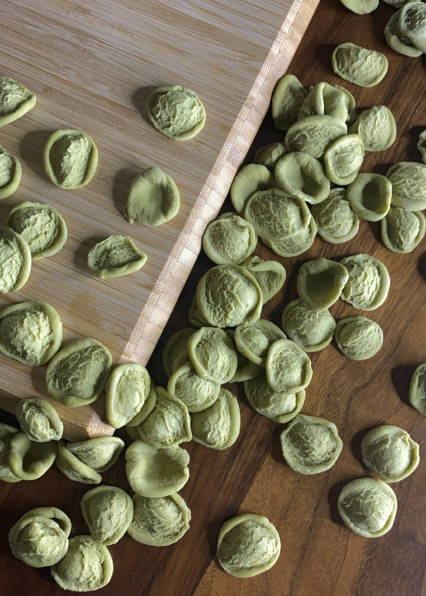
I love a mix. I enjoy Italian cuisine a little bit more than Spanish cuisine. I love being able to read recipes in the original language and not view it through a filter of someone else’s translation. Whether I was making orecchiette in Bari with different nonne on the street or learning about guanciale in Turin, I just really enjoyed in Italy the openness of the people. There’s not so many foreigners that learn Italian, so they also have a special appreciation for people who do take the effort to do that.
There are many diverse cuisines in the world, why the concentration on Italian and Spanish cuisines?
Because there are so many Italian Americans, I am interested in how that cuisine changed through immigration in the U.S. versus what continued to evolve separately in Europe after people emigrated. If you go to New Jersey or New York you’ll hear Italian Americans saying words in other Italian dialects that predate the standardisation of Italian, and then also a lot of the cuisine is like a time capsule of things that were popular at the time of their immigration.
What are the differences?
So many. There’s a lot of dishes that Americans grow up as thinking as quintessentially Italian that would just never fly in Italy, like chicken parmigiana. There’s melanzane alla parmigiana and in Sicily I had swordfish alla parmigiana which I had never tried before, but chicken parmigian as they say in the U.S. is a lot more common, or just putting chicken on pasta in general. It fascinated me to learn about all of the implicit food rules in Italy, whether it’s “we don’t eat this with this”, or “we do put cheese on this dish but never put cheese on a seafood pasta”, or which pastas go with which type of sauce.
“I consider it a big honor for a stranger to follow my recipes.”
Jeremy Scheck, is the cuisine in your book something you can find the ingredients for and cook anywhere in the world?
It is international comfort food, which doesn’t necessarily mean it has to be super heavy or creamy all the time. I love a gratin or something very indulgent, but, for me, my mom’s kale salad is also comfort food, and that you’ll find in the book as well. It doesn’t necessarily mean one cuisine or one style, but I approach it with what will lower the barrier to entry to create a home cooked meal from scratch. The ingredients do certainly change depending on where you are. The vast majority of my audience, 60-65%, is American, but I have followers all over the world. That definitely affects what ingredients are easily accessible. Maple syrup is an intrinsically North American ingredient, harder to find in other parts of the world, but that’s not to say they don’t sell maple syrup at Aldi in Madrid. I love Italian Calabrian chili bomba paste, and they sell it at Trader Joe’s in the U.S. so it’s very accessible to most Americans, and in Madrid I found it at a specific Italian market. The most difficult ingredient for people to find that I cook with frequently is pomegranate molasses, which is known more so in the Middle East, especially in Iranian cuisine. Even that I was able to find in Madrid, and they have it at more upscale grocery stores in the United States like Whole Foods. There’s so many things that you can do with it, whether it’s in a dressing or a marinade or on top of fruit. I love sour and fruity flavours.
Do you consider people’s diet and health?
I’ve taken a few classes on nutrition at Cornell, but it’s certainly not my area of expertise. I have a recipe for chicken soup from scratch that is one of my favourite recipes in the book. It’s something that I learned from my grandmother and my aunt and my mom, and anytime we were sick she would make that. I have recipes that are indulgent – key lime pie with a ginger snap crust, or vanilla birthday cake – I also have kale salad and tortilla soup, which is basically homemade chicken broth blended with a bunch of vegetables. That was the way that my mom got my youngest brother to eat his vegetables, and it’s about as healthy as you can get. Comfort food has more to do with nostalgia and feeling good than a particular profile.
Is it possible during a normal day to come home from work and cook like this?
Yes, certainly. That’s why they’re based on similar ingredients so that you don’t have to shop for a million different things. The recipe for homemade chicken broth you certainly would not make on a weeknight because I like to boil the chicken for at least six to eight hours to get all of the collagen, but that’s something that you can make on one Sunday and freeze and have to use in other recipes. None of the ingredients that are used in them are particularly esoteric. When I was moving into my first apartment as a college student, I thought about what are the essential recipes that people should know how to make when they’re becoming an adult for the first time. You should know how to make a few dinners, maybe a roast chicken, and then you need to know how to make a few breakfasts. I believe that you should always have emergency chocolate chip cookie dough in your freezer ready to bake fresh. So I started my blog geared towards college students, but people like friends of my mother said, “I know this is meant for college students but I’m a busy mom and I have similar time constraints and so I want to use these recipes anyway.” That’s why the book evolved into being accessible more broadly and not directed only for students.
Why do you now live in Madrid?
I wanted to be in Europe and I wanted to practice one of my foreign languages, and so it was really between Italy and Spain. I love to visit Italy, I was there last week, but didn’t really see myself living in one of the major cities but I did always feel connected to Madrid. It was the first international trip that I went on in my life with my grandparents when I was 12, and then I went back as an au pair when I was 18, and I just kept feeling drawn to it. Coming from New York City, where I lived before moving here, it feels very cosy, very walkable, but it also has enough going on that I don’t find it boring in any way. I find it to be a very charming city.
Are you planning on opening a restaurant in Madrid?
I would love to stay as long as I can and as long as it’s working for me. I’ve started leading food tours here and trips, so I’ve had Americans come and I do five day trips based in Madrid, but then we go to Ribera del Duero wine country and also Segovia for a different day trip. We do tastings of wine and cheese and jamón Iberico and baking workshops at my friend’s bakery here, and get a taste of the culture and the vibe of the city. I’ve never felt so drawn to working in restaurants, but I would love to open an ice cream shop in Madrid which doesn’t really have its own style of ice cream. There’s Italian inspired places, mostly, and sometimes I crave an American style ice cream, but it’s something that I’ve more thought about and I’m not sure. I would have to adjust my visa and it’s a little more complicated.
How can people taste your food?
If people want to taste my food that I cooked, you’ve got to be my friend or family, unfortunately. That’s why I share my recipes. I have a community of over two million followers and people who make my recipes. I consider it a big honor for a stranger to follow my recipes. It’s a lot of trust for someone to read my recipe and decide to go out and spend their money, and then spend their own time making the recipe that I proposed. Although they’re not eating the food that I’ve made with my own two hands, I do feel like it’s a very intimate and personal thing that they’re doing if they decide to make my recipe.
How come you’ve got such an extraordinary number of followers on TikTok and Instagram?
I was a sophomore in college at Cornell, living in my first apartment off campus, and COVID started and we were told to go home so I started making videos of using up the leftover ingredients I had in my kitchen and posting it. At the time I had been food vlogging for about four years, but mostly for my own satisfaction – my grandma was probably my most avid reader! I was in the habit of writing down my recipes and photographing it, and as a digital native I wondered how hard could it be to also upload these on TikTok. Pretty quickly after I started posting on TikTok regularly I grew my followers from zero to 50,000 to 100,000 to a million, and in under a year I was at two million people. I was at home at my parents’ house for nine months, and I had some online classes but I was pretty much without other things to do and nowhere to go, so I was just posting, sometimes five times a day, of what I was eating, what I was cooking, and people really connected with it.
Do you advise people about what to buy and do publicity for some specific companies?
Sometimes. I’ve partnered with different companies before and that’s one of the ways that I monetize my work because it would just be very difficult otherwise. A lot of times the companies that I work with are cookware brands, such as Staub, which is a French enamel cast iron company. They make these heritage pans that can last for generations in the north of France, and they’re also under the Zwilling umbrella. I’ve worked with Zwilling in Germany, and Demeyere, which is a Belgian company that makes top of the line stainless steel pans. I do also give my opinions on food brands. If you’re going to get the basic cheapest grocery store pasta, I like De Cecco more than Barilla, but if you’re looking to spend a little bit more there’s brands like Afeltra that I really like that are extruded through bronze dies and dried slowly. I also have recipes for making your own fresh pasta, which is something that I love to do.
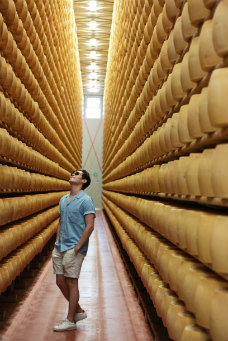
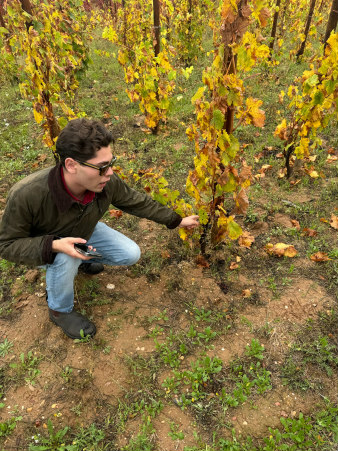

“When I travel, I like to take different food classes and I like to learn from people who live there.”
Jeremy Scheck, do you think about health food and things like whole wheat pastas, or gluten free food?
I’m aware that a lot of people have different dietary restrictions, and in fact, in my book, around 75% of the recipes are gluten-free. The ones that are not gluten-free are mostly ones that you could just buy your favourite brand of gluten-free pasta and use it. Similar for people who don’t eat meat, most of the recipes are vegetarian or easily adaptable to be vegan even. I’m always thinking about that, but at the same time, I am a little bit of a purist and I don’t really want to swap something to be whole wheat just for the sake of it being “healthier”. Whole wheat if it’s not processed in the sourdough method to have the nutrients broken down by the fermentation process is not necessarily so much healthier for you.
Today they say sugar is the number one enemy, both fattening and also not very good for the health…
I would rather have the dish the way it’s supposed to taste and have it in moderation versus having a bastardised, healthified version of a dish, especially if it’s an ice cream. I’d rather have a small portion of excellent gelato as opposed to having a massive portion of a “health” version of it. I’m not super interested in those substitutions that come at the cost of the flavour. I’d rather have a small slice of cake that’s actually delicious.
Maybe American people don’t eat very well?
It’s very hard to make generalisations about Americans because it’s such a diverse place. Certainly in places that experience food insecurity and scarcity, there are places where there’s no fresh food available and people can’t afford it, but also if you go to California or big cities on the East Coast, there is extremely healthy cuisine. In my neighbourhood, there’s a farmer’s market that comes to my parents’ actual street every Saturday and we get milk and eggs delivered from a local farm. In a lot of parts in the US there’s ways to be very involved in your local food system and eat local. It depends more on what is available to you and how much interest you take in it. Having lived in Spain for a year and a half, they have just as many cookie options and candies in the grocery store here, so it has to do more with your particular family’s choices.
Are you more into butter or into oil?
I love a very good extra virgin olive oil, and I love grass-fed butter. I’ve worked with Kerrygold, the Irish butter, and it’s one of my favourites for baking. In Spain a lot of the dairy is Asturian, and I like it a lot. I’m pretty 50-50 on butter versus oil. Both good extra virgin olive oil and good high quality butter, there’s not really any sort of real substitute for either of them.
Are you a fan of balsamic vinegar?
I’ve been to Acetaia in Modena and have had 12-year-aged balsamic vinegar that I loved. In one of the factories they served it to us on fior di latte gelato, and it was one of best things I’ve ever eaten. I do really like balsamic vinegar when it’s a good DOP type of it.
What is your ideal meal for yourself?
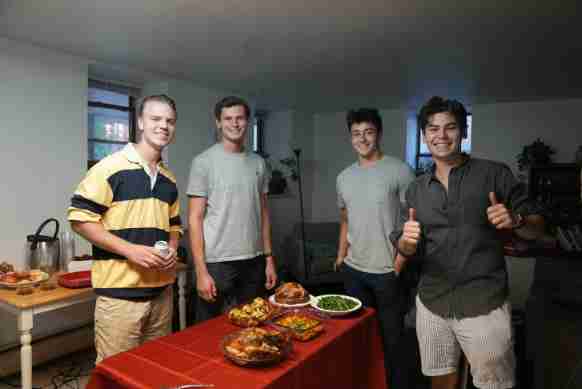
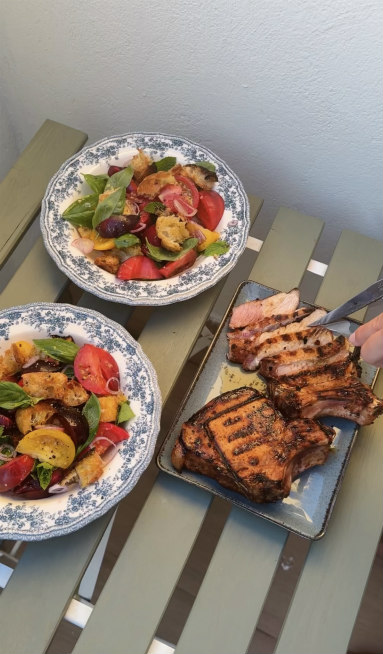
That certainly changes based on the time of year and what ingredients would be local and in season. In the summer, I am usually wanting things to be a little bit lighter. A couple of weeks ago, my brother was visiting and my aunt was also in town in Madrid so I had a little cookout on my terrace. I made a salad with a base of arugula and heirloom tomatoes from Spain (Spain has some of the best tomatoes in the world) and Stracciatella and pickled shallots and marinated plums and basil and really good extra virgin olive oil. I served that with chicken thighs that I marinated with saffron and apricot jam and a little bit of pomegranate molasses and za’atar. I grilled the chicken thighs and I didn’t serve it with a carb that would weigh it down more. It was just the grilled chicken with the really nice marinade and a giant salad which touched all the colours of the rainbow and had notes of acidity, which brings a lot of brightness and creaminess from the stracciatella and pepperiness from the arugula.
Did you drink wine?
Of course. My aunt had come back from La Rioja that day and she brought a bottle of rosé from La Rioja. When it comes to white wines, I really love a Portuguese Vinho Verde. I also love a dry Riesling. When it comes to red wines, to me there’s little that beats a nebbiolo from the Langhe region, whether it’s a Barolo or Barbaresco. One of the best dinners of my life I had in Barbaresco. I also love a Spanish Clarete or Rosé and I recently tried for the first time an Argentinian Merlot that was from a vineyard called El Enemigo. They also make a really good Cabernet Franc.
What did you learn at Cornell university?
I took a wide variety of classes that had to do with Spanish, Italian, and food science. I took classes on horticulture, where we were in fields at Cornell pruning grape leaves, viticulture and oenology, learning about grape growing and winemaking. I took that dairy science class where we went to Italy and actually were on dairy farms, and I worked with the European Union a year or two after graduating, to promote AOP cheeses from France. We went to dairy farms there, and I tried the first blue goat cheese from the cheese maker there that invented it. I’m always looking for ways to continue learning. When I travel, I like to take different food classes and I like to learn from people who live there. At Cornell, in addition to all the food classes that I took, I also took things like Spanish creative writing and Italian Jewish literature.
Do you keep on learning?
I’m a lifelong learner, and always interested in learning more about food. I started researching about spice tolerance, and spices in a historic sense, but also in a more personal biological sense, to what extent it’s really true that as some people say spices will ruin your palate, and whether or not the level of heat and spice can actually affect your ability to perceive foods, because spiciness in terms of heat and capsaicin is not one of the five tastes. It’s actually a physical sensation that affects your trigeminal nerve. It’s definitely a longer-term research thing that I want to look into because it’s something that affects people emotionally.
You studied Jewish Italian literature, did you also study Jewish Italian cuisine?
I’m aware of the Jewish ghettos in Venice and Rome and carciofi alla giudia and specific dishes that are known to be part of the Jewish Italian culture, but I would love to learn more about that because it’s not something that I have really delved into deeply.
You are only 25 years old, what do you have in mind for your future?
I would love to be able to continue writing books, that’s one of the most charmed jobs that you could have. I still am in disbelief that I was paid to write my first book. If I could continue to do that, there’s not really anything better in my opinion. I also would love to grow my food tours in Spain. It’s a really fun way to connect with people in a personal way. There’s not a lot of opportunities where people can try my food, but this is a way where I can really connect with people on a one-to-one level. I feel like I’ve won the lottery with what I get to do for my job. As long as I can keep doing this and continue, I would just be very grateful.
Jeremy Scheck, thank you very much, and my warmest wishes for continuing your success.
Thank you so much for your interest in me.
ENJOY THIS INTERVIEW? SHARE IT WITH A FRIEND.