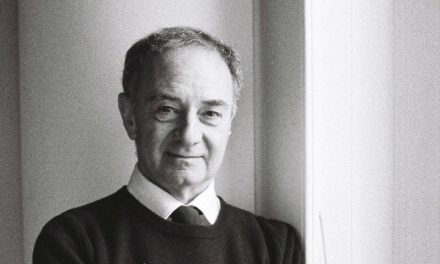
THE REGENERATION OF THE FRICK. Axel Rüger is a German art historian, curator and museum director. Director of the Van Gogh Museum in Amsterdam from 2006 to 2019, he previously worked as a curator of Dutch art at the National Gallery in London. He led the Royal Academy of Arts in London from 2019 through 2024, and in March 2025 assumed the directorship of The Frick Collection in New York City.
25 minutes read time.
You can listen to the podcast of this interview here.
Axel Rüger, please explain what the Frick Collection is, why you came here and what you intend to do?
It’s been a long journey across countries and continents to get to the Frick Collection. And curiously, The Frick Collection, had always been sort of in the back of my mind, not as necessarily the ultimate career and goal, but I always thought that I would be interested in the Frick. Should they ever call, I would certainly pick up the phone. This year is my twentieth anniversary of being a museum director, and it is nice to see that a lot of the experience that I’ve had over the years in other institutions, I can bring to bear here at the Frick Collection in New York, indeed one of the most beloved museums, certainly here in the city, if not anywhere. As soon as I was appointed, almost everyone I spoke to told me that it was their favourite museum. It is a very specific museum because it is an historic house, one of the last remaining Gilded Age Mansions here in New York City, built in the early 20th Century and finished in 1914. Then the Frick family – that is Henry Clay Frick and his wife Adelaide and daughter Helen Clay Frick – moved in. They had moved up from Pittsburgh, where the family originated from, much earlier, around 1904. They then lived here in the city in a rented mansion of the Vanderbilt family before Mr. Frick found this property between 70th and 71st Street on Fifth Avenue, right by Central Park, and found the time to build the house. It is important to note that Mr. Frick built the house already with the idea in the back of his mind that it would eventually become a public museum.
Had he started his collection before moving into the New York City house?
Yes, he started already collecting when he was living in Pittsburgh. They had a big house there, Clayton by name, and he started with American and French art of his own time. So he was collecting contemporary art, and at the Frick here we have still the 19th-century French paintings from the Barbizon school and a handful of Impressionist paintings. The other early collective forays that he made are on display at the Frick House in Pittsburgh. He then gravitated more and more towards European Old Master art that he saw on numerous trips to Europe, where he went early on, travelling with his friend Andrew Mellon.
“You get a sense of how the Fricks lived at the time, even though we do not really talk much about their daily life.”
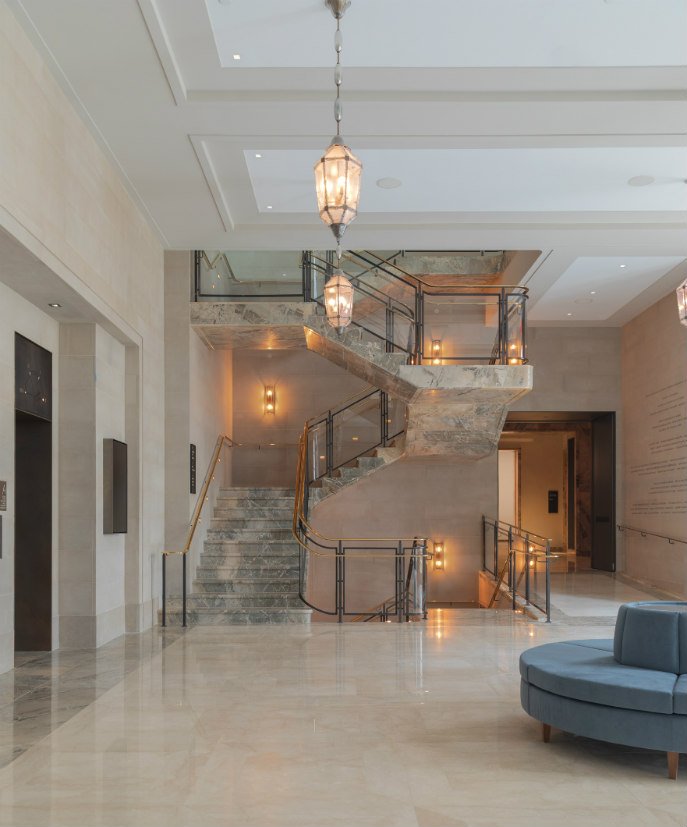
New staircase in the James S. And Barbara N. Reception Hall, The Frick Collection, New York
Photo: Nicholas Venezia
Axel Rüger, Mellon supported the National Gallery of Art in Washington DC?
Yes, many of the industrialists in those days were collectors. The Vanderbilts, J.P. Morgan, Mr. Frick, Benjamin Altman, the Huntingtons and the Wideners and so forth, they were collecting, and there was a pretty fierce competition. Many Europeans, and especially in Britain, many of the old families and old country houses started selling, because they needed funds to maintain their estates. The Americans were very ready at the time, with vast sums at their disposal to acquire works. Mr. Frick was a very judicious and very careful collector. He would not buy on impulse. He would at times have things delivered to the house and live with him for a while before he would decide whether he was going to buy them.
Was he influenced by the very prominent British art dealer Joseph Duveen?
He was, but Duveen came onto the scene a little later, and first he worked with M. Knoedler & Company where he had Charles Carstairs, with whom he travelled also, and who advised Mr. Frick early on and really helped him train his eye and develop his taste. Mr. Frick concentrated largely on portraiture and landscape painting, largely between the 16th century with a few earlier works up to the 18th century, and then expanding to decorative art, sculpture, works on paper; and pretty much fully focused on Europe. He collected the Dutch painter Vermeer, he has amazing paintings like the St Francis of Bellini, important works by Van Dyck, extraordinary Turner paintings and so on and so forth.
Were these paintings very expensive at the time?
Yes, this is not bargain hunting. He was definitely willing to pay top money and people knew what things were worth and what they had. By today’s standards it may not sound very much, considering the most expensive one, if you consider it as one work, is the painting cycle by Fragonard, The Progress of Love. A whole room basically, Mr. Frick bought the paintings from the Morgan estate for $2.4 million. In today’s terms, it is an astronomical amount of money. The market for Old Master paintings has changed over time, but in those days it was certainly an expensive market.
How do you position this institution when your neighbor on Fifth Avenue is the huge Metropolitan Museum?
The Frick Collection has a rather unique quality because it is a relatively small collection. We have a couple of hundred paintings and then works on paper, decorative arts, but the collection is very small compared the Metropolitan Museum’s millions of objects. Ours is a very good size for the visitor experience. You can comfortably visit the Frick within the space of an hour or an hour and a half, and you have seen pretty much all of it. It is manageable and you don’t get overwhelmed by the choice of what is on view.
Is it also that very specific character of an art museum in a historic house?
Yes, the collection is seen in the context of a private home, albeit a grant one, and that character gives the whole experience another more human dimension. You get a sense of how the Fricks lived at the time, even though we do not really talk much about their daily life. We are not a historic house museum in a sense that we would still have the Fricks’ utilitarian furniture, bed linens, china, etc. When the house was converted in the 1930s into a museum they had taken out facilities like the bathrooms and the kitchen. It is an art museum in a historic house and yet we still preserve the character of a private house.
In this regard, is it a bit like the Morgan Library?
Actually Mr. Morgan’s art collection was sold after his death. The Morgan is in that sense very different, and the historic bit that you go into is the reading room of the Library and then there are lots of modern additions for gallery spaces for the exhibitions. The mansion does exist there as well, but it has a different character and different feel here. The character of the Frick is very special, all the more so following the recent redevelopment.
What happened?
This was done before me, I started last year in March just in time for the reopening on April 17, 2025. We had been closed for five years and the museum had decamped into the building that was formerly occupied by the Whitney Museum on Madison Avenue which had been designed by Marcel Breuer. While we were closed here we showed the collection there in a very different context, against concrete walls as it were. The main impetus for the redevelopment and renovation of the Frick was partly the need for thorough renovation, but also to make the second floor accessible for the public.
And this is newly available now?
Yes, because until that project the public was only ever allowed to experience the ground floor, the grand representative rooms of the Fricks where much of the collection was on display and where they hosted guests. In contrast to most Gilded Age mansions, Mr Frick insisted on having a picture gallery rather than a ballroom, so he had the largest private art space in New York City in his day. The second floor up the grand staircase was not accessible to the public. Originally those were the private living spaces of the family, and when the house was turned into a museum these rooms became offices.
As part of this project these have been converted into gallery spaces and also brought back in terms of their look and feel to what they looked like originally in the house. These are much more domestic-scale, smaller rooms. That was one of the major aspects of the renovation, and displacement of the offices meant that elsewhere on the campus we needed a new building for office spaces and a new conservation studio. For the first time, the Frick now also has a café and a dedicated space for education activities. On top of that, it was decided to develop temporary exhibition galleries. They only had two very small rooms in the basement for basically drawings exhibitions. Now we have a dedicated exhibition space where we can do more ambitious temporary exhibitions, and that went into the space of the former music room. In order to make up for that, in the sub-basement under the 70th Street Garden, the museum added a new purpose-built performance and lectures space, the Stephen A. Schwarzman Auditorium, which is specifically designed for chamber music. The Frick since 1938 has been running a much appreciated, much loved music programme, a tradition that we’re now continuing. The space also allows us to host lectures, symposia and other public programmes.
“For the first time, the Frick now also has a café and a dedicated space for education activities.”
Axel Rüger, as the director, you are responsible for everything. How many curators do you have?
We have four main curators for the collection, and they are a specialized in different disciplines, that is to say painting, sculpture and decorative arts. We’ve broadened the team to include a Head of Concerts and Performance as well as a Horticulturist, and of course our robust education department is a critical group within that department. We always have curatorial assistants and we have Fellows as well.
What new exhibitions are you planning?
When you start as a director in any museum you always inherit a programme, because we plan three, two, three, four, sometimes five years in advance. The programme that I’ve inherited will take us into 2027, and there are some really good things on the horizon. We just closed an exhibition of breathtaking treasures from the Holy Sepulcher in Jerusalem. The next exhibition opening in the middle of February is on Gainsborough’s portraiture. It is prompted by our collection which contains a particularly strong group of works by Thomas Gainsborough, the great British portrait painter. Our collection will be augmented by important loans, and the exhibition will be looking at the connection between portraiture and fashion because Thomas Gainsborough, in contrast to some other artists of his time, was a strong proponent that people should be portrayed in the clothes that they would be wearing rather than in some sort of abstract, idealized dress that would be more timeless. Sometimes he even adapted paintings over the course of their existence to update the fashion in them. The exhibition will take place from mid-February in the new Ronald S. Lauder exhibition galleries.
A man like you has so many different roles. It’s a big job.
Indeed, but since we only reopened last April to the public shortly after I had arrived at the museum, I have been mostly focused on the new operation of the museum, seeing how all the well laid plans for the museum are also working in practice and whether any adjustments needed to be made. Now the time is coming that we will think about our strategic plan going forward, as well as also filling the programme for the years from 2028 onwards. We will also have to discover how the visitor numbers will develop once the first excitement about the re-opened museum abates. We’re going to embark with the senior team and the trustees on an extensive process of strategic planning and thinking about what the future will hold. Also, we need to think about the balance of the programme in terms of exhibitions and audience development.
You did so many interesting contemporary art exhibitions in London, from Tracey Emin to Antony Gormley and others?
The Frick has for a number of years engaged with contemporary artists, but it is of course a very specific setting and one needs to think carefully what type of contemporary art works and what makes sense here at the Frick. New York City is rife with museums and galleries that show contemporary art. The last thing the city needs is another place that does contemporary art, and our roots are really in historic art. But we also feel that there is an opportunity to work with artists whose work has a really tangible and comprehensible connection between their work and the work here in the collection. For example, at the moment we have on show an installation by Flora Yukhnovich, a British painter who is strongly inspired by 18th-century French and Italian art. She has taken a painting cycle that we have here by François Boucher, The Four Seasons, and has made an interpretation in her idiom and in her way of painting of those four seasons based on the Bouchers.
You must have had an amazing experience before, running the hugely visited Van Gogh Museum in Amsterdam?
It was indeed a unique privilege and very exciting to run the museum the represents the possibly most famous and popular artist in the world. When I was there, we were even surpassing two million visitors a year which is a lot for such a relatively small museum. I am grateful in my career that I have been able to run institutions that are so vastly different. I started as curator in a big national museum, the National Gallery in London, then I worked as director of the Van Gogh Museum before I took over the Royal Academy of Arts in London, which is a working academy with a membership of prominent British artists and a post-graduate program for fine arts students.
What makes Van Gogh perhaps the most famous artist?
It’s a unique confluence of aspects. First of all, his art is still attractive and very accessible, because it’s colourful and it shows everyday subject matter. There’s nothing complicated, no religious or mythological subject matter that we might not easily understand anymore. It’s largely portraiture, landscape, and still life. The paintings are incredibly colourful and very dynamic in their thick brushwork. You almost want to touch them, they are so haptic in their quality. Secondly, we know plenty about Van Gogh because of the letters that he wrote, in which he reflects a lot on his career and what it takes to become an artist, how he’s developing as an artist and what he’s doing. That has always been a deep source of inspiration for many other artists. The dramatic life story and the story with the ear are also iconic. Finally, there is his early suicide, an unnatural, premature death that leaves us forever with the question and speculation: what would have happened had he lived longer? Van Gogh was famously not famous in his own day and he sold only two works – but would he have become famous? How would his style have developed? Would he have found abstraction, because that was on the doorstep and he may not have been able to develop his style as others did? So we don’t know, but that speculation remains.
Is he a very great artist?
Definitely. But he changed. His early style was really changed dramatically when he moved to Paris and was exposed to Impressionist art, and he starts trying different approaches. Later, in isolation in the south of France he really finds his own style.
Now you have experience of so many places: London, Amsterdam, New York, all these cities?
I have indeed been very lucky. Throughout my career I have always worked in museums that have been extremely popular, in attractive and pretty cosmopolitan places. Between London, Amsterdam, New York City, and let’s not forget New York is New Amsterdam, historically. As much as they say New York is not America, Amsterdam is not the Netherlands. Both cities enjoy their specific character for which they are loved, and that sets them apart a bit from the rest of their countries. London is also not England. Each of these cities also are physically attractive in their own ways and have unique characters, and the museums that I have been lucky to be at play important roles for the cultural fabric of these cities. It’s an incredibly privileged position to be in. Here in New York there are many wonderful other museums and great colleagues around us, so there’s an extremely rich cultural infrastructure in the city, in which luckily the Frick still occupies an important place.
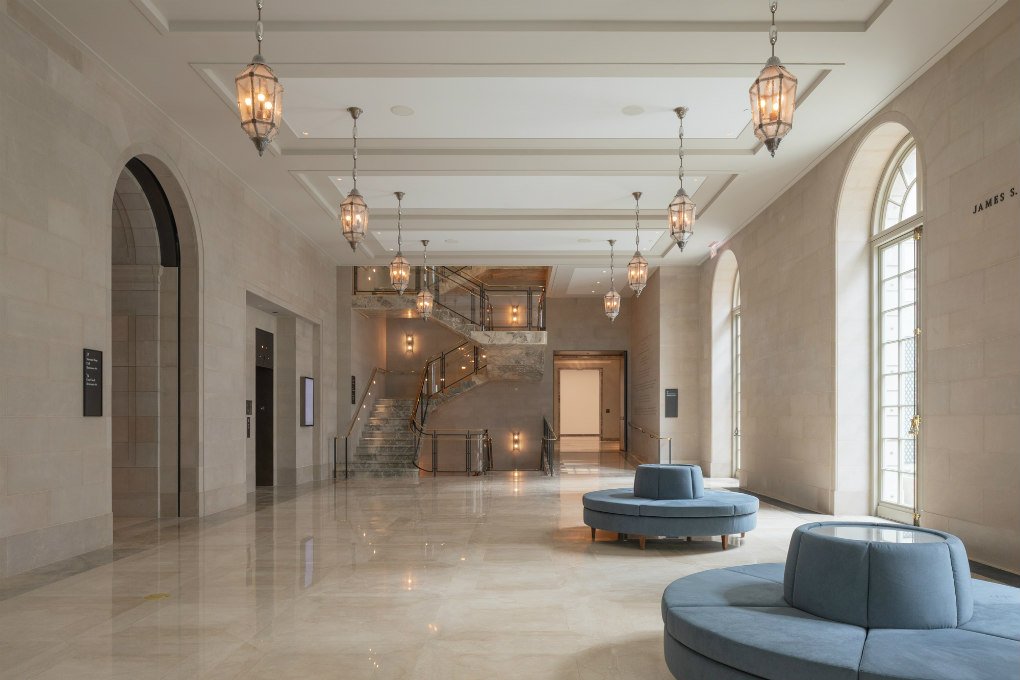
James S. And Barbara N. Reception Hall, The Frick Collection, New York
Photo: Nicholas Venezia
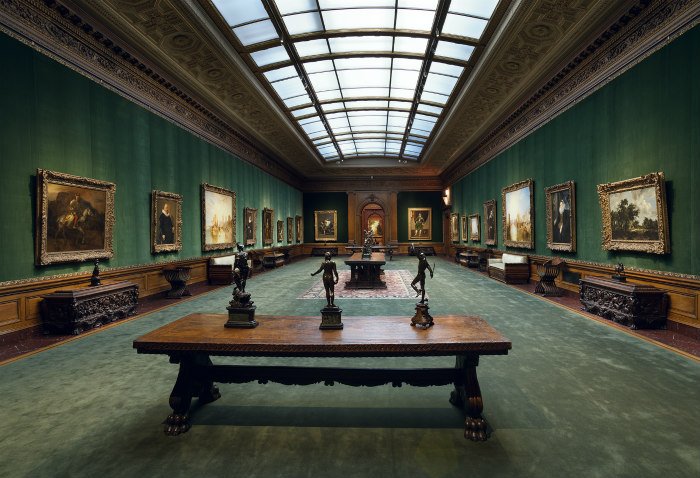
West Gallery, The Frick Collection, New York
Photo: Joseph Coscia, Jr.
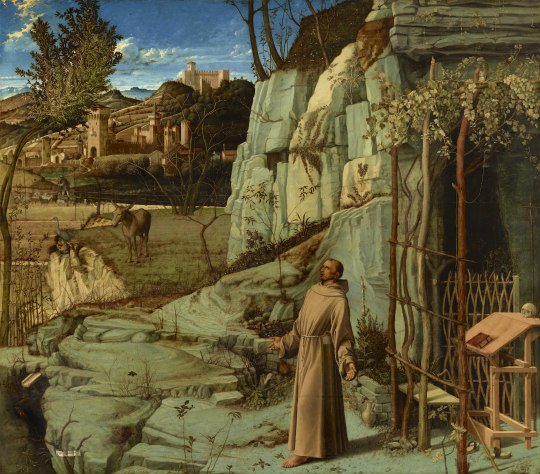
Giovanni Bellini (ca. 1424/35-1516)
St. Francis in the Desert, ca. 1475-80
Oil on Panel, 49 1/16 x 55 7/8 inches
The Frick Collection, New York
Photo: Michael Bodycomb
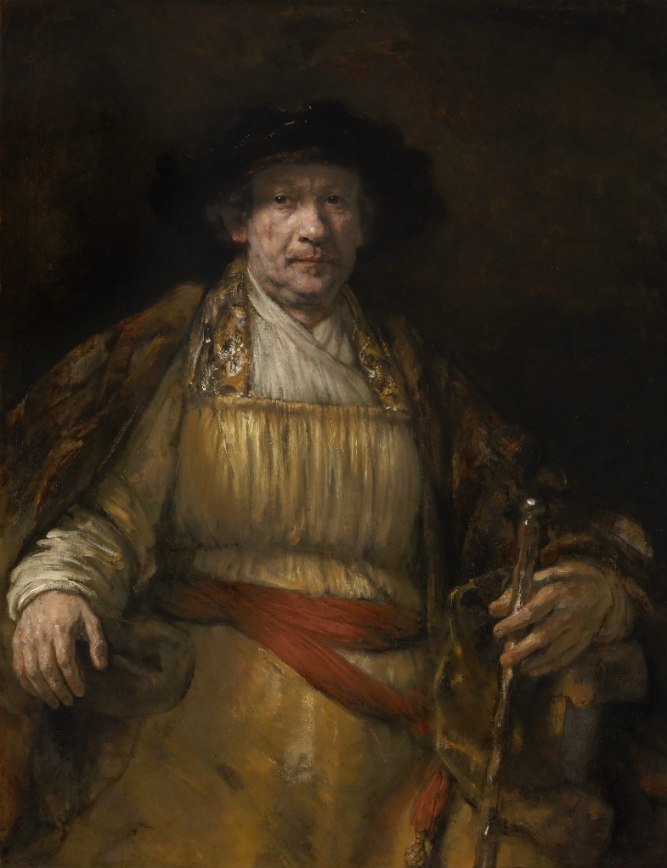
Rembrandt Harmensz. Van Rijn (1606-1669)
Self-Portrait, 1658
Oil on canvas, 52 5/8 x 40 7/8 inches
The Frick Collection, New York
Photo: Michael Bodycomb
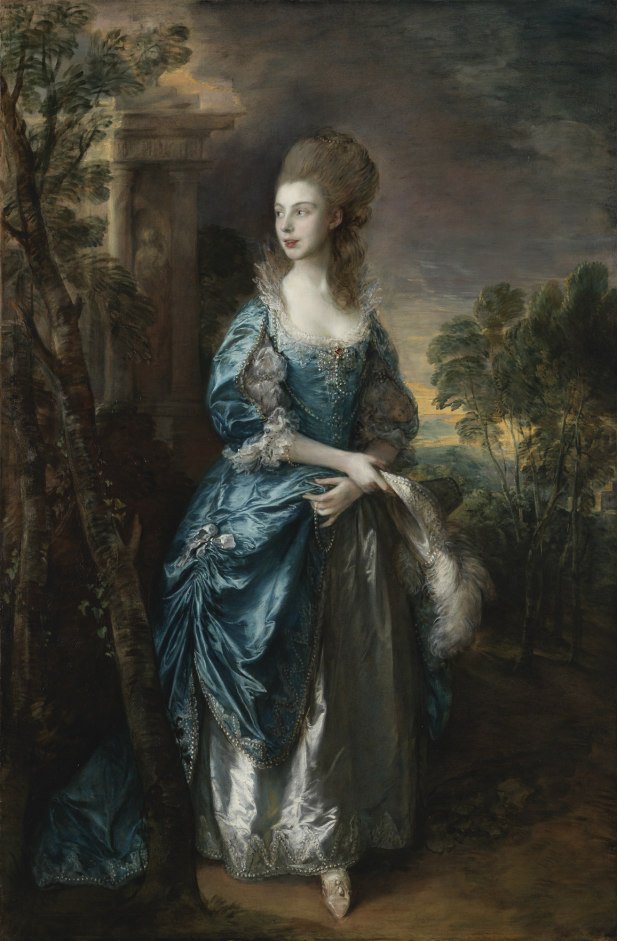
Thomas Gainsborough (1727–1788)
The Hon. Frances Duncombe, ca. 1776
Oil on canvas, 92 1/4 × 61 1/8 in. (234.3 × 155.3 cm)
The Frick Collection, New York
Photo: Joseph Coscia Jr.
“The library has always been a vital part of the museum.”
Axel Rüger, you mentioned Gainsborough, Fragonard and Boucher. Are young people interested in them?
We see lots of young people, and also a clear indication is that we have a young supporters circle, the Young Fellows of The Frick Collection, which has grown by leaps and bounds and is one of the most successful of those programmes in the city. It is also our task and our challenge to unlock what these paintings are, what they mean, what you’re looking at really, and how many of the subjects that artists were dealing with then are still relevant today.
You said that you can visit the Frick in one hour, one hour and a half, and this must suit especially young people with their short span of attention?
I don’t pass judgement on people’s attention span. I see lots of older people who skip from painting to painting. It’s been measured that the average time that people irrespective of age look at a painting in a museum overall is something like 5 seconds. The people that spend 5 or 10 minutes contemplating one painting are a very small sample of that.
People go to the Louvre because they just want to see the Mona Lisa. In The Frick Collection is there an icon?
It is a bit of a blessing and a curse when you have a work like that. To have a real poster child is great for your museum. I was in the Louvre the other day, and of course there’s different levels of popularity of things to see in there. Huge numbers of people go to see the Mona Lisa, but people also went into many other parts of the museum as well. If a great work or one of those global icons pulls people in who otherwise would not go to the museum, that’s a great win. Along the way, they will see other things and will get a sense of what else is there. It’s a journey of discovery with big museums. The challenge may well be that people can quite quickly get overwhelmed. It’s like going into a massive supermarket and seeing 70 brands of cereal, and which one do you take? The Dutch have a beautiful word for that, which is keuzestress, which means the stress of the choice. The more choice you have, the more stressful it can become because you have to decide; and how do you decide, and who helps you decide? We don’t really have that here at the Frick, and to come back to your question, we have a few very famous and iconic works in the collection that are much admired. Here one may think of Giovanni Bellini’s “St Francis in the Desert” and Rembrandt’s “Self-Portrait”.
Are New Yorkers very attached to their music?
Extremely, yes, and we see it here. The Frick has always had a strong local visitor base for its music programme. More generally, the percentage of local visitors to the museum is much higher than it used to be in the past relative to tourists. That is partly a function of our reopening and partly a function of especially international tourism having declined to the city.
You said you opened a restaurant and is that also quite important?
Yes, nowadays it is expected. People often want some kind of sustenance. We have the café, which is a restaurant-type facility with full waiter service. We also have a coffee bar, where you go for a quick espresso and perhaps a pastry. It’s for a quick rest stop for 10 to 15 minutes before you go on.
Do you buy works?
The Frick Collection has constantly evolved. We do not collect contemporary art, but we do certainly collect. We buy only very occasionally, because the quality of works that we would be interested in demands high prices, but we have been given many works, even entire collections. People leave sometimes leave them in their will or give them during their lifetime.
Can you tell me about a specific gift that has been made?
One of our late trustees, Sid Knafel, has given a large collection of French faience work. Not so long ago, the very important Portrait of a Woman by Moroni came from a private collector. Very recently, only a few weeks ago, we’ve been given by a private collector a very important Renaissance sculpture by Sebastiano Riccio, a small bronze warrior.
Is the Frick family still involved in the museum?
Yes, very much so. We always have Frick family members on the Board, and the family are still very much engaged with the museum, which is wonderful because it’s nice to continue the legacy.
Is it correct that you also built a new library?
That is a bit of a misunderstanding. Even prior to the museum’s opening, there had been an esteemed reference library on the property established by Henry Clay Frick’s daughter Helen over one hundred years ago (it is now known as the Frick Art Research Library). It has long been considered one of the foremost art historical research libraries in the world. Its 1924 building was replaced in 1935 by a a nine-story building adjacent to the mansion and was operated by Miss Frick until her death in the 1980s. The library has always been a vital part of the museum, but we were not quite as connected as we could have been. Now we have a physical internal connection that the public and staff can very easily go from the museum into the library, and get to the reading room. It is a research library and it is very actively used by scholars, by the art trade and by students from the multiple universities around us, but it is also open to the public, perhaps unbeknownst to them in some ways. While the 1935 building has been expanded slightly through this project, we feel our real achievement is this connection that allows it to be better known and used by the public.
Do you have to be a member?
You just sign up for a reading card. You can make it part of your visit, but people go there to do research so it’s a slightly different audience. We have a rare book collection, and what’s also really important is the family archive. We also have some dealer archives, and that is material that is much looked at and sought after.
Is it a must-go place for art historians?
Yes, the Frick really sees itself also as a significant research institution and that is an important part. A lot of that happens more behind the scenes that may not be so evident to the public, but it is indeed the museum in the historic mansion and the Frick Art Research Library together which form The Frick Collection.
We live in difficult times. Do you see a variation in numbers of people coming to the museum depending on the atmosphere of the time, or is this not something that is observable?
No, I don’t think we can really observe any significant difference. What motivates people to come can be a whole host of things. For some people the motivation may have shifted somewhat, but New York has a very culturally-minded public. The museums are close to people’s hearts here in the city.
Thank you Axel Rüger.
Axel Rüger, cropped Photo by Joseph Coscia Jr.
ENJOY THIS INTERVIEW? SHARE IT WITH A FRIEND