
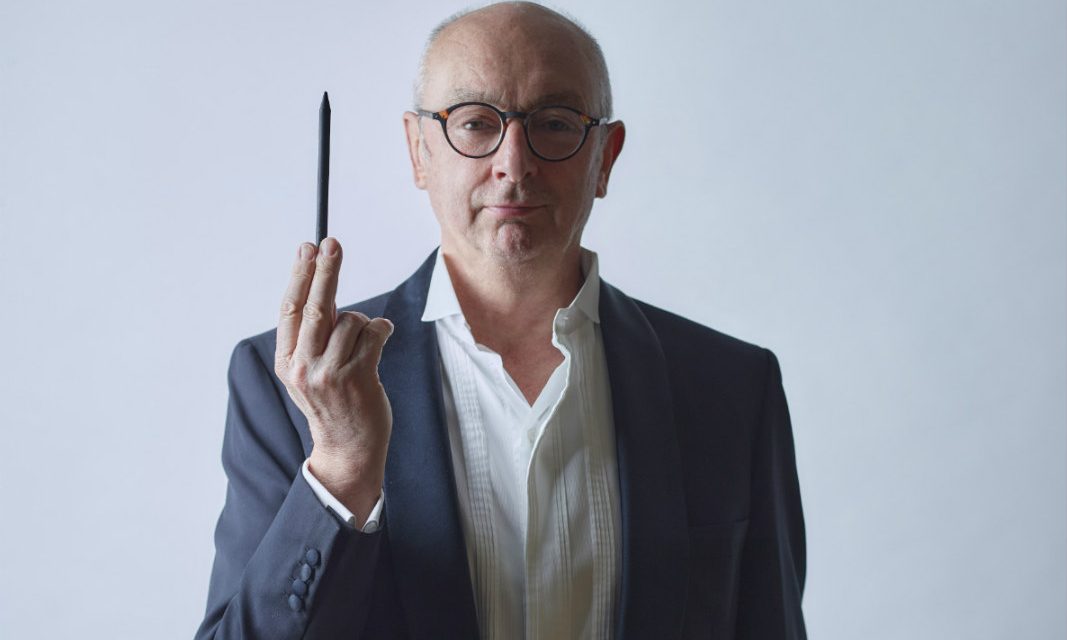
MILANESE MASTER OF CONTEMPORARY DESIGN. Piero Lissoni is a multi-award-winning-architect, designer and art director. One of the masters of contemporary design, he has an almost forty-year history in the development of projects the world over in the fields of architecture, landscape, interior, product and graphic design. He is art director for Alpi, Boffi, Living Divani, Lualdi, Porro and Sanlorenzo as well as being the founder and director of the interdisciplinary studio Lissoni & Partners.
23 minutes read time.
You can listen to the podcast of this interview here.
Piero Lissoni, why do you have a Lissoni studio in New York as well as in Milano?
We opened the studio in New York 20 years ago because I like this kind of Anglo-Saxon culture a lot and New York is important for us for the whole American market, meaning Canada, USA, Mexico, Brazil, Argentina. We need to be there because it makes it easier for us to be more efficient, and at the same time I like the feeling of being in New York culturally speaking, for its vibrancy and quality of life.
How many people work with you in your Milano studio, and how many in New York?
In Milano we are a hundred and something. In New York there are another ten people.
Do you spend your time between Milano and New York?
I spend more of my time in Milano, and I spend a lot of time all around the world because we work everywhere. One week every two months I am in New York. I like to live there and to be connected with real life in New York, but every day we open a special electronic window between Milano and New York and we are together. I stay in Milano, but after 3 o’clock I’m in New York.
“When you’re born in Milano and grow up in the polytechnic of Milano it becomes quite natural to control 360 degrees of everything.”
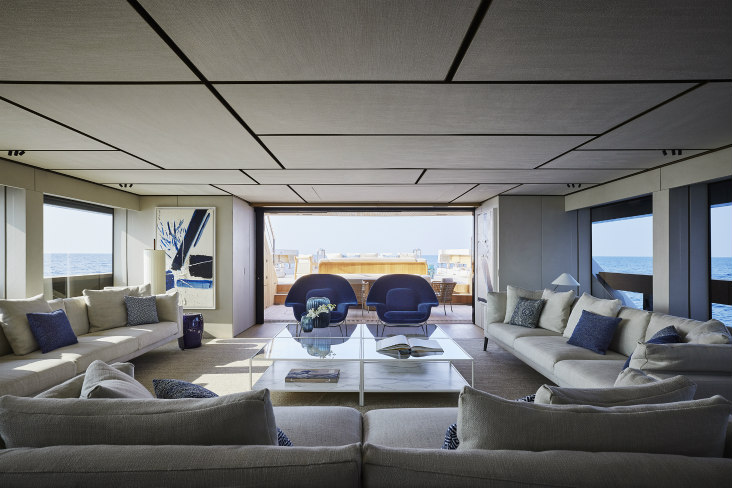
The Sanlorenzo 44X-SPACE, with interiors designed by Piero Lissoni, features a main deck salon that embodies a “floating villa” concept, focusing on a seamless, highly transparent connection between interior and exterior spaces. Photo by Federico Cedrone.
Piero Lissoni, you have building projects in America and in diverse places such as the Turks and Caicos Isalnds, Brazil, India and many other countries?
Starting from Japan, we have one project in Tokyo, two projects in Seoul, and five projects in China: Shanghai two, Xi’an two and a big one in Guangzhou. In India we have three different big projects: in Mumbai, outside of Mumbai, and in New Delhi. Then we work in other countries such as the Emirates, Saudi, Israel. And after that in Europe: Germany, Hungary, France, Switzerland.
You designed the celebrated Frog chair in1995 and are the art director of many companies. Is design included in your international projects?
No, outside of Italy I only do pure architecture. Inside Italy the other projects are in an architectural field. I only work as art director and as designer in Italy for Italian companies, not because I’m chauvinistic but because I know that Italy is a good place for such work to be well done. I do work a little bit outside of the country as designer, but only for Fritz Hansen in Denmark and for Knoll in USA.
Did the Milano atmosphere of many architects who designed furniture, lamps, or other objects influence you on the design side such that you started by working on kitchens and bathrooms with Boffi?
Yes, because working as a designer is like driving a Formula One car. You need to be precise, you need to be fast, and at the same time you have to be good. Architecture means buildings, so you need another level of time. I started to work as designer and art director with Mr. Boffi. He chose me when I was a very young architect, and even now, after 40 years, I have never understood why he chose me and decided to ask me to become a designer and an art director for him. I started there and for me design is like a bank. Economically speaking, it gives me the freedom only to choose to do those architecture projects that I like. I’m very happy that design gives me this level of freedom.
Which company built the Frog chair that you designed?
I designed the Frog Chair for Living Divani, my first project for them. As a young designer they asked me to design my first chair for them, and I designed this completely wrong chair: large, flat, low.
Why did you call it Frog?
Because she looks like a frog, ready to jump. It’s unbelievably uncomfortable, but for 30 years it has been an incredibly successful piece. Last year we were remodeling it a little bit, changing the material and some small details. New qualities of life are there, but it is still a Frog.
The old Frog chair is a collectible, and the new Frog chair?
Is a new piece. 30 years on, technologies and qualities of material have changed a lot. If you remember the original Cinquecento, it was in our heart, and when they redesigned the Cinquecento the new Cinquecento it had the feeling and the smell of the old Cinquecento but it was a completely new project. I have done exactly the same for the Frog.
For Sanlorenzo you have also designed motor-yacht interiors and didn’t you rebuild a house for Sanlorenzo near Basilica della Salute in Venice?
I started to work for Sanlorenzo 11 years ago as an art director, which strategically speaking means that I touch all the different aspects for Sanlorenzo: communications, photography, catalogues, factories – because we designed the factories -, how they show themselves during the major different international fairs held in Monaco, Cannes, Fort Lauderdale and Singapore. Last but not least, I started to design boats for them. As an architect, for me boats are floating villas or floating buildings, and so at the same time I retouched the line of the boats a little bit. The primary level of their boats was designed by the studio of Bernardo Zuccon and I retouched some little details as an art director with total freedom.
What about their house in Venice?
We designed the Casa Sanlorenzo in Venice as a museum for them. They have collected many different very beautiful pieces of art in the last 10 years and buy pieces every year. Sometimes we forget to work inside a cultural field, and our idea was to connect their capacity to be a very good builder in the yacht system together with the arts – to connect construction, industrialisation, technologies and arts.
“I think it was a disease, and I became an architect.”
Piero Lissoni, you also curated the corporate identity of the Venice International Film Festival?
For more or less 15 years we were involved in the Biennale of Venice for one week. We stopped working for them in 2020, just before COVID, when I decided that our experience was more or less finished. We designed the whole structure around the Biennale, the original facade where the artists come on the red carpet and the lounges. Many different places in Venice connected with the Biennale of Cinema, and it was our project and we designed everything around them.
Do you design shops, the interior of shops, the layout?
Yes, everything. Our characteristic is to be architects and at the same time to be designers. We design buildings, the interiors, the furniture, all the different pieces. We designed for a Swiss watch company named Bucherer, as well as six floors in Milano for the house of Audemars Piguet dedicated only to watches. We designed for the generation of Benetton for more than five years. When you’re born in Milano and grow up in the polytechnic of Milano it becomes quite natural to control 360 degrees of everything. It’s a very Milanese attitude and I’m very proud of that, because in the Anglo-Saxon schools they teach you to be very precise and very scientific, but our schools focus on a humanistic approach. This means you need to be good at many different aspects and insights of our profession.
Is there an identifiable Lissoni architectural style, as there is for instance with Frank Gehry or Tadao Ando?
Yes, our Lissoni language is quite clear. We work a little bit around some clean lines, and at the same time we work with different kinds of contamination all around the world. I like to feel connection and contamination all together inside in the interior, but in terms of architecture we design something clearly connected with our time. I am a contemporary architect. I never tried to be post-modernist. I only tried to be modernist, and anyway, luckily or not, you can recognise our Lissoni language.
Do you build differently in Turks and Caicos than in Chicago and in Brazil or India, or is the environment not so important for you?
You need to adapt yourself. In Turks and Caicos we built everything in wood. We tried to use this modernism language in terms of gentle architecture because there you need to think you are in the Caribbean atmosphere. When I design in Chicago I’m in the most important modernist town in the world. When I design something in India there is the need to connect our building with the surroundings. So, we adapt ourselves, but at the same time try to use a few different languages with some details connected by the Lissoni language.
How is your work day?
First, I need a very good espresso. It doesn’t matter if I’m in Milano, New York or Tokyo. After that, I spend one hour in the morning only for myself, reading books and newspapers. After that, I start to draw or study or talk with my clients.
How do you feel about the different qualities of espresso in Tokyo, in New York and in Milano?
Espresso is like a religion for me. I know very well that in some countries espresso looks like espresso, but it’s not espresso, but anyway for me it’s a good start and a good connection between me and the qualities of my life. After that I start work. I start to draw, and I draw by hand; I don’t use computers because I’m a monkey from another century, and I’m very proud of that. I like to draw. I like to read a lot of books. I like to hold many meetings with my team and my clients. Our work is not private work, I don’t like feeling that I close my doors and work alone. No, I like to talk with people, to discuss within a team. It’s a rare moment when I need time for myself to think, or to design, or to draw something. I like to stay inside a community all the time.
When you decided to be an architect were there some people that you particularly admired?
I had heroes like Le Corbusier and classical masters from around the world. I started to study them when I was really young, and I remember the amazing Italian architects such as Franco Albini and Marco Zanuso. I remember the Olivetti moment, after that the old Cinquecento and classical Vespa, and after that the great masters such as Achille Castiglioni, Vico Magistretti, and Ettore Sottsass.
Did you always know you wanted to be an architect and a designer?
Yes. I don’t know why but when I was young I started to sketch, to draw by myself and to build small models. Whatever kind of disease it was, I was completely inside these kinds of thing. I think it was a disease, and I became an architect.
Was Milano a great place to grow up in, with great designers and architects such as you mentioned and others like Gio Ponti?
It was the perfect place to be. In that way I am 100% chauvinistic. Milano was a special place to survive in and at the same time to grow up and to live in. It still is, because if you are a young designer or architect you need factories, and Milano is a place where factories are based. At the same time, when you start to think about architecture and move around in Milano you see Gio Ponti and touch the old pieces of Luigi Moretti and feel what happened with Aldo Rossi. For me, it was somewhere absolutely incredible to be and to learn.
New York concentrates a kind of energy that is found nowhere else in the world. How do you find its architecture?
New York is another incredible city. It is like a bibliothèque of architecture. Think about how you move through Park Avenue. You turn a little bit on the right side and you see the Seagram building with its small Seagram square, designed by Mies van der Rohe. After that SOM (Skidmore, Owings & Merrill) designed the Lever House in the 60s. And then after that, as you move around, think about the Chrysler Building, one of the most incredible art deco pieces in the world, and at the same time this beautiful tower. I’m completely crazy for the industrial feeling of being in New York: the classical loft, the classical factories, the classical SoHo.
Do you have an apartment there?
I’m much too lazy to live in an apartment in New York. I like to feel free. I know very well what would happen if I started to manage an apartment in New York, so I prefer to have a studio, that’s enough. Now the studio is in SoHo, and before we were in Williamsburg, a beautiful quarter of Brooklyn.
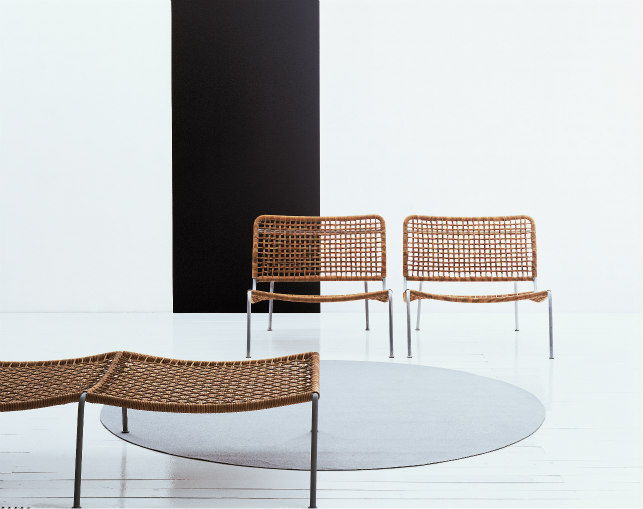
Piero Lissoni: The original Frog chair. Photo by Tommaso Sartori.
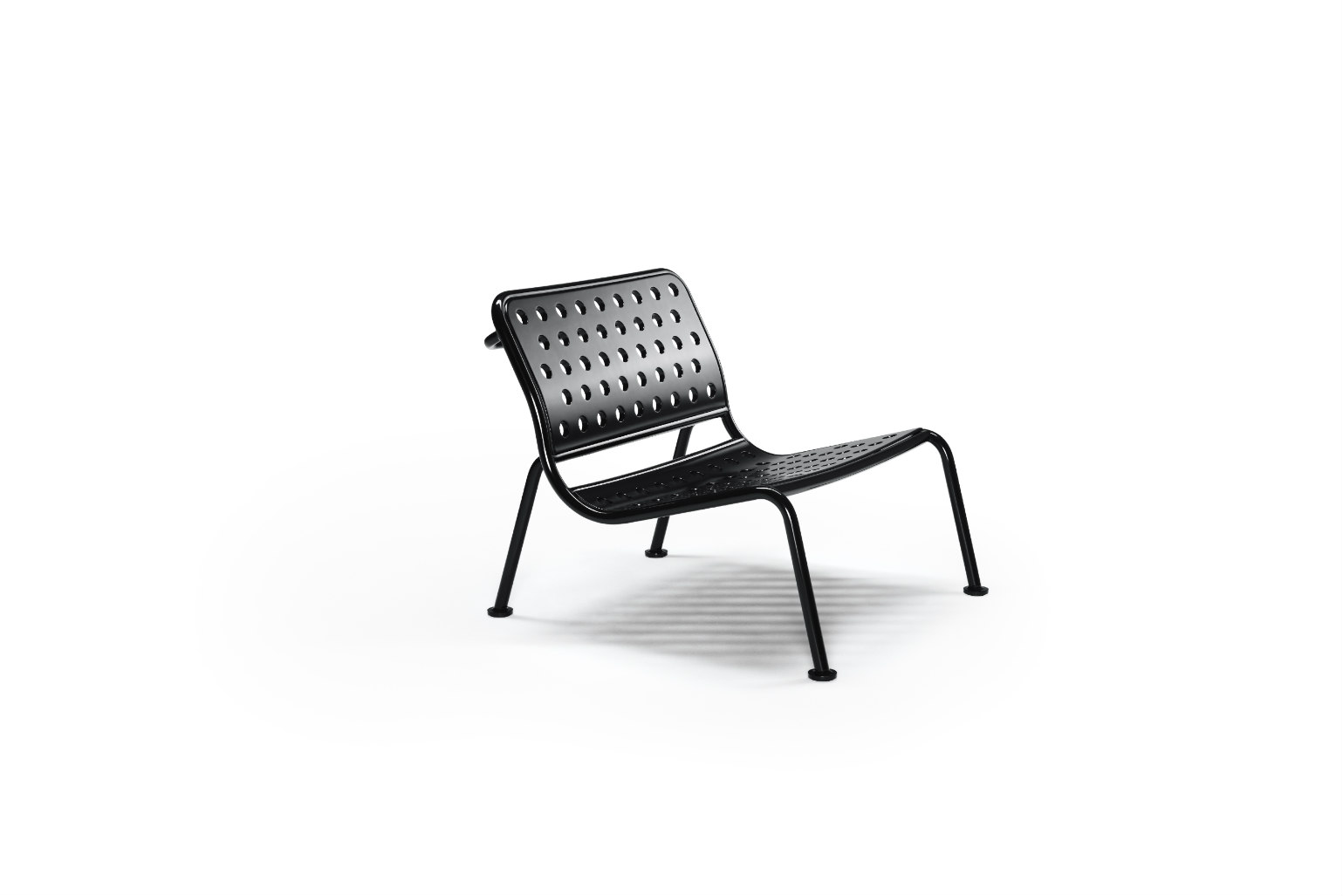
Piero Lissoni: The new 2025 super Frog chair. Photo by Tommaso Sartori.
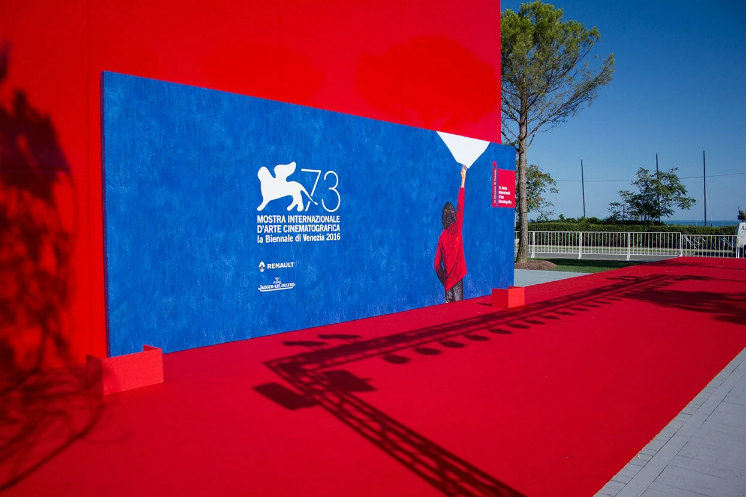
Piero Lissoni: the red carpet area for the Venice Film Festival, part of the overall corporate image designed by Lissoni.
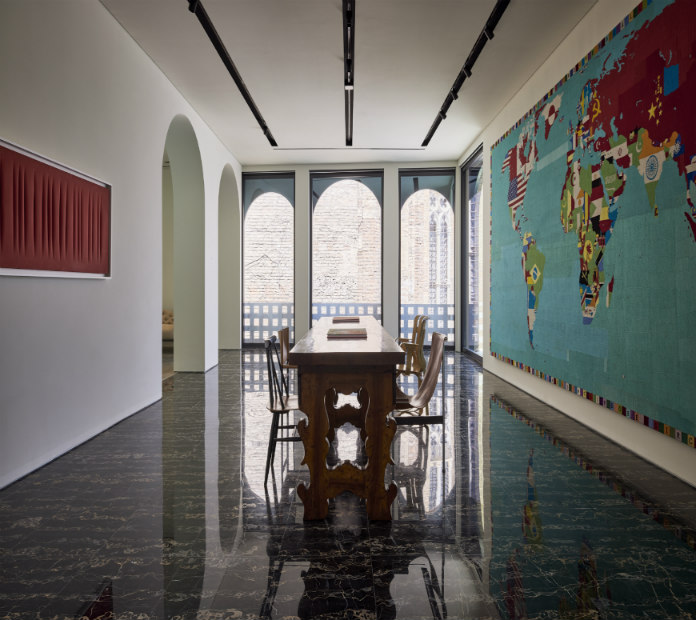
Piero Lissoni: The Salon, Casa Sanlorenzo museum, Venice, Italy. Photo by Federico Cedrone.
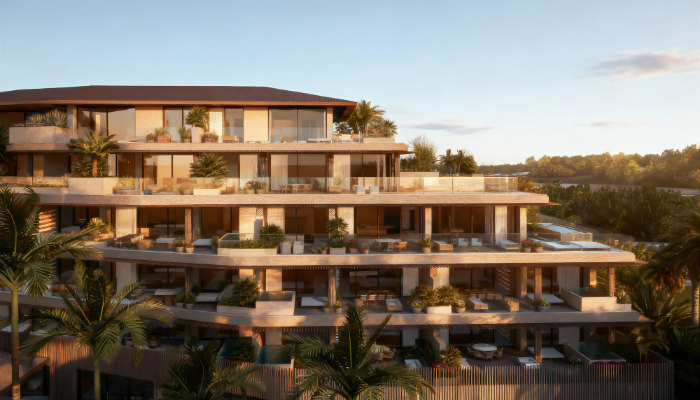
Piero Lissoni: ARC South Bank Resort and Marina, Turks and Caicos.
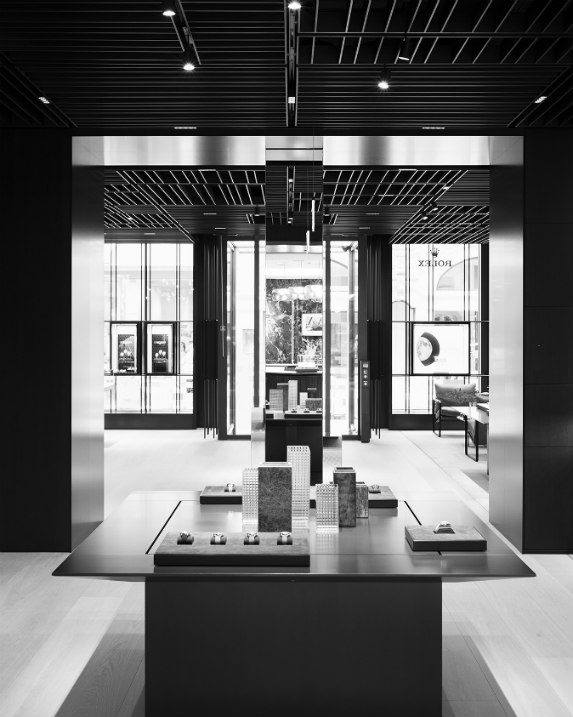
Piero Lissoni: Bucherer Basel, Switzerland
© Andrea Ferrari
“We need to live in our own times, even if sometimes they are imperfect.”
Piero Lissoni, who are the architectural masters you seek to emulate?
One of my personal heroes is Renzo Piano, for his great attitude to being a unique architect. Other heroes are a couple of Swiss architects, Herzog and de Meuron, because they are able to change scale. I’m completely crazy for some Japanese – Sanaa for example – and for a young Swiss, the 83 years old Peter Zumthor. I’m very close to this level of architecture which has the capacity to move inside in a small scale and build on a huge scale, and at the same time with this level of human touch and control of human proportions. All of them are my personal heroes.
How is it for an Italian architect working in Japan?
They are very similar to us. I work for myself in Japan. I’m an Italian architect, and I feel Japanese when I’m there. When I work in Japan I am totally crazy for the quality, for their capacity to figure out the level of details, the ways in which they touch the materials. I’m total crazy when I work in Korea too, because the Korean people are like the Japanese people but are a little bit more Napoletani, a little bit fancier.
Are you more Korean than Japanese?
No, I am more Japanese in this level of sophisticated purity and at the same time I like working in China a lot. The Chinese people are so gentle and so precise. Working in China is a great experience.
Even if your studio as a whole is at the cutting edge of computer science do you personally still like to draw with a pencil?
In the studio I am the one last monkey. The others work only with computers and computers and computers and computers. Now everybody talks about the new intelligent attitude but we started to work with the parametric system of computer-aided design more than 20 years ago. But I like to draw by hand, and if not on paper I like to draw on my iPad because it’s easier to move sketches around the world. I’m not a sophisticated drawer. I use every kind of pencil. I am not a fanatic. I like to draw, and that’s it. When it’s possible to draw, I draw. If I’m flying somewhere, I take the menu and start to draw with my pencil on the menu.
Without the incredible new technologies would you be able to follow as many projects as you have around the world?
No, it would be impossible. Technologies are unbelievably good tools. I’m a little bit worried about AI, but only for one reason, because if you don’t study enough, work enough, draw enough, it’s possible for some mediocracy to grow up without any good level of quality. This is a really dangerous thought.
You like to draw objects like lamps and tables and chairs, but then also buildings?
Yes, I like to design buildings too, and I like to use human scale. When I design a building I put my human scale inside, and I try to design and follow the technicality inside a building. When I design a building I like to draw and to do a very light, small calculation. After all, the point is to design beautiful architecture. I follow our master, Renzo Piano. When he designed something, it was an open dialogue between engineering and qualities of design. I try to copy him. I only try to copy him. This guy is a hero, sitting nearby God in terms of architecture.
Do you prefer human-centric “small” architecture or big towers? The late great architectural historian Joseph Rykwert was very interested in this difference, and like you was very impressed and touched by Le Corbusier.
I like to design small buildings. When I design factories, they ask for special qualities of dimension because in the end they are factories, and I don’t always feel confident to do that. I do it, but I prefer the small scale. When it’s possible for me to design something a little bit smaller I feel more confident.
Will the modern architecture of very tall and thin huge buildings that we see in New York, last?
This is a new generation of construction and some of them will be very efficient for more or less 25 or 30 years. After that, you will need to talk about the possibility of dismantling them or make a lot of renovation or restoration. Nothing is for out of the time. Out of the time means modernity, a limit of time. For example, when Mr. Renzo Piano with Mr. Rogers designed Beaubourg, they were supposed to design a special building for 30 years. It was a surprise when they discovered that now we will do a strong renovation and restoration because we need to get another 30 years life from that building. Modernity lasts for some time, but a little bit short. Mies van der Rohe did the Seagram building in the 60s. At the end of the 50s, he did the Farnsworth House outside of Chicago and now it’s a museum, but for me that’s quite natural. Sometimes it’s possible to dismantle this level of architecture and to redesign something completely new. Otherwise it is the ego of architects when they start to talk about designing for eternity. It is not true, and I don’t like that.
Forgetting the politics, there were great architects during the years of fascism in Italy, Terragni in Como, Piacentini and others. This architecture is all over Italy and you also see buildings of that time in the Dodecanese of Greece. These buildings last, they are still there. EUR in Rome is still there.
You need a new way to think about what happens in terms of durability. Unfortunately, one talks about fascist architecture in terms of the train stations in Italy. I am not talking about a political approach, but it was a sign of the qualities of modernity and at the same time the quality of construction. In that moment, it was possible to do it. Now, it is only possible in some countries, such as Germany, Swiss, sometimes in France and in Spain, where they care about the qualities of public modernity places. The question of durability is anyway different. Now we need the capacity to design something beautiful. After that, I don’t know if they are for an endless time or not.
Has all this changed somehow in the same way that people used to mend suits or change the sole of their shoes, keeping things for a long time, whereas nowadays people buy and throw away and buy something else?
In terms of architecture it is more or less the same attitude. Sometimes we build too much. Worldwide we grow some parts of the towns too much and we need to think that anyway in 40 or 50 years some things will have disappeared and after that we will rebuild a new building on top. Why not? I’m not so egoistic in terms of this idea of things lasting.
What do you feel about changes in the city of Milano?
Milano is a simple, small village. It’s an imperfect city with a lot of mistakes, but it is my town so it’s impossible for me to judge. I see something wrong, but at the same time I am falling in love with this town and so I cannot be honest.
Do you mind that new neighbourhoods are being built in Milano?
I’m not against that. We need to live in our own times, even if sometimes they are imperfect. I like the imperfection of that. I like to feel that okay, something is wrong, but at the same time that is in my time and that is my quality of life.
Rome and Venice are the two great Italian examples of layers of time?
It is impossible to think about Rome without the fantastic levels of layers: Roman layers, and before them Italic layers, and after that the Renaissance level, and after that the Baroque layers, and after that the modernity layers. That is Rome, and Paris is the same. Born by the Romans, layers by layers by layers Paris becomes now. We need to be on time and in our time. That’s it. No more.
What about looking forward?
Looking forward and thinking about that, my God, perhaps the future is not so bad! It’s not possible only to be looking through the past.
Thank you Piero Lissoni, it has been an interesting conversation.
Portrait of Piero Lissoni by Veronica Gaido.
ENJOY THIS INTERVIEW? SHARE IT WITH A FRIEND


