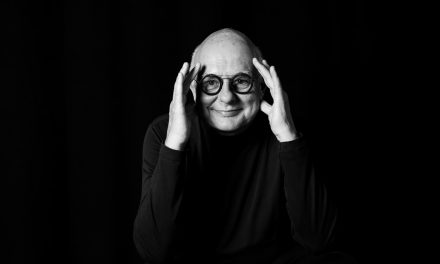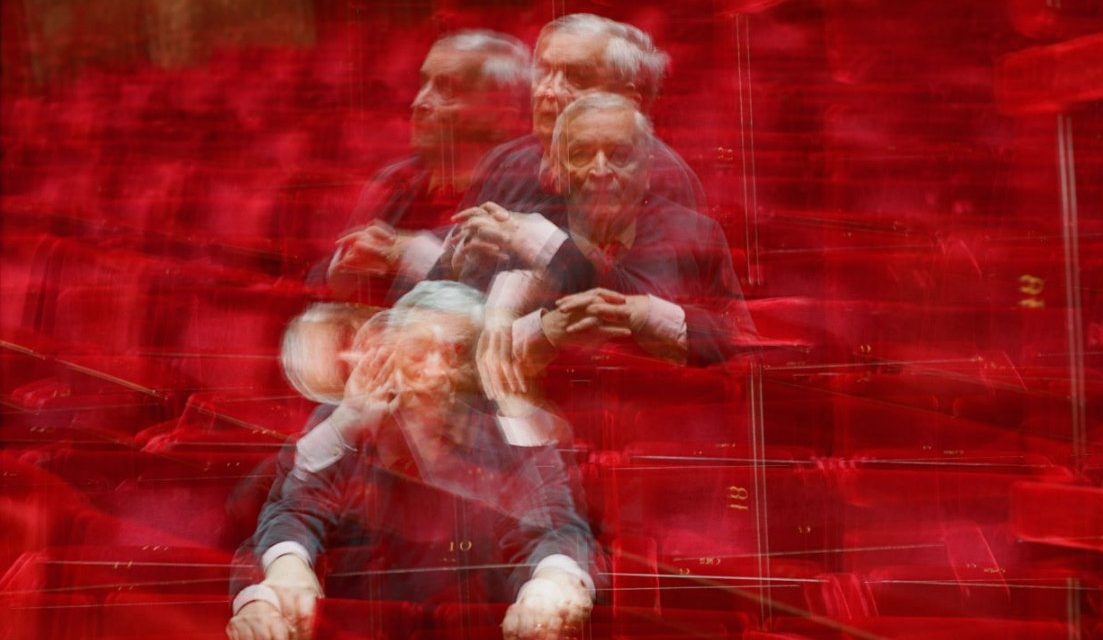
STILL PUSHING THE BOUNDARIES. Sir Norman Rosenthal celebrated his 80th birthday on November 8th 2024. A curator and art historian, he was Exhibitions Officer at Brighton Museum and Art Gallery, a curator at the Institute of Contemporary Arts and for many years Exhibitions Secretary at the Royal Academy in London. Recently he curated Georg Baselitz: The Last Decade at the Sabancı Museum in Istanbul. His Roberto Matta 1911-2002 opened at Ca’ Pesaro, Venice on October 25th 2024, and he is curating David Hockney’s April 2025 exhibition at Fondation Louis Vuitton, Paris.
You can listen to the podcast of this interview here.
Norman Rosenthal, how long have lived in your house in London’s Soho?
Since just after Manuela and I got married in 1989. The origins of the house go back. According to the Survey of London it was built in 1710, so it’s older than America! It’s in a little group of houses quite near that famous restaurant, Andrew Edmunds.
Soho was also the place of Francis Bacon and Lucian Freud?
That was in another part of Soho, more in Dean Street in the world of the Colony Room. I have a rather amazing painting of Francis Bacon and Muriel Belcher, the founding owner of the Colony Room. It used to hang there and when they had a sale I couldn’t resist buying it.
You are also a collector?
No, I don’t believe in the idea of the collector, but I do believe in souvenirs and my life has been a life of art. I never studied art or art history, but even since childhood I was going with my mother to the National Gallery and above all to Kenwood House.
“Art is a complex story, and one has to pick out the great artists who have their own vision of the world.”
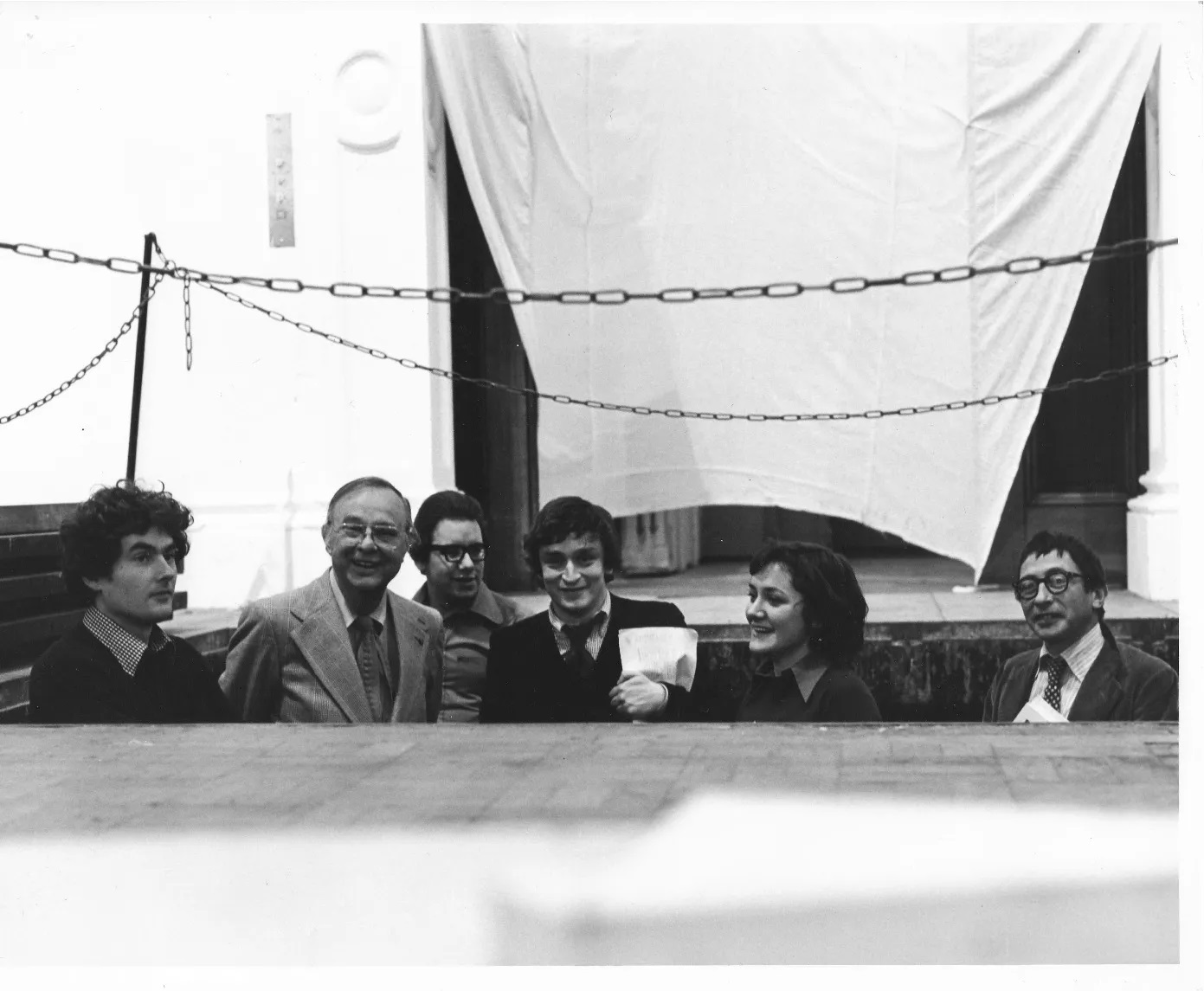
Robert Motherwell and Norman Rosenthal during installation of his Motherwell (paintings and collages 1941–) exhibition at the Royal Academy of Arts, London. January–March 1978, with members of Royal Academy staff; on right, John Kasmin (father of Paul Kasmin). This was the first Rosenthal-initiated show at the Academy.
Norman Rosenthal, in Kenwood House you saw the famous pink lady painting of Gainsborough?
Yes, Mary, Countess Howe. In the good old days that painting used to hang in the Orangery at Kenwood. I remember as a small boy trying to imagine what was underneath her skirts. It’s a story that I like to tell, and it’s true!
Visiting the National Gallery with your mother you fell in love with Rubens?
I loved going to the National Gallery and learning art, and then I got this extraordinary job at what then was “the Wildensteins of London”, an art dealer called Agnews. I wandered in there after I came down from university and asked if there was a job. At that moment, a wonderful person, one of the directors of the company called Evelyn Joll, came by. He looked at me and said there was a job sorting out their photographic reference library, and then later on sorting out the art library. I began to learn about art in a deep way for myself.
Did the Spanish baroque painter Murillo somehow change your life?
Somebody brought in a painting which they thought was a copy, and I managed to prove it was an original painting. It now hangs in the Gemäldegalerie in Berlin, an altarpiece. Later on, when I got to the Royal Academy, I went to Madrid for the first time to secure some loans for an exhibition that was already on the program, Gold of Eldorado. I met the director of the Prado and we talked about Murillo, and I suggested we do a Murillo exhibition at the Royal Academy. Manuela, the person who was to become my wife, was my deputed opposite number in the Prado museum. By chance, that’s how these things happen. I have a wife and two daughters and my life is full of incredibly beautiful coincidences. Of course, life can be a confluence of terrible coincidences, as happened in the case of my parents, who were survivors of the Second World War, but personally I’ve lived a life where I’ve never encountered any anti-Semitism. I feel unbelievably fortunate in that way.
What is your recent work?
This Baselitz exhibition which is taking place in Istanbul is absolutely fantastic, not because of me, but because of the artist. I came across him very early when he was completely unknown outside the German speaking world. When Britain entered the European community on the 1st January 1973, I was somehow found by the Institute of Contemporary Arts (ICA) because I speak German thanks to my parents – who spoke German to each other largely – even though I grew up speaking English. Towards the end of the war must have been a horrifying period for people living in Germany, with bombs falling everywhere, and people hanging from trees. My friend the great German composer Hans Werner Henze described this to me very graphically, and Baselitz describes this in his Heroes paintings and in his very early work.
Later you met other German artists such as Beuys, Kiefer, Richter, Polke?
Yes, all these German artists were confronting their beginnings in their own different ways, and Baselitz especially. The slightly younger Kiefer was an up-and-coming artist and within Germany Baselitz was already established, even though he was completely unknown outside the German speaking world. In 1974, when I was working at the ICA, I had to choose between doing an exhibition focussed on the Baselitz kind of work and the more expanded modernism of Joseph Beuys, and I chose Joseph Beuys to mediate the radical cultural positions of the 1968 revolution. We did this big exhibition called Art into Society, Society into Art of Beuys and artists like Hans Harcke, Klaus Staeck and others, including Gustav Metzger, who’s having a revival at the moment. He has a big exhibition called Gustav Metzger, And Then Came the Environment at Hauser & Wirth in Los Angeles. Like Frank Auerbach, Metzger was a Kindertransport artist who then became an artist within the English cultural scene, but nonetheless remaining culturally very German.
You were at the Royal Academy for many years, and in 1981 made a famous exhibition titled A New Spirit in Painting, including work by not only Germans but Americans and Italians?
Yes, and the other thing we did was to put in that exhibition the late work of Picasso, who died in 1973. The late work of Picasso was very little valued at that time. The general consensus was that if Picasso had died in around about 1950, he would be a better artist. People found the work that he was doing in the 60s and 70s almost embarrassing.
You disagreed?
Yes, and I even had to convince my co-curators Christos Joachimides and Nick Serota that this was something that had affinity with the new painting that was going on at that time as I saw it. It was very young painters like Rainer Fetting, Sandro Chia or Francesco Clemente, or artists with already a longer background in making art, like Baselitz and indeed Anselm Kiefer.
These German artists didn’t have the same fame then?
They weren’t known at all in the Anglophone world or even in France, where there was a sort of fading Ecole de Paris with artists. Art is a complex story, and one has to pick out the great artists who have their own vision of the world. Baselitz is one of them, Beuys another.
You opened the doors to very prominent art dealers like Charles Saatchi and Antony D’Offay?
I suppose I did. They were not collecting this kind of art at that time, and then suddenly, seeing our show A New Spirit in Painting, they started collecting like crazy. In 1982 I remember Charles Saatchi asking me at a Documenta where he could find a Sigmar Polke, because Polke was always a very difficult artist; his strategy was hiding. I told him of a very obscure dealer in Bonn who had access to Polke, and then he bought very important paintings by him.
With all this, you were later close to American artists like Jeff Koons and in 2016 you made an exhibition at the Ashmolean Museum of Andy Warhol: Works from the Hall Collection?
For me, all great art is a modern. Raphael is a modern artist, as far as I’m concerned. Titian, for me, is an unbelievably modern artist, even today. There are not many in any generation. I once read in a book that in Paris in about 1880 there were 70 or 80,000 individuals who identified themselves in a census as artists. If you are a relatively well-educated person today you can probably name 8 to 10 of them, and if you are a bit of an art historian you can probably get up to 20!
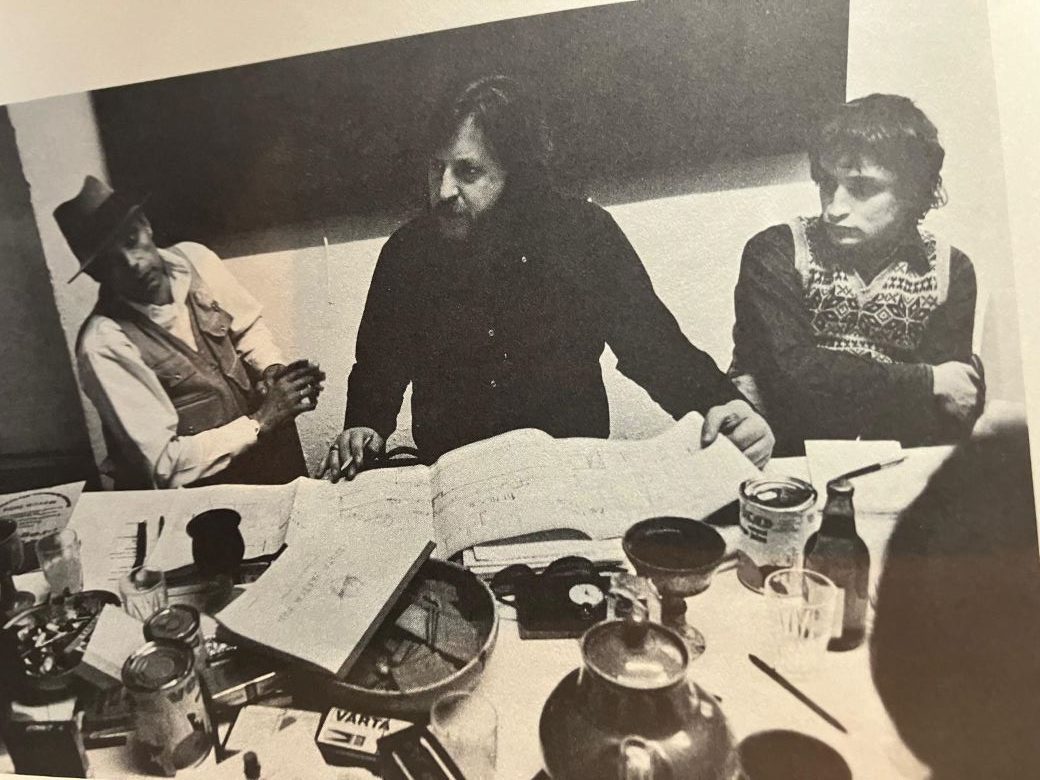
(Left to Right) Joseph Beuys, Christos Joachimides and Norman Rosenthal
“I always liked to do things with other people.”
Norman Rosenthal, what makes some people great artists?
Describing things in imaginative ways, both technically and in terms of looking and describing what they see, what has never been seen before. Cezanne described the world in a way that nobody had done before. The same is true of Raphael, Titian, Chardin, Manet, Monet too of course, and Van Gogh. Van Gogh: Poets and Lovers is now at the National Gallery. Greatness is for a consensus to decide. It takes time for that consensus to build up and that consensus is always changing. The Pre-Raphaelite artists were very famous in their lifetime, then vanished, and then suddenly had a bit of a comeback.
Caravaggio was forgotten for 300 years?
Vermeer equally. Nobody knew who Vermeer was. He and Caravaggio painted relatively few paintings. There are no rules about these things. Velasquez painted relatively few paintings, but he was not so easily forgotten. Every story of an individual is different.
And now there are no longer movements?
I don’t know whether there are no movements. The art world now has become very obviously commercialised in a particular way that has to do with this particular world. Art is very much connected with geography as well. Locality plays a big part.
Today there is a lot of talk about gender.
That’s a misunderstanding of our time. Gender and identity politics are a very big thing. It’s rather difficult now to be a male, blue eyed white artist, but in the end everything gets through. I did an exhibition recently in Venice just before the pandemic and there’s a catalogue which we called Breathless. I wanted to call the exhibition OUT because it was the moment when Britain was leaving the European community and also we’re talking about a period where artists like to be out, whether they’re gay or black or bisexual or transgender and so on and so forth. I thought outness and the double meaning of out, the out generation would have been good. Rather like many years ago I did that exhibition of the Sensation Generation and the world of the YBAs, the Young British Artists led by Damien Hirst and people like Tracey Emin and others. Of course, they are no longer young, but some of the best ones still continue to make wonderful art, including Tracey Emin, who now has a big exhibition called I Followed You to the End at White Cube in London. Damien Hirst is an undeniable artist of significance who has made very complex art in Great Britain. London is still a great cosmopolitan arts centre.
Do you like to still be very busy with exhibitions at your age?
In November, I’m going to be 80 years old. But think of the great John Richardson, who went on curating exhibitions into his 90s. Of course, he tended to concentrate on the big subject in his life, Picasso. Everybody has their own way of doing things.
What is your new show in Venice?
A show opening on 24th October of Roberto Matta, the least well-known very great artist of the 20th century. He died in 2001, and I knew him very well. He saw into the future and describes the fourth and fifth dimensional world we live in graphically and visually with both wit and with imagination. He needs to be looked at again as a great contemporary artist, even though he’s been dead for nearly 25 years.
In Paris at the Bourse de Commerce in October there is a big Arte Povera show. What is your view of Arte Povera?
I was the first person in England to show Jannis Kounellis, when I did the Greek month in London a year after we did the German month. My friend the Greek critic Christos Joachimides who lived in Germany introduced me to Baselitz, who introduced me to Beuys, and to other artists.
He and Nick Serota were your friends?
Yes, and I always liked to do things with other people. If you do things completely by yourself, there’s a tendency for paranoia to set in. If you do a thing with a colleague, you can both laugh about what you’re doing and also be self-critical more easily. Art is also about dialogue and pushing the consensus into new places, and that you can do more easily in dialogue with somebody than just purely by yourself.
Like when you established the importance of the late Picasso works?
If I hadn’t done it, somebody else would have. There was a wonderful director of the Kunstmuseum Basel called Christian Geelhar, who was to die of AIDS a few years later. He did the first big exhibition of late Picasso, and in the catalogue he said the re-evaluation of late Picasso commenced with the exhibition at the Royal Academy in 1981, A New Spirit in Painting. It’s more than 40 years ago, and 40 years is a long time in art. Think of the world of art in France in 1840 and then of the world of art in France in 1880. It’s a big jump. In the Renaissance you have the Renaissance and you have the Post-Renaissance, the world of Mannerism. It is a big jump that takes you from Raphael to Parmigianino and Correggio.
What will be the next jump?
Nobody knows what the next jump will be, but one knows that art doesn’t end. There’s no end to art. Art just goes on and on. There are the individuals who will push the boundaries and the people who do the same thing.
One who has pushed the boundaries is David Hockney?
Yes, and a year ago, suddenly out of the blue I get a telephone call from David Hockney on my iPhone. I could see him with his husband JP, Jean-Pierre Gonçalves de Lima in the background and David says to me, “Hello Norman, how are you? Would you curate my exhibition at the Fondation Louis Vuitton? It opens next April.” I swallowed hard, and couldn’t say no so I started working on that as well. Parkinson’s law says “work expands to fit the time available” and you just get on with it.
Are you happy to do the Hockney exhibition?
More than happy. Even though I’ve known David Hockney as a friend and I know him reasonably well and he’s done portraits of me and of my wife over the years, I’ve never known him very well, even though I helped initiate shows at the Royal Academy. But I have to say, spending the last year working and thinking about David Hockney, he is like Picasso, he is like Baselitz. He is an artist who is bottomless in his ability to renew himself, to constantly be thinking. On the one hand, his work is very identifiable, in the best sense narrow. Like Picasso and Baselitz, Hockney paints himself and his life. He’s interested in the world in front of him, and he has made an astonishingly rich, deep complex oeuvre that is completely mind blowing. The exhibition that we will show in Paris concentrates on the last 25 years of his life, and of course artists are interested in their recent work, and his recent work is amazing.

Installation view of A New Spirit in Painting, Royal Academy of Arts 1981
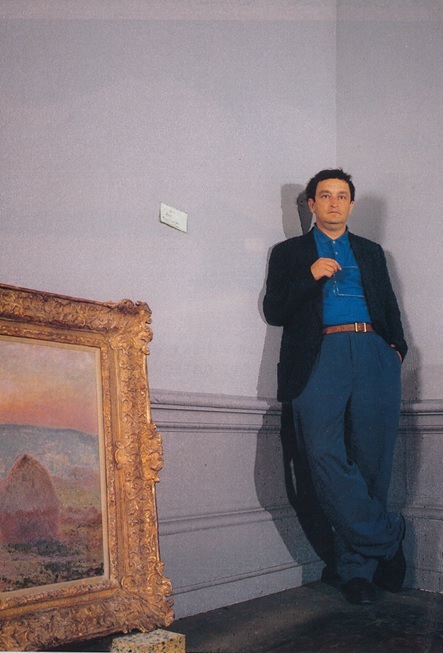
Installing Monet in the ‘90s, Royal Academy of Arts, 1989
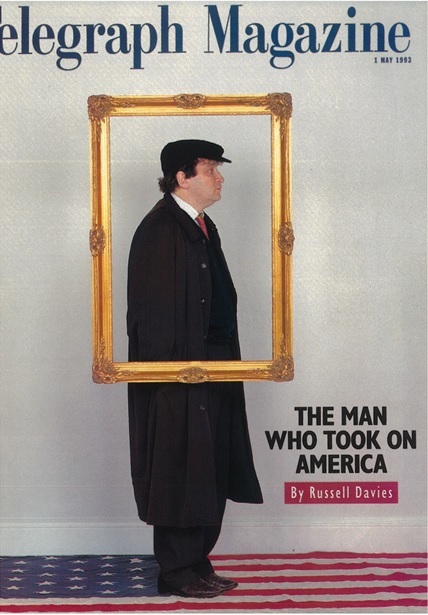
Telegraph Magazine Front Cover May 1993. Installing American art in the 20th century.
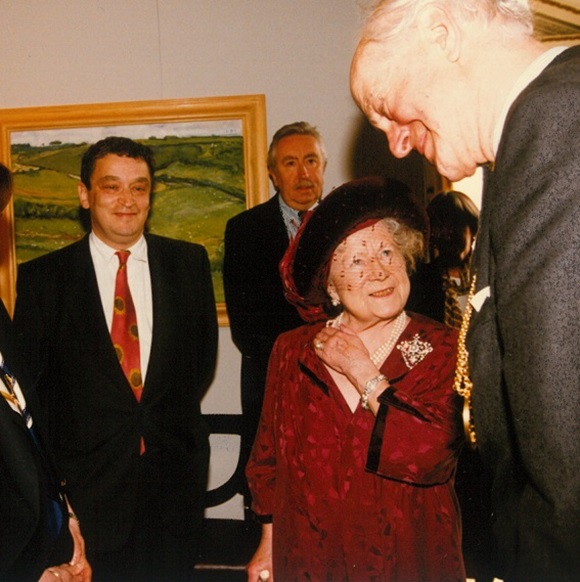
Queen Elizabeth The Queen Mother visiting Gustave Caillebotte Unknown Impressionist at the Royal Academy of Arts 1996
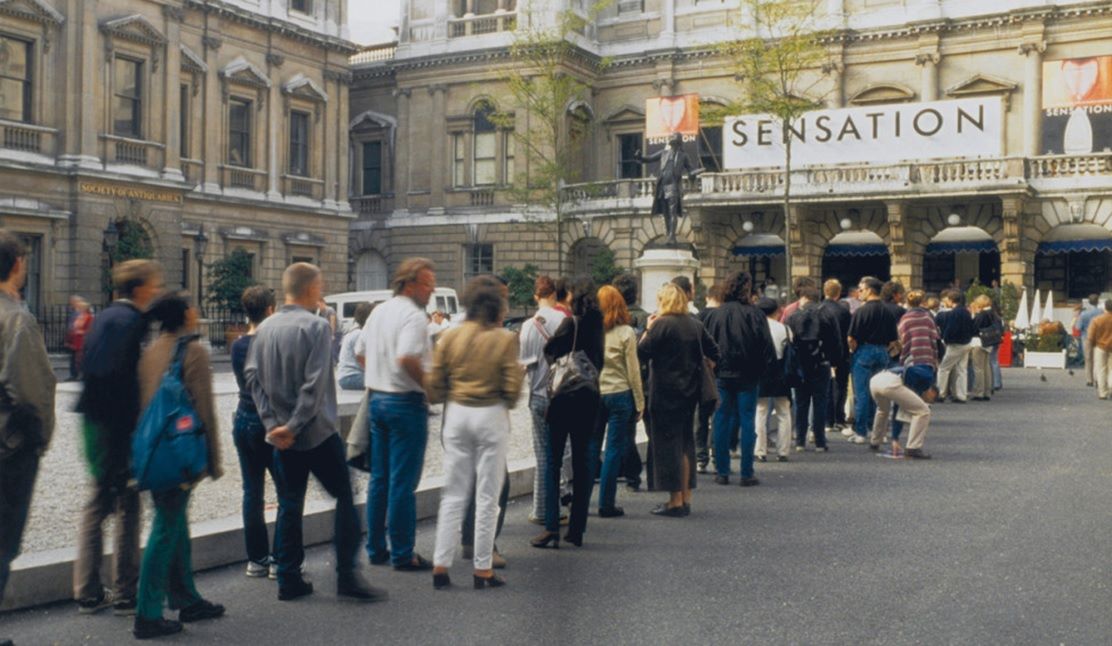
Sensation at the Royal Academy of Arts 1997. The queue.
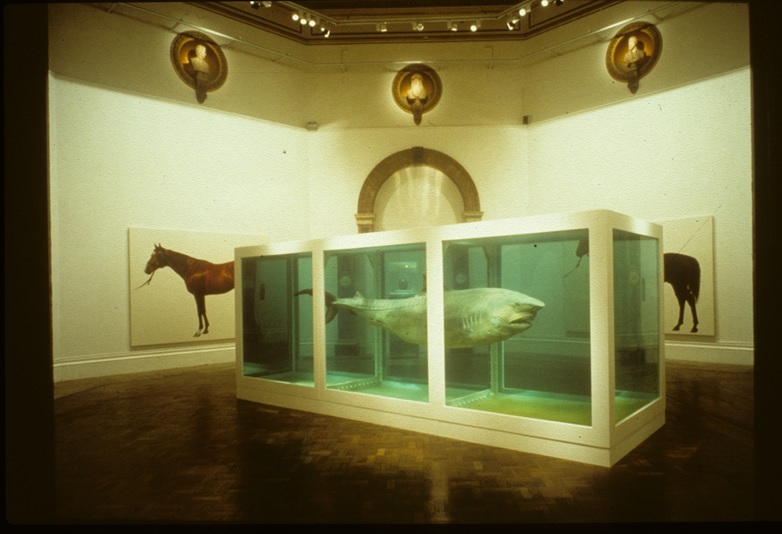
Installation view of Sensation at the Royal Academy of Arts 1997.
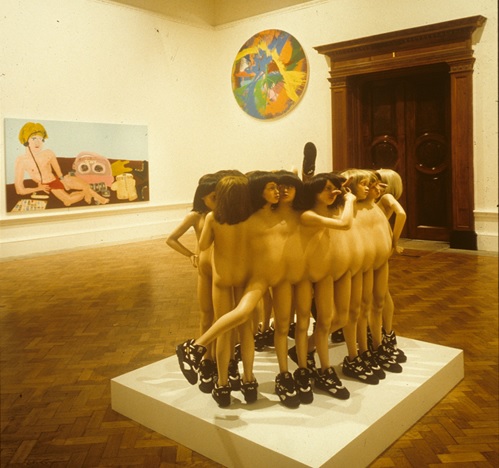
Installation view of Sensation at the Royal Academy of Arts 1997.
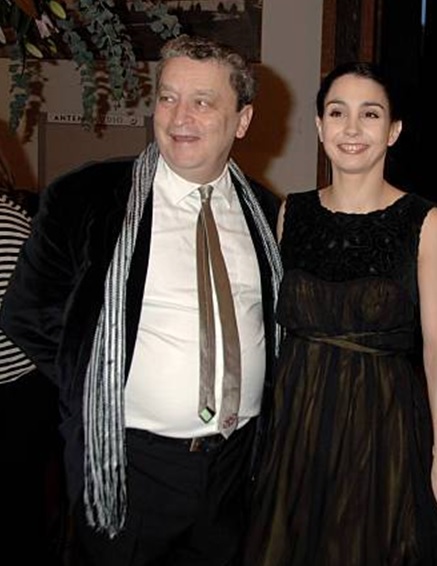
Norman Rosenthal and ballet dancer Tamara Rojo
“I’m very proud to be having a dialogue with David Hockney”
Norman Rosenthal, Hockney is obviously very famous for the early California work, the swimming pools and so forth?
This exhibition will focus on three big subjects, namely, the work he did in Yorkshire, because he returned to Yorkshire around the year 2000, and then he moved to Normandy and now he’s back in London. We will show the completely astonishing work he did in Normandy over 4 or 5 years, and the work that he made in Yorkshire is equally stunning. He’s become an artist of nature and people, and now that he’s back in London he has been doing portraits and strange symbolist paintings.
When you prepare an exhibition do you work closely with the artist?
If they are alive, obviously the artists have the last word. Inevitably. It’s a dialogue again. I’m very proud to be having a dialogue with David Hockney, and I have had an incredible dialogue with Baselitz about this exhibition In Istanbul over a year or two. It is his result, not mine. I don’t paint the pictures.
But you are an important figure because you put it together.
What I do is open the door to the platform, work on the platform and think about the platform. Every platform is different. The Sabancı Museum on the Bosphorus in Istanbul is a particular platform. One has to think about the rooms. What an exhibition looks like is very important. The Royal Academy was an incredible platform, and I like to think that I helped turn it into a great platform for art and also contemporary art. Now they’re having a big Michael Craig-Martin exhibition. Every venue is a platform, and you have to make the platform into something.
As well as being a curator, there is a second life of yours, which is music.
I’m not at all a musician but I’m passionate about music, so-called classical music and contemporary music. I’m very proud to have very briefly met Stravinsky, who when I was still a boy gave me an autograph and a big hug, which I can still feel. I heard Stravinsky conduct maybe 5 or 6 times, including when he conducted Oedipus Rex, for which Jean Cocteau did the libretto. If I metaphorically close my ears I can still hear Cocteau’s slightly high-pitched but also very dramatic voice.
Did you plan on going into music at the beginning of your career?
No, I didn’t know what I was going to be. My father wanted me to either work as a teller in a bank or be a shoemaker. I’d be far too impractical to be a shoemaker. I couldn’t do it. I was born with two left hands I’m afraid. I don’t play instruments because my hands are not very well coordinated physically, but I love music and I love art. I suppose if I have to say, what do I love more art or music, probably music.
But everybody knows you for art?
For years I promoted concerts at the house of Valerie Solti, until she died. She was the wife of Georg Solti who, when he was chief conductor at Covent Garden in my teenage years, conducted for me the whole operatic repertory, all of Wagner, all of Mozart, all of Verdi. He also did the first performance in England of Moses und Aron by Schoenberg. This year is the 150th anniversary of Schoenberg’s birth, another great composer alongside Stravinsky. For a long time they lived very close to each other in Los Angeles as refugees from fascist Europe, but they never met.
Even if you’re not an artist or composer yourself, are you very happy about the life you have had?
There’s no moral imperative to like art. There’s no moral imperative to like literature. There’s no moral imperative to like music intensively. To live through music, to live through art or to live through literature are great ways of getting through this funny thing called life, which is such a mysterious and weird thing. It’s very difficult to fully understand why we are alive in this universe, and I don’t think the word God actually gives you an answer, because God is an invention of humans.
Humans now want to achieve immortality through technology.
What is immortality? I don’t know whether people will be interested in Titian in 1000 or in 5000 years’ time, but maybe. Titian died in 1576 and he is still alive today, 500 years later. I personally believe that Picasso and Hockney will continue to live through their art for a very long time. But I don’t know what the world is going to be like in two years, let alone 500 or 1000 years. The world is so upside down at the moment.
In your lifetime Britain has changed from being an imperial power to what it is today.
When I went to school in the 1950s and early 60s the map was half red, so there was still a British empire. When I was growing up England was largely white, but now England is another kind of country and it’s wonderful. I have three great artist friends who are basically from what was the empire. Anish Kapoor who is very well-known, a wonderful artist called Raqib Shaw whom I did a big exhibition of in Venice, and then a wonderful Pakistani artist friend, devoutly Muslim in his religious beliefs, called Mohammed Qasim Ashfaq.
Are you an optimistic person?
I’m privileged to be able to just observe the world. I’m neither optimistic nor pessimistic. There is oneself and there’s the larger world. When I see a person sleeping on the street, and there are far far too many, I can’t help thinking how that person who was once a baby in his or her mother’s arms got to that stage.
You are concerned by other people’s sorrows and destiny?
At one level one is completely helpless to do anything. You can do little individual things, but none of us can change the world, except maybe Elon Musk or Warren Buffet could change the world. I find super richness difficult and, in a way immoral, but that’s the way the world has turned out.
Are the super-rich interested in art?
A handful are. I had the good fortune to know Gianni Agnelli, for example. He and his wife were very interested in art. The Medici were interested in art. They can make art possible. The Baselitz exhibition in Istanbul is only made possible by the Sabancı family, or one thinks of Gulbenkian in Portugal who not only had a museum but was a provider of hospitals and universities and so on.
What is art?
Ever since man started drawing in caves 40,000 years ago, art has always gone on. Artists basically describe the world from their perspective. Every artist has his own universe, depending on who they are and where they find themselves. They describe it, and my job is that I’ve had the pleasure of being able to look, and hopefully help people look. Occasionally I meet people who say their lives were changed by coming to an exhibition, and that’s as good as one can hope for. But when I put on an exhibition, I do it to please myself and by pleasing myself I hope that a few people might enjoy it, including the artists themselves. If a 15-year-old boy or girl comes to see an exhibition and enjoys it and it makes their life a little bit different, that’s enough.
When did you present your first exhibition?
A long time ago in 1964 or 5 when I was at Leicester University, not at Oxford or at Cambridge, but a small English provincial university. I did an arts festival including an exhibition called Artists in Cornwall, at that time the world of Ben Nicholson and Barbara Hepworth, and younger artists like Peter Lanyon. I also was one of the actors in an illicit world premiere of Play by Samuel Beckett which we managed to get hold of a script of. Play consists of two women and a man in the centre and all of them are in pots. I sat in a pot and two girls on either side of me, and I was the only person who remembered my lines perfectly well. When I was young I was quite keen to be an actor.
You would have been a good actor?
Putting on exhibitions is a form of acting, an interpreter of other people’s work. Musicians are also interpreters of other people’s work. Work does need interpretation, or rather presentation. The other day I heard Yuja Wang play Debussy for David Hockney. They are the most unlikely of friends, but they are friends and she loves playing for him. We also managed to squeeze a Yamaha concert grand piano into David Hockney’s studio and my young friends Samson Tsoy and Pavel Koleskinov played The Rite of Spring for him. They have played The Rite of Spring from the Carnegie Hall to the Wigmore Hall to all over Europe and they are fantastic pianists. So they too are interpreters.
Norman Rosenthal, we wish you a very happy birthday, and thank you for this interesting conversation.
Portrait of Sir Norman Rosenthal in the Wigmore Hall copyright Johnnie Shand Kydd
Images courtesy of the Royal Academy Archive and Sir Norman Rosenthal.
ENJOY THIS INTERVIEW? SHARE IT WITH A FRIEND.