
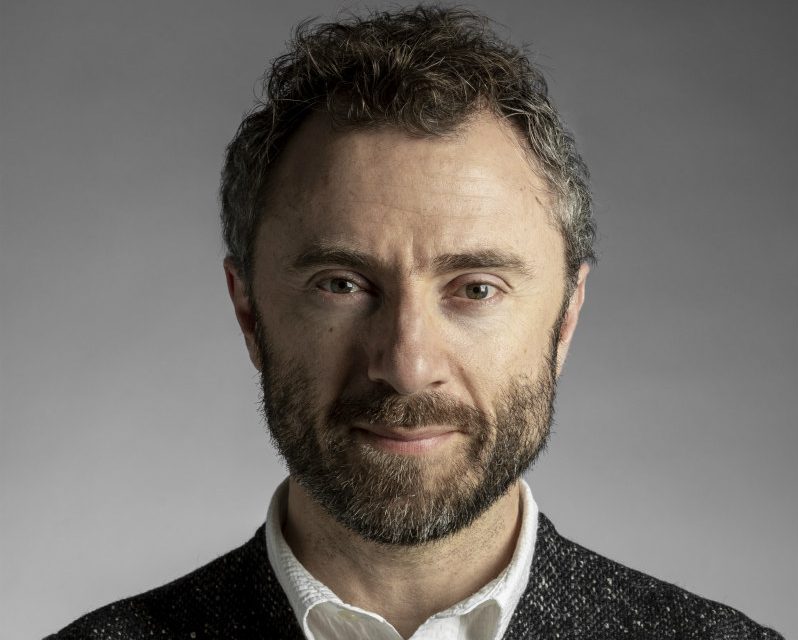
HUMANISE: A DEEPLY PASSIONATE MANIFESTO. Thomas Heatherwick is a British designer whose varied work over two decades is characterised by its originality, inventiveness and humanity. As the founder and design director of Heatherwick Studio, Thomas now heads a team of over 250 problem solvers dedicated to making the physical world around us better for everyone. This team wants to see a world where the buildings and places around us are radically more joyful, engaging and human. The approach driving everything is to lead from human experience rather than any fixed design belief.
You can listen to the podcast of this interview here.
Thomas Heatherwick, have you created certain masterpieces that you are proud of?
There are the things that mean a lot to you because of being milestones at different points in your life. A masterpiece must be judged by someone else, not by yourself. I always see things as improvable. The bigger the project is, the more you can always improve and improve on it.
What led you to think that buildings and pieces of cities could make people feel differently?
When I was a student, I felt that there was an opportunity for a more making-based joyful space that wasn’t being occupied. Nobody was thinking about how buildings could make people feel. We seemed to be stuck in styles and modernism or postmodernism or brutalism or classical didn’t feel the issue to me. When I was younger, I wanted to be an inventor. My challenge was to invent a project for a particular place that feels good to people. There was an atmosphere that considered the public ignorant and I felt uneasy with that, maybe because my grandfather was a communist and my parents straddled both the academic and the artisanal worlds.
“I advocate for servant architecture.”

Humanise A Maker’s Guide to Building Our World by Thomas Heatherwick.
In this manifesto for change, Thomas Heatherwick explores how buildings and cities around the world lost their soul – and what we can do about it.
Thomas Heatherwick, what was your first building?
I built a pavilion when I was a student, aged 21, because I realised that no students ever built anything. It felt that a pavilion was a size you had a chance of creating when no one would trust you. I was lucky that it was possible, and 26 companies sponsored me with materials. It sat for 30 years at the estate in Goodwood, a very small building, but a mini manifesto. Today it is kept downstairs in my London studio.
Did doing that give you confidence?
Yes. We all have in our lives those little moments that make you feel that it is possible to do some things. I grew up in the 1980s United Kingdom where it felt that architects had almost given up on making real visions anymore. The 1960s visions had gone a bit wrong, and there was great disillusionment with that way of creating pieces of city. We had the expression “paper architects” and there was a paper idealism, and yet nothing really happening.
In your book Humanise – A Maker’s Guide to Building Our World, you say you grew up against a blandemic caused by Le Corbusier and his dull followers?
Le Corbusier was a huge mix of contradictions. A very, very talented building designer, he also pushed urban theories that were extremely damaging. He’s still revered, but people struggle to separate some of the masterpieces he created from his incredible influence on city planners and officials around the world. He had zeal and mission to demolish the old towns, to create straight roads, and abolish all decoration. He had this condescending approach that all ornament was for savages. His ideas that pavements should be eradicated and that cafes were the fungus that eats up the pavements are absolute madness.
And this was repeated in Mao’s China where they destroyed the cities?
You see that vision built out all over the world. These big blocks with impersonal, car-centric cities. We’ve learned that car-centric cities do not make human cities. All over the world the most progressive cities are unwinding the car-first mindset that pushed people second and killed the life. After the pandemic we have had mass adoption of digital technologies. You can stay at home and lie in bed and get a Ph.D., you can stay at home and work, you can stay at home and do all your shopping. In the past, if you wanted to eat, you had to get food and the only place you could get food from was on our streets. When streets become quiet because nobody’s there, they become dangerous. It’s about all our streets engaging, giving joy, giving fascination.
What do you think about the skyscrapers built by very famous architects like Renzo Piano, Frank Gehry, Jean Nouvel and Norman Foster?
I’m not advocating against skyscrapers at all. The best architects such as these all know that the street matters so much, and how your building touches the ground and whether your building is generous to people who don’t go inside it and whether it contributes to public life. In the world of leadership in organisations, people talk about servant leadership. A really good leader of an organisation serves their team and serves society with their business. I advocate for servant architecture. Our job is to serve the public and to serve the people who commission us.
Is architecture an art?
We treated architecture like an art, but it’s different than the other main fine arts because it’s design, and the buildings of public life on our streets, in our towns and cities are the walls of your life. They have to be conceived of passionately by the designers and developers and city officials and city planners, to be generous to the passersby. My book Humanise was dedicated to the passersby. The architectural profession hasn’t cared enough about the outside of buildings. The feelings it could offer to strangers is a gap that we haven’t talked about.
Is this the basis of your Humanise campaign?
This gap for the 99% of buildings in the world is a very serious problem. As a studio, I have tended to be commissioned to do the 1%, where the commissioners have realised they want to do something that is extra engaging, but our challenge is everyday buildings and how we humanise boxes. The Victorians in the United Kingdom built millions of boxes that they managed to humanise with details that gave some fascination with qualities that mean that they are still valued now. Whereas the last 70/80 years of buildings no one sees value, because they don’t have culture embedded in them. The culture has been stripped off. Frank Gehry has made some of the most spectacular, incredible buildings, and Humanise isn’t saying let’s have more of those, even though it would be wonderful if we could. Our challenge is how do we make everyday housing, work spaces, shopping spaces have some fascination.
Where are you trying to do this at the moment?
We’re working on two very dense housing projects in the United Kingdom. We’re looking at the emotional experience for visitors and residents to those areas of those buildings, at how we can give details for a very cost-effective budget by designing from the visitor experience first. There is one big housing project with about 700 homes in London, and one project which will have about 1000 homes outside London. The challenge is to find everyday ways to have culture and joy embedded in these buildings.
“Working with neuroscientists and researchers, I see that once you get to city scale you go into stress when it’s plain, flat, shiny, serious, monotonous and anonymous.”
Thomas Heatherwick, greenery and plants are important elements of the Humanise philosophy, as they are for other architects like the Italian Stefano Boeri, who invented the vertical forest, Adjaye Associates or Foster & Partners?
When we tune in to places that make us feel good, often there is a strong amount of nature balancing the physical made construction. We had many developments where there was just too much made stuff, with no counterbalance of the complexity, variety, freshness, changing through the seasons and movement that natural planting brings. I’ve used nature as part of my architecture in my projects to soften and to find affordable ways to give the kinds of visual complexity that our brains need. And then there are also the other side benefits that the major use of trees brings: creates oxygen, reduces sound, cleans the air and other side benefits.
Isn’t this also just common sense that sometimes seems a bit lost in today’s world?
That’s the challenge in specialisation and great expertise. If you look at a human being from 10,000 years ago, we are still roughly the same height, the same step distance. The way we feel and respond to the world is probably incredibly similar. There’s a risk of a God complex when you’re designing pieces of city. You’re looking down on your models and down on your drawings, when humans don’t experience places like that. I keep telling my teams to put yourself down in and look up. It’s common sense. Humanise is a book about the obvious. When people who are not in our vast construction industry echo chamber read it, they say, “Yes, of course.” There’s no shock.
In the past buildings were built to last and last. Why do we seem to make buildings that look best on day one and then less and less good?
I find how to make something where the worst it looks is on day one and that can look good when dirty quite inspiring as a notion. I just came back from Venice and its imperfection is its richness. It doesn’t rely on being perfectly clean and new looking all the time. In Asia, they celebrate imperfection. The Japanese word wabi-sabi is used for enjoying aging and the quirks and imperfections. In the ceramic of our Xi’an project, we tried try to put much more imperfection and fascination. When ceramic is perfect, it actually looks very cheap. The glazes make natural patterns almost like you’re looking out at the solar system, where even if you walk up to the columns and structure one metre away, you could stand looking for an hour because it’s so complex. That’s not because of my design. That’s because of the natural way that the glazes flow.
How many years have you been working?
Last year the studio celebrated its 30th anniversary, but I hope that in our next 30 years we can go further with making buildings that really have that capacity to be repaired and adjusted and adapted. We got so excited at seeing buildings like a spaceship, as perfect product that is exact and technological. But humans don’t treat buildings like that. We need to be able to adjust them and adapt them and extend them as we change our needs over the years.
Is the architectural world of today generally very cold?
Yes. When we think of people, it’s a real compliment to talk about someone being subtle, understated, quiet and thoughtful. When we think of yoga, meditation, mindfulness and reflection, it’s all about calm and quiet. But when we get to the city scale, subtle clean lines and ‘less is more’ and quiet are the most boring pieces of cities. At city scale our brains need visual complexity. Working with neuroscientists and researchers, I see that once you get to city scale you go into stress when it’s plain, flat, shiny, serious, monotonous and anonymous.
Sadly you were unable to build your antithetical Garden Bridge project in London?
I don’t have any power. All me and my team can do is advocate for ideas and try and work out how we do something. I depend on everyone else. When a project starts to happen, whoever isn’t in government wants to criticise whoever is in government, so anything gets used as a political football. For me, if a project happens, it’s a blessing. The Garden Bridge was a beautiful idea of an actress called Joanna Lumley. It was an amazing idea, and we were thrilled to be asked to design it and work on it. It’s a shame that the politics stopped that.
You had more luck in New York?
In New York, at the same time, there was another project that we were working on with a garden on it, above the Hudson River. That got stuck in politics as well, but the Mayor of New York and the Governor of New York made that one happen. Look at the success of The Little Island. We recently asked visitors what they thought of Little Island and 94% said it felt like a place for people like them.. It’s been programmed by Diane von Furstenburg and Barry Diller for the next 20 years for free for almost everything that’s there, and it’s beautiful. So many people from London have seen that and realise what London missed.

Thomas Heatherwick, London Garden Bridge – Walkway View – Arup
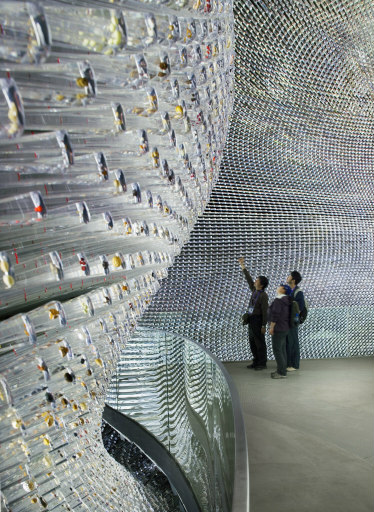
Thomas Heatherwick, UK Pavilion, photo credit Hufton + Crow
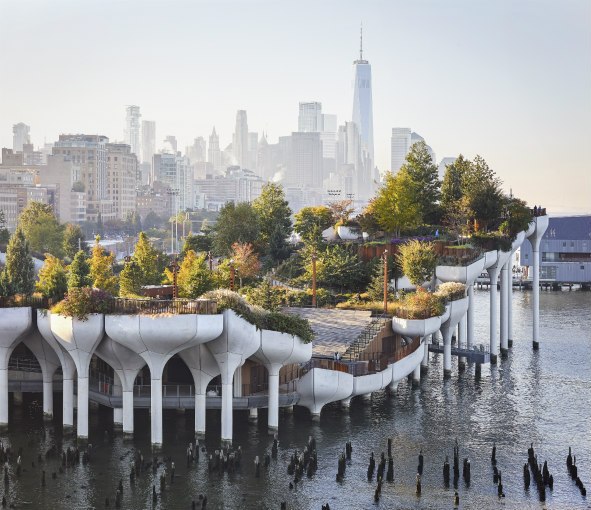
Thomas Heatherwick, Little Island, NYC © Hufton+Crow
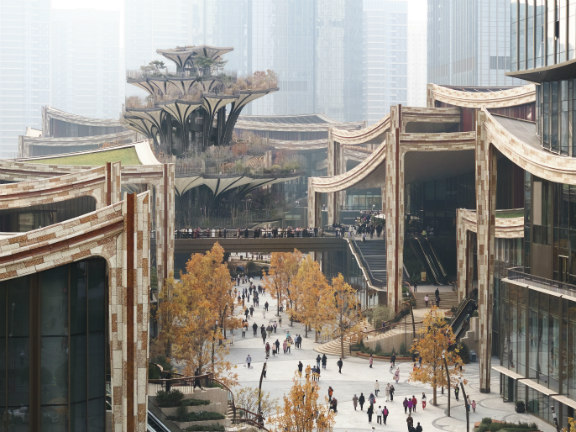
Heatherwick Studio, Xi’an. Photo by Qingyan Zhu

Heatherwick Studio, Olympia, photo by Raquel Diniz
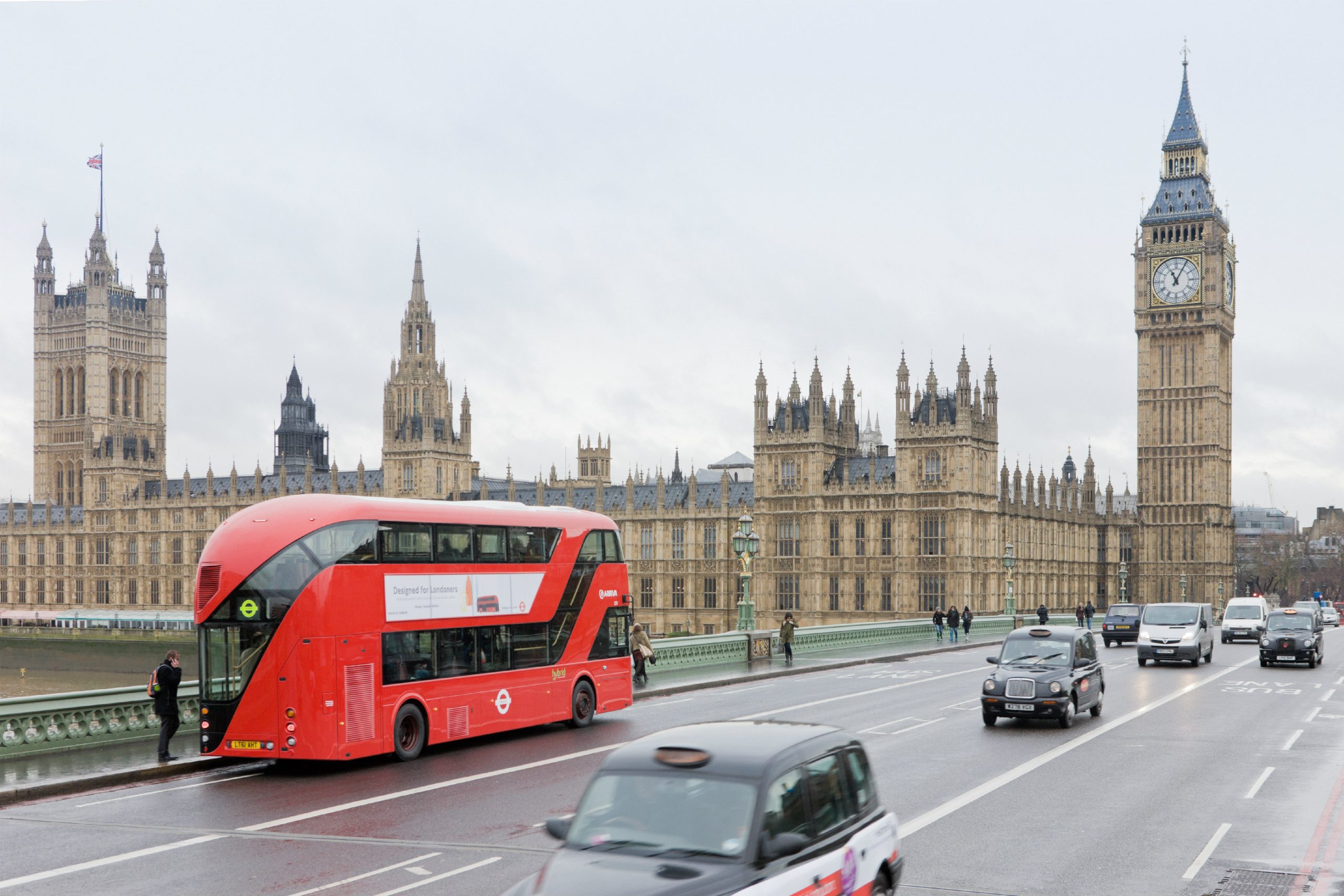
Thomas Heatherwick’s new bus for London
“It’s a real challenge as an adult to keep connected to true common sense.”
Thomas Heatherwick, may London reconsider the Garden Bridge?
It’s just such a good, simple, strong idea. It’s a humble idea, a free garden that connects the city together. There’s nothing not to love. It just got stuck in the politics, so it may take a generation. I don’t know. I have to take a long view.
Are the double-decker red buses that you designed still going round London?
Yes, a thousand buses! Originally I wanted them to have opening windows and Transport for London wanted to not have opening windows, and then, when the project launched, the public really wanted opening windows. It took three years, and then they put opening windows in. There’s no question that they are regarded as the best bus we have in London.
What is the difference between your buses and other ones?
Our bus is a complete piece of design and everything was coordinated and worked together. The bit I am proudest about is the lighting. Normal buses have fluorescent tubes – like in a battery chicken farm. It means that you ensure you look bad to your girlfriend and your girlfriend looks bad to you, because your skin tissue looks so unflattering in the light. So we use warm lights, not in strip lights, and when you look at them at night, they look mellow and relaxed. We designed the fabrics, the handrails are not nuclear warning yellow, and we could meet all the regulations without a design that looked like it didn’t care about the dignity of the passenger.
What about the so-called vessel that you did in a public plaza in New York City?
Hudson Yards was a new district in New York built above the railway lines, so no one had ever been there before. They built a huge table over the railway lines and made a new major public space with tall towers around. I didn’t design Hudson Yards, I worked on a project in the middle that began as a project for sculpture, but it felt to me that if it’s just a sculpture people look at and it doesn’t engage people. Building on the success of the High Line, where there are two miles of walkway, we could make one mile of public space and wrap it up, up to 15 or 16 stories in the air, and make lots of social spaces on it. It has 1500 stairs. It has an elevator that goes up in a curve, and it’s deliberately a focal social object.
Are you not only a designer, but also an engineer?
I don’t see a difference. We have a fashion in our time for slicing up the world into different things, and so we have landscape architecture, architecture, engineering, product design, furniture design, master planning, urban design. In the past we didn’t slice the world up like that. St Paul’s Cathedral was designed by architect Sir Christopher Wren, who was also an astronomer and mathematician. What matters is thinking about the totality of how something comes together. In my studio we are 250 people now, and my job is to bring us all together, and to work together to try and inspire the structural engineers we work with and the city officials. Our job is to try to be a good convenor, so that we pull things together into something that has a chance to happen.
What do you dream of for your next 30 years besides building houses which are not dull?
To look through the mindset more of how the public experience the places we make. We’re having our third symposium with neuroscientists soon. They’ve never been brought together with building designers and architects before. We’re also looking at the design of things as far away as space, at how we can grow different plant species in space, because as we start to use space and civilians start to go to and from space, how do we make humanised environments for people to spend time in who are not hard core astronauts, ex-military, air force trained hard nuts. The mental health dimension of the architectural spaces we make for people who may be spending one or two years in a space smaller than the room I’m in at this moment is really interesting.
Are you now working more on districts rather than individual buildings?
A district is like a room, and I feel so passionate about those rooms that actually matter most. Each individual building is an ingredient to help the district be the social gatherer, and hopefully inspirer of children and older people, and bringing people together more. We’ve had more than 600 children coming through our studio, in the last year since we moved here, for a creative education programme. I hope that we can get to influence and inspire different kinds of people to study building design – not just the same relatively privileged types of people. I hope to try and influence the education process itself, that can be too indoctrinating of only one or two ways of seeing things. Common sense is a funny expression but it’s so inspiring when you think about it.
And children have that?
Yes, they do. They ask you that common sense question. It’s a real challenge as an adult to keep connected to true common sense. That is at the root of what I’m trying to do. I’ve had people criticise my book and say he doesn’t use long words and he uses short sentences. I proudly am trying to communicate in plain English. Because the communication is what I want – not to make you think I’m a PhD genius.
Thank you very much and good luck.
Portrait of Thomas Heatherwick by Raquel Diniz, Heatherwick Studio
ENJOY THIS INTERVIEW? SHARE IT WITH A FRIEND.


