
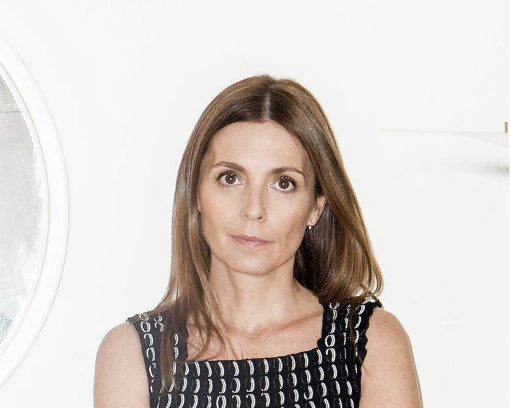
VISIONARY IN DESIGN. Clémence and Didier Krzentowski founded Galerie kreo in 1999. Today Galerie kreo is located in a very beautiful building in 31 rue Dauphine in the centre of Saint-Germain-des-Prés. It is a gallery of 20th and 21st century design and they are preparing a very important exhibition that will take place at Christie’s in Paris from January 14 to January 28, 2026, when they will present the masterpieces of their collection, 65 iconic pieces from the gallery.
27 minutes read time.
You can listen to the podcast of this interview here.
Was it a family story that made you decide to go into the design field?
Didier: Not at all. First, I was working in the sport business, partnered with Jean-Claude Killy, the skier. We were working together at the ski-wear company created by my parents, which became “Killy”. I met Clémence in the late 1980s—she also had a link to Killy through the 1992 Winter Olympic Games in Albertville, where she was Director of the Olympic Torch Relay. After the Olympic Games we sold Killy. I had begun collecting when I was very young, a crazy collector of watches, of art, of everything, and after I met Clémence we moved into an apartment and began to buy design furniture from a small gallery called Néotu.
At the time design wasn’t very fashionable?
Didier: No, not at all.
Clémence: There was no real place to collect. There was only vintage, and we were very drawn to contemporary. We didn’t bring anything to our first apartment; we decided to purchase everything new. Then we met some designers and realised that they could not really express themselves as much as they wanted, so we began working with them on industrial projects. Then we opened our own gallery with some of these same designers, who had strong ideas about design.
“We call ourselves a research laboratory, because the idea is not to produce just another chair or table, but to give the designers a possibility to produce a complete collection and exhibition.”
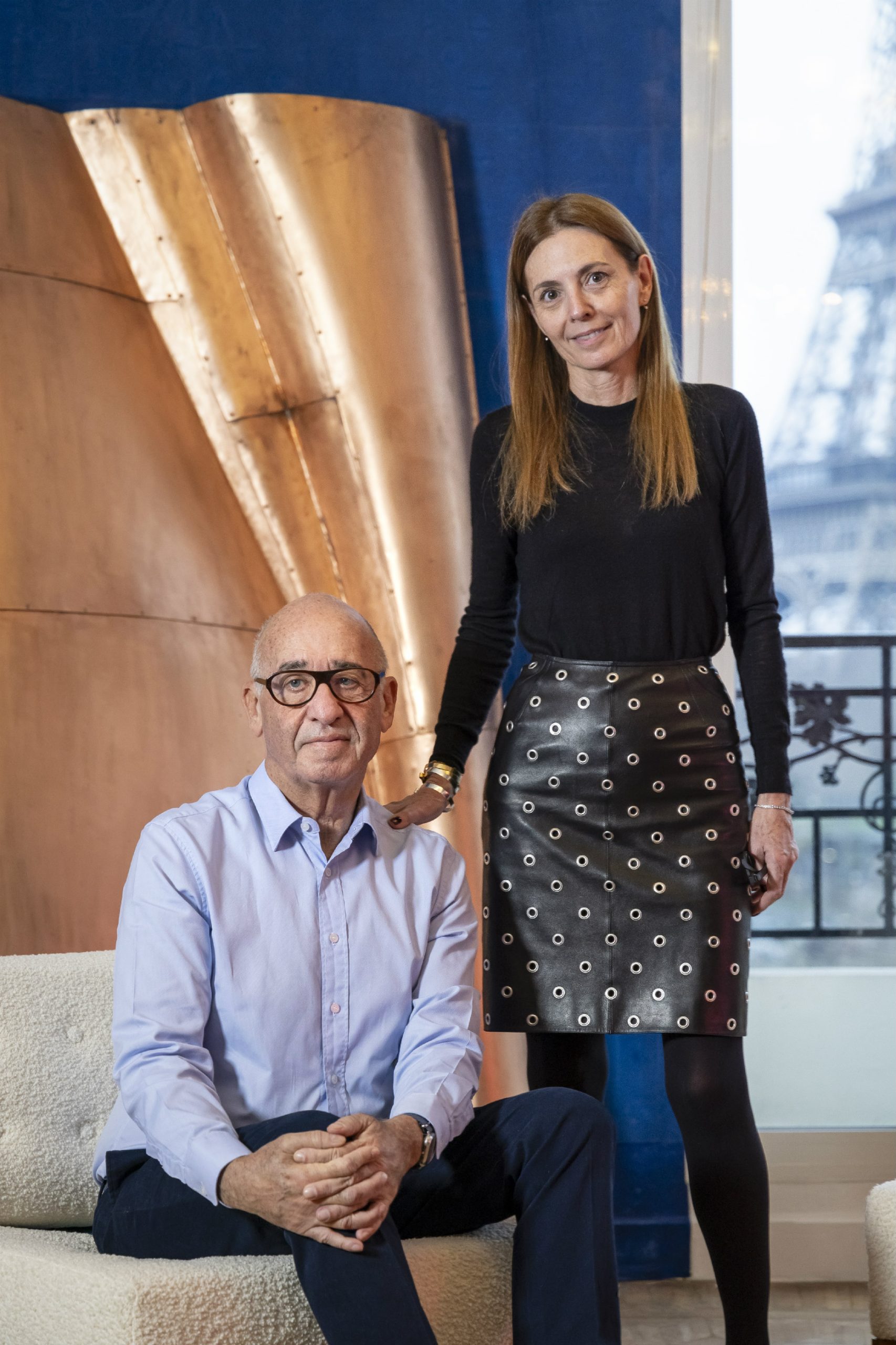
Didier and Clémence Krzentowski ┬® Alexandra de Cossette Courtesy Galerie kreo
Who were these designers?
Clémence: Marc Newson was one of the first, but also the Bouroullec Brothers. They were so young, Erwan Bouroullec was still at school when we started working together, but also many other designers: French designers like Pierre Charpin and François Bauchet, and Konstantin Grcic, the German designer, Hella Jongerius a major figure of design from the Netherlands, and Naoto Fukasawa from Japan.
Didier: All these designers were working in industrial design, and they still do. Marc Newson has worked with Apple, the Bouroullecs with Samsung. When you work in industrial design you have many constraints, and our idea was for them to work and think about the future with no constraints. This was and remains unique. I think we continue to be alone in the world to do that kind of work with industrial designers.
Many famous architects from Le Corbusier to Gio Ponti were doing design, but you were not interested in them?
Clémence: No, because in the 1950s, the time of Le Corbusier and Gio Ponti, things were very different. Today most contemporary architects are more interested in large-scale architectural projects than in developing design pieces, which takes a lot of time.
Didier: I love Ponti and all these master designers, but when we began in 1999 we wanted to work with the designers of the future.
When you started the world was still interested in old furniture, Louis XV/XVI. The fashion for design came later?
Clémence: It’s not that people were passionate about it; it was simply normal to live with historical furniture. Then, with the rise of contemporary art, expectations for one’s environment began to grow. It also became interesting to project something more contemporary alongside sculptures or paintings on the wall.
Didier: Also, the leading galleries of 18th century design through the 1930s and the 1950s to now were all French. We were lucky to become part of that tradition, and that for Americans, Paris was the place to go.
You were young collectors, were the people interested in these contemporary designers also young people?
Clémence: No, all kinds of people were. Our first gallery was located on an “art gallery street”, a special spot in the 13th arrondissement in Paris called Rue Louise Weiss, where Emmanuel Perrotin, Jennifer Flay, Almine Rech, and so on started. We were the only design gallery there and our clients were mainly art collectors who loved things that pushed the boundaries. In terms of design, we all love the great masters and the historically important pieces, but they’re everywhere. We thought maybe people would want something more personal and new in their place. These contemporary art collectors were very much interested in that, too.
Didier: When we began, we also had fashion designers like Azzedine Alaïa and Karl Lagerfeld, who bought a lot from the gallery. And François Pinault was one of the first to arrive in the gallery.
You do contemporary design, but your gallery is in a very old beautiful hotel particulier building. Does contemporary design work well in old buildings?
Didier: When you have a great piece from any time, you can put it everywhere.
Do people match furniture inherited from the family with new design, or do people just get rid of the old?
Didier: Sometimes they mix.
Clémence: Which is what we love most, because it brings the best of the two. If you’re only surrounded by one style, it becomes a bit flat. When you bring some contemporary furniture into a very classical environment, or the reverse, then something interesting happens. As you see here [at the gallery], we have vintage pieces and contemporary pieces together. It works so well.
Didier: One of our first collectors was Jean-Marie Rossi, who owned one of the top galleries of 18th century design, Galerie Aveline, and bought a lot from us.
We have different styles in periods, Louis XV/XVI, Empire, Restoration. Did design change since you started in 1999 to today?
Clémence: It changes, in part, due to production processes. At the time, you had processes with traditional materials like wood and metal, but design has evolved so much that you can now play with any materials in any shape. So less of a style, but rather an expression for any designer through material, without thinking of style.
You said that Lagerfeld and Alaïa and others were buying. Does that mean that design has to do with fashion and changes accordingly?
Didier: Not necessarily. You can think of art with a capital A. With Art you have painting, fashion, furniture design. We also organised an exhibition here with manuscripts—because when Rimbaud wrote the Lettre du voyant, which we showed here, it all depends on how you look at the piece. For me, there are no boundaries between these fields.
“That’s what interests us most of all: not seeing the object first, but having designers share with us what they are thinking.”
Is design art?
Didier: When you buy a vase, do you put flowers inside? It depends. If you take a Chinese vase from the 16th or 17th century, it’s like art and you don’t use it to put flowers in. Some put flowers in; some show it like an art object.
You like lamps in particular, so can you have a lamp from a very good designer next to a Basquiat painting?
Didier: At the gallery we sell contemporary design and also lamps from the 1950s to the 1980s, of which I have a quite important collection. For me all pieces can work together if they are good.
Are those going to Christie’s?
Didier: We’ll have some touches of vintage to mix with the contemporary, but it will mainly be contemporary as this is the theme of the exhibition. In terms of vintage lights, I’m passionate about the designer Gino Sarfatti. About a decade ago, we lent a great number of pieces for his retrospective at the Triennale in Milan.
Is it a sale when you go to Christie’s on January 14?
Didier: Not at all. It’s not going to be sold. Christie’s are interested because they recognise that the future of what they will sell includes pieces from the 21st century and many contemporary designers. They have a fantastic place on Avenue Matignon, and it was fun to say yes because it will be an exhibition of 65 iconic pieces from the beginning to now.
What do you mean by iconic?
Clémence: Some pieces are already iconic because they are in the best private collections and held in museums. As Didier was saying, for Christie’s it’s about seeing the future, but when you have a gallery you’re always focused on what comes next. So for us it was fun to stop and look back at the pieces that have been created these past 25 years — almost like pausing to reflect.
Didier: We’re going to show a small, slightly iconoclastic coat hanger by Naoto Fukasawa, a Japanese designer who was the art director of MUJI. When we first started working with him, it was around the time we moved into this gallery space, and at the time he said, “I’m going to make you a desk.” He took stones from the gallery building and mixed them with other stones and concrete to create a block, into which he core-drilled four legs. This desk carries the memory of the gallery’s construction. That’s what interests me: when a designer arrives with a project, I ask, “What are you talking about?” We don’t talk about whether it’s a nice desk. We need an idea for something different.
Some of the things you sell are classics?
Didier: About 80% of what we sell are contemporary designs, which we produce. 20% are vintage pieces, which I love to find.
Where do you look?
Didier: Everywhere. It can be a Sarfatti, or Ponti, or Mathieu lamp that I find.
And the rest you produce?
Clémence: Yes, a contemporary designer will come to us with an idea and show us an exhibition they want to make, or a personal story they want to tell, usually through about five to twelve pieces. If we like it, we work together to produce them with our manufacturers, in Italy, France, Belgium – mostly in Europe, in the UK too. Then, according to the material that the designer wants to use, we produce the pieces with the best manufacturers, craftsmen, makers.
Didier: But it can take between one year and six years from when the designer first proposed an exhibition.
Can you tell me about the beautiful exhibition of desks made by famous designers that is now in your gallery?
Clémence: It’s a long process, from the very first sketches to the moment we show the finished pieces in a monographic exhibition. When you enter the gallery, you see the desk, and you go, “Oh, that’s a beautiful desk.” You don’t feel that it took so long, and we’re very happy about this. But for these exhibitions on average we spend three years to develop every piece. We call ourselves a research laboratory, because the idea is not to produce just another chair or table, but to give the designers a possibility to produce a complete collection and exhibition.
Are these new designers already famous?
Clémence: No. The young designers have everything to prove, particularly when they are presented alongside more established designers.
You have to launch them?
Didier: Yes, but usually because they work with the industry, they have other work. And that’s quite unique.
Clémence: For us, it’s key because you need to have a balance. If a designer only does industrial design, with many specifications in terms of marketing, timing, cost, that’s real life in a sense, but it doesn’t allow them to do personal research and experiment. With us, it’s totally different: the foundation is artistic freedom. We never say, “We want a table.” We say, “Do exactly what you want.”
Didier: Konstantin Grcic, a German designer, arrived seven years ago with the idea of studying people’s postures when they work—the way they sit on a chair when working at a desk. He also asked whether you think and concentrate in the same way if you are sitting at a table, or if you are in a different position. Will this continue to be the case in the future? So he proposed another way of sitting, through new structures and different postures. That’s what interests us most of all: not seeing the object first, but having designers share with us what they are thinking.
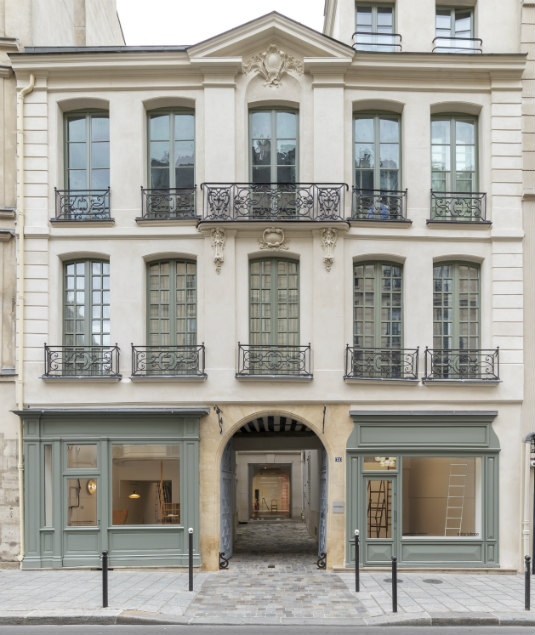
Clémence and Didier Krzentowski founded Galerie kreo in 1999. Today Galerie kreo is located in a very beautiful building in 31 rue Dauphine in the centre of Saint-Germain-des-Prés, Paris.
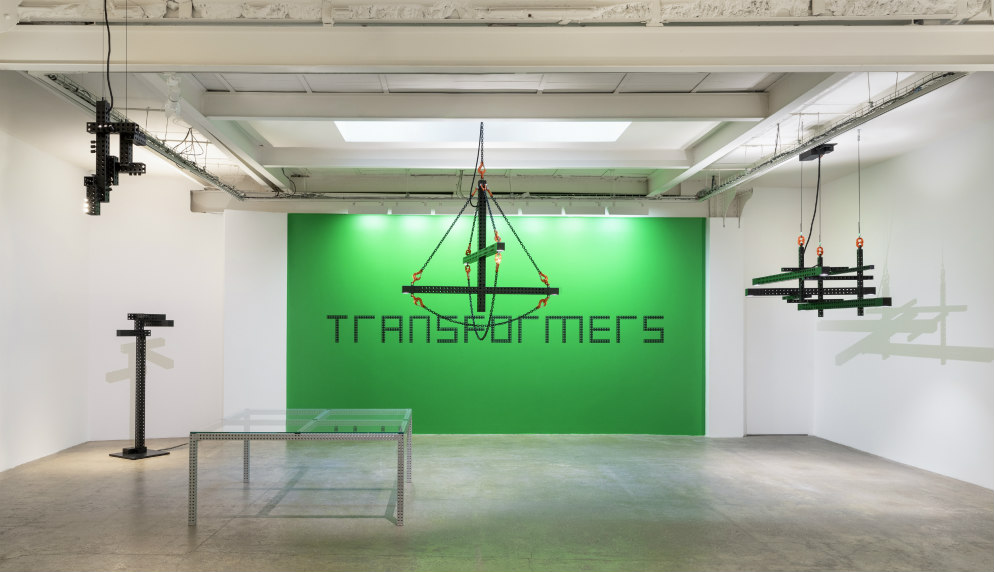
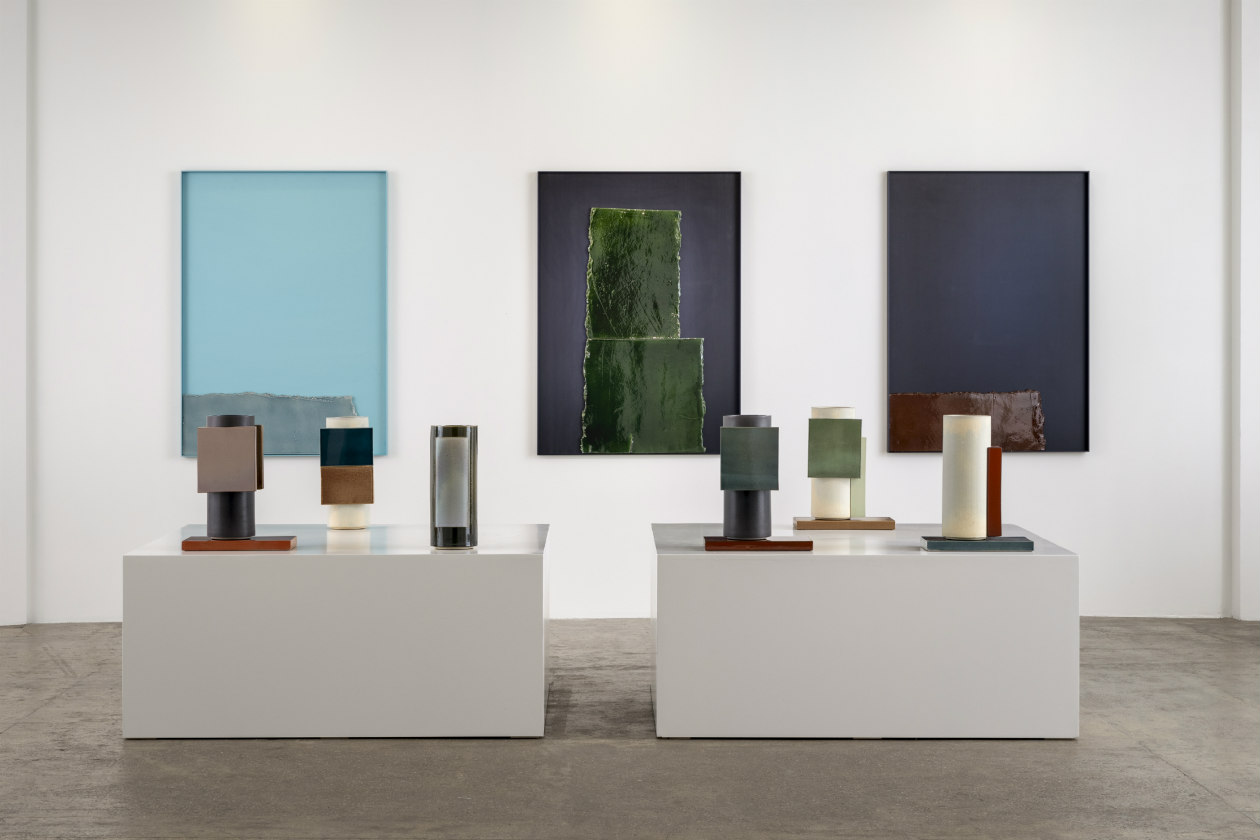
Galerie kreo, Konstantin Grcic – TRANSFORMERS ┬® Alexandra de Cossette Courtesy Galerie kreo
Galerie kreo, Ronan Bouroullec ┬® Alexandra de Cossette Courtesy Galerie kreo
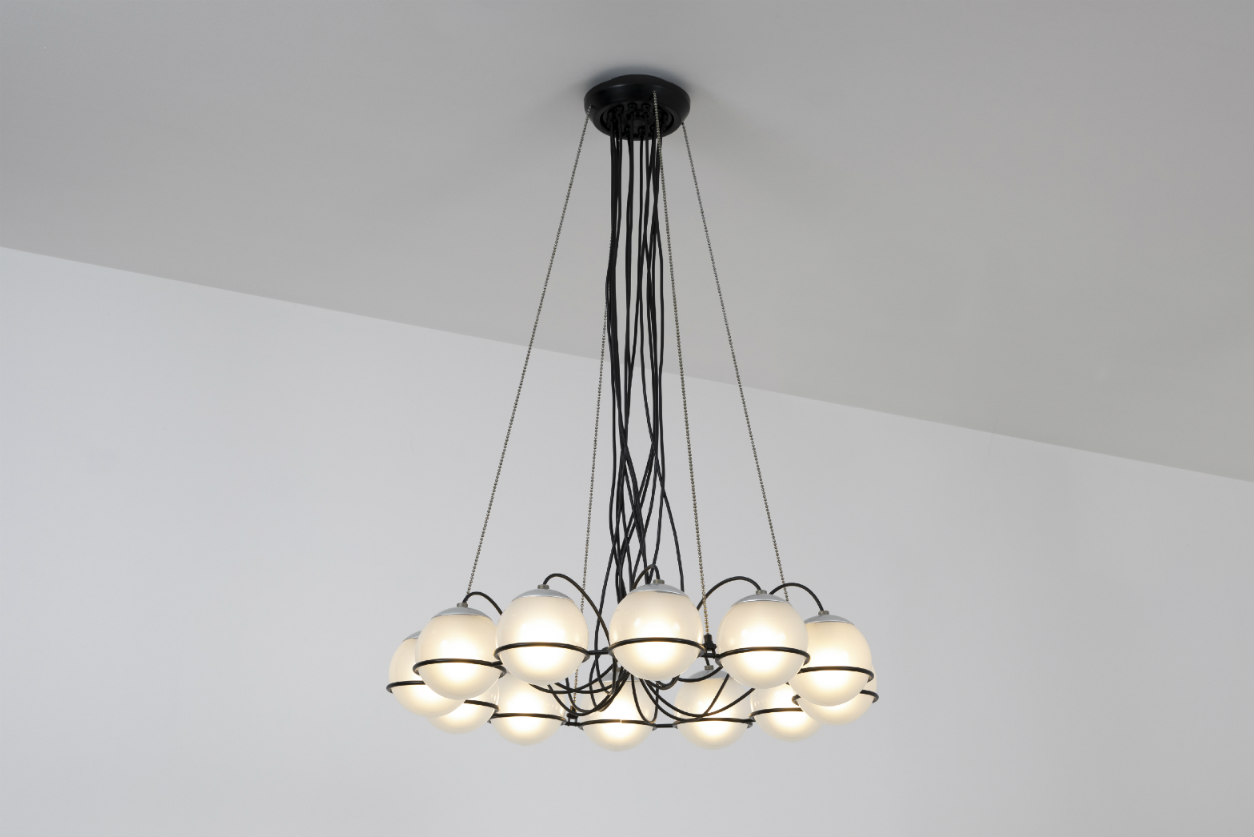
Gino Sarfatti, 2109_12 ┬® Alexandra de Cossette Courtesy Galerie kreo
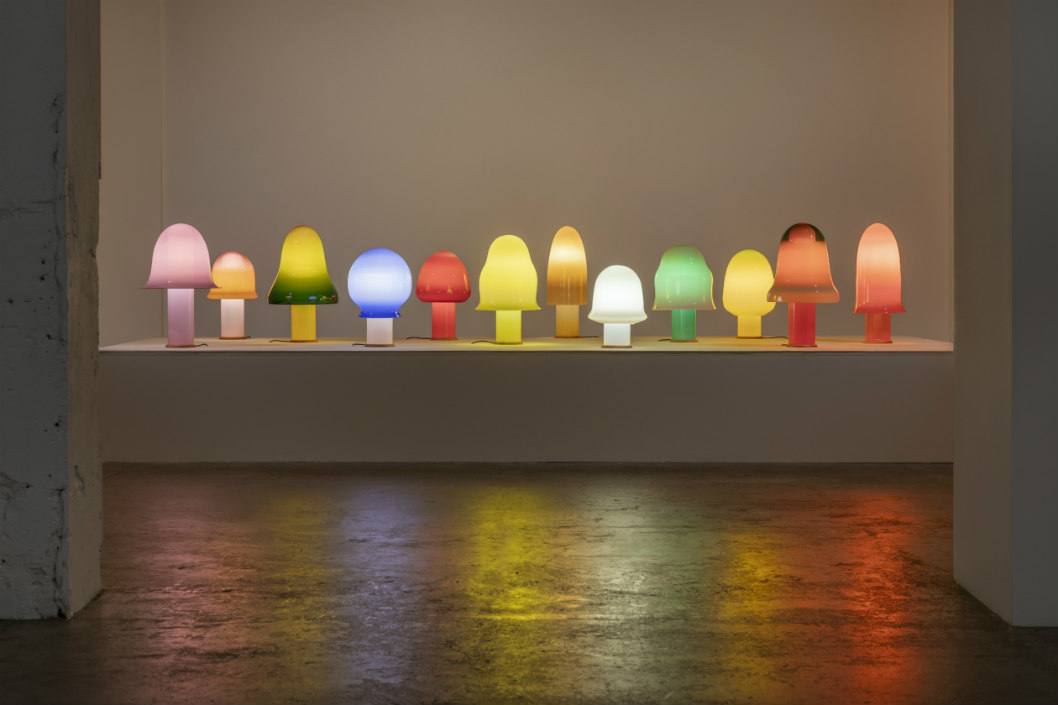
Galerie kreo, Studio Brynjar & Veronika – Mystic Gardens ┬® Alexandra de Cossette Courtesy Galerie kreo
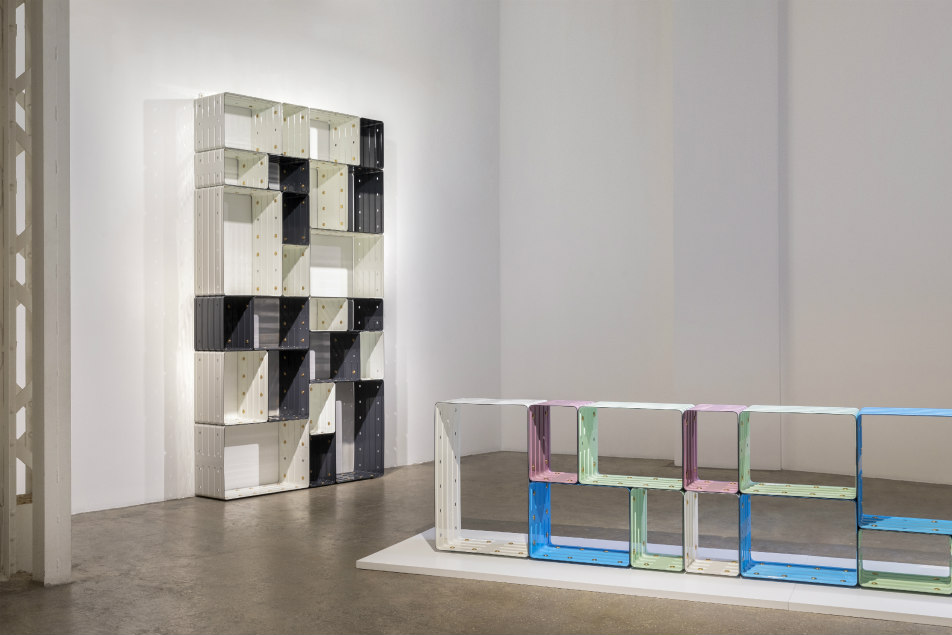
Galerie kreo, Marc Newson – QUOBUS ┬® Alexandra de Cossette Courtesy Galerie kreo
“We are lucky we’re working with people who are so talented and who surprise us each time.”
When you started, contemporary design pieces were inexpensive. What was expensive was to buy an antique piece from a great maker.
Clémence: Honestly, design has always been quite expensive because of the production. If you do something completely new from scratch, and you’re only doing a few with the best makers, it’s never going to be cheap.
Obviously the prices can go up or down, depending on the designer?
Clémence: The design market is not speculative. It’s going up, but slowly.
Didier: When we were selling Marc Newson’s first pieces, the most expensive ones were around €30,000, or even less. Today, some of them sell for one or two million euros. But it’s not at all like the art market.
Very few artists hold their value over the years, is it the same for designers?
Clémence: The design market is smaller. You always have a tiny number of ultra-talented people in any field. But the number of artists runs into the thousands, whereas there are perhaps only a hundred designers who truly leave their mark on the history of contemporary design. And then there’s the question of use: we sit at a table; we use it. Design is of course meant to be practical and functional. This also means that, over time, fewer pieces likely survive, which can create phenomena of scarcity and value.
In the art world to recognise this is a Giacometti, a Fontana or a Picasso is to be reassured. Is it the same for design that you have a lamp or a table by a known name?
Clémence: We have both. You will see at Christie’s, we will present some iconic pieces. Like the Pod of drawers by Marc Newson, which is emblematic among collectors.
Who are these collectors?
Clémence: International. Lots of Americans, a lot of French, Italian, British, and Europeans. Not so much Asians.
Is Instagram or social media helping or changing your work?
Clémence: It’s changing, as people can see everything everywhere. But if you’re passionate, you’re still going to come closer. You’re going to visit a gallery, a fair, meet people. There’s nothing that can replace this kind of relationship.
Didier: We’re also lucky to have many of our designers represented in museums globally. The only contemporary piece that is in the permanent collection of the château de Versailles is a monumental light by the Bouroullec brothers, who we represent worldwide. If you take Notre-Dame de Paris Cathedral, all the liturgical furniture was designed by Guillaume Bardet, who we also represent exclusively. Things like this naturally attract collectors.
What is the most wanted?
Clémence: If you think about an apartment or a house, you may focus on two or three pieces that set the tone. From there, you can build around them, choosing the materials and colours that will define the atmosphere.
Do you work a lot with architects or interior designers who make houses and hotels?
Clémence: We do, but we mostly work with clients directly. When you choose a piece of art, you might have an advisor, but a lot of collectors also like buying personally, especially when it comes to design. We have a lot of clients that are really passionate about their collections, and want to choose. Of course they will involve their interior designer to ensure the dimensions work and that everything is going well.
Do you sell more in your gallery here in Paris or in London, or in fairs, because sometimes you’ll go to fairs?
Clémence: We sell a great deal through the gallery. Fairs are also very important moments—for example, Art Basel in Paris, which was excellent this year. Many art galleries sell around 70% of their works at fairs, but we sell more through our gallery exhibitions.
Are many people coming?
Clémence: Yes. I know that in art galleries people are coming less than they used to, and fairs are now more important. But in design, it’s a little different. People still enjoy coming, seeing, touching. Maybe the volume also involves and requires a different relationship.
You are international but you are in a resurgent Paris, with its many exhibitions, museums, and people coming to live here?
Didier: The most important fair used to be Art Basel in Basel, but now Art Basel in Paris is more important because in Basel you only have one or two nice hotels, and in Paris you have everything. Paris is booming, definitely.
Do you have even more people coming to the gallery?
Clémence: Yes, also because they are enjoying Paris. The energy is everywhere – look at the Pinault Foundation, Vuitton Foundation, Cartier Foundation. When you come to Paris, you have major shows and the museums too. It has always been the case, but maybe people are rediscovering that. You have fantastic programmes everywhere, so if you come you really enjoy the city.
Do you feel that London has gone down?
Clémence: No, London is still very exciting and important to me. It’s true that some people left, and it has changed since Brexit, but we can’t say that it’s drastic. The museums have amazing shows; you have amazing galleries and collectors there too. And there are many people who only speak English.
You now can buy antique furniture very inexpensively. As the things you sell are practical are they going to last in the taste of a person or will they similarly come to be rejected because people decide they want something else?
Didier: 18th century is not going down. The challenge is having major pieces, and having provenance. With the pieces from the 1950s you have so many copies everywhere, and there are issues with pieces from the 1980s, too. But if you have a top piece from the Louis XIV period, the price is still going to be very high.
Is it the same for contemporary design?
Clémence: Of course. For example, pieces that belong to Yves Saint Laurent made much more important prices for the same models than other ones.
Who are going to remain design classics?
Didier: You never know. We are lucky to have the choice of the designers we think are the best, but we don’t know about their future value. If you have a collection, usually you have four or five artists who are going to go up, and the others who are as good but are not going to. I do believe that Marc Newson and others will stay in the history of design. They already influence the design world itself. You need time to see it, but we already see it, as we are in this world. Our designers are in the all the most important collections in the world— the Centre Pompidou, the V&A, the MoMa. If all these museums worldwide buy it, that’s important.
Clémence: It’s not for nothing that academic people and collectors are aligned.
Ignorant people don’t come to kreo, they have to be knowledgeable?
Clémence: Honestly, we have both, and we enjoy both kinds of interaction, depending on the visitor. It’s just that someone’s satisfaction can be greater if they understand what’s behind the pieces. If I see something, I either like it or I don’t—but if I know what’s behind it, my satisfaction can be deeper. That said, you can absolutely come knowing nothing.
Some people buy art because they love it, others because they think it’s an investment. Is it the same in design?
Clémence: More or less, but for investment it’s not the same figures, it’s a zero less. The commitment is different and the expectation is different.
Because it’s not yet considered art?
Clémence: These boundaries are complicated, because it is both a work of art and a design object. I don’t use a work of art—there is no practical interaction—whereas I do use a design piece. Yet some major design works are sold in art auctions. So we sit somewhere in between, depending on the pieces and the designers.
From the Jean-Claude Killy time to today, is there an episode in your existence that you consider iconic?
Clémence: For me, the most wonderful thing is that we’re still as excited as when we started. Sometimes I read about people getting bored of what they’re doing, but it’s exactly the opposite for us. We are lucky we’re working with people who are so talented and who surprise us each time. The last show by Ronan Bouroullec was mind-blowing, and we’ve done 15 shows together. It’s wonderful to have this kind of relationship, and also to be excited by the new ones. We worked with a young Italian designer this year, Marco Campardo, and we loved his show.
Didier: As for me, whether I find vintage from my collection or a new talent, I’m so happy.
Clémence: Didier is a collector since his seventh birthday.
What does it mean to be a collector?
Didier: I also have meteorites and prehistoric tools.
Are the people who buy from you mainly collectors?
Clémence: We have both. For people who really collect, it’s a neurotic passion.
What do you collect nowadays?
Didier: I continue to collect lamps, especially from Gino Sarfatti.
Clémence: I do it for fun because I love it, but I am not a collector in the sense that if I don’t have something I don’t sleep. For example, if something is coming up in an auction, Didier won’t sleep. I’m sleeping very well, and if I need to I’m thinking of finding another way to purchase it.
Didier: And sometimes I make collections for my wife! I make a collection of Hermes bags, or boxes of Line Vautrin from the 50s.
Does Clara, one of your two daughters, who works with you, have your passion?
Clémence: Yes, she does. She studied the history of art in the UK and she loves both art and design, and we’re so lucky that she’s taking care of all the events that we’re organising outside the gallery. We had an exhibition in Rome at the Rhinoceros gallery founded by Alda Fendi and directed by Alessia Caruso Fendi, and we had an exhibition in London with Daniella Luxembourg gallery, mixing art and design.
In design do you have periods where a lot of people are creating and there’s a big movement and then silence – and then it comes back. Do we have new talent today?
Clémence: I believe it’s a question of personalities, communities, and also of object typologies. If you look at lighting, there was an explosion of creativity in the 1950s, with the development of bulbs in all shapes and sizes, followed by neon, halogen, and so on. Today, creating lighting is more complicated because of regulations and technical standards. Designers have to comply with these constraints, which leaves less room for creative freedom. But I would also say France is quite strong at the moment.
Didier: And by the way, I don’t understand why Italy doesn’t recognise its designers more. There are so many remarkable figures in Italian design; since the 1950s they have been the best designers in the world, yet no museum is truly dedicated to them.
You are a collector of lamps and some will go in the exhibition at Christie’s. Are there many new great designers of lamps?
Didier: Today you have a few. Not a lot.
You said that you’re not yet having many Asian clients, but do you have new Asian designers?
Clémence: We work with Naoto Fukasawa and soon with Daisuke Yamamoto, who are both Japanese. We also work with Japanese makers, who have specific expertise and craftsmanship. We hope to develop more creative relationships in other parts of Asia, too.
Didier: In fact, we can say there is a pause because of AI and ecology. The young generation are so involved in ecology, and I’m sure thinking about the future of design, but for the moment we don’t see new products.
Ultimately, are you looking for beauty? And what is beauty?
Clémence: Didier and I would have different answers. Didier is much more focused on content—on new ideas. Even if he doesn’t like something visually, he can still like it. For example, he doesn’t care about colour.
Didier: Yes, I’m waiting to be surprised by new content. Afterwards I see the pieces, of course, but that has to follow. Yes, it’s really the idea.
What about Clémence?
Clémence: I need both. I need the idea, but I also need to be aesthetically shocked.
Aesthetics is a big word and you get used to practical things. Whether beautiful or not beautiful, everybody has an Apple telephone?
Didier: For me the content is the most important thing.
Clémence: Yes, but we are lucky in the context of the gallery. It’s not repetition or quantity that should make you think that something is good or not. Sometimes, when there are millions of the same car model, for example, people end up liking it simply because it’s everywhere. That kind of repetition can impose a form of attachment to an object. By contrast, when design is strong and singular, it can make all the difference. I’m not a scientist, but if you look at the iPhone, for many years its technology was less advanced than that of other phones, and yet people still wanted it because of the design. Apple is perhaps one of the brands that shows us how essential design is.
Clémence and Didier Krzentowski thank you very much.
ENJOY THIS INTERVIEW? SHARE IT WITH A FRIEND.


