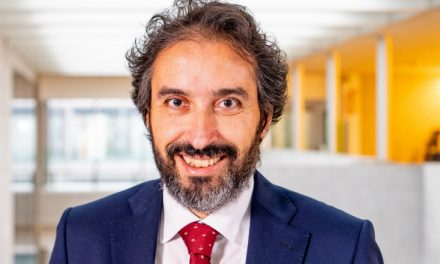
DAY TO DAY BRILLIANCE. ANTONIO CITTERIO is an Italian architect, furniture and industrial designer. Today his cross-disciplinary practice for architecture and interior design is known as “ACPV ARCHITECTS Antonio Citterio Patricia Viel”. The firm works internationally, developing projects on all scales in collaboration with a network of specialist consultants. In both 1987 and 1994, Antonio Citterio was awarded the Compasso d’Oro (“Golden Compass”) prize, the world’s oldest and most prestigious industrial design award. In 2008 the Royal Society for the Encouragement of Arts, Manufactures & Commerce of London awarded him the title of “Honorary Royal Designer for Industry”.
20 minutes read time.
You can listen to the podcast of this interview here.
Antonio Citterio, when did you start working?
In the 70s. I worked with Paolo Nava from 72 to 82. In the meantime I finished my architecture degree, because I started it early. I opened my office in the 70s, so it’s been around for a long time. I studied at the Institute of Art to begin with and when I was 15 years old I started to do design. I finished the Institute of Art in 1968 and then went on to study at university from 1970 to 1975. I started working at the age of 17, spending all my summer vacations in the architectural office doing lots of drawings. It was a different time, when young designers had many requests, unlike today. Now, we have more people than we need. In the past, for people with our outlook on life, it was really easy to find a place.
You are from Lombardy, Milano, and people in your family were already in this line of work?
That’s right. I started designing because my father had a small factory and designed products like chairs and cabinets himself. This was the environment I grew up in, so it was natural for me to start doing that and to study design and architecture. I’m actually from Brianza, near Milano, where many furniture companies such as Busnelli, Molteni and Galimberti started after the war. Gio Ponti was there, working with Cassina on the interiors of ocean liners along with other famous architects such as Franco Albini and Vico Magistretti.
“Headquarters is not a speculation building, it’s also part of the image.”

MONCLER HEADQUARTERS
Year: 2025
LOCATION: Milan, Italy
CREDITS: ACPV ARCHITECTS Antonio Citterio Patricia Viel
PH. Leo Torri
Antonio Citterio, you joined Terry Dwan, and together designed buildings in Europe and Japan. How did you start doing that?
In 1983 my office started to change the type of work we were doing. From the 70s to the 80s I was basically a designer and I started doing some interior design work. In the early 80s, the American company Esprit started expanding into other countries and I started doing business in Amsterdam and Antwerp. I met Terry because I needed an American architect for work with this client and I was looking for someone who could speak and write English very well and who would work with me in another country. Back in the 1980s fax and email didn’t exist, so we had to set up an office in each country where I was working. Every two weeks, someone would travel from Amsterdam to Milan or vice versa, and also to other cities. It was completely different from now, when we work all over the world and use Zoom for international meetings and sending drawings. At the moment, I’m working in America, China and other places without going there – our work has really changed.
Patricia Viel joined my office with Terry in 83, because they started work together. Terry is now my wife and with Patricia I created Antonio Citterio and Partners in 2000, which became ACPV ARCHITECTS in 2020. Now it’s an office with 14 partners and we have 230 architects. We start with small office but we grew and grew.
A lot of your work has been building the new headquarters of important companies such as Ermenegildo Zegna and Moncler and you even built a whole “Village” for Technogym, but you also created the Bulgari Hotel in Milano?
Yes, and we have designed other headquarters too, in Germany. Such headquarters work is really important work for us. We’re in charge of the Enel headquarters in Rome and the A2A headquarters in Milan, and their headquarters represent these companies. The quality of the building is very important. Headquarters is not a speculation building, it’s also part of the image. In the fashion market, the product and how it’s presented are basically the same thing, and this building is also where the presentation will take place. There is a show inside and people are coming to see the technology.
Technogym for example is a sports company where they make these fitness machines.
Yes, and in that case, I also design some of their machines. I have been working with Technogym from a long time. Their place is called a Village because it’s the main office, but there’s also a factory, other buildings and a sports centre. It’s not just a main office, but also an environment with many other functions. They make the product and the people use it there in the Village.
For Zegna and for Moncler you built a HQ building?
We built the Zegna building about 20 years ago and Moncler recently. It’s a show building, where they invite clients, and every two or three months there is a broader presentation. It’s an expression of the culture of the company.
How is it for an architect to work with creative people like at Zegna, Technogym and Moncler?
Every project has a client, and the client is a very important part of the creative process. If the client is a creative, you might feel a little tense because they can be difficult, because they already know exactly what they want. You might feel like you’re a tailor making clothes to order, but there is also your own personality and your ideas about architecture and you have to find the right balance. You have your own idea in mind, and then you try to convince the client to go along with it. But people like this, strong clients, usually also become my friends.
Since Covid and with Zoom and other technology do people go to the office less and less?
I don’t really believe in that, because I can’t imagine my office without people. I have lots of draftsman working for me, and I like to walk around and see what they’re doing and express my idea if I see some drawings. It is very important to be able to understand other people’s feelings. I’m working with a team and the reason for the success of my product, my architecture is the people I work with. For me, the team is like ping pong. I give some direction, and I receive some answers. I see some drawings that I like and some that I don’t. I explain why I think it’s wrong. It’s not about taste. I try to explain why it’s wrong and why it’s right, and to show direction. In this case, it’s really important to meet in person.
You need to touch and feel the models with your hands?
Yes and if I’m making a prototype for an office chair, I sit on the chair to see if it works. You can’t work for an architect via Zoom, the important thing is that we can talk to each other. And when I start working on a big project, I have to go there and see the land. I stay all day. I see what happens when the sun is coming; what I see from this area; what I see from that window. The idea starts when you are there.
“When you build something now, you really have to think about what will happen in the next 30 years.”
Antonio Citterio, we talked about headquarters, but what about when you do a luxury hotel for Bulgari?
A long time ago I met Silvio Ursini, who works for Bulgari, and Francesco Trapani, the nephew of the Bulgari family who sadly died last year. We started to talk about hotels in general because they were considering doing hotels and working in lifestyle and asked me to suggest something. Then we talked and talked and talked, and researched what people who went on two or three trips in first class during the year want and need. The plan was to create a modern luxury hotel with a contemporary style. Usually a luxury hotel is an old hotel, not a modern one, and the idea was to change this perception. In fact, we stopped using the term ‘luxury’ right away because luxury sometimes is something fake and we started talking about quality, things that are well made. The Bulgari Hotel Milano is based on this idea. We have a fantastic place with a nice garden and a typical Milanese courtyard inside, and we built it with Ritz-Carlton, our partner in this project and one of the biggest hotel companies in the world with a lot of hotels with different brands. We did the first one, and then we did loads of other hotels. Now our office works a lot in the hotel market.
Which hotels?
We’re working with the Mandarin Oriental hotel chain. We did one in Milan, and now we’re doing one in China, after having done one in Turkey. We are currently working on a project in Taipei involving the construction of a high rise. We are currently working on many other projects in that area. The Red Sea area in Saudi Arabia is a good place where there is a lot of investment now in the hotel area.
You also are famous as a designer of furniture and other things?
Yes for companies such as B&B Italia, Flexform, Flos, Maxalto, Vitra and others. I design things based on my ideas of interior architecture, which I have thought about more and more over the last 30 years. I design things like handles and bathroom fixtures. It’s really important to know what you need. For example, if I’m designing a hotel then I start to think maybe I need a chair like that, or an armchair like that. Many products are based on experience. I know what I have to do, and the same is true in the kitchen. I have a secret, which is I don’t just design for the sake of it. I only design if I have a reason. When it comes to design, there are many things to consider. You have to think about function, but that’s not the main question. You have technology, but you also need to connect emotionally with a product. What does the emotion mean? When you see a sofa, you think of your relationship with it. You think of how comfortable it is and what you can do with it. The products have to talk to you.
You have to mix aesthetics and practical?
That’s right. And, as usual, I’m not working to express myself. I’m working for synthesis in the product, and I like it to be a timeless product.
I know you don’t like the word, but they say you are master of sober luxury.
In the end, that’s exactly what I’m doing. I’m not an exuberant person, and I’m not exuberant in the way I approach my work. I like normality, everyday life. People don’t buy my product because it’s a Citterio design. They buy it, and when they realise it’s Citterio, they like it because they think it looks and feels good. Many people think that products which stand the test of time are more sustainable, because if you design a product that becomes outdated every five years, it’s not really sustainable. In design and architecture, sustainability is now a really important part of our job. For example, when we started working for Moncler, we also started talking about recycling the materials they use, like nylon which they have lots of pieces of by the end of each year. So, we started to use nylon which is made of a material called polyamide and made the office chairs by using recycled polyamide. It’s really important to have the right attitude, because one of the main problems in our world today is how to deal with the end-of-life of products. We have thousands of products that are not recycled. What can we do for mattresses? Where can we recycle mattresses? We make lots of other products, too. Today, all around the world they make millions and billions of products. People used less stuff 50 or 20 years ago. Today you have a big box for food, for everything. If we don’t think about it, the world will become even more of a disaster.
And so you’re studying how to recycle?
Yes, now we actually start by looking at the point when the product is no longer useful. 50 years ago, you started making products and getting them ready to sell. Today you start thinking about what happens after the product’s life has ended. How we can or cannot disassemble the product. For instance we can’t glue one material to another because that would make it impossible to dismantle it. So we completely changed how we design things. Now you start from the end. This is a big change.
You start by the consequences?
No, you start when the product is gone. This is also true in architecture with buildings. When you build something now, you really have to think about what will happen in the next 30 years. You might build an office building, but it might be able to be used as a residential building in the next 20 years. The technology we have will be very different because we get better at it every year, and you can’t any longer think about your creation lasting for eternity. This is a big change because, as architects, we all feel the same way and see our buildings as something that will last forever. Over the last 20 years we have started to change our minds. We are not building for eternity. Maybe in the future, the building will have a different facade and the function of the building will change. What’s really important is the attention you have toward the environment surrounding the building you’re designing. The quality of the city and the quality of the buildings are both really important when it comes to creating a nice atmosphere and a nice place.

DIESIS
BRAND: B&B Italia
YEAR: 1979
CREDITS: Antonio Citterio, with Paolo Nava

ERMENEGILDO ZEGNA HEADQUARTERS
YEAR: 2008
LOCATION: Milan, Italy
CREDITS: ANTONIO CITTERIO AND PARTNERS, WITH BERETTA ASSOCIATI
PH. Leo Torri

CROSS PERSONAL
BRAND: Technogym
YEAR: 2012
CREDITS: Antonio Citterio
n

TECHNOGYM VILLAGE
YEAR: 2012
LOCATION: Cesena, Italy
CREDITS: ANTONIO CITTERIO AND PARTNERS
PH. Marc Eggimann – courtesy Vitra

ID CHAIR
BRAND: Vitra
YEAR: 2010
CREDITS: Antonio Citterio

[ongoing project]
THE SKY TAIPEI
LOCATION: Taipei, Taiwan
CREDITS: ACPV ARCHITECTS Antonio Citterio Patricia Viel
PH. Studio Millspace
“Nowadays, the vision is for an office chair that is self-adaptive.”
Antonio Citterio, is the much-discussed AI, artificial intelligence helping you in your job?
I know about artificial intelligence because there are six people in my office who work around that, and I know the results will be really bad for the first ten years. It’s an easy way to get great results: in just one day you can have a picture of a building. This will be very bad for the market, because I am sure that, in this way, a real estate company will be able to get less expensive projects. At the beginning, you say “not bad”, because the artificial intelligence uses images of all the existing buildings in the world. This is why we will have a creative building, but with no control and in the next 5 to 10 years, we will have terrible buildings made by artificial intelligence. Perhaps things will change in the future, once artificial intelligence is able to criticise itself. But for now, things are going to be terrible.
What are you most proud of in your career?
I’m really proud when we have a fantastic team and I am at my best when I am working as part of a team. Architects now work in teams, so you have different skills. You need someone who works in technology and research, someone working on a different idea. It’s a team effort. For example, when I’m designing a machine for Technogym, there is a sports doctor who provides advice on muscles and movement and other needs. After that, you have another engineer working on the engine. It’s the same when we’re working on an office chair. An office chair is a machine. It’s complicated. Nowadays, the vision is for an office chair that is self-adaptive. This means you don’t need to find the comfort setting. You will feel comfortable. It’s a completely different setting. You sit down and the chair knows if you are heavy and if you are tall or short, and it adjusts itself to support you accordingly. This is the direction we’re going in now.
As you are proud of a team, how do you put it together?
The team is the opportunity because the team is in your office, but look at the Moncler project, for example. Ruffini and I met and started talking about a possible project at the time of the Coronavirus when we were both isolated in Engadin. I explained what we were doing in Milan, a big project in an urban area, and we’d already done a master plan and were starting a project for Covivio in this area, and there was this building that could be a possible building for Moncler. At the front of the building is a large bioclimatic greenhouse, separate from the offices, and when we started to discuss the air conditioning system with an engineer we noted that there is an existing old industrial chimney that is still there. The old chimney has been used again as a way to bring in fresh air from a height of 60 metres and spread it around the greenhouse that has been designed to be both climate-proof and eco-friendly. This greenhouse is a space that is a bit like a buffer between the outside and the inside.
It sounds as if your work has been a lifelong adventure?
Yes, and our work is great because we learn every day. We learn by watching and talking to smart people who give us ideas.
And also you were a teacher from 2000 to 2016 in Ticino, Switzerland?
When I teach, I learn. I was teaching for 16 years and it taught me a lot. Some students want to do a project, so you start doing the research with the student. If you have a good student, this is a great opportunity because they give you a lot of intention. Sometimes they are naive, yes, but, in our profession, you never stop working or thinking, because I’m really interested. On the first day of my architecture classes each year, I tell my students that while I don’t doubt they’re geniuses, if they’re not curious, they might want to consider other careers. You need to be curious. One of my favourite hobbies is to see other buildings and think about the clever ideas behind them. My wife is the same. She’s an architect too, so when we have a chance to see a new building or object or so on, it’s our hobby. I think it’s a positive way of looking at life.
Antonio Citterio, thank you very much.
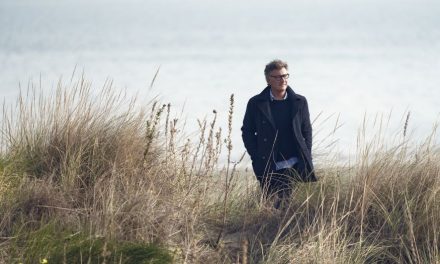
Portrait of Antonio Citterio by Gianluca Di Ioia
ENJOY THIS INTERVIEW? SHARE IT WITH A FRIEND.