
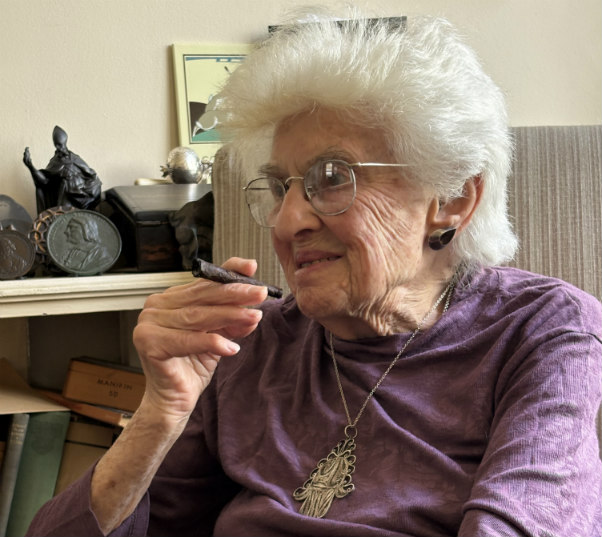
PIONEER OF BAROQUE SCULPTURE. Jennifer Montagu LVO CBE is a highly regarded British art historian whose emphasis is in the study of Italian Baroque sculpture. A daughter of Ewen Montagu, a British lawyer, writer and Naval intelligence officer, and granddaughter of painter Solomon J. Solomon RA, she studied under Sir Ernst Gombrich at the Warburg Institute, London where she received her PhD degree. Montagu lectured in History of Art at Reading University 1958–64, then was assistant Curator 1964–71, and Curator 1971–91, of the Photographic Collection at the Warburg Institute. She was Slade Professor of Fine Art and fellow of Jesus College, Cambridge 1980–81, Andrew W. Mellon Lecturer at the National Gallery of Art, Washington in 1991, and Invited Professor at the College de France, Paris in 1994. She was a trustee of the Wallace Collection 1989–2001 and of the British Museum 1994–2001. In 1990 Montagu delivered the annual A. W. Mellon Lectures in the Fine Arts at the National Gallery of Art. She is an honorary fellow of her alma mater, Lady Margaret Hall, Oxford, and of the Warburg Institute. She has been honoured in France as a Chevalier of the Légion d’Honneur and a Commander of the Ordre des Arts et des Lettres, and in Italy as an Officer of the Order of Merit of the Italian Republic. Her books are Bronzes 1963, Alessandro Algardi 1985, Roman Baroque Sculpture – The Industry of Art 1989, The Expression of the Passions 1994, and Gold, Silver and Bronze: Metal Sculpture of the Roman Baroque 1996. Her latest book, on the sculptor Giovanni Battista Maini, was published in 2025.
30 minutes read time.
You can listen to the podcast of this interview here.
Jennifer Montagu, were you in New York during World War II?
My father sent my mother, brother and me to America, first in Boston with their friends there that were prepared to take us in, then in New York for three years. My father was in the Navy and naval intelligence in London, responsible for Operation Mincemeat. After the war he wrote a book all about it called The Man Who Never Was; the story has twice been made into a movie. While he expected to be at sea, in fact he spent the whole war in London. It was the only time in his life he didn’t go to sea, because he loved sailing.
Are you a friend of the antiques dealer Alessandra Di Castro?
Yes, her family, not so much her. Her mother and also her brother are what I call my Roman family. If I was in Rome, which I quite often was, they acted as my Jewish family. I went there for the first night of Passover, and I went for breakfast on the Day of Atonement.
Are you close to the Jewish faith?
I’m a non-believer, but I’m what I call a one-day-a-year Jew. I keep Yom Kippur, but nothing else. Much of my family are strictly Jewish and so I get involved and I go to Bar Mitzvahs and that sort of thing in the family.
Today, at the age of 95, do you feel comfortable as a Jew in England?
I’m very lucky, I’ve never come across any personal problems. The fact that Israel has now decided to make war with Iran is horrifying. I have family in Israel – my nephew lives there with his four children – and I don’t want them being bombed by the Iranians to satisfy Trump and various other people that I have no particular affection for.
“I was brought up being rather anti-Baroque; and then I got interested in Le Brun and the 17th century.”
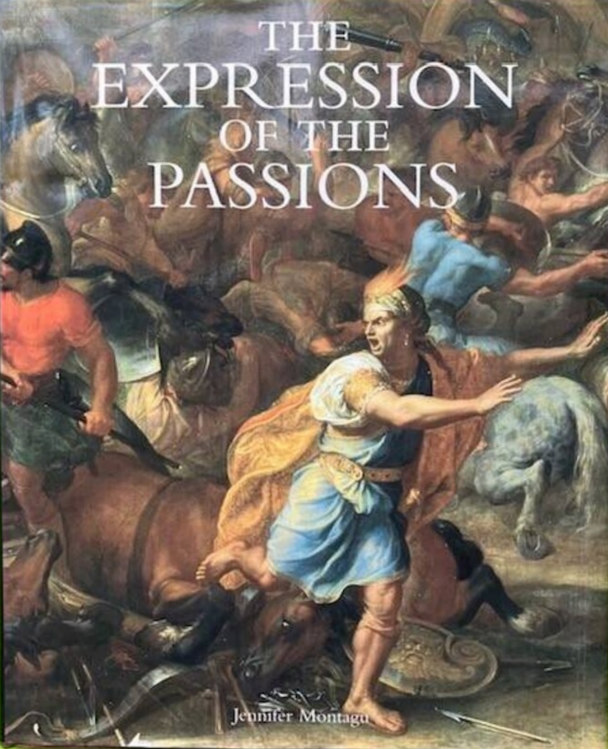
Jennifer Montagu: THE EXPRESSION OF THE PASSIONS
Yale University Press, 1994 (originally presented as the author’s doctoral thesis, Warburg Institute, 1959)
Jennifer Montagu, what have you learned about human nature from your long life as an art historian?
I don’t think as an art historian I’ve learned anything about human nature, but as a human being obviously one does learn a certain amount. I’ve been well treated by people. I haven’t suffered from overt antisemitism or anything, except sort of mild background antisemitism, which one has to accept. I’ve never had a hard time of it, so I’ve been very fortunate.
When you were younger there was a very high quality of intellectual life in London due to the people who came from Germany, Austria and Poland on the eve of the war. Is there now less of this kind of intelligentsia that you were part of?
It might be unfair to say that. There was this influx at the time of Nazi persecution, when a whole lot of very interesting people brought new ideas and new ways of doing things and looking at things. That was fortunate for us, unfortunate for them, which we hope won’t have to be repeated. That obviously came to an end, but now there’s a lot of international exchange. People are not flooding in as refugees, and God knows at the present state they wouldn’t be welcome if they did. Politics certainly have changed. They’ve become a lot cruder, a lot more brutal, and in many ways much more right-wing. I have had American friends who say thank God I got a British passport.
How come you became a pupil of Sir Ernst Gombrich, the renowned Austrian born art historian who settled in England?
I met him in Oxford, which is why I went to the Warburg Institute. My grandfather was a painter, Solomon J. Solomon RA. A typical question in the quiz to keep me quiet in the car driving to places when I was young was: “Who painted the Rokeby Venus?” so I have always known about art and been interested in it. I would have liked to have been an artist, but I had absolutely no talent, so I became an art historian instead.
You specialised in Baroque sculpture and for many years were curator of the photograph collection at the Warburg Institute?
Yes, the photograph collection is like a library, only it’s photographs instead of books. People come in and say they want to see pictures of the Last Judgement or whatever it might be, and we show them. It’s not actually about taking photographs. I’ve tried doing that and I am hopeless at it.
Why did you dedicate your life to being an art historian?
My thesis was on the expression of the passions and the way artists depict the emotions of the people they’re painting, and I got interested in French painting talking with Gombrich. It was his suggestion, actually, and he said: “You can’t write about the expression of the passions from the pyramids to Picasso, but the most important study of the subject was a lecture given about Charles Le Brun who painted Versailles and so forth. If you work on that, and if you’re lucky, you will in fact cover what went before and came after, but you will have a fixed point. Otherwise you’ll get completely lost.“
You started with Le Brun and then studied all the other French artists of the 17th century but your primary interest was in sculpture?
I always preferred working in plasticine to chalks when I was a child. I can’t understand perspective and I have very little sense of colour, so I’ve always been more interested in sculpture.
Today people are becoming more interested in sculpture again and you wrote an important book on Alessandro Algardi, published by Yale Press in 1985. Algardi is a contemporary of Gian Lorenzo Bernini and Francesco Borromini, and there is a big exhibition in Rome of Bernini’s sculpture titled “Bernini e i Barberini” at Palazzo Barberini from February 12 to June 14 2026. Why did you pick Algardi?
That was pure chance. There was supposed to be a series of books called Art Matters, and they suggested that I write a book on French 18th century terracottas, but I said: “Not on your life. So far as I know three quarters are fake, and I don’t know which are fake and which aren’t, and I’m not interested. But I’ve heard that there’s an artist called Algardi about whom I know virtually nothing. He looks rather interesting. Would you like a book on Algardi?”
Is Algardi as important as Bernini and Borromini?
I’m a founder member of the “Enemies of Bernini Society”. I prefer Algardi, but I have to admit that Bernini was the greater genius. He was certainly a more inventive and more talented sculptor. Borromini was an architect, and I don’t understand anything about architecture, but he was also a fascinating person.
Why is the Baroque so important in your life?
It was, as I say, really by chance that Gombrich said I was to work on it, that Le Brun was important. That was my first entry into the Baroque. Up until then, because my grandfather was the generation that he was – a typical Edwardian painter, academic – he detested the Baroque, except for Velasquez. He thought it was a terrible mistake after the Renaissance. So I was brought up being rather anti-Baroque; and then I got interested in Le Brun and the 17th century.
Are you also interested in the very ancient sculpture of the Egyptians, Greeks and Romans?
In a general sort of way, yes, as I’m interested in painting too, but once you get into a particular period you feel very much in it and you tend to go on working in it. When I moved from the 17th into the 18th century it was rather like changing schools, because you don’t know any of the rules, you don’t know any of the people; you have to get to know a new century.
“The basic problem, of course, is who painted it and why and when, but there are all sorts of other more interesting questions you can ask about it.”
Jennifer Montagu, in a book by the French poet called Yves Bonnefoy called “Rome,1630: The Horizon of the Early Baroque” he describes Rome as the centre of the world for art in that particular time. Everyone went to Rome then as they went to Montparnasse in 1910 or 20. Is that why you think it was a very important period for Rome?
Very much so, yes; and with the 18th century it was no longer so. Things were moving to France, or in Italy even to Venice or somewhere like that, but more was going on than people usually allow. There’s a lot to be seen and enjoyed about 18th century Rome too, but by then it was no longer the place where new things were happening. Instead, in the 17th century, everything happened there.
Did the church and its cardinals have a great influence on that?.
Yes, and the various Popes too. The Barberinis commissioned Baroque Rome in a sense, then the Chigis and other families too. Algardi worked for the Pamphili family and for the cardinal-nephew to Pope Innocent X. The Pope was a more difficult character and not really interested in art.
Did you spend a lot of time studying in Rome?
Yes, but never consistently. I would come and go because most of the time that I was working on Italian sculpture I was doing my job at the Warburg and so I could only go there during vacations.
Was it very interesting to be at the Warburg Institute?
Fascinating, yes. As I said, my job was very much like being a librarian, except that I was dealing with images rather than books, but when I first went there, many of the people were still the original ones who came from Germany or Austria with that great tradition of art history. They were a small, intimate group. As I once wrote in an article, they were a family, not an institute, because so many of them were refugees without families or extensive family connections in England, so they were very much connected to each other. I found it a very stimulating place to work. They had teas, often had lunches, and when they had a new institute they had a cafeteria, which is very important for a research institute, because people meet and talk.
Were you also friendly with the people at the Courtauld Institute, where Anthony Blunt was Director?
Oh yes, with Blunt in particular.
And what about with Sir Denis Mahon, one of the most distinguished art collectors and a historian of Italian art?
Mahon was always more difficult. Mahon, for some reason had quarreled with the Warburg, but by the end we got on quite well. I didn’t know him very well, whereas Blunt always treated me as if I were one of his students, because while Gombrich knew all about expression, he didn’t know much about French 17th century art, which Blunt did. Whenever I wanted to ask Blunt something, he would see me and talk to me and so forth. I owe him a lot.
Besides his bizarre career as a spy, was Blunt a very good art historian?
Certainly, yes. Not an inventive art historian like Gombrich, but a good teacher, and very generous with his time and his knowledge. He was particularly interested in Poussin, and I had nothing against Poussin, who spent most of his life in Rome and was helpful to Le Brun when he went there as a young man, and I love his paintings. One of the few times when I really spoke with Mahon was at the Poussin exhibition in Paris. He appeared there, and he wanted someone to try his theories out on. He was having whole new ideas about the chronology of Poussin. I’m not terribly interested in chronology, but he was, and he took me round and explained why the pictures were of a certain date and not the date that Blunt had said. He managed to convince me about the dates at the time. Whether I’d still be convinced, I don’t know.
Are the dates very important?
If you’re interested in that sort of thing. I’m not because I don’t think they are all that important. The general trajectory of an artist’s career is important. If he changes his style, you can see how things change, but whether a picture was painted in July or September really doesn’t seem to me to matter very much. Quite often, they began it in July and finished it in September. Most artists, like most human beings, change over their lives, and certainly that’s important, whether it’s early or late. But as I say, whether it’s done in one month or a few months later, I’m not going to get worried about.
What do you mean when you say that Gombrich was a very inventive art historian?
Gombrich has changed the way one looks at art history. It means coming to the subject with new questions and bringing in new comparisons from elsewhere, like his interest in expression, animal behaviour, psychology. Now there are a lot of people fascinated about neuroscience and what that can tell you about art history. I think it can’t tell you very much, but lots of people think it can. Inventive people come in and take a new way of looking at the problems. The basic problem, of course, is who painted it and why and when, but there are all sorts of other more interesting questions you can ask about it.
What has changed in the world of sculpture, which is your field?
Bernini. The movements in Bernini, the relationships of one bit of form to another, hadn’t been done by anyone before he came along; and that’s what we mean when we talk about the Baroque. Algardi I don’t think ever really changed anything, he just did it very beautifully.
Why do you believe the Baroque is so important ?
I wouldn’t say that, I’d just say it interests me. Things come and go. The Victorians are now coming back – up to a point – but there was a time when we despised everything Victorian. But people learned to look at something and see what’s great about it, what’s interesting, what’s beautiful; and quite often it takes someone to kick you and say: “Look at it!”
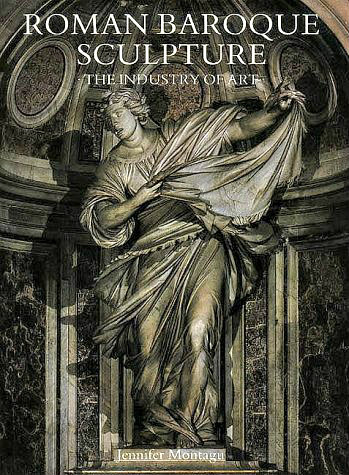
Jennifer Montagu: ROMAN BAROQUE SCULPTURE – The Industry of Art
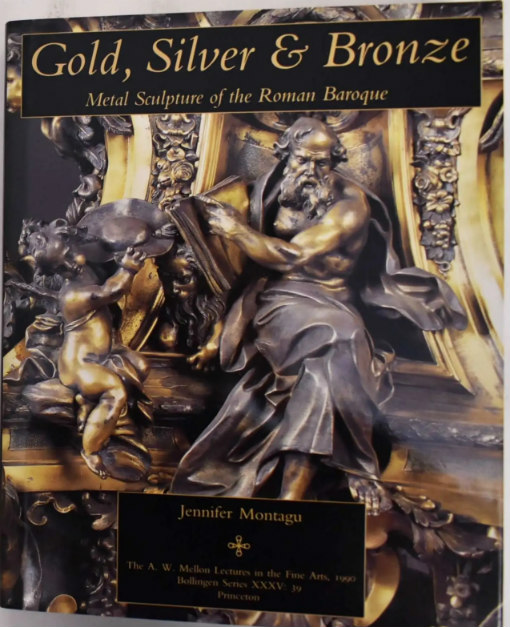
Jennifer Montagu: Gold, Silver & Bronze – Metal Sculpture of the Roman Baroque
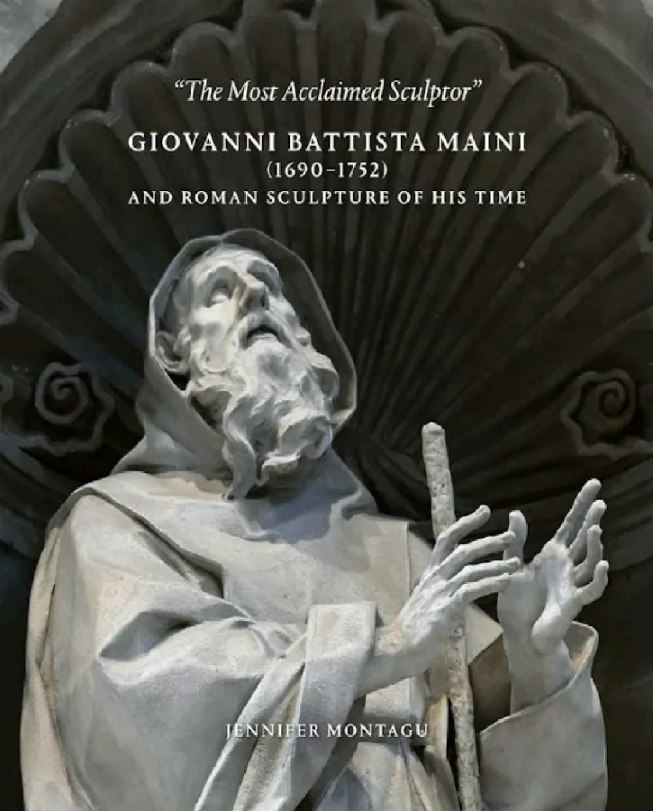
Jennifer Montagu: GIOVANNI BATTISTA MAINI (1690-1752) and Roman Sculpture of His Time
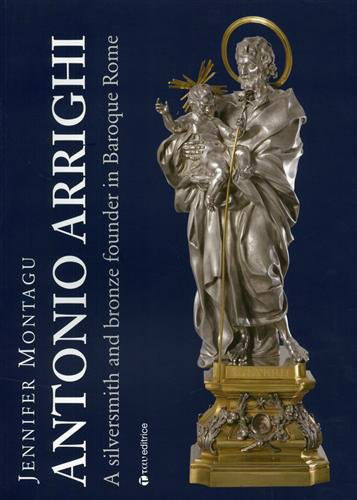
Jennifer Montagu: ANTONIO ARRIGHI. A silversmith and bronze founder in Baroque Rome
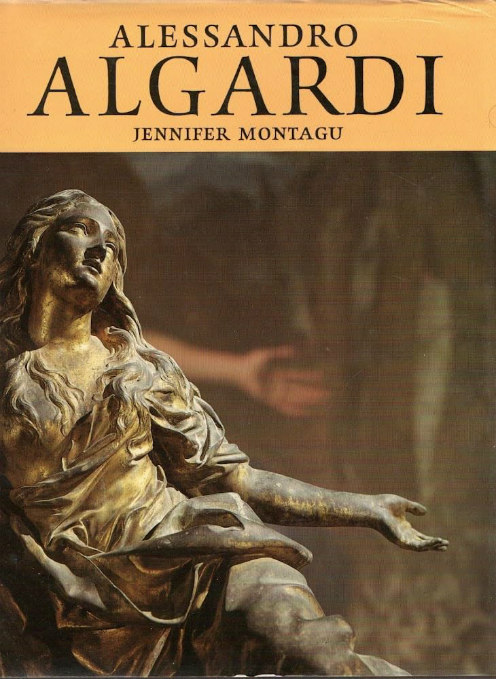
Jennifer Montagu: ALESSANDRO ALGARDI
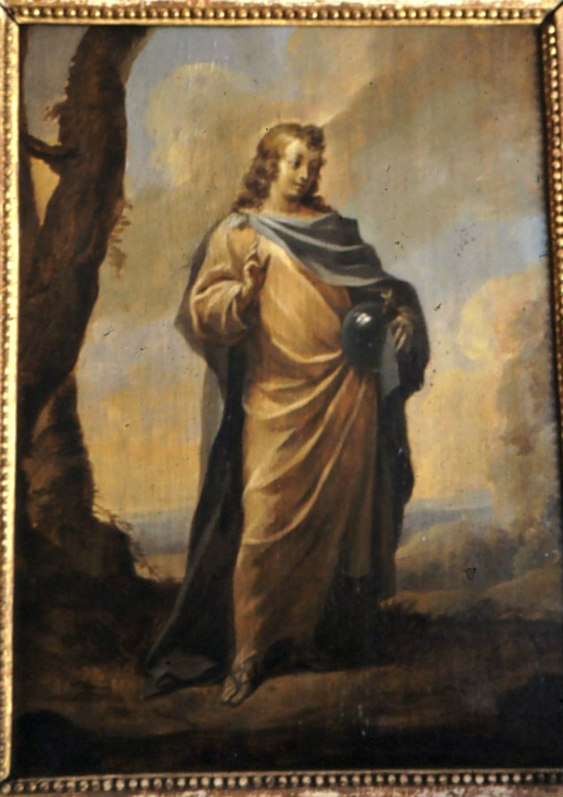
CHARLES LE BRUN (1619-1690), Christ the Saviour
“Sometimes there’s a connection, something about the painting which grabs you. The hairs on the back of your neck rise up, as they say, and there isn’t any particular explanation.”
Jennifer Montagu, just as Caravaggio was ignored until Roberto Longhi became the tastemaker, and Piero della Francesca was also not so well known until Bernard Berenson decided to show how Piero was important. Longhi said Mantegna is more important than Piero and people fight about the importance of artists.
Yes, that’s going a bit far. You get two totally different artists like Mantegna and Piero but they’re both important. One was more influential than another, but importance is purely subjective, and it’s a little more difficult now with the whole commercial world involved in it and dealers pushing things in the art market.
Is there now less interest in the Old Masters than there was in previous decades?
If you look at what young people are studying in university, far more of them are studying contemporary art, which I don’t think is really art history anyway because it’s contemporary, but people lose interest in the earlier things. It could come back. It’s the same in a way with music. I’m lucky enough to own a box at the Albert Hall, so I used to go to the Proms quite often and you could see the audience becoming older. In the old days, going to a season of the Promenade Concerts was a way that you got your musical education, and you’d hear most of the really great works by Beethoven and Brahms, the foundations of basic musical knowledge. Now you get that from the radio, or you don’t get it at all, and you don’t get the same groups of young people coming to a season of the Proms and knowing that they will end up with a musical education.
Today in London you have a choice to go to the Tate Modern and see a show by Tracey Emin or to the Tate and see a show of Constable and Turner. Which would you choose?
I’m afraid I don’t understand most contemporary art. I would choose a Constable and Turner, except that I’ve already seen Constable and Turner. At my age you’ve seen these things come round and round, and yet another exhibition of Rembrandt or whatever it might be. I haven’t seen Tracey Emin but I admit I’m prepared to let a whole lot of modern art just go by me, because I don’t really understand what they’re doing or why it should be good. I look at a lot of modern art. I cannot see what there is in it.
You were a Mellon lecturer in Washington, and you gave lectures in Cambridge. What were you teaching?
They weren’t really teaching lectures. The ones that I gave in Cambridge were what became my book Roman Baroque Sculpture, the Industry of Art, and what I gave in Washington were particular subjects that interested me rather than what a student has to learn. I’ve always started from just asking questions about things. I look at something and say: “Why was it done? Why is it that way? Why?” And that’s what I want to know. For example, at the same time I was talking about the industry of art and Roman Baroque sculpture, somebody else was giving the Reith Lectures – that the BBC broadcast once a year on some cultural topic – talking about genius. I find that extremely uninteresting, because if we really knew what genius was, we’d all be able to become geniuses. I was much more interested in the everyday sculptor – not necessarily Bernini – how he worked and lived and so forth. I’m interested in what a genius does, because it’s great – and that’s why it’s genius. A genius is somebody who has a unique way of looking at things, whatever he’s doing, which changes the way everybody else begins to think about it.
Like when the Arte Povera sculptor Giuseppe Penone, who makes trees in bronze, was at the Accademia, he didn’t want to become a very good artist in the classical sense and then go on and do beautiful portraits. He wanted to do something else, to break the mould.
This has become an essential part of the modern artist. He has to do something new, whereas old artists were quite happy going on doing what had always been done before. Doing it perhaps slightly better, a slight twist to it, but they didn’t feel they had to invent something new. Now unless you build something new nobody’s interested in you.
You love archives and have visited many museums in your life. Which are your favourite museums?
Ones that have a lot of sculpture, like the Bargello in Florence. In London they’re broken up, so if you’re interested in sculpture or furniture or the applied arts you go to the V&A, and if you are interested in painting you go to The National Gallery. The Louvre has everything, one of the few general museums. Like the Metropolitan in New York, the Louvre has the lot.
You go to the Louvre, and suddenly see a painting that you didn’t see before?
Yes, but on the other hand, you then suddenly find yourself in some gallery of, let’s say, Mesopotamian art, which you’d never realised was even there before. There are marvellous things in that.
Why are there icons in museums? The Mona Lisa in the Louvre, the Nefertiti in Berlin, the Rembrandt in Amsterdam, Las Meninas in the Prada?
In a way, it’s rather absurd. In a way, it’s also natural. Why does one feel you have to know the Beethoven symphonies, but can forget something else? Why does everybody go to Beethoven, this icon of music in a sense? I have this box at the Albert Hall and everybody wants to go and hear Beethoven’s 9th It’s that sort of thing.
What was your experience as a teacher?
I did teach a bit, but I was no good at it. I taught artists at Reading University, but in the art department. I don’t think I was able to convey my own feelings about art and its importance to these young artists who weren’t art historians, they were there to do art, but they had to learn about art history as well. The thing which I found most interesting was I would take them abroad to Italy and let them loose in the Uffizi, and then go and look around and see what they were looking at. They weren’t looking at the Botticellis or whatever, they were looking at some rather obscure little painting which had something that appealed to them and that was connected with what they were trying to do. That seemed very much more useful than going and staring at the Birth of Venus, which is a beautiful painting and well worth staring at. I like that they discovered things that meant something to their own personal interests as artists.
And what do you like?
I like all sorts of things. I even like the Birth of Venus. There are things you see, sometimes just an odd portrait, which just seem to be so utterly beautiful. In Berlin there’s a little painting by Geertgen tot Sint Jans of St. John on Patmos. It’s a very small little painting and it’s not an icon, but it’s something which just gets me, I don’t know why. I’m not particularly interested in early Netherlandish painting, but that one does something.
Do you like Italian paintings?
I like all sorts of things. I like Italian paintings, I like French paintings. I like particularly narrative paintings, rather than still lifes or landscapes. I wouldn’t say that I dislike landscapes, but as a genre it doesn’t interest me. I have nothing against landscape, but if I’m going round a large museum and haven’t got much time, I will walk more quickly through the galleries with landscapes than I will of those with history paintings in the traditional sense, telling stories. That just happens to interest me, partly because of my interest in expression, but I spent my holidays during the war when we were back in England with my aunt who had in her house the family Constable. It is, I think, one of the most beautiful paintings he ever did, and a landscape, and I loved that. It’s now in the National Gallery, but it’s a painting I was brought up with, a very beautiful painting.
In your lifetime, what did you love and then move away from and change to loving something else?
There was a Spanish rather minor, slightly mannerist painter, Luis de Morales, and I fell for him when I was young and now, well, I don’t say I don’t like his work anymore, but I no longer feel drawn to it the way I did. I went through an El Greco phase, and again he did some marvellous painting but I don’t feel the same way about him as I did when I was young. That applies to a lot of art.
Is it the same in your field of Baroque sculpture or paintings?
No, that has been more consistent, partly because I came to it later when I was rather more mature. But there are odd things. There’s a church in Venice, I can’t remember what it’s called, I don’t remember where it is, except it’s not far from the station. It has a 14th century tomb slab of a man with a beard lying down on this tomb stone, and that grabbed me. It’s a long time since I’ve seen it, but I think it probably still would. Why, I don’t know. It’s like quite a lot of other tomb sculptures of the period, but somehow there isn’t any real explanation. Sometimes there’s a connection, something about the painting which grabs you. The hairs on the back of your neck rise up, as they say, and there isn’t any particular explanation.
Do you have some icons that have never changed in your life?
Yes, and, as I said, they’re not necessarily anything to do with what I’m really interested in. It could be an early Netherlandish painting. It could be a 14th century tomb slab or whatever. You can’t explain it, any more than you can explain falling in love. That again can change over time, as we all know. Somebody I liked as a child or sort of adolescent and then as I matured grew out of him, which is not to say there’s anything wrong with him, but my attitude, my life, my choices changed. I hope one does grow out of one’s childhood feelings, which are usually pretty immature.
In your career did you identify some works that were fake?
I’ve come across fakes, but they are usually things that other people regard as fakes as well. There is the old saying: “Mine is genuine; yours is a copy; his is a fake.” The owner always believes that he has this great work. I’m not saying it’s a fake, I’m saying quite often it’s not by the great master he thinks it is, it’s by a lesser master. You recognise that by seeing a lot of things and getting used to seeing them.
Have you sometimes made mistaken attributions?
I’ve made mistakes, yes indeed. One of them was just stupidity. There’s a head of a Moor in terracotta in the Bargello, which was high up and I never asked to see it close to. I wasn’t happy going to a curator I didn’t know and saying can I look at that, but I have since seen it with a curator I do know and seen from the side it just falls to pieces. It can’t possibly be an Algardi. But from the front it was very beautiful and I thought it actually was an Algardi and I included it in the book. Now I am sure it isn’t.
And have you discovered something?
I’ve discovered things that are right, not things that are fake, including what they called the White Lady bust. A friend of mine in the Kunsthistorisches Museum in Vienna looked at it by chance, because at the time it wasn’t actually in his museum, and thought it was related to a French 17th century portrait by Philippe de Champaigne, so he sent me a photo. It wasn’t Philippe de Champaigne, and it was, as I discovered, by Camillo Rusconi, one of the greatest 18th century Roman sculptors. It’s a beautiful bust, now in the Kunsthistorisches Museum, but it hadn’t been identified before.
Does such discovery give you great pleasure, almost like giving birth?.
Yes. I remember sitting in the Piazza Navona in Rome and looking around and seeing within the radius three or four churches in which I have identified the artist of a quite important piece of sculpture. I used to feel a certain satisfaction.
Is there a contemporary sculptor who you like?
I quite often like Gormley. He’s the only sculptor that I really have seen. I might like a particular sculpture by odd people, but from purely physical inability I haven’t been to an exhibition for some time now; but that’s not because I don’t like them.
How do you spend your days?
I’ve retired. I try to read with growing difficulty. At the moment, I am trying to write my will amongst other things. One has to do it. If you’re going to die, you’d better write your will. I don’t collect, but I’ve bought things that I like from time to time, and I gave up buying long ago because the prices went beyond me. Some of them, to my surprise and delight, may be going to the Ashmolean Museum in Oxford. There’s a system in England where you can leave something in lieu of inheritance tax. The family want quite a lot of things I’ve got, and they have first choice.
You still smoke Italian Toscani cigars, somewhat to my surprise because you look so well. Who procures them for you?
I used to buy them in Italy of course, but there’s a Dutch smuggler who’s prepared to sell them. I smoke one a day: two halves, or two thirds/one third. I find them much better as opposed to Cuba. I’ve survived quite a long time while smoking, so I’m not going to give up now. I did try giving up a little while ago because I thought it was making my eyes worse, and I found I couldn’t work unless I smoked. I would rather die of smoking, which I enjoy, than of boredom, which I didn’t. So I went on smoking, but I cut down. I was smoking many more.
Jennifer Montagu, thank you for this fascinating conversation.
ENJOY THIS INTERVIEW? SHARE IT WITH A FRIEND.


