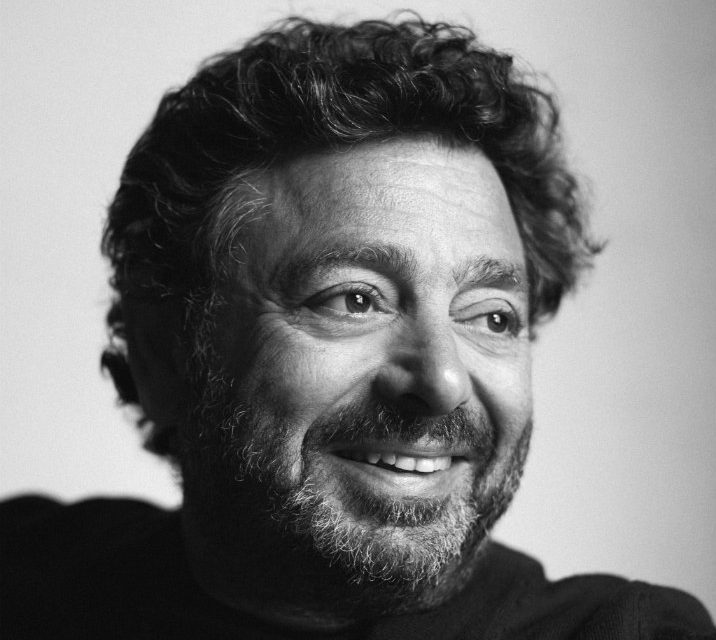
CLASSIC WITH A MODERN TWIST. Charles Zana is a highly sensitive architect who imagines each project through the lens of a French lifestyle. He is also a passionate collector like his father, and has done in-depth research on the great Italian design masters of the 20th century such as Ettore Sottsass and Carlo Scarpa. In 2019 Charles Zana was named Chevalier des Arts et des Lettres by David Caméo, director of the Musée des Arts Décoratifs.
You can listen to the podcast of this interview here.
Charles Zana, you are both an architect and an interior designer. What is the difference between these two roles?
I studied architecture at Les Beaux Arts, Paris, and finished my schooling in the 80s. I was an architect, and then I went to New York to work for one year in interior design. I have changed my way of thinking about how to design space. I work from the inside to the outside, still doing architecture but mainly when I have an interior design job. I don’t see any differences. It’s just a question of the size of the project. For me it is the same job, working for the volume, for the light, for the colours, and also for the integration of my project in a landscape or in a city.
You also design furniture, greatly inspired by two Italian architects, Carlo Mollino and Ettore Sottsass?
We were always designing bespoke furniture for our projects and then three years ago we started to show them independently. I am mixed in what inspired me between the classic French 18th century and the design from the 30s. I like the freedom and the happiness in Italian design. I like the way Carlo Mollino creates very ergonomic furniture inspired by the female body. Of course, my star is Ettore Sottsass. He is an artist first, and then an architect, and maybe a designer. His father was an architect and he finally went to architecture but he always wanted to be a painter. All his life he was thinking about creating furniture in an artistic way, pushing the frontier between art and design. Now we have a lot of designers who we think are artists first and then designers, but Sottsass was really the first one.
Is there an iconic piece of furniture of yours?
Yes, the Franck easy chair. It’s one of the first that we designed here with the team. I designed it very quickly. The idea was to make a very small but very comfortable sofa. I love it very much.
“I like to always start from a classic design, and then to treat it in a modern way.”
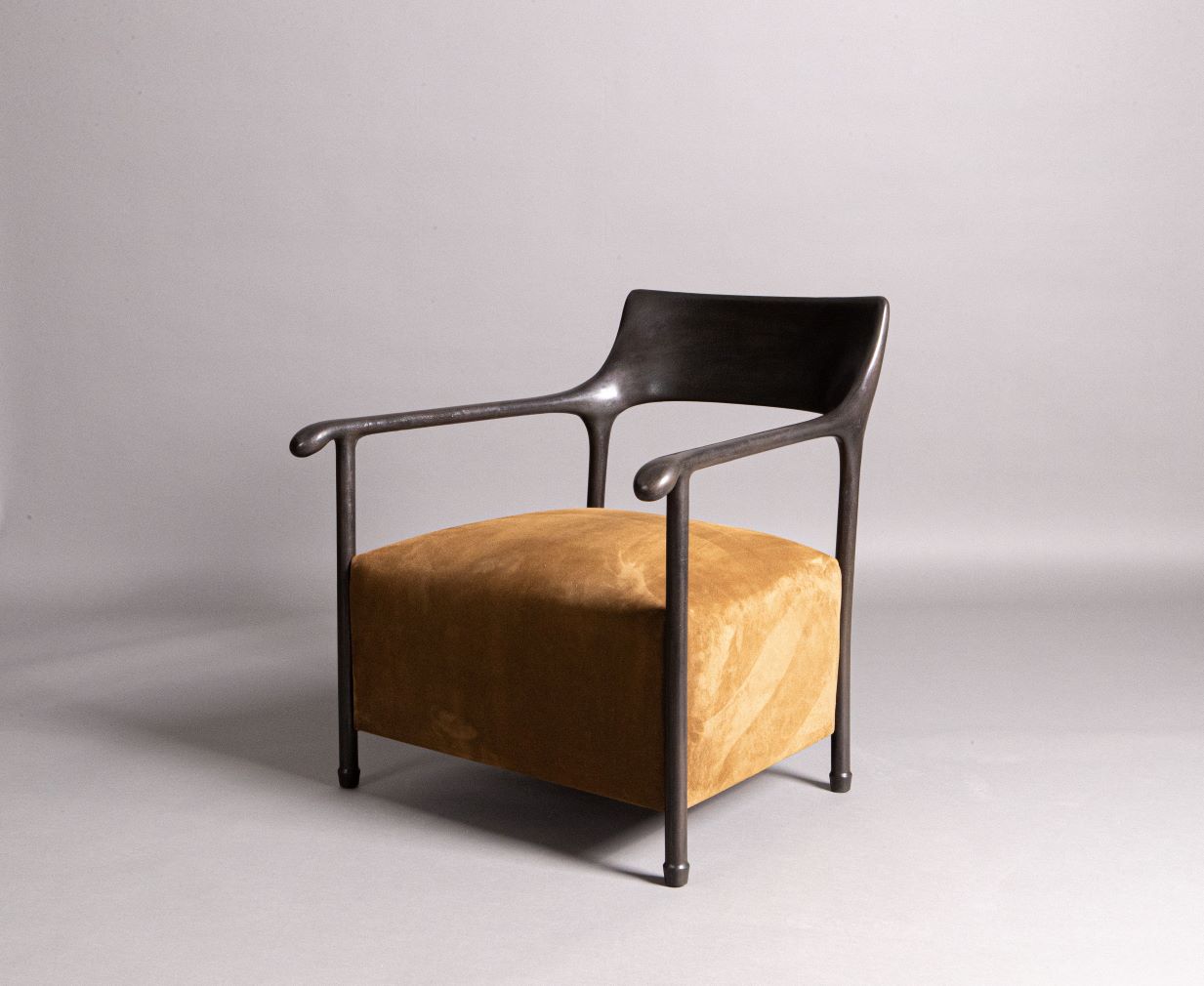
Charles Zana Collection
Franck Esay chair in Suede (1.5 m2) and patinated bronze. Playing on proportions with a comfortable seat and a graceful structure, the Franck easy chair is an emblematic piece of the Charles Zana collection. The patinated bronze structure is distinguished by its remarkable finesse, its arms and legs stretching finely, evoking the fluidity of the molten monk, frozen just before solidifying. A sensual and addictive collector’s item.
©Gaspard Hermach
Charles Zana, born in Tunisia, you came to Paris very young. Your father was a collector of antique and beautiful objects. He used to take you to auctions at Drouot or the flea markets. Were you brought up in an artistic way?
My father was an engineer in Tunisia and didn’t have an artistic background or culture. He was not from a family that were interested by that. But my father had really good eyes and could recognise a good painting from another one. In the 70s, my father was what we call in France an addict of Les années Pompidou. Our whole house was in orange and in green, and we had very funky furniture in stainless steel and plastic. I was very inspired by him. We were always going to museums, and were very interested by the French school paintings from the 1950s. When I was 18, as I was very interested by art but also good in mathematics, my parents suggested architecture as something that I could do in the middle of art and technique. I didn’t have any idea about architecture but I followed their advice.
Do many people now work with you?
I have a team of 30, a mix of architects and interior designers.
In your career, you have made diverse villas, apartments, hotels and restaurants in various parts of the world. Is there a Charles Zana style?
There are some important points which you can always recognise in my projects. The first one, that I learned at school at Les Beaux Arts, is to be contextual. At the beginning of a project, I always think about where the project is. I don’t do the same house in Marrakech or in New York or in Switzerland. To bring culture into the project I try to find a narrative way to write or to talk about the project at the beginning. I always work to find one or two important words that I can have for the project. Many years ago I had a client who said that he can recognise a house that I have done, and even if all my projects are very different, one from another, there is a link, a narrative that you can recognise. This is very important for me. The second point is that I like to always start from a classic design, and then to treat it in a modern way. I am very classic with a modern twist.
Together with the famous chef Yann Nury, who is a friend of yours, you created a restaurant called La Residence in New York’s SoHo. What is La Residence?
I met Yann Nury five years ago and he is a fashionable French chef in New York who specialises in big openings and receptions. He wanted to create his own confidential, private, space in New York. I went there two years ago and he had discovered the space on the 12th floor of an industrial building in SoHo. Very typically of the way that we think here at the studio with all the team, we completely changed the idea that they had. We always try to think very differently. At the beginning, Yann wanted to have first the reception room and then, at the end of the flat, the professional kitchen. But we installed the kitchen in the first room, so you enter into the professional kitchen in stainless steel with very hard black stone like granite and all the cookers and assistants, and then you walk through and at the end of the flat have the reception part. We bought a lot of furniture that’s a mix of Charlotte Pierrand and Prouvé, and we also designed a couch for this space.
“People don’t accept the simple beautiful project; they want to understand what is behind it.”
Charles Zana, in Saint-Tropez you built Hotel Lou Pinet. This must be very different from working in New York?
Yes, I started the project in Saint-Tropez with Maisons Pariente almost eight years ago. The inspiration was the ‘60s Riviera spirit, with, of course, Brigitte Bardot, but also with Picasso. The idea was to recreate a kind of village, with different houses around the swimming pool. With this very friendly inspiration you do not feel you are in a new hotel, but in a hotel that you have the idea you have already seen.
What kind of hotel is the Kimpton Hotel in Boulevard des Capucines in Paris, that you also did?
The Kimpton was La Samaritaine de Luxe, a typical French Art Deco building with white marble and a lot of metallic features, balconies and a huge staircase. Kimpton is an American brand, and I wanted the client to feel Paris. I wanted to redesign Paris inspiration. Kimpton is definitely a Parisian hotel with all the moldings and all the grey colours on the walls. It’s more like having a pied à terre in Paris than being in a standard hotel room.
Paris is your city and you are very inspired by French taste, but Venice is also one of your beloved places and you did some projects there?
When I was a student I had a friend who had a Venetian family, so I went there many times and discovered Venice when I was quite young. In those years, I mostly went to Venice in the winter when you have this fantastic fog. Venice is obviously a fantasy, and I love the story of this city, the amazing life of the people in Venice, and all the palacios. It’s one of the most cultural cities in Italy, a different world than everywhere else. I have made many projects in Venice. Eight years ago, I did an exhibition in a store called Negozio Olivetti designed by Carlo Scarpa. A dialogue between Scarpa and Sottsass, I showed the link between Scarpa’s architecture and Sottsass.
Which project in Venice stands out for you?
I was very excited when one of my clients asked me to design an entire floor in the Palazzo Morosini at Santo Stefano. That was a long project process starting from all the authorisations, so I worked with an Italian operation architect. I had to go to see the Superintendente and understood how the administration wants to keep everything and check everything. You have to take a picture of all that you do to a wall and show it to them, and sometimes they discover that there is a new story behind what you can see today. Palazzo Morosini was a two year long project, and I loved it.
How has your clients’ taste changed since you started 30 or 40 years ago?
Interior designers used to think about making a beautiful space. They had an idea of beauty and an idea of harmony, mixing colours in a nice way. Today you have to be more narrative, to have an idea behind the interior design. Or you have to think about the history of a space. People don’t accept the simple beautiful project; they want to understand what is behind it. For me, this is the big change. People have thousands of Instagram pictures of projects all around the world, and people have a lot of images in their head. It’s very complicated to try to explain something new because if they cannot see it or if they don’t have any reference they don’t go for a new project.
Not so long ago all clients wanted Louis XV or Louis XVI furniture, Impressionist paintings or Old Masters. Has this completely changed?
Yes, but it’s coming back from time to time in the new projects that I see. People are redoing things in Louis XVI for many hotel or restaurant projects, or even some houses. The difference is in the image. When you were an architect 50 years ago you did three drawings and the client decided with you off the drawings. Today you have to reconsider everything and do many images and many photos and many references. That doesn’t help creativity, because sometimes you have an idea and the real creativity is in your head. When you have to show too many things you control everything, and the projects are less creative than they were.
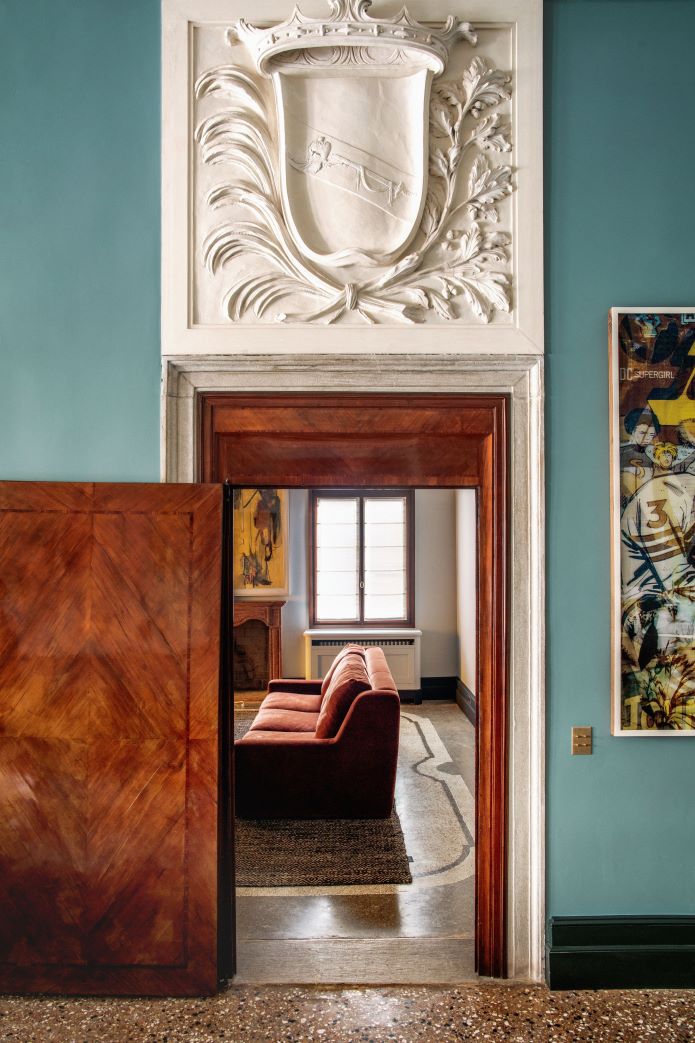
Charles Zana: Campo Santo Stefano, Venice, 2017
Detail of period Venetian door, escutcheon of the doge and vintage sofa in mohair velvet. © Matthieu Salvaing
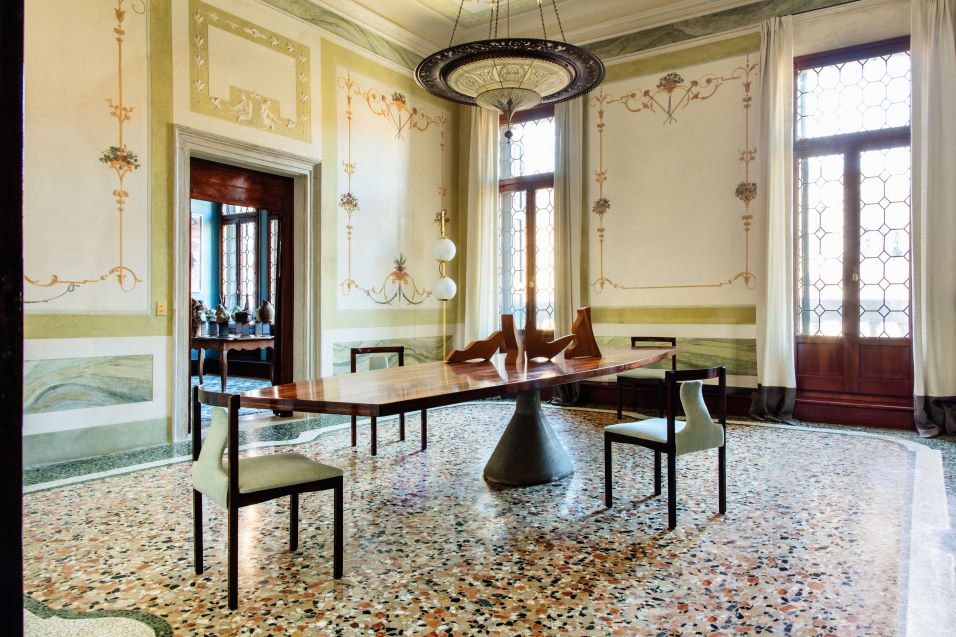
Charles Zana: Campo Santo Stefano, Venice, 2017
Marble-effect stucco decoration, Guanabara table by Jorge Zalszupin, chairs by Claudio Salocchi and wood sculptures by Enzo Mari. © Matthieu Salvaing
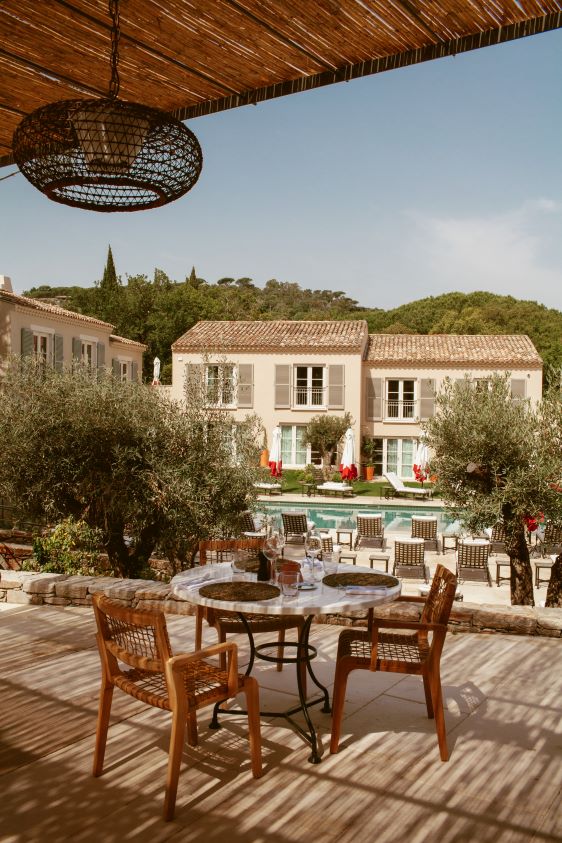
Charles Zana: Lou Pinet Hotel, Saint-Tropez, 2019
Terrace.
©Matthieu Salvaing
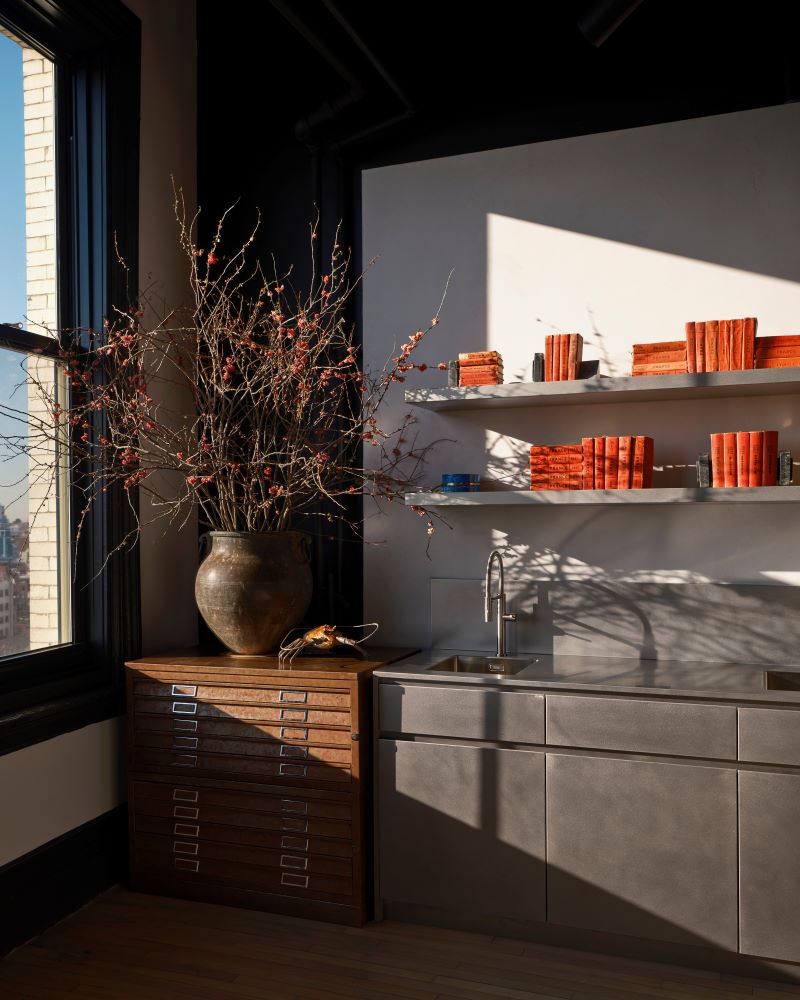
Charles Zana: La Résidence, Yann Nury, 2022
Michelin Collection Books.
©Adrian Gaut
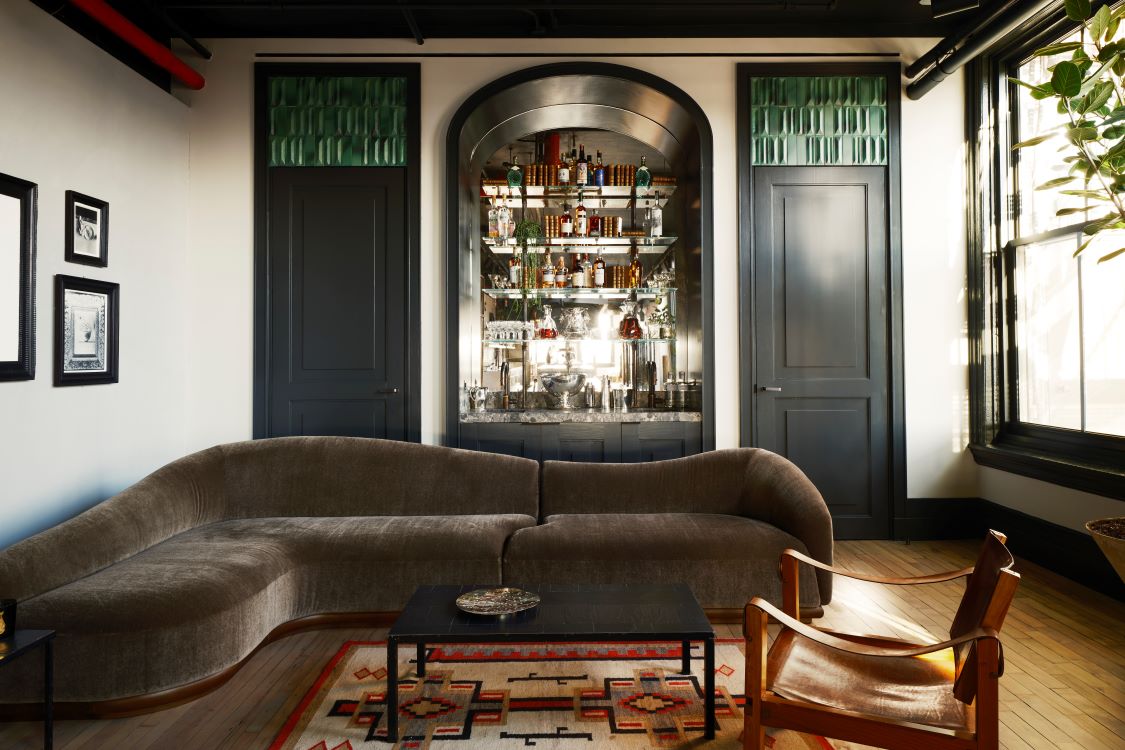
Charles Zana: La Résidence, Yann Nury, 2022
Guillaume Sofa by Charles Zana, Armchair by Pierre Chapo. ©Adrian Gaut
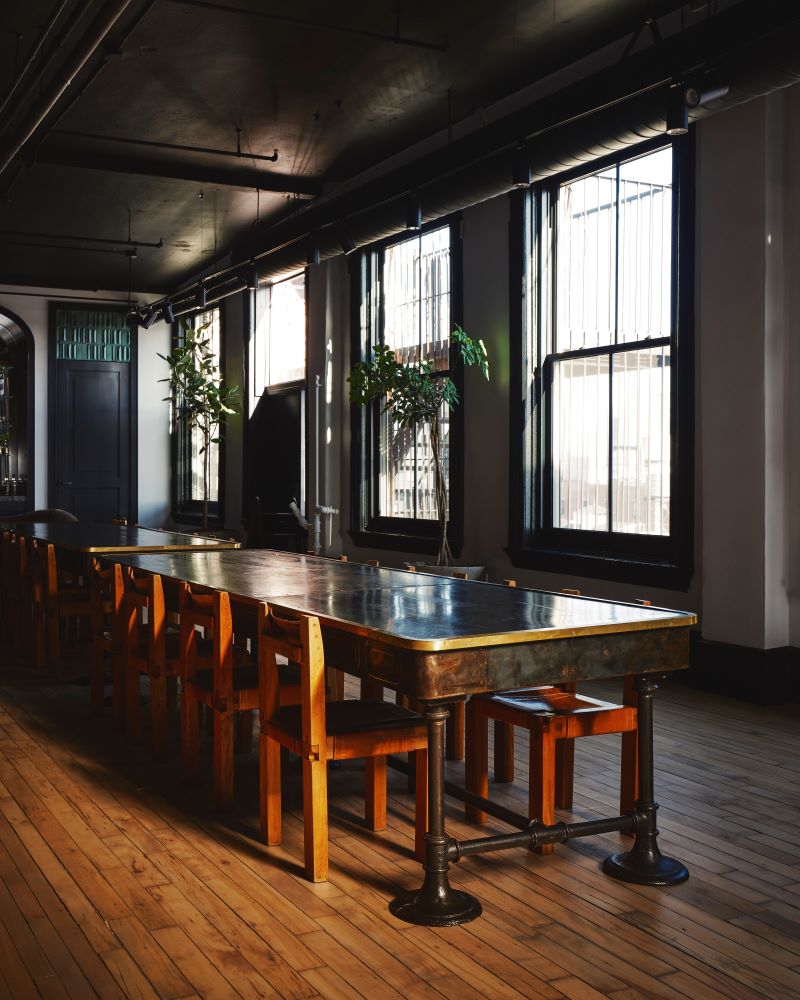
Charles Zana: La Résidence, Yann Nury, 2022
Bank of France Tables, 19th Century, Chairs by Pierre Chapo.
©Adrian Gaut
“I became a good architect and then I became fashionable.”
Charles Zana, isn’t it a paradox that the work that Jean Prouvé made for ordinary people is now very fashionable among the wealthy?
I’m still a little surprised, because he’s a fantastic engineer who never thought of himself as a designer. When he wanted design he was working with Charlotte Perriand. I had many pieces from Jean Prouvé when I was 20 years old and you could buy them for nothing in the flea market. His work goes very well with modern art, and at a certain time they started to install Prouvé furniture in front of modernist paintings in a dialogue between something rough and industrial, and a minimalist painting. People buying Prouvé to have a statement in their house didn’t do so because they liked the very democratic idea of Jean Prouvé to manufacture furniture for everybody. You have the same today with Les Lalanne. When I was young Lalanne was an animalist sculptor. People from the art establishment didn’t consider Lalanne as art. A lot of families have a monkey or a fish, something very decorative, but when I was in Basel this year for the Design Fair there was an entire booth about Lalanne.
What do clients really want from an architect and a designer?
My clients want to be surprised. You have to trust your architect and to be comfortable. Especially when you do houses, it’s very important to become very close to your clients. We are making a project for people, for family, for collections, and we need to really understand the request for the space. You have to have some humility also, to understand what the connection is between the rooms, the fluidity, and how the people are going to live. It’s very important to think about all this. A good project is a good client and a good architect.
Have the requirements of your clients changed a lot over the years?
Yes. When I started, clients were thinking to build a house as the most important project in their life. They were doing that project once. Today clients don’t think like that and over 20 years you can have three or four projects with the same client. Clients have less the idea that they build a family house for generations and generations. They are more building something for today and they can even sell the house and buy another one.
Is it difficult for you to stay in fashion as tastes change?
Not too difficult, because I climb every step of my career one by one. I’m becoming mature now and I wasn’t a young, fashionable architect. I became a good architect and then I became fashionable. It’s not good in our work to become fashionable too fast. It’s not so complicated to work honestly and always be passionate about your work, and always to love the next project.
What is your next project?
We are delivering a fantastic mansion house in Place Du Palais-Bourbon in Paris around July 15th, and I have a new very exciting project of designing a house in Miami on Star Island. That will be my focus from September to May next year.
I read in your biography that when you went to the urban oasis at Siwa, the landscape of the border of Egypt and Libya made a huge impression on you?
Yes. This was not to do with work. My wife always wanted to go to Siwa, but it is very complicated to reach, ten hours by Jeep car. I didn’t want to make ten or eleven hours going and coming back. One day I was lucky. I was with someone I didn’t know and he was talking about Siwa, and I told him it’s a dream for us but it’s too complicated to reach. He said that in a week he had a plane going to Siwa! So we went there. There is only one hotel in Siwa, without electricity and built with the sand of the ground of Siwa. You live in very simple conditions, and don’t really have a telephone network. We spent five days there, because the plane was coming Saturday and going back Thursday. It was fantastic. No sound. No connection. Very, very quiet. Not really any architecture. Nothing except the desert and a very salty lake. That was a very beautiful experience.
You were impressed by the desert, and I believe you also felt deeply about the recent Mark Rothko exhibition at the Fondation Louis Vuitton in Paris?
Yes, because you have the same spirit of emptiness. Rothko used to say that he loved people to walk in front of his paintings and to enter into another world. Everybody thinks of Rothko’s colour paintings, but there’s a deep sadness in him, beyond this image of happiness. In the exhibition that we were lucky to have in Paris this past year there were all his last paintings. It’s very impressive to see how he came from colour to black at the end in the last series that he did before he died. To see all those Rothko paintings together was a fantastic experience. I was also lucky to see it with friends from New York, and we all had the same impression. You walk and enter in the painting, enter in another world. In Siwa it’s quite the same, because the image that you see is like in the Hiroshi Sugimoto photos where you see the sea and the sky becoming the same. This is something that I love.
Thank you.
Portrait of Charles Zana by © Olivia Haudry
ENJOY THIS INTERVIEW? SHARE IT WITH A FRIEND.