
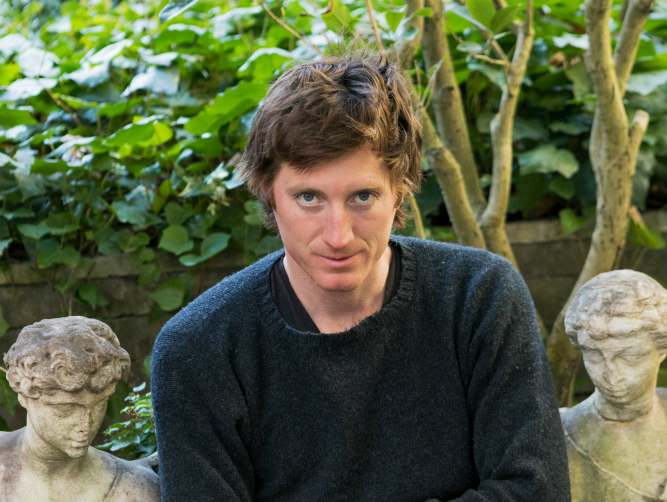
A CREATIVE ENTREPRENEUR. Marcantonio Brandolini d’Adda, born in 1991, is a Venetian entrepreneur and artist with diverse creative pursuits. The family business, Laguna~B, specialises in contemporary Murano glassware, and from this base Brandolini d’Adda is now expanding his activities into a universe of complementary ventures, including a design studio, a restaurant, and a magazine called EVERYTHING that serves as a communication platform for the various projects of his group of companies.
16 minutes read time.
You can listen to the podcast of this interview here.
Marcantonio Brandolini d’Adda, how do you define yourself?
It’s becoming a long list of things that I do, but I’m mostly a creative person who really finds joy in creating things and seeing them complete, and in seeing that people appreciate them and also that some of the things are useful.
Are you still influenced by the fact that Venetian children are raised in a manner which is unusually free?
Yes, it is freedom, and I see the immense opportunity that we had by growing up in Venice. By the age of eight we were going to school by ourselves, and after school we were allowed to play independently in the city squares. In Venice there are no private schools. Had I gone to school in Paris, I would have seen a much less diverse reality. In Venice you go to state school, which is helpful for growing up in a humble way, and also in becoming street smart. Today I see that my friends’ children, growing up in other cities, have less freedom than we had.
“EVERYTHING reflects the creative and cultural environment where it was born.”
© Everything Publishing
Marcantonio Brandolini d’Adda, both your father and late mother, who sadly passed away at a young age when you were in your early 20s, come from aristocratic families. You were brought up in Palazzo Brandolini on the Grand Canal, but a state education has probably helped you develop an easy rapport with all those around you?
Yes. It’s a matter of education, and my father is a really good example of a humble man who’s dedicated to his own passions—for agriculture, for wine: he doesn’t really care of the aristocratic context where he grew up.
After she married your father, your French mother became passionate about glass making and founded the glassware company Laguna~B in 1994. Why have you stayed close to your roots in Venice, taking control of your mother’s company?
I’m sticking with the philosophy that there is a reason for everything, and so there is a reason also for the tragedies that can happen in your life. This makes me think more and more that life is forever, and that people don’t die. They lived because there is something that they want you to do. Today I’m more and more convinced that there is a reason for the fact that my mother passed, and the reason is for me and my brothers to make something great out of it. This makes me really happy, because I’m less and less scared of death – that in my opinion doesn’t exist because it’s all interconnected. Another thing regarding the choice of taking over the business of my mother is that the aspect of freedom, that is something important in my life, has been applied in how I conduct the Laguna~B company. Looking back, the initial things I did in the company made no sense business-wise. They made sense to me, on a creative level, but commercially they made no sense.
Why not?
Because when I took over the company, the first thing I did was put my creativity in it. This is something that my mum did as well. She put her creativity in it, and the company has always been contemporary. For example, I was spending most of my time creating connections with schools in the U.S., creating exchanges with students from Pilchuck Glass School in Washington to make them come to Venice, creating partnership with universities, financing researchers for being less environmentally impactful, and so forth.
How have you changed?
I grew up. I made many mistakes. The company went really badly at some point because I was focusing on something that was not business-oriented. But that was one of the best thing that could happen, because if you lose money you put your few employees at risk, and then you realise, okay, I’m not a kid anymore and I need to understand what I want to do as a grown-up man. Things evolved pretty rapidly and I accepted to be an entrepreneur and I accepted to be an artist – and I accepted to be good at it.
What is the core of your business today?
You have to see it as a group of companies that are complementary between each other. So you have to see it as a universe. You can see it as my universe, or the universe of my family, meaning my father and my brothers.
What is special about this glassware?
My mother did a great job in designing products which are iconic, and people in the field see that more and more. We are doing more collaborations with established firms, from fashion to furniture and so on. They see that we are the brand or let’s call it the company for contemporary glassware made in Murano. It’s pretty niche.
“EVERYTHING is a collaborative endeavour: even though I’ve initiated it.”
Marcantonio Brandolini d’Adda, is Laguna~B now recognised all over the world?
It kind of is. I’m happy to say, “I work for Laguna~B” – because I never say, “Laguna~B is mine.” They say, “I know Laguna~B, it’s great.” And I’m like, “Okay, you know Laguna~B?” “Yes, of course,” they say, “I’ve been following it for many years.” Probably in New York, one out of a million persons knows what Laguna~B is, but still it’s one out of a million and that’s better than one out of a billion.
And you run Laguna~B?
Today I have a team of 15 or 16 people and we are establishing a more structured production. Akira Hara, a glass master from Japan has started working with us, and we are employing more and more people in production, under the guidance of Alvise Maria de Mezzo, who’s been a partner at the company since I took over. We have an amazing communications team producing all the creative content in-house — and which now has spun-off into a publishing house and creative agency. It’s a properly structured company now and, trusting my team, I can be less involved on a daily basis. I’m not doing much anymore.
Why not? Because you’re not a specialist of glass?
No, I actually don’t like glass at all! I always say, if I would have inherited a company that makes bananas, I would have made bananas my way.
What are your other activities?
There is my studio for my artist work, and I’m building a new studio now. I started, of course, working in glass, and I created big, chunky vessels, in a way where I could really have my energy and my intention. At the same time, I was applying most of my creative intuition to Laguna~B, but that was a mistake. Now I realize that my art and my business are two separate things. Trusting my team with Laguna~B, not being always that present—-makes space for my creative freedom to make art in my studio.
Now you also have a restaurant?
Yes, this universe includes a restaurant in Venice which is zero metres away from my studio, from the store of Laguna~B and from the offices. It also serves as a way to show how we apply our approach and identity to a different field. I mean to do a lot of things in the hospitality business in the future.
And what else?
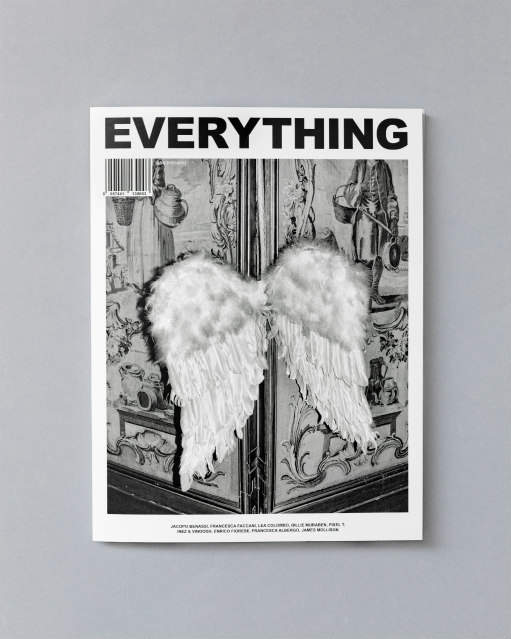
There is a proper publishing company called Everything Publishing which serves as a publisher and also produces and manages communications for each of the group’s companies, from newsletters to shooting content, creating campaigns, PR, press, and so on. And the non plus ultra of the communication of the universe is the magazine called EVERYTHING.
You are the founder of EVERYTHING magazine. What kind of magazine is it?
EVERYTHING reflects the creative and cultural environment where it was born; it narrates the fascinating universe surrounding Laguna~B and the other companies of the group—and the ideas, encounters, and stories it generates. This year the focus is the palazzo, the family. All the people who contributed to the magazine are friends or people I’ve met. In the first issue there’s a feature by Jacopo Benassi, an established photographer who documents the hardcore punk scene. We asked him to photograph the palazzo, offering a more authentic, every-day life perspective of a place that’s been represented countless times in glossy magazines, with super clean and perfect pictures. EVERYTHING is a collaborative endeavour: even though I’ve initiated it.
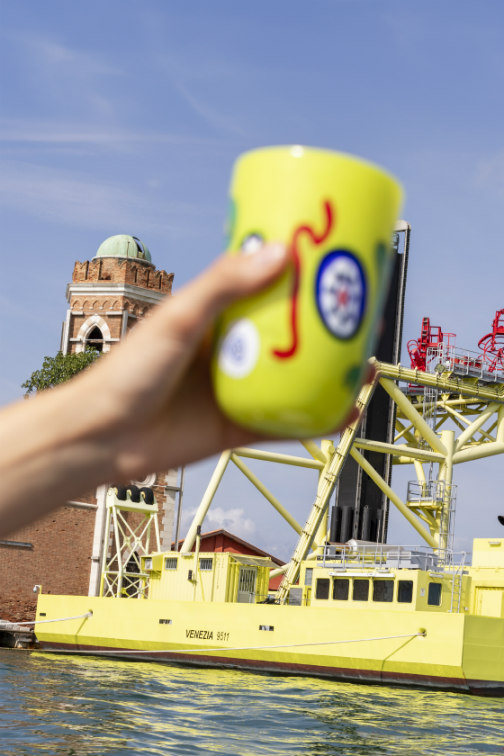
Laguna~B © Alessandro Trevisan
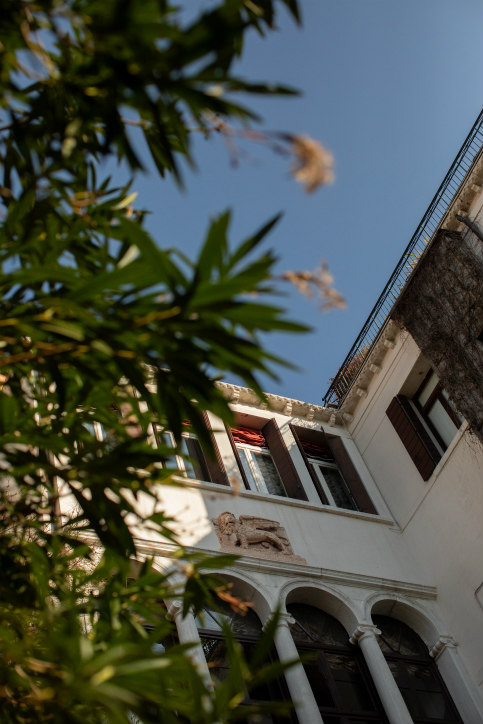
Palazzo Brandolini © Alessandro Trevisan
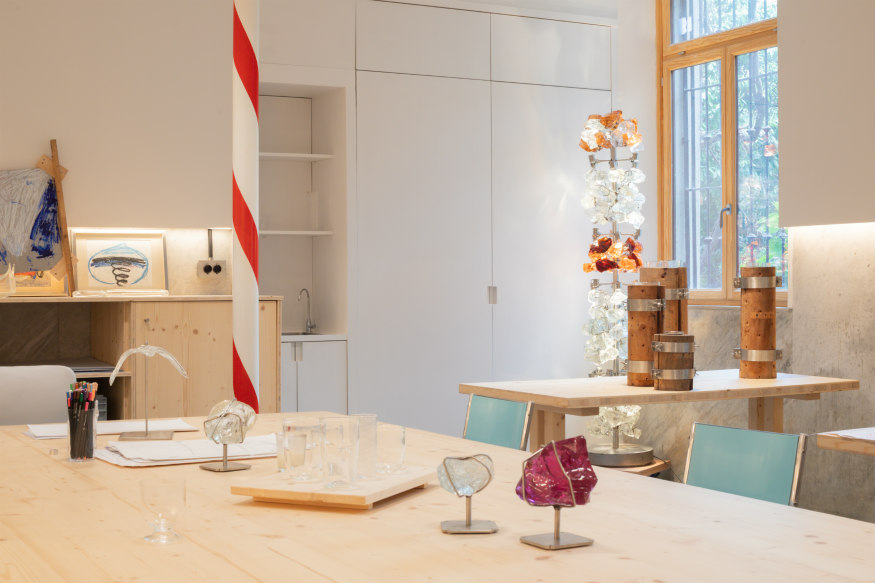
Marcantonio’s studio © Alessandro Trevisan
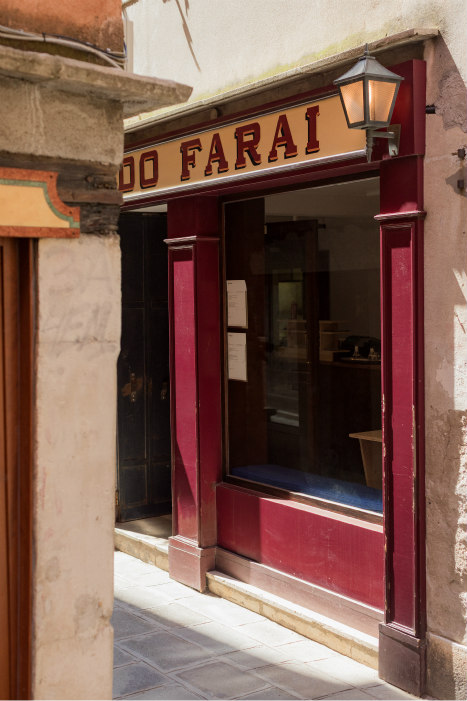
Do Farai restaurant © Alessandro Trevisan
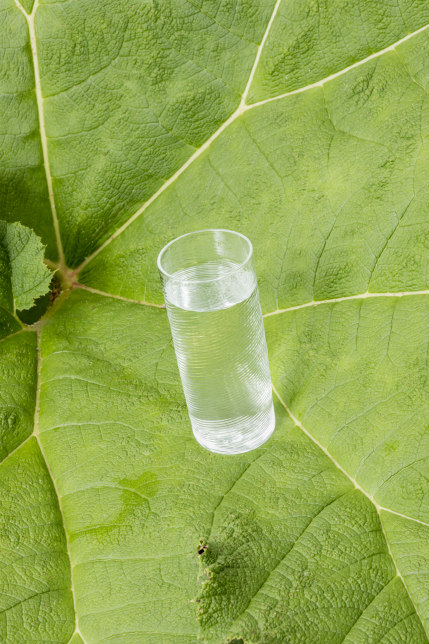
Laguna~B © Alessandro Trevisan
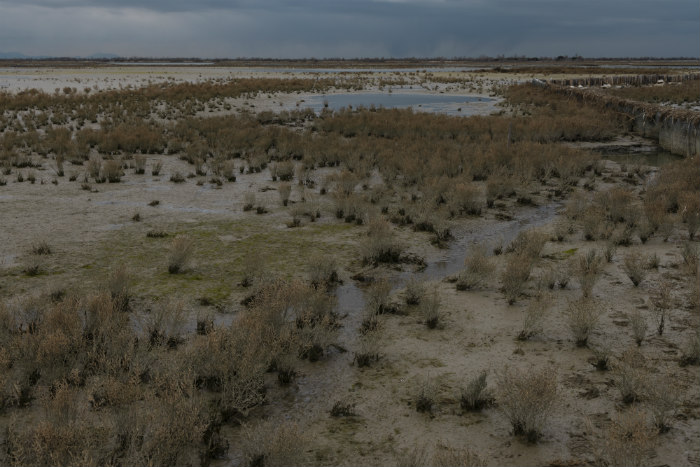
The Vital salt marsh regeneration project © Federico Vespignani
“I’m an artist, and the relationship between artist and entrepreneur is always complicated.”
Marcantonio Brandolini d’Adda, you belong to the Brandolini family, a very old Venetian family that owns a big palazzo on the Grand Canal where several members of your family live. Unless you take your topa, a typical little boat that Venetians use to move from one place to the other in the lagoon, everything is in walking distance and you just walk from one place to the other?
The palazzo is a live-work space. In the old days; the palazzi were built for being a place to do business. Of course you had the family living in it, but the showrooms and the offices were all in the same building. My dream for the future of the palazzo is for it to be a proper place of commerce, of culture, of excellency, and so on. If I stay in the palazzo for a single day I do seven kilometres, because I’m walking up and down and from one office to the studio and so on and so forth, and so I’m always in a run. It’s not lazy physically!
You took the Palazzo Brandolini back to its origin, so today it’s not just a pompous house, it’s a private place where there’s a lot of action?
Yes. It’s a sunny day and outside now there are five colleagues working in the garden with their computers. We all had lunch here in one of the offices where we have a small kitchen. It’s a fun place.
Even in New York many artists live and work in their studios and they all eat together. Do you cook?
Yes, a lot. For my speciality, I do spaghetti with bottarga and anchovies, but I do it with three types of pomodori, all of which I first peel and then remove the seeds. It takes a long time to do, but it’s pure meditation. Then I press them – I remove the juice and at a certain point I jump a little in the pan with the tomatoes and the garlic; then I add a little bit of anchovies and of salt.
Do you cook this in your restaurant or just at home?
The first thing I did when I took over the restaurant—together with Guillaume Pinaut, Do Farai’s manager— was going to the kitchen and cooking for everybody. Guillaume and I cooked a huge plate of spaghetti for the team. That’s the way we celebrated the acquisition of this new venue.
In other words, you are breaking the mold of your inheritance?
The idea most people have about craftsmanship and aristocracy in Italy, about wine and about all these things, is so nostalgic. For me the worst word ever is nostalgia, but I grew up in a nostalgic environment, per se, so I have to do the opposite. When I started working at Laguna~B, thinking that the field I was getting into was so rooted in the past made me anxious. The idea of this universe (or group of companies) is to turn these things normally associated with nostalgia – like family, aristocracy, whatever we grew up in – more contemporary, accessible, and fun.
Is Laguna~B glassware contemporary, elegant and expensive?
The designs were conceived to be contemporary back in the 1990s, and they still are, not just in their design but also in the way they are communicated. They are definitely expensive. I would not define them as elegant, they are playful. They are culture, even though that’s a big word to say, but there is a lot of culture behind those glasses.
Are you still involved with Vital, the project working to preserve the Venetian lagoon?
Yes, definitely. Vital is not part of the group, but it’s an incredibly important project that we began in 2020 and have been carrying out since. The project involves biologists and researchers to restore the lagoon’s endangered salt marshes and their ability to stock CO2, with the goal to offset our emissions locally and offer a blueprint for other companies to do the same. I’m really happy to say that today it’s a successful project, well financed by other partners. The pilot projects are completed and are working really well.
Refusing nostalgia, pleased with what you are now doing, Marcantonio today do you feel accomplished in what you do?
Yes, I feel accomplished, I feel like everything is possible. It sounds so cheesy and like a motivational speech from YouTube, but it’s true. I mean it. This gives me so much enthusiasm.
As a leader of others, perhaps you manage things in a less formal way than was historically the case?
Definitely. I think though that there’s a lot of improvement I should make. Sometimes being too enthusiastic can influence your team and make them feel like there’s nothing to improve. But it’s never the case. Sometimes I feel that the amount of energy and enthusiasm that I have in this specific period of my life can be mistaken for a superficial approach. But I’m an artist, and the relationship between artist and entrepreneur is always complicated. I’m two persons in one, so the conflict is between the impulsivity of an artist and the pragmatism of an entrepreneur. Just to have fun with my colleagues, I drew a self-portrait of where I’m separated in two; one side has long hair, and the other has short hair. One man wears a tie with a suit, the other a tee with short sleeves.
Over the years, will you try to harmonise the artist and the entrepreneur in an equal balance?
Exactly. Because maybe I’m one week an artist, and then one week I’m an entrepreneur, and so I have to have a perfect balance. This will take time but I’m sure that I will achieve it.
Marcantonio Brandolini d’Adda thank you very much for this fun conversation.
Portrait of Marcantonio Brandolini d’Adda © Alessandro Trevisan
All images Courtesy of Laguna~B
ENJOY THIS INTERVIEW? SHARE IT WIT A FRIEND


