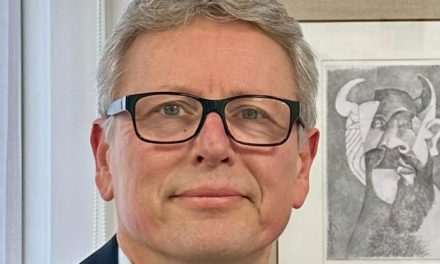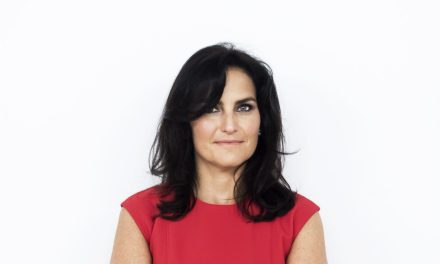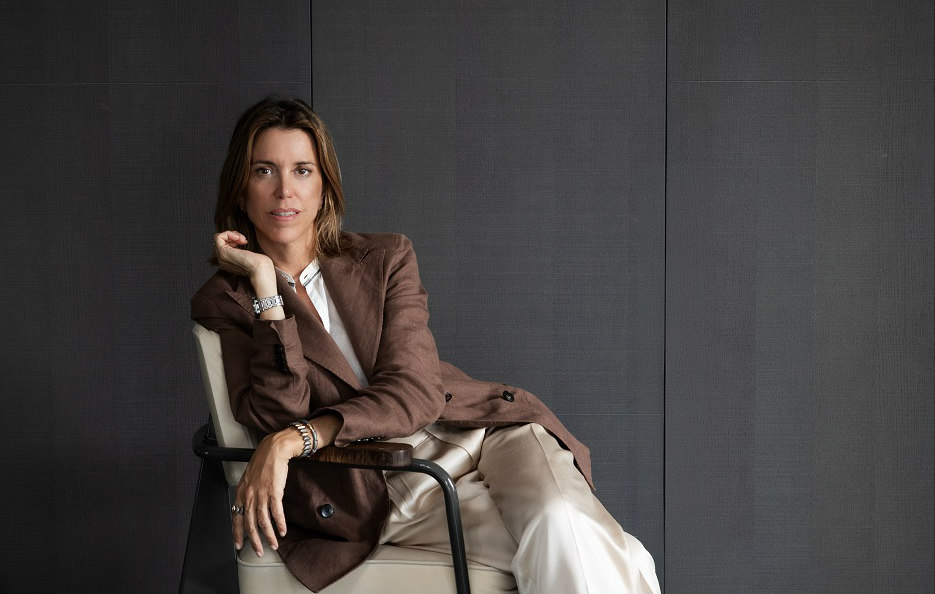
COMBINING ARCHITECTURE AND INTERIOR DESIGN. Nathalie Droulers and her twin sister Virginie were born in Milan in 1973. Nathalie graduated in Architecture from the Polytechnic University in Milan in 1997. She worked in New York as a Creative Director in product design development and in 2000 returned to Italy, where she collaborated with the Milan-based Dstudio as a Project Manager. In 2005 she founded Nathalie Droulers Studio, developing residential and commercial projects internationally. Her sister Virginie graduated in Graphic Design from Parsons School of Design in New York in 1999. She worked in New York from 1997 to 2000, and when she returned to Italy she founded Kv Design, a graphic and packaging firm. In 2007, Nathalie and Virginie founded Droulers Architecture together, with the aim of creating an international studio developing residential, commercial and leisure projects, now also specialised in architecture and interior design for luxury yachts. Droulers collaborates with a team of specialised and skilled professionals in a concerted effort to achieve these ambitious goals.
24 minutes read time.
You can listen to the podcast of this interview here.
Nathalie Droulers, with the family name Droulers, are you French by origin?
Yes, we are French. Our family name is Flemish, but we always lived in Paris. My grandfather bought Villa d’Este on Lake Como, but died at a very young age. My father, who was studying at university in France, then decided to move to Italy to take over the Villa.
Since your father ran and owned the very famous hotel Villa d’Este were you born on the shores of Lake Como?
No, we were born in Milano, but we lived and grew up on the shores of Lake Como for most of our lives until our twenties. Lake Como then was absolutely nothing like it is today. It was a very quiet, poor lake and not glamorous. Thanks to our father’s hard work, Lake Como has become so popular and glittering. There’s a bit too much tourism now, but it’s still beautiful. It’s a bit too busy; you have to remember that there is no infrastructure; the streets are tiny, and nothing has changed. They are building hotels everywhere, so you end up stuck in traffic, which is dangerous, but if you travel by boat you can do whatever you want.
“Naturally and luckily, we gradually moved into our respective roles.”
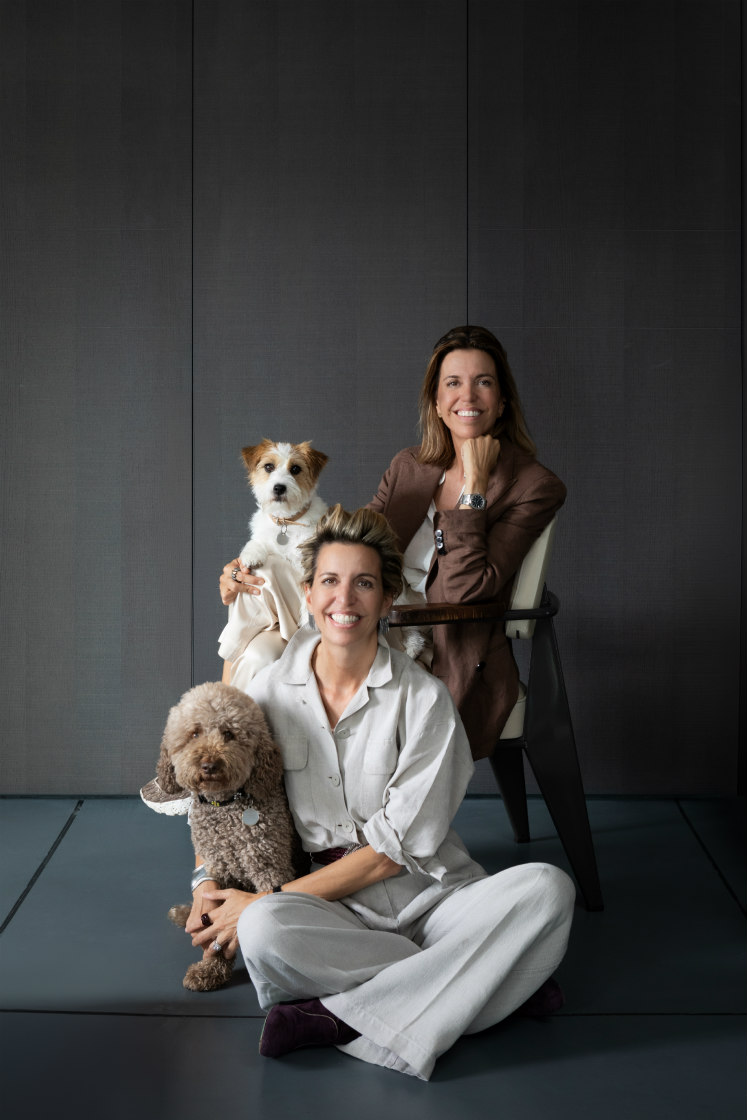
Nathalie and Virginie Droulers with their beloved pets
Nathalie Droulers, did the influence of architects such as Carlo Scarpa, Giuseppe Terragni and Pietro Lingeri who worked in the area encourage you towards architecture?
Of course! We grew up in an old house surrounded by beauty, but we found the contemporary buildings in our town really fascinating. We went to school in our little Cinquecento with the gardener and would always run alongside these buildings. They are attractive buildings that have aged very well. They’re timeless, and a real landmark in our old city. So, yes.
And recently you created luxury apartments in Miralago on Lake Como?
Yes, we did work for Villa d’Este because they called us back. We used to work there when our father was in charge, but when he sold the hotel to the Fontana family they decided to move in a different direction. Two years ago, however, they realised that they didn’t want to change the essence of the villa or the experience that guests enjoy when they visit, so they decided to call us back, because we know the villa very well. We have designed a new suite in Cernobbio which will open in May.
Did you decide to be an architect because you are interested in the structural part of the building?
I was born to do this job, because I can’t remember a time when I decided to do it. I always knew that I wanted to be an architect. When I started working, the technical side was the toughest part of my job and I paid a lot of attention to detail. I have stayed more involved in this aspect of the job because it always came more naturally to me than to Virginie.
Your twin sister Virginie went in the direction of graphic design and curating the interiors of apartments or houses. Why didn’t Virginie also become an architect?
Virginie was the complete opposite to me, always confused with no idea what to do. I knew what I wanted at the age of three; she still didn’t know at the age of 25. We are black and white. In her 20s, while I was striving to become the world’s first architect, she was in Paris studying Greek and Latin, but wasn’t very good at it so decided that Parsons would probably be a good choice for her. She did the foundation course and the first year, and then decided to study graphic design, which she really enjoyed. After graduating, she decided to work in graphic design for two years in New York, and loved it. Americans really admire graphic design and give it a lot of importance, but when she moved back to Italy, she realised that nobody really cares about graphic design. I had just opened my own studio and said to her one day, ‘Why don’t you come and work with me? Graphic design is not so far from interior design, and I think we could support each other.’
How does it work between the two of you?
Since we are both strong-willed, the first ten years were a constant battle. We couldn’t figure out how to make the two of us work together without things getting messy and causing conflict, so the first years were very, very hard. Then, little by little, we started to understand that I was better suited to the technical side of this type of job while Virginie was more into fabric decoration. So, naturally and luckily, we gradually moved into our respective roles. Now we really have two different roles in the office. If Virginie says something about the fabric, I go with it even if I’m not always 100% convinced, because the other thing is that she’s very rich and I am becoming increasingly minimalist. Our tastes are also the opposite, so, when we work, it’s a balance of two styles: I’m minimal and essential — less is more! Virginie is more is more!
You have worked on many different places, ranging from Le Café Louis Vuitton in Seoul, Korea, to the penthouse in Andermatt in Switzerland, a penthouse in London, a country place in Italy, a residence in Saint-Tropez. Is there a fil rouge to your work?
It’s the client’s job to try and find common ground with us. They know what they want and help us. If they opt for a more decorative approach, Virginie plays a bigger role in the project and she manages those projects. If the project is more contemporary, focusing on details and the architectural side, then I take care of it. We really try to divide things up. A common thread is that our architecture is quite clean, and when we talk about the core, it’s really about fabrics and fine furniture. You could say that we incorporate into our architecture our rationalist influences from Como and our French sense of decoration. At Virginie’s house, for example, I suggested an L-shaped sofa for the living room and a bathroom with a separate shower and sink with a structured bronze design. Those are my contributions, and then Virginie added all her decorations and sense of opulence.
How come you have so many international clients?
It was a lucky coincidence. When I first moved back from New York, I started working with my mother, who already had an architectural firm. My mother didn’t speak English very well, and Maria Pia Bassani had a friend in London who was looking for an architect, and introduced her to my mother who was not happy to take on the project because she did not feel comfortable going to London. So she gave it to me, and when we split up the studio because we wanted to go in different directions I kept the international clients. Through word of mouth we have been working in London for about 20 years, many more years than in Italy. Then, little by little, word spread to Italy too, and we started working there as well.
.
“One of our most important qualities is our ability to listen to what our clients want.”
Nathalie Droulers, nowadays, Milano is becoming an important international city and many people from abroad to live here?
Yes, in fact many of our clients have moved from London to Milan and are now asking us to work on new projects with them. We adapt to our clients’ changing needs and the great thing is that our clients keep coming back, and they don’t just come back for one project; they come back for different projects. We really build a nice relationship with our clients, and doing lots of projects for them is easy for them and us. It’s really pleasant. We follow their lead and, luckily, the flow is now coming to Milano. And Rome, I might add, because we’re also doing lots of projects in Rome – actually we’re working all over Italy.
You don’t just do apartments and cafes, you also made interiors of boats. Did you do aeroplanes too?
Aeroplanes? No, not yet! But we have had the privilege of designing the interiors of several important boats: an icebreaker, a Wally sailing yacht, and two luxury yachts, Yalla and Olivia O.
Many of your clients collect artworks by major artists. Is your ability to combine fabrics and furniture with such special artworks very important for them?
Yes, one of our most important qualities is our ability to listen to what our clients want. Nowadays, there are many amazing architects with great skills, but sometimes their ego is stronger than the desires of the client. Virginie and I have always done things the old-fashioned way: we really listen to what our clients need and want, and how they would like their house, apartment or boat to look. This makes us special. We also take our work very seriously.
Do you do a lot of research in order to find new designers or works of art or materials?
It’s such a big part of who we are that we do it all the time. For example, we worked in New York for many years and when we first started working there we spent eight months searching for the best US vendors everywhere. From marble to metal, we searched for all types of craftsmanship and the best vendors in the United States. Then we started to compare them, because it’s not just a matter of quality, it’s a balance between quality and price, because unfortunately people don’t just close their eyes today. It’s an endless search, in Paris, France, Italy and everywhere else. We decide on the vendors and the quality, and we also consult with the client depending on the budget, because that’s another important factor. It depends on how much the client is willing to spend. When we recently finished a beautiful penthouse at the Peninsula Hotel in London, we searched for the best in the world and used the best vendors ever, from Paris, to America to the UK, and it was fantastic.
You must have a great organisation and excellent people who work for you. How does it work?
A client arrives at the office. We have a meeting with Virginie. Then, in the first stage, we work together. With four hands on the table, we set up and structure the basis of the project: the mood, the concept and the renderings. Once this phase is complete and the client is happy, one of us takes the project on. Then there are project managers who have junior designers. We are very structured.
How do you divide things up between you?
We specialise, and I focus more on UK jobs because I am more familiar with the regulations. I work more in London because I have worked there for many years and know the workers and the regulations, whereas Virginie knows Italy better. On top of this, there is a structure of project managers because we handle so many projects, I think we have around 15. Interior design used to be an easier job, today we’re overwhelmed by documents: drawings and contracts, and sometimes unfortunately the process is more important than the result, especially in America and England. They focus the entire team so much on the process that sometimes they lose sight of what they are doing. We really fight to make the result as important as the process. To deal with big projects today, you need to have big shoulders and you have to be very well-informed.
Do you have big shoulders?
We do. We have strong characters.
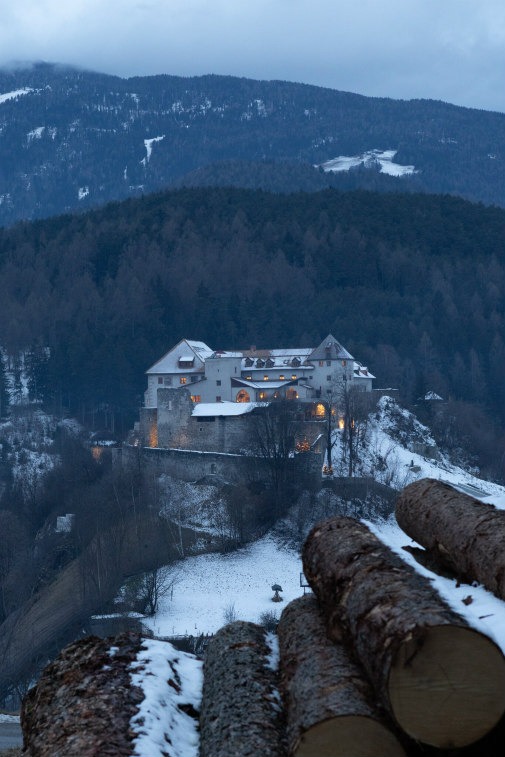
Castel Badia is in the heart of the Dolomites. The Droulers architecture and interior design studio project is the redevelopment of a hotel located within Castel Badia, a place that has crossed centuries while remaining a site of peace, hospitality, and wellbeing.
Photo by Monica Spezia
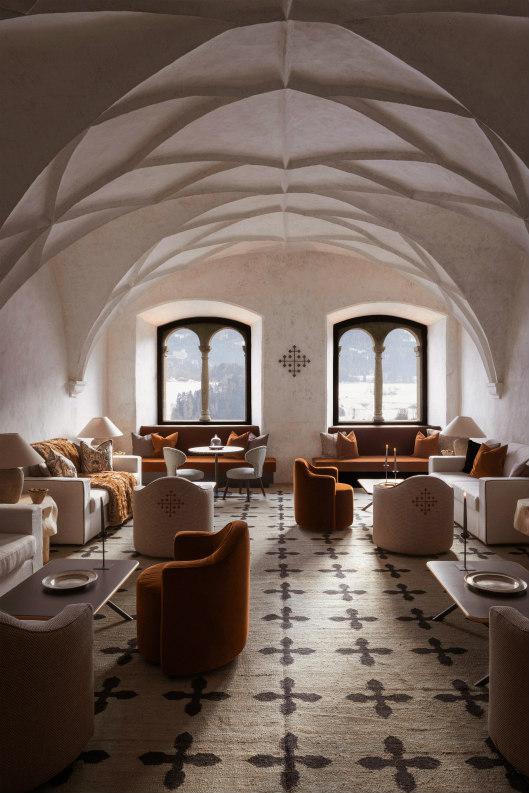
At Castel Badia the Droulers project is based on the idea of finding an aesthetic balance between the simplicity of forms and materials typical of monastic architecture.
Photo by Monica Spezia
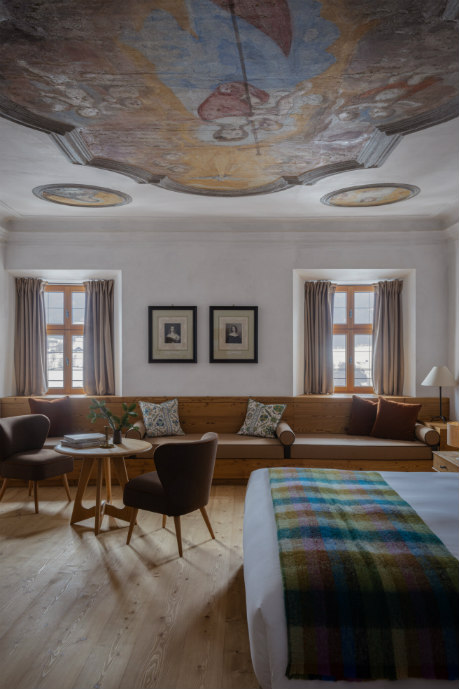
At Castel Badia the Droulers have created a luxury hotel in South Tyrol, introducing aesthetic choices that place contemporary details in a close dialogue with the historic elements.
Photo by Monica Spezia
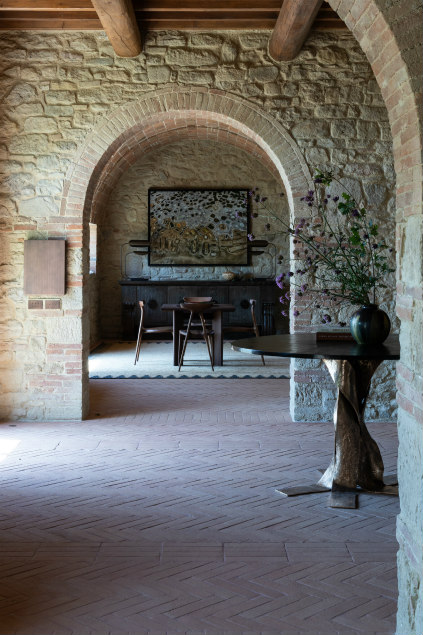
In the heart of the Tuscan hills, the Droulers architecture and interior design studio project is the renovation of an ancient farmhouse and aims to enhance the spaces through the use of local materials and colours, creating a harmonious connection with the surrounding nature.
Photo by Monica Spezia
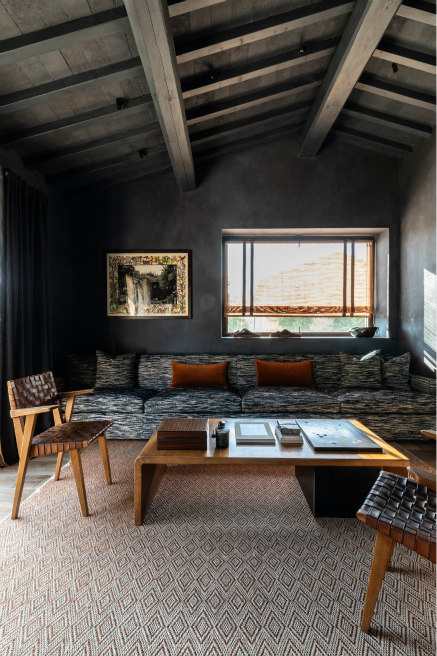
In the Tuscan villa, the furnishings, with a contemporary design, blend in perfectly, creating a warm and welcoming atmosphere that invites relaxation and serenity, making each space an ideal retreat for those wishing to escape the hustle and bustle of city life.
Photo by Monica Spezia
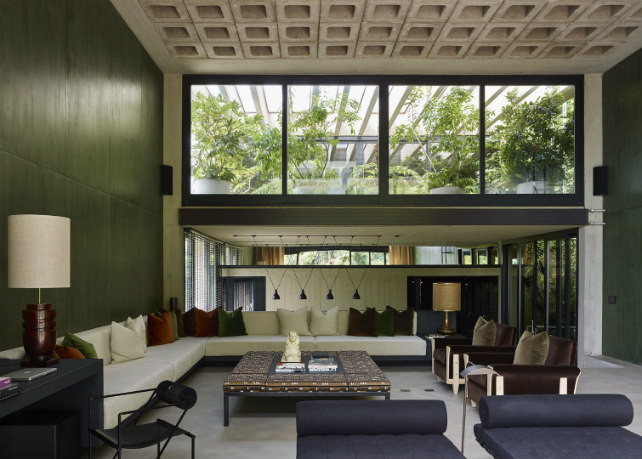
The villa in Lugano, designed in the 1960s by Mario Ciampi (known as Villa Roccia), is built on a rocky hillside and features concrete, glass, and other cold materials, with a strong integration between architecture, rock, and water.
After years of modifications that altered its original design, the Droulers Architecture studio carried out a conservative restoration, bringing back the original elements and removing later additions.
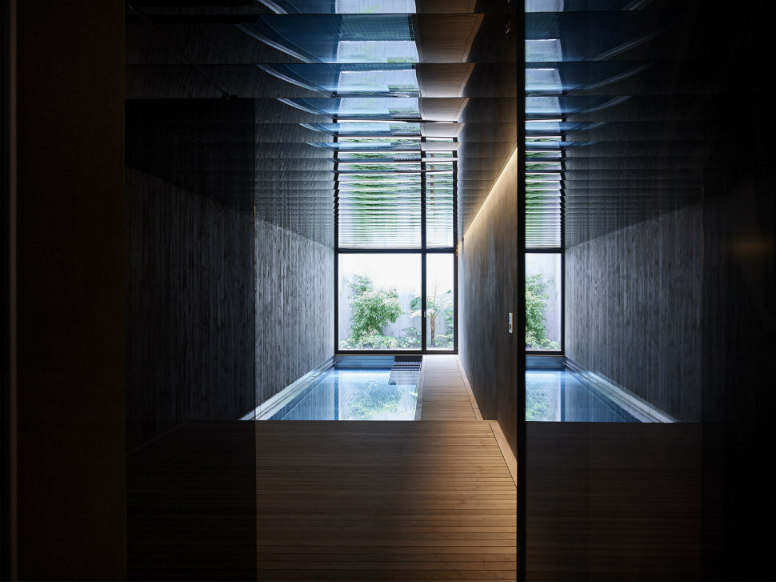
In Lugano the night area was also reorganized, and an indoor swimming pool was added. The interior design was completely rethought by the Droulers with custom-made furnishings, warmer materials such as wood and velvet, and an autumn-inspired colour palette to make the spaces more welcoming and livable.
“Getting the new generation on board is probably the biggest success we could achieve.”
Nathalie Droulers, what is the Droulers style?
We still don’t know what our style is, even today, after many years, so it’s difficult to answer. We would probably describe our work as modernist. It’s something in between: a clean cut of volume and space, with decoration that can be plainer or richer depending on the client. Details are important because they define the quality of our work. Then there’s the style, which for us is really fun. The Andermatt theme was to create a Japanese-style penthouse in the contemporary Chedi building in Andermatt, so we decided to give the project a Japanese theme. There is a common thread somewhere, but we’re not trying to make our work easily identifiable. We don’t care.
Does your feminine approach attract clients to you?
People recognise a kind of timeless architecture in our work. It’s modern, but not too contemporary; not too old either. The big collectors we have worked with liked our projects because they are very strong. Sometimes we use a lot of bronze, which is very effective in supporting important art, such as works by Bacon and other artists. It was impressive for us as well to see how well they live in our spaces. When we were younger, it was important for us to do a project where such important art could live well and maintain its strength. We design apartments, creating layouts, lighting and walls, so our job is really an architectural one first and foremost. We start from the beginning. It’s all about the proportions and spaces, and how they are cut. We are architects who combine interior design, and it’s very hard to find this combination. Often, you have great architects who have no idea how to design interiors, and vice versa. It’s difficult for clients to find someone who can bring these two worlds together.
As architects are you planning to make buildings?
No, they haven’t asked us about buildings yet. Exteriors are a whole other ball game, and there are more capable people for that. For example, for the hotels, we can choose the projects we want to work on. Castel Badia, an old monastery in the Tirol, was a contest, so they didn’t come straight to us saying, ‘We want you girls.’ They didn’t even know who we were. We submitted a project and won the long competition. There were 11 architects on this project, and we were very happy to win it, it’s so beautiful and full of charm. We won because of our commitment to cleanliness. What people recognise in our work is clean luxury. It’s not contemporary because people don’t recognise luxury in contemporary projects.
Do your clients also keep coming back because you are very efficient?
We are very American. We both worked in New York at the beginning of our careers, which shaped our approach to work. We work the American way.
Is there a lot of difference between American clients and people from other countries such as Korea, or Italy or Switzerland?
Yes, there is. We didn’t go to Seoul. We did everything via video call and rendering. Technology really helps today. Renderings are really helpful. When you’re designing a yacht you can’t see the finished product until the end, so we have learned to use technology to help us with projects. We can work on projects remotely without having to visit frequently. Sometimes because it’s not easy to work on a project where you can’t see the light or the energy of the place. Yachts are very difficult to design because they are soulless because they’re just boxes. The first yacht was very difficult because it was hard to capture its essence, its personality. Where to draw inspiration from? Not from the light, not from the space, not from the land — not from any of these things. That was a challenge but it was a great exercise, and we worked on the Seoul project through renderings and video calls. Seoul has a very strong concept, and especially in public spaces you need to give people a strong concept of the space.
Why didn’t you go to Seoul just to have a look?
We didn’t have time. Firstly, the Louis Vuitton team we were working with were extremely efficient. That was a big help, obviously, and the way we worked with them was very smooth. At one point, we were supposed to go, but we realised it wasn’t necessary so we agreed with the Louis Vuitton team that we could continue as planned. In Seoul they did everything in 10 days. It will certainly be interesting to go, though, because when the Louis Vuitton people called us, they showed us a white box on the top floor of the Frank Gehry building and said, ‘Listen, we have this space. It’s not working. There’s something we don’t like about it.’ Then, Virginie and I did a big brainstorm and decided to build a tent. Our bar restaurant is a tent made of books. We completely changed the structure and built a new one inside the box and put lots of books in it because Louis Vuitton wanted books. The cocoon wasn’t an easy task because it’s not made of wood. Regulations in Asia are very strict, so it’s an aluminium structure covered with material.
What new projects are you starting or about to start?
We have many. We have public ones and residential ones, so we have a mix of both. A few years ago, we decided to focus more on public spaces, so there are more hotel projects because our private clients don’t want us to publish them. We understand their reasoning, of course: they are important people and big collectors, and they are not happy for their pictures or apartments to be shown anywhere, which was at a certain point very difficult for us. It’s not that we need to show what we’re doing, but we think it’s important that people realise what we’re doing and how we’re moving forward. Without permission to show the projects we were working on to the public, it was very hard to demonstrate what we were doing, so we decided to become more public-facing.
Public-facing means that you want to do a museum or a school?
More restaurants and hotels, spaces open to the public. Louis Vuitton is doing all the retail shops for Zegna and we are rethinking all of Zegna’s retail spaces, starting with the apartments which are for their top clients. Zegna’s approach to clothes and their philosophy has changed tremendously over the past five years. It’s fascinating to see what they have in mind, and we are working with them on the new retail spaces, which will be unlike anything else we have seen before. It’s a big challenge, but also an opportunity for us to showcase our work. We are also doing another hotel for Villa d’Este, as well as another restaurant. Then there are really big private residential projects in Sardinia. Then there are more standard apartments. There is a constant flow of interesting projects.
Are quality, word of mouth, talent and hard work the keys to your success?
Yes, it’s hard work, but it’s very nice when clients — not just one client, but also the younger generations — come back to us. Now, their sons and daughters are also coming to us, asking us to work on their projects. It’s great because some of our clients have become like family. We grew up with them. They taught us how to budget, how to take numbers and delivery seriously. It’s a real partnership that we’ve built together alongside our clients, and it’s great that they keep coming back. Getting the new generation on board is probably the biggest success we could achieve.
Do you also take good care not to be too expensive?
Yes, we absolutely do. Some clients don’t want to spend a lot of money, or they can’t, but they still want nice things. If the client is nice, we are happy to help. For us, it’s another challenge. Hotels certainly don’t spend that much money, and sometimes it’s hard to combine things, and sometimes it’s very difficult to make a product look luxurious without spending a lot. It is a difficult combination to achieve, and you need to strike a balance. Some projects turn out well, others don’t, but as long as the client is happy, it’s their place. Obviously, we are happy when a project turns out the way we want, but most of the time we go back to projects we have done after a year and want to die because they probably haven’t kept it the way we would like, or they have added 200 million objects we don’t like. But it is their place. Our job ends when we deliver a quality project, after which the client takes ownership and makes it their own.
Nathalie Droulers, thank you very much for this conversation.
ENJOY THIS INTERVIEW? SHARE IT WITH A FRIEND.