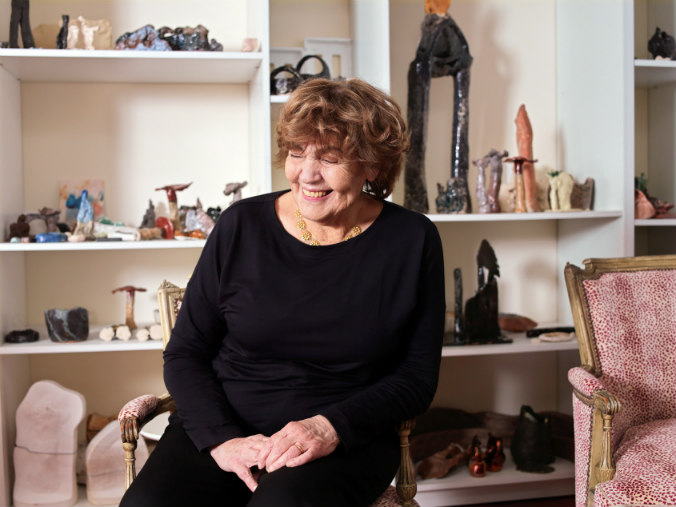
MANIFESTATIONS OF THE VOYAGE. Simone Fattal is a Lebanese-American artist. Born in 1942 in Damascus, she was educated in Beirut and Paris, studying philosophy at the École des Lettres and the Sorbonne, as well as archaeology at the École du Louvre. Simone Fattal and Etel Adnan (1925–2021) were life partners for 49 years, artists who shared a profound creative, political, and personal connection. Their multidisciplinary work spans painting, sculpture, poetry, and publishing.
24 minutes read time.
You can listen to the podcast of this interview here.
Simone Fattal, you made exhibitions in the Museum of Modern Art in NewYork,PS1, the Bregenz Museum in Norway, The YSL Museum in Marrakech, the IVAM museum in Valencia and the 18th Istanbul Biennial. You were twice at the Venice Biennale, in 2022 and in 2024 with an exhibition in the Giudecca Women’s Prison of enameled lava plaques turned into the canvas on which poetry was written?
Yes, I was asked by the Curator Chiara Parisi to do wall sculptures for the inside “calle” running along the garden of the prison. That prison had a garden and a Church, as it was formerly a convent. She said to make some sculptures to be hung on the wall, and I said it’s absolutely too late – we are in November and you want them for April, but if you want I can write poetry on lava stones. She said fine, but then thinking more about it I said, no, we have to ask the women prisoners to write the poems. Which they did, and I transcribed them on the surfaces of the lava.
This exhibition was an idea of Cardinal Tolentino de Mendonça, Minister of Culture of the Vatican, and was also approved by Pope Francis?
It was a wonderful idea, and we met the Pope when he came to visit the prison. He landed by helicopter in the prison courtyard, and talked with the prisoners for at least an hour. They all kissed him, and then he came to the old church to meet everybody else, the officials and artists. What struck me was his sweet voice. He speaks with tenderness. And his gentilesse; he was a kind man.
Were you very touched?
Very. We all shook hands with him, and he gave us each a rosary.
“We have to ask the women prisoners to write the poems. Which they did, and I transcribed them on the surfaces of the lava.”
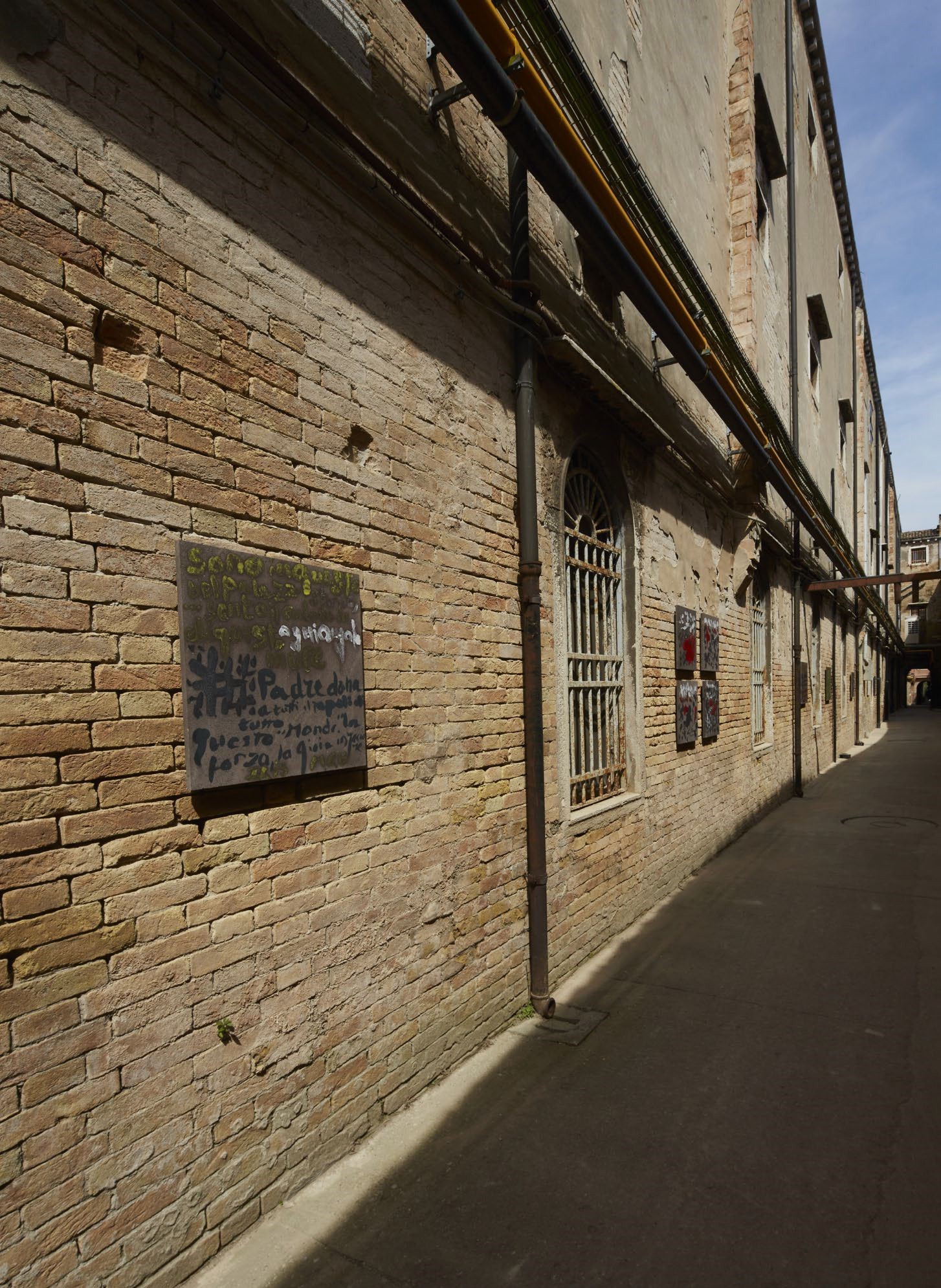
Simone Fattal: With My Eyes, 2024
installation view, Holy See Pavilion, Casa di Reclusione Femminile Venezia Giudecca – S. Eufemia, Venice Biennale
Simone Fattal, you were born in Damascus, raised in Lebanon, studied in Beirut and Paris, and then with your friend Etel Adnan went to live in Sausalito, California. Why did you become the publisher of the Post-Apollo Press there?
When I arrived in San Francisco in 1980 there was the trauma of leaving my studio in Beirut, and boxing all the works of ten years. I had returned to Beirut in ‘68, and started painting soon after. I knew I was never going to be a philosopher, teacher, or academic, so for ten years I only painted and when I left it was absolutely traumatic. After a year, I decided to publish a friend who’s a writer, really because of meeting with small presses and people working in San Francisco. I wouldn’t have done it anywhere else. There was a huge, splendid community of writers in Berkeley and San Francisco, and that scene was much more interesting than the art scene.
Why did you leave Lebanon?
The civil war started in ‘75, and for five years we were not rushed to leave. I was going back and forth from Paris and when the war was not too terrible I would return to this splendid atelier that I had in Beirut and work. I did a whole body of work until 1980. When I moved to California I didn’t really want to paint, it felt like writing and finishing an old chapter. My work also led to this idea of publishing.
Why did you decide to return to painting when later you came back to Paris?
Because in Paris I found a superb box of Belgian watercolours, which triggered in me such joy that I did a big series of watercolour paintings. Since then I paint, sculpt, and do many collages.
Besides your galleries, your work was exposed in many museums, including a big exhibition at the Louvre Department of Near-Eastern Antiquities in 2024/5. How was it to expose your work amidst these antiquities?
I was overjoyed and surprised when both Donatien Grau and Laurence des Cars were convinced that my work could be exhibited in those rooms. Many of my works actually go very well with the oriental antiquities, and to have someone recognise that was huge. Some of my works were so similar to what was there, but I never copied. They were all in my mind. It’s like an art that unconsciously inhabits me.
What did you show at MoMA in New York in 2019?
The curator Ruba Katrib exhibited 260 pieces from every period. The sculptures are all in the same vein – talking about gods, goddesses, and heroes of epics, so it’s a continuous theme – but she also had older collages, watercolours, and drawings alongside new ones, making a huge show.
Is your work different when in Lebanon then when in France?
In Lebanon I made many paintings about Mount Sannine, which I saw from my window. I was very interested in this mountain becoming pink before sunset, and horribly white after sunset. This is not only a colour change, it’s a change of presence. It’s sad after sunset, whereas it’s glorious during the day. I was very much interested in landscapes, whereas the sculpture became about people – heroes, warriors – which never existed in my paintings.
Where do you work now?
I have a studio near where I live. I also work with a ceramicist in the South of France, as it is impossible in Paris to have huge kilns, gas kilns and wood kilns. First I worked in Grasse with Hans Spinner. Now I work with Michel Muraour in Fox-Amphou, a wonderful, beautiful village.
“My inspiration doesn’t come from artists. When I’m working, poetic verses come to my mind.”
Simone Fattal, born in Damascus, were you much influenced and inspired by Islam?
Of course. For instance, when I go to the Louvre’s Islamic wing, it’s so familiar. Those shapes and objects are still made the same way. At home I was surrounded with this, alongside my father’s collection of carpets, which spanned the walls, sofas and floors and was the only art I saw at home.
Was your father a carpet dealer?
No, he was a collector. He had a company of import and distribution. He adored carpets. He was obsessed. I, too, like carpets very much. I have much more the desire to buy a carpet than a painting.
Which are your new exhibitions?
I have two exhibitions in New York in January, one at Greene Naftali, and the second gallery is Kaufmann Repetto. I will anchor the exhibitions around a big bronze piece. In the first gallery, there will be a big bronze piece called “Tree of Life”, surrounded by many drawings of trees and a few ceramic pieces. In the second gallery will be a walker, a man, with many collages of the sea. It’s a very hopeful exhibit, talking of trees, sea, and flowers.
You are very eclectic in your work, ranging from heroes to flowers to mountains to collages?
Yes, I follow my caprices. Recently I was asked by Jean de Loisy, the artistic director of the Van Gogh Foundation in Arles, to make a series of flowers to accompany a painting of Van Gogh. All my watercolours with the Van Gogh piece. That’s a supreme achievement! (laughs)
Did you know the Van Gogh painting before you did yours?
No, I saw it when it arrived from Amsterdam, an extraordinary moment. Everybody was there in the museum while they opened the box ,and then the two accompagnateurs examined the painting, taking pictures. It’s a small sunflower thrown on the floor, very tired, very dark. I made colourful and happy watercolours of roses, but some others were like the thorny hedges you meet when walking in the country, which went very well with the painting. The Van Gogh Foundation has been putting contemporary work next to his for six or seven years.
In 2018, what did you do for the contemporary art section of the Yves Saint Laurent Museum in Marrakesh?
I think it’s really one of my most beautiful exhibitions, because I did a series of angels on the wall diagonally, as if they were passing by with the wind blowing them around, and they were wearing skirts – a bit like the Sumerian statues. In the middle of the room, I did two people – showing the moment when two people meet. This moment in everybody’s life is the most important. When you ask anybody how they met the person they love, they will tell you exactly the day, the colour of the sky, in that fixed moment. Surrounding this is this movement of the angels, and then they asked Bob Wilson, a friend of ours, to read a poem by Etel Adnan.
You’re known and exhibited in so many places?
Now, yes. That exhibition was repeated in Venice the year after, at the Pinault Collection at Punta della Dogana. There will be more, totally different exhibitions next year in museums. For the moment I want to do landscape paintings. I’m very interested in surfaces of mountains. I want to make them big to show the different layers of the earth’s surface, so I’m going to Brittany to take photographs. These mountains or cliffs will be very different from the mountains in Lebanon.
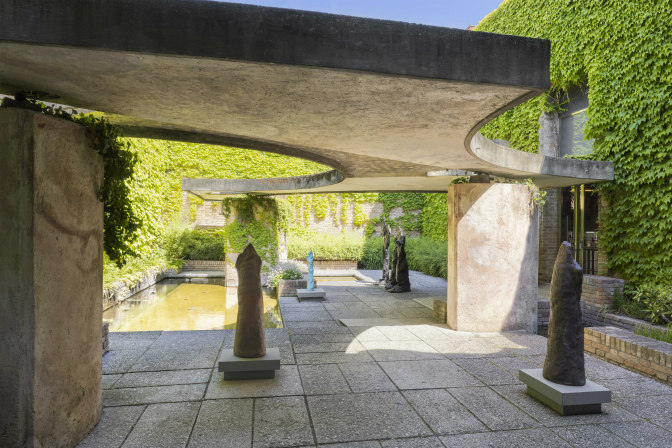
Simone Fattal, The Milk of Dreams – 59th International Art Exhibition – La Biennale di Venezia, 2022
Installation view, 59th International Art Exhibition – La Biennale di Venezia, Venice Courtesy of the artist, Archivio Storico della Biennale di Venezia-ASAC, and kaufmann repetto Milan / New York
Photo: Andrea Rossetti
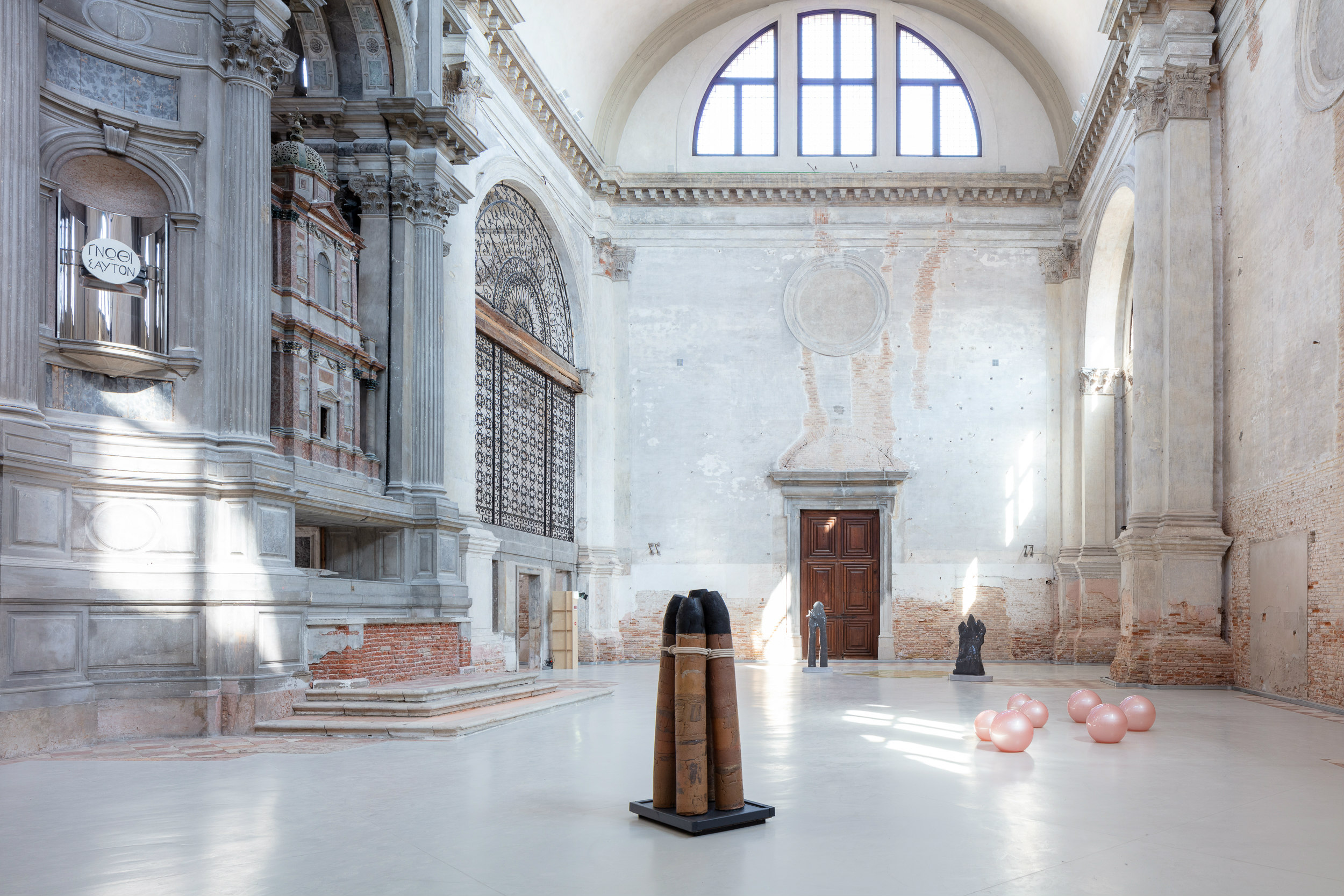
Simone Fattal, Sempre il mare, uomo libero, amerai!, 2023 Installation view, Ocean Space, Venice
Commissioned and produced by TBA21–Academy
Courtesy of the artist, Ocean Space, Venice and kaufmann repetto Milan / New York
Photo: gerdastudio
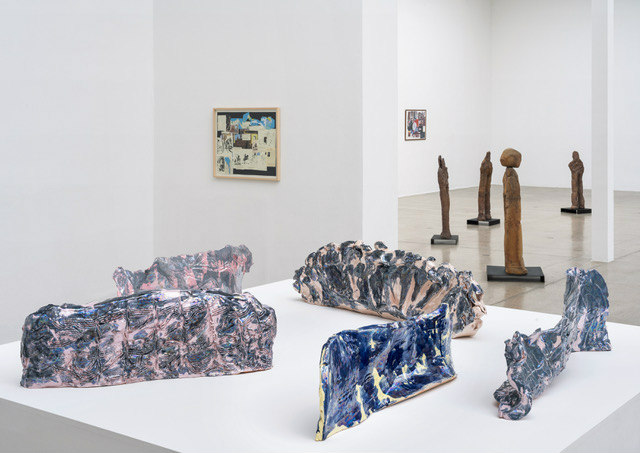
Simone Fattal, metaphorS, 2024 Installation view, Secession, Wien
Courtesy of the artist, Secession, Wien and kaufmann repetto Milan / New York Photo: Iris Ranzinger
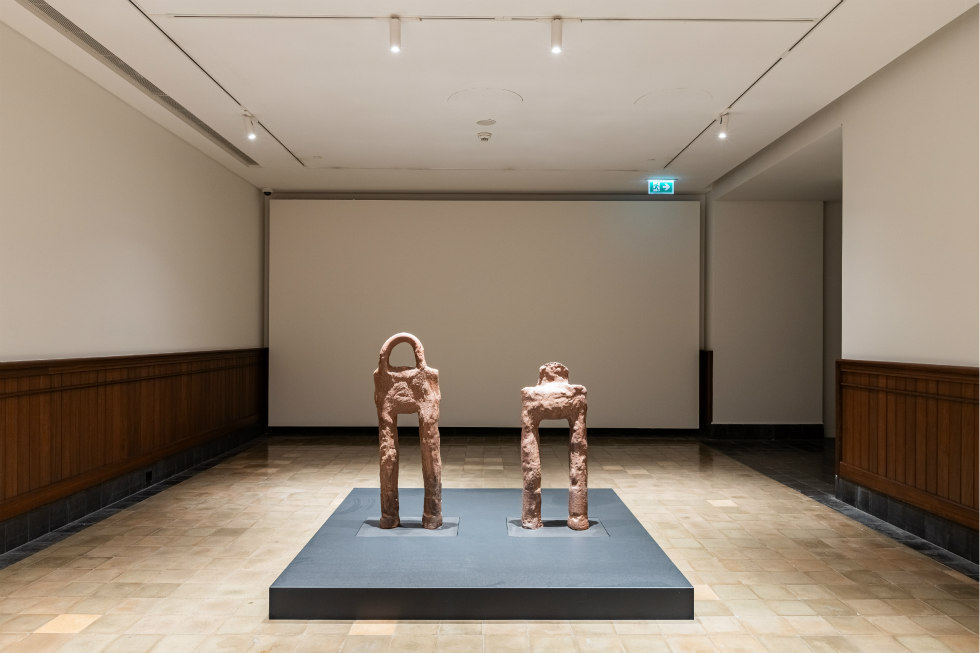
Simone Fattal, The Three-legged Cat – 18th Istanbul Biennial, 2025 Installation view, Instanbul Biennal, Instanbul
Courtesy of the artist, Instanbul Biennal, Instanbul and kaufmann repetto Milan / New York Photo: Sahir Ugur Eren
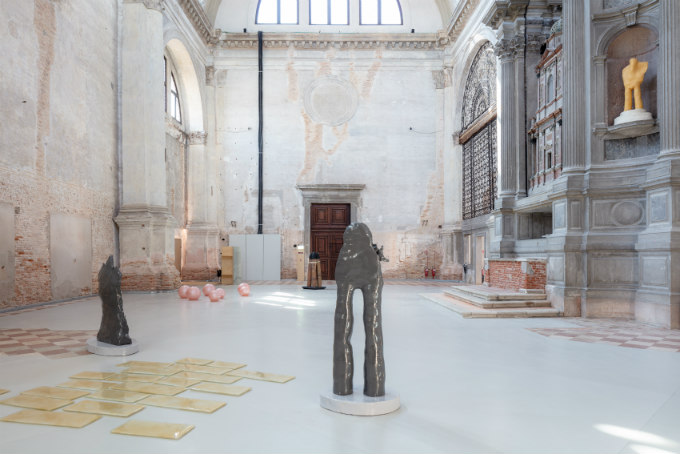
Simone Fattal, Sempre il mare, uomo libero, amerai!, 2023 Installation view, Ocean Space, Venice
Commissioned and produced by TBA21–Academy
Courtesy of the artist, Ocean Space, Venice and kaufmann repetto Milan / New York
Photo: gerdastudio
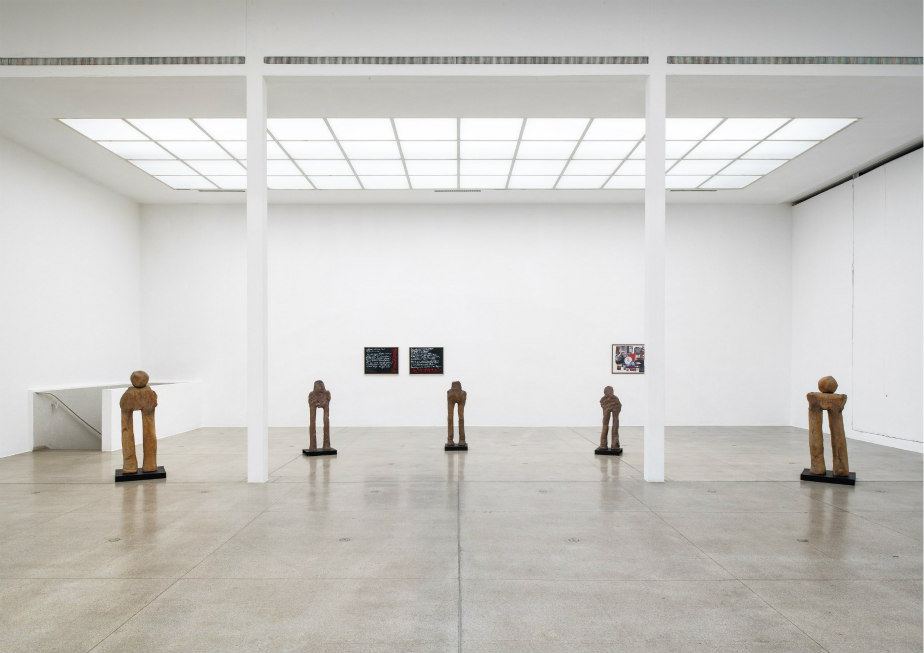
Simone Fattal, metaphorS, 2024 Installation view, Secession, Wien
Courtesy of the artist, Secession, Wien and kaufmann repetto Milan / New York Photo: Iris Ranzinger
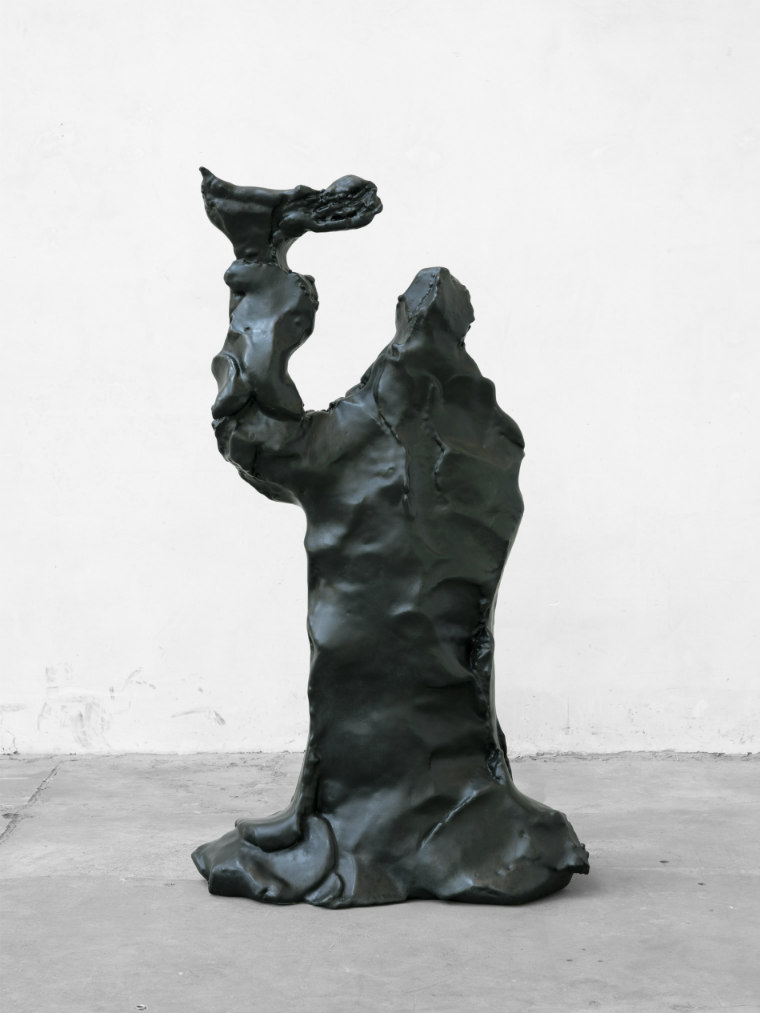
Simone Fattal: Victory holding a bird, 2023 bronze
140 x 78 x 34 cm / 55 x 31 x 13.5 in
Courtesy of the artist and Balice Hertling, Paris and Karma International Zurich and Greene Naftali New York and Hubert Winter Vienna and Karma International Zurich and kaufmann repetto Milan / New York
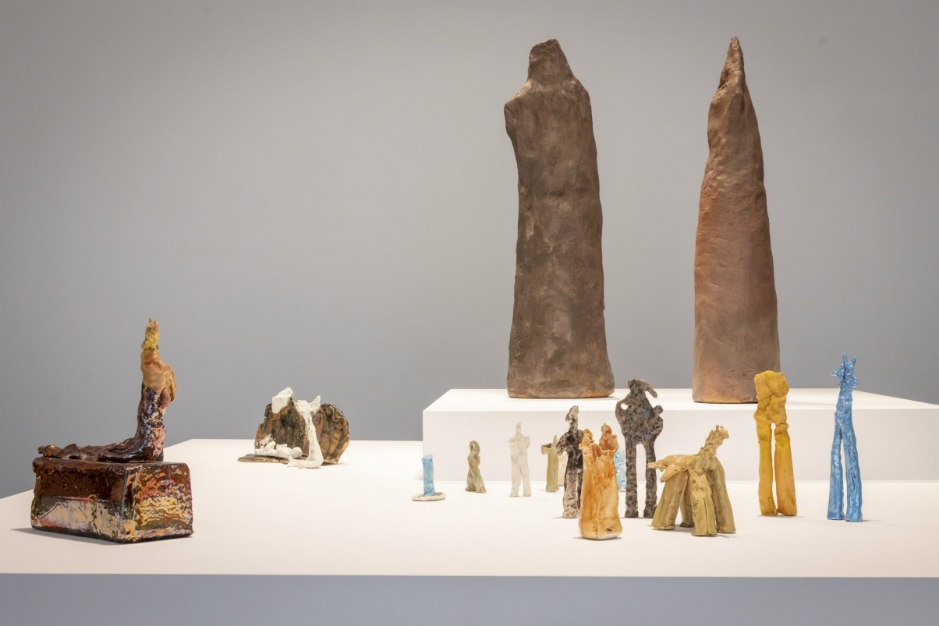
Simone Fattal, Suspension of Disbelief, 2024-2025 Installation view, Institut Valencià d’Art Modern, Valencia
Courtesy of the artist, Institut Valencià d’Art Modern, Valencia and kaufmann repetto Milan / New York
Photo: Miguel Lorenzo
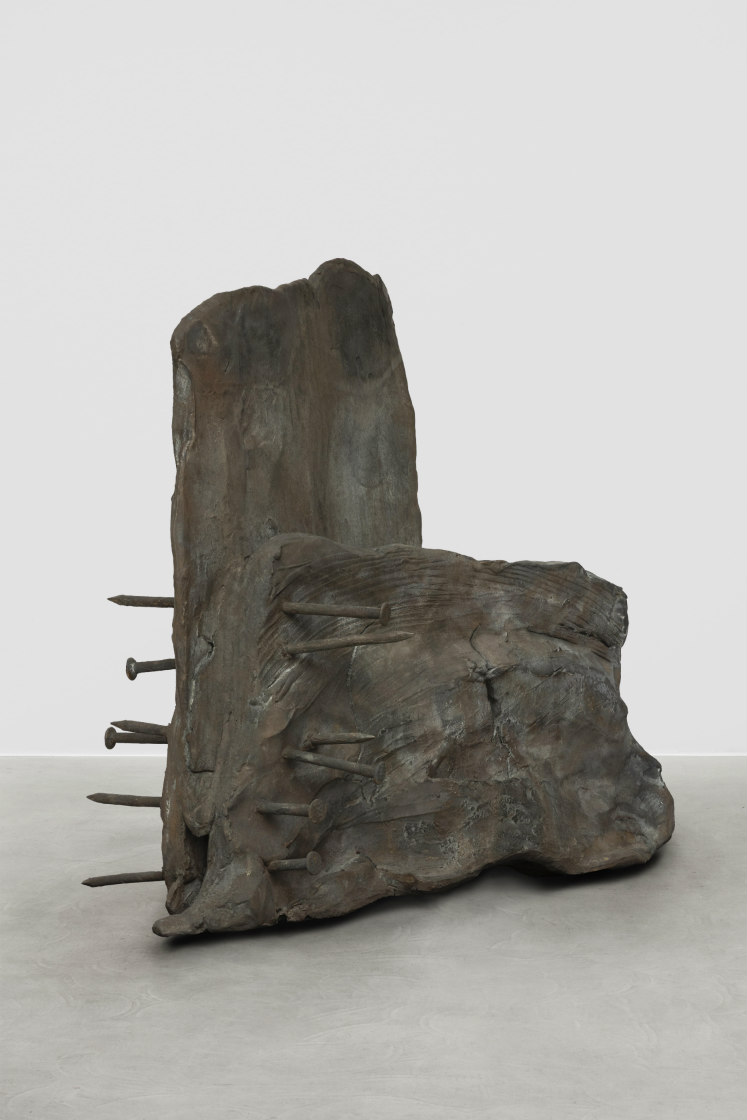
Simone Fattal: Door, 2024 bronze
120 x 75,3 x 118 cm / 47.2 x 29,6 x 46,4 in
Courtesy of the artist and Balice Hertling, Paris and Karma International Zurich and Greene Naftali New York and Hubert Winter Vienna and Karma International Zurich and kaufmann repetto Milan / New York
Photo: Andrea Rossetti
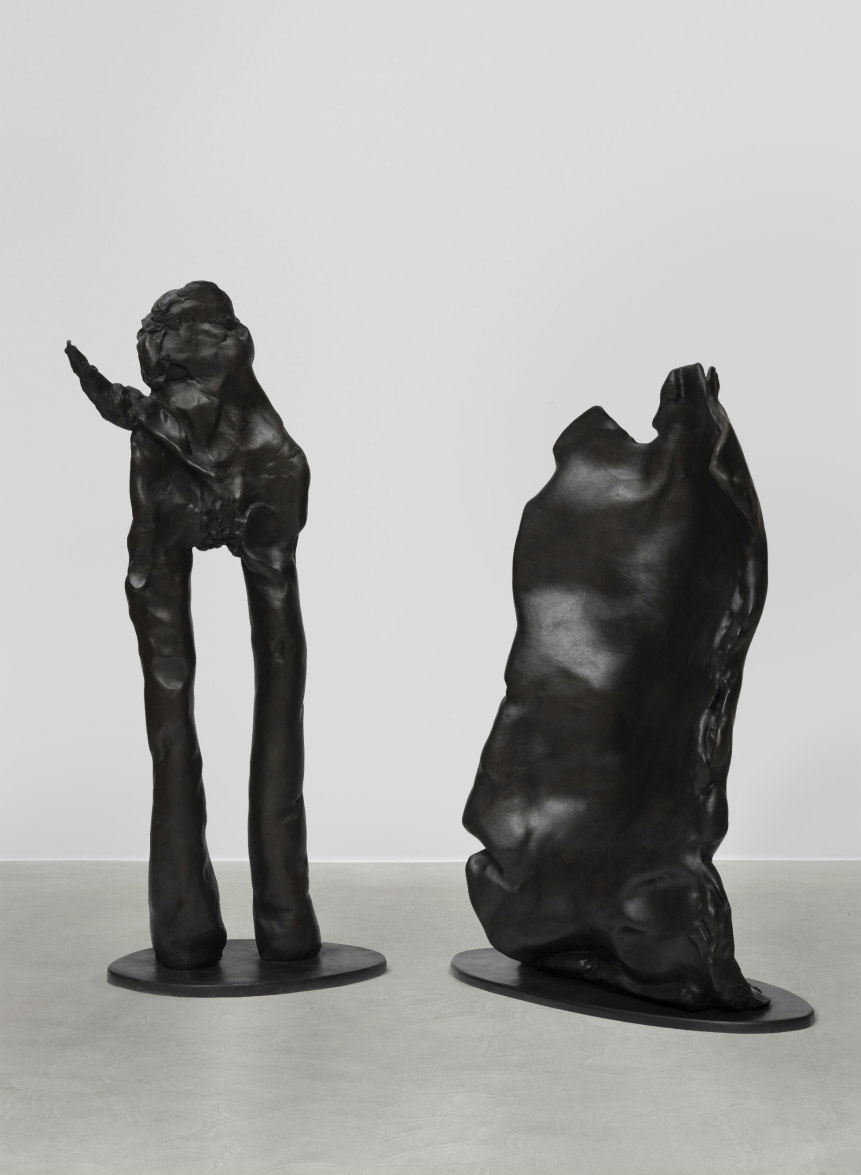
Simone Fattal: Ghaylan and Mayya, 2024
bronze
Ghaylan 127 x 60 x 36 cm / 50 x 23.6 x 14.1 in
Mayya 104 x 55 x 25 cm / 40.9 x 21.6 x 9.8 in
Courtesy of the artist and Balice Hertling, Paris and Karma International Zurich and Greene Naftali New York and Hubert Winter Vienna and Karma International Zurich and kaufmann repetto Milan / New York
Photo: Andrea Rossetti
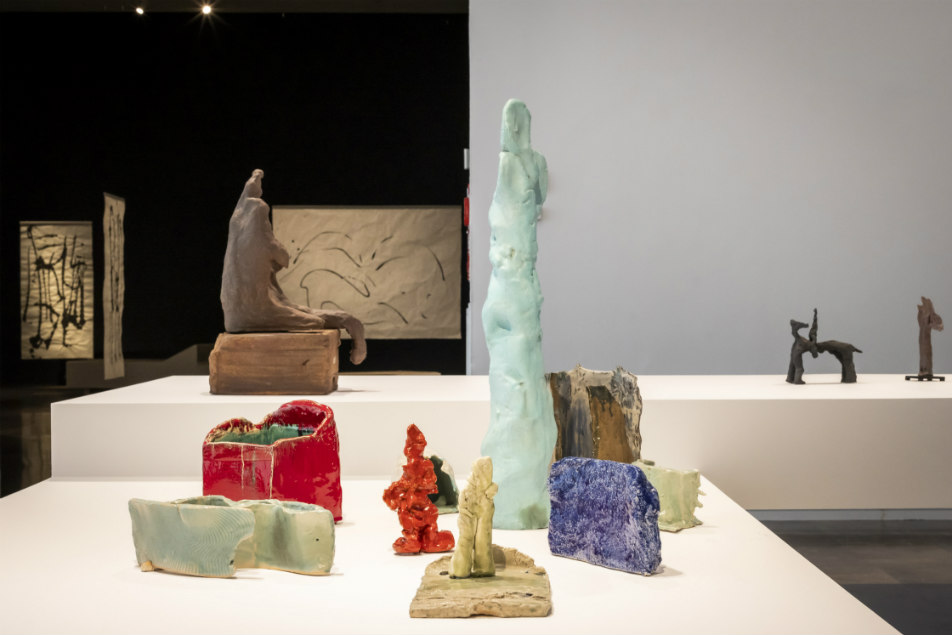
Simone Fattal, Suspension of Disbelief, 2024-2025 Installation view, Institut Valencià d’Art Modern, Valencia
Courtesy of the artist, Institut Valencià d’Art Modern, Valencia and kaufmann repetto Milan / New York
Photo: Miguel Lorenzo
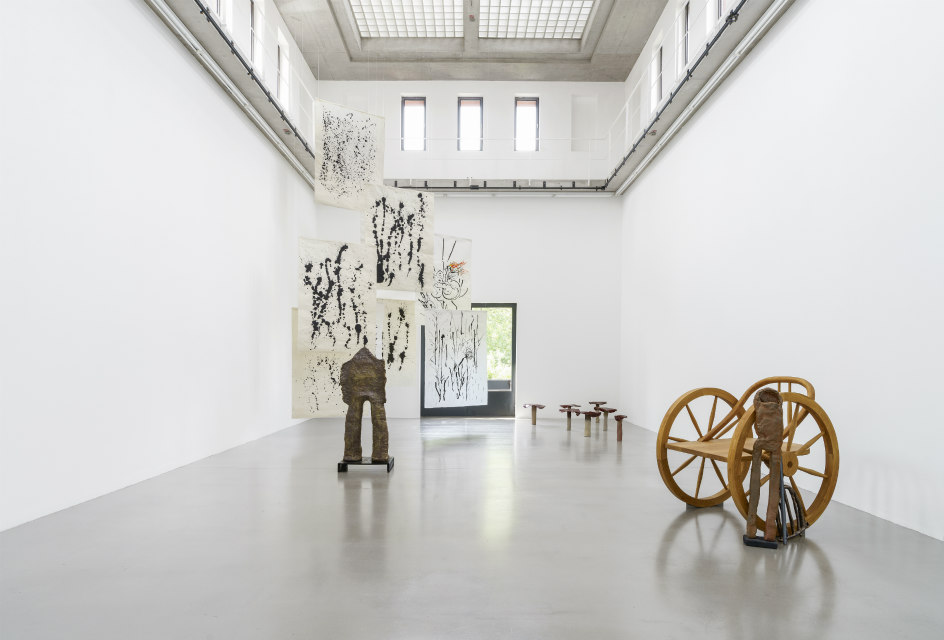
Simone Fattal, The Manifestations of the Voyage, 2023 Installation view, Portikus, Frankfurt
Courtesy of the artist, Portikus, Frankfurt and kaufmann repetto Milan / New York
Photo: Wolfgang Günzel
“I’m not displaced, but a traveler.”
Simone Fattal, are you missing your country and what do you consider your identity?
Identity is something you choose, and it is formed by huge layers of what you go through, what you live. I have the French education, I lived in America for thirty years, and I am of course from Syria and I’m very attached to it.
Which language did you speak as a child?
I spoke Arabic with my parents and friends, until now. And I went to a French school in Damascus, from age three. The French system is very effective at making you part of the community. Now I have an American passport and they consider me an American artist.
Do you go to America often?
I still go every year. Etel settled in Paris in 2012, she was unable to travel by plane anymore. I kept going back and forth to Sausalito, because I still had the publishing house, which I closed in 2017 because I couldn’t continue working from so far, and with the COVID pandemic it became impossible. I’ve lived in Paris since 2017. It is a very good place to work, because it is in the centre of Europe with a wonderful system of communications, and so many beautiful museums.
When do you work?
Every day I say tomorrow at 9am I am in the studio – which never happens! I’m lucky to go there at the end of the morning. And I work late. I have to start in the morning and then work for as long as possible. I work in painting or even sculpture, and it’s so varied and it can go very quickly or very slowly. I sculpt and make ink drawings very quickly. I’m much slower with painting.
Do you feel painting or sculpture is more your craft?
For me, sculpture is easier, because it’s with my material, with clay, so direct, sensual, and physical. You are all there. Painting is more elaborate, more intellectual, and I stay for many hours in the studio, listening to a lot of music. I listened to the same Beethoven sonatas for four or five years but now I can’t listen to them any more. I listen to the same music repeatedly until I change it. Music is something you really desire to hear.
Are you interested in politics?
Politics doesn’t leave us a single day without thinking about it, but I don’t want to have any message in my work. Certainly, politics is included in my work, especially in sculptures. When I make a warrior, even Gilgamesh, I certainly want to discuss the Orient, make people think about it.
Now are you going back to Lebanon?
Yes. I’ve started going back home to Lebanon now for two or three years, spending the summer there, but it’s too hot so I’ve tried to go in the winter more. I don’t have a studio there now, but I will, and I want to see my friends and family. But when I say “home”, I really can’t say anything is home. You don’t belong to one place anymore when you travel so much.
Are you a displaced person?
No, I’m not displaced, but a traveler. I am very much in Lebanon when I’m there, and I’m very much here in France when I’m here.
Can you work everywhere?
Not everywhere. I have to prepare work which gets adapted to the specific place.
Do you like to be commissioned, as you were for your flowers for Arles or for the Vatican pavilion?
Yes, very much. It gives you a new way of thinking and looking at things, refreshing your mentality. You discover things you don’t know, either about yourself or about a subject. It’s very interesting. If there are no commissions, then I would think about a poem and try to create something that evokes that poem.
Which subjects do you enjoy the most?
I enjoyed the flowers a lot and I have started doing flowers in ceramics. I have always done a lot of angels – one of my people, I would say. But the angels I did for Marrakesh were specific for this movement that I wanted to create.
Why the bronze tree in New York?
I started with trees, making many in pastels which were lost when I left Beirut. It’s a shame because they were very big: one metre eighty by one metre fifty. The tree returns regularly and I did that “Tree of Life” a few years ago. I had made the model in bronze, which I do very little, but I asked to work in a foundry in Berkeley and I made that little bronze model, which is maybe 25 or 30 centimetres high. When they told me about that show, I thought that would be the best thing to put in the middle of the gallery.
I usually also have a piece in bronze. If a clay piece has broken, then I can make a mold of it and have it made in bronze too, to recapture that movement. Otherwise I work directly in clay, which is more fragile and can break a lot. You must wait for the clay to dry before taking it to the kiln, and sometimes it’s too brittle, and it can disintegrate just by going to the kiln, and then in the kiln itself anything can happen.
Did you work with marble?
I do. My first stone piece was in alabaster, and when I saw that piece of stone I knew that I was going to make it like a torso thrown away in the archaeological sites where you always have pieces lying around. To me, it’s as if they had found that torso, but not on an archaeological site, but in downtown Beirut. That first piece already put together archaeology and a contemporary event, which was the war in Beirut. Putting these two sides of thinking together imprinted everything that came after in my work.
Are you part of a community of artists, or you are a loner?
I’m a loner. I don’t know many artists, but I admire them. I like Kiki Smith, for instance, and Penone. I like all the great painters. Etel and I spent our lives going to museums. I like Rembrandt, Rubens, Van Gogh a lot, all the Impressionists, Cezanne, all the American artists, Tony Smith and that generation. And I like Cattelan.
But my inspiration doesn’t come from artists. When I’m working, poetic verses come to my mind. I don’t think, “Oh Tony Smith says that”, although I admire them tremendously.
Was it easy to spend a long time of your life with Etel Adnan, another artist, poet, writer?
It was extraordinary because Etel and I liked the same poets, painters, paintings – almost always abstract – so we discussed, visited, and read a lot, but our works were very different. She didn’t impress me, and I didn’t impress her, and there was no competition between us and we each wrote a text on the other. We didn’t have the same way of working, like for instance, Robert Delaunay and his wife Sonia who did the same paintings. Even my painting was so different, not only the sculpture which she had never done. I like her work a lot. She had so many themes. The mountain, the sun. She was a great drawer with a brush. She worked at home because she had a very bad back. And I had to go to my studio.
Do you still love your work?
Yes, I’m very interested in my next steps. I want to work, to discover and investigate new things in my paintings. And I love to read and to travel. I’d like to go to China, to see the old kilns. Chinese pottery is so great. I have a teapot in China. Once, there were friends from Beirut who had a connection and they asked people to do teapots. I made my first teapot in white porcelain, and it’s in Shanghai in the Museum of Arts and Crafts.
Not bad!
Having a teapot in China is another summit of success. (laughs)
Are you interested in showing in Italy besides in Venice?
Yes, I showed in Italy. Kaufmann Ripetto is from Milan. In New York there is a second gallery, but the initial one was in Milan. I had a beautiful show in Milan at ICA. They commissioned works about Pompeii and when I went to Pompeii I saw the Roman Empire – Egypt, Phoenicia, Greece, and Italy – and it was very easy for me to do work about all these connections. For instance, there’s a temple of Isis in every city in the ancient world, not only in Egypt but in Pompeii, Delos, Rome, everywhere. Isis was the most important goddess and all these connections were so wonderful.
What did you do about Pompeii?
I did Europa and the Bull as one of the sculptures, because that’s Phoenicia. In Pompeii there is the House of Mysteries, where you have women actually initiating a young girl. So, there were a few women, young men, and trees that were a bit like how you find them in Napoli in the archaeological museum, representing a man’s virility, shall we say! I also did arches.
What about the exhibition you did in London at the Whitechapel Gallery?
The Whitechapel show and the Pompeii show took place simultaneously, so I had to work for two shows. The Whitechapel show is the most personal show that I have had. There was a procession of four men, going around, forward, and, on both sides I put something that represented what was on their minds. On one side I had engravings about Damascus, like city plans, and on the other side, a house and a tree, a ladder. In that sense, it was very personal and all in clay. There was nothing else, except the engravings.
Which is your favourite museum?
I love the Louvre. It’s so taken by the tourists it’s hard to go there, but they don’t go into the rooms I go to. But my favourite museum is in Greece, the archaeological museum of Athens. I also love the one in Naples, and I would like to go and spend two weeks visiting the new Grand Egyptian Museum in Cairo.
As an American, maybe you also like the Metropolitan?
I love the Metropolitan. For me, it’s like a promenade. I also go there to study. It is work for me.
Where are you most proud to have shown?
I had one painting on show in Damascus in what was the splendid Museum of Damascus but I don’t know what it has become today. The Museum of Aleppo was also fantastic. Hopefully, they haven’t been destroyed.
Thank you very much.
Portrait of Simone Fattal by Christophe Beauregard.
ENJOY THIS INTERVIEW? SHARE IT WITH A FRIEND.